
Wohnwand
-
Wall Unit CLIF - Living Room Furniture Set - San Remo Oak / Anthracite GreyRegular price $529.99Unit price / perRegular priceSale price $529.99
-
Wall Unit VISTE - Living Room Furniture Set - Scandi / Truffle / White GlossRegular price $719.99Unit price / perRegular priceSale price $719.99

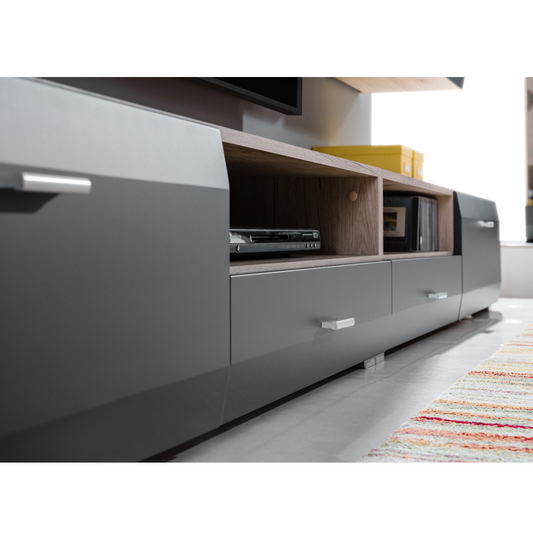

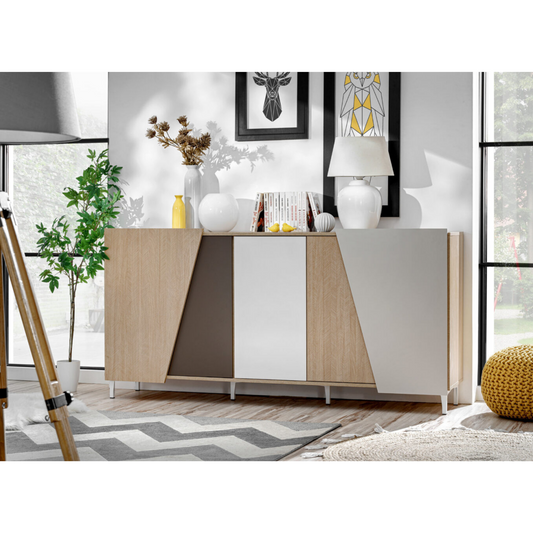
A wall unit (or entertainment center) is a modular or fixed furniture ensemble for the living room, designed primarily to house home entertainment electronics while offering both concealed and open storage for everyday items.The classic configuration consists of a TV media console (lowboard), flanking standing or floating display cabinets, and a wall shelf. Unlike the massive wall-to-wall cabinets of past decades, modern wall units feature a lighter, multi-piece layout that can be flexibly adapted to your room's layout.
As a focal point of interior design, this furniture piece balances functional storage with visual aesthetic. For DIYers, successful selection and installation rely heavily on material quality, precise room measurements, and proper wall anchoring techniques.
Anatomy and Components of an Entertainment Wall Unit
A well-planned wall unit acts like the Swiss Army knife of your living room: it combines diverse features—from cable management to display areas—into a compact, engineered system. Each individual module serves a distinct purpose.
The TV Lowboard / Media Console
The lowboard forms the foundation. It typically features a low height of 13-3/4 in to 19-11/16 in (35 cm to 50 cm) to position the television at an ergonomic eye level. Depths usually range between 15-3/4 in and 19-11/16 in (40 cm and 50 cm), providing ample depth for AV receivers, gaming consoles, and wire routing. Modern designs often include a wall unit with drawers riding onball bearing drawer slidesorunder-mount drawer slides. Choosing afull extension drawer slideensures complete access to the interior—ideal for storing media, game controllers, and heavy accessories.
Display Cabinets and Pier Units
These vertical elements frame the TV area. Freestanding piers rest on dedicatedcabinet feetor flat furniture glides, while wall-mounted cabinets attach directly to wall studs or masonry. They offer a balanced mix of solid doors (hiding paperwork, dishes, or tech accessories) and glass inserts. Installing awall unit with glass display cabinetrequires extra attention, as glass shelves must be securely supported using specializedshelf support pegs(typically designed for 3/16 in / 5 mm shelf holes).
Floating Shelves and Wall Boards
Wall shelves serve as a visual bridge connecting tall cabinets. They are frequently installed using concealed floating shelf brackets, which anchor into the wall and slide into pre-drilled slots in the shelf board. Load capacity is typically limited to 11 lbs to 22 lbs (5 kg to 10 kg), making them best suited for light decor, photo frames, or books.
Design Concepts and Surface Finishes
The visual impact of an entertainment center is defined by the interaction of materials, colorways, and surface finishes.
Modern Wall Units
Amodern wall unitstands out with handle-less fronts, clean architectural lines, and bold contrast. Push-to-open latch mechanisms are widely used: a gentle press on the cabinet door triggers a spring catch to release the door cleanly. A popular example of this aesthetic is theFUNNY PLUS Living Room Furniture Set - Matte White / Gloss White, blending subtle matte carcasses with high-gloss door fronts.
High-Gloss and Matte Lacquer Finishes
A white high-gloss wall unit bounces natural light throughout the room, helping smaller floor plans feel visually larger. Core construction typically usesMDF (Medium-Density Fiberboard)finished with thermoformed high-gloss foil or multi-coat lacquer. Alternatively, matte finishes—such as amatte black wall unit—resist fingerprints and deliver a quiet, light-absorbing atmosphere.
Wood Grain Decors and Solid Wood
To infuse natural warmth into your space, select wood-look finishes. These primarily utilizemelamine-faced particle boardfeaturing realistic, synchronized grain textures. ASonoma Oak wall unitor Wotan Oak model, such as theMIRANDA 4-Piece Wall Unit - Wotan Oak / Gloss White, provides a highly durable, scratch-resistant finish. For heavier construction and natural wood character that patinas over time, look to genuinesolid wood wall units.
Industrial and Scandinavian Styles
Combining rustic wood grains with dark accents captures an industrial loft feel. Aconcrete-look wall unitor models featuring matte black metal frames add cool, urban accents. A striking example of high-contrast design is theFAME Living Room Furniture Set - Black / Gold.
Planning and Layout: Dimensions and Storage
Before purchasing a unit, precisely measure your room dimensions. Amodern wall unit with abundant storagerequires adequate wall space without overpowering the room.
- Determine overall width:Measure the total available wall length. Leave at least 5-7/8 in to 7-7/8 in (15 cm to 20 cm) of clearance on either side near adjacent walls or doorways to allow the furniture breathing room. Standard total widths range from 86-5/8 in to 126 in (220 cm to 320 cm).
- Account for TV dimensions:Measure the actual overall width of your television (not just the diagonal screen size). A 65-inch TV is roughly 57 in (145 cm) wide. The supportingTV consoleshould extend at least 3-15/16 in to 7-7/8 in (10 cm to 20 cm) past the TV edges on both sides for balanced proportions.
- Distance to seating:The recommended viewing distance between your couch and TV wall should be at least two to three times the diagonal screen size.
- Storage capacity needs:Assess what items you need to conceal. Awall unit with maximum storage spacerequires plenty of closed cabinet space. If storing dining dishware or binder folders, verify the interior cabinet depths. Standard binders require a clear interior depth of at least 12-5/8 in (32 cm). An integratedsideboard unitwithin the set often yields the highest storage capacity—exemplified by comprehensive sets like theMILA Living Room Set - Artisan Oak / High Gloss White with Sideboard and Coffee Table.
When searching for living room inspiration, many home improvers reference common flat-pack furniture benchmarks likeIKEA wall unitsor standardmodular entertainment centers. Regardless of brand, modern knock-down (KD) furniture uses universal assembly hardware principles. Homeowners seeking high-capacityRTA (ready-to-assemble) wall unitsdemand functional design and simple assembly—a core feature built intoFurnica furniture systemsfor seamless home installation.
Installation Guide: Professional Assembly Tips for DIYers
Assembling an entertainment wall unit requires a systematic approach, basic woodworking tools, and standard DIY skills. Plan on roughly 3 to 5 hours of assembly time for a multi-piece modular set.
Tools Required
- Cordless drill/driver with bit set (PZ2, PH2, Torx TX20)
- Handheld Phillips screwdriver (essential for fine-tuning door hinges)
- Spirit level (at least 24 in / 60 cm, ideally 40 in / 100 cm)
- Tape measure and pencil
- Hammer drill (for masonry/concrete) or impact driver (for stud wall framing)
- Rubber mallet
Cabinet Box Frame Assembly
Most cabinet carcasses are assembled usingcam lock fasteners(cam locks and connecting bolts) alongside wood dowels. Screw the cam bolt into the pre-drilled threaded insert, slide the side panel into place, and turn the cam lock housing 180 degrees to lock the joint tight. Ensure the arrow stamped on the cam lock body points directly toward the incoming bolt before tightening.
Attaching the back panel is a critical step for frame stability. The backer board is typically slid into a groove or secured with small brad nails. Before fastening the back panel, squarification is vital: measure diagonally across both opposite corners of the cabinet back. Only when both diagonal dimensions match down to the millimeter is the cabinet cabinet perfectly square.
Wall Mounting Floating Cabinets
Afloating wall unitrequires robust, heavy-duty wall anchoring.
- Assess wall construction. For solid masonry or wood studs, standard heavy-duty anchors or lag screws work well. For drywall/gypsum board installations, toggle bolts or heavy-duty hollow wall anchors are mandatory to prevent pulling out under heavy loads.
- Floating cabinets hang securely using adjustableheavy-duty cabinet suspension bracketsmounted onto metal wall tracks/suspension rails.
- Drill mounting holes for the suspension rail, ensuring it is perfectly level.
- Hang the cabinet box onto the track. Use the internal adjustment screws on the cabinet brackets to fine-tune the height, level, and wall depth (pulling the cabinet flush against the wall).
Hardware Fine-Tuning: Adjusting Concealed Hinges and Slides
To give amodern luxury wall unita professional, custom finish, door panel gaps must be aligned with exact precision. This is achieved using 35 mm Europeanconcealed cabinet hinges. The hinge cup (standard1-3/8 in / 35 mmdiameter) sits flush in the door panel while the mounting plate attaches inside the cabinet frame.
- Side-to-side gap adjustment:Turn the front screw on the hinge arm to shift the door left or right to level reveal gaps.
- Height adjustment:Slightly loosen the top and bottom screws on the cross-mounting plate, slide the door up or down to align with adjacent doors, and retighten.
- Depth adjustment:Turn the rear screw on the hinge arm to pull the door closer to or further away from the cabinet box frame.
If your entertainment center features drawers on3/4 extension drawer slidesor full extension slides, these snap easily into place onto the cabinet runner tracks after frame assembly.
Care and Maintenance of Entertainment Centers
Proper cleaning practices ensure your living room furniture retains its factory appearance for years.
- Melamine-coated particle board(wood decors and matte solids): Highly durable and easy to maintain. Simply wipe clean with a slightly damp microfiber cloth and mild dish soap. Avoid abrasive scrubbers.
- High-gloss lacquer surfaces:Avoid microfiber cloths on acrylic or high-gloss painted surfaces, as micro-fibers can leave fine swirl marks. Use a soft cotton cloth paired with a dedicated gloss finish cleaner or diluted glass cleaner instead.
- Hardware and metal components:Steel hinges and slides are virtually maintenance-free. If a cabinet hinge squeaks over time, apply a single drop of non-resinous machine oil or silicone spray lubricant directly to the pivot joint.
Frequently Asked Questions (FAQ) About Wall Units
How do I hide cables and cords in a wall unit?Most TV consoles feature built-in wire pass-through grommets in the rear backboard or top panel. To conceal wires running up the wall to a mounted flat-screen, install surface-mount cable raceways/channels or run low-voltage wiring behind the drywall. Secure loose cords inside cabinets using hook-and-loop cable ties.
How much weight can a floating TV console hold?Weight capacity depends heavily on wall construction and fastener choice. A floating console properly secured to wood wall studs or solid concrete can easily support 66 lbs to 110 lbs (30 kg to 50 kg). When mounting to drywall, make sure to anchor into the structural studs wherever possible.
Can I replace or upgrade the integrated LED lighting?Yes. Most systems use plug-and-play LED glass shelf clips or stick-on LED strip lights connected via a low-voltage transformer to a standard power outlet. When replacing elements, ensure matching voltage (typically 12V DC) and compatible pin connectors.
How much space should I leave between the TV stand and upper floating cabinets?To keep the entertainment center from feeling cramped and leave ample room for large televisions, aim for at least 31-1/2 in to 39-3/8 in (80 cm to 100 cm) of clear space between the top of the lowboard and the bottom of upper wall cabinets.
Do wall unit modules have to be bolted together?No. Most modern sets—such as the SOLIDO TWIN Entertainment Center - Norwegian Pine / Gloss White—consist of freestanding modular components. You can adjust horizontal spacing between piers and TV stands freely, or even set up individual modules in different corners of the room.
What is the difference between soft-close and push-to-open hardware?These offer distinct operational benefits.Soft-close dampersslow down cabinet doors or drawers in the final inches of movement, pulling them shut silently (typically paired with cabinet handles or pulls).Push-to-open mechanisms(touch latches) pop handle-less door fronts open slightly with a gentle push, allowing smooth hand operation without hardware handles.
Related Categories for Your Living Room Project
Explore complementary furniture systems in our catalog designed for various interior aesthetics and functional layouts:
- Wall Units & Entertainment Centers(Full Collection)
- White Wall Units
- Wood Grain Wall Units
- Gray Entertainment Centers
- Oak Wall Units
- Modern Wood Entertainment Centers
- Charcoal Anthracite Wall Units
- Small & Compact Wall Units
- Beech Wood Wall Units
- High-Gloss Entertainment Centers
- Beige & Cream Wall Units
- Designer Wall Units
Whether you are outfitting a compact guest room setup or a full-scale home theater wall unit, a seamless build starts with exact room measurements, selecting the ideal material finish, and precisely adjusting your cabinet hardware hinges and slides.