
Black furniture legs
Popular Subcategories

-
Plinth Clip, BlackRegular price $0.05Unit price / perRegular priceSale price $0.05
-
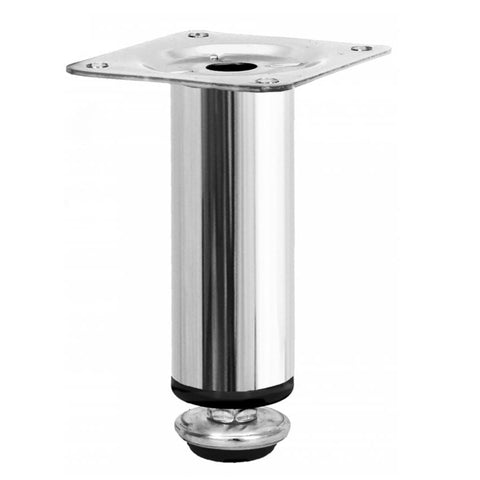
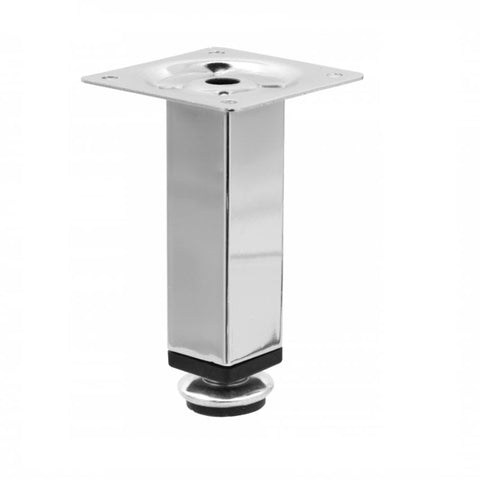
Kitchen Cabinet Leg 3-15/16 inch - BlackRegular price $1.13Unit price / perRegular priceSale price $1.13
-
Aluminum Plinth Clip, BlackRegular price $0.07Unit price / perRegular priceSale price $0.07
-
Kitchen Cabinet Leg 5-7/8 inch - BlackRegular price $1.22Unit price / perRegular priceSale price $1.22
-
Level Regulator for 11/16 inch (18mm) Boards, M6, BlackRegular price $1.80Unit price / perRegular priceSale price $1.80
-
Level Regulator, M8, BlackRegular price $0.30Unit price / perRegular priceSale price $0.30
-
Extension for Kitchen Cabinet Legs - BlackRegular price $1.05Unit price / perRegular priceSale price $1.05
-
Adjustable Plastic Furniture Feet 2-3/8 inch (60 mm) - BlackRegular price $0.24Unit price / perRegular priceSale price $0.24
-
Level Regulator, M6, BlackRegular price $0.16Unit price / perRegular priceSale price $0.16
-
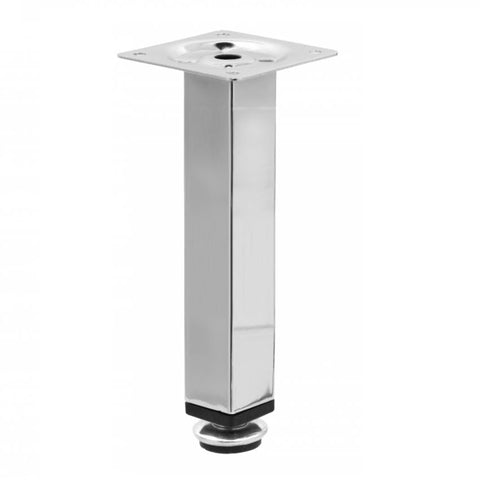
Adjustable Furniture Leg 27-15/16 inch - ZnAl Mounting Plate - BlackRegular price $12.35Unit price / perRegular priceSale price $12.35
-
Adjustable Furniture Leg 27-15/16 inch - BlackRegular price $10.97Unit price / perRegular priceSale price $10.97
-
Adjustable Furniture Leg 32-5/16 inch - ZnAl Mounting Plate - BlackRegular price $12.89Unit price / perRegular priceSale price $12.89
-
Adjustable Furniture Leg 32-5/16 inch - BlackRegular price $11.66Unit price / perRegular priceSale price $11.66
-
Square Furniture Leg 27-15/16 inch, Black, ZnAl Mounting PlateRegular price $26.51Unit price / perRegular priceSale price $26.51




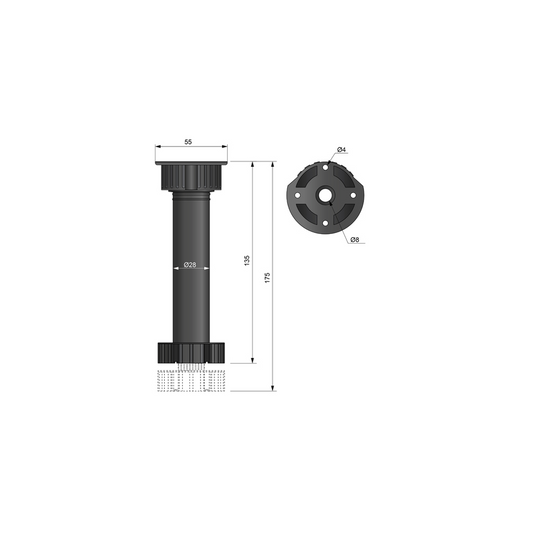




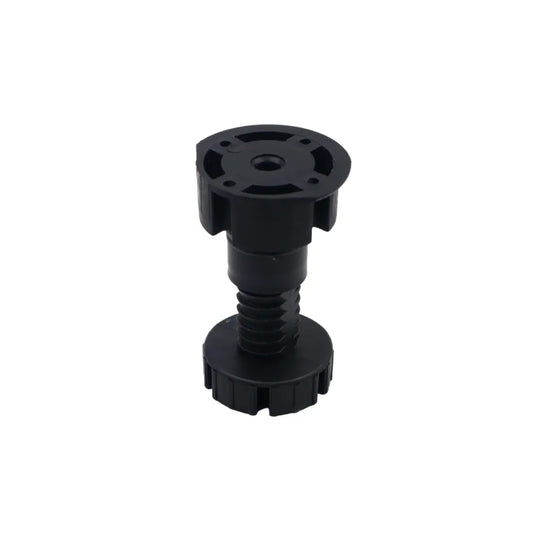


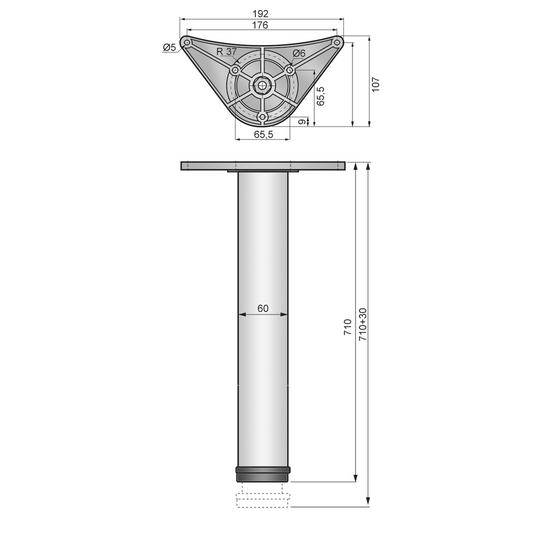

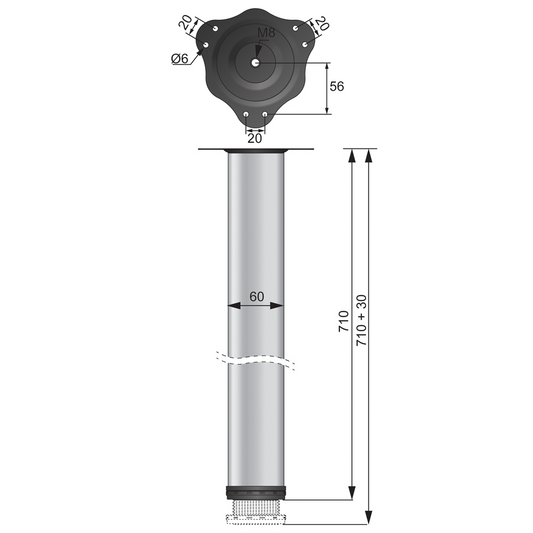

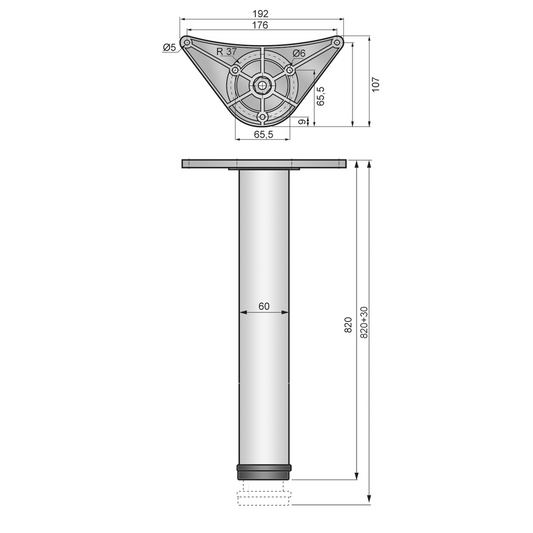

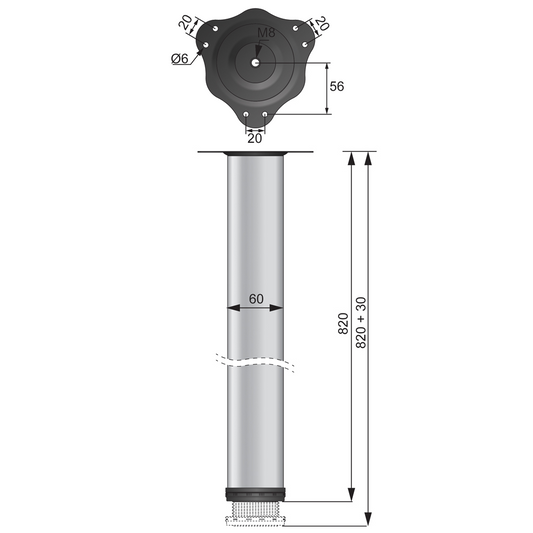

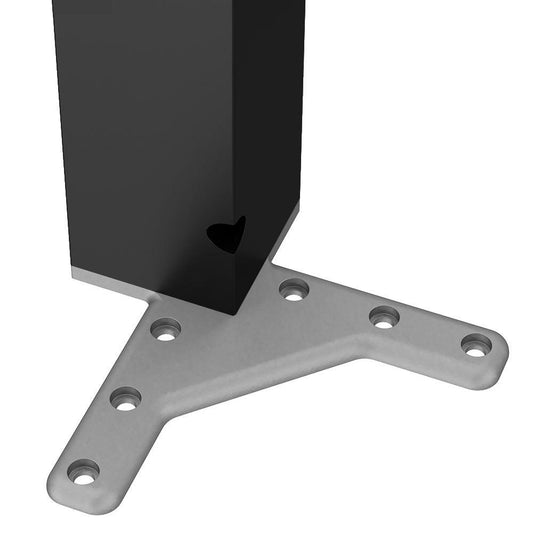
Black furniture legsare load-bearing and leveling hardware components designed to support furniture carcasses. Their dark finish allows them to either create bold visual contrasts or blend seamlessly into shadowed toe-kick areas. In furniture construction, they serve a dual function: securely transferring the weight of the furniture piece to the floor and enabling precise leveling on uneven surfaces via integrated threaded mechanisms.
Technical Characteristics of the Black Finish
When selecting black construction hardware, a distinction is made between visible and concealed components. Visibleblack metal furniture legsor black sled bases are typically finished with a scratch-resistant powder coating. This protective layer shields the steel or aluminum from corrosion and mechanical wear caused by cleaning equipment. The matte black furniture leg finish is especially popular because it absorbs light, minimizes fingerprints, and integrates effortlessly into modern interior concepts.
Concealed components, such as black kitchen plinth feet, are mostly made from high-density ABS plastic. Direct black pigmentation of the raw plastic granules prevents light reflections from making these parts visible through plinth gaps.
Applications and Spatial Planning
Selecting the rightfurniture legsdepends heavily on carcass weight and the installation environment. Black legs have established themselves as a standard choice across various mounting scenarios.
Living and Bedroom Areas
In freestanding cabinet construction, black cabinet legs and black dresser legs are critical for both structural stability and aesthetics. When setting up a heavy matte black sideboard or a solid black wood dresser, the legs must withstand dynamic leverage forces when drawers or doors are opened. For deep cabinet units, heavy-duty black metal furniture legs equipped with a wide mounting plate are frequently used to prevent screws from pulling out of the bottom panel.
These fittings are equally essential in upholstered furniture. Black couch legs and black bed legs generally feature a lower profile, yet they must deliver extremely high point-load capacity (measured in lbs), as dynamic loads from users are concentrated onto just a few contact points.
Kitchen Cabinet Installation and Concealed Plinths
Functionality takes priority in kitchen installations, where installers work with modular systems. Acting much like shock absorbers in a vehicle chassis,adjustable furniture legscompensate for subfloor unevenness and ensure precise horizontal alignment so countertops sit flush.
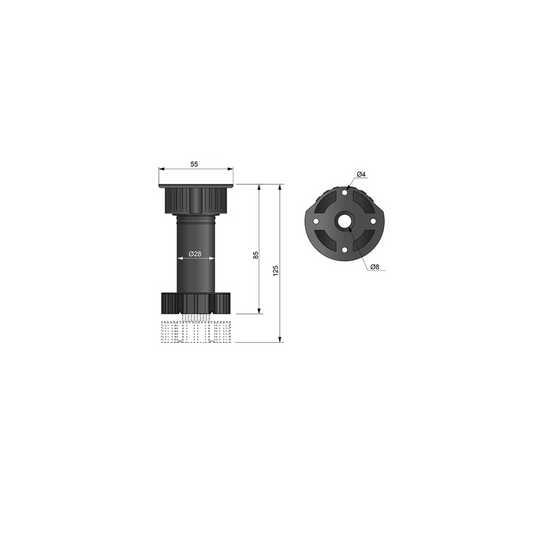
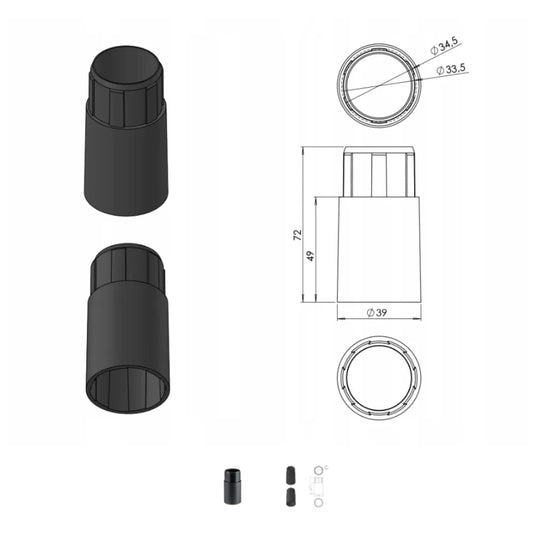
Typical heights for kitchen bases are 3-15/16 in (100 mm) or 5-7/8 in (150 mm). A standard choice for these applications is theAdjustable Kitchen Cabinet Legs 3-15/16 in (100mm) - Black, which feature continuous adjustment via robust plastic threading. For higher toe-kick clearance, theAdjustable Kitchen Cabinet Legs 5-7/8 in (150mm) - Blackare ideal. If standard heights fall short, the assembly can be extended to required specs using anExtension for Kitchen Cabinet Legs - Black.
Levelers for Board and Panel Materials
For heavy wardrobes, partition walls, or high-gloss black dressers where no visible legs are desired, cabinet makers rely on leveling feet. These compact levelers insert directly into the bottom edge of side panels or into the base plate.
Height adjustments are made via metric threads. AnM8 Cabinet Leveler, Blackfeatures an 5/16 in (8 mm) thread diameter, offering impressive weight capacity for heavy armoires. For lighter furniture or thinner material thicknesses, anM6 Cabinet Leveler, Blackis usually sufficient.
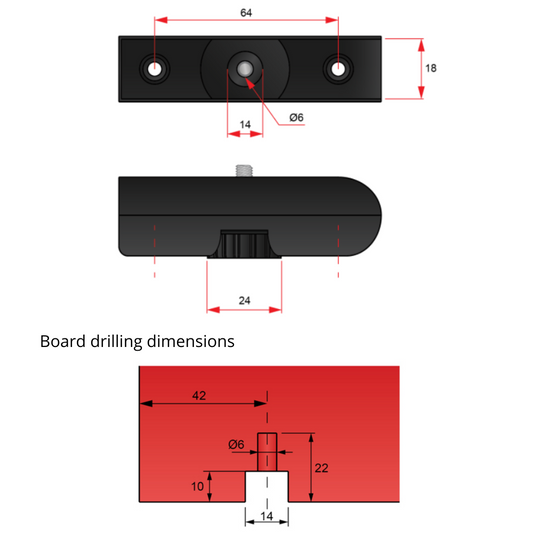
A specialized solution for direct board mounting is theCabinet Leveler for 11/16 in (18 mm) Panels, M6, Black. This bracket clamps securely onto the edge of an 11/16 in (18 mm) thick particle board or MDF panel and screws into place. The weight of the side panel rests directly on the threaded foot plate, minimizing shear forces on the fasteners.
Combining with Furniture Decors
Black furniture legs act as an architectural bridge between furniture and room design. The dark base creates a shadow gap effect that makes heavy cabinets appear lighter.
- Wood Finishes:On a black wood cabinet or an oak dresser (e.g., natural or dark oak), black metal furniture legs create a bold, industrial contrast against warm wood grain.
- Monochrome Surfaces:Under a black dresser or black IKEA dresser, the legs visually merge with the carcass. In these setups, matching the surface texture of the legs with matte black cabinet handles ensures a cohesive hardware appearance.
- High-Gloss:On a high-gloss white and black dresser, matte black furniture legs break up reflective front surfaces and ground the piece visually.
Installation and Mounting Hardware
Long-term stability for any furniture leg depends primarily on using correct mounting techniques.
Mounting Plates and Threads
Most metal legs (such as matte black metal furniture legs) feature a square or round mounting plate with pre-drilled holes—typically 5/32 in (4 mm) or 3/16 in (5 mm) in diameter. Secure attachment to the base is best achieved using matchingblack wood screws. For standard 5/8 in (16 mm) particle board, pan-head or countersunk screws measuring #6 x 5/8 in (3.5 x 15 mm) or #8 x 5/8 in (4.0 x 15 mm) are recommended. Always select the correct drive type (PZ or TX) to avoid stripping the wood fiber.
Toe-Kick Plinth Mounting
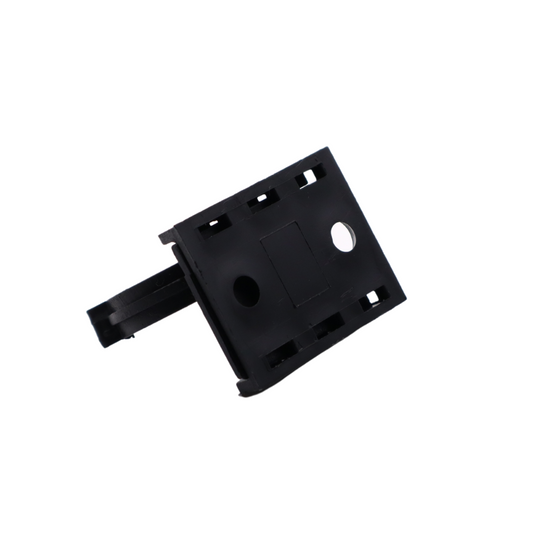
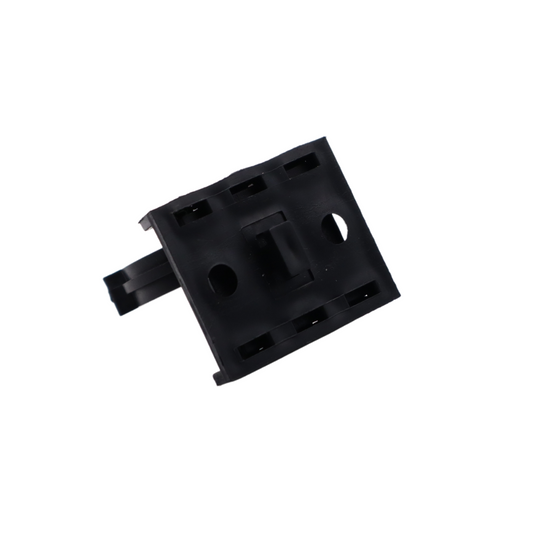
For kitchen cabinet feet, front toe-kick panels are secured using specialized clip systems that snap onto the round leg shaft. For wood or plastic plinths, theToe-Kick Clip for Kitchen Cabinet Legs - Blackis screwed to the back of the panel or slid into a groove. For metal plinths, install theToe-Kick Clip for Aluminum Kitchen Cabinet Legs - Black, engineered to fit hollow aluminum extrusion profiles perfectly.
Floor Protection
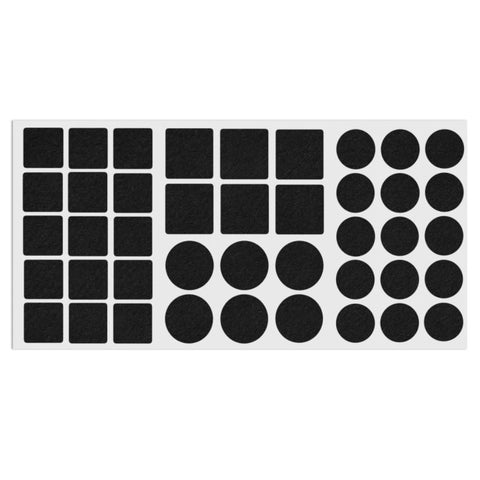
To shield delicate hard flooring (hardwood, laminate, tile) from scratches and reduce friction when shifting furniture, the hard base of the furniture foot should be buffered. Self-adhesiveblack felt padsapplied under plastic or metal bases provide excellent protection.
FAQ – Technical & Installation Questions
What is the adjustment range for black kitchen cabinet feet?
Tolerance ranges vary by model. A standard kitchen cabinet leg with a nominal height of 3-15/16 in (100 mm) typically adjusts -3/16 in (-5 mm) downward and up to +9/16 in (+15 mm) upward via the threaded base (overall range: 3-3/4 in to 4-1/2 in (95 mm to 115 mm)). This provides ample range to level out uneven subfloors.
What is the difference between M6 and M8 cabinet levelers?
The designation refers to the ISO metric thread size. An M6 thread has an outer diameter of 1/4 in (6 mm), while an M8 thread measures 5/16 in (8 mm). M8 levelers feature a thicker stem capable of supporting much higher vertical loads (lbs capacity), making them ideal for heavy armoires and wardrobes.
How do I calculate the required weight capacity for cabinet legs?
Total load is calculated by adding the net weight of the carcass (particle board weighs approx. 40.5 lbs/ft³ (650 kg/m³)) to the intended payload weight. Divide this combined figure by the total number of legs. For a black dresser weighing 265 lbs (120 kg) total on four legs, each foot must support a static load of at least 66 lbs (30 kg). For wide sideboards measuring 47-1/4 in (1200 mm) or wider, installing a fifth center support leg is essential to prevent bottom panel sag.
What furniture leg height is ideal for robot vacuums?
To allow standard robot vacuums to navigate underneath furniture effortlessly, ground clearance should be at least 3-15/16 in (100 mm).4 in (10 cm) furniture legsrepresent the absolute minimum, but6 in (15 cm) furniture legs(such asAdjustable Kitchen Cabinet Legs 5-7/8 in (150mm) - Blackwithout a front plinth board) offer safer clearance for vacuum sensors.
Related Hardware & Furniture Components
Complete your build and match hardware finishes with these precision-engineered components from our store: