
Furniture Connectors and Brackets
Popular Subcategories
-
1 inch Pipe End Cap, ChromeRegular price $0.24Unit price / perRegular priceSale price $0.24
-
1 inch Pipe Hinge Connector, ChromeRegular price $2.03Unit price / perRegular priceSale price $2.03
-
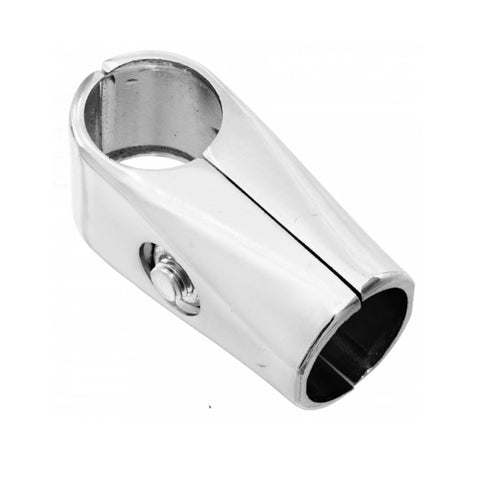
1 inch Half Cross Connector, ChromeRegular price $3.19Unit price / perRegular priceSale price $3.19
-
Shelf Support Connector Bracket, Single-Sided 1 inch (25 mm), ChromeRegular price $2.62Unit price / perRegular priceSale price $2.62
-
1 inch Pipe Connector, ChromeRegular price $1.81Unit price / perRegular priceSale price $1.81
-
Shelf Corner Fixing for Ø1 inch PipeRegular price $1.01Unit price / perRegular priceSale price $1.01
-
Long Double-Sided Shelf Support, ChromeRegular price $8.78Unit price / perRegular priceSale price $8.78
-
Oval Bar Distance Bracket 9/16 inch x 1-3/16 inch, ChromeRegular price $2.28Unit price / perRegular priceSale price $2.28
-
Oval Bar End Bracket 9/16 inch x 1-3/16 inch, ChromeRegular price $2.28Unit price / perRegular priceSale price $2.28
-
1 inch Double Sided Board and Glass Connector, ChromeRegular price $3.31Unit price / perRegular priceSale price $3.31
-
1 inch Board and Glass Connector, ChromeRegular price $2.40Unit price / perRegular priceSale price $2.40
-
1 inch Distance Handle, ChromeRegular price $2.81Unit price / perRegular priceSale price $2.81
-
1 inch Triple Connector, ChromeRegular price $2.35Unit price / perRegular priceSale price $2.35
-
1 inch Half S-Type Connector, ChromeRegular price $2.34Unit price / perRegular priceSale price $2.34
-
Plug Insert for Glass, WhiteRegular price $0.35Unit price / perRegular priceSale price $0.35
-
1 inch Parallel Ball Connector, ChromeRegular price $2.11Unit price / perRegular priceSale price $2.11
-
1 inch Double Connector, ChromeRegular price $2.86Unit price / perRegular priceSale price $2.86










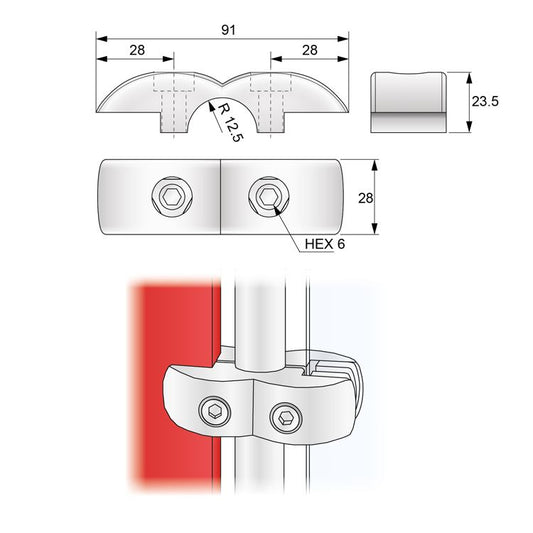

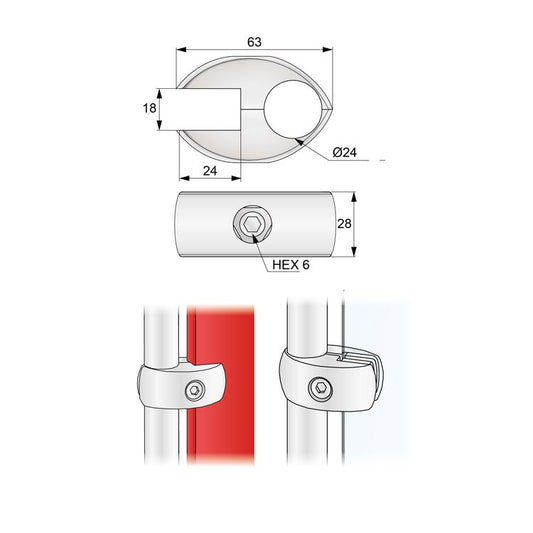

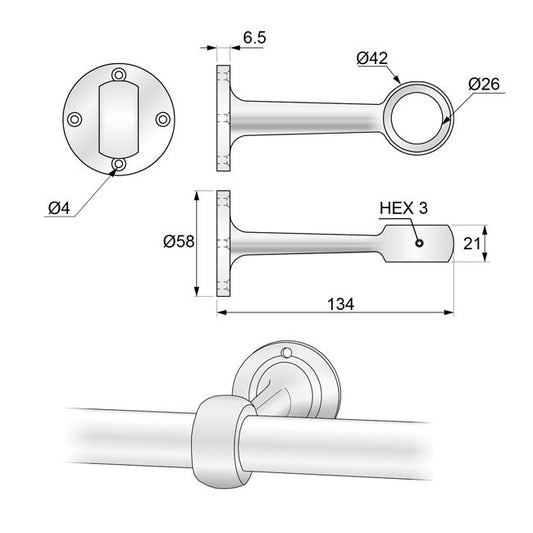

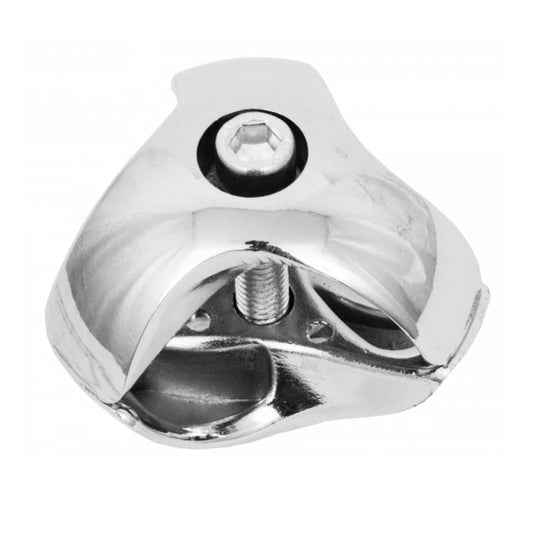




Furniture connectors and bracketsform the structural hubs in modern cabinetmaking, furniture building, and store fixture design, securely joining panel materials, metal tubing, and glass components through positive or force-fit locking. Whether constructing modular tubing systems for walk-in closets, creating hidden joints for cabinet bodies, or mounting closet rods securely to walls, selecting the exact right hardware determines the load capacity and durability of the entire structure. This technical guide breaks down the specific properties, dimensions, and mounting mechanisms of common connection systems.
Modular Tubing Systems (1 in (25 mm) Dia.)
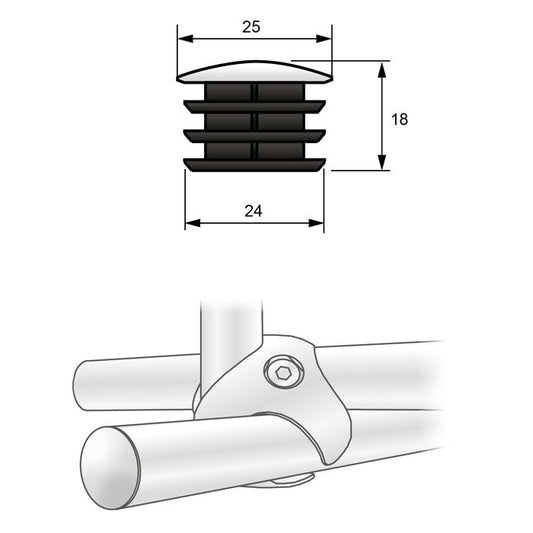
A dominant standard in retail display construction and open closet systems is round tubing with an outer diameter of1 in (25 mm). This dimension has established itself across the industry because it offers an ideal balance of flexural rigidity and sleek appearance. The tubes (typically made of chrome-plated steel or aluminum with a wall thickness of0.04 in to 0.06 in (1.0 mm to 1.5 mm)) are joined into three-dimensional frame structures using a wide variety of specialized25mm Chrome Tube Connectors.
Structural Hubs and Directional Changes
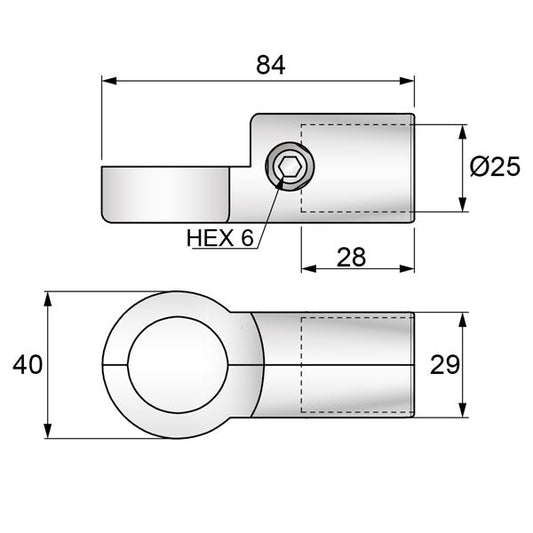
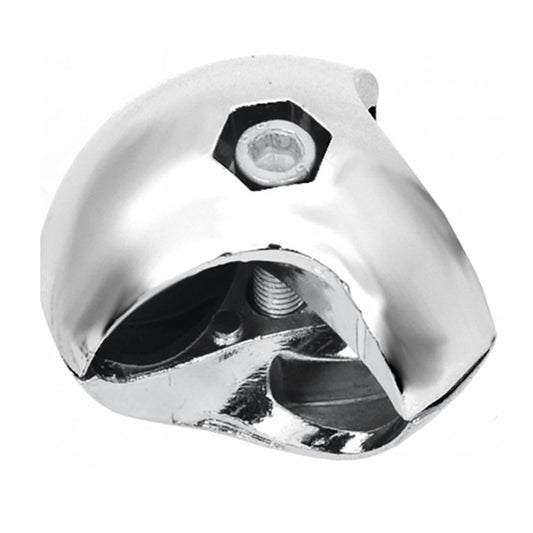
To build complex framing setups, various slip-on fitting geometries are used. Tubing is secured inside the connector using integrated set screws (typically internal hex/Allen drives) that press directly into the tube wall when tightened, preventing slippage under tension.
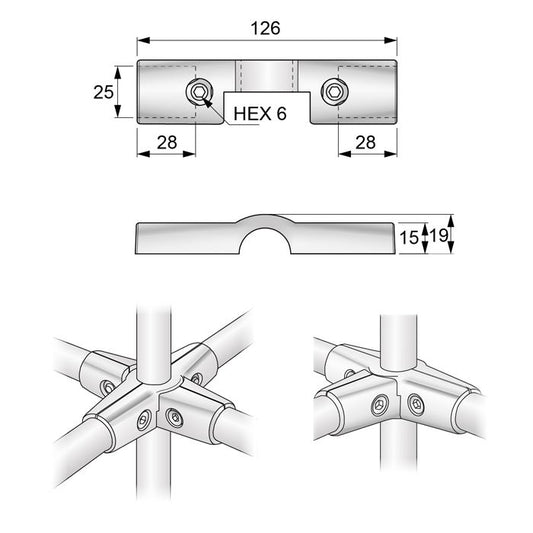
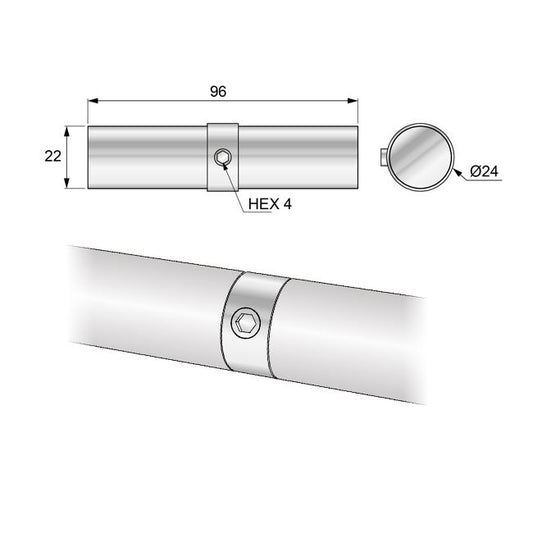
- T-Connectors and Cross Connectors:Designed for90°branches. A25mm Chrome In-Line Connectorallows linear extension of two tubes, while a25mm Chrome 3-Way Tube Connectoror a25mm Chrome Half-Cross Tube Connectorcreates structural junctions in three to four directions.
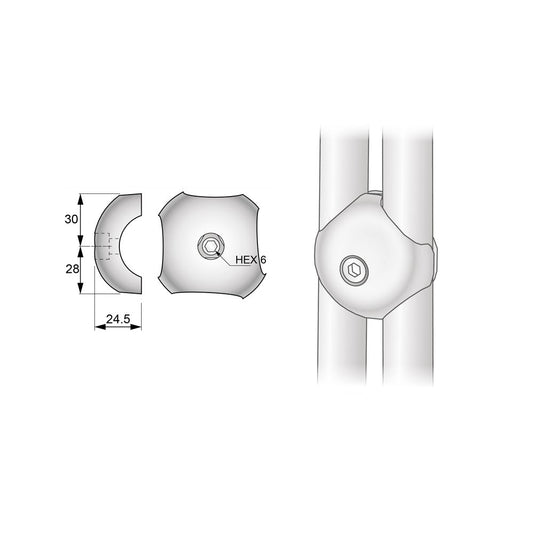
- Ball Connectors:The25mm Chrome Ball Tube Connectorcreates a closed, smooth sphere at corner joints. It is frequently used as top decorative caps on freestanding clothing racks.
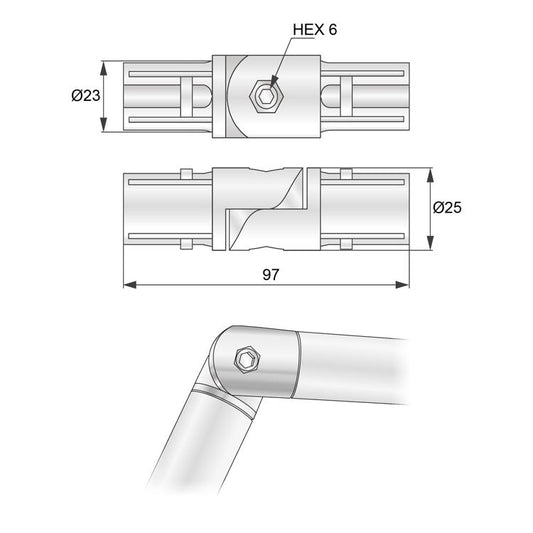
- Swivel Connectors:When structural framing needs to deviate from rigid90°grids (such as under sloped ceilings), a25mm Chrome Swivel Tube Connector Jointis used. This adjustableswivel connectorlocks firmly at any angle.
- Specialty Fittings:For curved designs or custom load paths, specialized hardware like the25mm Chrome Half S-Type Tube Connectoris available.
Much like a steel bridge truss, precisetubing connectorsdistribute tensile and shear forces deep into the frame structure, preventing twisting even under dynamic loads.
Floor and Wall End Mounts
Every structural tube system requires defined contact points against floors, walls, or ceilings. Awall bracket for 1 in (25 mm) tubingis typically screwed to the wall using a center mounting hole or a three-hole flange; the tube is then inserted and clamped fast. For floor terminations, simple25mm Chrome Tube Capsserve as floor scratch protectors, or for uneven floors, anAdjustable Threaded Metal Foot for 25mm Tubingcan be used. These often feature anM8orM10thread that allows continuous height adjustments from3/8 in to 3/4 in (10 mm to 20 mm).
Integrating Shelving and Glass into Tubing Systems
A bare metal frame becomes functional furniture only when integrated with shelves, side panels, or glass dividers. Specializedshelf support bracketsclamp directly onto the1 in (25 mm)tubing to achieve this.
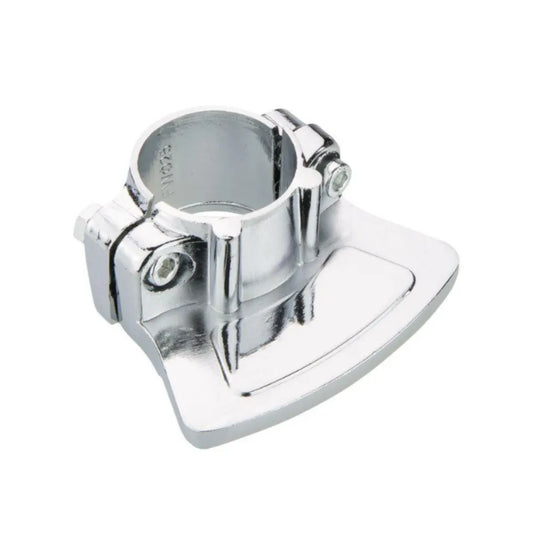
- Wood and Composite Panels:To install melamine-faced particleboard or MDF shelves horizontally, use a25mm Horizontal Chrome Shelf Bracketor aLong Double-Sided Chrome Shelf Support. These brackets offer a flat support surface that can be screwed to the shelf from underneath. Corner configurations utilize theCorner Shelf Mount for 25mm Tubing.
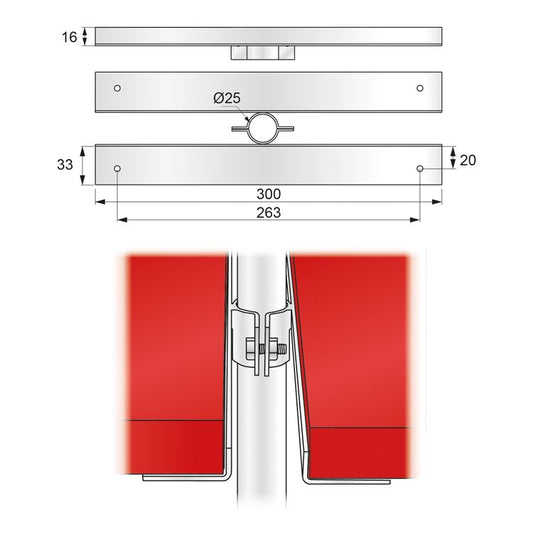
- Partition Wall Brackets:When vertical panels serve as back walls or room dividers between two tubes, installers rely on a25mm Chrome Panel Bracket Tube Connectoror the alternative25mm Chrome Panel Bracket Connectormodel.
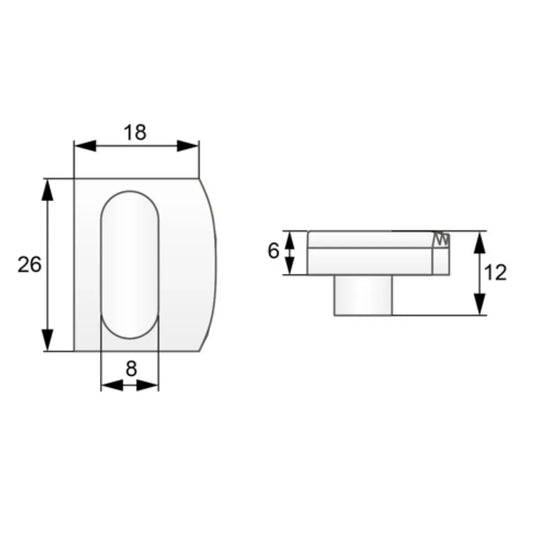
- Glass Elements:Glass shelves strictly require dynamic rubber or plastic inserts to cushion point loads and prevent stress cracking. Use aWhite Plug Insert for Glassin combination with a25mm Chrome Connector Plug for Glass and Panelsor a25mm Chrome Double Connector Plug for Glass and Panels. Alternatively, choose aSingle-Sided 25mm Chrome Shelf Bracket Connector.
Garderobe and Closet Rod Brackets
In closet organization hardware, a distinction is made between round and oval tubing. While1 in (25 mm)round tubing is popular for freestanding displays, oval tubing measuring a standard5/8 in x 1-3/16 in (15 x 30 mm)is the cabinet industry standard for built-in wardrobes. The oval profile provides a significantly higher moment of inertia along the vertical axis, offering superior sag resistance under heavy winter coats.
Mounting these rods inside a cabinet body requires specializedcloset rod brackets.
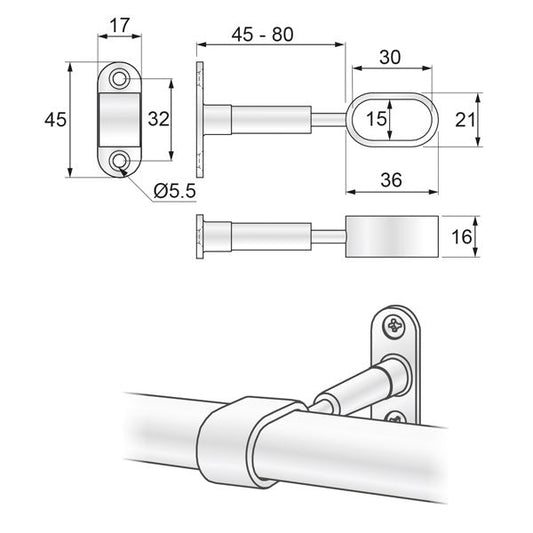
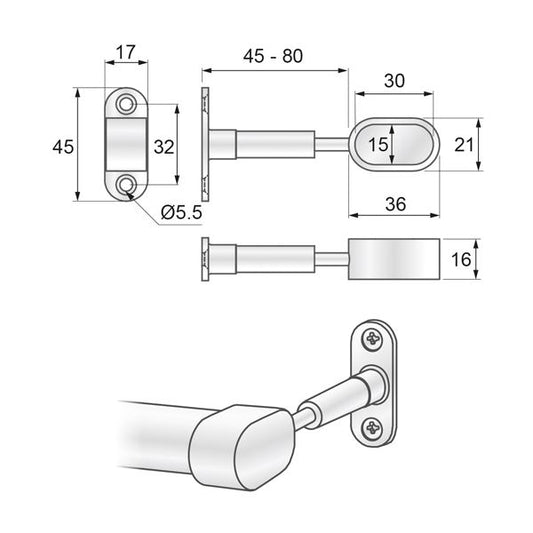
- End Brackets:The15x30mm Chrome Oval Bar End Socket Bracketinstalls on interior side walls using standardSystem 32hole patterns (typically mounted with3/16 in (5 mm)Euro screws). The closet rod drops in from above.
- Center Supports / Ceiling Mounts:For long closet rods (over39-3/8 in (1000 mm)) or undershelf mounting, use the15x30mm Chrome Oval Bar Center Support Bracket. Thiscloset rod bracketsupports the tube in the center to prevent sagging.
When planning customcloset rod holdersorhanging bar corner brackets, installers must always subtract the combined thickness of both end sockets (typically1/16 in to 1/8 in (2 mm to 3 mm)per side) from the cabinet's internal width before cutting the rod to length. If designing asingle-ended mounted closet rod, heavy-duty flange brackets with deep anchor points are required due to the leverage forces exerted on the cabinet wall.
Furniture Connectors for Cabinet Bodies and Fronts
Beyond metal tube framing, this hardware category includes essential panel joining components for traditional case goods. Cabinetmakers rely on specializedfurniture connectors and bracketsto construct flat-pack or custom cabinetry.
Cam Lock and Cabinet Connectors
The standard for knock-down (KD) furniture is thecam lock connector(commonly known as a Minifix system). It consists of a connecting bolt (with metric or Euro thread) and a rotating cam housing inserted into a19/32 in (15 mm)mortise hole. Turning the cam approximately210°draws the bolt in, pulling the panel edges tightly together. Thesecam lock connectorsare essential for concealed cabinet assembly.
For permanent structural joints,cabinet connectorslike trapezoid brackets or Confirmat screws (direct-drive fasteners) are used. These structuralcabinet joinery fastenersrequire precise pilot holes (e.g.,3/16 in (5 mm)in the side panel,9/32 in (7 mm)clearance hole) but yield exceptionally high pull-out resistance.
Specialized Cabinet and Drawer Fasteners
- Cabinet Gang Screws:To join two adjacent cabinet carcasses (such as modular kitchen units), sleeve-and-screw connector bolts are passed through matching3/16 in (5 mm)shelf pin holes. Thesekitchen cabinet connectorskeep neighboring cabinet fronts perfectly flush.
- Drawer Front Connectors:When building wooden drawer boxes, specialized front mounting brackets are used. Thesedrawer connectorsallow 3D alignment adjustments after installation, enabling precise gap alignment to the fraction of an inch.
- Cabinet Door Joint Brackets:This group includes connecting mending plates and wide-angle hinges designed to mechanically link jointed panels (e.g., in corner cabinets or bi-fold doors).
Countertop Connectors
In kitchen fitting,countertop connectors(also calledcountertop miter joint bolts) represent a heavy-duty category of high-tensile fasteners. When joining two kitchen countertops at a corner (typically with a miter or scribed joint), they must be drawn flush with immense force to ensure a tight, waterproof seam.
Recessed routing keyholes (often called dog-bone cutouts) are routed into the underside of the countertops. Thecountertop connectorsdrop into these recesses. Tightening the integrated threaded bolt (typically using a3/8 inor10 mmopen-end wrench) draws the steel clamping jaws together, pressing the butt edges together with hundreds of pounds of force. Standardcountertop joint boltsrange in length from2-9/16 in to 5-7/8 in (65 mm to 150 mm).
Table Leg Brackets and Standoff Hardware
Constructing tables or metal base frames calls for a dedicatedtable leg bracket(ormetal corner table connector plate). These are heavy-gauge steel mounting plates or apron brackets that provide a straight or angled mounting face for the table leg while rigidifying the top table frame.
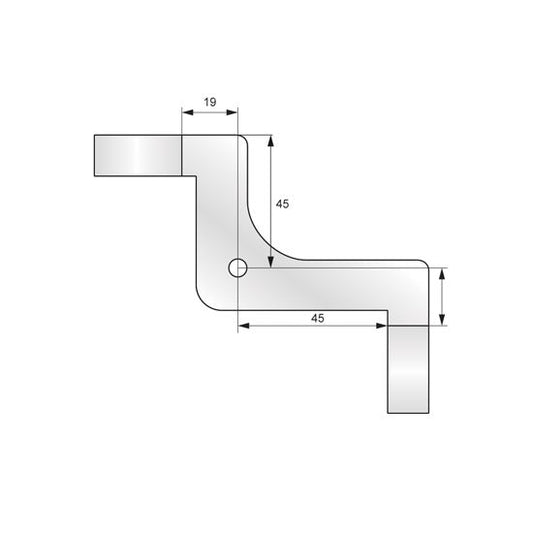
When panels or metal tubes must be mounted with offset spacing—such as architectural wall panels or false cabinet backs—a25mm Chrome Standoff Spaceris used. It sets an exact gap distance while enabling hidden wire routing in store fixtures. Similarly, utility hardware likehose bracketsorbroom holdersin utility closets rely on similar clamping or standoff mechanisms to keep tools organized and secure.
Materials and Finishes: Zinc alloy Alloy and Chrome
The mechanical performance of furniture hardware depends heavily on the base material. The majority of cast tube fittings in this category are manufactured from high-gradeZinc alloy(Zamak). This material is a specialized die-cast zinc-aluminum formulation (containing trace amounts of magnesium and copper).
Zinc alloy die-casting delivers superior dimensional tolerance accuracy, which is vital for smooth slip-fittube connectors. At the same time, the alloy offers high tensile strength and natural corrosion resistance. For exposed decorative applications in residential furniture and commercial displays, these raw Zinc alloy components receive electroplated finishes. A mirror-finish chrome plating provides a hygienic, wear-resistant surface while shielding the underlying metal from oxidation. Simpler alternatives, like lightweightplastic tube connectors, are reserved for non-structural interior locations or low-load applications.
Professional Installation Practices and Tolerances
When selectingfurniture connectors and bracketsalongsideshelf supports & brackets, dimensional tolerances must be strictly calculated. When cutting1 in (25 mm)tubing for modular framing, account for the insertion depth of each fitting. AT-connectoradds an effective center-line offset to the frame. If a technician cuts the tube to the overall outer dimension of the frame, the final assembly size will exceed design limits by several millimeters. Tubes should ideally be cut with a dedicated tubing cutter and deburred internally and externally so the connectors slide on smoothly without damaging internal O-rings (where applicable).
When installingwall bracketsorkitchen mounting hardware, target substrate composition dictates holding power. A shelf bracket's pull-out load rating relies on anchor selection rather than the chrome bracket itself (e.g., using0.18 x 2 in (4.5 x 50 mm)wood/masonry screws paired with5/16 in (8 mm)nylon wall anchors in solid concrete).
---
Frequently Asked Questions (FAQ)
What is the difference between a 1 in (25 mm) tube connector and a cabinet connector?
A1 in (25 mm) tube connectoris a solid structural clamp or socket fitting (typically Zinc alloy die-cast) designed to join metal tubing into framework using internal set screws. Acabinet connector(such as a cam lock fitting) is a fastener engineered specifically for wood cabinet assembly, sinking flush into drilled holes inside particleboard or MDF to lock cabinet panels invisibly together.
What is the weight capacity of an oval closet rod (5/8 in x 1-3/16 in / 15x30 mm)?
Load capacity depends on the span length. At a standard span of39-3/8 in (1000 mm)with proper side wall mounting, a steel oval closet rod easily supports33 lbs to 44 lbs (15 kg to 20 kg)(plenty for densely packed winter coats). For spans exceeding39-3/8 in (1000 mm), a center support bracket / ceiling hanger must be installed to prevent center bowing.
How do I calculate routing dimensions for countertop connectors?
Milling distance forcountertop connectorsdepends on the bolt length. For a standard5-7/8 in (150 mm)bolt, mortise cup holes (typically1-3/8 in (35 mm)diameter to house the clamping jaws) are drilled approximately2-9/16 in to 2-3/4 in (65 mm to 70 mm)back from the joint edge. The bolt channel notch must be routed deep enough to allow the threaded rod to lay completely flat below the surface.
What does Zinc alloy material mean in tube connectors?
Zinc alloy(also known as Zamak) stands for a zinc-aluminum die-cast alloy. It is the industrial standard material for high-quality furniture hardware castings. It resists twisting, won't snap easily like raw plastic, and accepts electroplated finishes (like polished chrome) exceptionally well, making it ideal for visibletubing frame connectors.
Can I use a 25 mm tube connector for curtain rods?
Technically yes, provided the curtain rod has an exact outer diameter of1 in (25.0 mm). However, a dedicatedcurtain rod connectorrequires a completely smooth seam for curtain rings to slide over. Standard tube fittings (such as T-fittings or ball joints) feature raised collars that block ring travel. They are best suited as fixed end flanges or for stationary curtain setups.
What tools are required to assemble ball tube connectors?
Securing most1 in (25 mm) tube connectorsandball connectorsrequires only a standard hex key (Allen wrench), typically in1/8 in or 5/32 in (3 mm or 4 mm)sizes. This tightens the integrated set screw against the wall of the tubing.