
35mm Cabinet Hinges
Popular Subcategories
-
110° Soft-Close Hinge, H0 Mounting Plate with EURO Screws, Overlay DoorsRegular price $1.10Unit price / perRegular priceSale price $1.10
-
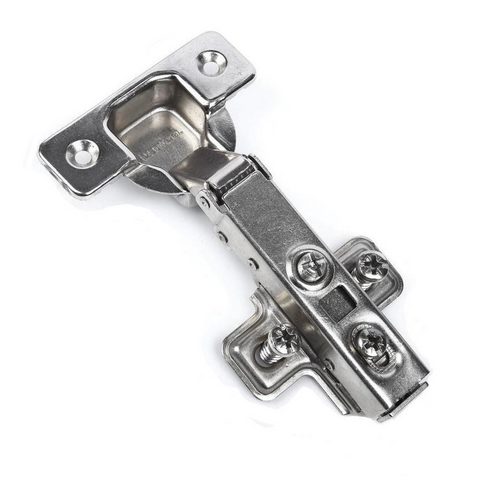
Hinge, H2 Mounting Plate with EURO Screws, Parallel DoorsRegular price $1.50Unit price / perRegular priceSale price $1.50
-
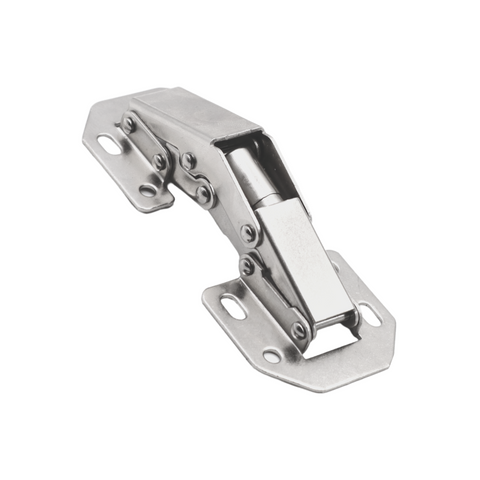
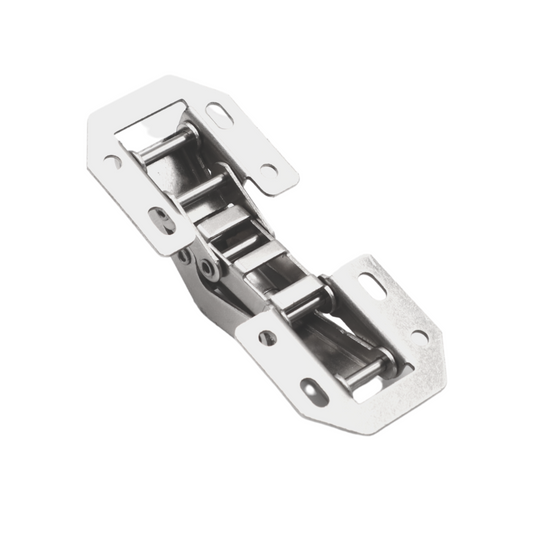
Hinge type "FROG"Regular price $0.90Unit price / perRegular priceSale price $0.90
-
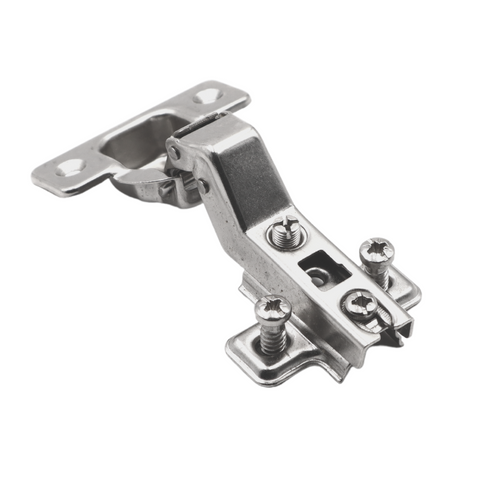
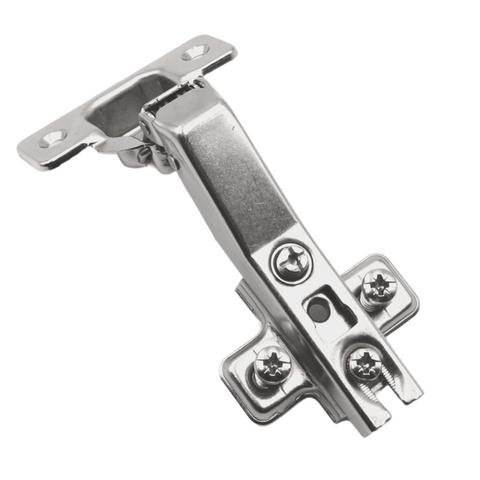
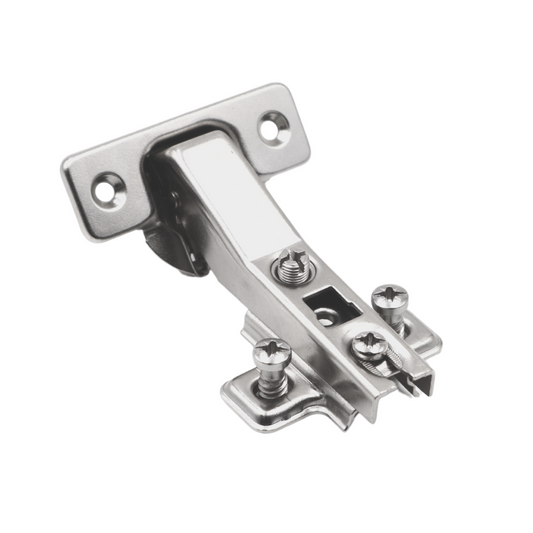
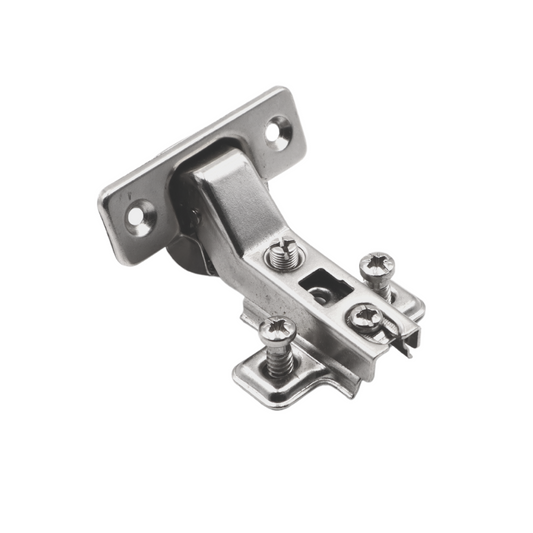
+45º Hinge, H2 Mounting Plate with EURO Screws, Angled DoorsRegular price $1.01Unit price / perRegular priceSale price $1.01
-
+30º Hinge, H2 Mounting Plate with EURO Screws, Angled DoorsRegular price $0.94Unit price / perRegular priceSale price $0.94
-
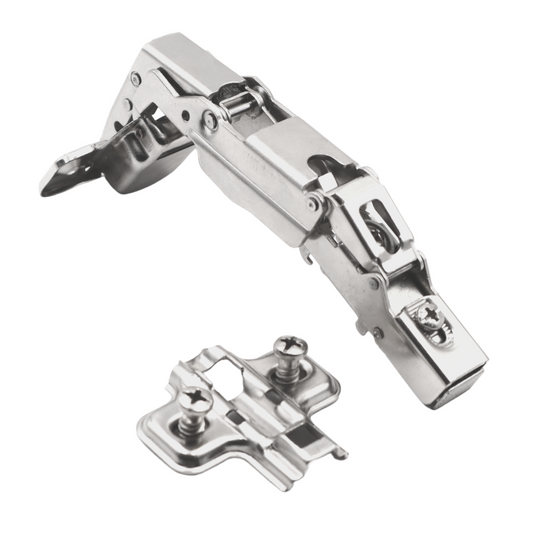
165° Soft-Close Hinge, H2 Mounting Plate with EURO Screws, Overlay DoorsRegular price $5.22Unit price / perRegular priceSale price $5.22
-
+30º Soft-Close Hinge, H2 Mounting Plate with EURO Screws, Angled DoorsRegular price $3.10Unit price / perRegular priceSale price $3.10
-
110° Hinge, H0 Mounting Plate with EURO Screws, Overlay DoorsRegular price $0.67Unit price / perRegular priceSale price $0.67
-
+45º Soft-Close Hinge, H2 Mounting Plate with EURO Screws, Angled DoorsRegular price $3.18Unit price / perRegular priceSale price $3.18
-
Soft-Close Hinge, H2 Mounting Plate with EURO Screws, Parallel DoorsRegular price $2.98Unit price / perRegular priceSale price $2.98
-
Soft-Close Hinge, H0 Mounting Plate with EURO Screws, Flush DoorsRegular price $1.33Unit price / perRegular priceSale price $1.33
-
Hinge, H0 Mounting Plate with EURO Screws, Twin DoorsRegular price $0.68Unit price / perRegular priceSale price $0.68
-
165º Hinge, H2 Mounting Plate with EURO Screws, Overlay DoorsRegular price $2.39Unit price / perRegular priceSale price $2.39
-
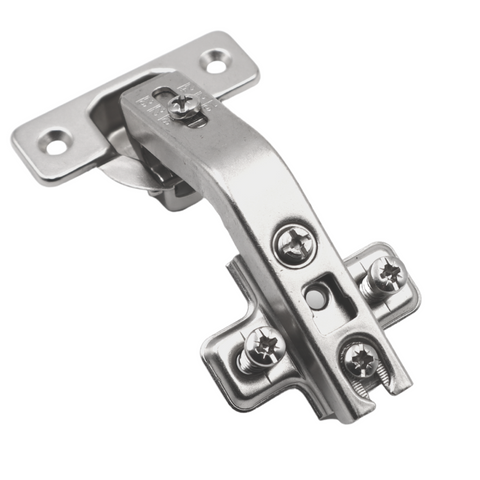
135º Angular Hinge, H2 Mounting Plate with EURO Screws, Corner DoorsRegular price $1.22Unit price / perRegular priceSale price $1.22
-
3D 110 Degree Soft-Close Cabinet Hinge, H0 Mounting Plate with EURO Screws, Inset ApplicationRegular price $2.18Unit price / perRegular priceSale price $2.18
-
Hinge, H0 Mounting Plate with EURO Screws, Flush DoorsRegular price $0.67Unit price / perRegular priceSale price $0.67
-
Soft-Close Hinge, H0 Mounting Plate with EURO Screws, Twin DoorsRegular price $1.33Unit price / perRegular priceSale price $1.33
-
4D 110 Degree Cabinet Hinges with Soft-Close, H0 Concealed Mounting Plate with EURO Screws and Cover Caps, Full OverlayRegular price $2.56Unit price / perRegular priceSale price $2.56
-
3D 110° Soft-Close Hinge, H0 Mounting Plate, Overlay DoorsRegular price $3.59Unit price / perRegular priceSale price $3.59

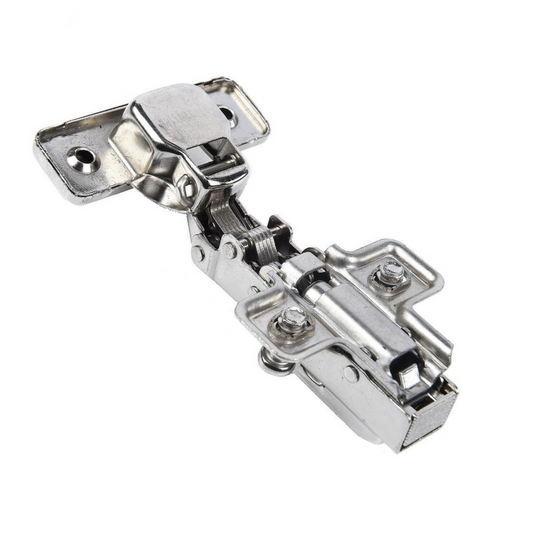






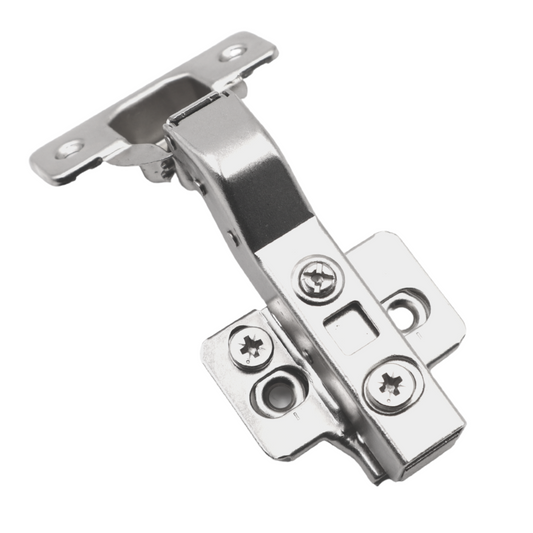

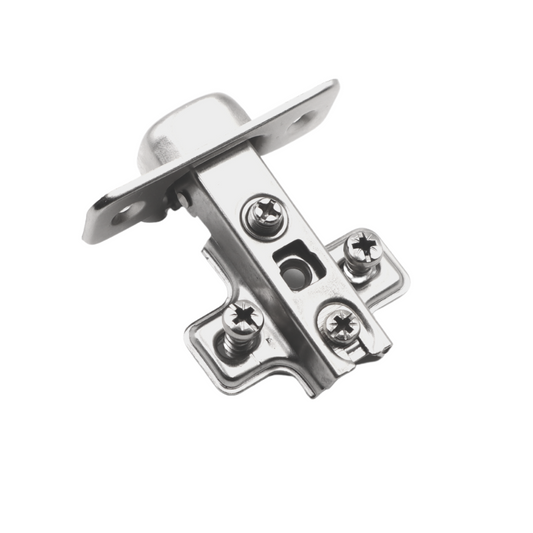

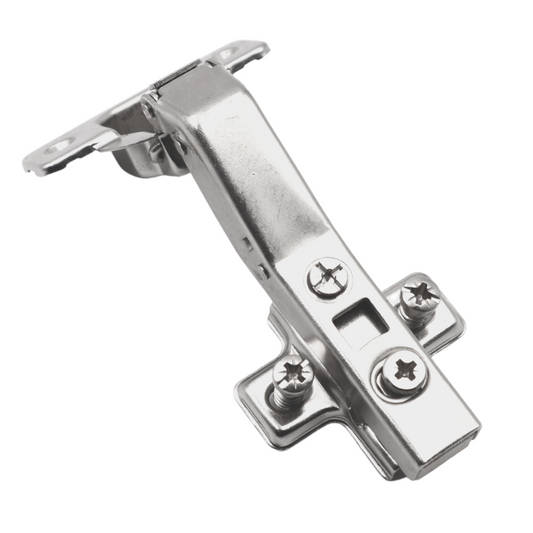

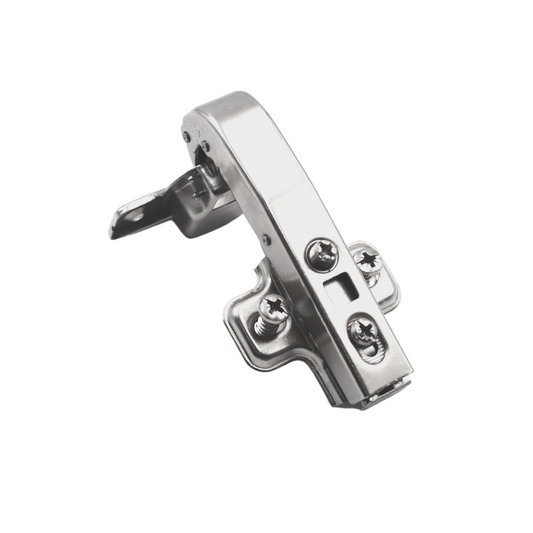

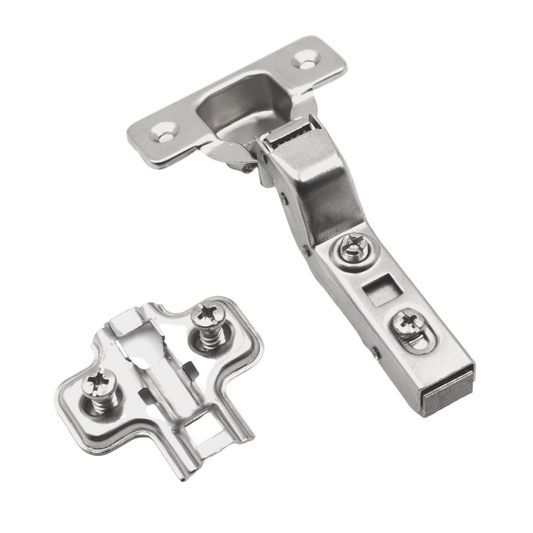

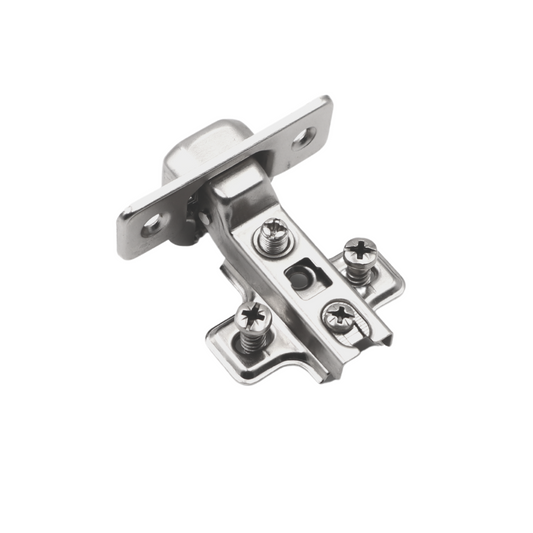

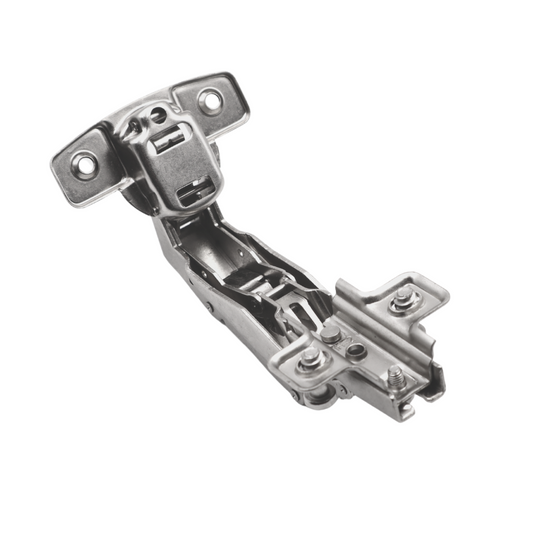

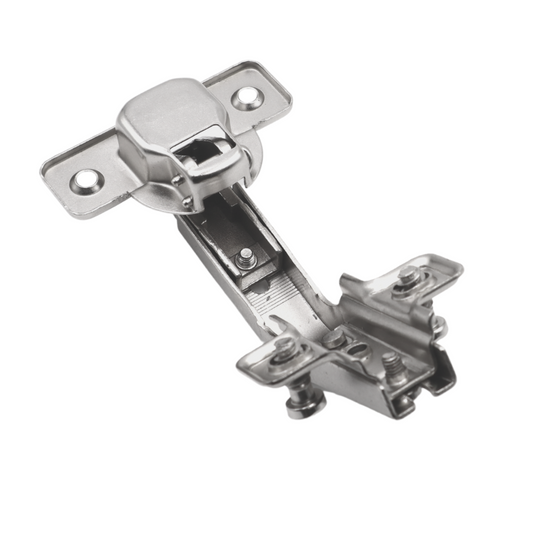

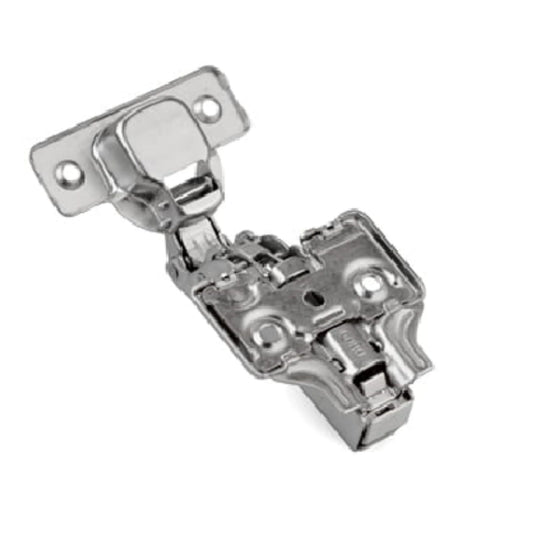

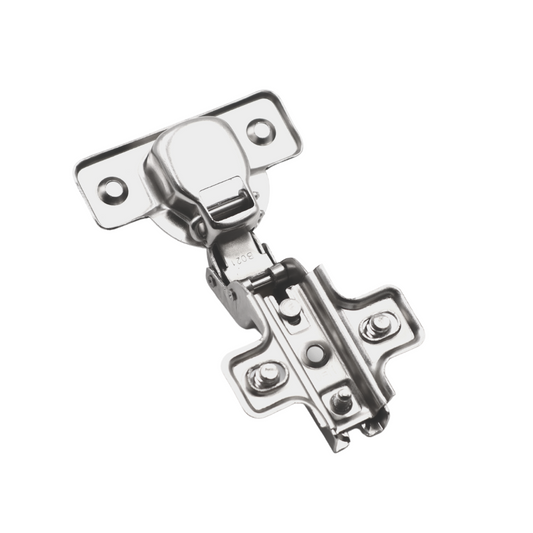

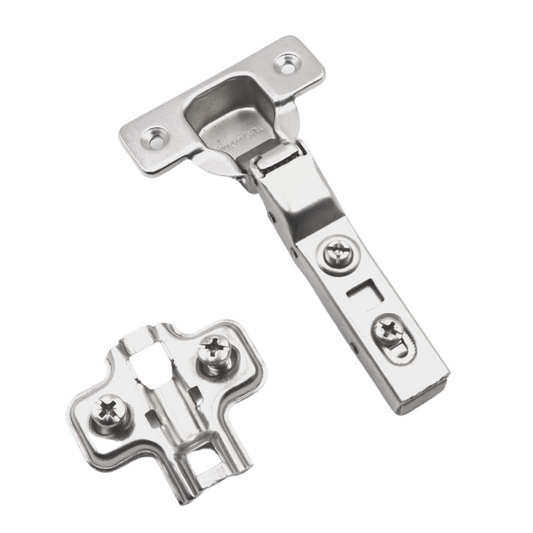

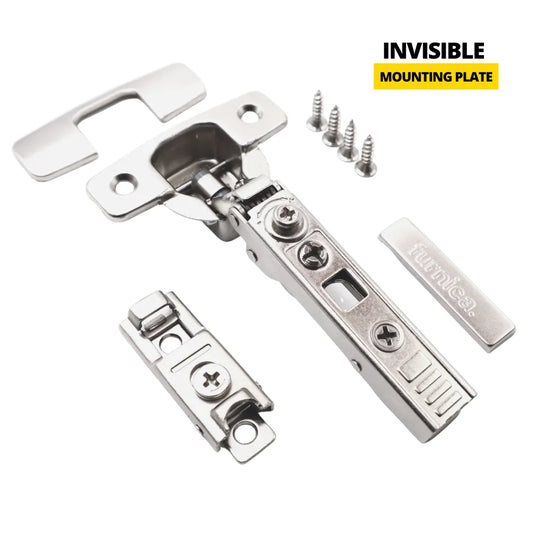

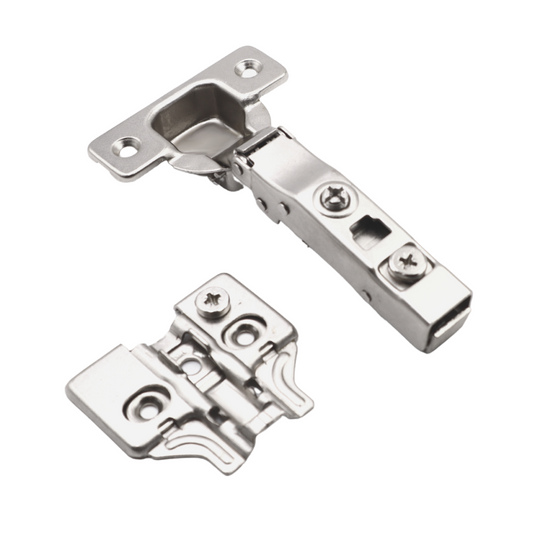
35mm cabinet hingesare concealed furniture hinges requiring a exact 1-3/8 in (35 mm) cup drilling diameter in the door leaf, serving as the absolute industry standard in modern cabinetmaking and professional millwork.
These fittings form the mechanical foundation for virtually all swinging doors on cabinet bodies. Compared to smaller variations, the standardized 1-3/8 in (35 mm) cup diameter provides a significantly larger surface area in engineered wood. This results in optimal power transmission and allows heavy, large-format MDF or solid wood fronts to be mounted with torsional rigidity. Anyone planning or replacing35mm cabinet hingesmust primarily address cabinet geometry, desired opening angle, and door overlay position to ensure collision-free door kinematics.
Overlay Types: Crank/Cranking and Cabinet Positioning
Selecting the correct hinge strictly depends on the door's position relative to the cabinet side panel. 35mm cabinet hinges are categorized into three basic designs defined by their cranking (the bend of the hinge arm). When analyzing35mm cabinet hinge types, this is the single most critical technical criterion.
Full Overlay (Standard Overlay Doors)
In full overlay applications, the closed cabinet door almost completely covers the front edge of the cabinet side panel, leaving only a minimal lateral gap needed for contact-free opening. Hinges for full overlay have a straight hinge arm (0 in (0 mm) cranking). For this standard application,full overlay 35mm cabinet hingesare used. Typical scenarios include freestanding wardrobes or the outer doors of a kitchen run. Specific searches for full overlay concealed hinges refer precisely to this configuration.
Half Overlay (Twin / Dual Overlay)
When two doors are mounted to a single shared partition wall, it is referred to as a half overlay. Both doors share the front edge of the 3/4 in (18 mm or 19 mm) particle board panel. The hinge must therefore be engineered so the door covers only half the edge (typically 3/8 in (9.5 mm) cranking). For this setup,half overlay 35mm cabinet hingesare utilized. This construction is frequently found in multi-unit wall storage or continuous upper cabinets.
Inset (Flush Doors)
In inset installations, the door does not sit on top of the cabinet edge, but swings flush inside the cabinet opening. The front edges of the cabinet carcass remain fully visible when closed. Here, the hinge arm features a steep bend (5/8 in (16 mm) cranking) to guide the door past the interior side wall as it opens. Installers rely oninset 35mm cabinet hingesor specialized inset door 35mm cabinet hinges. This variant is often used in display cabinets or designer furniture with exposed face-frame style constructions.
Opening Angles and Specific Applications
The kinematics of a 35mm cabinet hinge determine how far a door can swing open. The standard in cabinet construction is 110°.110-degree 35mm cabinet hingesoffer ample clearance for standard interior shelves and everyday access to cabinet contents.
For specialized accessibility needs—particularly when interior pull-out drawers are installed behind a swinging door—a 110° angle is insufficient, as the opened door would collide with the extending drawer. In such cases, wide-angle hinges are required.155-degree 35mm cabinet hingesor even wider-opening165-degree 35mm cabinet hingesswing the door completely clear of the interior opening. These fittings utilize a complex seven-bar linkage mechanism to achieve zero-protrusion (zero-encroachment).
Solutions for Corner Cabinets
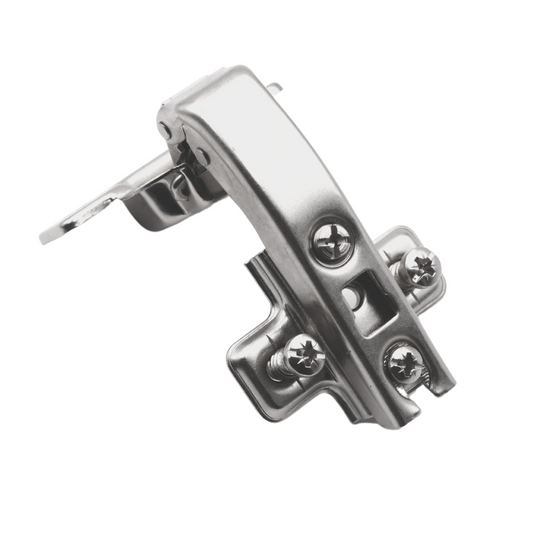
In kitchen design and L-shaped built-in cabinetry, fronts often meet at unusual angles. Precisely calibrated angled hinges exist for these geometric requirements.45-degree 35mm cabinet hingesand135-degree 35mm cabinet hingesenable smooth closure for angled corner cabinets or bi-fold corner doors. Proper installation requires precise calculation of reveal gaps, as the rotational axis diverges significantly from standard specs.
Mechanics: Soft-Close and Handleless Systems
A hinge's functional features largely define user convenience. Two opposing mechanical principles exist that should never be combined:
Soft-Close 35mm Cabinet Hinges
A 35mm cabinet hinge with an integrated damper acts like an automotive shock absorber: it absorbs the kinetic energy of the closing door and gently, silently brings it to a rest in the final inches. In modern hardware, the dampening unit (often a small hydraulic or pneumatic cylinder) is built directly into the hinge cup or arm. Those searching for soft-close cabinet hinges need models from thesoft-close 35mm cabinet hingescategory. These feature a self-closing spring that actively pulls the door shut while the damper absorbs the momentum.
Push-to-Open (Unsprung / Free-Swinging Hinges)
Handleless cabinet fronts require an entirely different system. A separate push-latch mechanism (Tip-On) is drilled into the cabinet side panel. When the user presses the door, the pin pops the front open. For this to function, the hinge mustnothave a self-closing spring pulling against the latch. Unsprung 35mm cabinet hinges are free-swinging. Soft-close mechanisms are technically impossible and counterproductive here, as the door must be manually pressed shut to reload the latch spring.
Installation, Drilling, and the 32mm System
Installing 35mm cabinet hinges demands precision and proper tooling. The cup is embedded into the door leaf, while the mounting plate attaches to the cabinet interior. Both elements connect via a clip-on mechanism or fastening screw.
Cup Hole Drilling in the Door
Drilling the door leaf requires a Forstner bit measuring exactly 1-3/8 in (35 mm) in diameter. Drilling depth is typically 7/16 in to 1/2 in (11.5 mm to 12 mm). This requires a minimum door thickness of 5/8 in (15 mm to 16 mm) to prevent blow-through. A critical metric during installation is the cup distance (the measurement from the door edge to the edge of the 1-3/8 in (35 mm) hole). This distance usually ranges between 1/8 in and 1/4 in (3 mm and 6 mm) and directly impacts the reveal and door overlay. A hinge jig is an indispensable tool for maintaining precise edge distances and square angles.
Mounting Plate on the Carcass
Attaching the mounting plate to the cabinet body typically follows the standardized32mm System. The line-drilled holes sit 1-7/16 in (37 mm) back from the front cabinet edge, with exactly 1-1/4 in (32 mm) spacing between the plate's two fastening screws. Mounting plates vary in height offsets. An H0 plate (0 mm clearance) is standard for 3/4 in (18 mm) side panels. An H2 plate (2 mm clearance) is used to intentionally widen the gap between door and frame or compensate for thinner panel dimensions. Fastening is frequently done via pre-mounted EURO screws (3/16 in (5 mm) diameter) that drive directly into 5 mm system holes.
3D Adjustment
Once the door is clipped into the cabinet body, fine adjustments are made. Modern 35mm cabinet hinges feature three adjustment screws on the hinge arm:
- Depth adjustment:Moves the door closer to or further from the cabinet, regulating seal pressure and gap width.
- Side adjustment (Overlay adjustment):Moves the door left or right to align vertical reveals between adjacent doors symmetrically.
- Height adjustment:Realized via elongated holes or an eccentric cam on the mounting plate, raising or lowering the door to align top and bottom reveals.
Selected Products for Specific Needs
Selecting the exact fitting depends on the specifications of the given furniture piece. Below are detailed technical configurations for standard installation scenarios:
- Standard installation with soft-close:For classic full overlay doors on wardrobes or kitchen cabinets, the110° Soft-Close 35mm Cabinet Hinge, H0 Mounting Plate with EURO Screws and Cover Caps, Full Overlayserves as the core standard. The H0 plate fits the 32mm system, and the EURO screws drive cleanly into 5 mm pre-drilled holes.
- Wide-angle applications:When installing internal drawers, the door must fully clear the inner opening width. Installers choose the165° Soft-Close 35mm Cabinet Hinge, H2 Mounting Plate with EURO Screws, Full Overlay. The H2 plate provides the necessary clearance for complex seven-bar linkage mechanics.
- Handleless fronts:Push-to-open setups require an unsprung hinge. The3D Push-to-Open Unsprung 35mm Cabinet Hinge, H0 Mounting Plate with EURO Screws, Full Overlayis tailored specifically for use with mechanical push catches.
- Inset constructions:For display cabinets or framed fronts where the side panel remains visible, theSoft-Close 35mm Cabinet Hinge, H0 Mounting Plate with EURO Screws and Cover Cap, Insetis specified. The high crank of the hinge arm ensures the door clears the interior wall during opening.
FAQ – Frequently Asked Technical Questions About 35mm Cabinet Hinges
Why use 35mm cabinet hinges instead of smaller cup diameters?The 1-3/8 in (35 mm) cup size is the global industrial standard because it offers a large surface area in the cup hole. This distributes leverage forces from heavy doors (e.g., 3/4 in MDF) optimally across engineered wood. A 1 in (26 mm) hinge (mini hinge) has lower pull-out resistance and is primarily reserved for very light, compact doors like medicine cabinets.
How many hinges do I need per door?The required number of 35mm cabinet hinges scales directly with door height and weight. As a general thumb rule for 3/4 in particle board:
- Up to 35-7/16 in (900 mm) height / 8.8 lbs to 13.2 lbs (4 kg to 6 kg): 2 hinges
- Up to 63 in (1600 mm) height / 26.5 lbs to 37.5 lbs (12 kg to 17 kg): 3 hinges
- Up to 78-3/4 in (2000 mm) height / 37.5 lbs to 48.5 lbs (17 kg to 22 kg): 4 hinges
- 2400 mm (94-1/2 in) and above: 5 hinges.
What is the difference between EURO screws and standard wood screws on mounting plates?EURO screws feature a blunt end and thread execution designed for 3/16 in (5 mm) holes. They are engineered exclusively for pre-drilled 5 mm line hole series (32mm System) in particle board, offering maximum pull-out strength. Wood screws (typically 1/8 in or 5/32 in (3.5 mm or 4 mm) diameter) feature a pointed tip and are used when no system holes exist, securing the plate directly into solid material.
Can I retrofit a standard hinge with soft-close?Some manufacturers offer add-on dampers that clip onto the hinge arm of an unsprung or standard hinge. From a technical standpoint, however, replacing the entire hardware piece with a modern 35mm cabinet hinge featuring an integrated hydraulic cylinder inside the cup is far more durable and efficient.
How do I determine the cup distance (C-dimension)?The cup distance (C-dimension) is the distance from the outer door edge to the start of the 1-3/8 in (35 mm) bored hole. It typically measures 1/8 in, 5/32 in, or 3/16 in (3 mm, 4 mm, or 5 mm). A larger C-dimension increases door overlay on the carcass side. The exact value must be taken from the drilling chart of the specific hinge spec sheet, as it interacts with mounting plate height (H0, H2) to determine the final reveal gap.