
Door Dampers
Popular Subcategories

-
Black Magnetic Door CatchRegular price $0.24Unit price / perRegular priceSale price $0.24
-
Push to Open latch - Springless Hinges - with magnetic tip Zinc/GreyRegular price $1.88Unit price / perRegular priceSale price $1.88
-
White Magnetic Door CatchRegular price $0.18Unit price / perRegular priceSale price $0.18
-
Brown Magnetic Door CatchRegular price $0.24Unit price / perRegular priceSale price $0.24
-
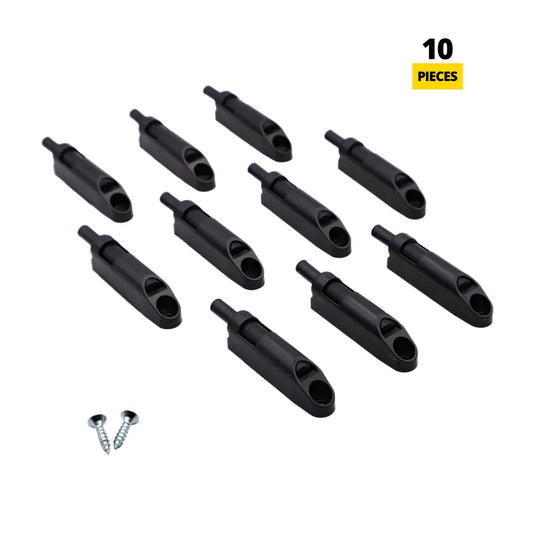
Soft-Close Cabinet Door Damper - Black (10-Pack)Regular price $17.97Unit price / perRegular priceSale price $17.97
-
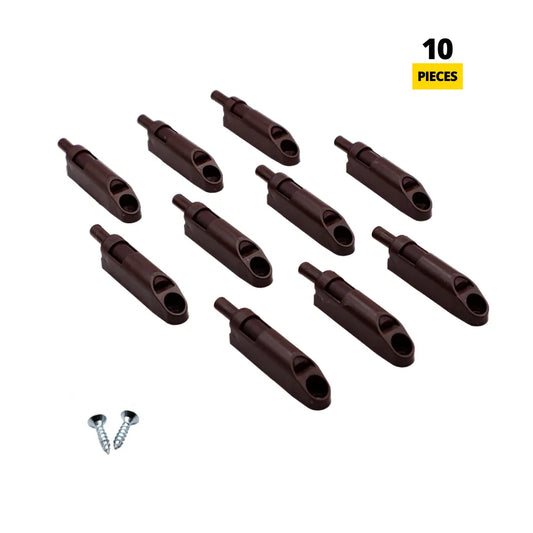
Soft-Close Cabinet Door Damper - Brown (10 Pack)Regular price $16.33Unit price / perRegular priceSale price $16.33
-
Soft-Close Cabinet Door Damper CalvadosRegular price $17.96Unit price / perRegular priceSale price $17.96
-
Soft-Close Cabinet Door Damper BeechRegular price $17.96Unit price / perRegular priceSale price $17.96
-
Soft-Close Cabinet Door Damper MapleRegular price $17.96Unit price / perRegular priceSale price $17.96
-
Soft-Close Cabinet Door Damper GreyRegular price $17.96Unit price / perRegular priceSale price $17.96
-
Push to Open Catch - with Rubber TipRegular price $1.14Unit price / perRegular priceSale price $1.14
-
Push to Open latch - Spring Hinges - with rubber tip Zinc/GreyRegular price $1.61Unit price / perRegular priceSale price $1.61
-
Push to Open latch - Springless Hinges - with magnetic tipRegular price $1.18Unit price / perRegular priceSale price $1.18
-
Soft-Close Cabinet Door Damper - White (Pack of 10)Regular price $17.97Unit price / perRegular priceSale price $17.97
-
Push to Open latch - Spring Hinges - with rubber tipRegular price $1.00Unit price / perRegular priceSale price $1.00








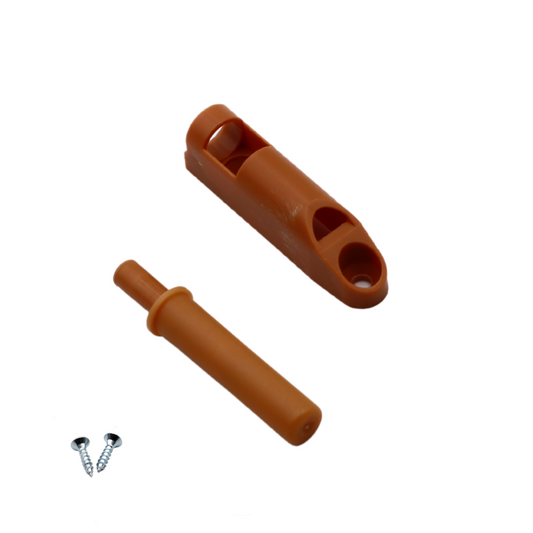

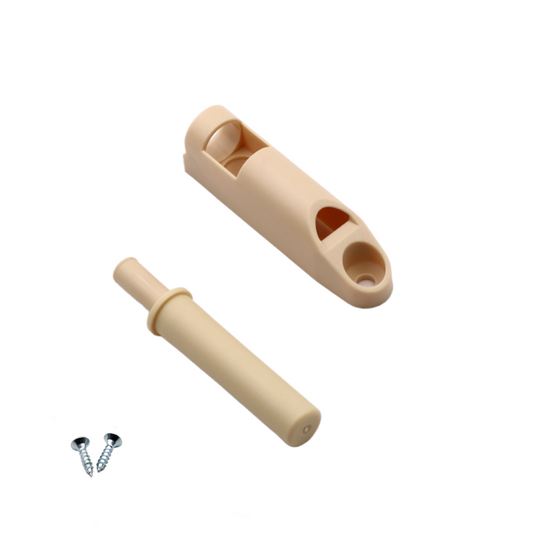

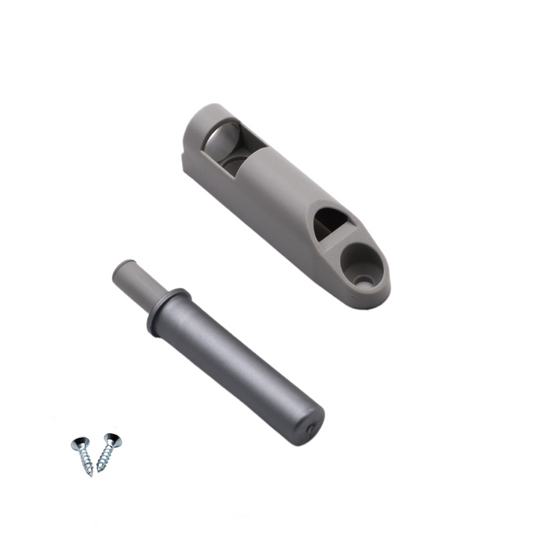

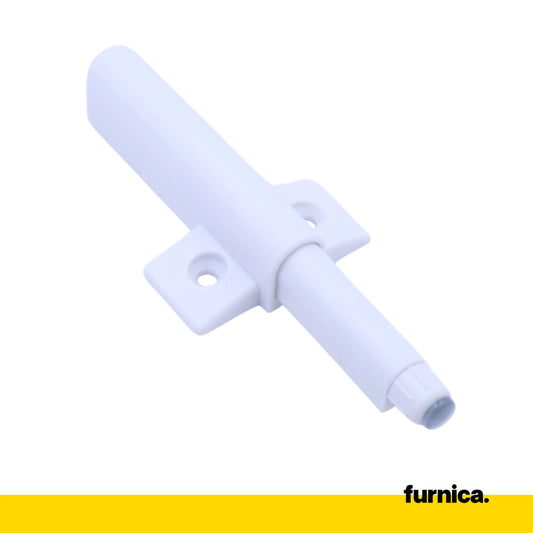

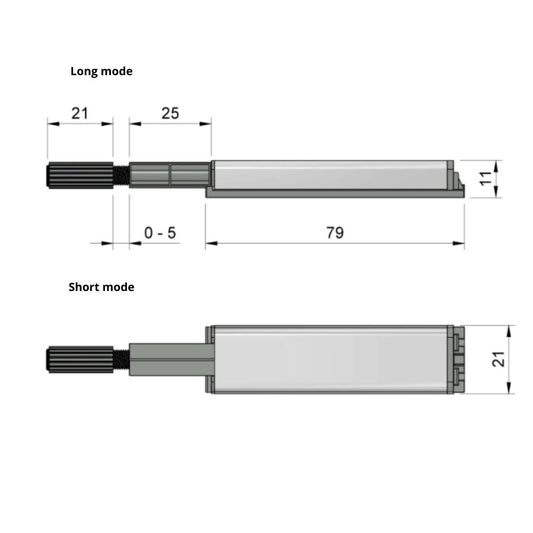

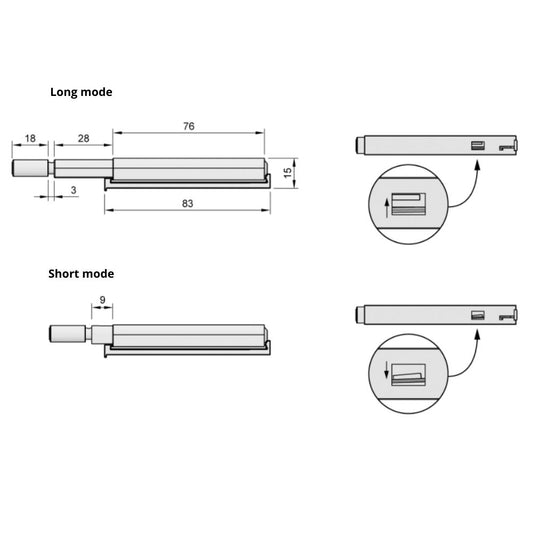

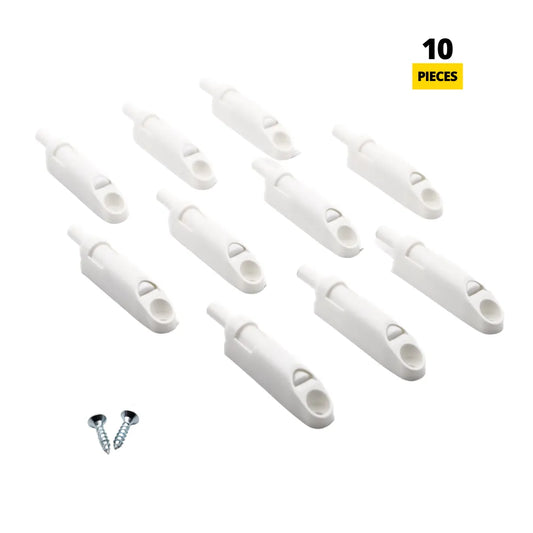

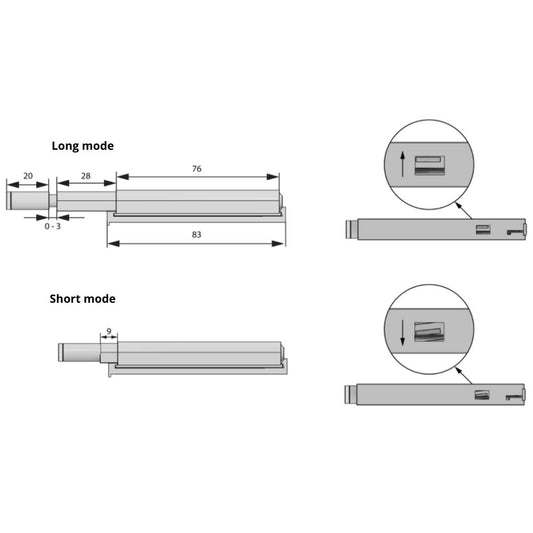
Door dampers are functional hardware components for furniture building that keep furniture fronts from slamming or, in handleless designs, serve as a mechanical release unit. When you install a modern cabinet door damper, the kinetic energy of the moving door is deliberately absorbed as it closes, which protects the material of the cabinet and the front over the long term. Precise damping also minimizes annoying closing noise throughout living, office and kitchen areas. Besides pure damping elements, this segment also includes mechanical opening systems and magnetic catches, each matched to specific hinge types and structural requirements.
Operating principles and component types at a glance
Choosing the right hardware depends on the desired motion and on the construction of the furniture front. Fundamentally, there are two opposing operating principles: controlled deceleration when closing and an active ejection impulse when opening.
Soft-Close dampers (closing damping)
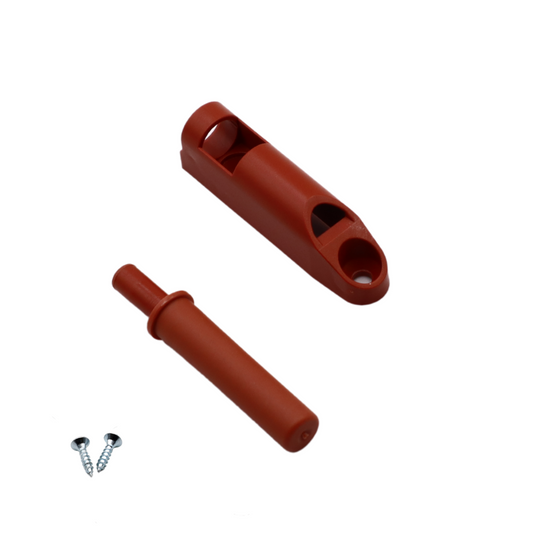
Classic cabinet door dampers work as a passive braking unit over the last millimeters of the closing travel. As soon as the closing spring in the cup hinge pulls the front shut, the door meets the damper's plunger. Inside, the motion is absorbed by a pneumatic, oil-free system or a liquid damping medium. This keeps the edges from striking the cabinet hard. The system works like a car's shock absorber, which cushions bumps gently and keeps the chassis from bottoming out. For quick, clean retrofitting of existing cabinets, the Soft-Close cabinet door damper + adapter (10 pcs) is well suited: with an overall length of 47 mm (1-7/8 inch) and a compact height of 13 mm (1/2 inch), it screws directly to the inside of the cabinet.
Push-to-Open systems (opening mechanism)
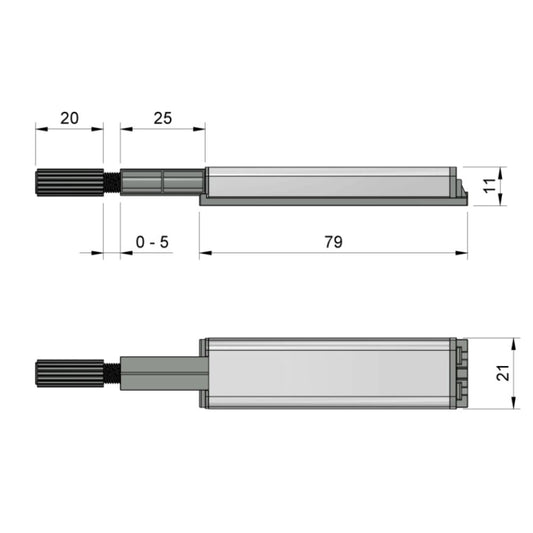
Modern handleless furniture concepts use special Push-to-Open latches. These mechanisms contain an internal, preloaded spring. A light press on the front releases the catch, and the spring-loaded plunger pushes the door open by a few centimeters (an inch or two) so it can be grasped comfortably by hand. When choosing, the hinge type is the deciding factor:
- Models with a magnetic tip: The Push-to-Open latch for springless hinges with magnetic tip in zinc/gray and the Push-to-Open latch for springless hinges with magnetic tip must be combined with springless hinges. The magnet holds the closed front against a strike plate.
- Models with a rubber tip: The Push-to-Open latch for spring hinges with rubber tip, and its zinc/gray variant, are designed for cup hinges with an integrated closing spring. The elastic tip keeps the latch from slipping on the inside of the door. Alternatively, the universal Push-to-Open catch with rubber tip is available.
Magnetic catches for simple door holding
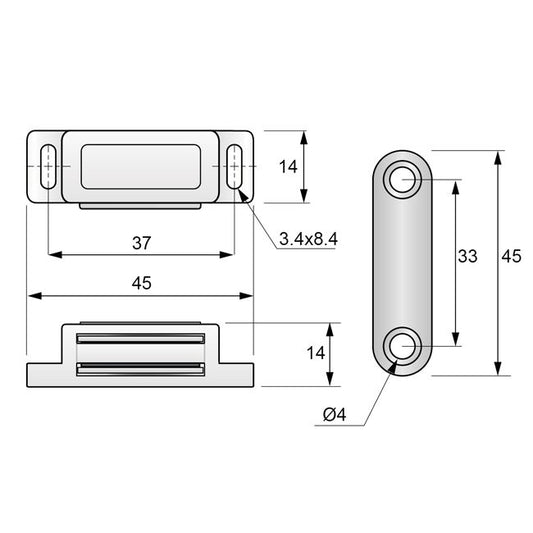
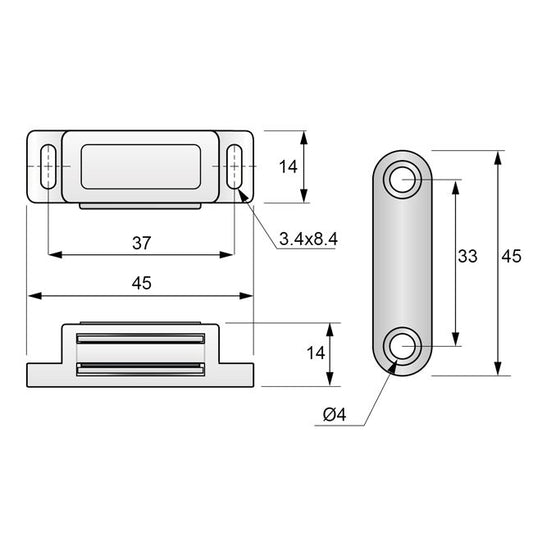
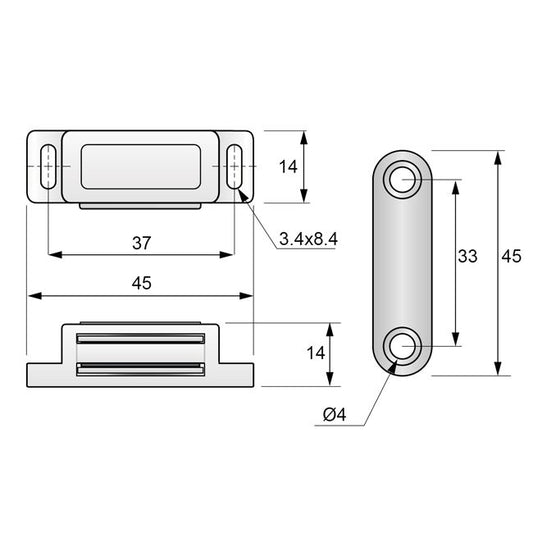
Classic magnetic catches have no spring force to push the door open. They hold lightweight doors or flaps shut statically and always need a handle to open. Typical examples are the magnetic catch with metal strike plate in white, in black and in brown. These parts are 45 mm (1-3/4 inch) wide and 14 mm (9/16 inch) high, with a precise hole spacing of 37 mm (1-7/16 inch), suited to common stop dimensions.
Selection criteria for cabinet door dampers
For furniture fronts to close silently and sit flush, the damping components must be matched precisely to the particular door construction.
Door weight and front dimensions
For standard furniture doors up to a height of approx. 900 mm (35-7/16 inch) and a material thickness of 16 mm or 19 mm (5/8 or 3/4 inch), a single damper is usually enough. For tall wardrobe doors or solid fronts over 1000 mm (39-3/8 inch) in height, two units should be installed. They are then placed in the upper and lower third of the cabinet to avoid warping or torsional stress in the door.
Compatibility with cup hinges
Damping systems must be technically compatible with the hinges. When classic cup hinges with a closing spring are used, external dampers effectively support the braking phase. If you already have cup hinges with damping installed, an additional surface-mount damper is unnecessary in most cases, because the damping is already built into the hinge arm. For handleless systems with magnetic holding, springless hinges must be chosen so that the hinge spring does not work against the holding force of the magnet.
Color matching to cabinet and decor
Visible surface-mount adapters can blend into the cabinet interior with a harmonious color match. Furnica offers damper housings in a wide range of colors:
- Light cabinets: Soft-Close Cabinet Door Damper - White (10 pcs)
- Dark and modern finishes: Soft-Close Cabinet Door Damper - Black (10 pcs) or Soft-Close Cabinet Door Damper - Gray (10 pcs)
- Wood-grain finishes: Soft-Close Cabinet Door Damper - Beech (10 pcs), Soft-Close Cabinet Door Damper - Maple (10 pcs), Soft-Close Cabinet Door Damper - Brown (10 pcs) and Soft-Close Cabinet Door Damper Calvados (10 pcs)
Installation instructions and technical dimensions
Proper installation ensures a long service life for the hardware and clean closing behavior.
Surface mounting with an adapter plate
Surface-mount dampers are the simplest way to retrofit. The mounting plate is fastened to the inside wall of the cabinet, typically on the strike side opposite the hinges, on the top or bottom panel. The adapter is fixed with suitable screws and the damper is then slid into the holder. At rest, the plunger must sit flush with the front edge of the cabinet or protrude approx. 1 mm to 2 mm so it catches the door at the right moment.
Drill-in mounting for a concealed fit
In high-end interior fit-outs, the damper body is often recessed directly into the edge of the cabinet. For this, a precise bore with a diameter of 10 mm (25/64 inch) is drilled. The recommended drilling depth is between 45 mm and 50 mm (1-3/4 and 1-15/16 inch), depending on the damper type. This solution is completely invisible from the outside and gives a particularly tidy look.
Gap dimensions for Push-to-Open
For Push-to-Open latches to work correctly, a front release gap of 2 mm to 3 mm (5/64 to 1/8 inch) must be kept between the door front and the cabinet box. This space is needed so the door can be pressed in slightly to release the plunger. Precise alignment of the cabinet using stable furniture connectors and adjustable furniture feet ensures that the fronts run parallel and the catches respond reliably.
Typical applications
Damping systems are used in almost every furniture category to improve operating comfort and protect materials.
Kitchen and wall cabinets
In the kitchen, cabinet doors are opened and closed very often. Effective door damping prevents shocks inside the cabinet, which protects the stored dishes. For narrow niches, systems such as the 20 cm (7-7/8 inch) kitchen cabinet pull-out can also be integrated. Flap hardware on wall cabinets, however, should not be mistaken for conventional door dampers; this calls for special lift systems or powerful gas struts, which actively hold the weight of the front up.
Living room and bedroom furniture
In the living room and bedroom, damped cabinet doors make for a quiet home environment. In addition to hinged doors, drawers are often fitted with modern undermount drawer slides or drawer slides with damping to achieve a uniform Soft-Close experience throughout the entire piece of furniture. If classic controls are preferred over Push-to-Open, high-quality furniture knobs or clean-lined matte black furniture handles are the fitting complement to gently closing dampers.
Troubleshooting and practical tips
If the damping or the push mechanism does not work as desired, the following checks will help:
- The cabinet door does not close completely: If the damper's resistance is too high or the hinge spring too weak, a small gap stays open. If two dampers are installed, reduce them to one damper, or readjust the hinge position.
- The door slams without braking: The surface-mount adapter sits too far inside the cabinet, so the plunger touches the front too late. Move the adapter plate forward by 1 mm to 2 mm.
- Push-to-Open does not trigger: The gap was set too small. Use the hinge mounting plates to set a front gap to the cabinet of at least 2 mm to 3 mm.
- The magnet does not hold the door closed: Cup hinges with a return spring were installed. The spring force overcomes the magnet. Replace the hinges with springless cup hinges or use rubber-tip catches.
Complementary hardware for your furniture project
For a complete, professional furniture installation, you will find a wide selection of compatible components at Furnica:
- Push-to-Open latches – Precise catches for handleless fronts in modern furniture design.
- Cup hinges – Robust cabinet hinges for overlay and inset doors.
- Cup hinges with damping – Hinges with a factory-integrated Soft-Close damper.
- Undermount drawer slides – High-quality drawer slides with a concealed runner and damped self-closing.
- Gas struts – Powerful lifting aids for flaps and wall cabinets.
- Furniture connectors – Sturdy corner and cabinet connectors for precisely fitting cabinets.
- Furniture locks – Reliable locking solutions for cabinets and drawers.
- Furniture knobs – Attractive handle options for fronts that are opened by hand.
- Furniture – A comprehensive range for DIY projects, cabinet building and renovations.
Frequently asked questions
How many door dampers are needed per furniture door?
A single cabinet door damper is enough for conventional furniture doors up to 900 mm (35-7/16 inch) high and 16 mm to 19 mm (5/8 to 3/4 inch) thick. For solid wood fronts, heavy MDF doors or front heights of 1000 mm (39-3/8 inch) and above, two dampers should be installed in the upper and lower third of the cabinet to keep the door from twisting.
Which hinges are needed for Push-to-Open with a magnetic tip?
Push-to-Open systems with a magnetic tip must be used with springless hinges that have no holding spring. An integrated hinge spring would work against the magnetic force and push the door open unintentionally. For hinges with a spring, Push-to-Open catches with a rubber tip are used instead.
What bore diameter is required for drill-in dampers?
For cylindrical drill-in dampers, a bore 10 mm (25/64 inch) in diameter is usually drilled into the edge of the cabinet. Depending on the damper model, the drilling depth is between 45 mm and 50 mm (1-3/4 and 1-15/16 inch), and using a drill bit with a depth stop is recommended.
Why does the furniture door not close completely after installing the damper?
This problem usually occurs when the damper resistance is too strong for the weight of the front or the damper was mounted too far forward. Check the mounting position of the adapter plate and, on lightweight doors, remove the second damper if necessary so the hinge spring can pull the front fully shut.
How large must the gap be for handleless Push-to-Open fronts?
A front gap of 2 mm to 3 mm (5/64 to 1/8 inch) must remain between the front edge of the cabinet and the furniture door. This travel is technically required so the cabinet door can be pressed in far enough to release the catch's mechanical trigger.