
3 Hook Coat Rack
Popular Subcategories
-
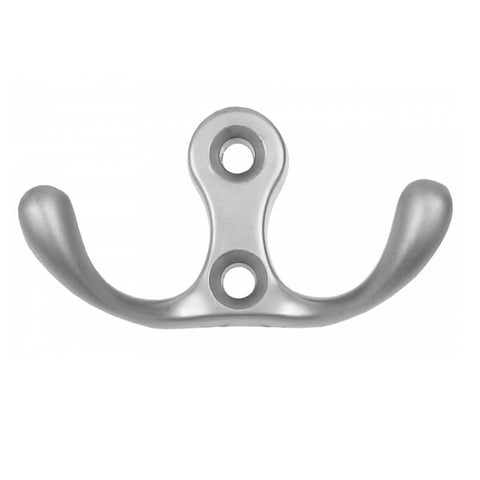
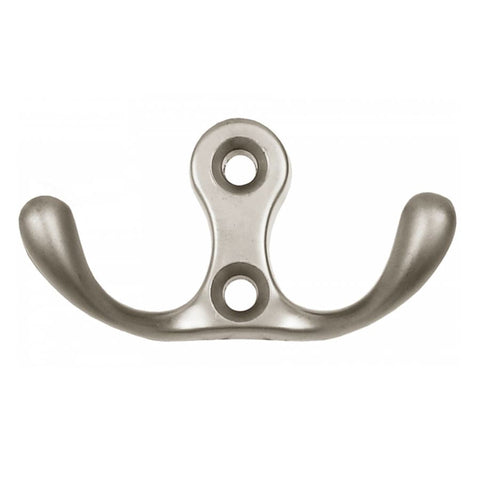
Modern Triple Wall Hook - SatinRegular price $10.50Unit price / perRegular priceSale price $10.50
-
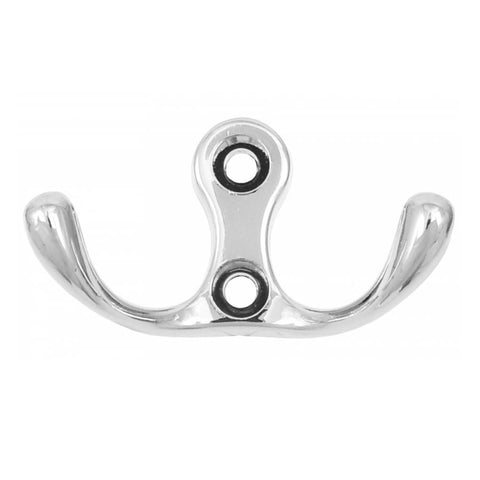
Modern Triple Robe & Coat Hook - Matte ChromeRegular price $10.50Unit price / perRegular priceSale price $10.50
-
Triple Modern 3 Hook Coat Rack - ChromeRegular price $10.50Unit price / perRegular priceSale price $10.50
-
Triple robe hook - Chrome WP05Regular price $2.30Unit price / perRegular priceSale price $2.30
-
Triple robe hook - Chrome WP03Regular price $2.60Unit price / perRegular priceSale price $2.60
-
Triple robe hook - Satin WP03Regular price $2.68Unit price / perRegular priceSale price $2.68
-
Triple robe hook - Aluminium WP03Regular price $2.68Unit price / perRegular priceSale price $2.68
-
Triple robe hook - Satin WP05Regular price $2.36Unit price / perRegular priceSale price $2.36
-
Triple robe hook - Aluminium WP05Regular price $2.36Unit price / perRegular priceSale price $2.36
-
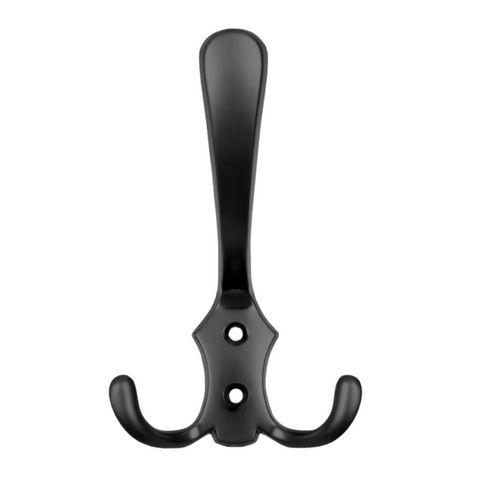
Triple robe hook - Black WP03Regular price $2.68Unit price / perRegular priceSale price $2.68

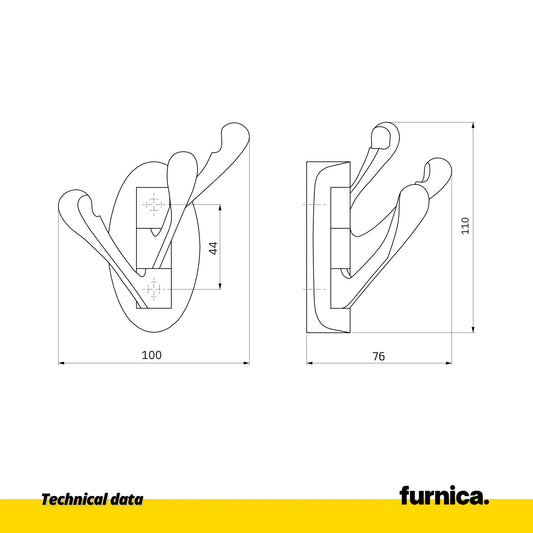

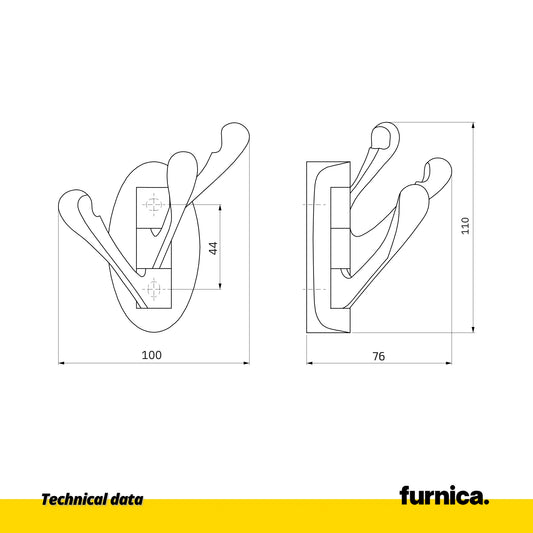

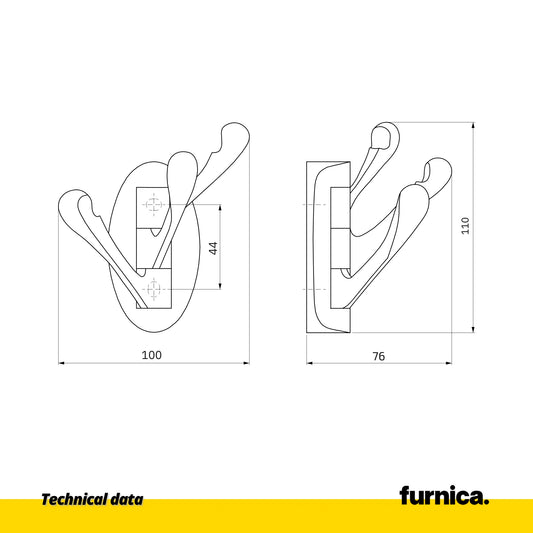

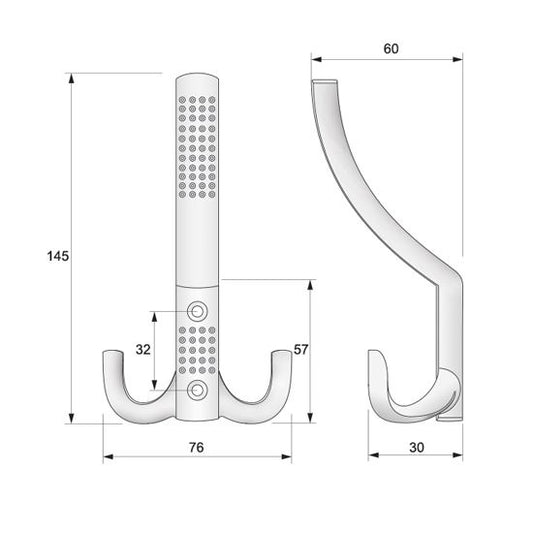

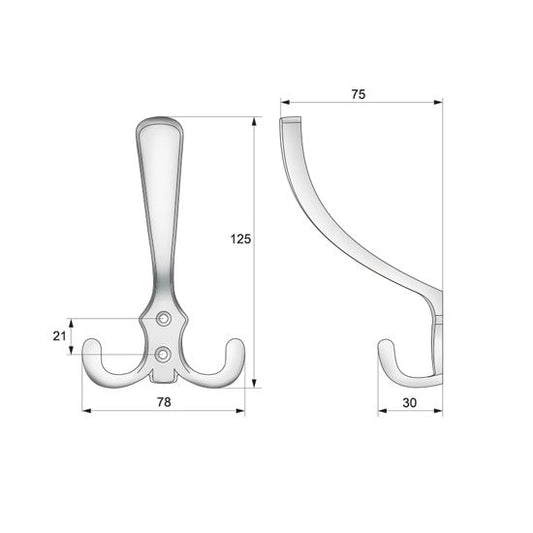

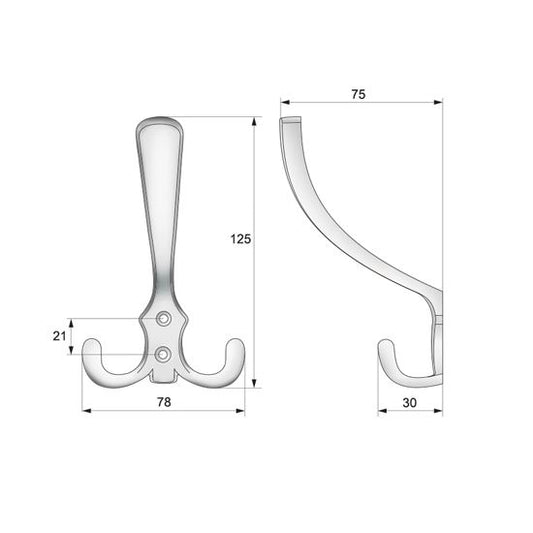

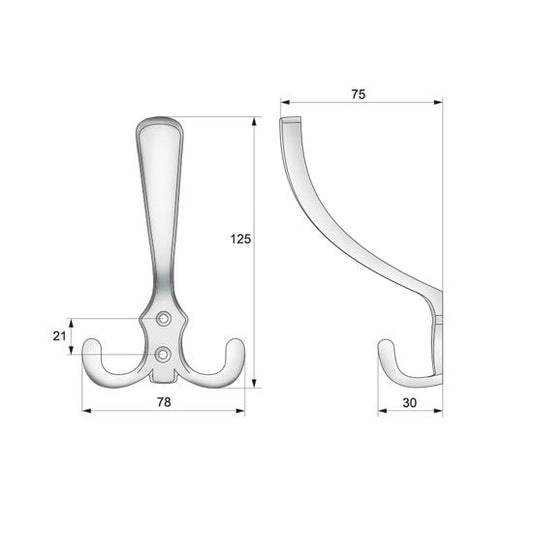

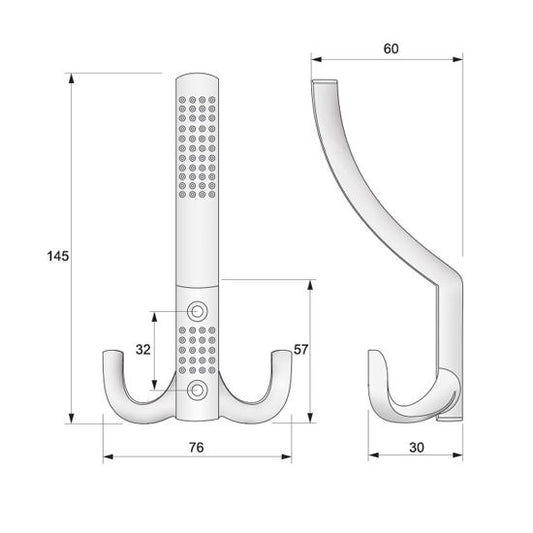

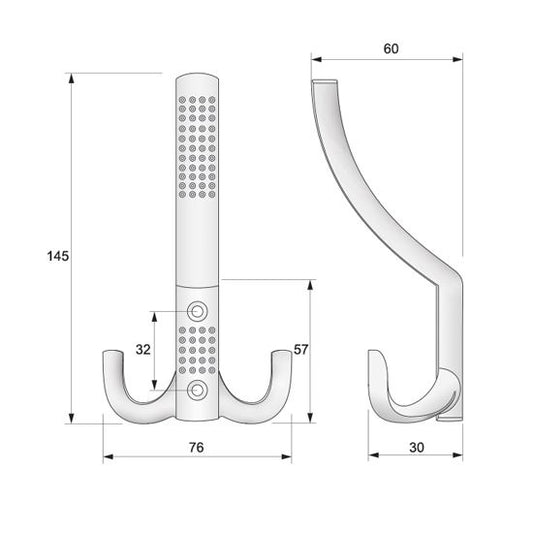

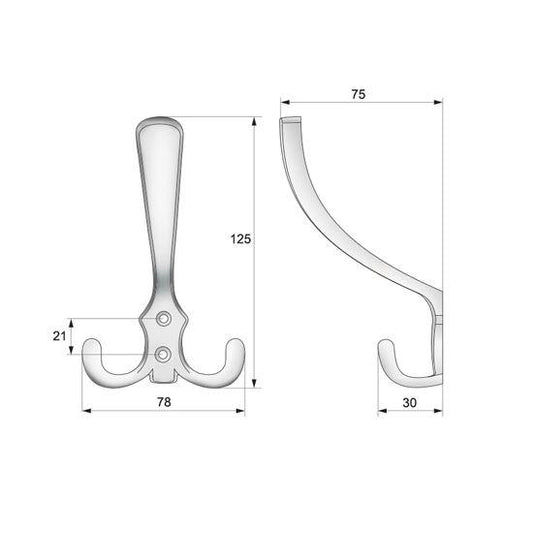
A 3 hook coat rack consists of multi-part mounting hardware featuring a central baseplate or support body that provides three separate hanging points for garments, bags, or gear.Generally, the geometry combines an extended upper hook (hat or coat hook) with two shorter hooks positioned laterally or below. This design maximizes hanging capacity within a minimal footprint and requires careful consideration of leverage forces and pull-out resistance during installation.
As a key element in coat rack design and commercial fit-outs, a3 hook coat rackprovides high functional density. For cabinetmakers, interior fitters, and professional installers, selection and installation depend not only on aesthetics, but primarily on material quality, load capacity of the mounting points, and compatibility with the respective substrate.
Construction and Structural Statics of Triple Hooks
The architecture of a3 hook coat rackis engineered to handle varying loads. Mounted to a wall, a triple hook acts like a structural load distributor in bridge construction: tensile and shear forces from heavy winter coats or wet towels are funneled through the main body and evenly transferred to the rear mounting points.
Because of its greater distance from the wall, the upper, usually longer hook creates a stronger leverage effect. Hanging a heavy garment here exerts primary tensile stress on the upper mounting screw, while the lower screw experiences primarily shear stress. The two lower or side hooks sit closer to the pivot point and accommodate lighter items like jackets, scarves, or bags.
Most models are manufactured fromdie-cast zinc (Zamak)or solid aluminum. These materials offer high torsional rigidity alongside a moderate tare weight. The load capacity of a properly installed 3 hook coat rack typically ranges between 22 lbs and 33 lbs (10 kg and 15 kg) total load, depending on wall conditions and screw dimensions.
Surface Finishes and Material Variants
The choice of finish impacts not only visual integration into the interior design concept, but also resistance to mechanical abrasion and corrosion. Different coating processes offer specific technical properties:
Powder-Coated Surfaces (Black)
A black powder coating is produced by electrostatically applying color powder, which is then cured at high temperatures. This surface is extremely scratch-resistant and immune to fingerprints. Models like theKleiderhaken - Black WP03are ideal for high-traffic areas or as a black wall-mounted3 hook coat rackin industrial-style interiors. The matte texture also masks fine dust buildup.
Anodized and Brushed Surfaces (Aluminum)
Aluminum hooks often feature an anodized surface. Anodic oxidation forms a hard, corrosion-resistant protective layer directly from the base material. These finishes are lightweight and resistant to moisture. Options include theKleiderhaken - Aluminum WP03with its classic geometry, or the more substantialKleiderhaken - Aluminum WP05.
Electroplated Surfaces (Chrome and Satin)
For a metallic finish, raw hook castings are electroplated in nickel baths and finished with chrome.
- Polished Chrome:Delivers an extremely hard, smooth, non-porous surface that is easy to clean. Moisture beads off, making these models ideal for humid rooms. Popular options include theKleiderhaken - Chrome WP03and theKleiderhaken - Chrome WP05.
- Satin / Matte Nickel:The surface is brushed or dulled prior to final plating. The result is a velvety feel that is less prone to visible scratches. TheKleiderhaken - Satin WP03andKleiderhaken - Satin WP05feature this glare-free, technical look.
Installation and Fastening Technology
The long-term stability of a wall-mounted3 hook coat rackdepends primarily on selecting the correct fasteners for the substrate. Because a triple hook invites heavy loads across its three hanging points, undersized screws must be avoided.
Mounting on Engineered Wood (MDF, Particle Board, Solid Wood)
When attaching to coat panels made ofparticle boardorMDF, surface mounting is usually direct.
- Panel Thickness 5/8 in to 3/4 in (16 mm to 19 mm):Use wood orparticle board screws(countersunk or oval head, depending on hook countersink design) measuring #6 x 5/8 in (3.5 x 15 mm) or #8 x 11/16 in (4.0 x 17 mm).
- Pre-drilling:For melamine-faced panels, pre-drill slightly using a 5/64 in (2 mm) wood bit to prevent tear-out of the decorative laminate. In solid wood (e.g., oak), pre-drilling is mandatory to prevent wood splitting.
Mounting on Solid Walls (Concrete, Masonry)
Direct wall mounting of a3 hook coat rackinto concrete or solid brick requires standard expansion anchors.
- Anchors:A 1/4 in (6 mm) nylon wall anchor is standard.
- Screws:Matching wood screws sized #8 x 1-1/2 in (4.0 x 40 mm) or #10 x 1-3/4 in (4.5 x 45 mm) ensure sufficient anchoring depth. The screw must pass through the end of the anchor to fully expand it.
Mounting on Hollow Walls (Drywall)
Installing heavy-duty hooks on drywall poses structural challenges. Standard plastic expansion anchors will not hold under load.
- Use specializedhollow-wall anchors(toggle bolts, hollow-metal anchors, or snap toggles).
- On single-layer 1/2 in (12.5 mm) drywall, load capacity per anchor point is strictly limited. Installing a continuous backing board (wood panel) secured directly to the wall studs (metal or wood framing) is recommended. The3 hook coat rackis then mounted onto this panel.
Ergonomics and Recommended Spacing
To ensure convenient daily use and clean visual alignment, follow standard installation dimensions when positioning a3 hook coat rack.
- Mounting Height (Adults):The top edge of the upper hook should sit at a height of 63 in - 69 in (1600 mm - 1750 mm) above finished floor level.
- Mounting Height (Children):In daycare centers or family homes, a secondary row positioned at 39 in - 47 in (1000 mm - 1200 mm) is recommended.
- Center-to-Center Spacing:To hang bulky winter coats side by side without crowding, horizontal spacing between hook centers should be at least 6 in (150 mm). For lighter jackets or towels, spacing can be reduced to 4-3/4 in (120 mm). A spacing of 8 in (200 mm) provides maximum clearance and prevents garments from tangling.
Comparison with Other Hook Systems
While a single hook typically serves one garment, a triple hook functions as a compact storage station. If vertical clearance is restricted or the bold profile of a triple hook is not desired, double-hook systems offer a practical alternative.
Designs likedouble coat hooksgenerally eliminate the long upper hat hook, concentrating on two symmetrically arranged shorter arms. Choosing between a double and a3 hook coat rackusually comes down to available vertical wall space. Triple hooks demand more vertical clearance, but offer 50% more storage capacity within the same horizontal footprint.
Maintenance and Care
The mechanical parts of a fixed coat hook are maintenance-free. Care is limited to preserving the surface finish.
- Chrome and Aluminum:Clean with a soft, damp cloth. Avoid abrasive cleaners or solvent-based chemicals, as these can strip anodized or electroplated layers.
- Powder-Coated (Black/Matte):Light dirt can be removed with a mild soap solution. Microfiber cloths work best for dusting between the three hook arms.
- Fasteners:On hooks installed in high-traffic settings (such as restaurants, offices, or locker rooms), inspect mounting screws after the first heating season (for wood panels) or following heavy use, retightening them if necessary.
Frequently Asked Questions (FAQ)
How much weight can a 3 hook coat rack support?
Load capacity depends heavily on the wall material and fasteners used. The cast zinc or aluminum hook itself easily withstands a static load of 33 lbs to 44 lbs (15 kg to 20 kg). The weak point is always the pull-out resistance of the screw in the wall or panel. When properly mounted into concrete or solid wood, hanging multiple heavy, wet coats presents no structural issue.
What screw drive type should I use for installation?
For a clean look, flat-head countersunk screws that sit flush with the baseplate holes are standard. ATorx drive (TX)provides superior torque transfer and prevents bit slippage (cam-out), protecting the hook's finish during driving. Alternatively,Pozidriv (PZ)screws are a common standard in cabinetmaking.
Can I install a 3 hook coat rack in humid areas like bathrooms?
Yes, models made of anodized aluminum or high-grade chrome plating are corrosion-resistant and well-suited for bathrooms. Ensure that the mounting screws are also rustproof (e.g., A2 stainless steel) to prevent unsightly rust stains on tiles or panels.
How do I align multiple coat hooks in a straight horizontal line?
When installing multiple units side by side, use a cross-line laser or a long spirit level. Mark a continuous horizontal reference line (e.g., using painter's tape) for the top mounting holes. Drill all top holes first, mount the hooks loosely, align them vertically using a plumb line, and then mark the lower drill holes directly through the baseplate openings.
Are the mounting screws visible after installation?
That depends on the hook design. Many functional models feature surface-mounted screws in matching colors (e.g., black screws for black hooks). Other models utilize concealed mounting: a small mounting bracket is screwed to the wall first, and the coat hook is slid over the bracket and secured invisibly from below with aset screw(grub screw).
How much clearance should be left from an adjacent side wall?
To allow comfortable access to the outer hook arm, maintain a minimum distance of 4 in to 6 in (100 mm to 150 mm) from the center of the hook to any adjacent side wall or cabinet body.