
Steel Furniture Legs
Popular Subcategories


-
Square Furniture Leg 1x1 inch - H 3-15/16 inch ChromeRegular price $2.93Unit price / perRegular priceSale price $2.93
-
Furniture Leg 5-7/8 inch - ChromeRegular price $3.32Unit price / perRegular priceSale price $3.32
-
Furniture Leg 5-7/8 inch - SatinRegular price $3.90Unit price / perRegular priceSale price $3.90
-
Furniture Leg 3-15/16 inch - SatinRegular price $3.14Unit price / perRegular priceSale price $3.14
-
Conical Furniture Leg H 3-15/16 inch - SatinRegular price $3.71Unit price / perRegular priceSale price $3.71
-
Square Furniture Leg 1x1 inch - H 3-15/16 inch SatinRegular price $2.94Unit price / perRegular priceSale price $2.94
-
Square Furniture Leg 1x1 inch - H 5-7/8 inch SatinRegular price $3.31Unit price / perRegular priceSale price $3.31
-
Conical Furniture Leg H 3-15/16 inch - ChromeRegular price $3.29Unit price / perRegular priceSale price $3.29
-
Furniture Leg 3-15/16 inch - ChromeRegular price $2.81Unit price / perRegular priceSale price $2.81
-
Square Furniture Leg 1x1 inch - H 5-7/8 inch ChromeRegular price $3.31Unit price / perRegular priceSale price $3.31

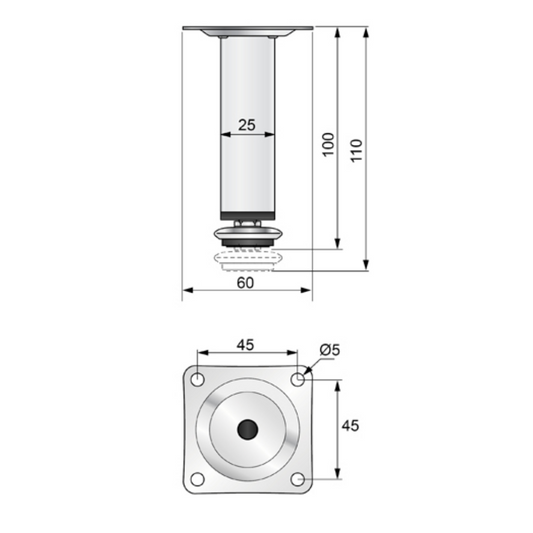

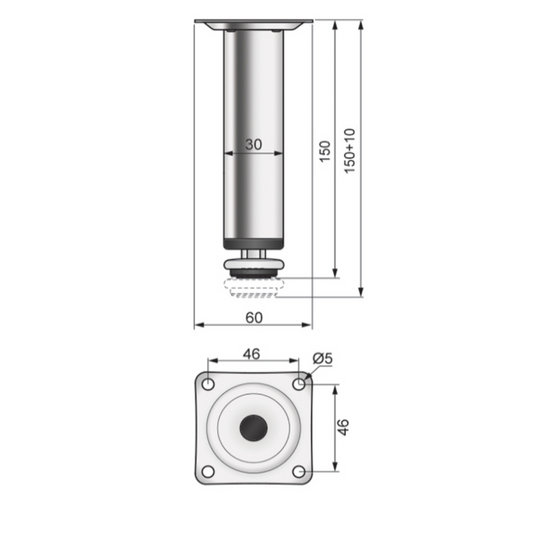

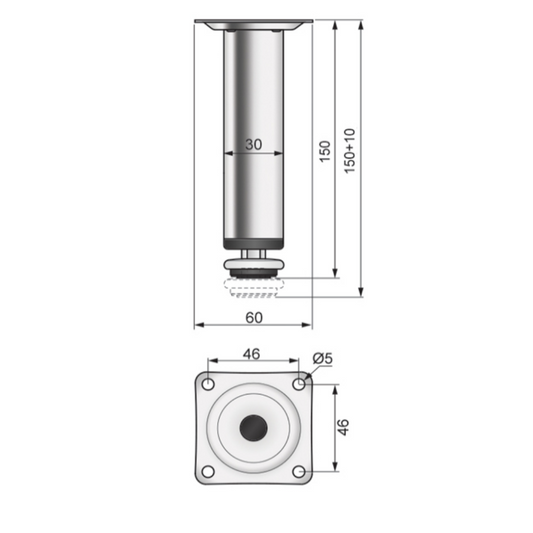

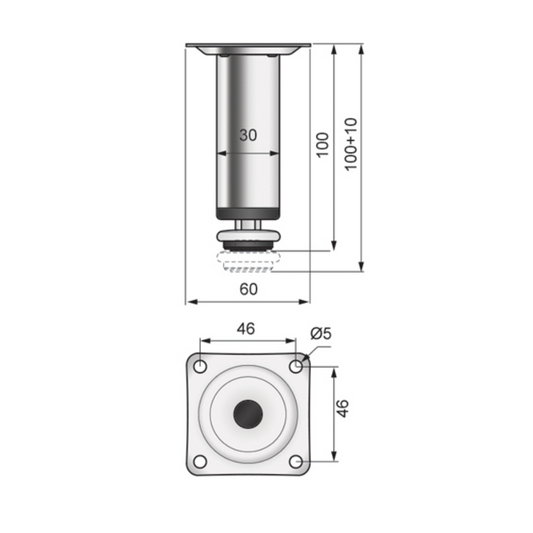

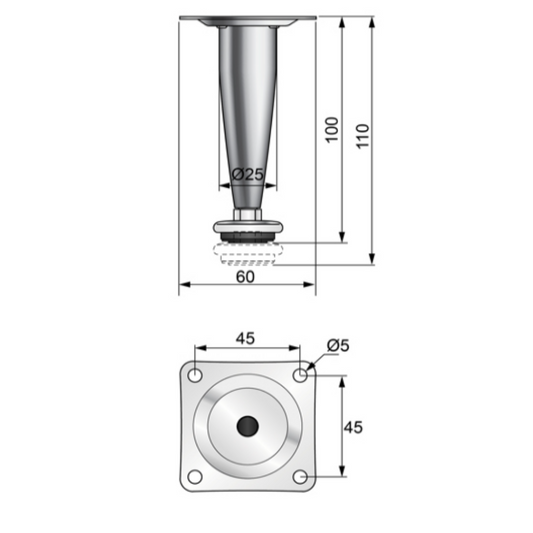

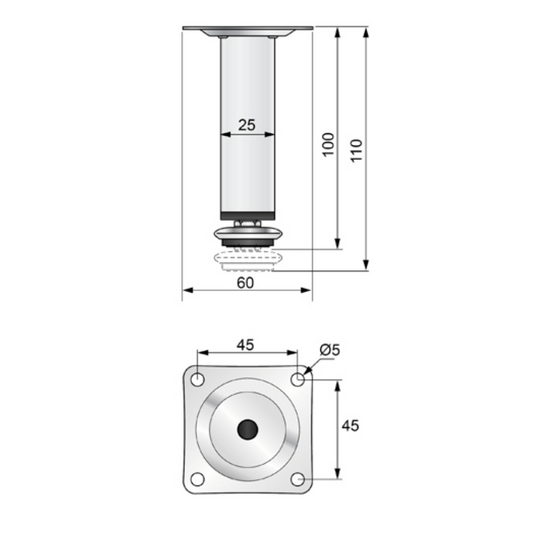

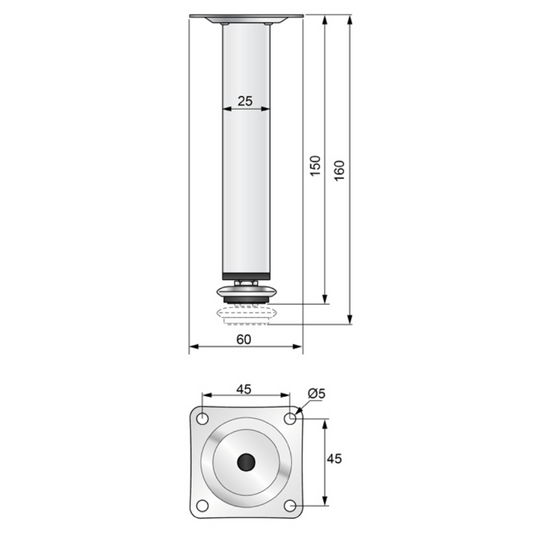

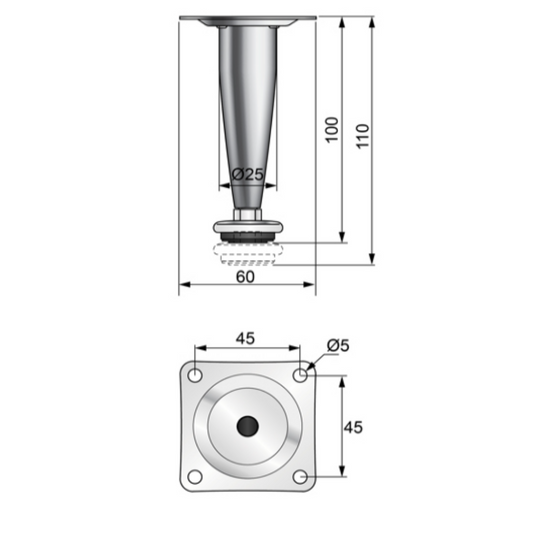


Steel furniture legsare heavy-duty structural elements for cabinet making and furniture manufacturing, engineered primarily from tubular steel or aluminum alloys. They elevate dressers, cabinets, or bed frames to a defined working height while precisely compensating for uneven floors.
Technical Specifications and Structural Features
In professional cabinet making and demanding DIY projects, selecting the right sub-structure is critical to the static stability of the entire piece. Compared to plastic or wooden options, metal legs offer significantly higher torsional rigidity and load capacity. The core typically consists of a hollow profile (square or round) with a standard wall thickness of 3/64 in to 1/16 in (1.2 mm to 1.5 mm). This material thickness ensures that the leg will not buckle under vertical loads.
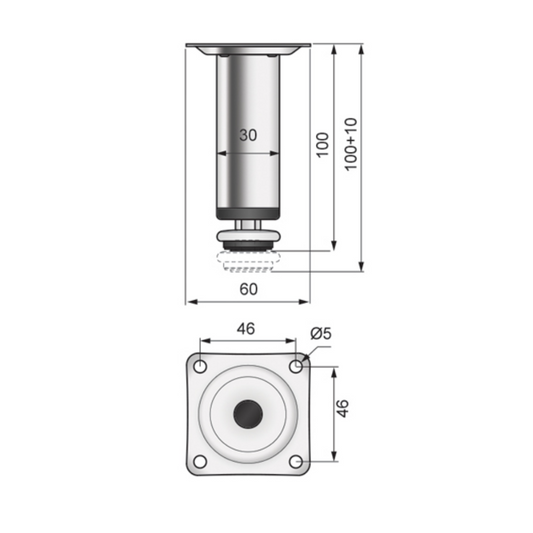
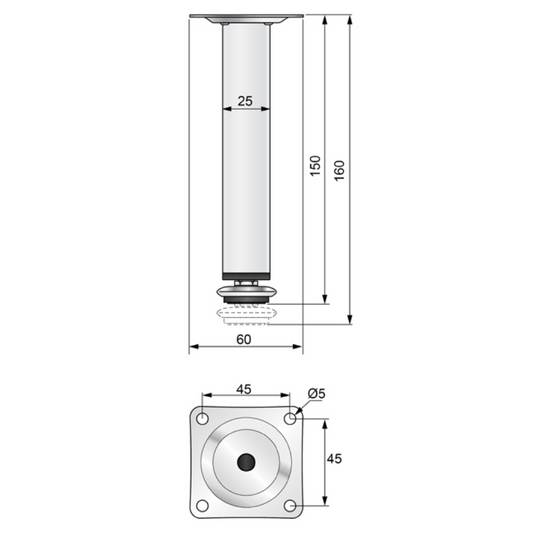
Load transfer from the cabinet body to the leg occurs via a securely welded mounting plate at the top. This plate—frequently measuring 2-3/8 x 2-3/8 in (60 x 60 mm)—features pre-drilled countersunk holes that enable flush screwing to the cabinet base. Depending on the design, the static load capacity of an individual leg ranges from 88 lbs to 110 lbs (40 kg to 50 kg). For a standard cabinet with four legs, this yields a theoretical total load rating of up to 440 lbs (200 kg)—minus the net weight of the furniture piece itself.
Surface Finishes: Chrome and Satin
The surface finish influences not only aesthetics, but also corrosion resistance and maintenance requirements.
- Chrome:An electroplated chrome surface delivers a high-gloss, reflective appearance. The hard chrome layer effectively shields the underlying steel from oxidation.Chrome Furniture Legsare particularly suited for humid areas like bathrooms, as the non-porous finish repels moisture.
- Satin (Brushed / Matte):For the satin finish, the metal surface is mechanically brushed and sealed.Satin Furniture Legsare less susceptible to fingerprints and micro-scratches, making them ideal for high-traffic living spaces.
- Black (Powder-Coated):Industrial designs frequently useBlack Furniture Legs. Cured at high temperatures, the powder coating forms an extremely impact-resistant, matte protective layer.
Height Adjustment: Adjustable Steel Furniture Legs
A rigid leg on an uneven floor acts like a car with three wheels—the structure will wobble, and the alignment gaps on cabinet doors will warp. To prevent this, many models feature integrated height adjustment functionality.
Adjustablesteel furniture legsare equipped with a threaded insert at the bottom, typically made of high-strength plastic or featuring an M8 metal thread. The floor glider can be smoothly adjusted by turning it outward. The typical adjustment range—also known as level regulation—is +9/16 in (+15 mm).
These adjustable metal legs are essential when aligning multiple cabinet bodies perfectly level alongside one another. The integrated plastic glider also protects delicate hard flooring (laminate, hardwood, tile) from scratches caused by the metal profile. When pure adjustable cabinet levelers are installed behind a toe kick or plinth trim, functionality takes top priority while aesthetics remain secondary.
Geometries and Installed Heights
The profile geometry of the legs must complement both load distribution and overall furniture design.
- Square Profiles:Provide a large contact area and a solid, substantial look. A common size is 1 x 1 in (25 x 25 mm). This shape is frequently found inSquare Furniture LegsandSquare Metal Furniture Legs.
- Cylindrical and Tapered Profiles:Round or downward-tapering (conical) legs create a lighter visual profile.
Selecting the correct installed height (nominal size without the foot extended) determines overall ergonomics and under-cabinet clearance:
- 4 in (100 mm / 10 cm):Standard dimension for heavy bases, deep cabinets, and sofas. Ensures sufficient air circulation underneath the furniture. See4 Inch Furniture Legs.
- 4-3/4 in (120 mm):An intermediate height frequently selected to allow robot vacuums to clean beneath furniture without obstruction (most robotic vacuums require approx. 4 to 4-5/16 in (100 mm to 110 mm) clearance).
- 6 in (150 mm / 15 cm):Popular for lightweight dressers, floating bathroom vanities, or nightstands, creating an elevated floating look. See6 Inch Furniture Legs.
Practical Applications in Furniture Making
Applications forsteel furniture legsspan across all areas of modern cabinetry. Project specifications guide the right selection:
Metal Bed Legs
Bed construction involves high dynamic loads. Metal bed legs must support not only the weight of the frame, slat roll, and mattress, but also absorb dynamic movement. Models featuring a wide mounting plate are recommended to minimize leverage forces on the bed frame (typically particle board or solid wood). For double beds 63 in (160 cm) or wider, installing a center support leg along the center rail is essential to prevent sagging.
Dressers and Sideboards
When specifying legs for dressers or sideboards, balancing load capacity with design aesthetics is essential. Sideboards often exceed 47-1/4 in (120 cm) in width. Beyond this width, a 4-point support layout is often insufficient, as the bottom panel may bow under the weight of books or tableware. Installing five or six legs is recommended (four at the corners, one or two centered).
Shelving and Heavy Cabinets
For metal storage cabinets or heavy shelving systems, specialized shelf legs are required to ensure precise point-load transfer into the subfloor. Adjustable levelers are mandatory here, as an uneven stance on a fully loaded unit poses a severe tipping hazard.
Installation Guide for Professionals and DIYers
Proper mounting of your metal furniture feet is crucial for long-term stability.
- Positioning:Legs should not sit completely flush with the outer edge of the cabinet base. Setting them back 5/8 in to 1 in (15 mm to 25 mm) prevents stubbed toes and masks minor alignment irregularities.
- Fasteners:Use only countersunk wood/particle board screws so that the screw head sits completely flush within the mounting plate countersink. A protruding screw head can impair structural seating.
- Screw Size:For a standard cabinet base made of 3/4 in (18 mm) particle board, screws sized #8 x 5/8 in (4 x 16 mm) or 3.5 x 15 mm are ideal. Drive types should ideally bePZ (Pozidriv)orTX (Torx)to ensure optimal torque transfer without driver bit slippage.
- Pre-Drilling:When working with hard materials (MDF, solid wood) or driving close to edges, pre-drill with a 1/8 in (3 mm) wood drill bit to prevent material splitting.
- Leveling:After attaching the legs, move the furniture piece to its final location. Perform fine-tuning on the adjustable legs using a spirit level while in place.
Selected Products for Your Projects
To match specific hardware specs, our catalog offers various configurations:
- For heavy, geometric designs:Square Furniture Legs 1x1 in (25x25mm) - 6 in (150mm) Chromeor the shorter versionSquare Furniture Legs 1x1 in (25x25mm) - 4 in (100mm) Chrome.
- For a subtle, matte finish in the same profile:Square Furniture Legs 1x1 in (25x25mm) - 4-3/4 in (120mm) Satinas well asSquare Furniture Legs 1x1 in (25x25mm) - 4 in (100mm) SatinandSquare Furniture Legs 1x1 in (25x25mm) - 6 in (150mm) Satin.
- For streamlined furniture requiring level adjustments:Adjustable Tapered Furniture Legs 4 in (100mm) - ChromeorAdjustable Tapered Furniture Legs 4 in (100mm) - Satin.
- Classic round tubular legs for maximum versatility:Adjustable Furniture Legs 4 in (100mm) - Chrome,Adjustable Furniture Legs 6 in (150mm) - Chrome,Adjustable Furniture Legs 4 in (100mm) - Satin, andAdjustable Furniture Legs 6 in (150mm) - Satin.
- Another square intermediate dimension in polished finish:Square Furniture Legs 1x1 in (25x25mm) - 4-3/4 in (120mm) Chrome.
FAQ – Frequently Asked Questions About Steel Furniture Legs
How do I calculate the required load capacity for metal furniture legs?
Add the empty weight of the furniture body to the maximum anticipated weight of its contents. Divide this total by the number of load-bearing legs. For example, a solid sideboard weighing 132 lbs (60 kg) packed with 88 lbs (40 kg) of tableware equals 220 lbs (100 kg) total. Using four legs, each leg must support a continuous static load of at least 55 lbs (25 kg).
Can adjustable furniture legs be re-adjusted after placement?
Yes, the leveling mechanism is specifically designed for that purpose. The base pad sitting against the floor is attached to a threaded rod. By turning the pad (by hand or using an open-end wrench), you can extend the foot by up to +9/16 in (+15 mm) to compensate for floor unevenness. Lift the furniture slightly during adjustment to relieve tension on the threads.
What screws are required for installation?
For standard particle board (3/4 in / 18 mm or 19 mm thickness), countersunk wood screws measuring #8 x 5/8 in (4 x 15 mm or 4 x 16 mm) are recommended. The countersunk head ensures the screw seats flush into the leg’s mounting plate. Avoid over-tightening to prevent stripping the pilot hole in particle board.
Will steel furniture legs scratch sensitive floors like hardwood?
No, provided they are properly equipped. Virtually all models feature an integrated plastic floor glider on the base, preventing direct contact between sharp metal tubing and your floor. For delicate surfaces, self-adhesive felt pads can be applied under the plastic glide base for added protection.
Related Categories and Complementary Hardware
For projects demanding alternative materials, unique mounting heights, or specialized fittings, explore our additional category line-ups. Browse our primary overview of base support solutions underFurniture Legs. For lighter-duty builds or hidden base plinth applications, considerPlastic Furniture Legs.
If you are building or restoring desks and tables rather than cabinetry, leverage forces require significantly heavier support systems found underMetal Table Legs. For functional desk organization, explore ourMetal Cable Grommets, and complete your hardware layout with matchingMetal Cabinet Handles.
Frequently Asked Questions
How much weight can these steel furniture legs support?
Load capacity varies by model but generally ranges between 110 lbs and 330 lbs (50 kg to 150 kg) per leg. For heavy cabinets, we recommend our heavy-duty steel options. Ensure secure attachment to the cabinet base plate using at least four appropriate wood screws (#8 x 5/8 in / 4x16 mm) to guarantee maximum stability.
Are these steel legs height-adjustable to level out uneven floors?
Yes, many of our steel furniture legs feature an integrated plastic foot glider with a threaded leveling stem. They allow smooth, continuous adjustment up to +9/16 in (+15 mm) to compensate for floor irregularities. This protects delicate floors from scratches and keeps dressers or kitchen cabinets completely wobble-free.
Can I use these metal legs on existing IKEA cabinets?
Yes, our furniture legs work great with IKEA furniture like Kallax or Pax series, provided the cabinet bottom has a flat mounting surface. They serve as a durable, heavy-duty upgrade to stock factory legs. For mounting, simply position the integrated attachment plate (typically 2-3/8 x 2-3/8 in / 60x60 mm) and screw it directly into the wooden frame.
How are the metal furniture legs mounted to a cabinet?
Installation is completed via a square or round mounting plate located at the top of the leg. This plate screws directly into the furniture base using standard particle board screws. Pre-drilling with a 5/64 in (2 mm) wood drill bit is recommended to prevent material tear-out. Mounting hole patterns vary by leg style.
Are metal furniture legs suitable for bathroom vanity units?
Yes, for bathrooms we recommend our anodized aluminum or stainless steel furniture legs due to their excellent corrosion resistance. These models serve as ideal replacements for standard vanity cabinets. In high-humidity environments, avoid un-coated steel legs to effectively prevent rust formation around floor contact points over time.