
Plastic Furniture Feet
Popular Subcategories


-
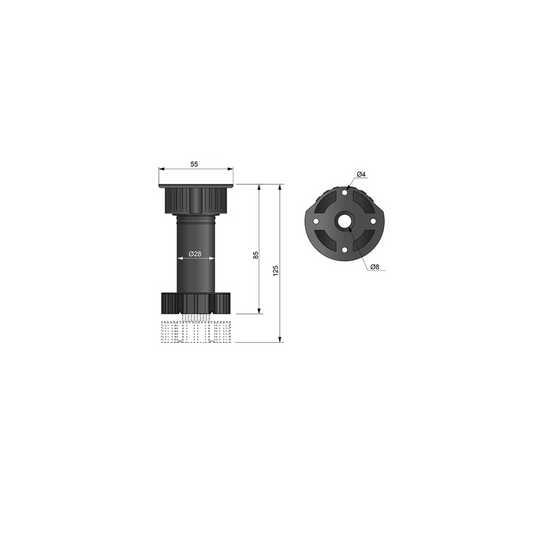
Kitchen Cabinet Leg 3-15/16 inch - BlackRegular price $1.13Unit price / perRegular priceSale price $1.13
-
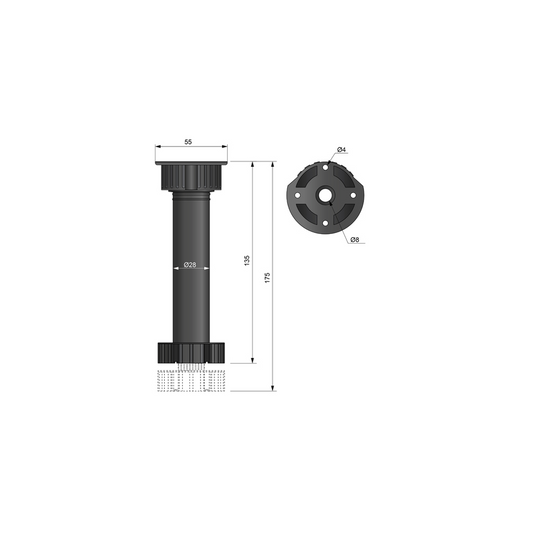
Kitchen Cabinet Leg 5-7/8 inch - BlackRegular price $1.22Unit price / perRegular priceSale price $1.22
-
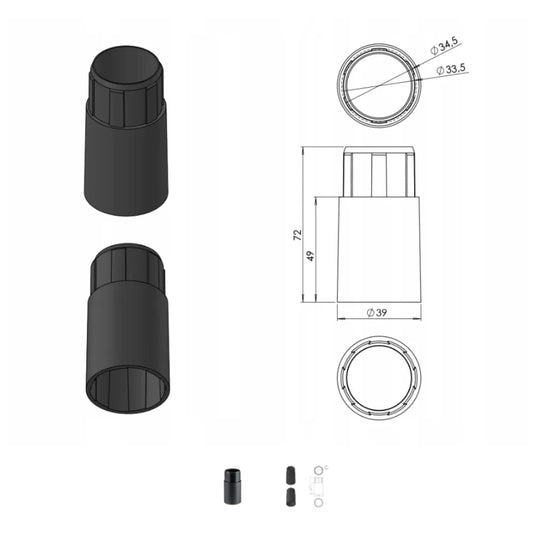
Extension for Kitchen Cabinet Legs - BlackRegular price $1.05Unit price / perRegular priceSale price $1.05
-
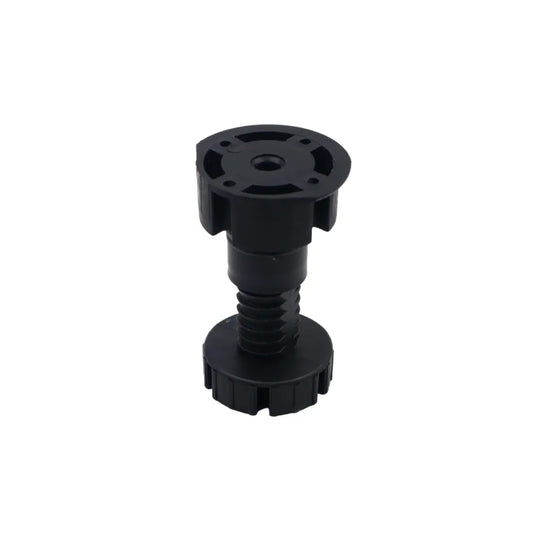
Adjustable Plastic Furniture Feet 2-3/8 inch (60 mm) - BlackRegular price $0.24Unit price / perRegular priceSale price $0.24




Plastic furniture feetare load-bearing, usually height-adjustable components made of durable polymer that serve as a stable foundation for cabinets, dressers, kitchen bases, and upholstered furniture. They isolate the cabinet body from the floor, protect solid wood and engineered wood products from rising moisture, and feature integrated screw threads that allow for precise leveling on uneven floors.
For ambitious DIYers and professional cabinetmakers, plastic furniture feet offer a functional and technically reliable solution. Unlike purely decorative legs, these hardware components focus on structure, load capacity, and adaptability. When assembling a massive wardrobe made ofparticle boardor a heavy kitchen base cabinet, perfectly level alignment is essential so that hinges close without gaps and drawers don't roll open on their own. This is precisely where these levelling legs come into play.
Technical Material Properties
The use of polymers in furniture construction is backed by solid technical advantages. Plastic feet for furniture are typically manufactured from high-density polymers such as ABS (acrylonitrile butadiene styrene) or polypropylene. These materials offer specific structural benefits:
- Moisture Resistance:Unlike solid wood or untreated steel, plastic does not absorb water and will not rust. Whether exposed to mop water on the floor or high humidity in damp rooms like bathrooms, plastic furniture feet form an impenetrable barrier between wet flooring and the vulnerable edges of a cabinet'sMDF board.
- High Static Load Capacity:Modern plastic adjustable feet are engineered to distribute vertical loads efficiently. A set of four feet can easily support the weight of a fully loaded kitchen cabinet, including a heavy stone countertop.
- Floor Protection:Compared to metal alternatives, the softer plastic material prevents scratches on sensitive flooring such as laminate, hardwood, or vinyl. On hard tile floors, they also help damp light vibrations.
- Lightweight Design:During handling and assembly of large furniture pieces, the minimal weight of plastic feet makes it much easier to lift and upright flat-assembled cabinet frames.
Typical Applications and Spatial Solutions
Depending on their design and project requirements, plastic furniture feet serve various purposes throughout the home.
Kitchen Assembly (Concealed Plinth Feet)
The classic application for height-adjustable plastic furniture feet is in kitchen installation. Here, the feet are screwed under the base cabinets. They remain hidden from view later behind a clip-on toe kick / plinth panel. Height adjustability is essential in this scenario: adjustable feet act like off-road suspension—they precisely compensate for floor irregularities in older buildings, ensuring heavy kitchen cabinets stand perfectly plumb and continuous countertops sit without structural strain.
Bathroom Furniture
Vanity units and tall bathroom cabinets benefit from the absolute waterproof nature of the material. Plastic cabinet feet prevent furniture panels from swelling when standing water gathers on tile floors after showers.
Living Rooms and Bedrooms
Simple screw-on plastic feet are frequently used under heavy wardrobes, sideboards, or as hidden center support legs beneath wide bed frames. They raise the furniture slightly—just a few inches off the ground—creating a subtle "floating" effect while promoting air circulation underneath to prevent mold growth against exterior walls. For visible applications, DIYers often chooseBlack Furniture Feetto create a sleek, modern contrast against wood finishes like Sonoma Oak.
Lightweight Tables and Workbenches
Plastic legs are also used as table feet, particularly for lightweight side tables, hobby room workbenches, or temporary installations.
Styles, Shapes, and Dimensions
The geometry and dimensions of the feet determine which projects they are best suited for.
- Heights:Overall height significantly affects furniture ergonomics. Standard heights in kitchen design are often 3-15/16 in (100 mm) or 5-7/8 in (150 mm) to achieve a comfortable working height. For low dressers, 2-3/8 in (60 mm) is often sufficient. If you are searching for specific heights, you can find suitable options in the10 cm (3-15/16 in) Furniture Feetor15 cm (5-7/8 in) Furniture Feetcategories.
- Shapes:Visible feet serve as a key design element. Round plastic furniture feet create a softer, more traditional look, while square plastic furniture feet complement clean-lined, contemporary designs. For alternative material options, explore ourSquare Furniture Feetcollection.
- Adjustability:Adjustable plastic furniture feet feature an integrated screw thread. The adjustment range typically spans from +5/8 in to +3/4 in (+15 mm to +20 mm) and -3/16 in (-5 mm). This means a leg with a nominal height of 3-15/16 in (100 mm) can generally be adjusted continuously between 3-3/4 in and 4-23/32 in (95 mm and 120 mm). For general levelling solutions, feel free to check ourAdjustable Furniture Feetcategory.
DIY Step-by-Step Installation Guide
Installing and attaching plastic feet requires only basic tools and a bit of precision.
Tools Required:
- Cordless drill/driver
- Phillips bit (typically PZ2)
- Wood screws (countersunk, typically #6 x 5/8 in (3.5 x 16 mm) or #8 x 5/8 in (4 x 16 mm)—depending on board thickness)
- Bubble level
- Tape measure and pencil
Step-by-Step Assembly:
- Marking:Lay the cabinet flat on its back or top panel. Mark the locations for the feet. On cabinets, position the feet near the corners, offset about 3/4 in to 2 in (20 mm to 50 mm) from the outer edges to support loads directly beneath the load-bearing side panels.
- Attaching the Mounting Plate:Many kitchen cabinet legs consist of two parts: a flat mounting socket and the leg tube itself. Fasten the mounting plate to the bottom panel of the cabinet using four wood screws. On a standard 5/8 in (16 mm) particle board panel, screw depth should not exceed 19/32 in (15 mm) to avoid breaking through the interior surface.
- Inserting the Foot:Insert or twist the cylindrical plastic leg into the pre-attached mounting plate.
- Rough Pre-adjustment:Before standing the cabinet upright, adjust all feet to the exact same length (e.g., 3-15/16 in (100 mm)) by turning the threads.
- Uprighting and Final Levelling:Lift the cabinet upright (always work with a partner on heavy units to avoid snapping feet sideways). Place a level on top of the cabinet body. By turning the lower section of the height-adjustable plastic feet, level the unit precisely to the millimeter.
Featured Products for Your Furniture Projects
For custom cabinetry and furniture builds, various specialized hardware components are available to meet precise interior construction requirements.
- Adjustable Kitchen Feet 100mm - Black:The standard size for most kitchen base cabinets. This height allows for a classic plinth panel and sets countertops at an ergonomic standard height of roughly 33-7/8 in to 35-7/16 in (86 cm to 90 cm).
- Adjustable Kitchen Feet 150mm - Black:Ideal for taller individuals who prefer a higher kitchen working surface, or for furniture designed to let robot vacuums pass underneath easily. The generous adjustment range compensates well for severe floor slopes.
- Adjustable Kitchen Feet 60mm - Black:A low-profile solution for modern lowboards, living room credenzas, or base frames where a minimal gap between furniture and floor is desired.
- Extension for Kitchen Feet - Black:A technical adapter piece. If a standard foot isn't tall enough to level out extreme floor dips or if you want to increase counter height later, this component snaps securely between the mounting plate and the leg shaft.
Alternatives to Plastic
While plastic is ideal for hidden plinth areas and wet rooms, certain projects call for different decorative finishes or structural properties. For visible furniture fronts in living areas,Metal Furniture Feetare frequently selected for a sleeker, industrial aesthetic. Distinctive options likeSquare Metal Furniture Feetemphasize loft-style designs. For glossy highlights, opt forChrome Furniture Feet, while matte finishes are best achieved withSatin Furniture Feet. For a complete overview of all materials, explore our mainFurniture Feetcategory.
Frequently Asked Questions (FAQ)
How much weight can a plastic furniture foot support?
Weight capacity depends on material thickness and tube diameter. A standard high-grade plastic kitchen plinth leg supports a static load of 220 lbs to 330 lbs (100 kg to 150 kg). A set of four legs can easily hold total cabinet weights exceeding 880 lbs (400 kg), which is more than sufficient for dish-filled cabinets or heavy stone countertops.
How does a plastic height adjuster work?
The feet consist of two interlocking tubular sections connected by coarse threading. Rotating the bottom foot clockwise or counterclockwise threads it in or out. This smoothly alters the overall height of the leg, typically providing up to 1 in (25 mm) of continuous adjustment.
Can plastic furniture legs be used outdoors?
Generally, plastic offers superior weather resistance compared to untreated wood. They can be used under lightweight cabinets on covered patios or balconies. However, prolonged exposure to direct UV sunlight can make standard plastic brittle over time.
How many feet do I need for a wide cabinet?
As a rule of thumb, a cabinet unit up to 31.5 in (80 cm) wide stands securely on four feet. For cabinets wider than 35.5 in (90 cm) (such as double base units or wide dressers), install one or two extra feet near the center to prevent the bottom panel from sagging under load.
How do I attach toe kicks or plinth boards to round plastic feet?
Round kitchen legs are designed to work with specialized plinth clips. These semi-circular plastic clamps screw onto the back of the toe kick panel or slide into a dedicated groove. The panel is then simply pressed against the legs from the front until the clips snap securely around the plastic tube.