Pozidriv Wood Screws

0 products

No products found
Use fewer filters or remove all

PZ2 pozidriv wood screwsare high-performance fasteners designed for professional cabinetmaking and interior millwork, featuring asize 2 Pozidriv drive. The PZ2 drive system is the established industry standard for mounting screws with thread diameters ranging from 1/8 in (3.5 mm) to 3/16 in (5.0 mm). Thanks to their specialized drive geometry, these screws deliver precise torque transfer from tool to fastener, making them the top choice for mounting furniture hardware, hinges, drawer slides, and cabinet box connectors.

In professional woodworking and furniture assembly, selecting the correct drive type and screw dimensions is essential for structural integrity. Stripping a thread in particleboard or slipping out of a screw head causes immediate material damage and costly downtime. This category features a precisely curated range of pozidriv wood screws engineered specifically for engineered woods like particleboard, MDF (medium-density fiberboard), plywood, and solid wood.

The Technology Behind Pozidriv Wood Screws (PZ2 Drive)

To understand the mechanical advantages of aPZ2 screw, it helps to examine the geometry of the Pozidriv system (often written asPozidrive 2). Unlike the older Phillips system (PH), where the cross-recess flanks taper downward, Pozidriv drives feature parallel flanks.

The PZ2 drive interlocks with the driver bit like a calibrated locking mechanism, blocking slippage under load. This reduces the so-called cam-out effect—where rising torque pushes the driver bit axially out of the screw head. Installers need to exert significantly less forward pressure, creating a massive ergonomic advantage when driving overhead or inside cramped cabinet carcasses.

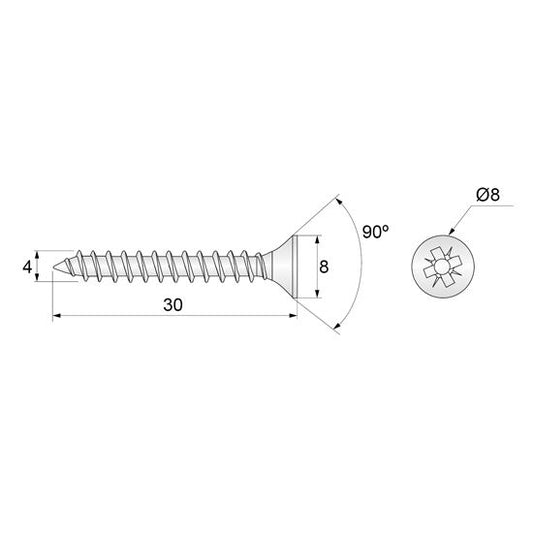
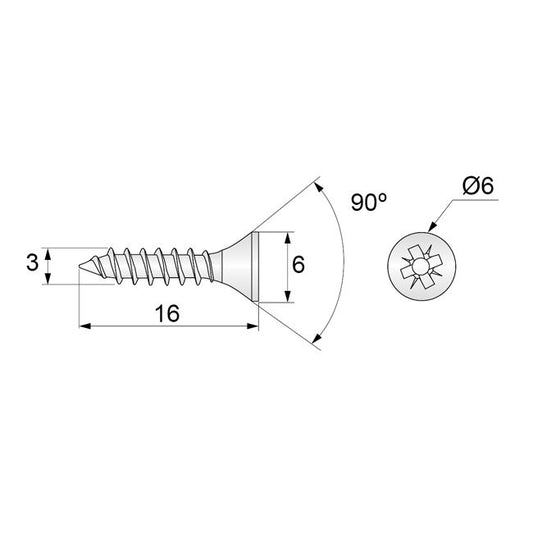
Another key visual feature used toidentify Pozidriv screwsis the set of fine, radial tick marks stamped into the screw head between the four main cross slots. These markings enable fast visual identification on the jobsite or shop floor, preventing costlyPH2 vs PZ2driver mix-ups. Using the wrong bit (such as a PH2 bit in a PZ2 screw) causes loose fit, accelerated bit wear, and ruined screw heads.

Material and Surface Finish

The fasteners in this category are manufactured from hardened steel with a protective electro-zinc coating. Thesewhite zinc wood screws(often specified as clear or bright zinc) offer solid corrosion protection for dry interior environments (Use Class 1). The zinc layer protects the steel against oxidation while providing a smooth finish that reduces driving resistance in dense wood products.

For decorative applications where fasteners remain visible and must blend into dark cabinetry finishes, cabinetmakers frequently rely onBlack Wood Screws. Mechanical properties remain identical, differing only in surface passivation treatment.

Dimensions and Specific Cabinetry Applications

This assortment covers the most popular screw lengths and diameters used in modern cabinetry and furniture building. Selecting the optimal dimension always depends on substrate thickness, hardware weight, and expected shear or tensile loads.

1/8 in (3.5 mm) Diameter – The Standard for Furniture Hardware

Screws with a 1/8 in (3.5 mm) thread diameter represent the universal standard for attaching light-to-medium furniture fittings.

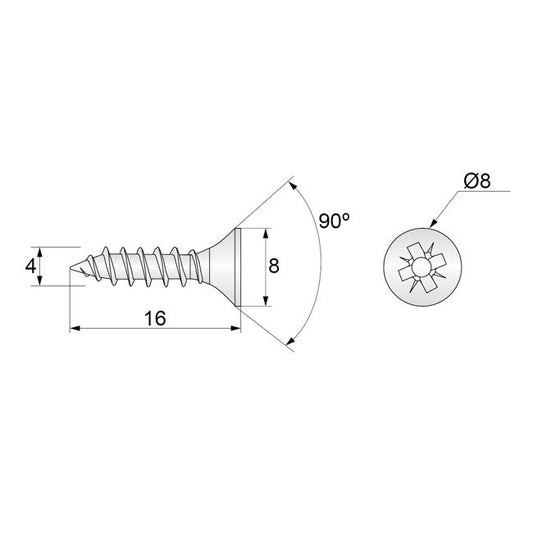
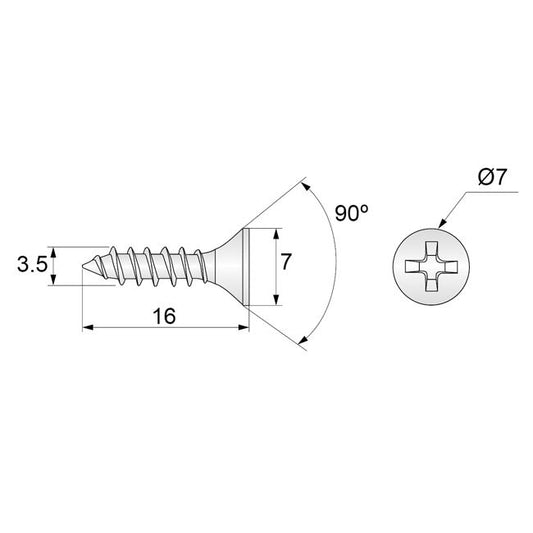
  • Concealed European Hinges:For mounting hinge base plates inside cabinet boxes or attaching hinge cups to doors (where Euro screws or clip-on systems are not used),PZ2 Wood Screws 3.5x16mm White Zinc (1000 pcs)are the industry standard. In standard 11/16 in (18 mm) or 3/4 in (19 mm) particleboard, a 5/8 in (16 mm) length ensures maximum thread engagement without poking through decorative exterior faces.
  • If you are searching for this diameter in alternative drive styles, check out our dedicated3.5mm Wood Screwssection.

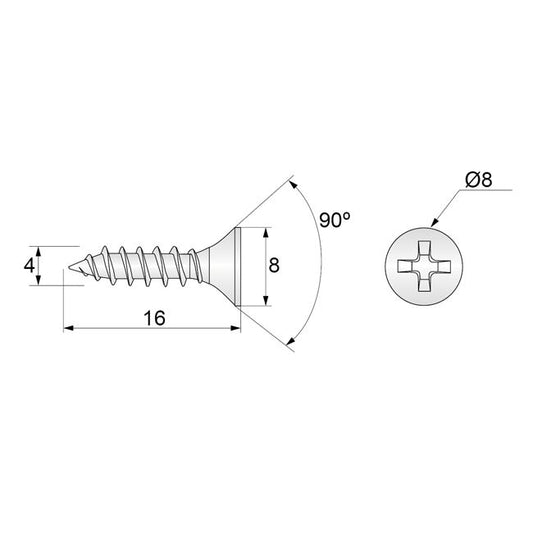
5/32 in (4.0 mm) Diameter – For Structural Cabinet Joints and Drawer Slides

A 5/32 in (4.0 mm) diameter delivers significantly higher pull-out resistance and shear strength, making it ideal for components subjected to continuous dynamic loads.

3/16 in (5.0 mm) Diameter – Heavy-Duty Fittings and Special Applications

Screws measuring 3/16 in (5.0 mm) in diameter generate massive holding power. They are designed for high-stress hardware like heavy furniture legs, bed frame brackets, or structural hanging plates. A specialized short variant for thick metal hardware plates is the PZ2 Wood Screw 5.0x13mm White Zinc (100 pcs). Thanks to its wide thread diameter, it bites aggressively into wood while remaining short enough (1/2 in (13 mm)) to avoid penetrating thinner panel substrates.

Design Features: Flat Countersunk Head and Threading

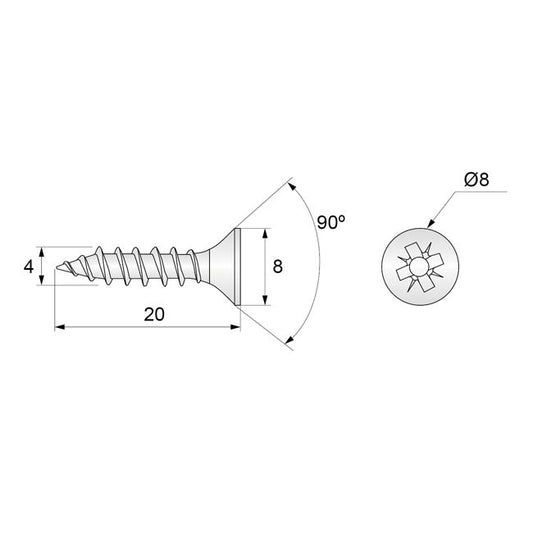
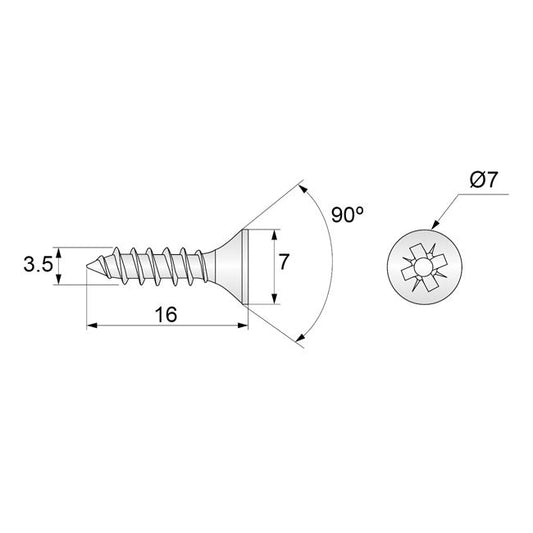
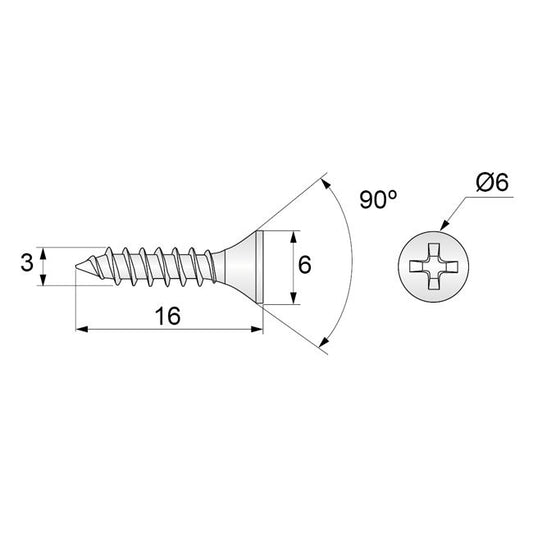
The fasteners featured in this selection are engineered asflat countersunk head wood screwswith a standard 90° shoulder angle. This geometry allows screw heads to seat completely flush with panel surfaces or countersunk metal hardware. Flush mounting is critical when installing drawer runners: if a screw head protrudes even 1/32 in (1 mm), it can collide with the slide mechanism, jam movement, or damage nylon rollers.

These products feature specializeddeep-thread wood screw designstailored for engineered timber. The sharp thread geometry cuts directly into wood fibers or particleboard cores rather than displacement-wedging, delivering superior pull-out strength. Shorter lengths (up to approx. 1-3/16 in (30 mm)) are fully threaded up to the head, while longer screws (such as 1-3/4 in (45 mm) lengths) feature partial threads. The smooth shank pulls the top component tight against the lower substrate for optimal joint clamping.

Professional Installation: Pre-Drilling Wood Screws

A core practice in professional cabinetmaking is knowing when to drill pilot holes.Pre-drilling pilot holes for wood screwsisn't an optional detail—it depends heavily on substrate material, edge distance, and fastener diameter.

When Is Pre-Drilling Mandatory?

  1. MDF (Medium-Density Fiberboard):Because MDF consists of highly compressed fine fibers, it splits easily. When youpre-drill pilot holes for wood screwsin MDF (especially near edges or panel ends), you eliminate edge bulging and material splitting.
  2. Hardwood (Oak, Maple, Beech):Dense hardwoods must always be pre-drilled. Un-drilled hardwood can bind the screw shank, leading to sheared screw heads under high driving torque.
  3. Particleboard:On the flat face of melamine-laminated particleboard, PZ2 screws can often be driven directly without drilling. However, when fastening closer than 1-3/16 in (30 mm) to an edge, pre-drilling pilot holes prevents laminate chipping and edge swelling.

Selecting the Correct Pilot Drill Bit Diameter

The standard technical rule fordrilling pilot holes for wood screwsis simple: the drill bit diameter should match the root/core diameter of the screw (the solid steel shank inside the threads).

  • For a 1/8 in (3.5 mm) screw, pre-drill using a 5/64 in (2.0 mm) or 3/32 in (2.5 mm) wood drill bit.
  • For a 5/32 in (4.0 mm) screw, use a 3/32 in (2.5 mm) or 1/8 in (3.0 mm) bit.
  • For a 3/16 in (5.0 mm) screw, choose a 9/64 in (3.5 mm) bit.

Pilot hole depth in solid wood should match full screw length. In particleboard, a short starter dimple (1/4 in to 3/8 in (5 mm to 10 mm) deep) made with a brad-point bit or scratch awl is sufficient to center the tip and prevent skittering across slick melamine surfaces.

Tool Compatibility: Bits and Screwdrivers

To drive these fasteners efficiently, matching drive tools are essential. A dedicatedPZ2 driver bitor a qualityPZ2 screwdriveris required.

When inserting aPZ2 bitinto a cordless driver, set your clutch properly. Particleboard has finite core density. If driving torque is set too high, the screw will strip out the pilot hole in the wood, destroying joint integrity. When mounting hinges or slides, start with a low torque clutch setting (e.g., setting 3 or 4 out of 20) and dial up gradually until the countersunk head sits perfectly flush in the hardware recess.

If delicate work (like mounting small ornamental hinges or piano hinges) calls for smaller screws, explore our range of3mm Wood Screwsor switch to smaller drive sizes in ourPZ1 Wood Screwssection. If job specs require traditional Phillips drives, visitPH1 Wood ScrewsandPH2 Wood Screws. For a full breakdown of interior fasteners, browse our mainWood Screws and Furniture Screwscategory.

---

Frequently Asked Questions (FAQ) About Pozidriv Wood Screws

How do I identify Pozidriv screws?

You can identify a Pozidriv screw (PZ) by looking at its cross-recess head: it features four additional fine, radial tick marks radiating outward between the four main slots. These visual lines distinguish pozidriv wood screws from standard Phillips heads (PH), which feature only two plain intersecting cross slots.

What is the difference between PH2 and PZ2?

The core difference is flank geometry. On PH2 (Phillips) drives, the recess walls taper downward, which forces the driver bit upward under high torque (cam-out effect). On PZ2 (Pozidriv) drives, the slot walls remain parallel, enabling significantly higher torque transfer without tool slippage. The two drive systems are not cross-compatible.

What screw length do I need for 11/16 in (18 mm) particleboard?

When attaching hardware (such as a mounting plate or drawer runner) to 11/16 in (18 mm) board without breaching the backside, a 19/32 in (15 mm) or 5/8 in (16 mm) length is industry standard. This size maximizes thread grip while leaving a 5/64 in to 1/8 in (2 mm to 3 mm) safety margin inside the board.

Do I need to pre-drill pilot holes for PZ2 screws?

That depends on the board material. Dense materials like MDF or hardwood require pre-drilled pilot holes to prevent splitting. In softwoods or across panel faces, pre-drilling is often unnecessary for diameters up to 5/32 in (4.0 mm), though it helps guarantee exact screw placement.

Which bit fits a PZ2 screw?

You must use a driver bit stamped "PZ2". Never use a PH2 bit in pozidriv wood screws. Doing so creates excessive slop, strips out the head recess, and quickly ruins the driver bit.

Are zinc-plated wood screws suitable for outdoor use?

No. Electro-zinc plated screws offered here are designed strictly for dry interior environments (furniture making and interior millwork). Exterior or humid locations require stainless steel wood screws (A2/304 or A4/316 grade).