
Glass Shelf Brackets
Popular Subcategories






-
Glass Shelf Clamping Support Bracket Ø3/16 inchRegular price $0.49Unit price / perRegular priceSale price $0.49
-
Glass Shelf Support Ø3/16 inch with a Suction CupRegular price $0.18Unit price / perRegular priceSale price $0.18
-
Pelican Shelf Support Bracket 1-3/4x2-3/16 inch - ChromeRegular price $2.36Unit price / perRegular priceSale price $2.36
-
Square Glass Shelf Bracket - ChromeRegular price $2.61Unit price / perRegular priceSale price $2.61
-
Glass Shelf Bracket Half-Round - SatinRegular price $0.85Unit price / perRegular priceSale price $0.85
-
Glass Shelf Bracket Half-Round III - SatinRegular price $2.61Unit price / perRegular priceSale price $2.61
-
Half-Round Glass Shelf Bracket III - ChromeRegular price $2.61Unit price / perRegular priceSale price $2.61
-
Glass Shelf Bracket Half-Round II - SatinRegular price $1.73Unit price / perRegular priceSale price $1.73
-
Glass Shelf Bracket Half-Round II - ChromeRegular price $1.73Unit price / perRegular priceSale price $1.73
-
Glass Shelf Bracket Semi-Round - ChromeRegular price $0.85Unit price / perRegular priceSale price $0.85
-
Glass Shelf Support with Suction Cup, ChromeRegular price $0.35Unit price / perRegular priceSale price $0.35
-
Pelican Shelf Support Bracket 1-3/8x1-9/16 inch - SatinRegular price $1.94Unit price / perRegular priceSale price $1.94
-
Pelican Shelf Support Bracket 1-3/8x1-9/16 inch - ChromeRegular price $1.81Unit price / perRegular priceSale price $1.81
-
Pelican Shelf Support Bracket 1-3/4x2-3/16 inch - SatinRegular price $2.65Unit price / perRegular priceSale price $2.65
-
Pelican Shelf Support Bracket 2-3/16x2-15/16 inch - SatinRegular price $3.66Unit price / perRegular priceSale price $3.66
-
Pelican Shelf Support Bracket 2-3/4x4-1/8 inch - SatinRegular price $7.76Unit price / perRegular priceSale price $7.76
-
Pelican Shelf Support Bracket 2-3/4x4-1/8 inch - ChromeRegular price $6.76Unit price / perRegular priceSale price $6.76
-
Pelican Shelf Support Bracket 2-3/16x2-15/16 inch - ChromeRegular price $3.35Unit price / perRegular priceSale price $3.35
-
Glass Shelf Brackets - 3/16 inch (5 mm)Regular price $0.39Unit price / perRegular priceSale price $0.39

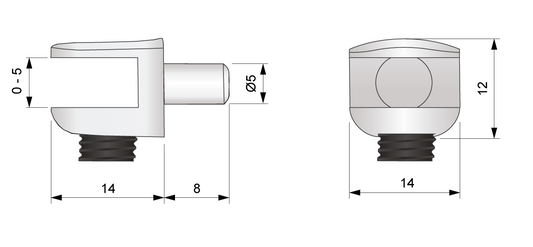

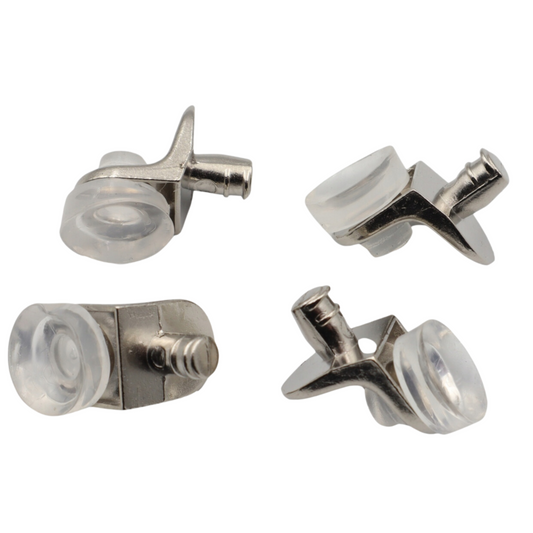


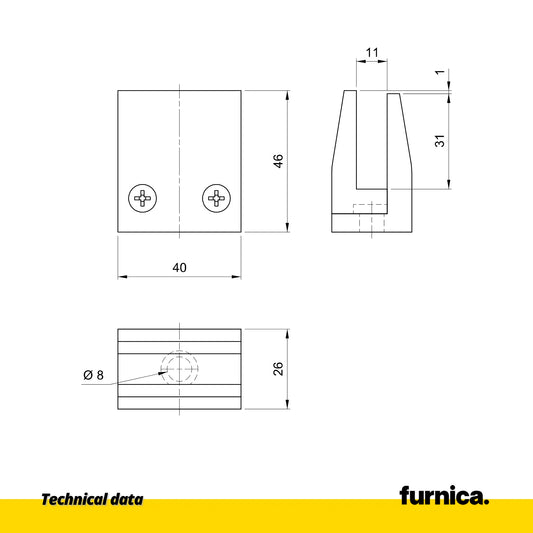

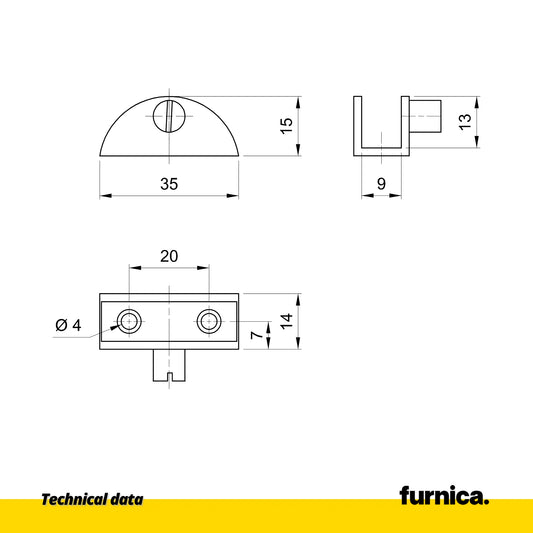

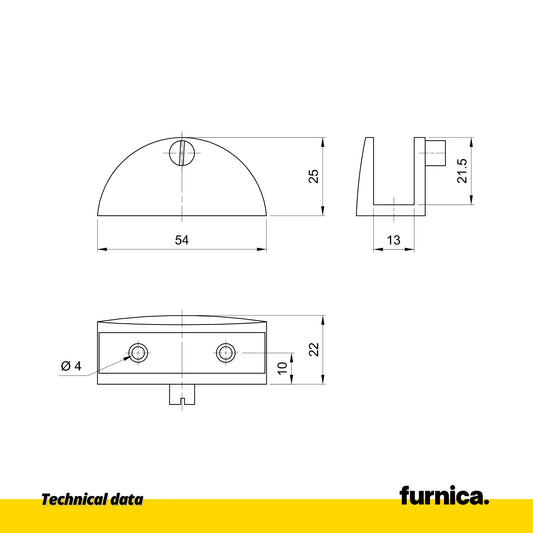


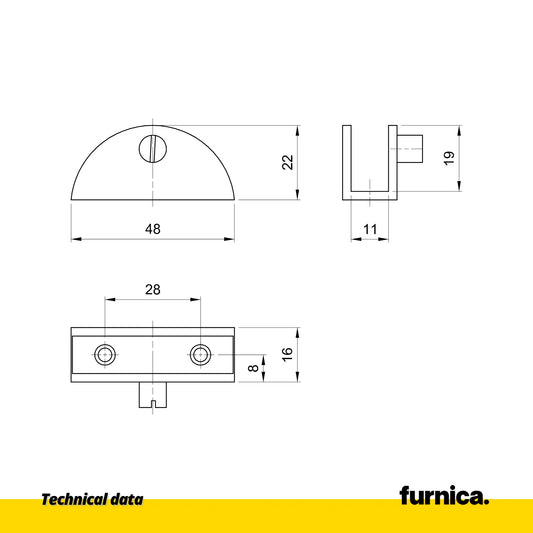


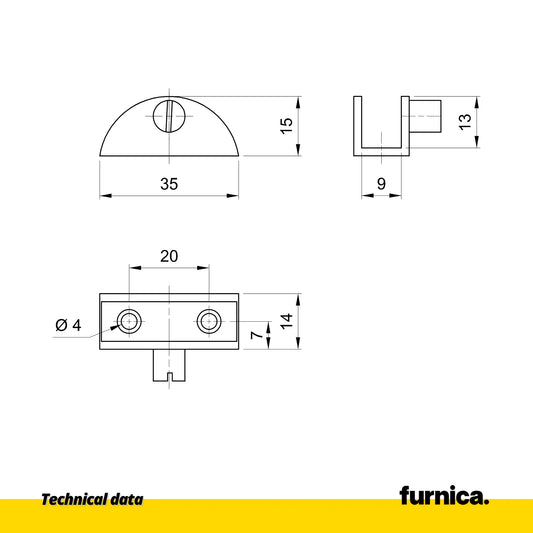

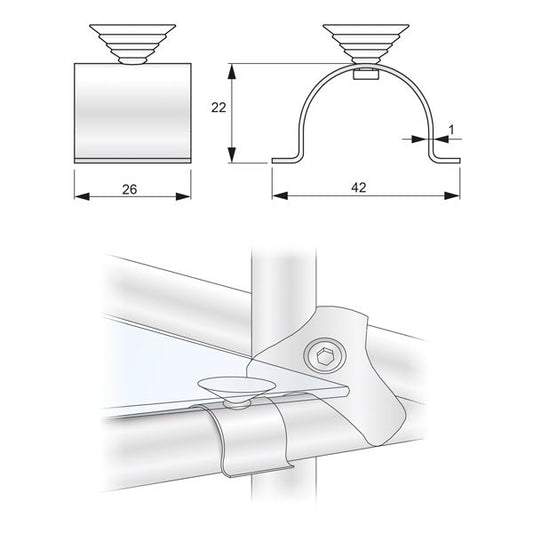


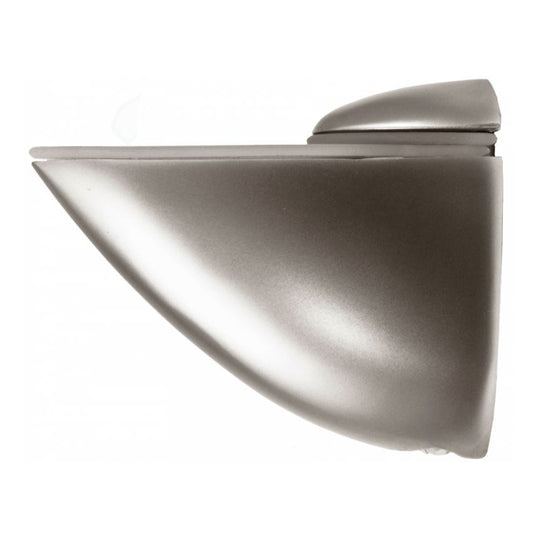


Glass shelf bracketsare specialized cabinet and furniture hardware designed to securely hold and support glass shelves inside cabinet bodies or on walls. Unlike conventional shelf supports for wood-based materials, these components are specifically engineered to accommodate the physical properties of glass. Glass is rigid yet extremely brittle and highly susceptible to point loads and scratching. For this reason, professional glass shelf supports feature integrated cushioning elements, rubber inserts, or clamping systems that prevent direct contact between the metal bracket and the glass surface while keeping smooth glass panels safely in place.
Technical Design and Operating Principles
Selecting the rightglass shelf bracketsdepends on the installation environment, glass thickness, and required load capacity. From an engineering perspective, these fittings fall into two main categories: push-in shelf pegs for internal cabinet mounting and clamping brackets for floating wall installations.
Push-In Shelf Pegs for System 32
In enclosed cabinets (such as display cases or bathroom vanities), push-in shelf pegs are the standard choice. The industry-standard pin diameter is3/16 in (5 mm), making it compatible with standard 32 mm line drilling (System 32). Less common variants designed for1/8 in (3 mm)holes are used primarily in delicate or fine furniture.
To keep the smooth glass panel firmly in place, these supports utilize different retention mechanisms:
- Rubberized Pads:An O-ring or flat rubber layer on top of the bracket creates high friction to prevent slippage.
- Suction Cup Anchors:Functioning like shock absorbers, flexible suction cups isolate the hard glass panel from the metal pin while creating a vacuum seal that keeps the shelf from accidentally sliding forward.
- Slip-On Sleeves:U-shaped plastic profiles that slide over standard metal pins to cushion and grip the glass.
Clamping Brackets and Pelican Shelf Supports
For mounting floating glass shelves directly to walls without surrounding cabinetry,glass shelf brackets with clamp fittingsare required. Often referred to in the trade as "pelican" shelf supports, these heavy-duty hardware components feature a two-part die-cast zinc or steel construction.
The base plate anchors securely to the wall. The adjustable upper or lower clamping jaw can be tailored precisely to the glass thickness using a set screw (typically hidden on the underside). Standard clamping ranges span from3/16 in to 3/8 in (4 mm – 10 mm)or3/16 in to 5/8 in (4 mm – 15 mm). The clamping pressure supports the glass panel as a cantilevered shelf. Like cabinet pegs, the clamping contact points are lined with elastomeric gaskets to prevent stress cracking in the glass.
Material Properties and Finishes
The mechanical load rating ofglass shelf bracketsrelies heavily on the core material used. Solid steel is typically specified for push-in pins to absorb shear forces at the edge of the shelf hole. The visible support bodies and clamping brackets are generally manufactured from a zinc-aluminum-copper alloy (Zamak). This material allows for precision casting, clean geometric designs, and high tensile strength.
In addition to enhancing appearance, surface finishes provide essential technical benefits, particularly corrosion resistance in humid environments:
- Polished Chrome (Electroplated):A high-gloss, durable, ultra-smooth finish. It is exceptionally resistant to moisture and easy to wipe clean, making it ideal for bathroom applications.
- Satin / Brushed Nickel:A brushed or matte surface that resists fingerprints and smudges. It diffuses light gently and is widely specified for living areas and modern kitchen cabinetry.
Applications and Project Planning
Proper selection and specification ofglass shelf bracketsare critical to ensuring a safe, stable installation.
When designing display cabinets or bookcases, 4-point support using push-in shelf pegs is usually sufficient. However, if there is a risk of the shelf tipping or lifting when items are removed,glass shelf bracketswith suction cups or top-locking mechanisms are essential for child and displacement safety.
For wall installations using pelican-style brackets, leverage must be calculated carefully. As shelf depth increases, the rotational torque on the wall anchors increases significantly. Glass shelf depth should always remain proportionate to the overall size of the clamp. A deeper shelf requires a clamping bracket with a longer support bed (e.g., 4-1/8 in (105 mm)) to minimize bending stress on the glass and safely transfer loads into the wall.
Installation and Mounting Guidelines
Precise installation is essential because glass cannot flex to compensate for alignment errors.
- Cabinet Mounting (Push-In Pegs):The 3/16 in (5 mm) shelf pin holes must be perfectly level and aligned. If aglass shelf bracketbinds or sits unevenly, it creates a 3-point load distribution, which can cause the glass to crack under weight. Push the pins firmly into the side panels until fully seated.
- Wall Mounting (Clamping Brackets):Anchoringglass shelf bracketsto walls requires appropriate wall anchors and screws rated for the specific substrate (drywall, brick, concrete, or wood studs).
- Adjustment:Slide the glass shelf into the pelican bracket and tighten the clamp screw by hand using a manual screwdriver. Do not use an impact driver or power drill. Apply just enough torque to grip the glass securely without over-tightening and cracking the pane.
Product Line Overview
Choosing the correct hardware depends on your shelf thickness and aesthetic preference. Compact solutions are available for standard cabinet integration:
- TheGlass Panel Holder - Ø 3/16 in (5 mm)offers a minimalist support footprint for standard display cases.
- An alternative design for the same hole diameter is theGlass Panel Holder Ø 3/16 in (5 mm).
- For added slip resistance, choose theGlass Panel Holder Ø 3/16 in (5 mm) with Suction Cupor the chrome-plated version, theGlass Panel Holder with Suction Cup, Chrome.
For floating wall shelves, pelican-style brackets come in various sizes to support different shelf depths. Compact options for narrow shelving (e.g., above bathroom sinks):
- "Pelican" Shelf Bracket 1-3/8 x 1-9/16 in (35x40 mm) - Chrome
- "Pelican" Shelf Bracket 1-3/8 x 1-9/16 in (35x40 mm) - Satin
- "Pelican" Shelf Bracket 1-3/4 x 2-3/16 in (45x55 mm) - Chrome
- "Pelican" Shelf Bracket 1-3/4 x 2-3/16 in (45x55 mm) - Satin
Medium-size brackets for standard bookcases or vanity shelving:
- "Pelican" Shelf Bracket 2-3/16 x 2-15/16 in (55x75 mm) - Chrome
- "Pelican" Shelf Bracket 2-3/16 x 2-15/16 in (55x75 mm) - Satin
Large heavy-duty brackets for deep floating shelves (high leverage applications):
- "Pelican" Shelf Bracket 2-3/4 x 4-1/8 in (70x105 mm) - Chrome
- "Pelican" Shelf Bracket 2-3/4 x 4-1/8 in (70x105 mm) - Satin
FAQ – Technical Questions & Answers
What hole diameter is required for push-in glass shelf brackets?
For interior cabinet mounting, the industry standard pin size is3/16 in (5 mm), matching standard 32 mm system line drilling. The hole depth should be at least5/16 in (8 mm)for full pin engagement. Delicate or European specialty cabinets may require1/8 in (3 mm)pins.
How do you prevent glass shelves from sliding?
Because glass is naturally smooth, bare metal supports should never be used. Shelves are secured usingglass shelf bracketswith non-slip rubber inserts, built-in suction cups that create a light vacuum seal, or adjustableclamping glass shelf bracketsthat clamp the glass firmly between rubberized pads.
How do I calculate the spacing between two pelican shelf brackets?
Bracket spacing depends on glass thickness. For standard glass thicknesses of1/4 in to 5/16 in (6 mm – 8 mm), spacing between brackets should not exceed15-3/4 in to 23-5/8 in (400 mm – 600 mm)to prevent bowing. The side overhang beyond each bracket should be no more than6 in (150 mm).
What is the difference between Chrome and Satin finishes on glass shelf supports?
These are two distinct decorative and protective surface treatments. Chrome is electroplated for a mirror-like sheen, high humidity resistance, and easy cleaning. Satin (or brushed nickel) has a soft brushed texture that resists fingerprints, reduces glare, and conceals minor scuffs. Mechanically, both deliver excellent corrosion protection for the die-cast zinc core.
Can pelican brackets be used for wood shelves?
Yes. Although designed primarily asglass shelf brackets, these clamping mounts work equally well for floating shelves made of wood, MDF, or particle board, provided the material thickness falls within the bracket's clamping range (e.g., up to5/8 in (15 mm)).