
Cam Locks
Popular Subcategories
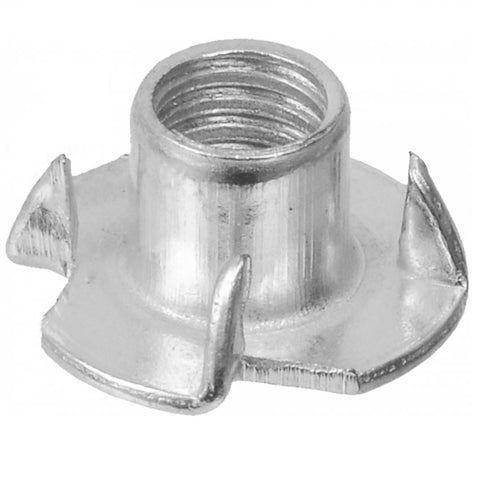
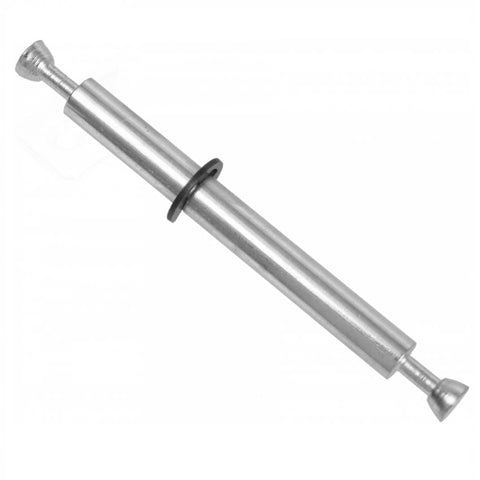
-
Furniture cam lock 9/16 inch, a=3/8 inch (100 pcs)Regular price $8.75Unit price / perRegular priceSale price $8.75
-
Furniture cam lock 9/16 inch, a=1/4 inch (100 pcs)Regular price $8.75Unit price / perRegular priceSale price $8.75
-
Cam Lock 9/16 inch (15 mm), H=11/32 inch (9.0 mm) - 1 Pc.Regular price $0.08Unit price / perRegular priceSale price $0.08
-
Furniture Cam Lock 9/16 inch (15 mm), Height = 5/16 inch (7.5 mm) - 1 Pc.Regular price $0.08Unit price / perRegular priceSale price $0.08

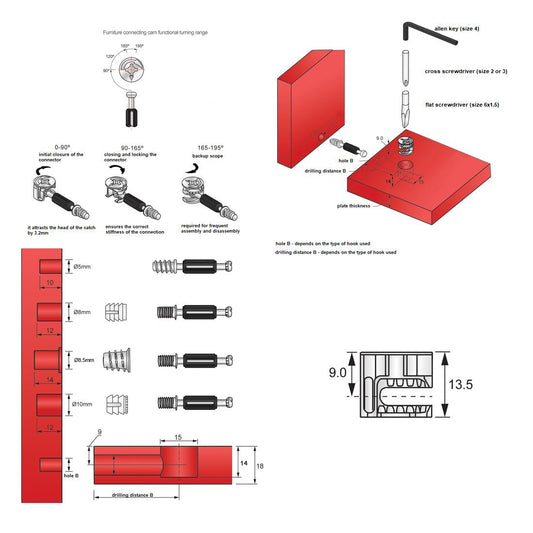

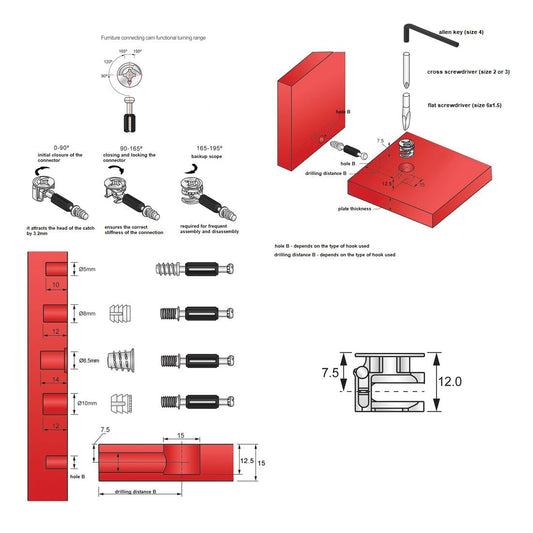

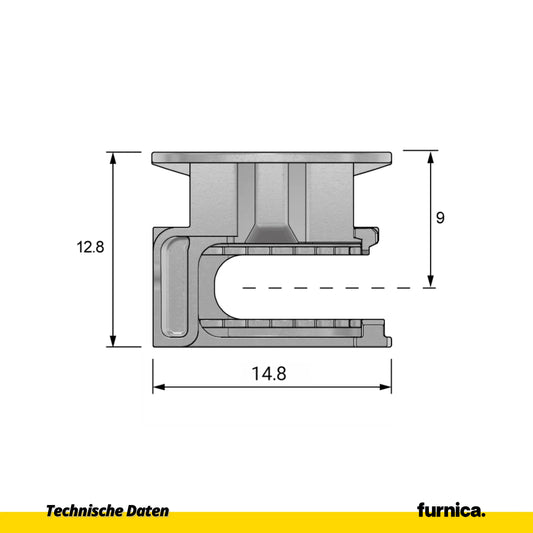

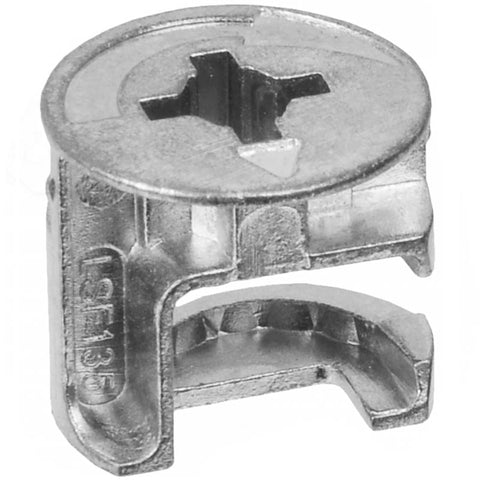
Cam locksare cylindrical metal connecting fittings used in professional furniture construction to create right-angled, positive-locking, and detachable joints between cabinet panels.
As a central element in modern furniture manufacturing, thecam lock systemforms the structural backbone for cabinets, dressers, shelving units, and beds. Unlike glued wooden dowel joints or simple wood screws, acam lock furniture connectorenables hidden assembly that remains completely invisible from the outside of the furniture. For cabinetmakers, installers, and demanding interior fitters, these fittings allow large-scale furniture pieces to be transported in flat packs and assembled on-site with maximum stability.
How the Cam Lock System Works
A completecam lock jointalways consists of two matching components installed in two panels set at a right angle to each other:
- The cam lock (housing):A cylindrical component, often called acam nut, inserted into a blind hole on the horizontal panel (e.g., a shelf).
- The cam dowel (connecting pin):A steel pin with a specially shaped head screwed into the vertical panel (e.g., the cabinet side wall).
The operating principle of a cam lock resembles a spiral staircase: as it is turned with a screwdriver, the head of the cam dowel rides up an internal inclined ramp inside the housing, pulling the two wooden components tightly together under high pressure. This tension ensures a play-free, high-load corner joint that will not give way, even under heavy cabinet loads.
Technical Specifications and Dimensions
Selecting the rightfurniture cam locksrequires maximum precision. A deviation of just a fraction of a millimeter in height can cause the connector to protrude above the panel surface or fail to generate sufficient clamping force.
Drill Hole Diameter
The standard diameter for professionalcam locksis 19/32 in (15 mm). This dimension is internationally established in furniture manufacturing and is precisely milled into particleboard or MDF using a standard Forstner bit or Brad point bit.
Overall Height (H) and Board Thickness
The height of the cam housing must strictly match the material thickness of the engineered wood panel used. The center point of the cross-bore for the dowel must sit precisely at half the board thickness. In practice, the following guidelines apply:
- H = 19/64 in (7.5 mm):Designed for panel thicknesses from 19/32 in to 5/8 in (15 mm to 16 mm). This is the standard size for light to medium-weight cabinet bodies. For single applications or repairs, theCam lock 15mm, H=7.5mm - 1 pc.is ideal. For serial production, woodworkers rely on theCam lock 15mm, H=7.5mm - 100 pcs.or the bulk packCam lock 15mm, H=7.5mm - 1000 pcs..
- H = 5/16 in (8.0 mm):An intermediate size frequently used with exactly 5/8 in (16 mm) thick melamine-coated boards to ensure optimal centering. TheCam lock 15mm, H=8.0mm - 1000 pcs.is available for this purpose.
- H = 23/64 in (9.0 mm):Essential for thicker substrates from 23/32 in to 3/4 in (18 mm to 19 mm). These panel thicknesses are primarily found in high-end kitchen cabinetry, heavy-duty shelving, or solid wardrobes. Single pieces like theCam lock 15mm, H=9.0mm - 1 pc., medium packs like theCam lock 15mm, H=9.0mm - 100 pcs., and industrial bulk packs like theCam lock 15mm, H=9.0mm - 1000 pcs.are available here as well.
Material Quality
High-qualitycam lock fittingsare manufactured using azinc die-casting process. This alloy provides the necessary hardness to prevent stripping the Pozidriv or Phillips drive during assembly, while retaining minimal elasticity to prevent breaking under temperature fluctuations in the wood.
Assembly and Workshop Processing
Installingcam locksrequires precise marking out and drilling. In industrial manufacturing, CNC machining centers operating on the 32 mm system execute this. For manual application in the workshop or on the job site, a structured approach is essential.
Drilling the Holes
For a properly functioning joint, three drill holes must align perfectly:
- The main cup hole (19/32 in (15 mm)):Drilled vertically into the surface of the shelf or panel. The depth corresponds to the height of the connector (e.g., 15/32 in (12 mm) deep for a 19/32 in (15 mm) cam).
- The edge hole (usually 13/64 in or 5/16 in (5 mm or 8 mm)):Drilled horizontally into the edge of the shelf until it intersects the center of the main cup hole. The dowel passes through this channel.
- The dowel hole (usually 13/64 in (5 mm)):Drilled into the surface of the cabinet side panel to anchor the connecting pin.
To set these holes manually within a tight tolerance of under 0.02 in (0.5 mm), using acam lock jig(orcam lock drilling template) is strongly recommended. It guarantees the correct backset from the panel edge to the center of the 19/32 in (15 mm) hole. This drilling distance (often 15/16 in or 1-11/32 in (24 mm or 34 mm)) is defined by the length of the cam dowel used.
Assembly Steps
Once all holes are drilled, assembly takes just a few steps:
- Press the cylindricalfurniture cam lockflush into the 19/32 in (15 mm) hole. Make sure the stamped arrow on the surface points directly toward the open edge hole. This aligns the internal channel to receive the dowel head.
- Screw thecam dowelsinto the opposing cabinet panel. Pins with Euro threads (13/64 in (5 mm)) thread directly into the pre-drilled particleboard.
- Bring the wooden components together. The dowel head slides through the edge hole into the cam housing.
- Use a suitable screwdriver (typicallyPZ 2orPZ 3). Turn the cam clockwise. After about180° to 210°, you will feel firm resistance. The joint is now locked and firmly clamped under tension.
Maintenance, Disassembly, and Troubleshooting
A key technical advantage offurniture cam fastenersis their reversibility. Furniture can be assembled and disassembled as often as needed without sacrificing structural integrity — a major benefit over glued joints or direct wood screws that destroy the internal structure of particleboard after repeated driver engagement.
Unlocking Cam Locks
To disassemble a cabinet, simplyrelease the cam lock. Insert a screwdriver and turn the cam counterclockwise until the stamped arrow points back toward the panel edge. In this position, the internal ramp fully releases the dowel head. The panels can now be pulled apart horizontally with no effort.
Avoiding Common Assembly Errors
- The cam does not grip:If thecam lock connectorspins continuously without tightening, the drilling offset is incorrect. Either the 19/32 in (15 mm) hole was drilled too far from the edge, or the dowel was screwed too deep into the side wall. The dowel head fails to reach the internal ramp.
- The cam sits proud:If thecam nutsdo not sit flush with the panel surface, either the hole was not drilled deep enough or the wrong height was selected (e.g., H=23/64 in (9.0 mm) in a 19/32 in (15 mm) thick panel).
- Stripped drive recess:Never use a high-torque cordless impact driver to tighten cam locks. Tighteningfurniture camsshould always be done carefully by hand using a manual screwdriver. A slipping driver bit destroys the die-cast zinc drive profile, making future disassembly nearly impossible.
Industry Standards and Compatibility
In trade terminology, the termMinifixoften comes up when discussing these fittings. Historically a brand name from Häfele, it has become a generic term forfurniture cam locks. The cam connectors offered here share identical dimensions and full compatibility with common systems on the market, provided the 19/32 in (15 mm) diameter and drilling pattern match.
They serve as convenient replacement hardware for ready-to-assemble furniture from major European or global brands when original parts go missing during a move. Standardized geometry ensures that thesefurniture cam screwsfit existing factory routings precisely.
---
FAQ – Frequently Asked Questions About Cam Locks
What size cam lock do I need for 5/8 in (16 mm) panels?
For a board thickness of 5/8 in (16 mm) (particleboard or MDF), a cam lock with a 19/32 in (15 mm) diameter and a height of19/64 in (7.5 mm)or5/16 in (8.0 mm)is the correct choice. This height ensures the cross-bore for the dowel runs precisely through the center of the board and the cam sits flush with the surface.
What tools do I need to install cam lock connectors?
For preparation, you need a 19/32 in (15 mm) Forstner bit (for the housing) and 13/64 in or 5/16 in (5 mm or 8 mm) wood drill bits (for the dowel and edge hole). To tighten thecam nut, a standard Pozidriv screwdriver sizePZ 2orPZ 3is sufficient. Do not use power drills for final tightening.
Why won't my cam lock tighten?
This issue occurs if the distance between the 19/32 in (15 mm) cup hole and the board edge is too large, or if the connecting pin (dowel) was driven too deep into the mating piece. The dowel head cannot reach far enough into the housing to catch the internal ramp. Check your drilling pattern using acam lock jig.
Can I disassemble and re-tighten a cam lock joint multiple times?
Yes, that is the main purpose of this connector type. Because force is transferred through metal components (zinc die-cast cam and steel dowel), the wood fibers are not stressed during disassembly. To unlock, simply turn the cam counterclockwise until the arrow points to the edge.
What is the difference between a cam lock and a Minifix?
There is no technical difference. "Minifix" is a registered trademark of a major German hardware manufacturer for this specific style offurniture cam lock. The functionality, 19/32 in (15 mm) hole diameter, and application are identical across standardized cam locks.
How deep do I need to drill for a 19/32 in (15 mm) cam lock?
The drilling depth depends on the overall height (H) of the connector plus a minimal tolerance clearance. For a connector with H=19/64 in (7.5 mm), the blind hole should be drilled approximately 15/32 in (12 mm) deep. Take care that the center point of the Forstner bit does not break through the back of the panel.