
Adjustable furniture legs
Popular Subcategories


-
Adjustable Furniture Leg 43-5/16 inch - Steel Mounting Plate - ChromeRegular price $16.67Unit price / perRegular priceSale price $16.67
-
Adjustable Furniture Leg 32-5/16 inch - ZnAl Mounting Plate - SatinRegular price $15.61Unit price / perRegular priceSale price $15.61
-
Adjustable Furniture Leg 32-5/16 inch - ChromeRegular price $11.38Unit price / perRegular priceSale price $11.38
-
Square Furniture Leg 1x1 inch - H 3-15/16 inch ChromeRegular price $2.93Unit price / perRegular priceSale price $2.93
-
Adjustable Furniture Leg 43-5/16 inch - ZnAl Mounting Plate - AluminumRegular price $16.38Unit price / perRegular priceSale price $16.38
-
Adjustable Furniture Leg 27-15/16 inch - ZnAl Mounting Plate - AluminiumRegular price $14.23Unit price / perRegular priceSale price $14.23
-
Furniture Leg 5-7/8 inch - ChromeRegular price $3.32Unit price / perRegular priceSale price $3.32
-
Adjustable Furniture Leg 32-5/16 inch - ZnAl Mounting Plate - ChromeRegular price $13.40Unit price / perRegular priceSale price $13.40
-
Conical Furniture Leg H 3-15/16 inch - SatinRegular price $3.71Unit price / perRegular priceSale price $3.71
-
Square Furniture Leg 1x1 inch - H 3-15/16 inch SatinRegular price $2.94Unit price / perRegular priceSale price $2.94
-
Square Furniture Leg 1x1 inch - H 5-7/8 inch SatinRegular price $3.31Unit price / perRegular priceSale price $3.31
-
Square Furniture Leg 1-9/16 x 1-9/16 inch - H 3-15/16 inch ChromeRegular price $1.98Unit price / perRegular priceSale price $1.98
-
Square Furniture Leg 1-9/16 x 1-9/16 inch - H 5-7/8 inch AluminumRegular price $1.74Unit price / perRegular priceSale price $1.74
-
Square Furniture Legs 1-9/16 x 1-9/16 inch (40 x 40 mm) - 4 inch (100 mm) - BlackRegular price $0.97Unit price / perRegular priceSale price $0.97
-
Square Furniture Legs 1-9/16 x 1-9/16 inch (40x40 mm) - 3-15/16 inch (100 mm) - WhiteRegular price $0.97Unit price / perRegular priceSale price $0.97
-
Square Furniture Legs 1-9/16 x 1-9/16 inch (40x40 mm) - 6 inch (150 mm) - WhiteRegular price $1.47Unit price / perRegular priceSale price $1.47
-
Square Furniture Legs / Adjustable Table Legs 2-3/8 x 2-3/8 inch - 2-3/8 inch AluminumRegular price $1.02Unit price / perRegular priceSale price $1.02
-
Conical Furniture Leg H 3-15/16 inch - ChromeRegular price $3.29Unit price / perRegular priceSale price $3.29
-
Square Furniture Leg 1x1 inch - H 5-7/8 inch ChromeRegular price $3.31Unit price / perRegular priceSale price $3.31
-
Square Furniture Leg 1-9/16 x 1-9/16 inch - H 3-15/16 inch AluminumRegular price $1.43Unit price / perRegular priceSale price $1.43
-
Square Furniture Legs 1-9/16 x 1-9/16 inch (40x40 mm) - 5-7/8 inch (150 mm) - BlackRegular price $1.47Unit price / perRegular priceSale price $1.47

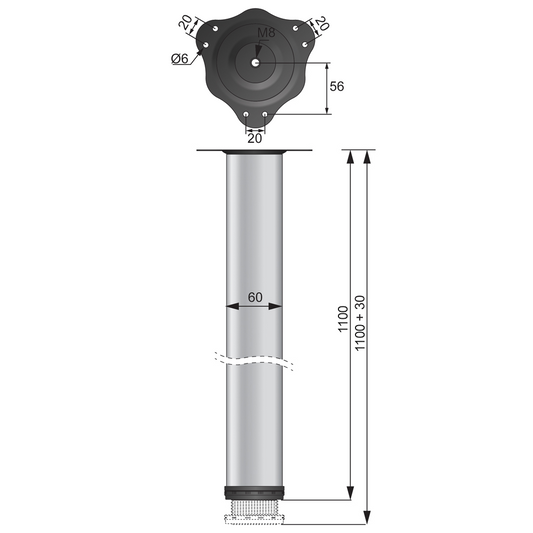

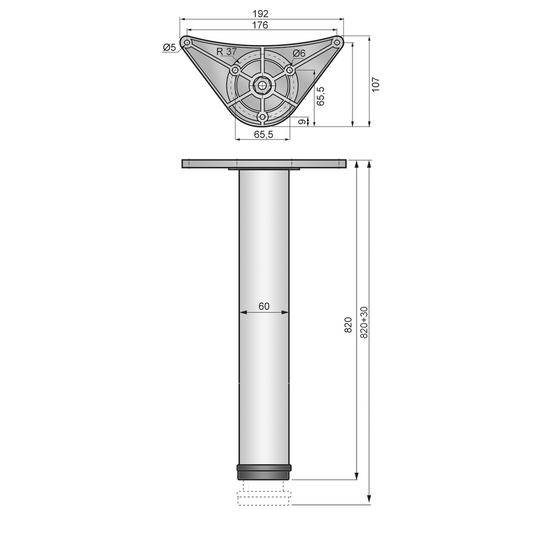

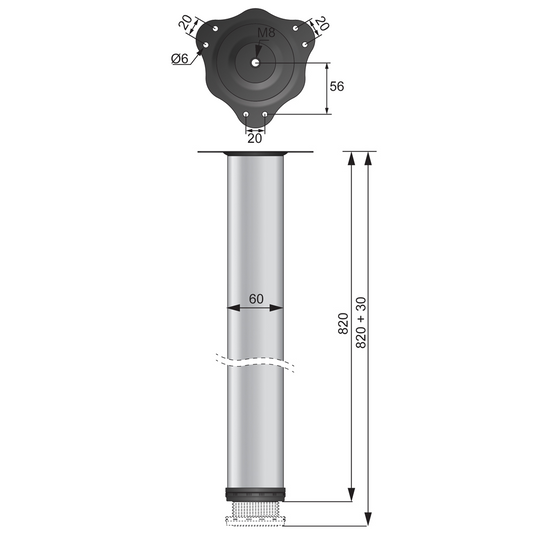

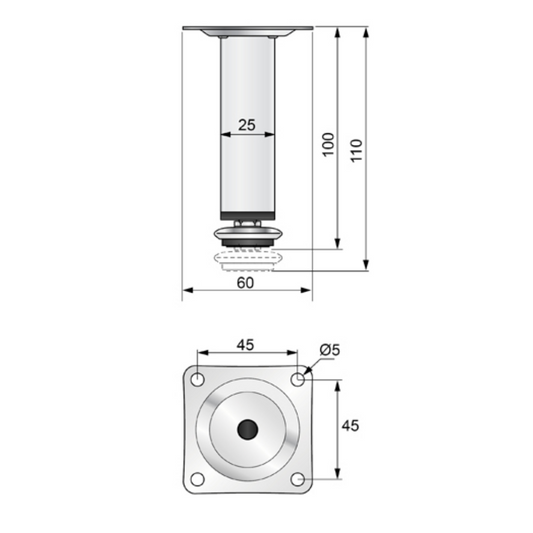

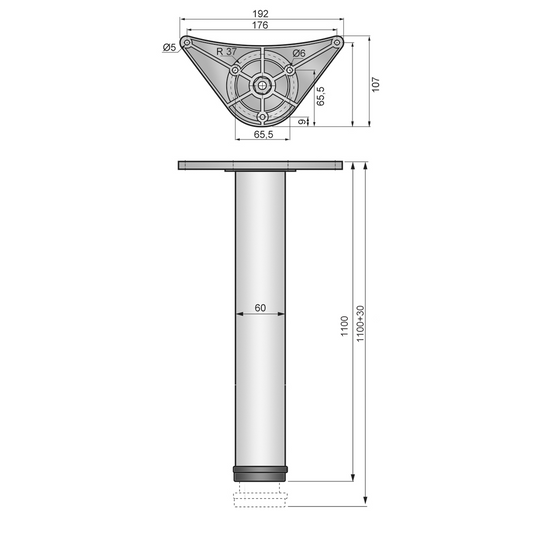

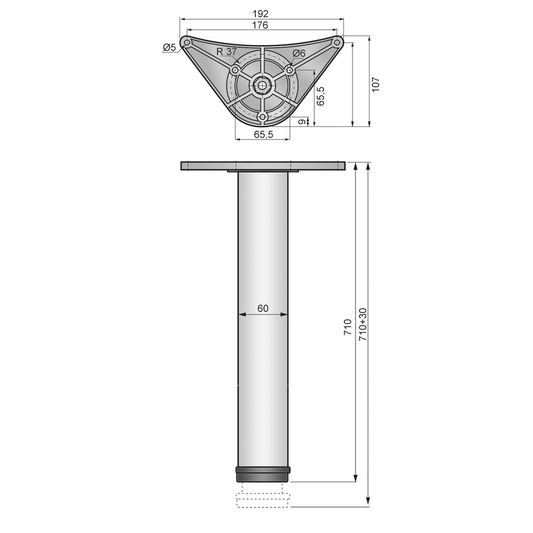

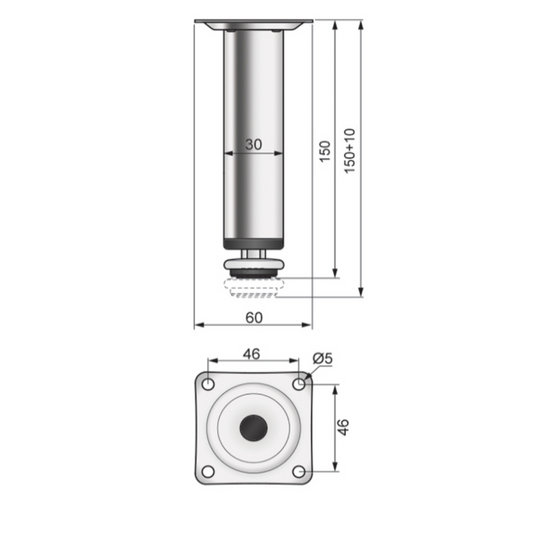

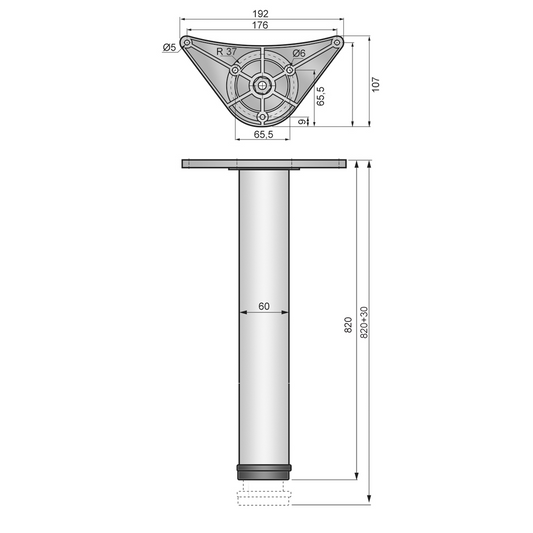

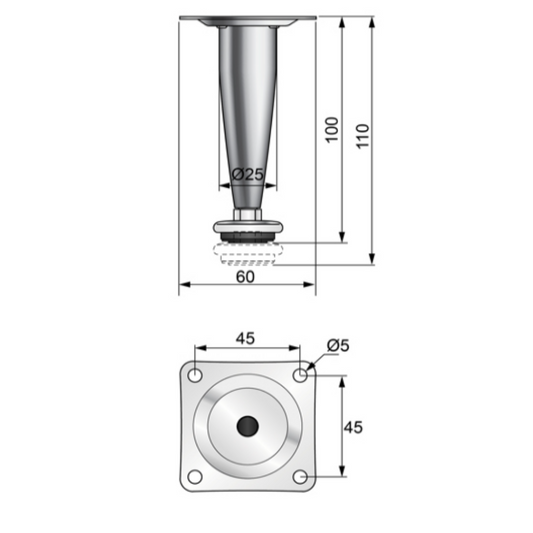

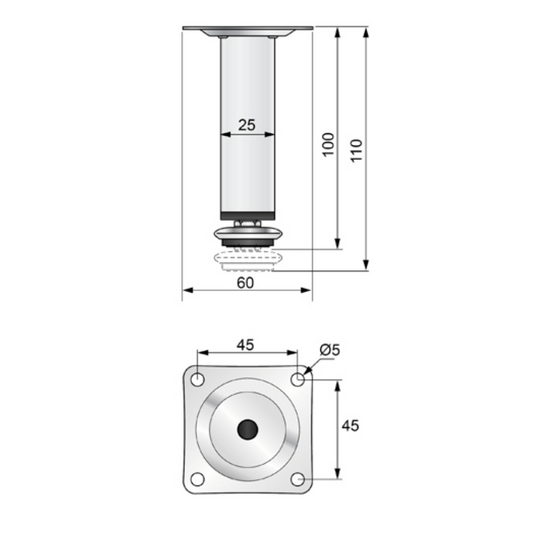

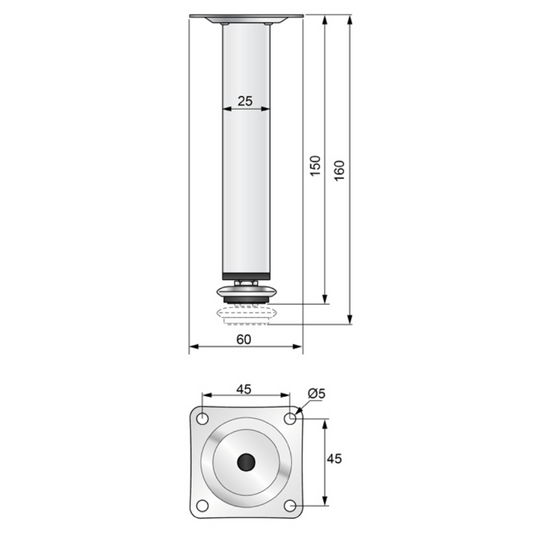

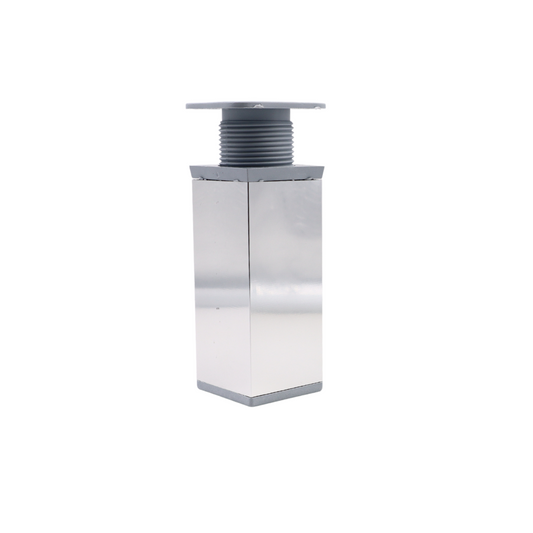

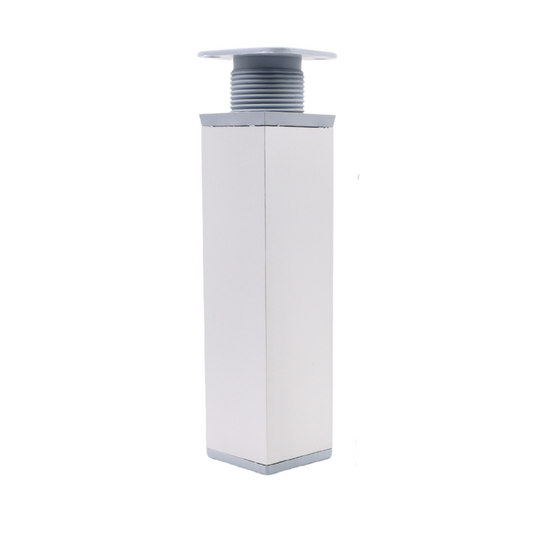


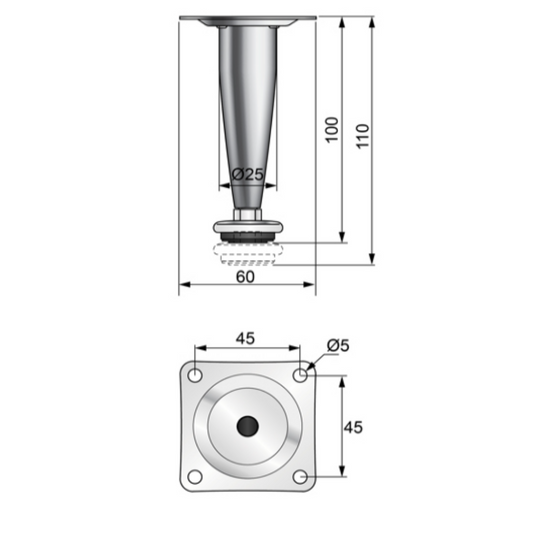

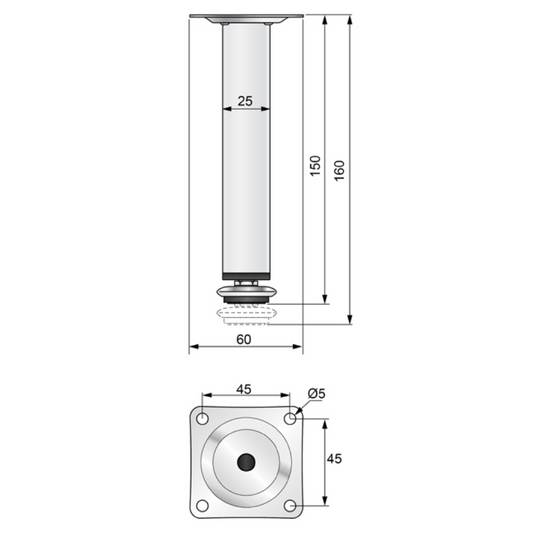

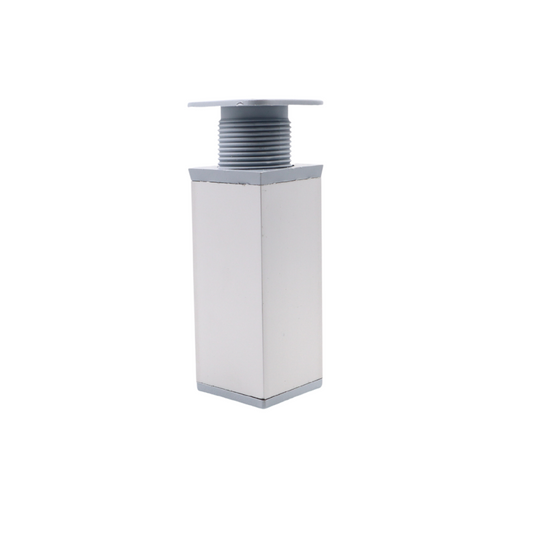

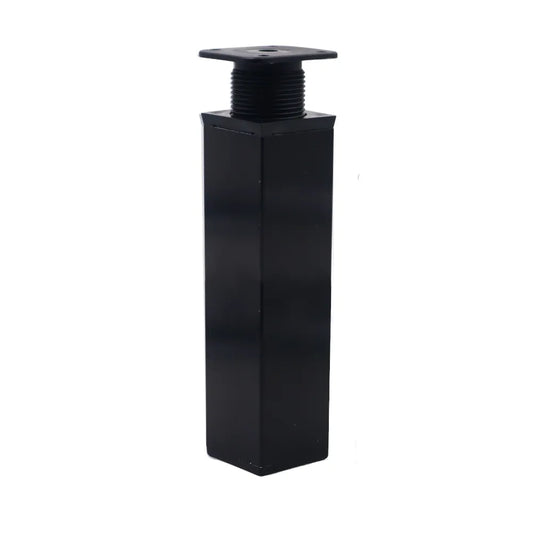
Adjustable furniture legsare load-bearing, mechanically levelable hardware fittings that ensure precise height adjustment of furniture on uneven floors and protect the cabinet body from direct ground moisture. An integrated thread in the base plate or leg tube allows the standing height to be adjusted down to the millimeter, ensuring absolute horizontal alignment of cabinets, dressers, or tables and preventing warping of the furniture structure.
Correct alignment of furniture is essential in professional cabinetmaking and proper assembly. A cabinet body that is not plumb leads to sticking drawers, dragging doors, and uneven gap patterns. Adjustable furniture legs solve this issue right at the base.
Construction and Technical Mechanics
An adjustable furniture leg typically consists of three main components: the mounting plate for attachment to the bottom of the cabinet, the load-bearing profile tube (shaft), and the floor glide with an integrated threaded pin. The thread inside the leg functions much like an off-road vehicle's suspension: it continuously levels out floor unevenness so the main body sits perfectly horizontal in the room without requiring shims or wedges.
The adjustment range varies by model, but standard versions typically offer+3/8 in to +5/8 in (+10 mm to +15 mm). This is sufficient to compensate for typical unevenness in concrete subfloors, historic hardwood flooring, or tiled surfaces. Adjustment is made simply by turning the plastic glide on the bottom.
Profile Thickness and Load Capacity
Selecting the right cross-section depends on the weight of the furniture piece. For light to medium-weight case goods, sideboards, or bathroom vanities, narrower profiles are ideal, such as those found in theSquare Furniture Legs 1x1 in (25x25 mm) - 4 in (100 mm) SatinorSquare Furniture Legs 1x1 in (25x25 mm) - 4-3/4 in (120 mm) Chromeseries.
For heavy wardrobes, fully loaded filing cabinets, or wide TV consoles, a larger contact area for weight distribution is essential. Here, solid cross-sections come into play. ASquare Furniture Legs 1-9/16x1-9/16 in (40x40 mm) - 2-3/8 in (60 mm) Aluminumor theSquare Furniture Legs 2-3/8x2-3/8 in (60x60 mm) - 2-3/8 in (60 mm) Aluminumversion optimally distributes pressure onto the furniture base plate, minimizing the risk of mounting screws tearing out of theparticle boardunder lateral load.
Finishes and Materials for Visible Applications
Unlike concealed plinth feet that disappear behind a kick plate, standard adjustable furniture legs serve as a visible design element. The material choice influences both corrosion resistance and visual integration into the interior concept.
- Aluminum (Anodized):Provides high strength at a low dead weight and is immune to mop water. Products like theSquare Furniture Legs 1-9/16x1-9/16 in (40x40 mm) - 4 in (100 mm) Aluminumare excellent for modern living rooms and damp spaces.
- Chrome (Electroplated):A high-gloss, hard surface used primarily in bathroom and living areas.Chrome Furniture Legs, such as theAdjustable Furniture Legs 4 in (100 mm) - Chrome, provide a closed, wear-resistant seal over the steel.
- Satin / Brushed:A matte, subtly textured surface where fingerprints and fine scratches remain virtually invisible. Ideal for high-traffic areas. An example is theConical Adjustable Furniture Legs 4 in (100 mm) - Satin.
- Powder-Coated (Black/White):Electrostatic powder coating cures in an oven to form an impact-resistant layer. ASquare Furniture Legs 1-9/16x1-9/16 in (40x40 mm) - 6 in (150 mm) - Blackpairs perfectly with industrial designs, whileSquare Furniture Legs 1-9/16x1-9/16 in (40x40 mm) - 4 in (100 mm) - Whiteis frequently used in Scandinavian furniture design.
Specific geometries can be targeted directly using filters, such as in theSquare Metal Furniture LegsorRound Furniture Legscategories.
Applications and Overall Heights
Selecting the correct nominal height (height in its fully retracted state) defines the ground clearance of the furniture piece. This is crucial for ergonomics, ventilation, and access for cleaning devices (e.g., robot vacuums).
Low Leveling Feet (2-3/8 in - 4 in / 60 mm - 100 mm)
For heavy wardrobes and dressers where the center of gravity needs to remain low, shortleveling feet for furnitureare recommended. An installed height of 2-3/8 in (60 mm), as found on theSquare Furniture Legs 1-9/16x1-9/16 in (40x40 mm) - 2-3/8 in (60 mm) - Black, offers a solid look while providing full leveling capabilities. Standard dressers are frequently built with 4 in (100 mm) legs. Corresponding options can be explored in the4 inch (10 cm) Furniture Legscategory.
Medium Heights (4-3/4 in - 6 in / 120 mm - 150 mm)
If the space beneath the furniture needs to accommodate robot vacuums, a minimum height of 4-3/4 in (120 mm) is required. ASquare Furniture Legs 1x1 in (25x25 mm) - 6 in (150 mm) Chromeor models from the6 inch (15 cm) Furniture Legscategory visually lift the cabinet and simplify floor maintenance dramatically. These lengths are also optimal as center support legs for cantilevered designs.
Kitchen and Plinth Applications
Cabinetry in kitchens follows different rules. Here, legs must often support heavy cabinet frames and granite countertops before being concealed behind a toe kick board. Purpose-builtadjustable plinth feetmade of high-strength plastic are designed specifically for this purpose. They frequently feature a larger adjustment range (e.g., -3/8 in to +3/4 in / -10 mm to +20 mm) and include mounting clips for attaching the toe kick fascia. When installers need a solution for island units without kick plates, decorativemetal furniture legsare often chosen instead.
Table Legs and Countertops
While classic adjustable furniture legs are engineered for case goods, tables and unsupported countertops demand longer support elements.Height-adjustable table legsgenerally feature nominal lengths from 27-1/2 in to 32-1/4 in (700 mm to 820 mm). When sourcingadjustable legs for countertopsto support a kitchen island or extend a dining area, sturdy tubular steel designs with a solid mounting plate are required. These are located in our dedicatedHeight-Adjustable Table Legscategory.
An entirely different technical principle is found in a Height-Adjustable Desk. When adesk is electrically height-adjustable, motorized lifting columns handle the dynamic adjustment of the working height (frequently ranging from 25-5/8 in to 49-1/4 in / 650 mm to 1250 mm). Anelectric height-adjustable deskpromotes ergonomic working conditions and should not be confused with static leveling feet.
Professional Installation of Adjustable Furniture Legs
The stability of a furniture piece relies heavily on the proper installation of its legs. Torn-out screws are a common problem resulting from improper mounting techniques.
- Positioning:The mounting plate should not sit flush with the outer edge of the furniture bottom. Maintain a setback of at least 3/4 in to 1-3/16 in (20 mm to 30 mm). Mounting flush risks splitting the edge of theparticle boardwith the mounting screws.
- Screw Selection:Use exclusively flathead or pan-headwood screwsorparticle board screws. Thread diameters should be#6 or #8 (3.5 mm or 4.0 mm).
- Screw Length:Length must be carefully calculated based on the material thickness of the base panel. For standard 5/8 in (16 mm) particle board, screws should measure a maximum of9/16 in (14 mm to 15 mm)to avoid breaking through the interior surface.
- Pre-Drilling:Harder substrates likeMDFor solid wood require pre-drilling with a wood drill bit (Ø3/32 in or 1/8 in / 2.5 mm or 3.0 mm). For standard particle board, marking with an awl is usually sufficient.
- Drive Type:Use screws with aPZ (Pozidriv)orTX (Torx)drive to ensure efficient torque transfer without camming out.
- Leveling:Place the furniture in its final location. Position a spirit level on top of the cabinet. Turn out the plastic glides on the adjustable furniture legs until the bubble is centered. Always start adjusting from the lowest point on the floor.
Load Distribution on Wide Cabinetry
A critical oversight in furniture assembly is inadequate central support on wide cabinets. Once a cabinet exceeds31-1/2 in to 35-1/2 in (800 mm to 900 mm)in width, four corner legs are no longer sufficient. Under load, the bottom panel (especially at 5/8 in / 16 mm thickness) will sag in the middle.
In these cases, a fifth (and for widths over 47-1/4 in / 1200 mm, a sixth) furniture leg must be installed under the center of the base. Simple designs work well for this center support, such as theAdjustable Furniture Legs 4 in (100 mm) - Satinor models from thePlastic Furniture Legscategory, as they remain hidden in the cabinet's shadow line.
FAQ – Frequently Asked Questions About Adjustable Furniture Legs
How much weight can an adjustable furniture leg support?
Load capacity depends on the profile cross-section, material, and above all, the strength of the screw connection. A square aluminum leg (e.g., 1-9/16x1-9/16 in / 40x40 mm) typically supports a static load between88 lbs and 110 lbs (40 kg and 50 kg). A set of four legs provides a total weight capacity of approx. 350 lbs to 440 lbs (160 kg to 200 kg). Note: The failure point is almost always screws pulling out ofparticle boardduring lateral shear forces (e.g., sliding the furniture across the floor), rather than structural failure of the leg itself.
What is the adjustment range of adjustable furniture legs?
Most standard metal adjustable furniture legs offer an adjustment range of+3/8 in to +5/8 in (+10 mm to +15 mm). This means a leg with a nominal height of 4 in (100 mm) can be extended up to 4-1/2 in (115 mm). Threading the leg below its nominal height (e.g., down to 3-3/4 in / 95 mm) is physically impossible due to its construction.
What is the difference between leveling feet and plinth feet?
Leveling feet for furniture(or decorative adjustable legs) are visible components crafted from metal or finished plastic.Adjustable plinth feetare purely functional, typically black plastic cylinders installed beneath kitchen cabinets and hidden entirely behind a continuous toe kick board.
Can I compare a cabinet handle hole distance with a furniture leg?
No. Queries such as "adjustable cabinet handle hole spacing" refer to specialized hardware handles where mounting posts slide along a track to fit pre-existing holes (such as those in the32mm system). Adjustable furniture legs feature fixed mounting plates with preset hole patterns.
Are adjustable furniture legs suitable for bed frames?
Yes, provided the load rating is sufficient. However,height-adjustable bed legsmust resist strong lateral shear forces. We recommend selecting models with wide mounting plates and heavy cross-sections (e.g., 2-3/8x2-3/8 in / 60x60 mm) and securing them through the bed frame using machine bolts (M8) rather than short wood screws.
Which screws should I use for mounting?
Use flatheadparticle board screws. A diameter of#6 or #8 (3.5 mm or 4.0 mm)is ideal. Calculate screw length by subtracting 1/16 in (2 mm) from the thickness of your cabinet base panel (e.g., use a 9/16 in / 14 mm screw length for a 5/8 in / 16 mm board).
Can I build an electric height-adjustable desk using standard table legs?
No. Manuallyadjustable table legsonly serve to compensate for floor unevenness (adjustment range usually 3/8 in to 1-3/16 in / 10-30 mm) or set a static countertop height (e.g., from 27-1/2 in to 28-3/4 in / 700 mm to 730 mm). Anelectric height-adjustable deskrequires a complete lifting column frame with integrated electric motors, control electronics, and a dynamic load capacity often exceeding175 lbs (80 kg).
Related Categories for Cabinetry and Furniture Making
To complete your project with the right hardware fittings, explore our specialized subcategories:
- All Styles & Materials:Furniture Legs
- By Finish:Black Furniture Legs|Satin Furniture Legs
- By Shape:Square Furniture Legs
- For Kitchen Base Units:Adjustable Plinth Feet
- For Countertops & Islands:Height-Adjustable Table Legs
- Workplace Ergonomics: Height-Adjustable Desks
- Metal Furniture Legs
Frequently Asked Questions
Will these adjustable furniture legs fit under my IKEA Pax wardrobe?
Yes, our adjustable furniture legs are suitable for IKEA Pax and compatible with IKEA Faktum systems. Installation typically uses a mounting plate with 4 screws or an M8 threaded stem. Check base plate dimensions prior to mounting. They serve as a robust replacement for plastic IKEA feet to achieve accurate height alignment.
How much weight can these adjustable furniture legs hold?
Depending on the model, load capacity ranges from 110 lbs to 330 lbs (50 kg to 150 kg) per leg. For heavy kitchen base units, ideal as a replacement for Nobilia or suitable for Alno, we recommend models with a heavy-duty M10 threaded rod. Distribute weight evenly and verify mounting plate dimensions for secure attachment.
What is the adjustment range of these furniture legs?
The continuous adjustment range is typically +5/8 in to +3/4 in (+15 mm to +20 mm), allowing you to level uneven floors down to the millimeter. If using these legs as an alternative to Hettich or a replacement for Häfele plinth feet, double-check your required base height (e.g., 4 in / 100 mm) and tube diameter carefully.
How are height-adjustable legs mounted to the furniture?
Mounting is typically done via a top plate (e.g., 2-3/8x2-3/8 in / 60x60 mm) using four wood screws, or with an M8/M10 threaded bolt. These attachment styles are often suitable for Blum cabinets or compatible with Nolte base units. Verify the hole pattern and pre-drill exact diameters for threaded stem installations.
Can I attach a toe kick board to these adjustable legs?
Yes, many models accept clip adapters for mounting plinth panels or toe kicks. This feature works great as an alternative to Nobilia plinth feet or compatible with IKEA Utrusta panels. The critical measurement is the tube diameter (often 1-1/8 in or 1-3/16 in / 28 mm or 30 mm). Clips snap onto the legs to hold wood or plastic panels discreetly in place.