
Satin Nickel Coat Hooks
Popular Subcategories
-
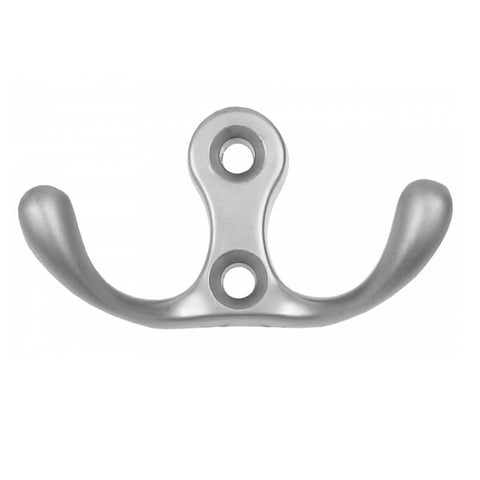
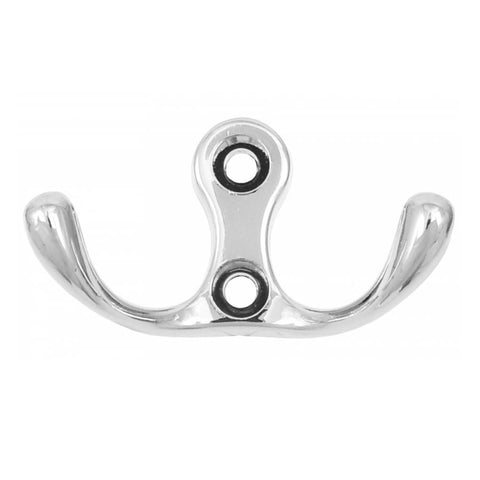
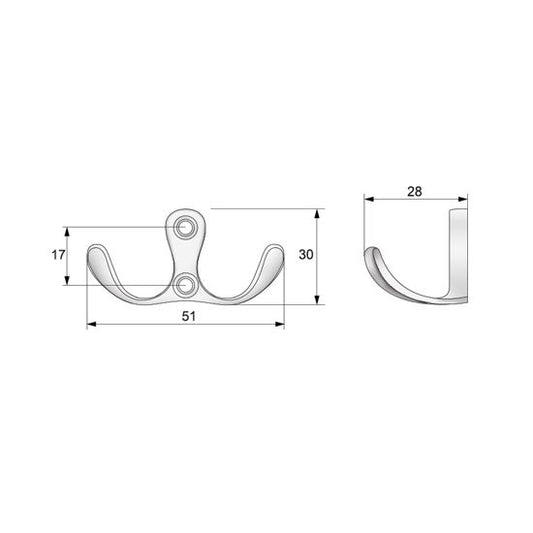
Double robe hook - Satin WP02Regular price $1.27Unit price / perRegular priceSale price $1.27
-
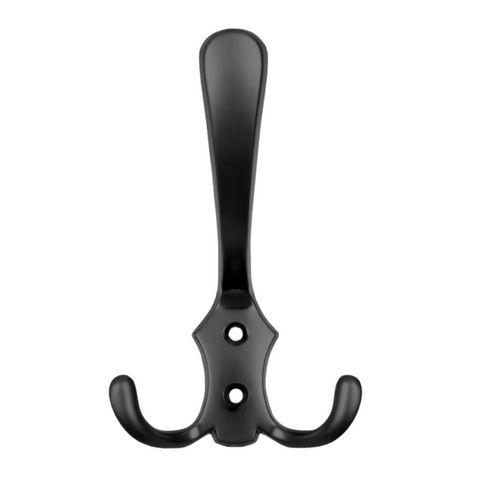
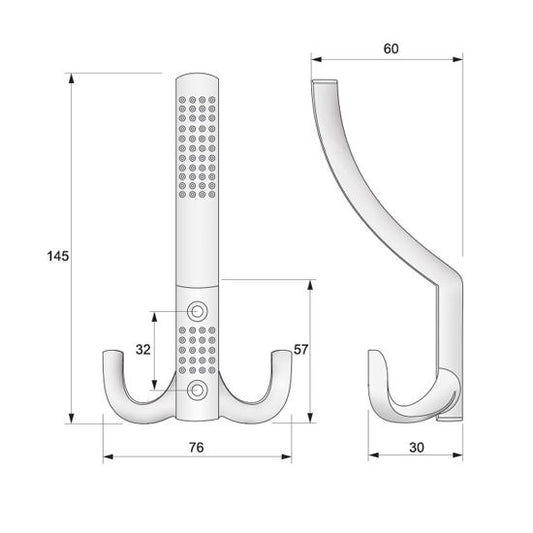
Triple robe hook - Satin WP03Regular price $2.68Unit price / perRegular priceSale price $2.68
-
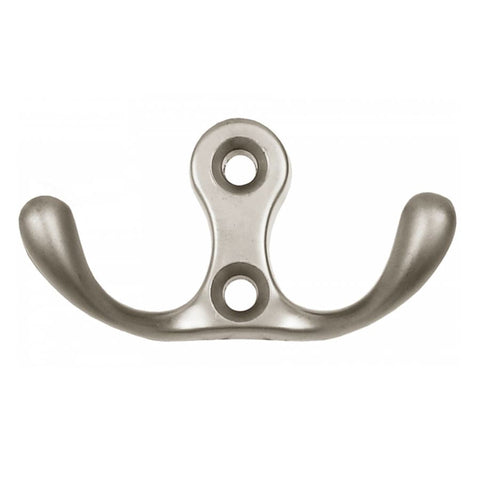
Double robe hook - Satin WP04Regular price $1.19Unit price / perRegular priceSale price $1.19
-
Triple robe hook - Satin WP05Regular price $2.36Unit price / perRegular priceSale price $2.36
-
Double robe hook - Satin WP01Regular price $0.91Unit price / perRegular priceSale price $0.91

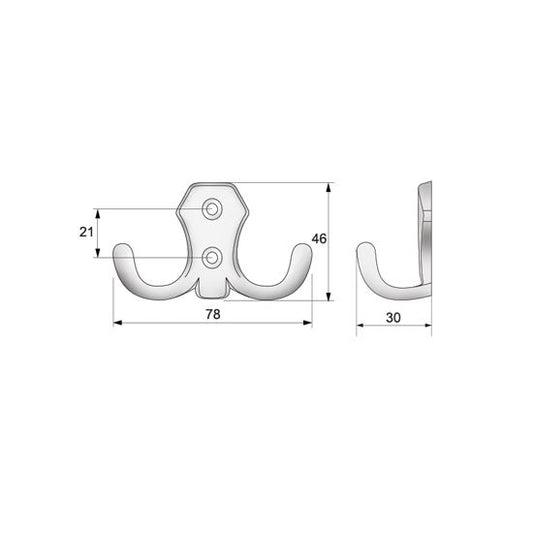

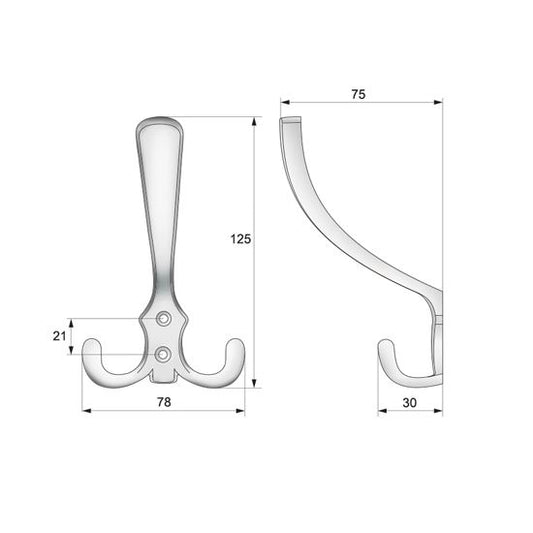

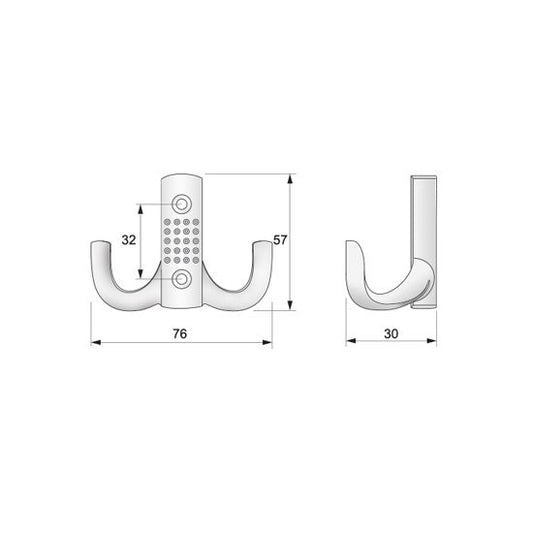


Satin nickel coat hooksare mechanical hardware fittings designed for hanging clothing, featuring a brushed, matte, or electroplated finish with a silky, low-sheen luster. Serving as functional load-bearing points in entryway, closet, and commercial furniture design, they combine high mechanical strength with a resilient, scratch-resistant surface structure.
When designing coat racks, built-in wardrobes, or freestanding display systems, choosing the right hardware is essential for long-term furniture durability. Compared to high-gloss alternatives, satin nickel coat hooks offer distinct practical advantages for daily use, as micro-scratches and fingerprints are visually minimized by the diffuse light reflection. In professional interior fitting andwall-mounted coat hooksinstallation, precise knowledge of geometry, leverage forces, and fastening technique is crucial to prevent hardware tear-out under heavy loads.
Material and Surface Finish
Coat hooks for cabinetry and furniture making are typically die-cast fromZinc alloy(Zamak), a robust zinc-aluminum alloy, or manufactured from solid steel. These base materials deliver the tensile strength and break resistance required for daily use.
The "satin" finish is not a color in the traditional sense, but a refined surface condition. Following casting and deburring, the component is electroplated (usually with nickel or chrome) and subsequently brushed or chemically matted. The result is a non-reflective, low-glare surface. Unlike mirror-polishedchrome coat hooksor anodizedaluminum coat hooks, the satin look integrates subtlety with various substrate materials. Especially on panels featuring bold wood grains—such as modern oak panels or general solid wood boards—the brushed metallic tone provides a harmonious contrast without visually overpowering the natural grain.
Design Types and Geometry of the WP Series
A hook's geometry dictates its application. The primary distinction lies between multi-hook designs with vertical or horizontal mounting points. Technical documentation on the official website features several standardized styles tailored to different space constraints and load specifications.
Double Hooks (Vertical Layout)
Double hooks feature a shared base plate with a longer, top arm extending upward (for hats, heavy winter coats, or large hanging loops) and a shorter, lower prong extending forward or downward (for light jackets, scarves, or bags).
- TheCoat Hook - Satin WP01offers a classic curved design. The flared upper prong reliably keeps heavy garments from slipping off.
- TheCoat Hook - Satin WP02features a more compact profile, making it ideal for wall panels with limited vertical height.
- TheCoat Hook - Satin WP04provides an alternative double-hook option with specific mounting hole spacing that can be pre-drilled using standard CNC machinery.
Triple Hooks (Horizontal Layout)
Triple hooks spread their mounting points across a horizontal axis. This layout is especially suitable for high-traffic entryways, allowing multiple garments to hang side-by-side without overlapping.
- TheCoat Hook - Satin WP03features a wide base plate with three distinct hanging prongs. Load distribution differs significantly here: shear forces on the mounting screws are higher, while pull-out tension (leverage) is lower compared to deep-reaching double hooks.
- TheCoat Hook - Satin WP05expands the lineup with alternative screw hole centers, making it suitable for retrofits or custom cabinetry hole grids.
Statics and Load Distribution
Mounting hardware on vertical surfaces requires an understanding of mechanical forces. A wet winter coat can weigh6.6 lbs to 11 lbs (3 kg - 5 kg). Attached to a backing panel, the hook acts like a rigid lever arm, converting the vertical downward pull of the garment into a horizontal pull-out force exerted on the top mounting screw.
The farther the hanging point extends from the wall or panel (hook projection), the greater the torque applied to the top screw. The lower screw primarily absorbs shear force (weight parallel to the panel surface). Selecting the proper fastener for your specific wall or substrate material is therefore critical.
Fastening Techniques and Installation
Installation methods differ fundamentally depending on whether the hardware is anchored directly into masonry drywall or mounted onto engineered wood panels.
Wood and Cabinetry Installation (Panels & Wardrobes)
When mounting coat hooks inside wardrobes or onto MDF and particleboard panels, standardwood screwsorparticleboard screwsshould be used.
- Screw Diameter:Mounting holes in the base plate of these satin nickel coat hooks are typically sized for screws with a thread diameter of#6 to #8 (3.5 mm to 4.0 mm).
- Head Style:Flatcountersunk screwsare strictly required. The countersunk head centers the hook precisely within the mounting hole while sitting flush against the metal surface. Raised screw heads (like pan heads) can snag or damage delicate clothing.
- Drive Type:To ensure high torque transmission without slippage, usePozidriv (PZ)orStar/Torx (TX)drive screws.
- Screw Length:Length must match panel thickness precisely. For a standard3/4 in (18 mm or 19 mm)cabinet panel, select a screw length of5/8 in (15 mm - 16 mm). This provides maximum pull-out resistance without piercing the finished back of the panel.
- Pre-Drilling:To prevent splitting melamine coatings or wood fibers, pre-drill holes using a5/64 in to 3/32 in (2.0 mm - 2.5 mm)wood drill bit to a depth of roughly3/8 in (10 mm).
Direct Wall Installation (Masonry and Drywall)
If installing directly onto a wall without a decorative wood backing panel:
- Solid Walls (Concrete, Brick):Use nylon wall anchors with a diameter of1/4 in (6 mm or 8 mm). Selected countersunk screws must be long enough to pass through the hook base, plaster, and full anchor length—typically1-1/2 in to 2 in (40 mm - 50 mm).
- Drywall (Gypsum Board):Standard wall plugs in1/2 in (12.5 mm)drywall cannot withstand the leverage of a heavily loaded coat hook. Always usehollow-wall metal anchorsortoggle boltsthat spread the load behind the drywall.
Ergonomics and Layout Spacing in Furniture Design
When designing functional entryway furniture, standard industry guidelines help ensure maximum convenience and usability.
- Mounting Height:Ergonomic hanging height for adults is63 in to 67 in (1600 mm - 1700 mm)above finished floor level. For children's coat racks, a secondary row should be installed at a height of39 in to 47 in (1000 mm - 1200 mm).
- Horizontal Spacing:To comfortably accommodate bulky winter coats, space hooks at least6 in (150 mm)apart center-to-center. For staggered (zigzag) layouts, horizontal spacing can be reduced to4 in (100 mm), provided vertical offset is at least8 in (200 mm).
Hardware Matching and Integrated Interior Design
A professionally designed piece of furniture relies on uniform hardware finishes. The satin finish of the WP series pairs seamlessly with matching hardware across your space.
For instance, if designing a hall credenza below a coat panel, installingsatin nickel cabinet handleson drawer fronts creates a unified aesthetic. If the credenza isn't built on a full plinth base,satin nickel furniture legsmaintain clear floor clearance while carrying design elements down to the floor. For entryway units with integrated device charging stations or vanity mirror lighting, a matchingsatin nickel desk grommetneatly manages wiring through wood surfaces.
For high-contrast interior concepts, satin nickel coat hooks can also be combined with contrasting finishes. In modern industrial interiors, pairing warm wood tones and satin hooks with black accents—such as a bold black coat hook—helps delineate specific storage zones.
Maintenance and Troubleshooting
Satin-finished zinc-aluminum coat hooks require minimal maintenance. The matte surface tolerates contact with damp outerwear or rough metal garment hangers significantly better than high-gloss options. However, avoid abrasive scouring pads or acidic cleaners during routine cleaning, as these can wear down the fine brushed grain of the electroplated finish. Wiping with a slightly damp cloth and mild soap is sufficient.
If a hook becomes loose over time, this is rarely due to hardware failure, but rather material fatigue in the wood substrate (e.g., stripped screw threads in particleboard). To fix this, fill the stripped pilot hole with wood glue and a wooden dowel, allow it to cure, re-drill, and re-install. Alternatively, upgrade to a screw with a larger thread diameter—such as a#8 (4.0 mm)instead of a#6 (3.5 mm).
---
Frequently Asked Questions (FAQ)
What screw diameter should I use to install WP Series coat hooks?
Countersunk holes in the base plate accept flat-head screws with a thread diameter of#6 to #8 (3.5 mm to 4.0 mm). Larger screw heads will sit proud instead of flush.
How long should screws be for a 3/4 in (19 mm) thick panel?
For maximum hold without breaking through the back face, use particleboard screws measuring5/8 in (16 mm or 17 mm)long. Ensure the screw tip does not penetrate the finished rear surface.
Are satin nickel coat hooks suitable for humid areas like bathrooms?
Yes. Electroplated coating over a Zinc alloy core provides reliable corrosion protection. They can be used as towel hooks, provided they are not continuously submerged or exposed to standing water.
What is the difference in load capacity between WP01 and WP03?
The structural load capacity of the metal body for both styles easily exceeds daily garment weight (over22 lbs (10 kg)). However, because the double hook (WP01) projects farther out from the wall, it exerts greater leverage (pull-out tension) on the upper mounting screw than the lower-profile triple hook (WP03).
Do I need to pre-drill holes in MDF panels?
Yes, absolutely. MDF (medium-density fiberboard) is prone to splitting along edges and mushrooming around screw entry holes if driven without pilot holes. Pre-drill using a3/32 in (2.5 mm)drill bit.
Can I mount these hooks directly onto a plastered masonry wall?
Yes. For direct wall installation, use suitable nylon anchors (e.g.,1/4 in (6 mm)) along with sufficiently long countersunk screws (e.g.,#8 x 1-3/4 in (4.0 x 45 mm)) to pass through plaster layer into structural masonry.
---
Related Categories
Explore matching hardware lines and alternative surface finishes for your custom cabinetry or interior project: