
Cabinet Recycling Bins
Popular Subcategories


-
Pull-Out Kitchen Waste Bin - 2x20L - 15-3/4 inch CabinetRegular price $134.10Unit price / perRegular priceSale price $134.10
-
Pull-Out Shoe Rack Shelf 23-5/8 inch (60 cm) Soft-Close - Chrome/Aluminum - GrayRegular price $97.91Unit price / perRegular priceSale price $97.91
-
Trash Can Pull Out Waste Separator - 34L+2x17L - 23-5/8 inch (60 cm) CabinetRegular price $174.59Unit price / perRegular priceSale price $174.59
-
Dual Trash Can Pull Out - 2x15L or 2x20L - 23-5/8 inch (60 cm) Kitchen CabinetRegular price From $103.22Unit price / perRegular priceSale price From $103.22
-
Pull Out Cabinet Recycling Bins Soft-Close 4x15L or 4x20L - 31-1/2 inch Kitchen CabinetRegular price From $130.44Unit price / perRegular priceSale price From $130.44
-
Pull Out Cabinet Recycling Bins with Soft-Close (2 x 15L + 2 x 7L) or (2 x 20L + 2 x 9L) - 23-5/8 inch CabinetRegular price From $114.83Unit price / perRegular priceSale price From $114.83
-
Cabinet Recycling Bins Soft-Close 3 x 4 gal + 1 x 1.6 gal - 23-5/8 inch Base CabinetRegular price $184.24Unit price / perRegular priceSale price $184.24
-
Pull-Out Clothes Hanger Soft-Close - GrayRegular price $49.60Unit price / perRegular priceSale price $49.60
-
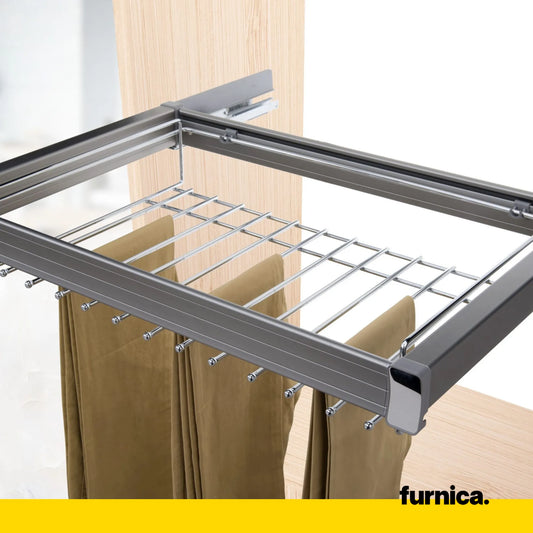
Pull Out Trouser Rack Soft-Close - GrayRegular price $68.00Unit price / perRegular priceSale price $68.00
-
Pull-Out Shoe Storage Rack 31-1/2 inch (80 cm) Soft-Close - Chrome/Aluminum - GrayRegular price $111.13Unit price / perRegular priceSale price $111.13
-
Pull-Out Shoe Organizer Shelf for 35-7/16 inch Slim Shoe Cabinet - Soft-Close - Chrome/Aluminum - GrayRegular price $114.21Unit price / perRegular priceSale price $114.21
-
Pull-Out Shoe Rack Tray for 27-1/2 inch (70 cm) Slim Shoe Cabinet Soft-Close - Chrome/Aluminum - GrayRegular price $108.08Unit price / perRegular priceSale price $108.08
-
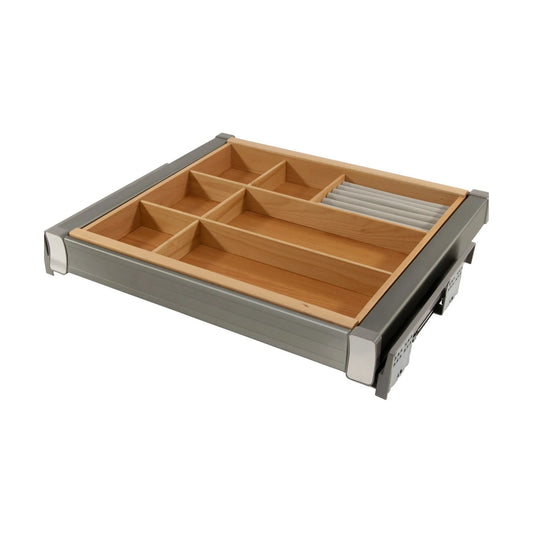
Pull-Out Multifunctional Shelf for 35-7/16 inch (90 cm) Cabinet Soft-Close - Aluminum/Wood - GrayRegular price $208.29Unit price / perRegular priceSale price $208.29
-
Pull-Out Storage Shelf for 31-1/2 inch (80 cm) Cabinet with Soft-Close - Aluminum/Wood - GrayRegular price $197.52Unit price / perRegular priceSale price $197.52
-
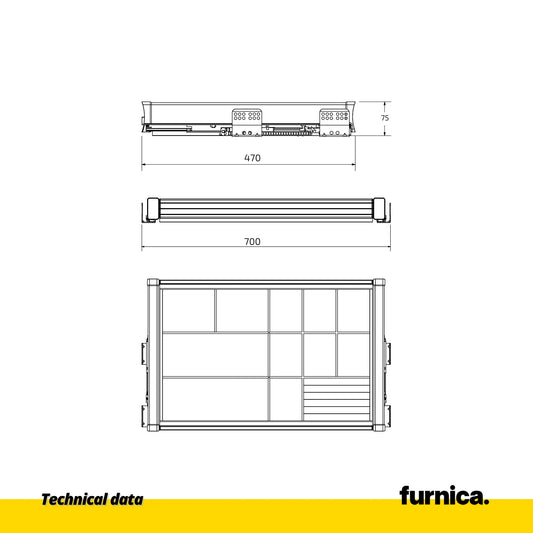
Pull-Out Shelf Organizer for 27-9/16 inch (70 cm) Cabinet Soft-Close - Aluminum/Wood - GrayRegular price $180.20Unit price / perRegular priceSale price $180.20
-
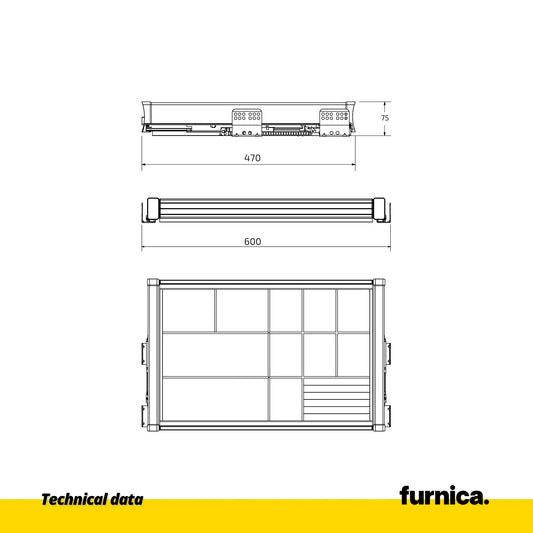
Pull-Out Storage Tray for 23-5/8 inch (60 cm) Wardrobes Soft-Close - Aluminum/Wood - GrayRegular price $167.66Unit price / perRegular priceSale price $167.66
-
Pull Out Trouser Hanger 2 for 31-1/2 inch (80 cm) Armoire Soft-Close - Single Shelf - GrayRegular price $110.79Unit price / perRegular priceSale price $110.79
-
Cabinet Recycling Bins Soft-Close 3 x 4 gal + 3 x 1.6 gal - 23-5/8 inch Base CabinetRegular price $227.23Unit price / perRegular priceSale price $227.23
-
Pull-Out Storage Baskets for 35-7/16 inch (90 cm) Cabinet Soft-Close - Single Shelf - ChromeRegular price $100.02Unit price / perRegular priceSale price $100.02
-
Pull-Out Wire Storage Basket for 31-1/2 inch (80 cm) Closet Soft-Close - Single Shelf - ChromeRegular price $97.36Unit price / perRegular priceSale price $97.36
-
Pull-Out Storage Baskets for 27-1/2 inch (70 cm) Wardrobe Soft-Close - Single Shelf - ChromeRegular price $94.71Unit price / perRegular priceSale price $94.71

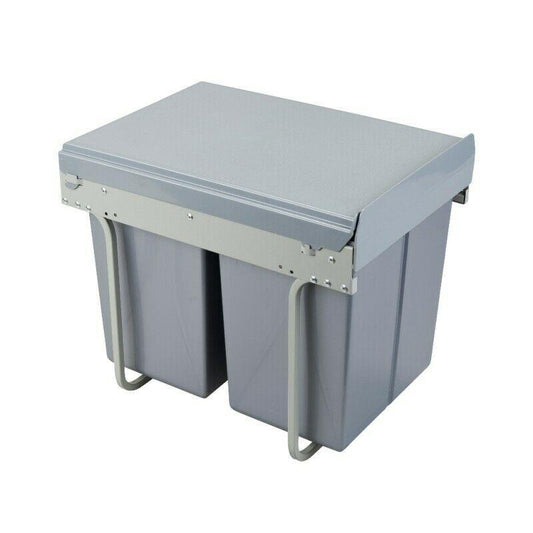

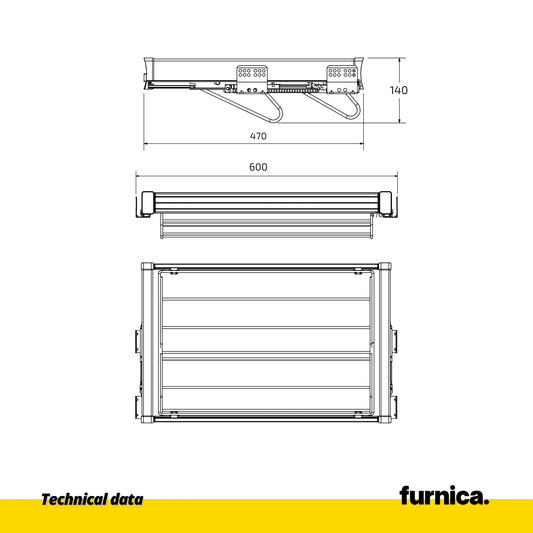


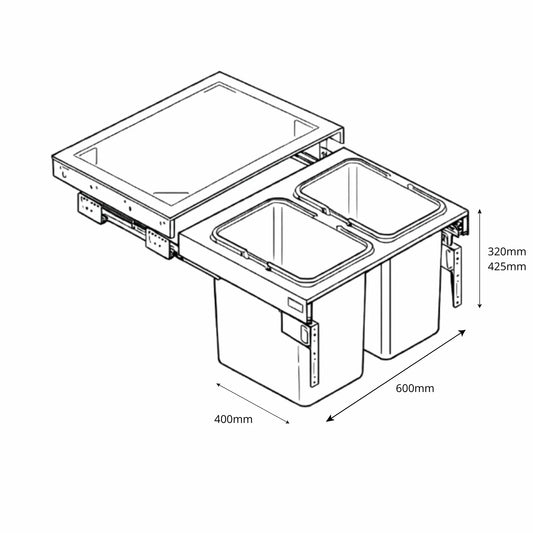

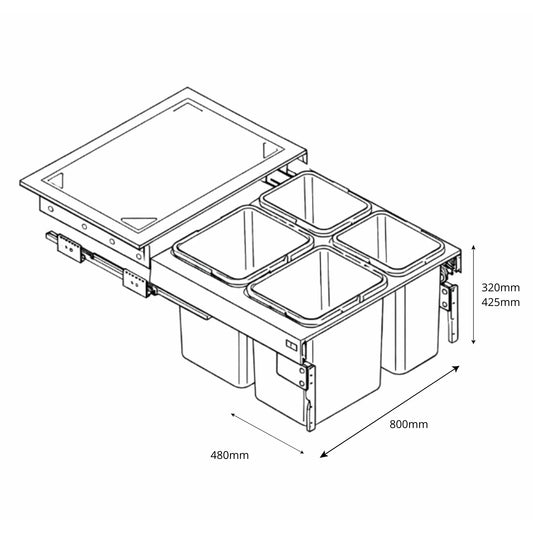

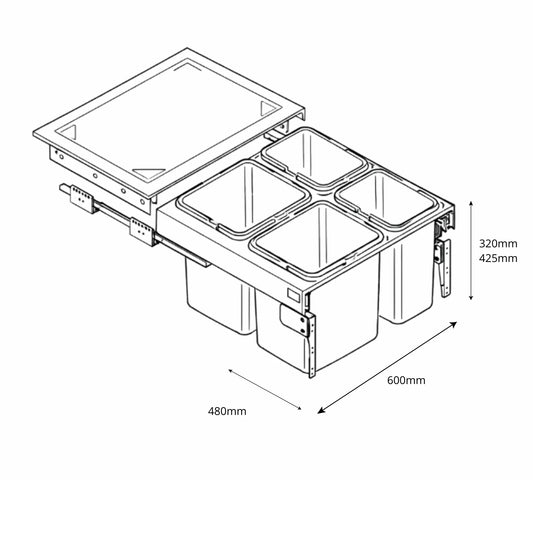

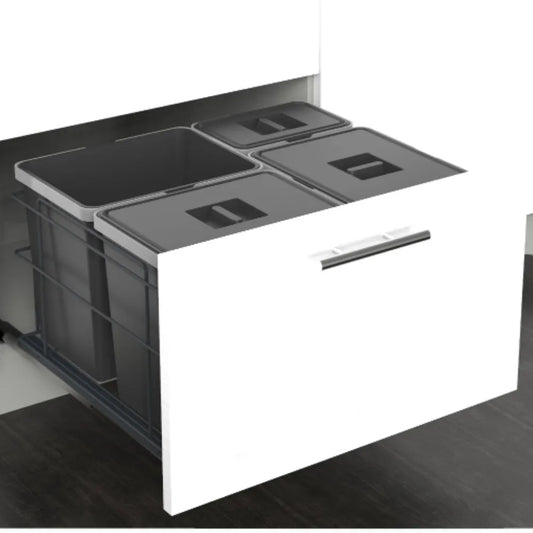



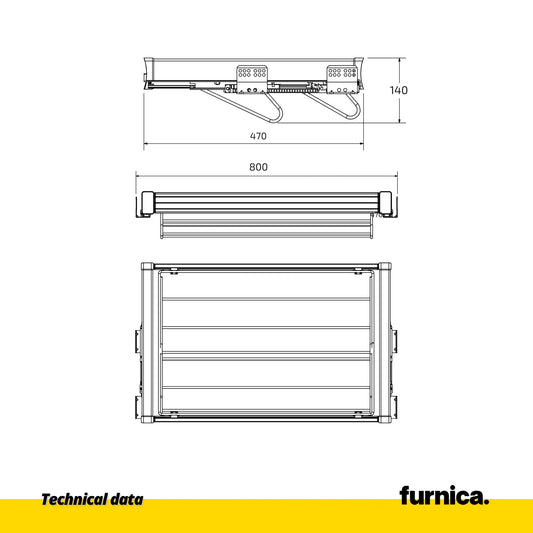

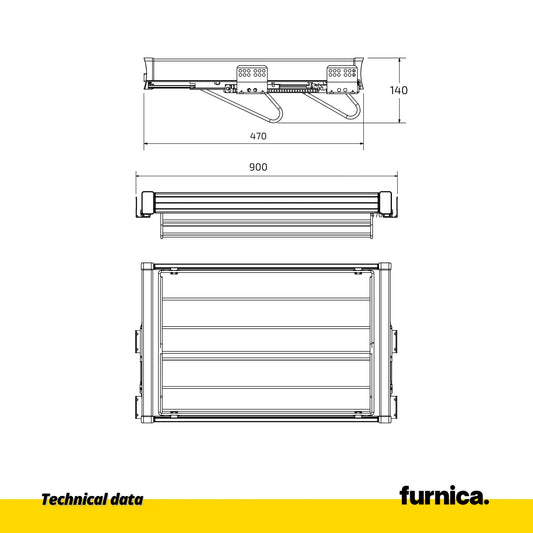

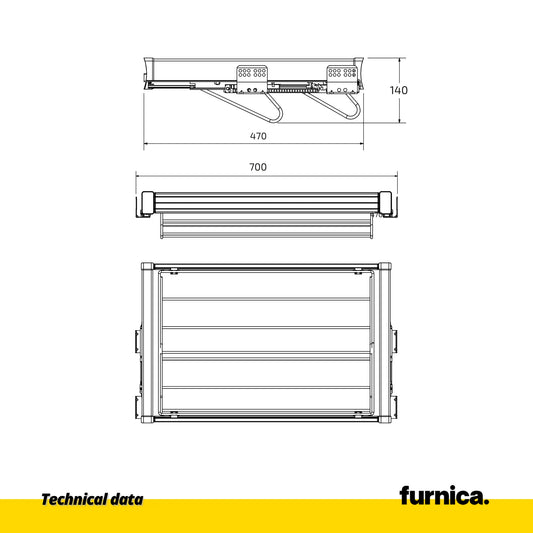

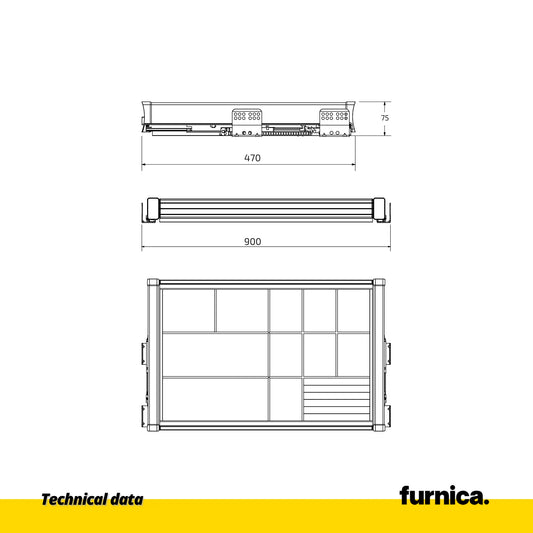





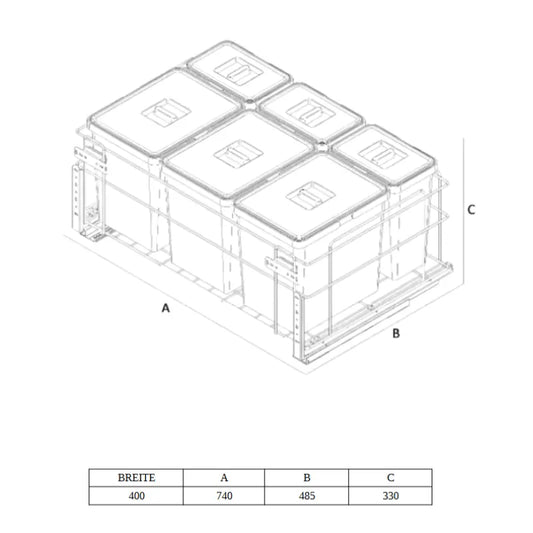

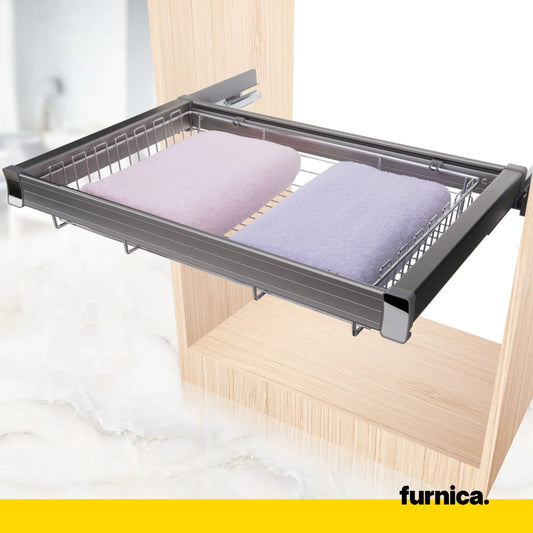

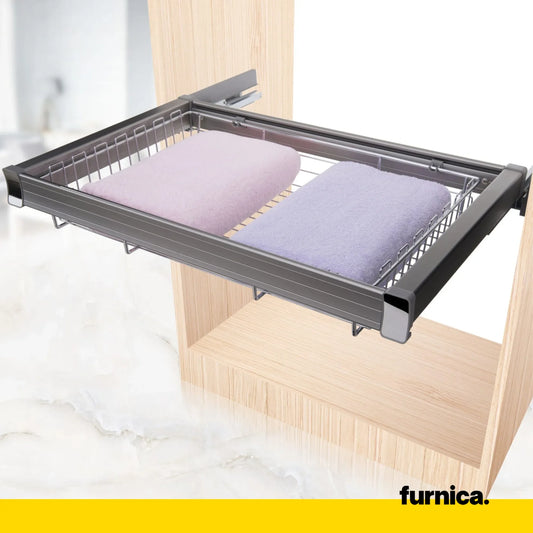

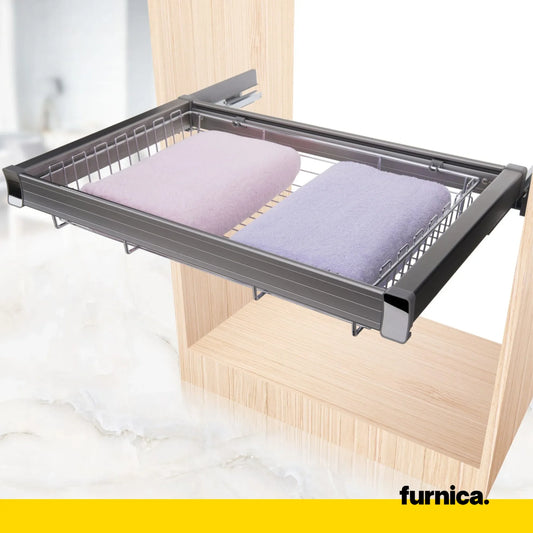
Cabinet recycling binsare frame-mounted, ball-bearing pull-out systems designed to secure multiple waste containers within a sturdy housing, bringing structured waste sorting directly inside your base cabinet.
A well-engineered cabinet recycling system acts like the quiet clockwork of a modern kitchen—operating silently in the background and keeping your daily workflow moving seamlessly. Instead of bulky freestanding step cans cluttering your floor space, your waste disposal moves discreetly behind the cabinet front. For DIYers and kitchen remodelers, retrofitting a pull-out system is a classic project that massively boosts kitchen functionality with minimal tool investment.
In this guide, you will learn how to select the right pull-out system for your cabinet width, what to consider regarding installation depth under the sink, and how to complete a professional installation.
Structure and Hardware Mechanics of Cabinet Recycling Bins
A professionalcabinet recycling binsystem consists of three main components: the mounting frame, the drawer slides, and the heavy-duty plastic bins.
The foundation for most units is abottom-mount design, where the slide mechanism screws directly onto the bottom shelf of the kitchen cabinet. Alternatively,side-mount systemsattach securely to the vertical interior side walls of the cabinet carcass.
Crucial to everyday convenience is the slide mechanism. High-end systems utilizefull-extension slides. This allows the frame to extend 100% out of the cabinet, ensuring back bins can be removed effortlessly without getting caught on the front edge of the countertop or cabinet frame. Entry-level models rely onpartial-extension slides, where roughly 25% of the frame remains inside the cabinet interior.
Another essential hardware feature is thesoft-close damping mechanism. Awaste bin waste sorting Soft-Close 3 x 15L + 3 x 6L - 60cm kitchen cabinetcatches the momentum in the final few inches, gently and silently guiding the slide into its fully closed position. This is distinct from push-to-open (tip-on) mechanisms, where applying pressure to the front releases the slide. Soft-close cushions the closing motion, whereas push-to-open enables handle-free opening.
Determining the Correct Size: Cabinet Width and Volume
When looking toretrofit a pull-out cabinet recycling bin, the most critical dimension is thecabinet width(the outer dimension of the cabinet carcass). Kitchen cabinets follow standardized sizing. The interior clearance (clear width) equals the total cabinet width minus the side wall thicknesses—typically 2 x 5/8 in (2 x 16 mm) or 2 x 11/16 in (2 x 18 mm). Built-in bin manufacturers generally specify the exact exterior cabinet width their systems are designed to fit.
Narrow Base Cabinets (15-3/4 in to 19-11/16 in / 40 cm to 50 cm)
Compact kitchens and tight alcoves benefit from systems made for 15-3/4 in (40 cm), 17-11/16 in (45 cm), or 19-11/16 in (50 cm) wide cabinets by utilizing deep cabinet space. A primary example is thewaste bin waste sorting - 2x15L - 40cm kitchen cabinet. These units generally offer two bins stacked front-to-back. For specific dimensions in this category, explorewaste bin kitchen pull-out 40cm,waste bin kitchen pull-out 45cm, andwaste bin kitchen pull-out 50cm. Always double-check required installation depth: a unit like thewaste bin waste sorting 2 x 15L - 45cm, T = 480mm H = 320mm kitchen cabinet - Anthracite Grayrequires a clear internal depth of at least 18-7/8 in (480 mm).
Standard and Wide Base Cabinets (23-5/8 in to 31-1/2 in / 60 cm to 80 cm)
The 23-5/8 in (60 cm) base cabinet is the global benchmark for sink bases, offering maximum layout versatility. Under thewaste bin kitchen pull-out 60cmsection, choose between dual large-capacity bins (e.g., 2 x 7.1 gal (2 x 27 L)) or multi-bin configurations with three to four smaller inserts. Awaste bin waste sorting Soft-Close (2 x 15L + 2 x 7L) or (2 x 20L + 2 x 9L)- 60cm kitchen cabinetconveniently combines larger containers for general trash and recyclables alongside smaller pails for compostables or household batteries.
2-Bin, 3-Bin, or 4-Bin Sorting Systems
The number of internal compartments depends on your local municipality waste streams and personal habits:
- 2-Bin Pull-Outs:Ideal for straightforward separation of trash and mixed recyclables. Browsewaste bin waste sorting 2 Fach.
- 3-Bin Pull-Outs:The most popular configuration, catering to general waste, single-stream recyclables, and organic compost. Find all options underwaste bin waste sorting 3 Fach.
- 4-Bin Pull-Outs:Features specialized small compartments for glass, paper, or items like coffee pods.
Spatial Planning: Navigating Sink Cabinets
The standard location for installingcabinet recycling binsis directly inside the under-sink base cabinet. Here, DIYers face the most common installation obstacle: the sink p-trap, plumbing lines, and supply valves.
Before selecting a system, take precise measurements of your cabinet'sclear internal heightandclear internal depth. Plumbing traps routinely extend low into the cabinet cavity. Standard built-in bin systems usually range in height from 12-5/8 in to 15-3/4 in (320 mm to 400 mm). Measure from the cabinet floor up to the bottom edge of the p-trap. If clearance is limited, select a low-profile pull-out model or install a compact, wall-routed space-saving drain trap.
Internal depth demands equal attention. Rear-wall shut-off valves, water lines, or inline water heaters often consume available depth, preventing full usage of the standard 19-11/16 in to 21-5/8 in (500 mm to 550 mm) interior footprint. Always verify the manufacturer's specified "minimum internal depth" (e.g., 18-7/8 in (480 mm)).
Installation Guide: Retrofitting Pull-Out Cabinet Bins
Retrofitting a pull-out recycling system is an approachable DIY task taking roughly 30 to 45 minutes. Most standard units are engineered for bottom-mount installation behind a hinged **swing door**. You manually swing open the cabinet door first, then extend the pull-out frame forward.
Required Tools
- Cordless driver or Phillips screwdriver (sizePZ2for wood/chipboard screws)
- Tape measure
- Pencil
- Brad awl or small wood drill bit (1/8 in /3 mm)
- Carpenter square
Step-by-Step Installation Process
- Preparation:Completely clear out the cabinet and wipe clean the bottom shelf. Ensure door hinges do not obstruct opening clearance; the cabinet door should open to at least a 90° angle so the pull-out slide extends freely without scraping the inner face of the door.
- Positioning the Frame:Place the fully assembled slide framework (without the bins inserted) onto the cabinet floor. Align it centered or flush against one side according to instructions. Important: Maintain roughly 1/4 in to 3/8 in (5 mm to 10 mm) clearance behind the closed door panel so the door doesn't hit the frame when shut.
- Marking and Pre-drilling:Mark all base slide mounting hole locations with a pencil. Remove the frame. Indent the marks with an awl or pre-drill shallow pilot holes (maximum 3/16 in (5 mm) deep) using a 1/8 in (3 mm) wood bit. Pre-drilling prevents the cabinet shelf's melamine veneer from chipping or flaking during screw insertion.
- Fastening:Set the slide framework back in place and secure it tightly using the providedwood screws(typically #8 x 5/8 in / 4 x 16 mm or 4 x 15 mm). Take care not to over-tighten, which could strip the wood fiber holes.
- Final Assembly:Extend the slides, drop in the plastic recycling bins, and test the movement. The frame should glide smoothly on its tracks and engage the soft-close feature silently over the final few inches of travel.
Extended Applications for Pull-Out Recycling Systems
While kitchens remain the primary application, pull-out cabinet systems are increasingly installed in other living spaces to eliminate clutter.
Utility and Laundry Rooms
In laundry room storage cabinets near the washer, large-capacity bin systems (e.g., 2 x 7.1 gal (2 x 27 L) or 2 x 9.0 gal (2 x 34 L)) keep powdered detergent dry or allow pre-sorting of whites and darks. Heavy-duty metalball-bearing slidescarry heavy load capacities effortlessly (often rated up to 66 lbs or 99 lbs (30 kg or 45 kg)).
Home Offices and Workspaces
When searching foroffice cabinet recycling bins, buyers look for streamlined methods to hide paper waste and trash. Compact slide-out systems can easily integrate into modular office credenzas or storage furniture. Converting a low credenza or cabinet into a concealed recycling center simply requires adding an internal pull-out track assembly.
This trend toward integrated functional hardware extends throughout modern home design. In adjacent utility spaces, you can incorporate space-maximizing hardware like apull-out Shelf, ironing board, foldable 300 mmor slide-out closet organizer tracks to maximize every inch of available space.
Materials and Maintenance
The heavy-duty slide rails and mounting chassis are manufactured from galvanized steel or powder-coated metal to prevent corrosion in humid under-sink environments. The bins themselves are injection-molded from durable, easy-to-clean polypropylene plastic.
For optimal sanitation, choose bins featuring smooth, rounded internal corners. Select systems include a fixed cabinet-mounted top lid. This lid remains inside the cabinet when pulling out the bins, doubling as a convenient storage shelf for extra trash bags, sponges, or cleaning supplies.
Maintaining slide hardware is simple: wipe down the telescoping slide rails periodically with a clean, dry or slightly damp cloth. Never apply harsh degreasers to the slide rails, as this strips away factory-applied ball-bearing grease, causing stiff or erratic glide performance.
Frequently Asked Questions (FAQ) About Cabinet Recycling Bins
What is the difference between door-mounted front pull-outs and hinged-door systems?With a hinged-door system, you first open the door on its cabinet hinges, then manually pull the bin frame forward. With a door-mounted (front-attached) pull-out system, the cabinet door face screws directly into the bin's front bracket frame. Pulling the cabinet door handle opens the entire slide assembly and door in a single motion. Many bottom-mount systems convert to front-door mounting using optional mounting brackets.
Can I install cabinet recycling bins inside an existing drawer box?Yes, specialized drawer insert bins drop directly into prefabricated drawer systems (such as Hettich, Blum, or Nolte slide-outs). However, the catalog featured here focuses primarily on standalone hardware systems featuring integrated bottom-mount slide tracks independent of existing drawers.
What total gallon or liter capacity do I need?For a 1 to 2 person household, a combined capacity of two 4.0 gal (15 L) bins is usually sufficient. Families generally prefer 5.3 gal (20 L) or 7.1 gal (27 L) main bin options. Keep in mind: organic waste should be kept in smaller containers (e.g., 1.6 gal or 1.8 gal (6 L or 7 L)) and emptied frequently to minimize household odors.
My base cabinet is 23-5/8 in (60 cm) wide, but internal hinges stick out. Will the system clear them?It depends on clear internal width. A standard 23-5/8 in (60 cm) cabinet features roughly 22-3/16 in to 22-3/8 in (564 mm to 568 mm) of interior clearance. Most 23-5/8 in (60 cm) recycling bin frames are engineered narrower (around 20-1/16 in to 20-7/8 in (510 mm to 530 mm)) specifically to glide clear of standard concealed cup hinges. Always measure clearance between hinge faces against the product's overall width.
Are there all-metal cabinet recycling options?While internal pails are almost universally manufactured from plastic for weight reduction and washability, premium structural frames and trim covers are available in stainless steel or chrome-plated metal for a sleek aesthetic. Explore these options under ourwaste bin aus Stainless steelsection.
Related Kitchen Storage Hardware Categories
If you want to maximize your lower kitchen cabinets, full-extension sliding hardware opens up vast organizational possibilities. Beyond waste management featured in our mainwaste bin kitchen pull-outcollection, ball-bearing slide mechanisms bring cleaning supplies, cookware, and pantry goods within easy reach. Precise measurement of cabinet width and clear internal dimensions remains the key to success across all retrofitting projects.