
28mm Cam Dowels
Popular Subcategories
-
Cam Dowel 1-1/8 inch with M6 Screw-Thread - 1000 pcsRegular price $65.57Unit price / perRegular priceSale price $65.57

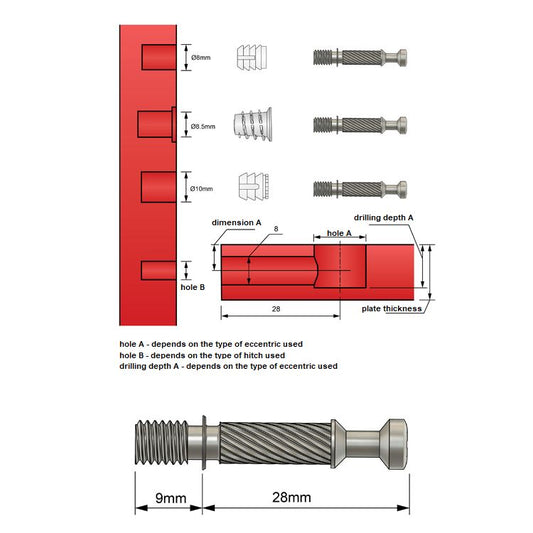
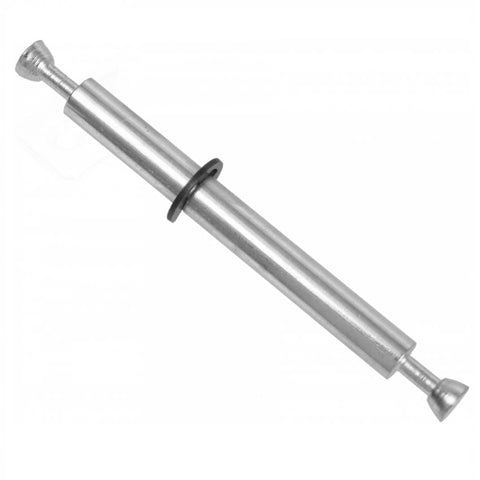
28mm cam dowelsare heavy-duty steel connecting elements for professional cabinet making. Combined with a cam lock housing, they create a force-locking, right-angled, and fully detachable cabinet joint.
In the construction of cabinet carcasses, wardrobes, and shelving units, the28mm cam dowelsserve as the central structural anchor. The specification of1-3/32 in (28 mm)refers to the crucial drilling distance: it precisely defines the measurement from the panel edge of the horizontal shelf to the center of the hole drilled for the cam housing. For woodworkers, cabinetmakers, and installers, this dimension forms the foundation for grid planning in furniture construction. The cam dowel acts like a steel anchor inside the substrate, absorbing the tensile forces of the eccentric cam and distributing them safely into the engineered wood panel.
Technical Specifications and Structural Features
A technical understanding of exact dimensions and thread types is essential for proper processing. Standard 28mm cam dowels feature specific parameters engineered to align perfectly with industrial manufacturing standards and the32mm cabinet system.
The M6 Screw Thread
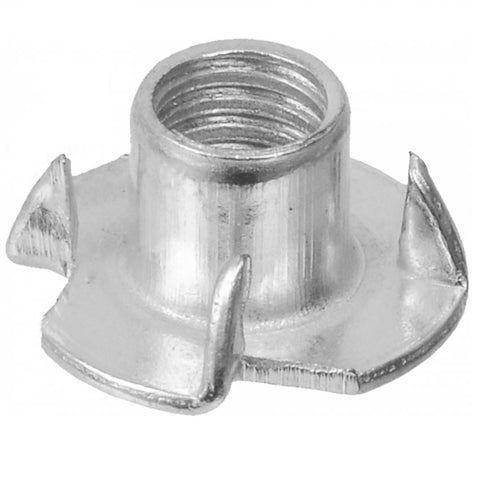
Unlike versions with coarse Euro threads that cut directly into a 13/64 in (5 mm) pre-drilled hole in wood, the models in this category feature a metricM6 thread. This thread requires a matching counterpart installed in the vertical cabinet side panel. Typically, a flush-mountedthreaded insert(Rampa nut) or a specialized plastic dowel with an internal M6 thread is driven flush into theparticle boardorMDF. The key advantage of the M6 machine thread lies in its exceptional pull-out strength. Even during repeated assembly and disassembly of the furniture, the thread will not strip out of the engineered wood because the force distribution occurs through the firmly anchored metal insert.
The 28mm Clamping Distance
The clamping distance is the exposed shaft length of the dowel after it has been fully screwed up to its shoulder (integrated collar) into the side panel. With a measurement of1-3/32 in (28 mm), the recess for the cam housing in the joining shelf must be centered exactly1-3/32 in (28 mm)from the edge of the workpiece. This dimension is a well-established standard in the furniture industry and pairs seamlessly with panel thicknesses ranging from 19/32 in to 3/4 in (15 mm - 19 mm).
Dowel Head and Drive
The head of the dowel features a mushroom-shaped geometry. This shape is precision-machined to match the internal clamping cams of standard eccentric cam lock housings (such as Minifix systems). When turning the cam, it latches behind the head of the dowel, drawing both panels together without play. For easy installation, the head is typically equipped with a cross-recess drive, usuallyPZ2 (Pozidriv)or aPH drive.
System Integration: Cabinet Construction and Front Assembly
The stability of a cabinet begins out of sight. Hinges, drawer slides, and fronts can only be precisely adjusted if the primary structural connections are kept completely square and rigid using accurately installed 28mm cam dowels.
This systemic connection is particularly evident during the final assembly of kitchen cabinets and wardrobes. When installers align heavy cabinet doors or mount wide drawers, the carcass must not yield. Achieving a flawless visual appeal with front hardware depends entirely on a straight, square frame. For example, if5-1/16 in (128mm) cabinet handlesare mounted on a sagging door, every minor asymmetry is visually highlighted. Whether using classic5-1/16 in (128mm) closet handles, modernblack 5-1/16 in (128mm) kitchen handles, orbrushed stainless steel 5-1/16 in (128mm) cabinet pulls, the foundation for uniform reveal gaps is the hidden carcass joint. Even when installing specialized5-1/16 in (128mm) cabinet hardwareor alternative5-1/16 in (128mm) door pulls, the installer relies on the frame being held together rigidly in the background by reliable28mm cam dowels. A precise5-1/16 in (128mm) hole center spacingon the outside demands equally precise 1-3/32 in (28 mm) drill spacing on the inside.
Professional Installation and Processing Steps
To create a clean, permanently stable corner or center wall joint using 28mm cam dowels, follow these precise steps with the proper tooling.
1. Preparing the Side Panel
Drill the hole for the M6 counterpart in the vertical cabinet panel. When using an M6 threaded insert, pre-drill with a 5/16 in (8 mm) or 25/64 in (10 mm) wood drill bit (depending on the insert's outer diameter). Drive the insert in at an exact 90° angle. Next, drive the cam dowel in using a hand screwdriver (PZ2) or a cordless driver set to low torque until the collar sits flush.
2. Drilling the Horizontal Shelf
Two distinct drillings are required in the shelf to be joined:
- Edge Hole:A 5/16 in (8 mm) diameter hole is drilled into the center of the panel edge, allowing the dowel shaft to slide inside.
- Cam Recess Hole:Exactly1-3/32 in (28 mm)from the edge, drill the hole for the cam lock housing using a19/32 in (15 mm) Forstner bit. The drilling depth depends on panel thickness (for a 5/8 in (16 mm) board, typically 15/32 in to 1/2 in (12 mm - 12.5 mm) deep).
3. Joining the Components
Slide the shelf over the protruding cam dowel until the panel edge sits flush against the side wall. The dowel head now extends precisely into the 19/32 in (15 mm) cam housing recess. Insert the cam lock housing and turn it clockwise approximately180° to 210°using a screwdriver to draw the joint tightly together.
Product Selection by Project Size
Selecting the right package size depends on whether you are running a full production run or handling individual shop tasks. Our selection offers tailored quantities for every requirement:
- For Repairs and Prototypes:When fixing individual pieces of furniture or building sample units, a small quantity is ideal. Choose theCam Dowel with M6 Thread L28mm (1 pc).
- For Custom Woodworking:Cabinetmakers building custom wardrobes or kitchen units benefit from medium-sized packs. TheCam Dowels with M6 Thread L28mm (100 pcs)supply ample hardware for multiple full carcasses.
- For High-Volume Manufacturing:Industrial production lines and commercial fit-out projects process connectors in bulk quantities. TheCam Dowels with M6 Thread L28mm (1000 pcs)ensure an economical hardware supply for continuous output.
Related Dimension Systems and Alternatives
Not every cabinet design uses a 28 mm drill measurement. Depending on panel thickness, furniture design, or target hardware specifications, alternative shaft lengths may be required. Explore our full selection in the primarycam dowelscategory.
For slim components or thinner panels where the cam lock must sit closer to the edge, a 15/16 in (24 mm) length is often preferred (see24mm cam dowels). For deeper joints or heavy-duty connectors, a longer clamping length may be needed, as found in the34mm cam dowelssection. If your project calls for different shaft diameters or specialized dowel shapes, check out our range of8mm cam dowels.
Frequently Asked Questions (FAQ)
What is the difference between an M6 thread and a Euro thread on cam dowels?
AEuro thread(typically 1/4 in (6.3 mm) outer diameter) is self-tapping and screws directly into a pre-drilled 13/64 in (5 mm) hole in engineered wood. It is optimized for standard line-drilled hole patterns. AnM6 threadis a metric machine thread that cannot be cut directly into raw wood. It requires a metal or plastic threaded insert pre-installed into the panel. M6 connections offer significantly higher pull-out resistance and withstand frequent assembly and disassembly.
Why is the 28mm dimension so critical?
The1-3/32 in (28 mm)measurement defines the exact distance from the edge of the board to the center of the cam lock housing hole. If you accidentally drill at 1-11/32 in (34 mm) for a 28mm dowel, the head of the dowel will not reach into the cam housing, preventing the joint from locking. If you drill at 15/16 in (24 mm), the shelf cannot flush up against the side panel because the dowel bottoms out against the cam before the seam closes.
What tools are required to install an M6 cam dowel?
For panel prep, you need a suitable wood drill bit for the insert (sized to your specific insert diameter), a5/16 in (8 mm)drill bit for the edge hole, and a19/32 in (15 mm) Forstner bitfor the cam housing recess. Drive the dowel itself using aPZ2(Pozidriv) orPHdriver bit.
How deep should the hole for the 15mm cam housing be drilled?
This depends on your panel thickness. For standard 5/8 in (16 mm) particle board, the recess depth is typically15/32 in to 1/2 in (12 mm - 12.5 mm). For a 3/4 in (19 mm) panel, drill to a depth of roughly35/64 in to 37/64 in (14 mm - 14.5 mm). The recess must be deep enough for the cam housing to sit flush without the spur of the Forstner bit breaking through the outer face of the panel.
Can a 28mm cam dowel be used for mounting door fronts?
No. Cam dowels are designed exclusively for structural right-angle panel joints (carcass sides, tops, and bottoms). Cabinet doors are attached using concealed cup hinges, while cabinet handles or pulls (such as5-1/16 in (128mm) handles) are used to operate the fronts. The cam dowel ensures the cabinet frame behind those doors remains completely square and dimensionally stable.