
110 Degree Cabinet Hinges
Popular Subcategories
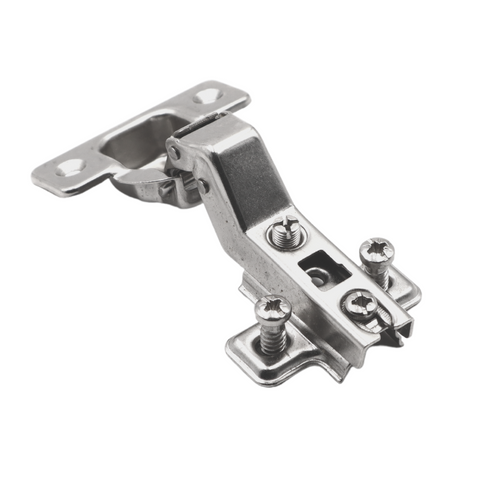
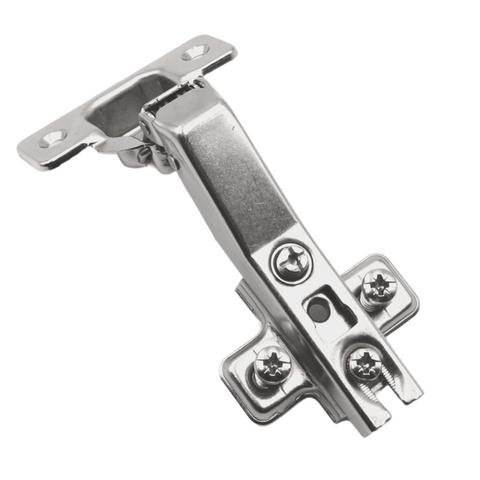
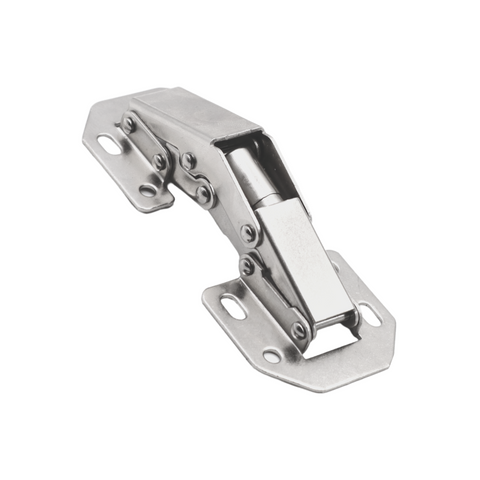
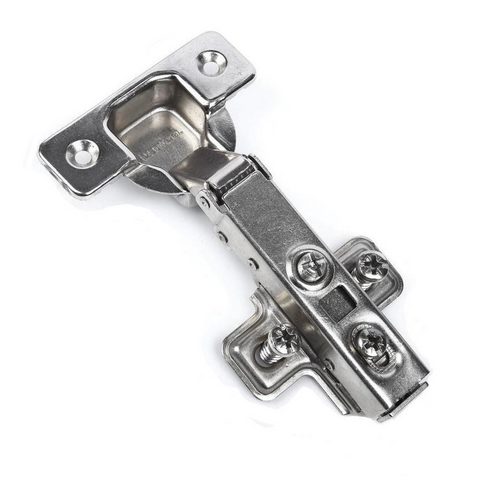
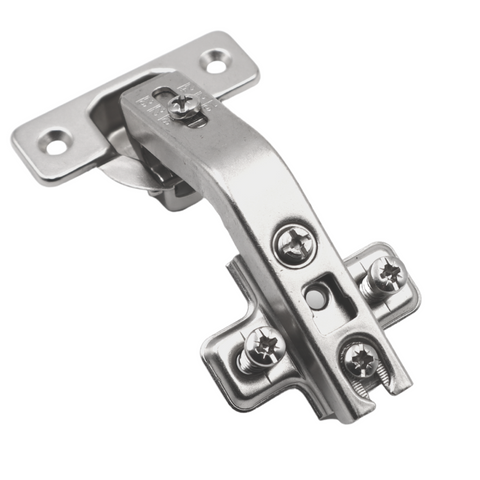
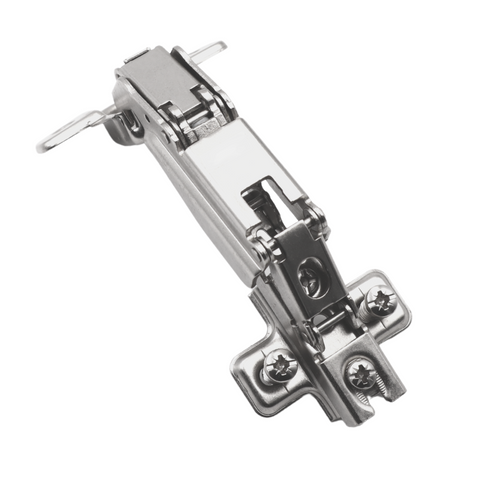
-
110° Soft-Close Hinge, H0 Mounting Plate with EURO Screws, Overlay DoorsRegular price $1.10Unit price / perRegular priceSale price $1.10
-
Hinge, H2 Mounting Plate with EURO Screws, Parallel DoorsRegular price $1.50Unit price / perRegular priceSale price $1.50
-
110° Hinge, H0 Mounting Plate with EURO Screws, Overlay DoorsRegular price $0.67Unit price / perRegular priceSale price $0.67
-
Soft-Close Hinge, H2 Mounting Plate with EURO Screws, Parallel DoorsRegular price $2.98Unit price / perRegular priceSale price $2.98
-
Soft-Close Hinge, H0 Mounting Plate with EURO Screws, Flush DoorsRegular price $1.33Unit price / perRegular priceSale price $1.33
-
Hinge, H0 Mounting Plate with EURO Screws, Twin DoorsRegular price $0.68Unit price / perRegular priceSale price $0.68
-
3D 110 Degree Soft-Close Cabinet Hinge, H0 Mounting Plate with EURO Screws, Inset ApplicationRegular price $2.18Unit price / perRegular priceSale price $2.18
-
Hinge, H0 Mounting Plate with EURO Screws, Flush DoorsRegular price $0.67Unit price / perRegular priceSale price $0.67
-
Soft-Close Hinge, H0 Mounting Plate with EURO Screws, Twin DoorsRegular price $1.33Unit price / perRegular priceSale price $1.33
-
4D 110 Degree Cabinet Hinges with Soft-Close, H0 Concealed Mounting Plate with EURO Screws and Cover Caps, Full OverlayRegular price $2.56Unit price / perRegular priceSale price $2.56
-
3D 110° Soft-Close Hinge, H0 Mounting Plate, Overlay DoorsRegular price $3.59Unit price / perRegular priceSale price $3.59

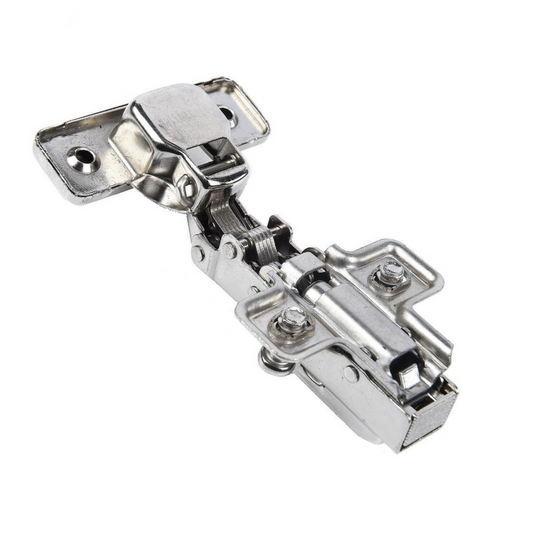

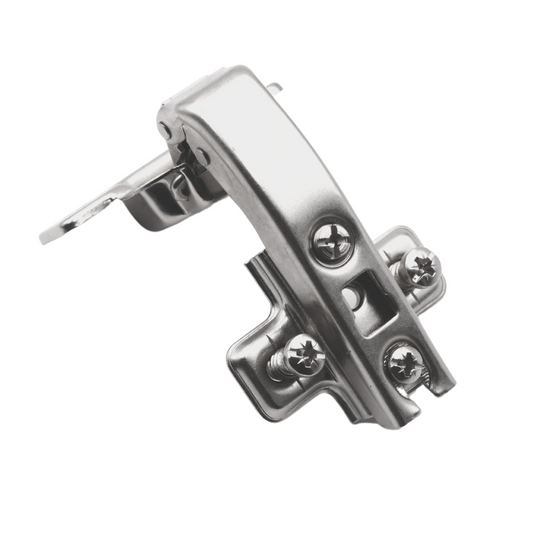

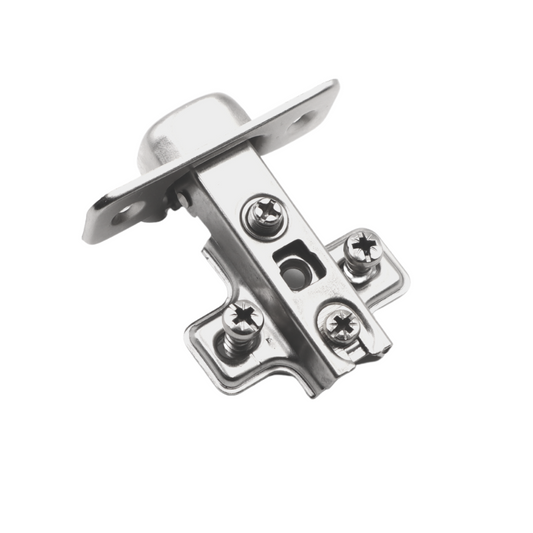

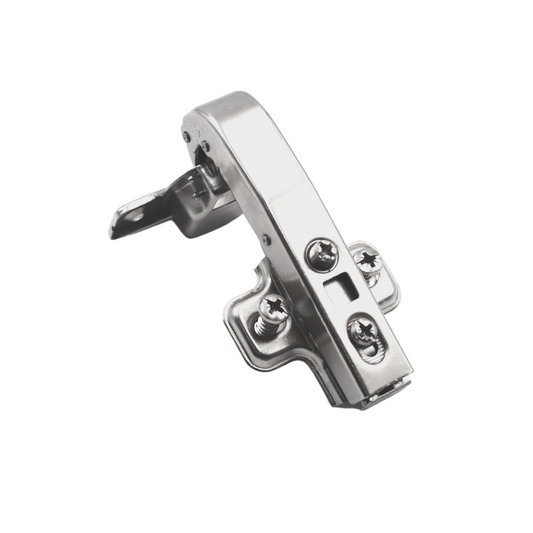

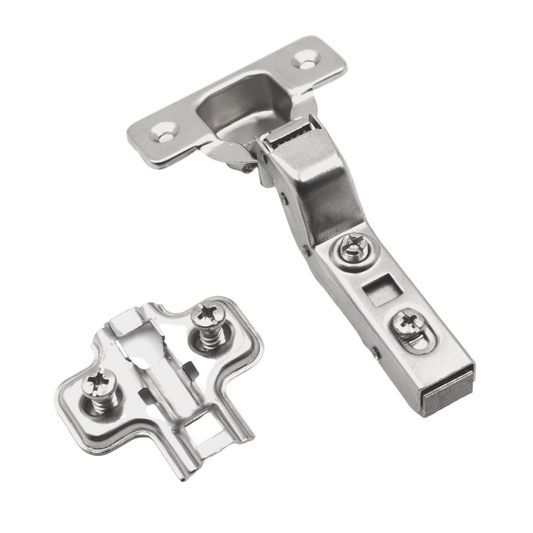

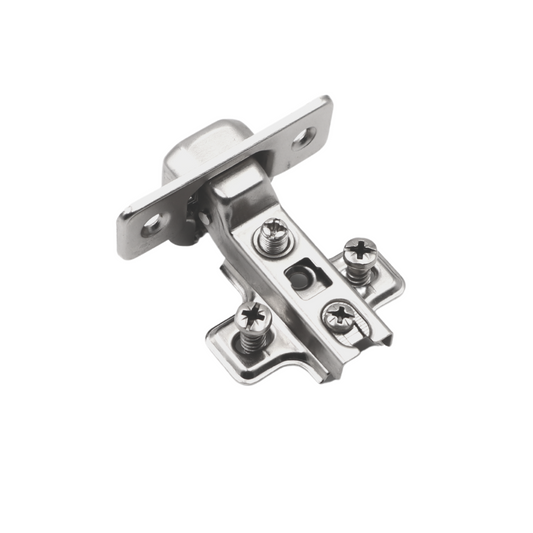

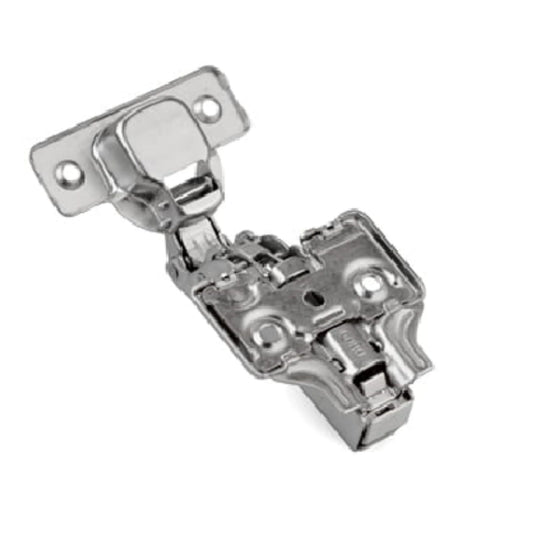

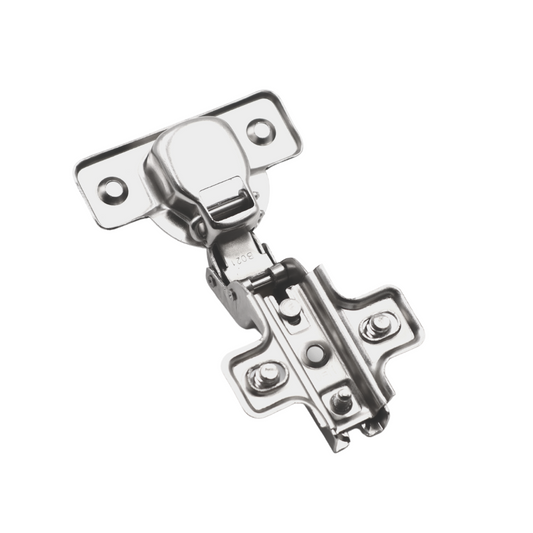

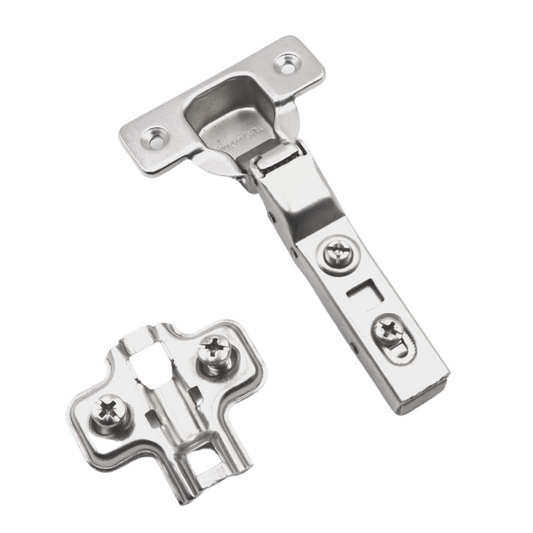

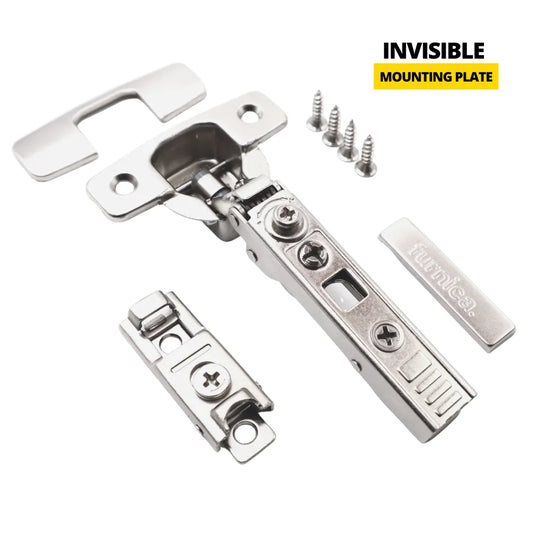

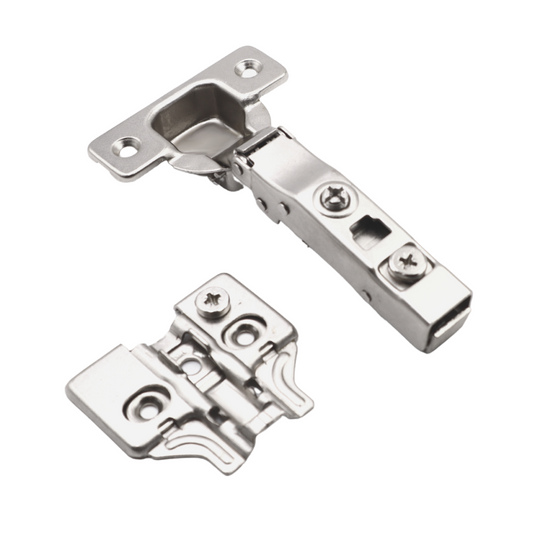
110 degree cabinet hingesand European-style concealed hinges are the industry standard for traditional cabinet doors with a vertical axis of rotation. Connecting the cabinet side panel to the door front, they allow the door to swing open smoothly and wide without colliding with adjacent cabinet elements. For professional woodworkers, cabinetmakers, and experienced installers, the110°opening angle offers the ideal balance between maximum interior accessibility and space-saving door clearance.
Designed as concealed cup hinges, they remain completely invisible from the outside when the door is closed. The 110 degree cabinet hinges in this category utilize the standard1-3/8 in (35 mm)cup diameter. Designed for cabinet side panels ranging from 5/8 in to 3/4 in (16 mm to 19 mm) thick, they serve as the foundation of modern cabinetry in kitchens, bathrooms, offices, and living spaces.
Dimensions, Engineering, and Applications for 110 Degree Cabinet Hinges
A110 degree hingeis engineered to swing open just past a right angle. This prevents interior pull-out drawers or trays from scraping against the inside of the open door when extended. The hinge cup is recessed into the back of the cabinet door. Standard cup drilling depth typically ranges from 7/16 in to 1/2 in (11.5 mm to 12.0 mm), requiring a minimum door thickness of 19/32 in (15 mm) to prevent tear-out or drilling through the front face.
Choosing the Right Overlay Type: Crank and Reveal
Selecting the correct hinge style depends on the door's position relative to the cabinet side panel. In technical terms, this is determined by the hinge arm'scrank(cranking height). The varioustypes of cabinet hingesin the 110° range fall into three main overlay categories:
- Full Overlay:The closed cabinet door almost completely covers the front edge of the side panel, leaving only a narrow gap or reveal (typically 1/16 in to 5/64 in / 1.5 mm to 2.0 mm) between adjacent cabinets for clearance. The hinge arm is straight (0 mm crank). Explore matching hardware in ourfull overlay cabinet hingessection.
- Half Overlay (Dual Overlay):When two doors share a single vertical partition wall (common in wide wardrobes or wall units), each door overlays half of the 5/8 in or 3/4 in (16 mm or 19 mm) side panel edge. The hinge arm features a prominent crank (typically 9.5 mm). Browse these configurations underhalf overlay cabinet hinges.
- Inset:The door does not sit on top of the cabinet frame or side panel; instead, it sits completely flush inside the cabinet opening, leaving the front edges of the cabinet carcass exposed. The hinge arm has a high crank (typically 15 mm to 18 mm). Cabinet makers useinset cabinet hingesor hinges for inset doors for these build-outs.
Closing Mechanisms: Soft-Close vs. Standard
Integrated self-closing technology is a key functional feature.Soft-close cabinet hingesfeature a small hydraulic damper built directly into the hinge cup or hinge arm. This mechanism catches the momentum of the swinging door at roughly a 30° angle, pulling it smoothly and silently into the closed position. Premium models calibrate the damping resistance to match the weight of the door.
Un-damped, standard 110 degree hinges use a classic spring mechanism that firmly pulls the door shut during the last few inches. This version is required if you plan to install push-to-open (tip-on) latches, as the counter-pressure of the spring plunger would interfere with a hydraulic damper.
Installation and Precise 3D Adjustment
Installing1-3/8 in (35 mm) cup hingesrequires precise drilling. The cup recess in the door face is drilled using a 1-3/8 in (35 mm) Forstner bit. A critical measurement is thetab distance (C-dimension)—the distance from the edge of the drilled cup hole to the outer edge of the door. Depending on the manufacturer and desired reveal width, this distance is typically between 1/8 in and 9/32 in (3 mm and 7 mm). Any variance here directly impacts the door's side overlay.
Mounting plates are typically fixed to the cabinet interior following the32 mm systemstandard: mounting holes are spaced 1-1/4 in (32 mm) apart vertically and set back 1-7/16 in (37 mm) from the front edge of the cabinet side panel.
Subsequent 3D adjustment via eccentric screws operates much like fine-tuning precision machinery—delivering crisp, perfectly aligned reveal lines:
- Height Adjustment:Adjusted via slotted holes or an eccentric screw on the mounting plate (typically ± 1/16 in / ± 2 mm).
- Side / Overlay Adjustment:Controls the gap between adjacent doors. The adjustment screw on the forward portion of the hinge arm allows horizontal corrections of typically -1/16 in to +1/16 in (-2 mm to +2 mm).
- Depth Adjustment:Adjusts the gap between the door and the cabinet front edge, ensuring a tight seal without rattling.
Many contemporary hinges feature clip-on technology, allowing the hinge arm to snap onto the mounting plate without tools. This dramatically simplifies single-person final installation on large cabinet fronts.
Selected 110 Degree Cabinet Hinges for Professional Builds
Hardware specifications vary based on application, door weight, and panel material. The selection below highlights key technical options within the 110-degree category:
- For Full Overlay Fronts with Soft-Close:The110° Soft-Close Concealed Hinge, H0 Mounting Plate with Euro Screws, Full Overlayserves as the standard choice for kitchen and wardrobe cabinets. The H0 plate (0 mm height) is ideal for 5/8 in and 3/4 in (16 mm and 19 mm) panel thicknesses.
- For Maximum Adjustability:The4D 110° Soft-Close Hinge, H0 Concealed Mounting Plate with Euro Screws and Cover Caps, Full Overlayoffers enhanced 4-dimensional adjustment along with clean interior visuals thanks to included screw cover caps.
- For Inset Designs:For flush-fitting doors, use the110° Soft-Close Concealed Hinge, H0 Mounting Plate with Euro Screws, Inset. Its high crank geometry clears the door out of the internal cabinet opening during swing-out.
- Commercial-Grade Quality:The110° Concealed Hinge - BLUMdelivers exceptional cycle life, specified frequently in high-traffic commercial installations (offices, healthcare facilities).
- For Parallel / Bifold Doors:TheConcealed Hinge, H2 Mounting Plate with Euro Screws for Parallel Doorsutilizes an H2 mounting plate (2 mm elevation) to achieve precise spacing and clearance angles in complex cabinet geometry.
FAQ – Frequently Asked Questions on Hardware & Installation
How do I adjust cabinet hinges if the door is sagging or crooked?A misaligned door is corrected using the side adjustment screw (the front screw on the hinge arm). If the top of the door tilts outward, turn the upper hinge screw clockwise (drawing the door closer to the cabinet wall) and the lower hinge screw slightly counterclockwise. Check the reveal line after every quarter-turn.
Is there a drilling jig specifically for 110 degree IKEA Utrusta hinges?Cabinet hinges from major retailers generally adhere to standardized industrial dimensions. A universal jig designed for 1-3/8 in (35 mm) hinge cups and the 32 mm system layout works across virtually all major brands (including Hettich, Blum, or suppliers for IKEA). Simply confirm your required C-dimension (distance from the cup hole to the door edge).
What do H0 and H2 mean on a mounting plate?The designation H (height) or D (distance) indicates the thickness offset of the mounting plate. H0 represents 0 mm added height—the standard for 5/8 in to 3/4 in (16 mm to 19 mm) side panels in full overlay setups. An H2 plate adds 5/64 in (2 mm) in height, useful for thinner side panels (e.g., 19/32 in / 15 mm) or to provide extra reveal clearance on half-overlay dual door setups.
How many 110 degree cabinet hinges do I need per door?The required count depends primarily on door height and panel weight (e.g., heavy MDF vs. lightweight particle board). As a general technical guideline:
- Up to 35 in (900 mm) height / 9 lbs to 13 lbs (4 kg to 6 kg): 2 hinges
- Up to 63 in (1600 mm) height / 26 lbs to 37 lbs (12 kg to 17 kg): 3 hinges
- Up to 78 in (2000 mm) height / 37 lbs to 48 lbs (17 kg to 22 kg): 4 hinges
- Up to 94 in (2400 mm) height / 48 lbs (22 kg) and above: 5 hinges
Can these hinges be used for integrated refrigerator doors?Standard 110 degree cabinet hinges are intended for traditional cabinetry doors. For built-in refrigerators, installation style matters: Sliding door hardware systems use standard cabinet hinges to swing the outer wooden door, which slides along track runners attached to the appliance door. Fixed door systems (where the cabinet panel mounts directly onto the appliance door) require specialized heavy-duty, flat-profile appliance hinges. Standard cup hinges cannot be used for fixed-door refrigerator installations.
Related Hinge Systems and Opening Angles
Depending on spatial layouts or specialized cabinet design, standard 110 degree cabinet hinges may reach their limits—such as in corner units, bathroom vanity mirrors, or angled ceiling builds. In these situations, builders utilize alternative opening angles. All variants fit the identical 1-3/8 in (35 mm) cup drilling pattern, differing only in hinge arm geometry:
- For bifold doors and angled corner builds:30 Degree Cabinet Hingesand45 Degree Cabinet Hinges.
- For exact right-angle clearance in tight quarters:90 Degree Cabinet Hinges.
- For wide-angle clearance (e.g., cabinets with full-extension internal pull-out drawers):135 Degree Cabinet Hinges,155 Degree Cabinet Hinges, and165 Degree Cabinet Hinges.
- To view our full hardware catalog across all standard specifications, visit the main35 mm Cabinet Hingescategory page.