
Furniture Casters
Popular Subcategories


-
Furniture Caster with Top Plate and Brake - Clear - Chrome - 3 inch (7.5 cm)Regular price $5.24Unit price / perRegular priceSale price $5.24
-
Furniture Caster with Mounting Plate & Brake - Clear - Chrome - 2 inch (5.0 cm)Regular price $2.61Unit price / perRegular priceSale price $2.61
-
Furniture Caster with Plate and Brake - Clear - Chrome - 1-3/8 inch (35 mm) WheelRegular price $2.27Unit price / perRegular priceSale price $2.27
-
Furniture Caster with Top Plate - Clear - Chrome - 3 inch (7.5 cm) Dia.Regular price $5.24Unit price / perRegular priceSale price $5.24
-
Furniture Caster with Plate - Clear - Chrome - 2 inch (50 mm) Dia.Regular price $2.61Unit price / perRegular priceSale price $2.61
-
Furniture Caster with Plate - Clear - Chrome - 1-3/8 inch (35 mm)Regular price $2.27Unit price / perRegular priceSale price $2.27
-
Furniture plastic swivel wheel with mounting plate Ø1-15/16 inchRegular price $0.80Unit price / perRegular priceSale price $0.80
-
Rubber castor wheel Ø1-3/16 inchRegular price $2.87Unit price / perRegular priceSale price $2.87
-
Furniture plastic swivel wheel with mounting pin 5/16 inch and sleeve - Ø1-15/16 inchRegular price $1.26Unit price / perRegular priceSale price $1.26
-
Rubber castor wheel Ø1-9/16 inchRegular price $4.04Unit price / perRegular priceSale price $4.04
-
Furniture plastic swivel wheel with short mounting pin 5/16 inch and sleeve - Ø1-9/16 inchRegular price $0.62Unit price / perRegular priceSale price $0.62
-
Furniture plastic swivel wheel with mounting pin 5/16 inch and sleeve - Ø2-3/16 inchRegular price $0.91Unit price / perRegular priceSale price $0.91
-
Furniture plastic swivel wheel with mounting pin 5/16 inch and sleeve - Ø1-9/16 inchRegular price $0.91Unit price / perRegular priceSale price $0.91
-
Furniture plastic swivel wheel with mounting pin 3/8 inch - Ø1-15/16 inchRegular price $1.44Unit price / perRegular priceSale price $1.44
-
Furniture plastic swivel wheel with mounting plate and brake Ø1-9/16 inchRegular price $1.52Unit price / perRegular priceSale price $1.52
-
Furniture rubber swivel wheel with thread 3/8 inch - Ø1-15/16 inchRegular price $2.34Unit price / perRegular priceSale price $2.34
-
Furniture rubber swivel wheel with mounting pin 7/16 inch - Ø1-15/16 inchRegular price $2.15Unit price / perRegular priceSale price $2.15
-
Furniture plastic swivel wheel with thread 5/16 inch - Ø2-3/8 inchRegular price $1.26Unit price / perRegular priceSale price $1.26
-
Furniture plastic swivel wheel with thread and brake Ø1-15/16 inchRegular price $1.52Unit price / perRegular priceSale price $1.52
-
Furniture rubber swivel wheel with mounting plate and brake Ø1-15/16 inchRegular price $2.78Unit price / perRegular priceSale price $2.78
-
Furniture rubber swivel wheel with mounting plate Ø1-15/16 inchRegular price $2.34Unit price / perRegular priceSale price $2.34

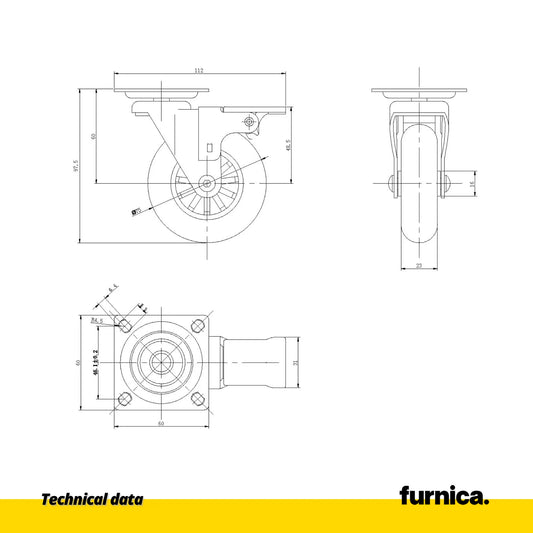

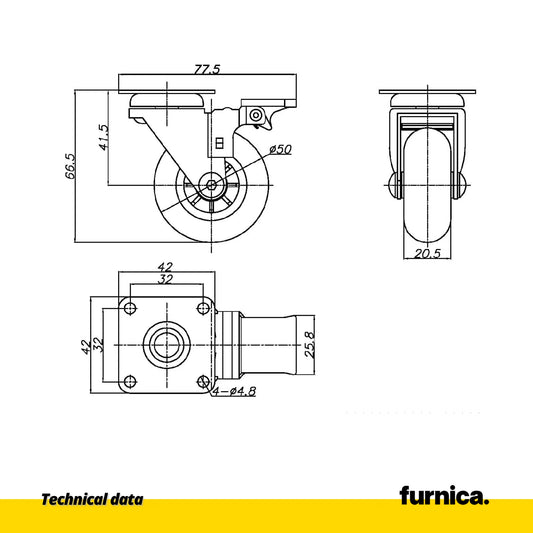

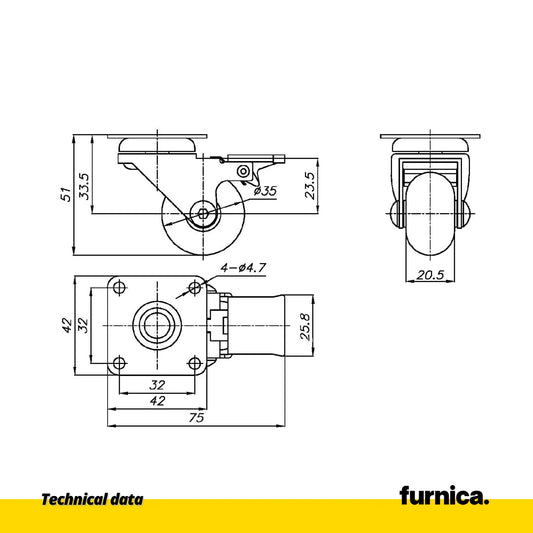

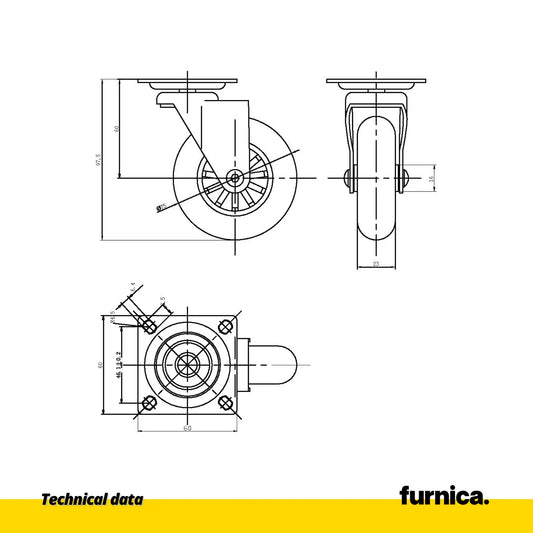

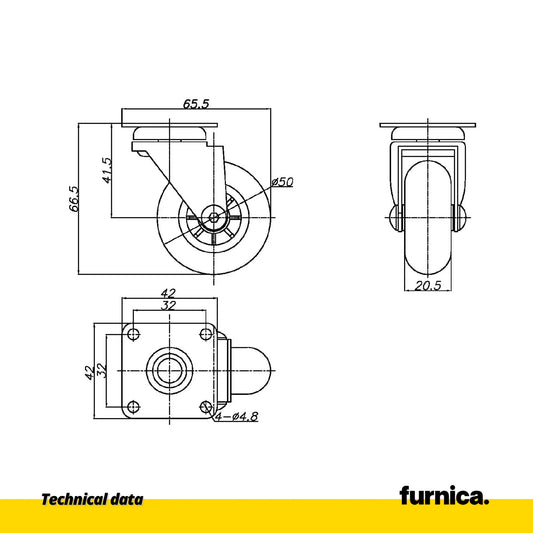

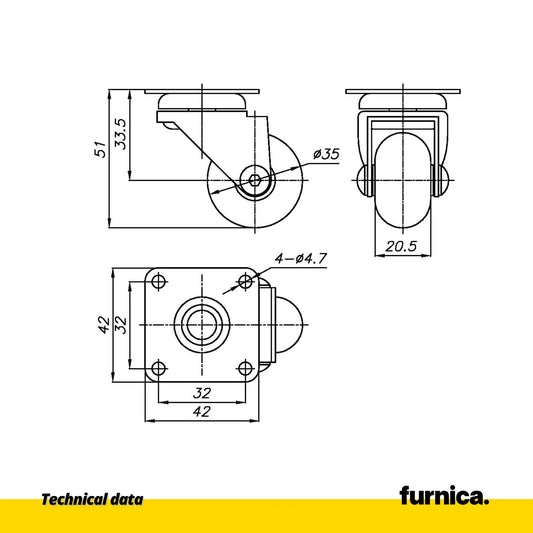

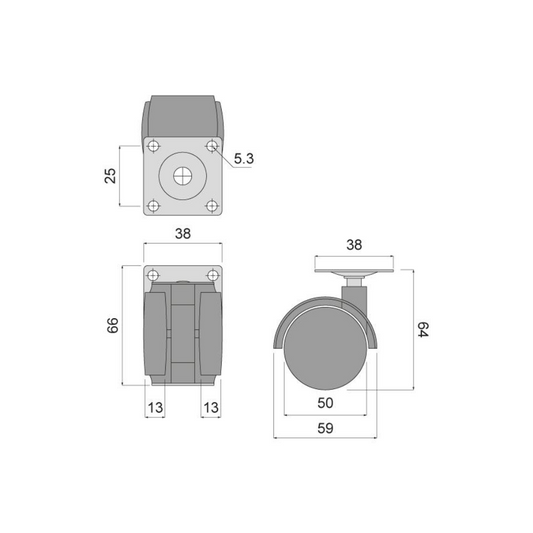

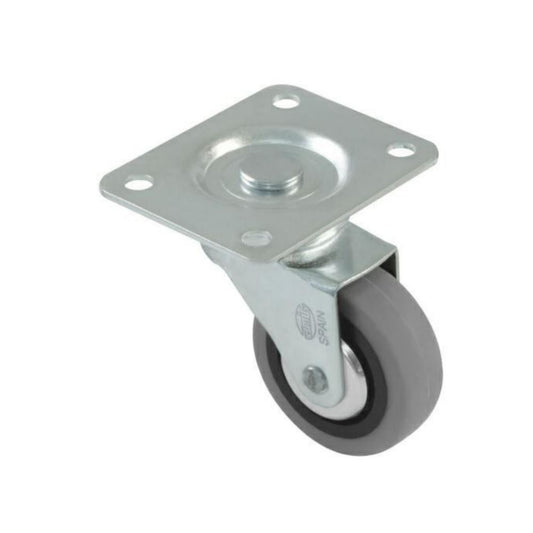

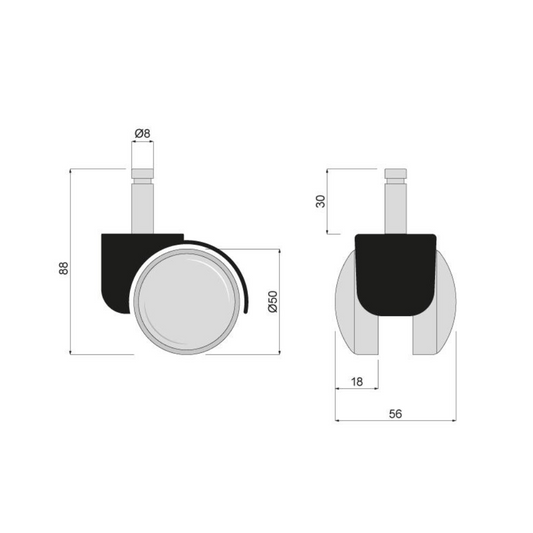

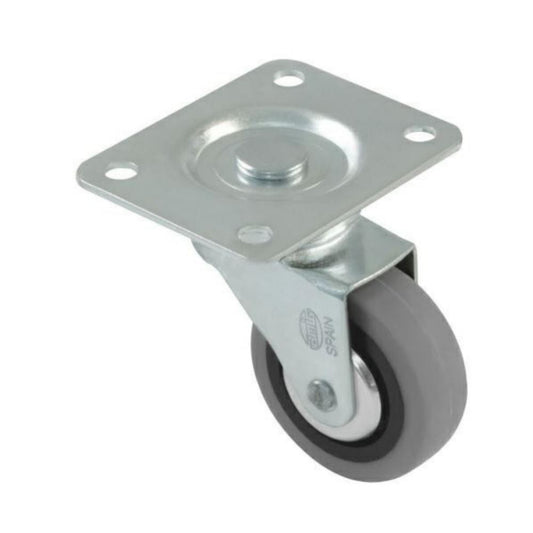


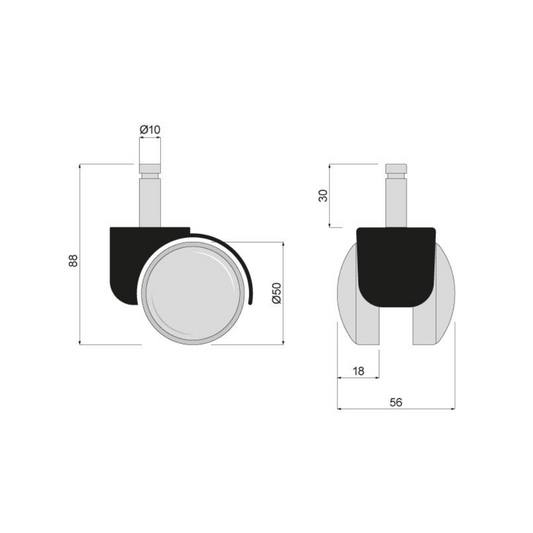

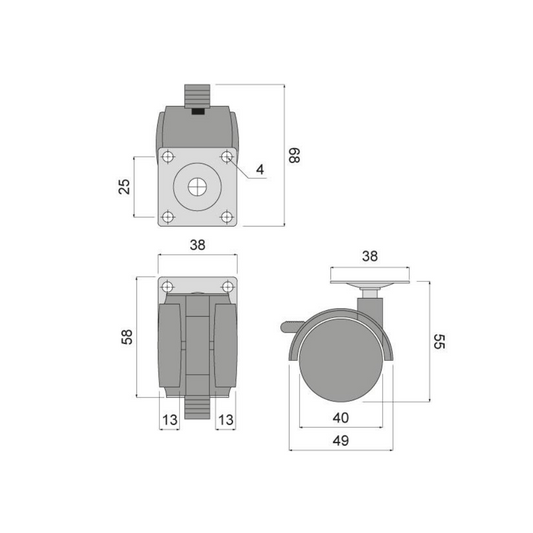

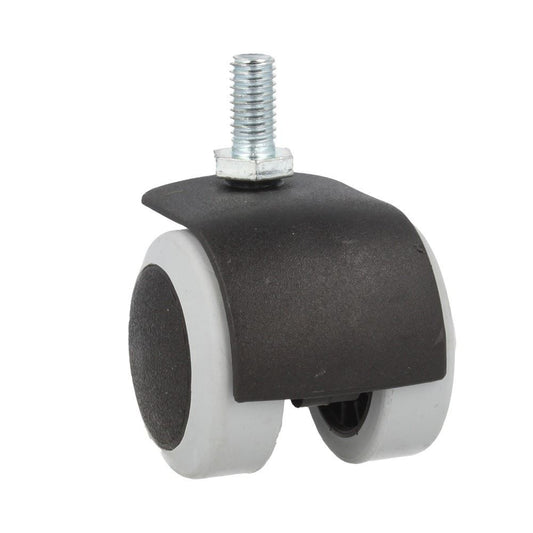


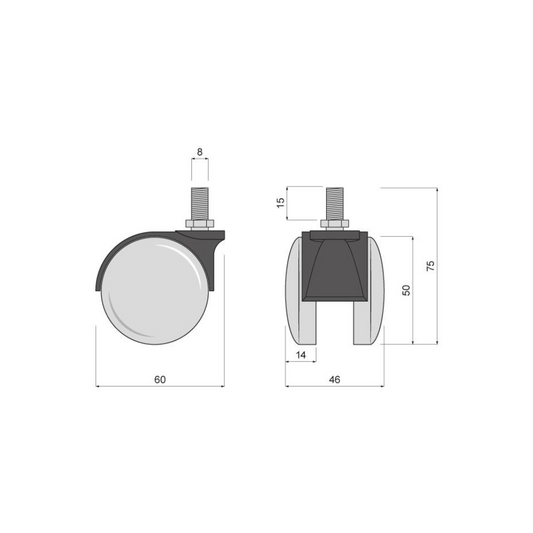


Furniture castersare mechanical running gear components that transform stationary furniture items, cabinets, or equipment into mobile units. At their core, they consist of a wheel core, an axle, a mounting housing, and a specific attachment element. In professional furniture assembly and cabinetmaking, specifying the exact furniture caster is crucial to safely transfer the static load of the furniture to the floor, guarantee maneuverability, and protect the respective flooring from mechanical damage.
When designing mobile storage units, rolling carts, kitchen islands, or mobile room dividers, technical parameters such as overall height, wheel diameter, tread material, and mounting type must be precisely matched. Incorrect sizing leads to stiff casters, increased wear, or damage to the floor structure.
Tread Material: Rubber vs. Plastic
The choice of tread material strictly depends on the floor surface at the location of use. Selecting the right tread is like choosing the right tire tread for a vehicle—using a tread that is too hard on a sensitive surface will inevitably result in scratches and grooves.
Plastic Furniture Casters
Casters with a hard tread made of polyamide or polyurethane are designed for soft floor coverings. These include carpeting, rugs, or soft PVC flooring. The hard plastic easily penetrates the textile pile, ensuring low rolling resistance. For very lightweight furniture or small rolling pedestals, compact models such as thePlastic Furniture Caster Ø 11/16 in (18 mm)are often used. When larger wheel diameters are required—for instance, to clear thicker carpet edges—styles like thePlastic Swivel Furniture Caster with Threaded Stem 3/8 in (10 mm) - Ø 2-3/8 in (60 mm)are ideal. However, usingplastic casters with 3/8 in (10 mm) stemsor2-3/8 in (60 mm) plastic casterson hard floors (laminate, tile) generates high noise levels, and the lack of elasticity can permanently damage the floor over time.
Rubber Furniture Casters
For hard and delicate floors such as hardwood, laminate, floorboards, tile, or polished concrete,rubber furniture castersare essential. The soft tread made of thermoplastic rubber (TPR) or solid rubber absorbs shocks, dampens rolling noise, and prevents surface scratching. In the small components segment, theRubber Furniture Caster Ø 5/8 in (16 mm)is recommended whensmall rubber furniture castersare required. For standard applications in cabinet construction, theRubber Furniture Caster Ø 1-1/8 in (29 mm)or the ball-bearingRubber Furniture Caster with Bearing Ø 1-3/16 in (30 mm)are frequently specified.
Mounting Types in Furniture Construction
How the caster attaches to the furniture piece determines the stability of the entire assembly. Choosing the proper mounting method depends on the material thickness of the bottom plate and the frame structure.
Top Plate (Mounting Plate)
Mounting via a rectangular or square plate made of zinc-plated sheet steel provides the largest contact surface and thus the best load distribution into the cabinet body. Fastening is typically done using four wood screws (typically Ø 1/8 in to 5/32 in (3.5 mm to 4 mm)). A classic example of this design is thePlastic Swivel Furniture Caster with Mounting Plate Ø 2 in (50 mm), Set of 4. With models like theRubber Swivel Furniture Caster with Mounting Plate Ø 1-9/16 in (40 mm), the load is evenly distributed across the flange area, effectively preventing tear-outs in engineered woods like particle board or MDF.
Threaded Stem
For furniture featuring metal frames, pre-drilled threaded sockets, or tee nuts, casters with a metric threaded stem are used. Common sizes includeM8 (approx. 5/16 in)andM10 (approx. 3/8 in). Whenfurniture casters with 5/16 in (8 mm) threaded stemsare specified, installers rely on components such as theRubber Swivel Furniture Caster with Threaded Stem 5/16 in (8 mm) - Ø 2 in (50 mm). Installation requires only a matching open-end wrench. Thread engagement depth should be at least 1.5 times the stem diameter to safely absorb shear forces.
Grip Neck / Stem with Socket (Insert Stem)
For wooden furniture requiring an invisible fastening solution inside end grain or edges, casters with a smooth metal pin and a matching plastic or metal socket are utilized. The socket is press-fitted into a precisely drilled blind hole in the wood, after which the caster stem snaps into place. A standard dimension is the 5/16 in (8 mm) stem used in theRubber Swivel Furniture Caster with Mounting Stem 5/16 in (8 mm) and Socket - Ø 2 in (50 mm). Heavy-duty versions also exist, such as theRubber Swivel Furniture Caster with Mounting Stem 7/16 in (11 mm) - Ø 2 in (50 mm). Less common, but relevant for specific repairs, are dimensions likefurniture casters with 9/32 in (7 mm) stems.
Kinematics: Caster Types and Mobility
Depending on the intended application, the furniture must either be fully maneuverable in all directions or follow a precise, straight path.
Swivel Casters
Aswivel casterfeatures a fork housing mounted on a vertical swivel head with a ball bearing. This allows the wheel to rotate 360°, enabling directional changes in extremely tight spaces. Almost all rolling pedestals and mobile tables use four swivel casters.
Swivel Casters with Brakes (Locking Casters)
To prevent furniture from rolling away unexpectedly, brakes are essential. When engaged, these total-lock brakes usually stop both wheel rotation and swivel head movement. Whenfurniture casters with brakesare required, models like theRubber Swivel Caster with Brake Ø 1-9/16 in (40 mm)are ideal. Plastic versions also feature this functionality, as seen in thePlastic Swivel Furniture Caster with Mounting Plate and Brake Ø 1-9/16 in (40 mm). Typically, on a piece of furniture with four casters, at least two are equipped with brakes.
Rigid Casters / Fixed Wheels
Arigid caster(or fixed caster) is stationary and cannot swivel. It allows movement only in a straight line (forward and backward). Rigid casters are frequently combined with swivel casters on longer furniture pieces or heavy carts to maintain straight tracking. An example of this style is theRubber Rigid Caster Wheel Ø 2 in (50 mm).
Sizing, Load Capacity, and Overall Height
Accurately calculating load capacity is a critical step in project planning. A caster's nominal weight rating always refers to dynamic load capacity on smooth floors at walking speed.
The n-1 Rule for Load Capacity Calculation
In real-world conditions, floors are rarely perfectly level. On a furniture item with four casters, often only three casters maintain full contact with the floor at any given moment while the fourth hangs slightly free. Therefore, required load capacity per caster is calculated using the following formula:(Tare weight of furniture + maximum payload) / 3 = required load capacity per caster.
When builds are specified withheavy-duty furniture castersorindustrial furniture casters, solid steel housings and double ball bearings in the wheel axle are essential.Casters for heavy furniturealso require larger wheel diameters to minimize starting resistance.
Wheel Diameter and Overall Height
Wheel diameter significantly impacts the ability to roll over obstacles such as gaps, transitions, and door sills.
- 3/4 in (20 mm) or 1-3/16 in (30 mm) furniture casters: Suitable for small accent furniture, under-bed storage, or floor-level drawers.
- Ø 1-9/16 in to 2 in (40 mm to 50 mm): The standard choice in furniture making for office caddies and TV stands.
- Ø 2-3/8 in (60 mm) and larger: Ideal for uneven floors or workshop carts.
Theoverall height(total height from the bottom of the wheel to the top of the mounting bracket) must be deducted from the overall clearance of the furniture design. If you specifically needlow-profile furniture castersto keep ground clearance minimal, select small wheel diameters with a compact top plate. If the design calls forfurniture casters 4 in (10 cm) tall, combine the wheel diameter and housing height to achieve that exact floor offset.
Specific Applications in Cabinetry and Furniture Making
Requirements vary significantly based on the furniture type.
Casters for Table Legs
To make tables mobile, casters are usually integrated directly into the table legs. In these setups,casters for table legswith stem or threaded attachments are ideal as they fit flush with the leg profile. For wooden legs, a centered hole is drilled to receive a threaded insert (Rampa nut) to accept a metric thread. For tubular steel frames, matching plastic end caps with internal threads are used.
Concealed Casters for Plinths & Base Boards
For heavy cabinets or sideboards that only need to be moved occasionally (e.g., for cleaning or cable management),under-furniture castersare often mounted concealed behind a base cabinet toe kick. Rigid casters or compact swivel casters without brakes are standard here, as brakes behind a toe kick panel would be inaccessible anyway.
Visual Integration
Housing and wheel finishes play an aesthetic role on visible casters. Beyond classic zinc-plated steel with a black wheel,white furniture castersor grey finishes are widely specified to blend seamlessly with light wood decors, white cabinetry, or medical and hygienic environments.
Technical Specifications for Installation
For professional installation, keep the following parameters in mind:
- Fastening Top Plates:Use pan-head or truss-head wood screws. Countersunk screws can distort the mounting holes in steel plates or fail to sit flush if the plate lacks matching countersinks.
- Pre-drilling:When installing on particle board or MDF, always pre-drill using a bit matched to the screw's root diameter (e.g., a 3/32 in (2.5 mm) drill bit for a 1/8 in (3.5 mm) screw). This prevents the core panel from splitting.
- Installing Stem Sockets:The hole for the plastic or metal socket must be drilled perfectly vertical. The drill diameter depends on socket specifications (often 3/8 in (10 mm) for a 5/16 in (8 mm) stem with socket). Tap the socket flush using a rubber mallet.
- Aligning Rigid Casters:When using fixed rigid casters, top plates must be installed perfectly parallel to the intended direction of travel. A deviation of just a few degrees causes severe tire scrubbing, premature wear, and sluggish movement.
---
Frequently Asked Questions (FAQ)
How do I calculate the required load capacity for furniture casters?
Due to uneven floors, often only three out of four casters carry the full load at one time. Add the weight of the empty furniture to its maximum planned payload. Divide this total weight by three. The result gives you the minimum required load capacity for each individual caster.
Which casters are suitable for laminate and hardwood floors?
For all hard and scratch-sensitive floors, soft-tread casters must be used. Choose models with treads made of rubber, thermoplastic elastomer (TPR), or polyurethane. Hard plastic casters are too rigid for these surfaces and will cause severe damage.
What is the difference between a swivel caster and a rigid caster?
A swivel caster features a swivel bearing inside the housing, allowing it to rotate 360° around its vertical axis for full maneuverability. A rigid (fixed) caster is permanently fixed to its mounting plate, guiding the furniture item strictly in a straight line forward or backward.
How do I install furniture casters with a threaded stem?
Casters with threaded stems (typically M8 or M10) are screwed into existing internal threads on the furniture frame. For wooden furniture, a threaded insert nut (such as a Rampa nut) or tee nut must be installed first. The caster is then tightened using a matching open-end wrench on the integrated hex nut above the swivel race.
What drill bit size do I need for stem-and-socket furniture casters?
The bit size depends on the outer diameter of the included socket, not the stem itself. For instance, a 5/16 in (8 mm) stem often requires a socket that needs a 3/8 in (10 mm) drilled hole. Always measure the socket's outer diameter precisely with a caliper before drilling.
Why is my swivel caster jamming when trying to turn?
If a swivel caster no longer rotates freely, debris such as dust, hair, or dirt has likely clogged the ball bearings in the swivel head. During top-plate installation, oversized screw heads might also rub against the rotating yoke. Ensure proper clearance and use low-profile pan-head screws.
Frequently Asked Questions
Which furniture casters are suitable for hard floors like laminate or hardwood?
For hard floors, you need furniture casters with a soft, rubberized tread. These prevent scratches and roll much more quietly. Hard plastic casters are intended exclusively for soft floors like carpeting. Look for polyurethane (PU) or TPE coatings in the technical specifications to give your flooring optimal protection.
Will these casters fit under my IKEA Kallax shelf?
Yes, our top-plate furniture casters fit IKEA Kallax shelving units. Technical compatibility is key: measure the width of your furniture's bottom panel. For a stable installation, you need a contact surface of at least 1-9/16 x 1-9/16 in (40x40 mm) for the top plate, along with suitable wood screws.
How do I correctly calculate the required load capacity for furniture casters?
Divide the maximum total weight (furniture piece plus contents) by three. Since uneven floors often mean only three out of four casters touch the ground simultaneously, this formula offers a safe load reserve. For example, if your cabinet weighs 265 lbs (120 kg), each individual caster must have a load capacity of at least 88 lbs (40 kg).
What is the difference between top-plate casters and threaded stem casters?
The attachment type determines the installation method. Top-plate casters are fastened flat using four screws beneath the furniture base (ideal for wooden cabinets). Threaded stem casters (e.g., M8 or M10) screw directly into pre-existing internal threads, which is common on metal frames or specialized furniture pieces.
Can I use your casters as replacements for defective Hettich casters?
Yes, our models are ideal replacements for Hettich casters. Exact mounting dimensions are critical for replacement. Check the stem diameter (typically 3/8 in or 7/16 in (10 mm or 11 mm)) or the hole spacing on the top plate (e.g., 1-1/4 in (32 mm) hole pattern). If these measurements match, replacement is fast and simple.