
Square furniture legs
Popular Subcategories
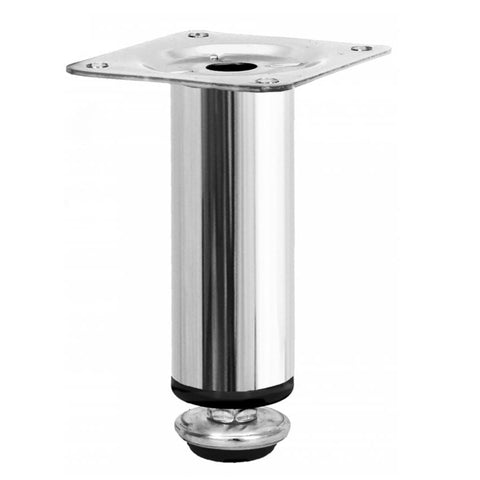

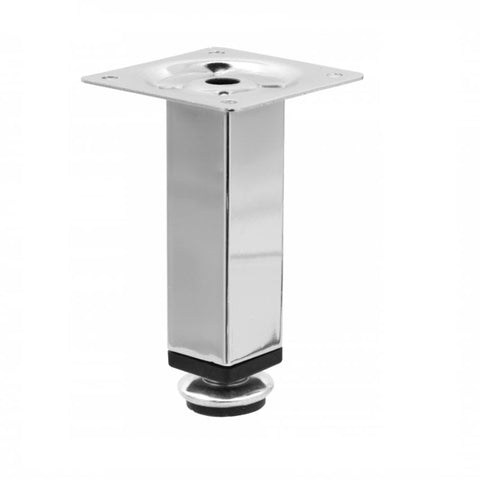
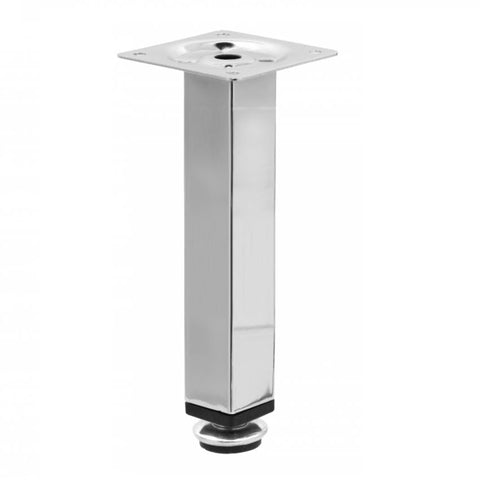
-
Square Furniture Leg 27-15/16 inch, Chrome, ZnAl Mounting PlateRegular price $23.77Unit price / perRegular priceSale price $23.77
-
Square Furniture Legs 1-9/16 x 1-9/16 inch (40 x 40 mm) - 4 inch (100 mm) - BlackRegular price $0.97Unit price / perRegular priceSale price $0.97
-
Square Furniture Leg 1x1 inch - H 3-15/16 inch ChromeRegular price $2.93Unit price / perRegular priceSale price $2.93
-
Square Furniture Legs 1-9/16 x 1-9/16 inch (40x40 mm) - 3-15/16 inch (100 mm) - WhiteRegular price $0.97Unit price / perRegular priceSale price $0.97
-
Square Furniture Legs 1-9/16 x 1-9/16 inch (40x40 mm) - 6 inch (150 mm) - WhiteRegular price $1.47Unit price / perRegular priceSale price $1.47
-
Square Furniture Legs / Adjustable Table Legs 2-3/8 x 2-3/8 inch - 2-3/8 inch AluminumRegular price $1.02Unit price / perRegular priceSale price $1.02
-
Square Furniture Legs 1-9/16 x 1-9/16 inch (40x40 mm) - 5-7/8 inch (150 mm) - BlackRegular price $1.47Unit price / perRegular priceSale price $1.47
-
Square Furniture Legs 1-9/16 x 1-9/16 inch (40x40 mm) - 2-3/8 inch (60 mm) - BlackRegular price $0.85Unit price / perRegular priceSale price $0.85
-
Square Furniture Legs 1-9/16 x 1-9/16 inch (40 x 40 mm) - 2-3/8 inch (60 mm) - WhiteRegular price $0.85Unit price / perRegular priceSale price $0.85
-
Square Furniture Leg 1-9/16 x 1-9/16 inch - H 5-7/8 inch AluminumRegular price $1.74Unit price / perRegular priceSale price $1.74
-
Square Furniture Leg 1-9/16 x 1-9/16 inch - H 2-3/8 inch AluminumRegular price $1.02Unit price / perRegular priceSale price $1.02
-
Square Furniture Leg 1-9/16 x 1-9/16 inch - H 3-15/16 inch AluminumRegular price $1.43Unit price / perRegular priceSale price $1.43
-
Square Furniture Leg 1-9/16 x 1-9/16 inch - H 3-15/16 inch ChromeRegular price $1.98Unit price / perRegular priceSale price $1.98
-
Square Furniture Leg 27-15/16 inch, Satin, ZnAl Mounting PlateRegular price $26.51Unit price / perRegular priceSale price $26.51
-
Square Furniture Leg 27-15/16 inch, Black, ZnAl Mounting PlateRegular price $26.51Unit price / perRegular priceSale price $26.51
-
Square Furniture Leg 27-15/16 inch, White, ZnAl Mounting PlateRegular price $26.51Unit price / perRegular priceSale price $26.51
-
Square Furniture Leg 1x1 inch - H 5-7/8 inch SatinRegular price $3.31Unit price / perRegular priceSale price $3.31
-
Square Furniture Leg 1x1 inch - H 3-15/16 inch SatinRegular price $2.94Unit price / perRegular priceSale price $2.94
-
Square Furniture Leg 1x1 inch - H 5-7/8 inch ChromeRegular price $3.31Unit price / perRegular priceSale price $3.31

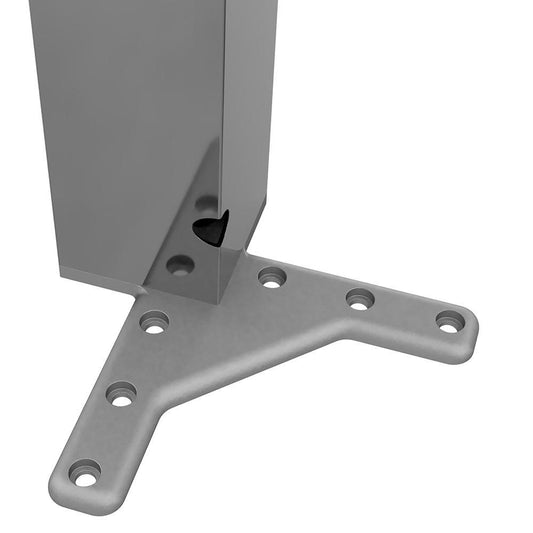


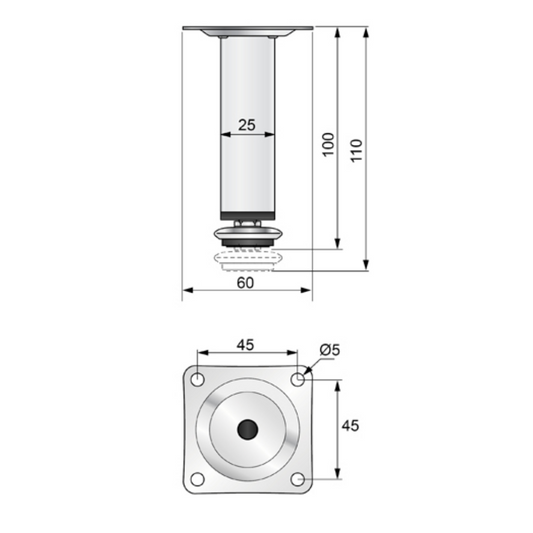


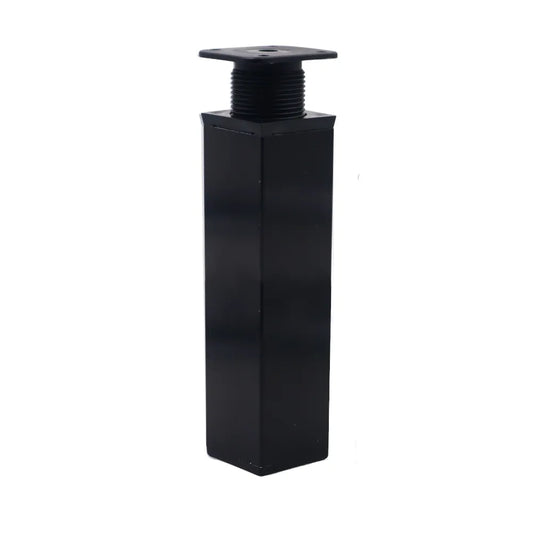


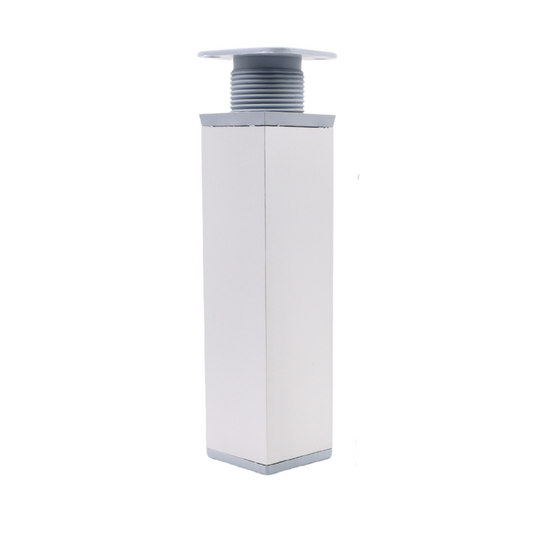

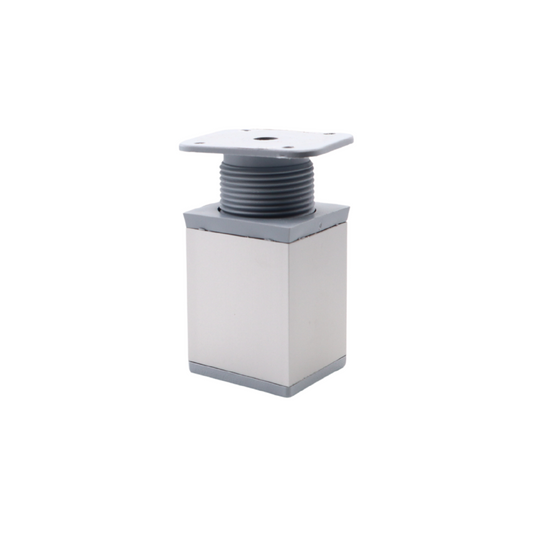

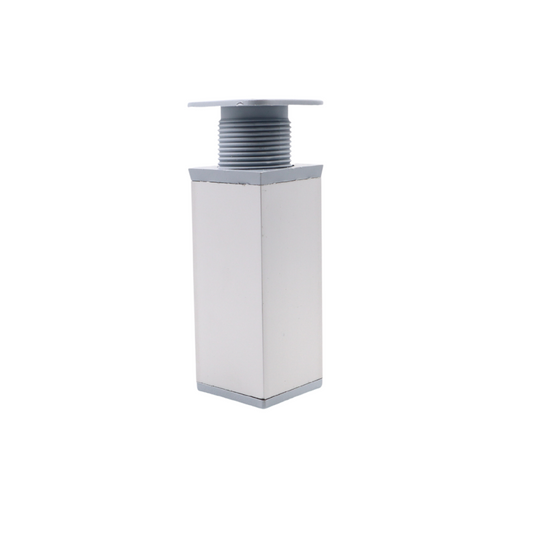

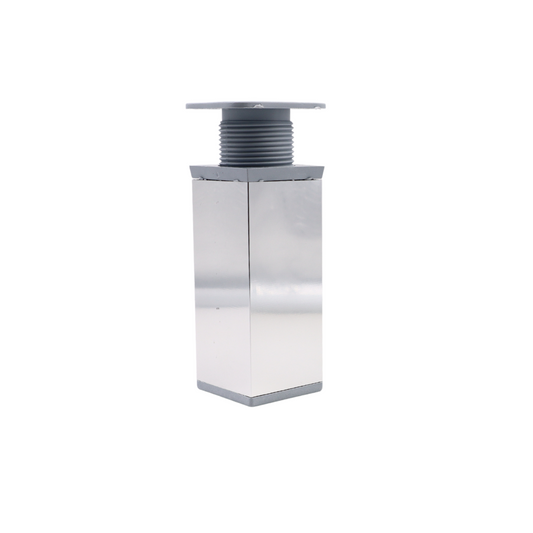

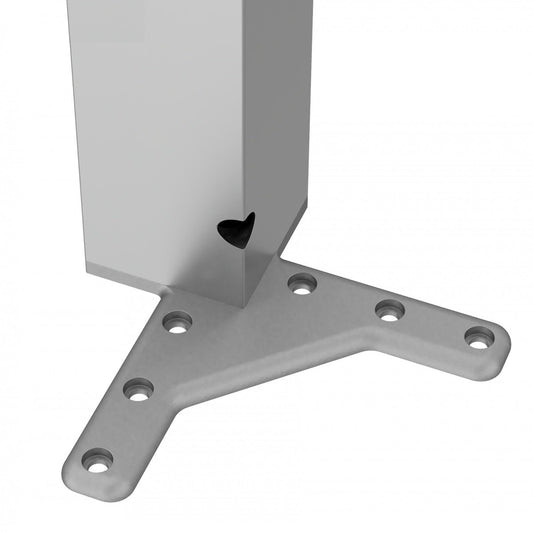

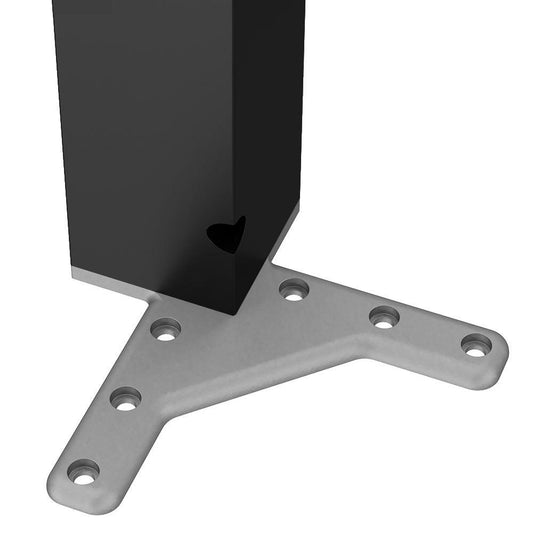

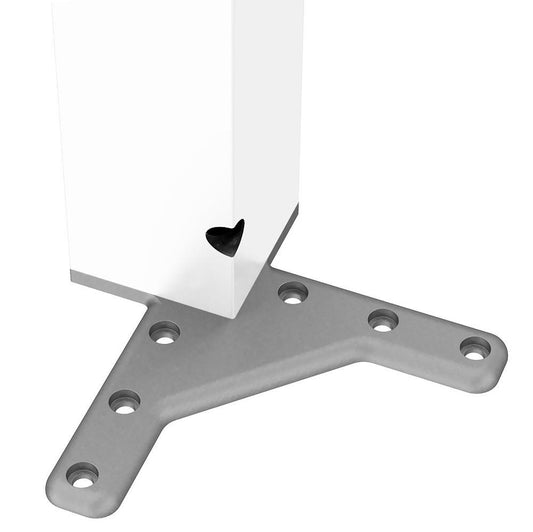


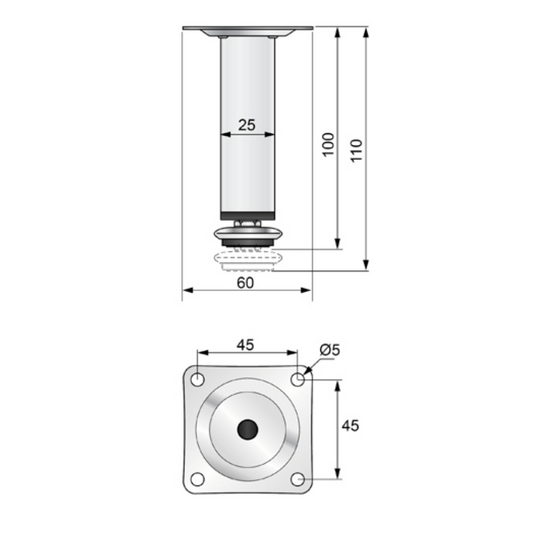

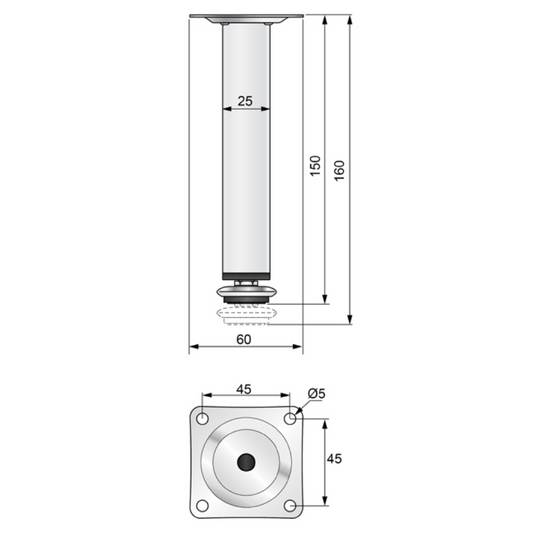
Square furniture legsare load-bearing hardware elements with a four-sided profile cross-section used in professional cabinetmaking and furniture manufacturing for floor clearance, leveling, and load distribution of cabinet bodies, upholstered furniture, and heavy wardrobes. Thanks to their angular geometry, they offer a wide contact surface at the mounting plate and ensure high torsional rigidity, making them particularly suitable for furniture pieces with high static weight or dynamic loads.
In structural design practice, these hardware components are primarily installed where clean, straight-line aesthetics are required alongside technical parameters such as precise height adjustment on uneven surfaces. This guide covers the technical specifications, profile cross-sections, load capacities, and installation requirements forsquare furniture legs.
Profile Cross-Sections and Structural Properties
The sizing of the box profile is the decisive factor for the load capacity of the furniture leg. The larger the cross-section, the higher the resistance to buckling and the maximum load capacity per leg. In practice, three standard dimensions have established themselves depending on the furniture type.
The 1 x 1 in (25 x 25 mm) Profile (Slender Designs)
Square furniture legs with a cross-section of 1 x 1 in (25 x 25 mm) are used for light to medium-weight cabinet units. Typical applications include freestanding bathroom cabinets, lightweight dressers, or nightstands. Due to the reduced cross-section, these legs offer a slender visual profile but require shorter spans between support points on wider furniture to prevent sagging of the bottom panel. A classic example of this dimensioning is theFurniture legs square 25x25mm - 120mm Satin.
The 1-1/2 x 1-1/2 in (40 x 40 mm) Profile (The Industry Standard)
The cross-section of 1-1/2 x 1-1/2 in (40 x 40 mm) is considered the universal standard in furniture making and interior fitting. Thisprofile thicknessprovides the optimal balance between material usage and weight capacity. It is standardly used for sideboards, heavy dressers, upholstered furniture, and kitchen base cabinets. The wall thickness of the metal used (typically aluminum or sheet steel) ensures sufficient stability under dynamic loads, such as sitting down on a sofa. A frequently specified option here is theFurniture legs square 40x40mm - 100mm - Whiteor the black variant.
The 2-3/8 x 2-3/8 in (60 x 60 mm) Profile (Heavy Duty and Large Cabinets)
For massive wardrobes, heavy workshop cabinets, or large-format shelving systems, a cross-section of 2-3/8 x 2-3/8 in (60 x 60 mm) is required. Functioning like support pillars, square furniture legs of this dimension safely distribute vertical forces from the cabinet body over a large floor area. The broad footprint of the integratedmounting platealso prevents screws from tearing out of the substrate panel. A technical reference model is theFurniture legs square 60x60mm - 60mm Aluminum.
Installed Heights and Ergonomic Planning
Selecting the correct installed height affects not only the ergonomics of the furniture piece, but also accessibility for cleaning devices (such as robotic vacuums) and ventilation beneath the cabinet base, which is especially relevant in high-moisture rooms.
- 2-3/8 in (60 mm) Height:These ultra-low profiles primarily protect the bottom edge from floor moisture and impact damage. They are often used on heavy wardrobes where keeping the center of gravity as low as possible is critical. SeeFurniture legs square 40x40mm - 60mm - Black.
- 4 in (100 mm) Height:The standard size for dressers and sideboards. This height provides sufficient ground clearance for effortless cleaning while giving the furniture a floating look. Technically covered byFurniture legs 10 cm.
- 4-3/4 in (120 mm) Height:Frequently used in upholstered furniture to raise the seat height of sofas and armchairs to an ergonomic level.
- 6 in (150 mm) Height:This height is chosen when maximum floor clearance is required, such as in bathrooms to prevent splash water damage to engineered wood, or on extra-deep cabinet units. Corresponding components are listed underFurniture legs 15 cmas well as specifically asFurniture legs square 40x40mm - 150mm - Aluminum.
Height Adjustability and Leveling
A crucial technical feature in cabinet construction is tolerance compensation. Because subfloors are rarely perfectly flat,adjustable square furniture legsmust be designed to compensate for uneven surfaces and prevent cabinet twisting. A warped cabinet carcass invariably leads to sticking drawers and uneven door gaps.
TheFurniture legs Verstellbarfeature a hard plasticleveling glideron the bottom. This glider is anchored into the metal profile via a threaded stem (typically M8 or M10 thread). Rotating the glider provides continuous height adjustment. The typical adjustment range for square legs is +3/8 to +5/8 in (+10 to +15 mm). It is technically essential to mount the legs fully screwed in and perform leveling exclusively byunscrewingto maintain maximum thread engagement and structural weight capacity.
Materials and Surface Finishes
Material selection determines corrosion resistance, mechanical strength, and seamless integration into overall furniture design.Furniture legs Metal Eckigdominate the market due to their structural integrity.
Aluminum (Anodized)
Aluminum legs are lightweight, rustproof, and impervious to moisture. The anodized finish offers a sleek, technical matte appearance. They are ideal for bathroom vanity units and kitchen cabinetry. A standard component is theFurniture legs square 40x40mm - 100mm Aluminum.
Steel (Chrome-Plated)
For applications requiring a hard, scratch-resistant surface, electro-chrome-plated steel is used. The high-gloss surface reflects the floor covering and is frequently selected for high-end interior fitting.Furniture legs Chromealso provide exceptionally high breaking strength. An example of slender chrome designs is theFurniture legs square 25x25mm - 100mm Chrome.
Steel (Satin / Brushed)
Satin or brushed finishes (often referred to as stainless steel look) mask fingerprints and light dust. They offer an ideal compromise between the surface hardness of chrome and the matte aesthetic of aluminum. Corresponding hardware can be found in theFurniture legs Satincategory, such as theFurniture legs square 25x25mm - 150mm Satin.
Powder-Coated Steel (Black & White)
To achieve a smooth, opaque color finish, the metal is powder-coated. This process bakes the color into the material at high temperatures, creating an impact-resistant shell.Furniture legs Blackare commonly used in industrial-style furniture designs (e.g.,Furniture legs square 40x40mm - 150mm - Black), while white legs (e.g.,Furniture legs square 40x40mm - 60mm - White) are often mounted beneath white melamine cabinets to visually blend into the background.
Technical Installation Guidelines
Proper installation of square furniture legs is essential for the structural stability of the entire piece of furniture. Load transfer occurs through the topmounting plate(attachment plate), which is securely welded or press-fitted to the square profile.
Positioning on the Cabinet Body
Legs should not be mounted completely flush with the outer edge of the cabinet. To prevent breakout in particle board or MDF bases, maintain a setback of at least 5/8 to 3/4 in (15 to 20 mm) from the outer edge. For cabinet bodies wider than 31-1/2 in (800 mm), a fifth support leg must be placed in the center of the base panel, as standard 11/16 or 3/4 in (18 or 19 mm) particle boards tend to sag under load across that span.
Fastener Selection
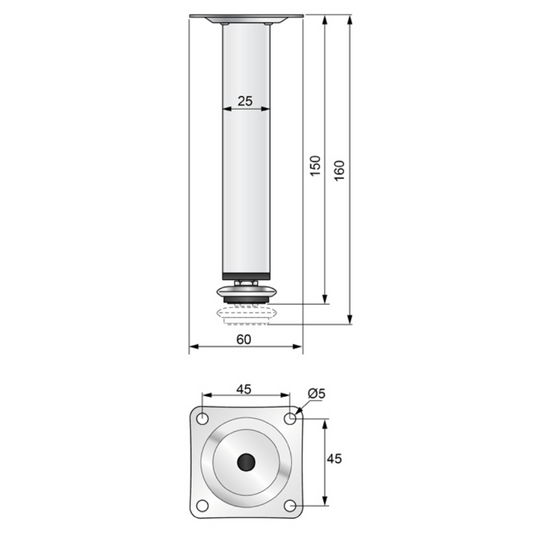
Attachment is typically made via four pre-drilled holes in the mounting plate (usually 3/16 in / 5 mm in diameter).
- Screw Type:Use exclusively full-threadpan-head screwsor countersunk screws (if the mounting plate features bevel-drilled holes).
- Screw Size:For standard 3/4 in (18 mm) particle board, 8 x 5/8 in (4.0 x 15 mm) or 8 x 11/16 in (4.0 x 17 mm) wood screws are ideal. Screws must never pierce through the base panel.
- Pre-Drilling:On hard substrates (such as plywood or solid wood), pre-drill with a 1/8 in (3 mm) wood bit to prevent splitting the material during screw insertion.
Floor Protection and Glide Properties
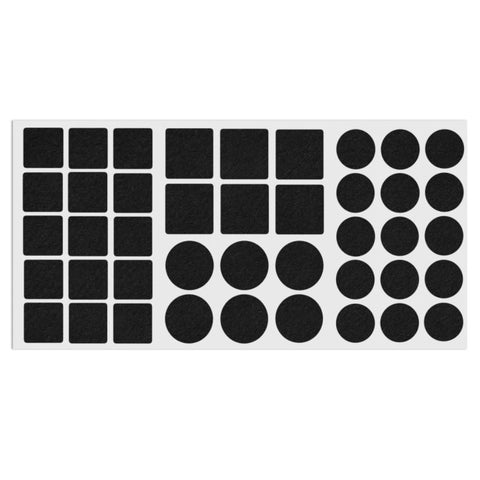
Because the bottom of adjustable legs is typically made of hard plastic, sliding furniture can cause micro-scratches on sensitive floors (hardwood, laminate, vinyl). To minimize sheer forces when moving furniture, sticksquaree Filzgleiteronto the contact surface. Felt pads absorb dirt particles and acoustically isolate the furniture from the subfloor.
Distinction: Furniture Legs vs. Table Legs
In furniture design terminology, a strict distinction must be made between low cabinet legs and table legs, even though search terms like "square table legs" are often used interchangeably.
The square furniture legs featured here (ranging in height from 2-3/8 to 6 in / 60 to 150 mm) arenot suitablefor building standard dining tables or desks. A standard table requires a leg height of approximately 28 to 28-3/4 in (710 to 730 mm). The top plates of short cabinet legs are not engineered to withstand the strong leverage forces generated by a 28-inch table leg. However, for low coffee tables or risers, 6 in (150 mm) tall legs (e.g.,Furniture legs square 40x40mm - 150mm - White) can be used without issue.
FAQ – Frequently Asked Technical Questions
1. What profile size do I need for a heavy wardrobe?For heavy wardrobes with high static and payload weights, choose a 1-1/2 x 1-1/2 in (40 x 40 mm) or 2-3/8 x 2-3/8 in (60 x 60 mm) profile. The 1 x 1 in (25 x 25 mm) profile provides too small of a mounting plate surface for concentrated heavy loads.
2. How much weight can a metal square furniture leg support?Static load capacity depends on the screw fastening and the strength of the cabinet floor. A properly installed 1-1/2 x 1-1/2 in (40 x 40 mm) aluminum or steel leg typically carries static loads of 88 to 110 lbs (40 to 50 kg) per piece. A piece of furniture with four legs can easily support 330 to 440 lbs (150 to 200 kg).
3. How does the height adjustment mechanism work?Adjustable square legs feature a threaded plastic insert at the bottom. The floor glide sits on a threaded rod. Manually turning the glide threads it out of the profile. The usable adjustment range is typically up to 5/8 in (15 mm).
4. Are square aluminum furniture legs suitable for bathroom use?Yes. Aluminum oxidizes in contact with air, forming a natural protective anodized layer. It does not rust like untreated steel. This makes aluminum legs ideal for humid environments exposed to mopping water or high humidity.
5. Which screws are recommended for attaching the mounting plate?Use deep-thread wood or chipboard screws (#8 / 4.0 mm diameter with PZ or Torx drive). Screw length should match the thickness of the cabinet floor minus 1/16 to 1/8 in (2 to 3 mm)—for example, an 8 x 5/8 in (4.0 x 15 mm) screw for a 3/4 in (18 mm) panel.
6. Can I install these legs on a sofa instead of casters?Yes, provided the wooden base frame of the sofa is wide enough to fully support the mounting plate (typically around 2-3/8 x 2-3/8 in / 60 x 60 mm or larger). Ensure that all four screws drive securely into solid wood framing.
Related Hardware Categories
For expanded structural requirements or alternative furniture support designs, explore these related categories:
- Furniture legs Metal– Complete selection of metal furniture feet.
- Furniture legs Rund– Cylindrical alternatives to square profiles.
- Furniture legs Plastic– Cost-effective options for concealed toe-kick bases.
- Cable grommets square– Matching square grommets for desk cable management.