
Round Drawer Pulls
Popular Subcategories
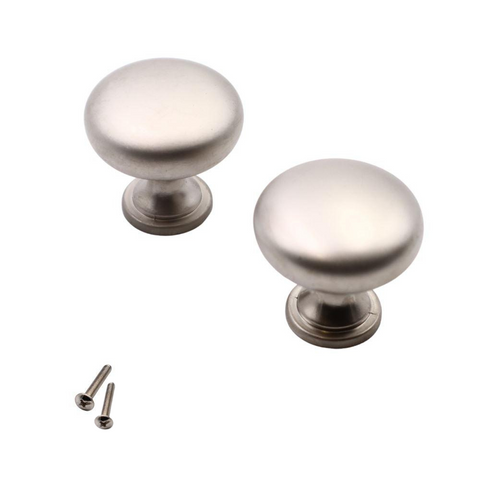
-
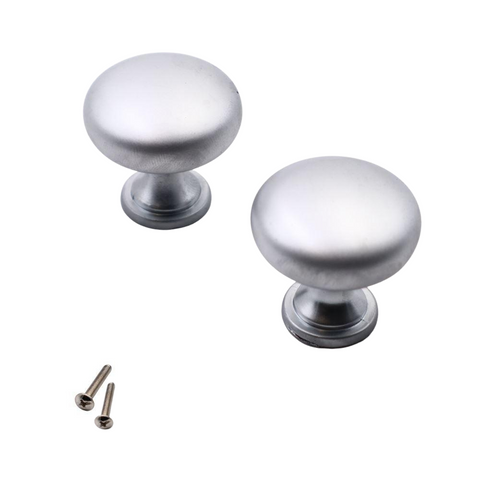
Cabinet knob - AluminumRegular price $1.78Unit price / perRegular priceSale price $1.78
-
Cabinet knob - ChromeRegular price $1.33Unit price / perRegular priceSale price $1.33
-
Porcelain Cabinet KnobRegular price $3.07Unit price / perRegular priceSale price $3.07
-
Round Crystal Glass Cabinet Knob - 1-3/8 inch (35 mm) - ChromeRegular price $4.47Unit price / perRegular priceSale price $4.47
-
Round cabinet knob - Black MattRegular price $2.98Unit price / perRegular priceSale price $2.98
-
Cabinet knob - SatinRegular price $1.78Unit price / perRegular priceSale price $1.78
-
Round cabinet knob - Brushed SteelRegular price $2.98Unit price / perRegular priceSale price $2.98

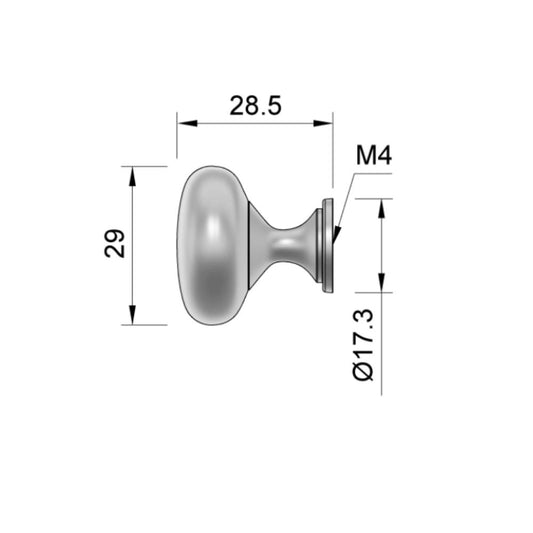

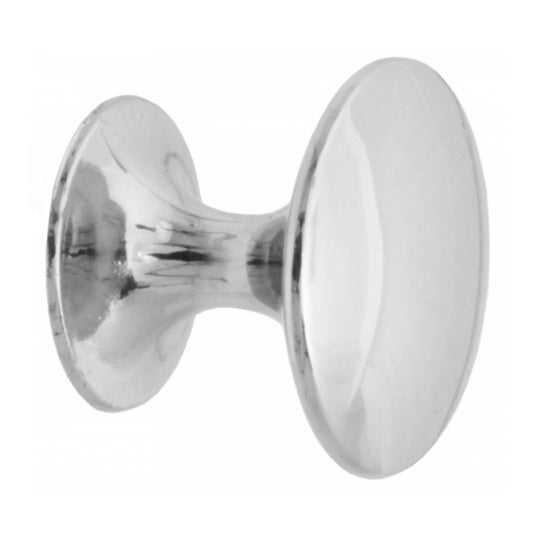


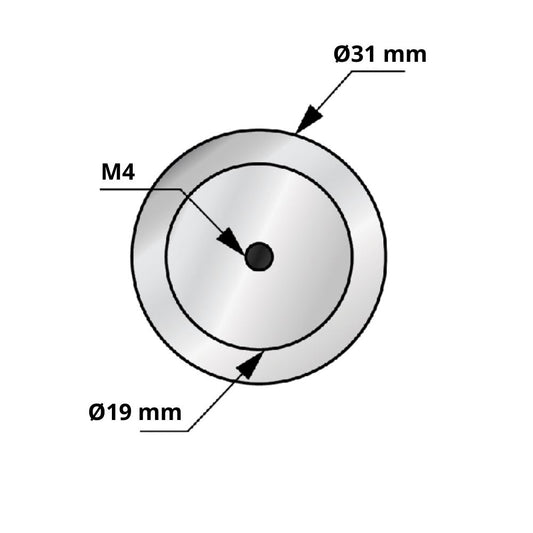

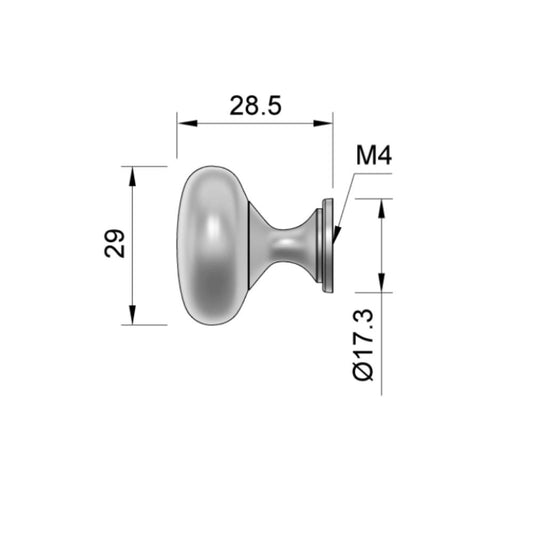

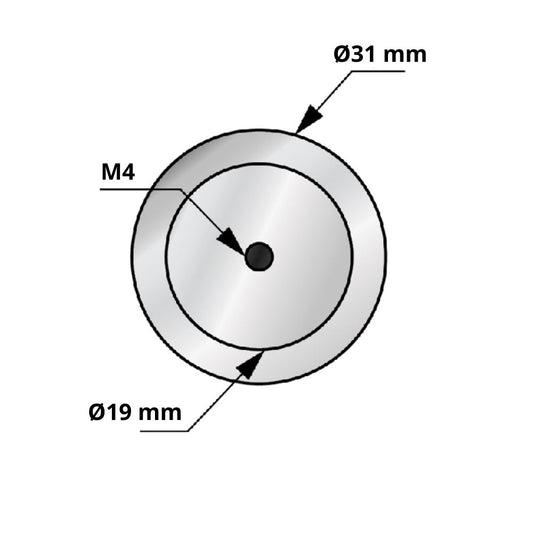
Round drawer pullsand knobs refer to rotationally symmetrical or curved operating elements for cabinet doors, flaps, and drawer fronts, primarily used to transmit pull and push forces. In furniture assembly and interior fitting, they serve as the classic physical interface between the user and the piece of furniture. Unlike flush recessed pulls or handleless systems (such as tip-on mechanisms), they require surface mounting, which is typically implemented via a standardized clearance hole through the cabinet front.
The geometry of a round handle provides specific ergonomic and mechanical properties. Due to the absence of sharp edges, the risk of injury is minimized, making them a preferred choice in high-traffic living spaces. From a technical standpoint, tensile force on a roundcabinet knobis concentrated centrally at a single fastening point, while curved round bar pulls or bow handles distribute the load across two or more drill holes.
In this technical guide, we cover the design types, material properties, dimensions, and correct installation of round drawer pulls for professional cabinetmaking and ambitious DIY projects.
Design Types and Shapes
The round pulls category encompasses various construction styles that fundamentally differ in their force distribution and mounting method. Selecting the right type depends on the weight of the front to be moved and the available space.
The Classic Cabinet Knob (Single-Point Fastening)
Around cabinet knobis the most compact style of hardware. It consists of a solid or hollow body with an integrated internal thread (typically M4) at the base. Because the entire pull force of the door or drawer is directed through a single screw, this type is primarily suitable for light-to-medium fronts, such as standard drawers or small cabinet doors. Analuminum cabinet knoboffers a very low dead weight combined with high tensile strength.
Round Tube and Bow Pulls (Two-Point Fastening)
When users search for terms like "round hand pulls" or "round handle," they often mean a bar pull with a circular cross-section. These pulls require two drill holes spaced at a defined center-to-center distance (hole spacing). They distribute leverage forces over two points and provide a wider gripping surface for the hand. This is essential for wide pull-out drawers or heavy integrated refrigerator doors in modern kitchens. For these applications,6-5/16 in (160 mm) drawer pullsor7-9/16 in (192 mm) drawer pullswith a round profile are frequently used.
Materials and Finishes in Detail
The material of a pull defines not only its haptics and appearance, but also its resistance to mechanical wear, moisture, and cleaning agents.
Metals: Stainless Steel, Aluminum, and Zamak
Around stainless steel drawer pullis the standard for commercial and high-end residential applications. Solid stainless steel (often 304 grade/V2A) is corrosion-resistant, acid-resistant, and extremely rigid. It is exceptionally well suited for damp areas or asround kitchen pulls, where grease and harsh cleaners are daily occurrences. Abrushed steel cabinet knobalso conceals fingerprints thanks to its fine, directional satin texture.
Aluminum pulls are manufactured using an extrusion process and subsequently anodized. The anodized layer hardens the surface and protects the softer core material from oxidation. They are significantly lighter than stainless steel.
Zamak (a zinc-aluminum-magnesium-copper alloy) is processed using die casting. It allows for intricate geometric designs and is subsequently electroplated. This produces finishes seen on achrome cabinet knobor asatin cabinet knob. The electroplated coating provides brilliance and protects the Zamak from corrosion.
Non-Metals: Porcelain and Glass
For specific architectural styles (such as farmhouse or restorations), mineral materials are utilized. Aporcelain cabinet knobis extremely abrasion-resistant and colorfast, but is sensitive to hard impacts (risk of brittle fracture). The porcelain body is often glued or pressed onto a metal base that houses the M4 thread.
For light-refracting effects, choose around crystal glass look cabinet knob - 1-3/8 in (35 mm) dia - chrome. In this design, the pull body consists of acrylic glass or genuine glass, which reflects ambient light through faceted cuts. The structural base, however, remains a solid metal pedestal.
Coatings: Matte, Glossy, Colored
Surface treatment significantly impacts maintenance needs. While high-gloss surfaces (like achrome cabinet knob) require regular polishing, powder-coated surfaces are much easier to care for. Amatte black cabinet knobis achieved through a baked enamel finish or powder coating, which exhibits high scratch resistance and eliminates reflections. Similar coatings are found on complete hardware series, such asmatte black drawer pullsorcharcoal drawer pulls.
Ergonomics and Dimensions: Choosing the Right Size
An undersized pull on a heavy pantry door acts like a bicycle tire on a semi-truck—the leverage is simply insufficient to overcome hinge resistance or a door seal vacuum effectively. Therefore, sizing must be tailored precisely to the application.
Diameter (Ø)
For round cabinet knobs, the diameter typically ranges between3/4 in and 1-9/16 in (20 mm and 40 mm).
- 3/4 in - 1 in (20 mm - 25 mm) dia:Ideal for small drawers, apothecary cabinets, or lightweight drop-down flaps.
- 1-3/16 in - 1-3/8 in (30 mm - 35 mm) dia:The universal standard size. Provides sufficient surface area for thumb and index finger to maintain a secure pinch grip. This is the most common dimension forround cabinet handleson standard wardrobes (front thickness 5/8 in - 3/4 in (16 mm - 19 mm)).
- 1-9/16 in (40 mm) dia and larger:Designed for heavy fronts or as a deliberate architectural statement.
Depth (Projection) and Finger Clearance
The overall depth of the pull determines how far it extends from the front. Essential for ergonomics is thefinger clearance(the distance between the back of the knob head and the cabinet face). This should measure at least19/32 in to 25/32 in (15 mm to 20 mm)so larger fingers can grasp the pull securely without scratching the finish with fingernails.
For curved round bar pulls (two-point), the rod diameter is also relevant. A cross-section of3/8 in to 9/16 in (10 mm to 14 mm)provides optimal feel for a full hand grip.
Installation and Mounting Hardware
Proper installation of round drawer pulls requires precision to prevent tear-out in core substrates (particle board, MDF, or solid wood) and ensure a permanently secure fit.
Threads and Screws
The hardware industry has broadly standardized on metricM4 threadsfor cabinet pulls. Fastening is accomplished using M4 machine screws (typically with PZ or PH drives) inserted from the inside of the door and threaded into the pull.
The required screw length is calculated from the cabinet front thickness plus the thread engagement depth inside the pull. The engagement depth should measure at least5/32 in to 1/4 in (4 mm to 6 mm), but must not exceed the maximum depth of the blind hole in the pull, otherwise the pull cannot be drawn flush to the panel.Example:For standard 3/4 in (19 mm) particle board and a desired engagement depth of 3/16 in (5 mm), an M4 x 24 mm or M4 x 25 mm screw is required.
Drilling and Tools
To bore the clearance hole, use abrad point wood drill bitwith a center point. The hole diameter should be11/64 in or 3/16 in (4.5 mm or 5 mm). This slight oversized clearance compared to the 4 mm screw provides minimal tolerance adjustment if the hole placement is off by a fraction of a millimeter.
To prevent blowout of the melamine coating or veneer on the backside when drilling through, press the panel firmly against a sacrificial backing board (scrap wood). Alternatively, drill from the front until the center point barely pierces the rear, then finish drilling the hole from the back.
Anti-Twist Features for Cabinet Knobs
A common technical issue with single-point fastening is the round knob spinning during use. Unlike square or asymmetrical knobs, this rotation is not visually obvious on round knobs, but over time it can loosen the screw connection. To prevent this, some solid metal knobs feature tiny anti-rotation pins on the base that press into the face when tightened. If these are lacking, a thinstar washer or lock washercan be placed between the screw head and the interior face to increase friction and prevent self-loosening.
Applications and Compatibility
Round drawer pulls are used in virtually all areas of cabinetmaking. However, specific requirements vary depending on the room.
Kitchen Cabinets and Humid Environments
In the kitchen, hardware is constantly exposed to temperature fluctuations, high humidity, and grease splatters.Round kitchen drawer pullsshould therefore feature a smooth, non-porous finish.Stainless steel drawer pullsor chrome plated options are top choices here. When mounting to kitchen drawers, note that wide pot drawers (23-5/8 in (600 mm) wide and up) should be equipped with two round knobs (left and right) or a continuous bar pull to prevent binding on theundermount slidesduring asymmetrical pulling. For a cohesive kitchen concept, explore our main category forkitchen cabinet hardware.
Bedrooms and Living Areas
On wardrobes, understated flat round knobs are frequently selected so as not to distract from the door panel finish. When customers search for compatibility with large furniture retailers (e.g., "IKEA cabinet pulls"), retrofitting is generally straightforward because factory pre-drilled holes in the fronts typically use the standard 3/16 in (5 mm) diameter. If existing bar pulls are replaced with single knobs, one drill hole will remain visible. In such cases, switching to alternative center-to-center hole spacings, such as5-1/16 in (128 mm) drawer pullsor3-3/4 in (96 mm) drawer pulls, is often the cleaner solution to cover old holes.
Integration with Soft-Close Systems
Understanding the interaction between pulls and internal functional hardware is essential. A round drawer pull serves strictly for manual pulling. It is the perfect match for hinges and slides withsoft-close damping(where the front is manually pushed shut and gently cushions over the last few inches). However, it should not be confused withpush-to-open(tip-on) systems. With push-to-open mechanisms, the door pops open by pressing on the front; a pull handle is technically redundant here and is at most installed as a dummy pull purely for visual symmetry.
FAQ – Frequently Asked Questions About Round Drawer Pulls
What diameter is optimal for round drawer pulls?For standard drawers (height approx. 5-1/2 in to 8 in (140 mm to 200 mm)), a diameter of1-3/16 in to 1-3/8 in (30 mm to 35 mm)is ideal. For very small apothecary drawers, 3/4 in (20 mm) is sufficient. For heavy-duty pull-outs (load capacity 66 lbs (30 kg) and up), step up to a two-point bar pull.
How do I determine the correct screw length for my cabinet knob?Measure the thickness of your cabinet front (standard sizes are often 5/8 in, 11/16 in, or 3/4 in (16 mm, 18 mm, or 19 mm)). Add3/16 in (5 mm)for thread engagement inside the knob. For a 3/4 in (19 mm) panel, you will need an M4 x 24 mm or M4 x 25 mm length screw.
Do standard round pulls fit on IKEA furniture?Yes. Pre-drilled holes in fronts from popular cabinet manufacturers standardly measure 3/16 in (5 mm) in diameter. Since virtually all round cabinet knobs install with M4 screws (0.157 in / 4 mm diameter), they pass through these clearance holes without issue.
How do I clean round drawer pulls made of brushed stainless steel?Use warm water and a soft microfiber cloth. Always wipe in the direction of the brush grain to preserve the satin finish. Avoid abrasive scouring pads or harsh chlorine cleaners, as these can micro-damage the surface coating.
My cabinet knob spins when pulled. What can I do?If the knob lacks anti-rotation pins on the back, remove it and place an M4 star lock washer between the screw head and the inside face of the cabinet door. Tighten the screw securely with a hand screwdriver. The serrations bite into the wood face to stop rotation.
Can round cabinet knobs be installed on glass doors?Yes, but this requires specific protective measures. The M4 screw and metal base must never make direct contact with the glass, otherwise stress cracks will form. You must use transparent plastic or silicone washers (rosettes) along with a section of silicone tubing over the threads inside the glass hole.
Related Categories and Complementary Components
If you are considering alternative shapes or specific color palettes for your cabinetry design, explore additional tailored hardware options in our catalog. For clean geometric layouts, browsesquare stainless steel drawer pullsormodern drawer pulls.
Looking for accent colors beyond traditional chrome or stainless steel? Review our curated lines forgold drawer pulls,matte gold drawer pulls, or the crisp tone ofsilver drawer pulls. For rustic or industrial interiors,industrial drawer pullsandblack metal drawer pullsprovide the correct aesthetic matching.
Beyond face hardware, if you are working on floor protection for freestanding pieces, consider protecting surfaces withround felt pads. For neat cable routing through desks or media consoles, we also carry matchinground desk grommetsthat harmoniously continue the circular hardware theme.
- white drawer pulls