
165 Degree Cabinet Hinges
Popular Subcategories
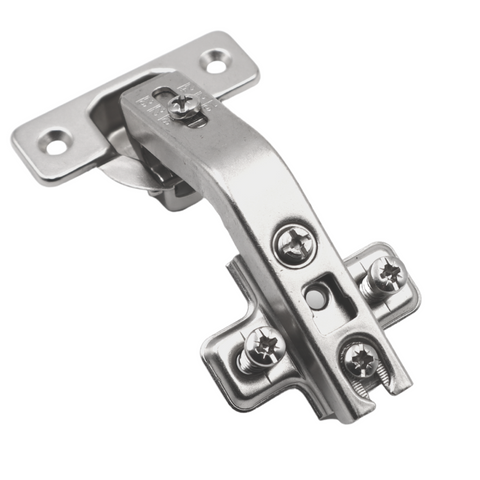
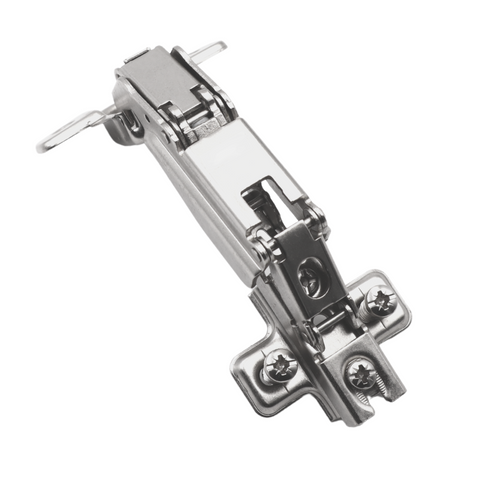
-
165° Soft-Close Hinge, H2 Mounting Plate with EURO Screws, Overlay DoorsRegular price $5.22Unit price / perRegular priceSale price $5.22
-
165º Hinge, H2 Mounting Plate with EURO Screws, Overlay DoorsRegular price $2.39Unit price / perRegular priceSale price $2.39

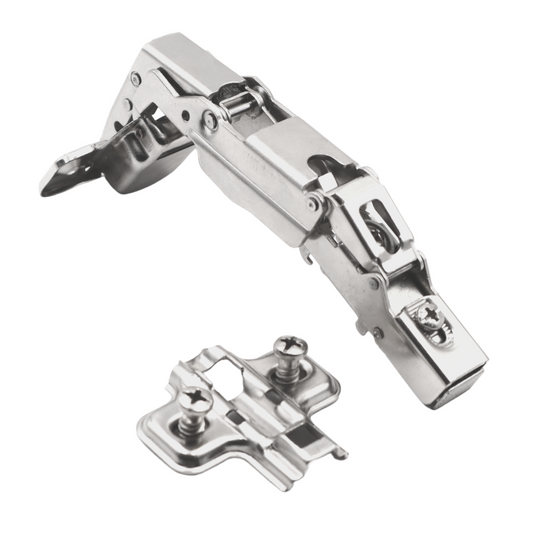

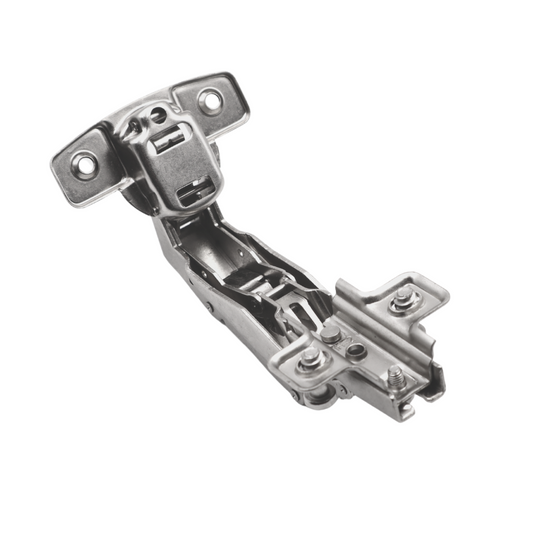
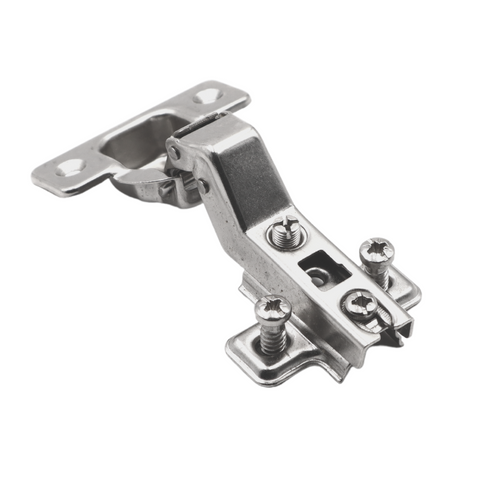
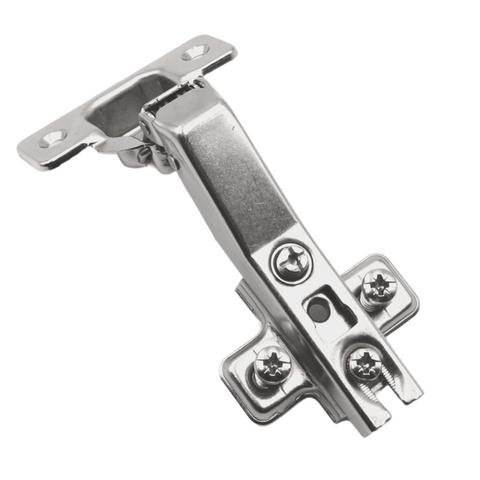
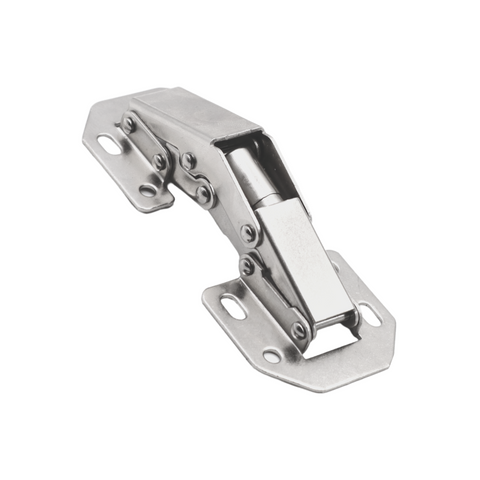
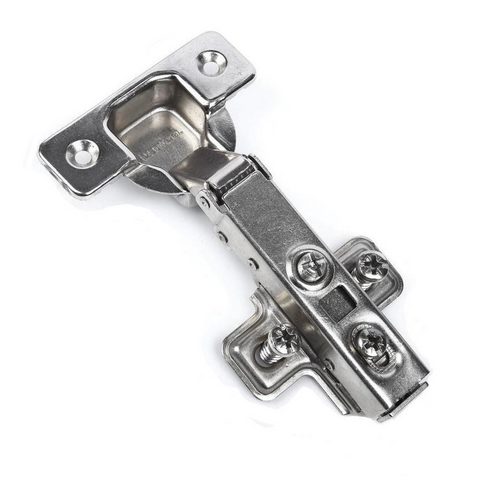
165 degree cabinet hinges(concealed European hinges) are wide-angle hinges designed for cabinet making. They allow doors to open up to 165°, making them essential for corner cabinets or cabinet carcasses with internal pull-outs, ensuring full, unobstructed access to the entire cabinet interior.
Technical Specifications and Kinematics of 165 Degree Cabinet Hinges
A165 degree cabinet hingediffers fundamentally from standard hinges due to its complex multi-pivot kinematics. While a conventional hinge simply pivots the door around a single axis, a wide-angle hinge utilizes multiple pivot points. Similar to an industrial robotic arm, the hinge mechanism folds compactly when closing, while swinging the door completely clear of the access opening when open. This design creates what is known as zero-protrusion (zero-encroachment).
Zero-protrusion is a critical factor when designing pantry units, tall kitchen cabinets, or apothecary cabinets. It means that when the cabinet door is opened from roughly 90° to 165°, it does not extend into the interior opening of the cabinet carcass. This feature allows interior drawers or pull-out shelves to extend smoothly without catching or rubbing against the edge of the door.
Standard cup dimensions apply to these wide-angle fittings. The hinge cup diameter is standardized at 1-3/8 in (35 mm), ensuring compatibility with most factory drill patterns. Matching35 mm cabinet hingestypically require a cup drilling depth of 7/16 in to 1/2 in (11.5 mm to 12.5 mm). The recommended door thickness for these hinges ranges from 5/8 in to 15/16 in (16 mm to 24 mm).
Overlay Types for Wide-Angle Hinges
Choosing the correct overlay type is vital for proper door function and maintaining uniform reveal gaps. When selecting a165 degree cabinet hinge, there are three primary installation types:
Full Overlay
In a full overlay configuration, the closed door almost completely covers the front edge of the cabinet side wall, leaving only a minimal gap to ensure smooth opening.Full overlay cabinet hingesare the most common choice for standalone cabinets or the outer ends of a continuous cabinet run.
Half Overlay (Dual Overlay)
When two doors share a single partition or center panel (for example, in continuous wardrobe systems), half overlay hinges are required. The hinge arm features a pronounced crank/bend. The door overlays only half of the cabinet side wall, leaving sufficient room for the adjacent door. For this setup,half overlay cabinet hingesare mandatory.
Inset
With inset door fronts, the door sits flush with the outer front edge of the cabinet carcass, meaning the door rests inside the cabinet opening. The hinge arm for this application features a heavy crank.Inset cabinet hingesor hinges for inset doors are frequently used in custom furniture design where the cabinet sides remain exposed. Inset cabinet doors demand precise gap planning, as the door requires clearance around all four edges.
Damping Systems: Soft-Close Technology
A modern165 degree soft-close cabinet hingefeatures an integrated hydraulic damper built directly into the hinge arm or hinge cup. This cylinder dampens the door's closing momentum during the final 10° to 15°, pulling it softly and silently against the cabinet frame.
Soft-close cabinet hardware is especially beneficial for heavy or large door fronts (such as full-height wardrobe doors) to prevent wear and tear from slamming. On many models, the soft-close feature can be deactivated via a small switch on the hinge cup if lightweight doors experience too much resistance from two active dampers. As an alternative to integrated systems, self-closing (non-dampened) hinges can be installed and retrofitted with clip-on dampers. When searching specifically for soft-close kitchen cabinet hinges, look for "Soft-Close" in the product title. For a complete overview of this technology, explore oursoft-close cabinet hingescategory.
Installation and Adjustment
Installing wide-angle European hinges requires precision. To ensure accurate placement of the 1-3/8 in (35 mm) cup hole, using a cabinet hinge drilling jig is highly recommended. The distance from the drill hole to the door edge (bore distance / cup margin) typically ranges between 1/8 in and 1/4 in (3 mm to 6 mm), directly affecting the door reveal.
The Mounting Plate
The counterpart to the hinge is the mounting plate (often called a face frame or base plate), which is fastened to the cabinet side wall. It defines the hinge height offset distance (D) relative to the cabinet. Common plate heights are H0 (0 mm) and H2 (2 mm). Plate selection depends on the desired reveal gap and door thickness. Fastening is done using standard wood screws or pre-mounted Euro screws (Ø 3/16 in / 5 mm) screwed into a 32 mm system hole pattern. If a damaged hinge has torn out of the cabinet side wall, a metal cabinet hinge repair plate is often installed to span the damaged screw holes and restore a secure mount for the new hinge.
3D Adjustment
Aligning cabinet doors precisely is done using the adjustment screws on the hinge arm. These screws allow 3-way (3D) adjustment:
- Depth Adjustment:Sets the gap between the door and the cabinet side wall (typically +1/8 in / -1/16 in (+3 mm / -2 mm)). Prevents the door from rubbing against the face of the cabinet.
- Lateral (Overlay) Adjustment:Adjusts the gap width between adjacent doors or the outer cabinet edge (typically +1/16 in / -1/16 in (+2 mm / -2 mm)).
- Height Adjustment:Performed via the elongated slots on the mounting plate or an eccentric cam on the plate to align the door vertically (typically +1/16 in / -1/16 in (+2 mm / -2 mm)).
Featured 165 Degree Cabinet Hinges in Detail
Specific designs are available to meet various technical requirements. The following models cover the most common installation scenarios:
- 165° 3D Soft-Close European Hinge, H2 Mounting Plate with EURO Screws, Full Overlay:This model features integrated soft-close damping. The included H2 mounting plate (2 mm distance) is ideal for standard carcass wall thicknesses of 5/8 in (16 mm). Pre-mounted Euro screws significantly speed up installation in pre-drilled 3/16 in (5 mm) system hole lines.
- 165° Soft-Close European Hinge, H0 Mounting Plate with EURO Screws, Full Overlay:Also a dampened system, but paired with an H0 mounting plate (0 mm distance). This configuration is chosen when maximum door overlay on the cabinet side is required, typically on 23/32 in or 3/4 in (18 mm or 19 mm) side walls.
- 165° European Cabinet Hinge, H2 Mounting Plate with EURO Screws, Full Overlay:The un-dampened (self-closing) variant. Ideal for doors equipped with touch-to-open (push-to-open / tip-on) latches, where built-in soft-close dampening would resist the push-ejector mechanism.
System Compatibility and Hardware Replacement
Installers and homeowners frequently need to replace broken concealed hinges from major cabinet brands. Searches for replacement kitchen cabinet hinges highlight the demand for accurate retrofits. The wide-angle hinges offered here utilize industry-standard drilling patterns (35 mm cup hole, with hinge cup screw spacing typically at 1-25/32 in (45 mm) or 2-3/64 in (52 mm)). They serve as ideal replacements for damaged brand-name hardware, provided the overlay type (full overlay, half overlay, or inset) and mounting plate height match. We recommend replacing both the hinge and mounting plate together to ensure perfect clip-on snap engagement.
Wide-Angle Hinges in Relation to Other Opening Angles
A 165° opening angle is highly specialized. Depending on furniture construction, alternative angles may be required. European cabinet hinges vary significantly based on their intended range of motion:
- For standard cabinet doors without interior pull-out drawers, a110 degree cabinet hingeis usually sufficient.
- In corner cabinets with bi-fold doors (pie-cut corner units), the 165° hinge mounts to the cabinet wall and operates in tandem with a135 degree corner hingeconnecting the two door leaves.
- For thick doors or specialized decorative profiles, a155 degree cabinet hingeis recommended.
- Angled cabinets (such as diagonal end cabinets) often require a45 degree cabinet hingeor a30 degree cabinet hinge.
- For blind corner cabinets, dedicated90 degree blind corner hingesare used.
For a complete overview of all options, explore our mainEuropean cabinet hingescategory.
FAQ – Frequently Asked Technical Questions About 165 Degree Hinges
What is the difference between 165 degree and 180 degree cabinet hinges?
A165 degree hingeis the standard wide-angle European hinge for cabinet construction using a 1-3/8 in (35 mm) cup. It provides zero-protrusion for internal drawers. Searches for180 degree cabinet hingesusually refer to specialty hardware designed to swing the door completely flat against the adjacent outer wall or adjacent cabinet face. These often require different routing profiles and do not use a standard 35 mm cup. In standard modular cabinet making, 165° is the functional maximum for concealed cup hinges.
Can I use a 165 degree hinge with push-to-open systems?
Yes, but you must select an un-dampened hinge (without soft-close). An integrated hydraulic damper would counteract the push-latch mechanical ejector. Additionally, un-sprung hinges (free-swinging hinges without a closing spring) are preferred so the door pops open smoothly when released.
How do I properly adjust a 165 degree cabinet hinge?
Adjusting cabinet hinges is done using the three screws on the hinge arm. First, adjust the vertical height on the mounting plate to correct horizontal door alignment. Next, use the front screw on the hinge arm to set the side/overlay alignment (gap between doors). Finally, use the rear screw to adjust depth, setting the distance between the door and cabinet frame to prevent rubbing.
Why won't my door close completely with a 165 degree hinge?
This issue is usually caused by incorrect depth adjustment or using an improper mounting plate height. If the door is pulled too tight against the cabinet carcass, the hinge kinematics lock up before reaching the 0° closed position. Loosen the rear adjustment screw slightly and move the door 1/16 in (1 mm to 2 mm) away from the cabinet box.
Are 165 degree hinges suitable for integrated refrigerator doors?
No. Refrigerator hinges for built-in appliances are specialized flat sliding or heavy-duty panel hinges designed to support the combined weight of the appliance door and the outer decorative front simultaneously. They feature completely different kinematics. A 165 degree concealed cup hinge is designed exclusively for standard wood or MDF cabinet doors.