
Coat Hooks
Popular Subcategories
-
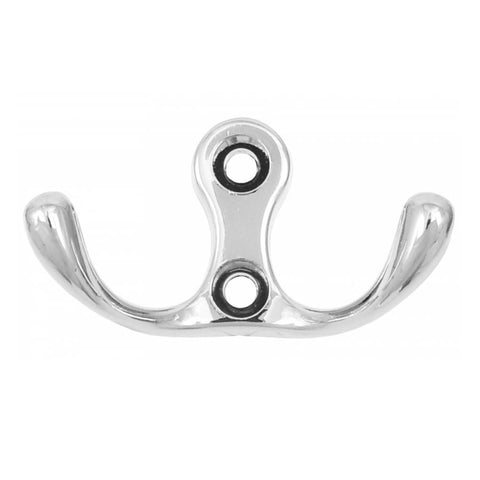
Double robe hook - Chrome WP01Regular price $0.85Unit price / perRegular priceSale price $0.85
-
Double robe hook - Black WP02Regular price $1.27Unit price / perRegular priceSale price $1.27
-
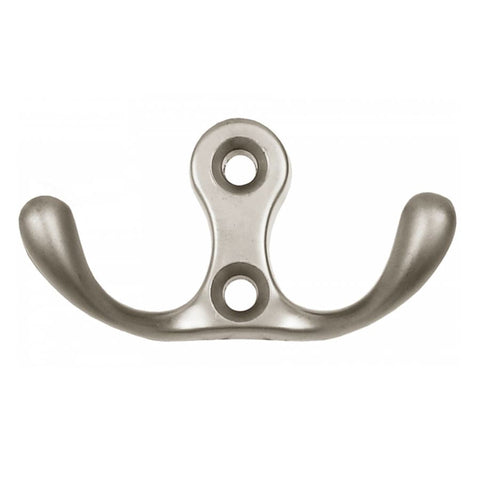
Double robe hook - Satin WP02Regular price $1.27Unit price / perRegular priceSale price $1.27
-
Triple robe hook - Chrome WP05Regular price $2.30Unit price / perRegular priceSale price $2.30
-
Triple robe hook - Chrome WP03Regular price $2.60Unit price / perRegular priceSale price $2.60
-
Double robe hook - Chrome WP02Regular price $1.21Unit price / perRegular priceSale price $1.21
-
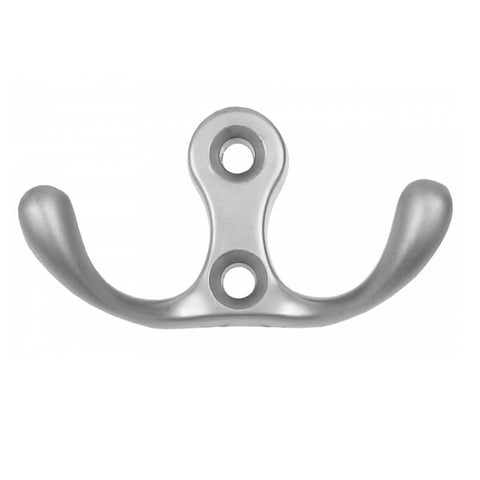
Double robe hook - Aluminium WP01Regular price $0.91Unit price / perRegular priceSale price $0.91
-
Double robe hook - Aluminium WP02Regular price $1.27Unit price / perRegular priceSale price $1.27
-
Triple robe hook - Satin WP03Regular price $2.68Unit price / perRegular priceSale price $2.68
-
Triple robe hook - Aluminium WP03Regular price $2.68Unit price / perRegular priceSale price $2.68
-
Double robe hook - Satin WP04Regular price $1.19Unit price / perRegular priceSale price $1.19
-
Triple robe hook - Satin WP05Regular price $2.36Unit price / perRegular priceSale price $2.36
-
Triple robe hook - Aluminium WP05Regular price $2.36Unit price / perRegular priceSale price $2.36
-
Coat Hook - Black WP01Regular price $1.31Unit price / perRegular priceSale price $1.31
-
Double robe hook - Chrome WP04Regular price $1.13Unit price / perRegular priceSale price $1.13
-
Double robe hook - Aluminium WP04Regular price $1.19Unit price / perRegular priceSale price $1.19
-
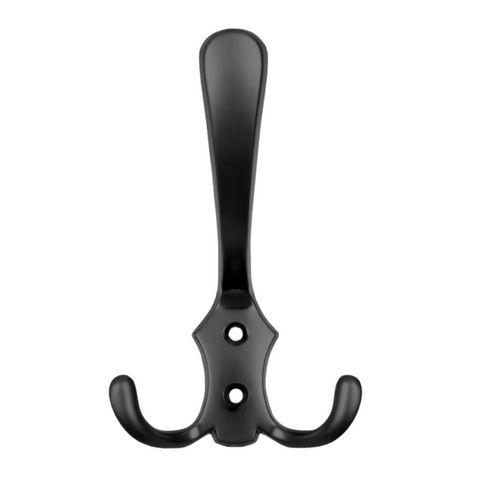
Triple robe hook - Black WP03Regular price $2.68Unit price / perRegular priceSale price $2.68
-
Double robe hook - Satin WP01Regular price $0.91Unit price / perRegular priceSale price $0.91

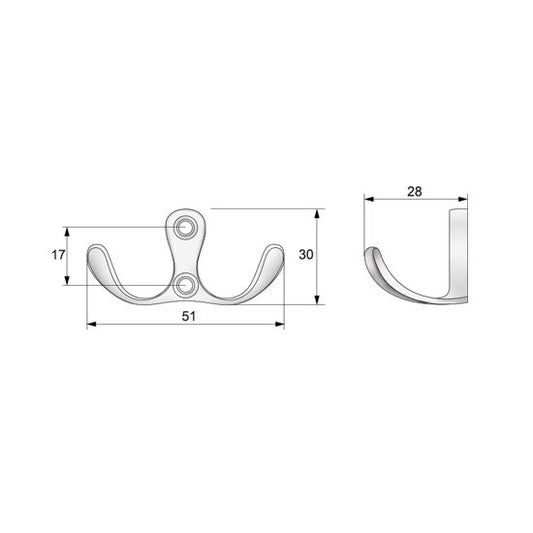

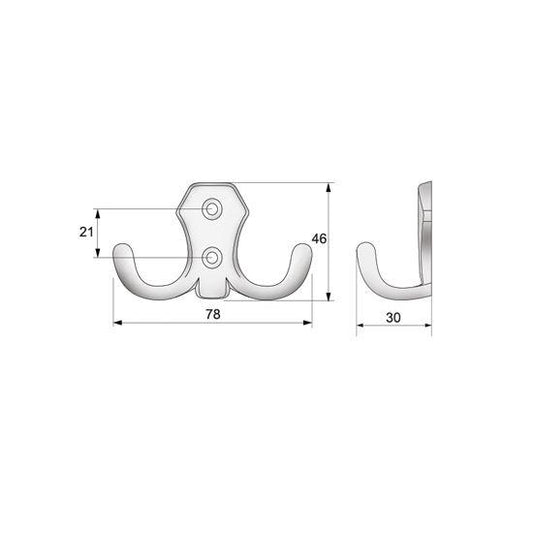

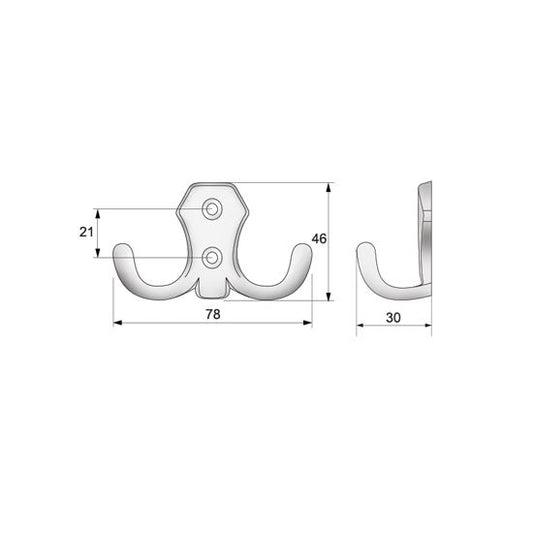

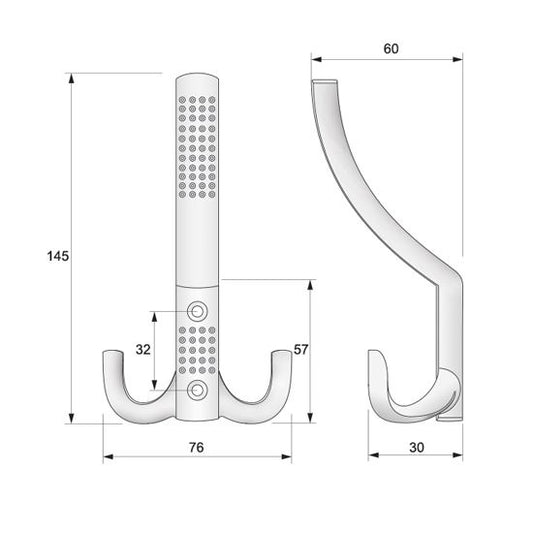

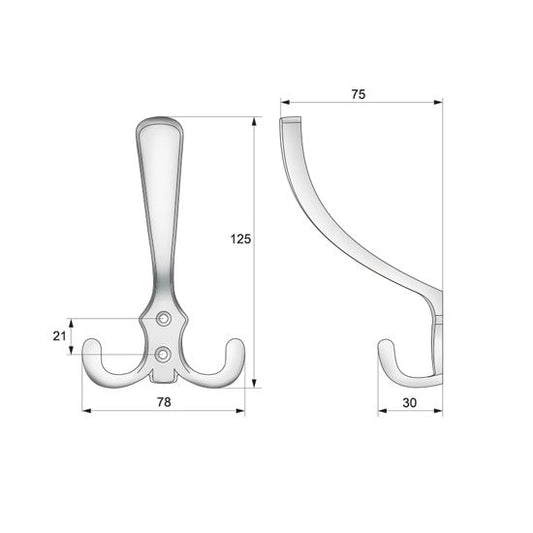

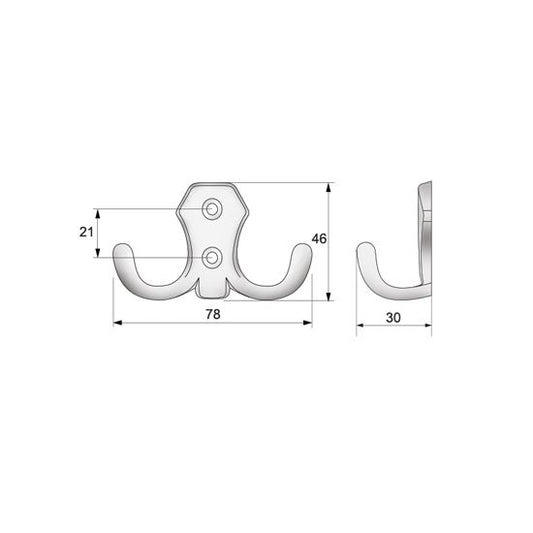

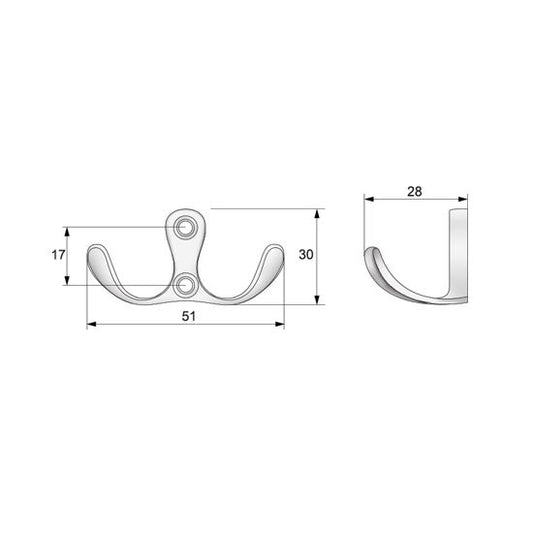

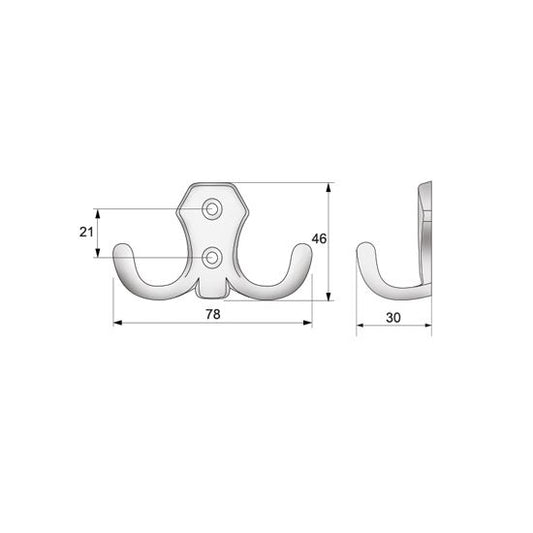

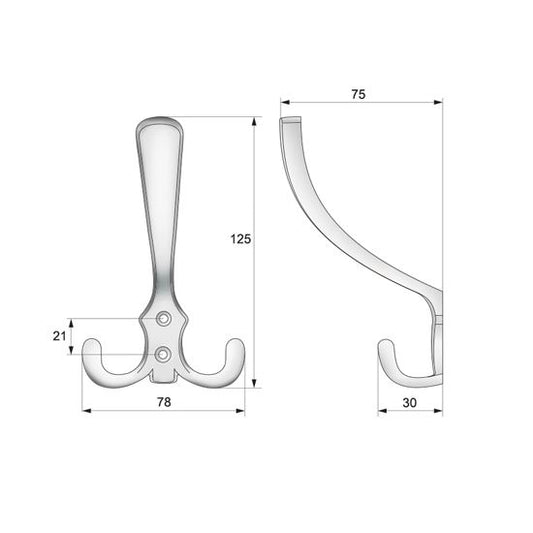


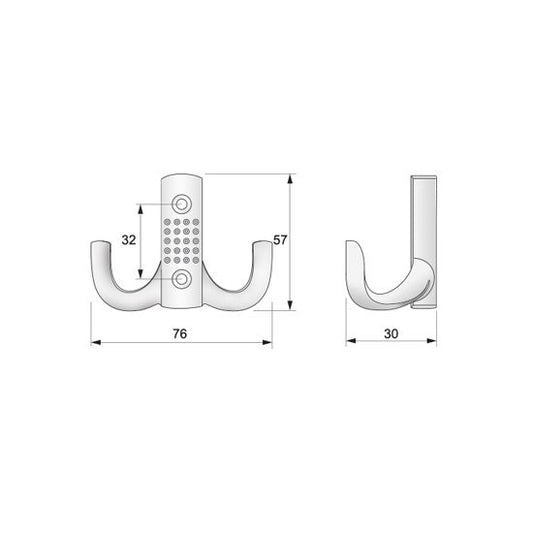

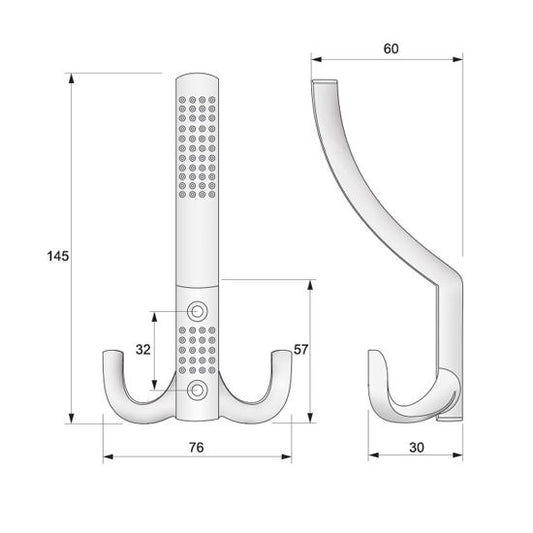

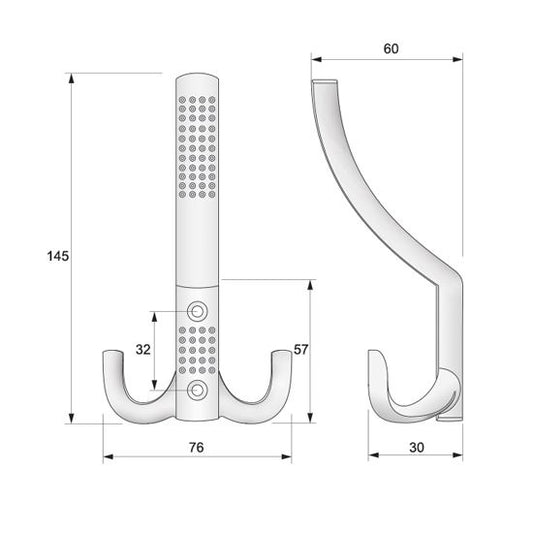

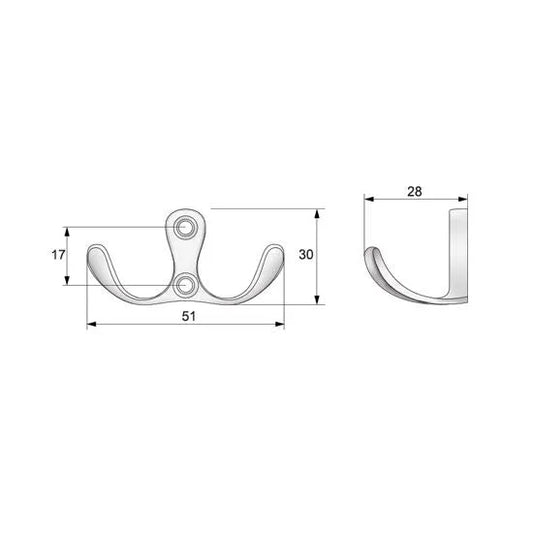

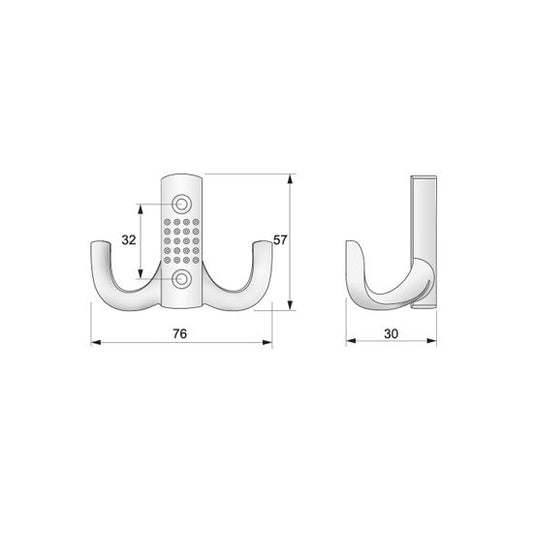

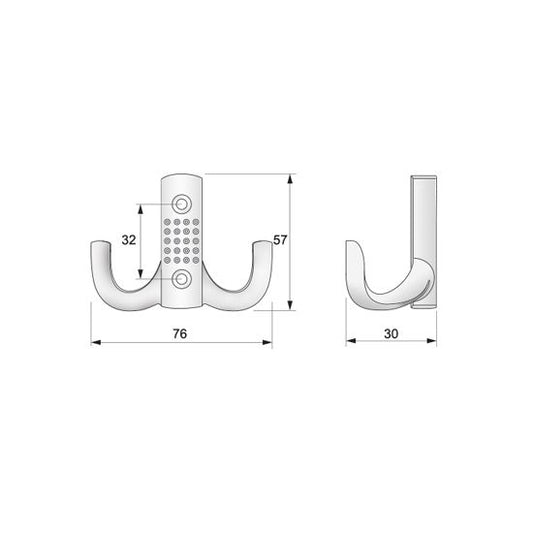

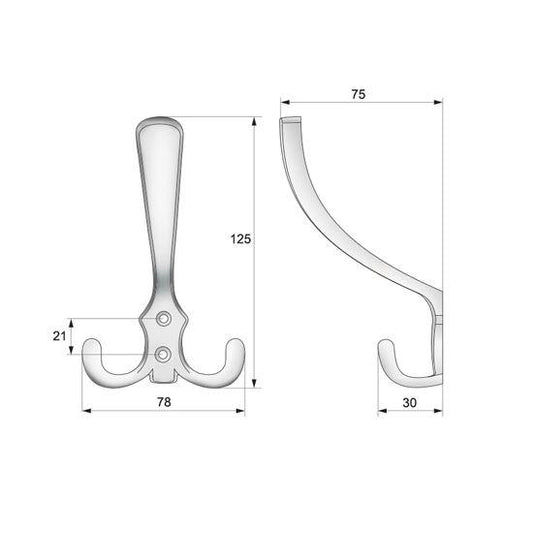

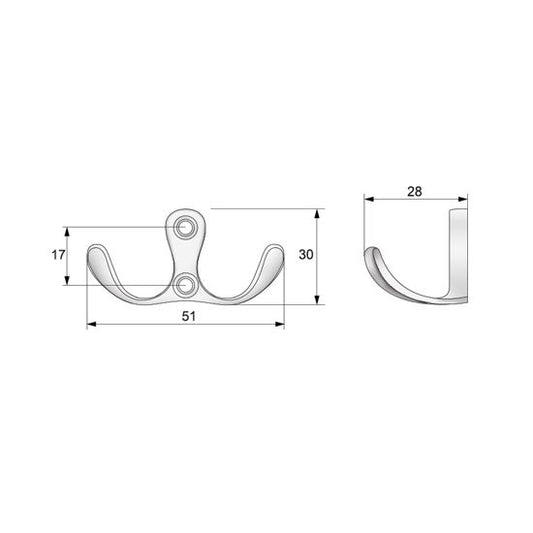
Coat hooksare heavy-duty mechanical hardware engineered for vertical garment storage, mounted via fixed screw connections to backboards, walls, or cabinet carcasses. In professional cabinetry and interior millwork, they do not merely hold clothing—they must absorb static forces and safely transfer loads into the substrate. Designing such hardware requires precise coordination of material strength, surface finishing, and fastening technology to ensure long-term functionality under daily weight loads.
Under physical loads, a coat hook behaves like a cantilever beam in structural engineering: the vertical pulling force of a hung garment creates a lever effect that acts as tensile force on the upper mounting screw and compressive force on the substrate at the bottom edge of the baseplate. Therefore, choosing the right hook style, proper screw, and professional installation method for the given substrate is crucial to the durability of any coat rack construction.
Construction Types and Design Styles
The geometry of a coat hook determines its functional capacity. In practice, a distinction is made between various configurations selected according to space requirements and planned garment volume.
Double Coat Hooks (Two-Prong Configuration)
The classic design features two mounting prongs. Typically, a longer, upward-curved upper arm is designed for heavy coats or hats, while a shorter lower arm accommodates jacket loops, scarves, or bags. This asymmetrical load distribution demands a stable baseplate. Models like theKleiderhaken - Black WP01orKleiderhaken - Chrome WP01exemplify this style. This configuration is widely used when designing coat rack panels because it provides high storage density with a moderate footprint. A specific dimensional example for compact entryway panels is aDouble Hat and Coat Hook - 4-13/16 in (122 mm) - Satin, whose length is ideal for standard panel widths without projecting too far into the room. For more spacious designs, longer options like theDouble Hat and Coat Hook - 6-5/16 in (160 mm) - Chromeare often selected, which require deep-reaching anchors due to their larger leverage arm.
Additional options in this category include theKleiderhaken - Satin WP01andKleiderhaken - Aluminum WP04, which feature WP-series geometry ideal for flush mounting.
Triple Coat Hooks (Multi-Prong Configuration)
When maximum holding capacity is needed in a minimal footprint, triple coat hooks are the ideal solution. Alongside a central, usually upward-facing main hook, these fittings feature two angled secondary prongs extending to the sides or downwards. Structural demands on the fasteners are significantly higher here, as the load from three heavy garments (e.g., wet winter coats) can quickly reach22 lbs - 33 lbs (10 kg - 15 kg)per hook. Corresponding engineering can be found in models such as theKleiderhaken - Black WP03orKleiderhaken - Aluminum WP05. TheKleiderhaken - Satin WP05andKleiderhaken - Chrome WP05also use this geometry to distribute shear forces across an enlarged baseplate down to the mounting screws.
Specialty Forms and Minimalist Designs
Beyond traditional arm structures, single-point mounting solutions are also popular. Coat hook dots are cylindrical or mushroom-shaped hardware usually anchored deep into the substrate using a single central hanger bolt. They offer a clean, minimalist design, but because they lack a stabilizing baseplate to absorb rotational torque, they require play-free installation into solid wood or heavy-duty wall anchors in masonry.
Materials and Surface Finishes
The choice of material and surface treatment directly impacts the mechanical durability, corrosion resistance, and wear resistance of the hook. Friction from metal coat hangers or zippers creates continuous mechanical wear on the surface finish.
Chrome (Electroplated)
Electroplated chrome coat hooks feature an extremely hard, wear-resistant surface. During the electroplating process, a thin chrome layer is deposited onto the base material (typically a zinc die-cast alloy or steel). A classichat and coat hook in chromeprotects against oxidation while withstanding daily friction from hard fabric loops. Products like theKleiderhaken - Chrome WP04orKleiderhaken - Chrome WP02feature this non-porous, sealed surface. When cleaning, avoid abrasive cleaners that could scratch the microscopically thin chrome layer.
Aluminum (Anodized)
Aluminum hardware offers an outstanding strength-to-weight ratio. Through anodization (electrolytic oxidation of aluminum), the top metal layer is converted into a hard oxide layer. This layer is fully integrated into the base material and will not peel or chip. Models like theKleiderhaken - Aluminum WP02orKleiderhaken - Aluminum WP01are highly corrosion-resistant and suitable for humid areas like bathrooms or locker rooms. The matte, slightly textured surface also conceals micro-scratches effectively.
Satin (Brushed / Matte)
Satin finishes are produced by mechanical brushing or specialized matte nickel plating. They diffuse light softly and resist fingerprints. Hooks like theKleiderhaken - Satin WP02orKleiderhaken - Satin WP04are frequently used in high-end interior design where a subtle, glare-free aesthetic is required. The surface hardness remains suitable for intensive daily use, as seen in options like theKleiderhaken - Satin WP03.
Black (Powder-Coated)
Black coat hooks are typically finished with an electrostatic powder coating. Pigment powder is sprayed onto the metal workpiece and baked at approximately356°F - 392°F (180°C - 200°C). This process creates a uniform, impact-resistant coating layer. TheKleiderhaken - Black WP02is a prime example of this technology. While powder coating offers excellent corrosion protection, it can be slightly more susceptible to minor chipping from sharp metal hanger chains compared to electroplated chrome.
Technical Planning and Ergonomics
Proper placement of coat hooks follows clear ergonomic and mechanical guidelines. Random positioning causes garments to overlap and hinders ease of use.
Mounting Heights
- Adults:Standard mounting height for coat hooks is between63 in and 67 in (1600 mm and 1700 mm)above the finished floor level. This height ensures that long winter coats (typical length around 47 in (1200 mm)) do not drag on the floor.
- Children:For kids' coat racks, a mounting height of39 in to 47 in (1000 mm to 1200 mm)is recommended.
- Two-Tier Layout:When designing a staggered two-row setup, set the upper row at approximately67 in (1700 mm)and the lower row at approximately47 in (1200 mm). The lower tier is ideal for short jackets, bags, or umbrellas.
Spacing and Spacing Grids
To ensure proper ventilation for wet clothing and easy hanging, adhere to standard center-to-center spacing.
- Horizontal center-to-center distance (hook center to hook center) should be at least6 in (150 mm).
- For bulky winter wear, a spacing grid of8 in to 10 in (200 mm to 250 mm)is recommended.
- Edge clearance on wooden substrate boards must be at least2 in (50 mm)to prevent screw breakout or panel splitting.
Installation and Fastening Technology
The durability of any coat hook setup depends heavily on the quality of the screw connection. Tensile and shear forces must be securely transferred from the hardware into the mounting substrate.
Screw Selection
When installing onto engineered wood substrates (particle board, MDF, solid wood), flat countersunkwood screwsare essential. The countersunk head centers the hook in the baseplate hole and sits flush, preventing clothing from snagging.
- Diameter:Standard screw thread diameters used are#6 or #8 (3.5 mm or 4.0 mm).
- Drive Type:APZ (Pozidriv)orTX (Torx)drive is preferred, as it delivers optimal torque transmission during insertion and prevents bit cam-out.
- Thread Engagement Depth:Load-bearing thread depth in the substrate should be at least5/8 in to 3/4 in (15 mm to 20 mm). On standard3/4 in (19 mm)cabinet panels, a screw sized#8 x 5/8 in (4.0 x 15 mm)or#8 x 11/16 in (4.0 x 17 mm)is typically selected to avoid breaking through the back of the panel.
Substrate Preparation
Pre-drilling pilot holes is a critical step that is frequently overlooked.
- Particle Board / Melamine-Coated Panels:Pre-drilling prevents the hard melamine resin coating from cracking. For a #8 (4.0 mm) screw, a wood drill bit sized3/32 in or 1/8 in (2.5 mm or 3.0 mm)is ideal. Drilling depth should be roughly1/16 in (2 mm)shorter than the screw length.
- MDF (Medium-Density Fiberboard):MDF splits easily if screws are driven without pilot holes. Pre-drilling (Ø 1/8 in (3.0 mm)) is mandatory.
- Solid Wood:Hardwoods (such as oak or beech) must always be pre-drilled to prevent high drive resistance from shearing off the screw head.
Wall Mounting (Masonry / Drywall)
If coat hooks are attached directly to a wall without a backer panel, the fastening strategy changes.
- Masonry / Concrete:Use1/4 in (6 mm)nylon wall anchors combined with matching countersunk screws (Ø #8 - #10 (4.0 mm - 4.5 mm)). The screw must pass through the end of the anchor by at least its own diameter.
- Drywall (Gypsum Board):Standard expansion anchors lack holding power in hollow drywall. Use hollow-wall metal anchors or self-drilling drywall anchors with coarse external threads. A single 1/2 in (12.5 mm) drywall sheet carries limited weight per anchor, so for heavy coat racks, mounting into studs or using a load-distributing backboard is strongly recommended.
Load Capacity and Physics
The load limit of coat hooks is rarely constrained by the metal body itself (a die-cast zinc hook withstands loads well over110 lbs (50 kg)before breaking), but rather by the screw pull-out force from the substrate.
- A#8 x 5/8 in (4.0 x 15 mm)screw in standard particle board (P2) offers a vertical pull-out resistance of approx.400 N(approx. 90 lbs (40 kg)).
- However, leverage from a deep coat hook projection (e.g., 6-5/16 in (160 mm)) multiplies this force. Downward pull of 22 lbs (10 kg) at the tip can exert44 lbs to 66 lbs (20 kg to 30 kg)of outward tension on the top mounting screw.
- Triple hooks such as theKleiderhaken - Aluminum WP03orKleiderhaken - Chrome WP03distribute these forces across their baseplate geometry and hole pattern much more efficiently than narrow single-point hooks.
FAQ – Frequently Asked Technical Questions
What drill bit diameter is needed to pre-drill pilot holes for coat hooks?For standard countersunk screws with a#6 or #8 (3.5 mm or 4.0 mm)diameter, use a wood bit sized3/32 in or 1/8 in (2.5 mm or 3.0 mm)in particle board or MDF. In solid hardwood, a1/8 in (3.0 mm)pilot hole is recommended.
Can coat hooks be screwed directly into 5/8 in (16 mm) particle board?Yes. Use Euro screws or specialized wood screws sized#8 x 5/8 in (4.0 x 15 mm). Be careful to pre-drill pilot holes accurately to a maximum depth of 0.5 in (13 mm) to avoid blowing out the back of the panel. A drill bit depth stop collar is highly recommended.
What is the difference between an anodized and an electroplated hook?Anodizing (for aluminum) converts the metal surface into a hard oxide layer via electrolysis; the base material forms its own protective barrier. Electroplating (for chrome) deposits an additional metal layer (chrome) onto the base material (like steel or zinc) in a plating bath. Chrome is harder, while aluminum is lighter.
How far apart should double coat hooks be installed?Standard technical spacing for unhindered use is at least6 in (150 mm)center-to-center. For heavy winter coats, expand spacing to8 in to 10 in (200 mm to 250 mm).
Why are the screws on my coat hooks pulling out of the wall?This is almost always caused by improper wall anchors rather than failure of the hook. In hollow drywall, standard expansion anchors fail under leverage loads. Use metal cavity toggle bolts or heavy-duty drywall anchors that expand broadly behind the board.
How should I clean matte (satin) or powder-coated (black) coat hooks?Use only a soft, slightly damp microfiber cloth. Avoid solvent-based cleaners, abrasive creams, or harsh scrubbing pads, as these can polish matte surfaces shiny or micro-scratch powder coatings, reducing corrosion resistance over time.