
Mailbox lock
Popular Subcategories
-
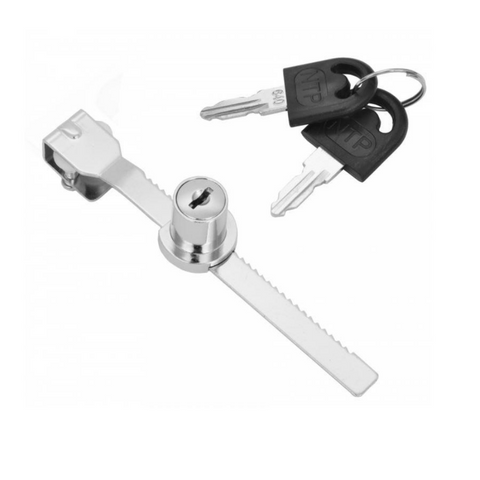
Cabinet Lock for Slidable Doors 3/4x15/16 inch, ChromeRegular price $1.84Unit price / perRegular priceSale price $1.84
-
Cabinet Lock with Straight Cam Plate 3/4x1-3/16 inch, ChromeRegular price $1.72Unit price / perRegular priceSale price $1.72
-
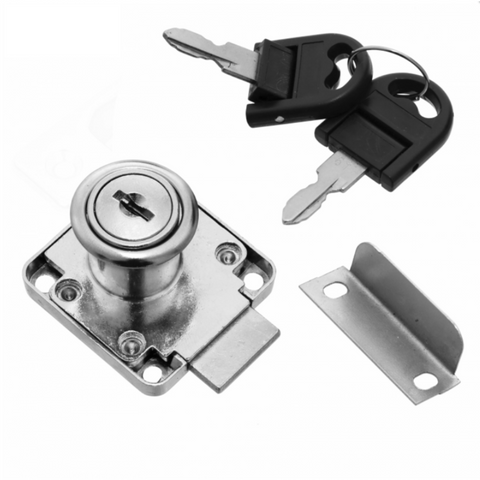
Cabinet Lock with Straight Cam Plate 3/4x1 inch, ChromeRegular price $1.63Unit price / perRegular priceSale price $1.63
-
Cabinet Lock with Straight Cam Plate 3/4x13/16 inch, ChromeRegular price $1.68Unit price / perRegular priceSale price $1.68
-
Key for Drawer Lock 3/4 x 5/8 inch (19x16 mm) Keyed Alike VersionRegular price $0.57Unit price / perRegular priceSale price $0.57
-
Cabinet Lock with Hook Cam Plate 3/4x13/16 inch, ChromeRegular price $1.56Unit price / perRegular priceSale price $1.56
-
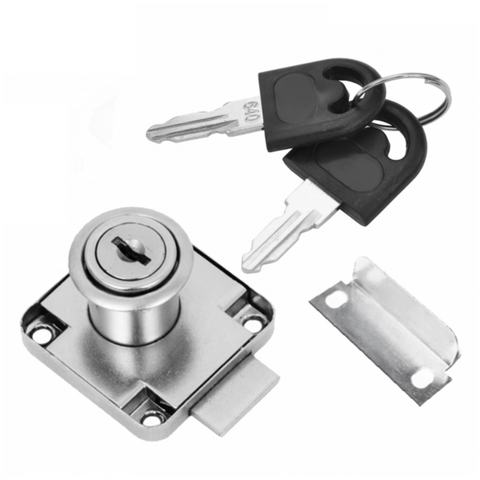
Cabinet Lock with Straight Cam Plate 3/4x5/8 inch, ChromeRegular price $1.50Unit price / perRegular priceSale price $1.50


A mailbox lock (technically known as a cam lock or lever cylinder lock) is a mechanical locking system where the turning motion of a key is directly transferred to a rear-mounted locking cam to securely lock a door, hatch, or drawer into the cabinet body.
These locks provide the essential technical framework for securing access to metal mailboxes, lockers, safes, access panels, and wooden furniture. For cabinetmakers, installers, and experienced DIYers, a precise understanding of cylinder dimensions, rotation paths, and mounting types is crucial to guarantee a secure, rattle-free installation. In practice, there is no universal lock for every mailbox or piece of furniture; selection is strictly dictated by the material thickness of the door and the geometry of the strike plate.
Technical Anatomy and Functionality
A classic cam lock consists of four functional main components that are precisely engineered to work together.
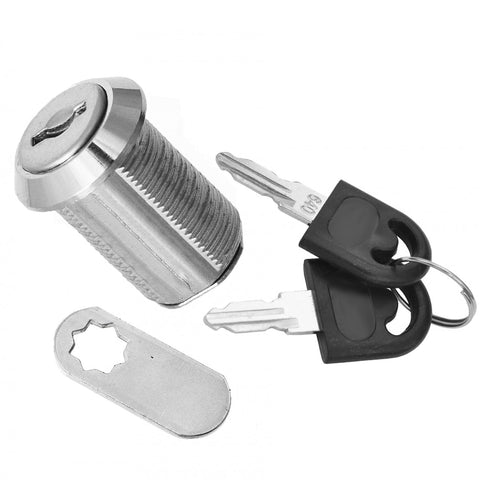
Thecylinder housing(stator) forms the outer sleeve and features an external thread. It passes through the mounting hole in the door. Inside the housing turns thecylinder core(rotor). This core contains the tumblers—typically wafer tumblers in this type of lock. When the correct key is inserted, the wafers align flush with the core, allowing it to rotate freely.
Mounted at the rear end of the cylinder core is thelocking cam(latch). This is usually fastened onto a square spindle using a small hex nut or screw. The entire lock is secured into the door using a largemounting nut, which threads onto the external housing thread and presses the lock firmly against the inside of the door.
A cam lock functions much like a car transmission: if the installation length does not match the material thickness of the door precisely, the mechanism will slip or jam completely. If the cylinder is too short, the nut cannot thread on. If it is too long, the lock will wobble—unless fitted with spacer rings—and the latch will not engage smoothly behind the keeper.
Key Dimensions: Cylinder Diameter and Cylinder Length
When specifying cam locks, two core dimensions are typically provided, such as `19x16 mm` (3/4 x 5/8 in) or `19x30 mm` (3/4 x 1-3/16 in). These measurements are standardized and mandatory to follow during replacement.
Cylinder Diameter (Mounting Dimension)
The first number (usually3/4 in (19 mm)) specifies the outer diameter of the threaded body. This is the hole size required in the door. However, on sheet metal doors (mailboxes, lockers), this cutout is rarely a perfect circle. To prevent the entire lock from spinning when turning the key, the housing features flat sides (anti-rotation flats). A 3/4 in (19 mm) cylinder typically measures5/8 in (16 mm)across these flat sides, creating a standard double-D profile cutout. For wood installations (cabinetry), a round 3/4 in (19 mm) hole is usually drilled, and the lock is secured against spinning using a spur washer (a rosette with sharp prongs).
Cylinder Length (Usable Length / Clamping Length)
The second number (e.g.,5/8 in (16 mm),25/32 in (20 mm),1 in (25 mm)) defines the length of the cylinder housing from the underside of the lock head to the seating point of the locking cam. This dimension determines the door thickness the lock can accommodate.
- 5/8 in (16 mm) Cylinder Length:This is the standard size for thin materials, particularly sheet steel. Installing amailbox lock with key 19x16mm, chromeis ideal for metal thicknesses from 1/32 in (0.8 mm) to 5/64 in (2.0 mm). Models like themailbox lock with key 19x16mm, chromeormailbox lock with key 19x16mm, chromecover this standard industrial size for mailboxes. When customers search for a "15mm mailbox lock," they typically mean this standard 5/8 in (16 mm) size, as effective clamping length can vary slightly depending on the cam.
- 25/32 in (20 mm) Cylinder Length:Used for thicker sheet metal doors with reinforcement profiles or thin engineered wood (e.g., 5/8 in (16 mm) particle board). Amailbox lock with key 19x20mm, chromeormailbox lock with key 19x20mm, chromeprovides the necessary thread clearance here.
- 1 in (25 mm) Cylinder Length:Designed for cabinetry and furniture. Standard furniture doors made of 3/4 in (19 mm) MDF or particle board require this length so that enough threaded body protrudes out the back to accept the nut and locking cam. Here, installers reach for themailbox lock with key 19x25mm, chromeormailbox lock with key 19x25mm, chrome.
- 1-3/16 in (30 mm) Cylinder Length:Used for custom builds, solid wood doors, or heavily layered material. Amailbox lock with key 19x30mm, chromeormailbox lock with key 19x30mm, chromespans material thicknesses up to approx. 15/16 in (24 mm).
Locking Mechanisms: Keyed Different vs. Keyed Alike
A crucial decision when planning master key setups in workshops, offices, or multi-family housing is key allocation.
Keyed Different Systems
This is the standard configuration. Each lock features an individual tumbler code and comes with its own unique keys. If you are installing locks for multi-family mailbox units, this is essential so that each tenant can access only their specific compartment. These models often ship with two keys. If a "mailbox lock 4 keys" setup is needed, key blanks can easily be duplicated by a locksmith using the included original keys.
Keyed Alike Systems (Identical Keys)
In environments where one person needs access to multiple compartments, cabinets, or access panels, a keyed-alike system saves time and hassle. All locks in a single production batch share the same cylinder milling. Acam lock 19x16mm keyed alike version, chromeallows facilities managers or technicians to open dozens of units with a single key. Should keys be lost or additional employees need equipment, a replacementkey for cam lock 19x16mm keyed alike versioncan be ordered separately using the known series code.
Materials and Surface Finishes
The lifespan of a mailbox lock depends heavily on the materials used, especially when installed outdoors exposed to weather or in humid indoor spaces.
Most commercial housings and cylinder cores are made ofdie-cast zinc. This material allows for high-precision casting, which is required for the tight tolerances of wafer tumblers. To prevent corrosion and maintain a clean appearance, surfaces are electroplated, typically withchrome platingor nickel plating. Chrome provides a hard, scratch-resistant, and easy-to-clean finish.
The search term "stainless steel mailbox lock" is very common. However, it is important to note that on most standard locks, only the front dust cap or the rear locking cam is made of stainless steel or zinc-plated steel to handle mechanical locking stress. A lock machined entirely from solid V4A stainless steel is a highly specialized industrial product for extreme environments (chemical plants, offshore) and is uncommon in standard furniture and mailbox construction. Die-cast zinc with heavy chrome plating offers ample rust protection for standard outdoor use.
Special Designs: Push Cylinder Lock for Sliding Doors
While standard mailbox locks use a 90° or 180° turn to swing a lever behind a catch, sliding doors require a completely different motion. This is where push cylinder locks come in.
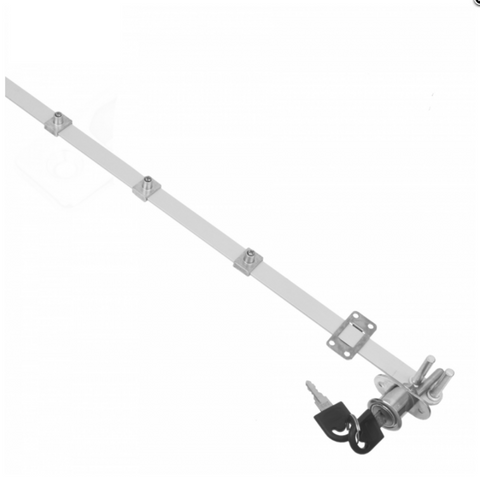
With amailbox lock for sliding doors 19x24mm, chrome, the lock mounts in the front door panel. The locking action does not happen by rotating a latch, but by pushing the entire cylinder core inward. As it is pushed, a solid pin extends out the back into a matching hole on the rear door panel or guide rail, locking the doors in place. Unlocking is done by turning the key, which triggers an internal spring to pop the cylinder core and locking pin back forward. The dimension specification `19x24 mm` (3/4 x 15/16 in) defines the cylinder diameter and housing length in the unpushed state.
Compatibility with Leading Brands
Many customers need to replace a broken lock on an existing unit. Search queries like "replace mailbox lock," "Renz mailbox lock," "Burg Wächter mailbox lock," or "JU mailbox lock" reflect this common task.
The good news for installers: sheet metal cutouts on these major brand mailboxes are widely standardized. The double-D hole pattern measuring 3/4 in (19 mm) in diameter with 5/8 in (16 mm) flat sides is an industry standard. This means a universal mailbox lock with key 19x16mm will mechanically fit into the door cutout of Renz or Burg Wächter mailboxes.
However, the critical factor is the locking cam.Manufacturers often use custom-bent (offset) or hooked latches to align perfectly with their specific cabinet strike plates. When installing a universal lock, standard practice is to unbolt the old, custom-fitted cam from the damaged lock and attach it onto the square drive of the new cylinder. Always check the drive interface: most systems utilize a 9/32x9/32 in (7x7 mm) or 5/16x5/16 in (8x8 mm) square drive at the end of the cylinder, secured by an M4 or M5 nut.
Professional Installation and Replacement
Replacing a mailbox lock does not require specialized tools, but it does require careful work to avoid scratching the door finish or paint.
- Removing the Old Lock:Open the door. On the back, loosen the small hex nut (usually 7 mm or 8 mm wrench size) holding the locking cam in place. Remove the cam.
- Unfastening the Housing:Unscrew the main mounting nut (usually 22 mm or 24 mm wrench size) securing the cylinder housing to the door. For severely rusted units, penetrating oil can help loosen the threads.
- Removal:Pull the old lock forward and out of the door opening.
- Preparation:Clean any dirt, rust, or burrs from the sheet metal or wood cutout.
- Inserting the New Lock:Insert the new cylinder body from the outside. Align the flat sides with the door cutout for proper anti-rotation positioning. The key slot should sit vertically when the key is removed.
- Securing:Thread the large mounting nut onto the back and hand-tighten it with an open-end wrench. Avoid using pliers, as they can slip and damage the body threads.
- Attaching the Cam:Place the locking cam onto the square drive. Check the rotation direction before tightening down completely. When the key is turned, the cam must engage snugly behind the cabinet frame stop. Secure the cam using the small nut and washer.
A special case involves woodencabinet door locks. These lack a double-D cutout. Instead, a standard 3/4 in (19 mm) round hole is drilled. A spur washer is slid onto the lock threads from behind; as the mounting nut is tightened, its prongs bite into the wood (MDF, particle board) to lock the housing against turning.
Maintenance: Troubleshooting Sticky Lock Mechanisms
A frequent winter complaint is a "frozen mailbox lock." Condensation or rainwater gets inside the cylinder core and freezes between the wafer tumblers, preventing the key from inserting or turning.
Technical Solution:Never force the key. Die-cast zinc keys can shear off under excessive torque. Gently warming the key with a lighter before inserting it transfers heat into the wafers to melt internal ice. Alternatively, use a commercial alcohol-based lock de-icer.
For preventive maintenance on outdoor cam locks,never use sticky grease or heavy oils. These attract dirt and gum up the fine springs behind the tumblers. Proper lubrication should strictly be done usinggraphite powderor dedicated dry PTFE lubricant sprays. A quick spray before winter displaces moisture and keeps the mechanism operating smoothly.
Alternatives to Cylinder Locks
While classic cam locks dominate the market, mechanical combination locks offer key benefits in specific applications. A combination mailbox lock eliminates lost keys and is ideal for gym lockers, breakroom storage, or shared access spaces. Mounting is identical to a standard lock using a 3/4 in (19 mm) cutout. Users set a 3-digit or 4-digit code. The downside: combination locks project further off the surface and are more vulnerable to vandalism in unprotected outdoor areas, which is why key locks remain the standard for home mailboxes.
---
FAQ – Frequently Asked Technical Questions About Mailbox Locks
1. How do I properly measure a broken mailbox lock for replacement?
Remove the old lock. Measure the outer thread diameter (typically 3/4 in (19 mm)). The most critical dimension is cylinder length: measure from the underside of the lock head (the rim resting against the outside of the door) to the exact surface where the locking cam sits. This yields the usable clamping length (e.g., 5/8 in (16 mm), 25/32 in (20 mm)).
2. Will a universal lock fit a Renz or Burg Wächter mailbox?
Yes, in most cases. The mounting cutout (3/4 in (19 mm) diameter with 5/8 in (16 mm) flats) is standard across brands. However, be sure to keep the original locking cam from your old lock. It is often custom-bent and can be transferred onto your new universal lock so the latch aligns perfectly with the frame catch.
3. What does "keyed alike" mean for cam locks?
Keyed alike means that every lock in a given order or batch shares the exact same key code. One single key operates all locks in the set. This is ideal for property managers or technicians accessing multiple panels, cabinets, or mailboxes without carrying a heavy key ring.
4. Can I use a mailbox lock on wooden cabinet doors?
Yes, cam locks make excellent cabinet door locks. Just pay close attention to the cylinder length. For a standard cabinet door made of 3/4 in (19 mm) particle board, you will need a cylinder length of at least 1 in (25 mm) (e.g., 19x25 mm). You will also need a spur washer to lock the cylinder housing into the round drilled hole.
5. What should I do if my mailbox lock is frozen?
Do not apply force, as the key can easily snap off. Warm the key blade slightly with a lighter and slide it into the keyway to melt ice inside the cylinder core, or use a de-icer spray. To prevent freezing, blow out moisture before winter arrives and lubricate exclusively with dry graphite powder or PTFE spray—never standard oil, which thickens and gums up in freezing weather.
6. Can the locking direction (right/left) be adjusted?
Yes, on most cam locks. By loosening the rear mounting nut and repositioning the locking cam 90° or 180° on the square drive, you can easily change the rotation path to suit left-hand or right-hand door hinges.