
Satin Nickel Furniture Legs
Popular Subcategories


-
Furniture Leg 5-7/8 inch - SatinRegular price $3.90Unit price / perRegular priceSale price $3.90
-
Furniture Leg 3-15/16 inch - SatinRegular price $3.14Unit price / perRegular priceSale price $3.14
-
Conical Furniture Leg H 3-15/16 inch - SatinRegular price $3.71Unit price / perRegular priceSale price $3.71
-
Square Furniture Leg 1x1 inch - H 3-15/16 inch SatinRegular price $2.94Unit price / perRegular priceSale price $2.94
-
Square Furniture Leg 1x1 inch - H 5-7/8 inch SatinRegular price $3.31Unit price / perRegular priceSale price $3.31

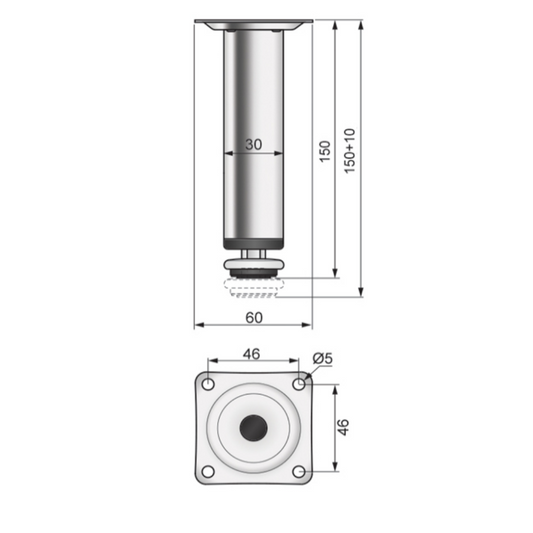

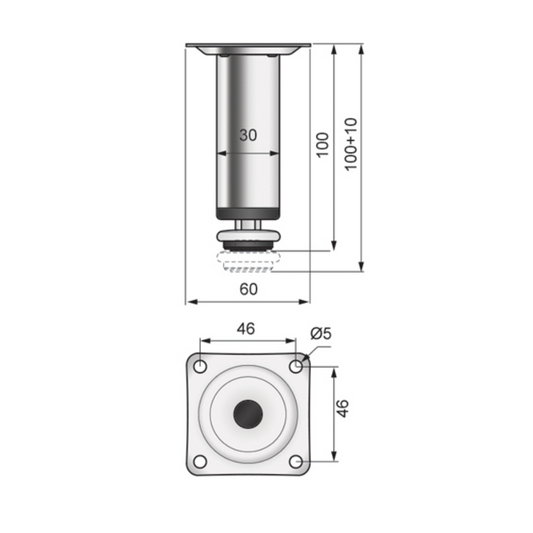

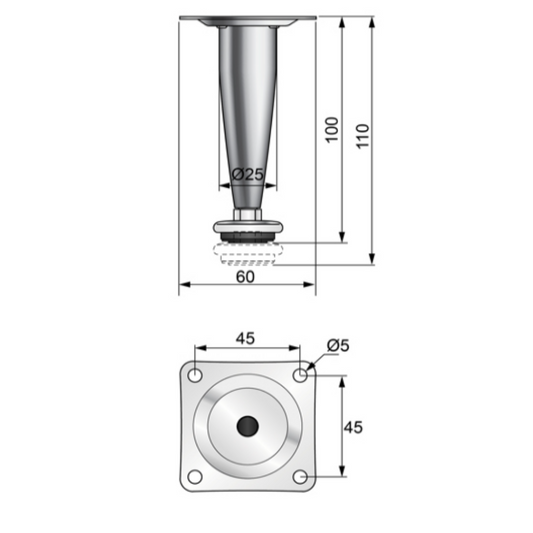

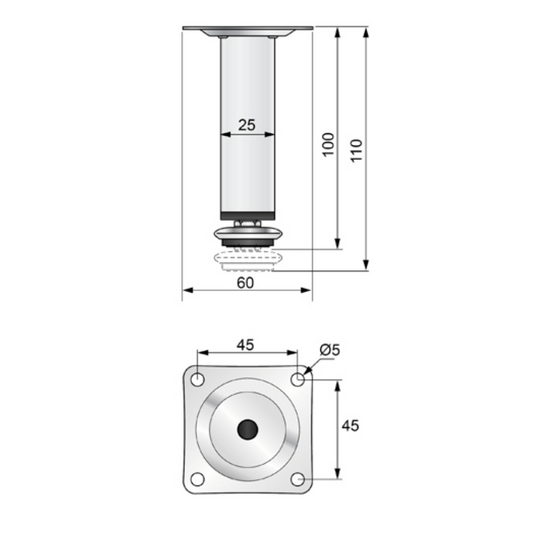

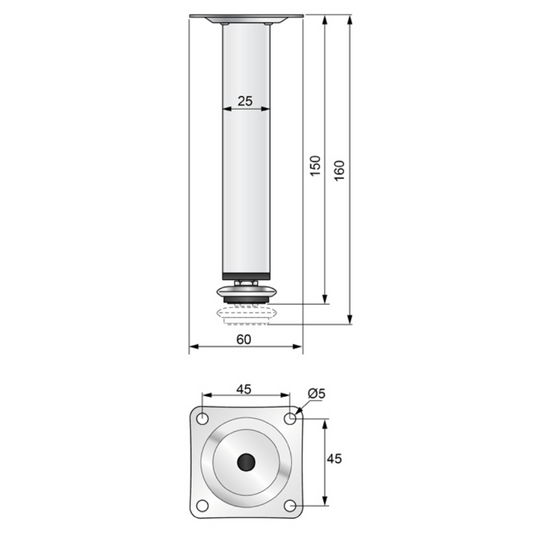
Satin nickel furniture legsare load-bearing metal or high-strength plastic hardware components featuring a matte, finely brushed surface finish, designed for floor support, leveling, and load distribution of cabinet furniture.
The satin finish represents an established standard in modern furniture construction. Unlike high-gloss chrome plating, a satin finish diffuses light softly. The fine brushed texture acts as a visual shock absorber for scratches—minor mechanical damage or dust buildup is hardly noticeable in the light refraction of the matte structure. This makes these fittings particularly suitable for floor-level use, where vacuums or mops frequently come into contact with the furniture.
In this technical guide, specific designs, height adjustment mechanics, correct installation procedures, and structural requirements for satin furniture legs are detailed.
Material Properties and Structural Specifications
When cabinetmakers and installers fitmetal furniture legs, the structural load capacity of the cabinet is the top priority. Satin nickel furniture legs typically feature a core made of steel tubing or aZinc alloy(zinc-aluminum die casting).
Finishing is achieved through an electroplating process or a durable powder coating. This coating protects the base material from oxidation, which is of key technical relevance when used in humid environments (bathroom furniture) or kitchens.
The load capacity of a standard metal furniture leg ranges from88 lbs (40 kg) to 110 lbs (50 kg)per piece, depending on the tube wall thickness and mounting plate dimensions. For a four-door wardrobe supported by six legs, this translates to a theoretical total static load capacity of up to661 lbs (300 kg). However, it is essential to note that the weak point in furniture engineering is rarely the metal leg itself, but rather thescrew pull-out strengthin the cabinet base, especially when using standard particleboard (5/8 in (16 mm) or 3/4 in (19 mm)).
Designs and Profile Geometries
Selecting the right profile geometry depends on the architectural style of the furniture and the required mounting surface area.
Square Profiles
Square geometries offer clean lines and allow flush mounting along cabinet outer edges. In thesquare furniture legscategory, profiles with a cross-section of1 x 1 in (25 x 25 mm)predominate. This dimension is an industry standard, robust enough for heavy case goods without visually overpowering sleeker sideboards.
Typical designs for professional furniture making include various fixed heights that define floor clearance:
- Square Furniture Legs 1x1 in (25x25mm) - 4 in (100mm) Satin Nickel– Standard height for kitchen toe kicks or low living room sideboards.
- Square Furniture Legs 1x1 in (25x25mm) - 4-3/4 in (120mm) Satin Nickel– Allows slim robot vacuums to pass beneath the furniture easily.
- Square Furniture Legs 1x1 in (25x25mm) - 6 in (150mm) Satin Nickel– Frequently specified whenlong furniture legsortall furniture legsare required to protect bathroom cabinets from water splashes or to achieve an ergonomic working height.
Additional square metal options can be found in thesquare metal furniture legssection.
Cylindrical and Tapered Profiles
Round cross-sections distribute forces evenly across the mounting plate. Tapered (conical) legs narrow toward the base, minimizing the footprint while maintaining high dynamic stability at the upper shaft. A classic example is theAdjustable Tapered Furniture Legs 4 in (100mm) - Satin Nickel. These geometries are frequently used on upholstered furniture or freestanding dressers. Further cylindrical models are grouped underround furniture legs.
Height Adjustment Mechanics (Leveling)
Perfectly level floors are rare in older homes or tiled spaces. To prevent cabinet twisting—which leads to jamming drawers and uneven door reveals—you should selectadjustable height furniture legs.
The adjustment mechanism is located at the bottom of the leg. It consists of a glide (typically hard ABS plastic or nylon) threaded into the metal shaft via athreaded spindle. Rotating the plastic glide allows smooth, continuous height adjustments.
The standard leveling adjustment range (stroke) is+9/16 in to +3/4 in (+15 mm to +20 mm). This means:
- AnAdjustable Furniture Leg 4 in (100mm) - Satin Nickelextends to a maximum height of4-1/2 in (115 mm).
- Whenadjustable 6 in (15 cm) furniture legsare required, installers use theAdjustable Furniture Leg 6 in (150mm) - Satin Nickel, which levels out uneven floors up to an overall height of6-1/2 in (165 mm).
Technically, height adjustment should only be used to bridge floor unevenness rather than extending legs fully by default. The farther the thread is turned out, the greater the leverage and the lower the lateral shear stability under dynamic load (e.g., when shifting furniture).
For custom constructions where the thread screws directly into a tee nut or threaded insert in the cabinet bottom,M8 furniture legsor M10 legs are often used, where the entire leg acts as a threaded rod.
For a complete overview of adjustable systems, visit theadjustable furniture legscategory.
Installation Guidelines and Fastening Techniques
Proper installation of satin nickel furniture legs is critical to the longevity of the entire piece of furniture. Force is transferred into the cabinet base through themounting plate(attachment plate), which is securely welded or pressed onto the tubular shaft and features four countersunk screw holes.
Positioning on the Cabinet Base
- Edge Distance:The mounting plate should never be mounted flush with the outer edge of the particleboard. A setback of at least1/16 in to 3/16 in (2 mm to 5 mm)prevents edge tear-out under load.
- Load Distribution:On wide cabinets starting at31-1/2 in (800 mm)wide, a fifth or sixth support leg must be placed centrally beneath the bottom panel or center partition. This prevents sagging of the bottom panel, which would otherwise block bottom-mounted drawer slides.
Selecting Fasteners
Screw selection depends on the thickness of the cabinet base. For a standard5/8 in (16 mm)particleboard base, useflathead wood screwssized#6 x 5/8 in (3.5 x 15 mm)or#8 x 5/8 in (4 x 15 mm). For3/4 in (19 mm)panels,#8 x 11/16 in (4 x 17 mm)screws can be used.
- The flathead (countersunk) design ensures the screw sits flush inside the mounting plate recess without protruding.
- APZ (Pozidriv)orTX (Torx)drive maximizes torque transfer without bit slippage.
Pre-drilling
To avoid splitting the melamine coating or engineered wood core, pre-drilling screw holes is strongly recommended. For a#8 (4 mm)screw, pre-drill with a3/32 in or 1/8 in (2.5 mm or 3 mm)wood drill bit to a depth of roughly3/8 in (10 mm). A depth stop prevents accidentally drilling through the cabinet floor.
Applications and Design Compatibility
Satin hardware is remarkably versatile, offering a calm, refined contrast to warm wood tones. Mounting satin legs on awalnut dressercreates a modern mix of materials: the dark, rich grain of the walnut is grounded by the cool, matte metal accents.
Satin finishes are also preferred in commercial environments, office furniture, and medical offices because, unlike high-gloss surfaces, they are highly resistant to visible fingerprints.
To achieve a cohesive interior design, all visible metal hardware on a piece of furniture should match. Pairing satin nickel furniture legs with matchingsatin cabinet handleson front panels or asatin cable grommeton a desk creates a professional, well-coordinated look. In entryway areas, cabinets supported by satin legs match perfectly withsatin coat hooks.
Frequently Asked Questions (FAQ)
How does a satin finish differ from matte chrome?
While both finishes minimize reflections, a satin finish features a finer, directional brushed texture that gives the material a slightly warmer, velvety appearance. Matte chrome (or satin chrome) is usually electroplated with a matte texture, giving it a smoother and cooler look. If you prefer a highly reflective surface, explore ourchrome furniture legs.
What screw length do I need for installation?
Calculate screw length by adding the thickness of the mounting plate (typically1/16 in (1.5 mm to 2 mm)) to the maximum insertion depth into the cabinet base. The screw tip must remain at least1/16 in (2 mm)clear of the top surface to avoid bulging or blowing out the melamine surface. For a5/8 in (16 mm)panel, a5/8 in (15 mm)screw is the absolute maximum.
Are satin nickel furniture legs suitable for delicate flooring (hardwood)?
The metal housing does not touch the floor directly. The underside of the legs—especially on adjustable models—features a plastic base glide. However, on soft real wood floors (such as oiled pine), applying felt pads to the plastic glides is recommended to reduce point-load indentation from heavy furniture. Alternatively,plastic furniture legscan be considered directly for demanding applications, provided structural requirements allow it.
How do I properly level a four-door wardrobe?
Leveling should always be done from the outside in. First, adjust the four outer corner legs using a level placed on the cabinet bottom or top panel. Once the outer frame is plumb and level, extend the center support legs until they make light but firm floor contact. They should not lift the cabinet in the center, but merely prevent future sagging under load.
Can these furniture legs be cut to size?
For square or round tubular legs equipped with press-fit plastic adjustment inserts, shortening them by sawing is technically not supported. Cutting the tubing destroys the internal threaded insert. It is essential to choose the correct nominal length in advance. For low-profile designs, select4 in (10 cm) furniture legs; for higher ground clearance, choose6 in (15 cm) furniture legs.
Related Fitting Systems
For designs calling for different colorways or materials, explore additional industry-standard options for base support. Black hardware for industrial-style designs is available underblack furniture legs. Our full range of support and leveling systems for furniture manufacturing is listed in the mainfurniture legscategory.