
24 Inch Pull Out Trash Can
Popular Subcategories


-
Recycling bins for kitchen - 23-5/8 inch - 3 Buckets (15L+ 2x7L)Regular price $74.44Unit price / perRegular priceSale price $74.44
-
Pull Out Kitchen Recycling Bins - 2x15L or 2x20L - 19-11/16 inch Base CabinetRegular price From $100.66Unit price / perRegular priceSale price From $100.66
-
Pull Out Cabinet Recycling Bins with Soft-Close (2 x 15L + 2 x 7L) or (2 x 20L + 2 x 9L) - 23-5/8 inch CabinetRegular price From $114.83Unit price / perRegular priceSale price From $114.83
-
Cabinet Recycling Bins Soft-Close 3 x 4 gal + 1 x 1.6 gal - 23-5/8 inch Base CabinetRegular price $184.24Unit price / perRegular priceSale price $184.24
-
Cabinet Recycling Bins Soft-Close 3 x 4 gal + 3 x 1.6 gal - 23-5/8 inch Base CabinetRegular price $227.23Unit price / perRegular priceSale price $227.23


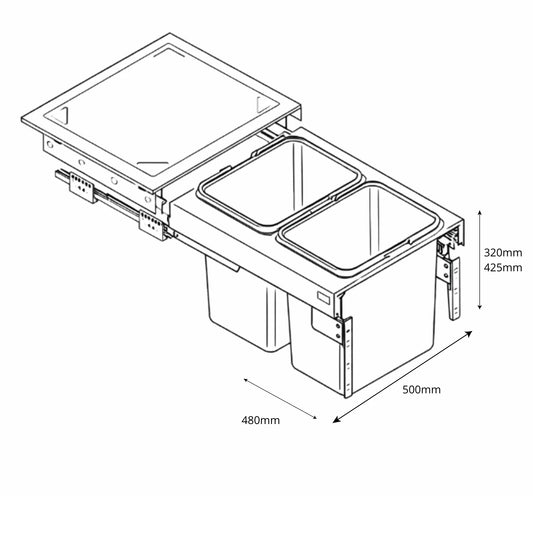

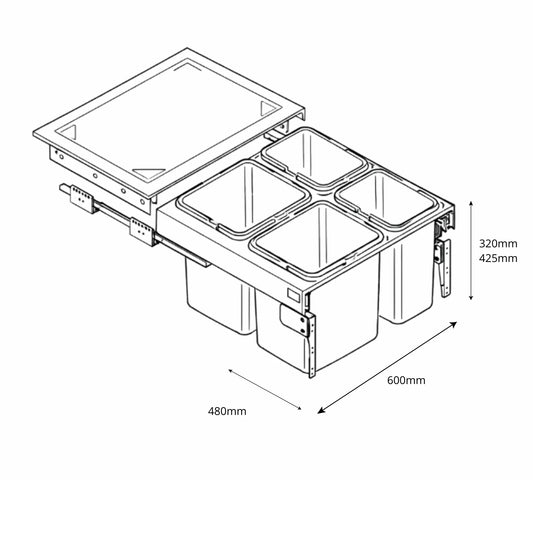

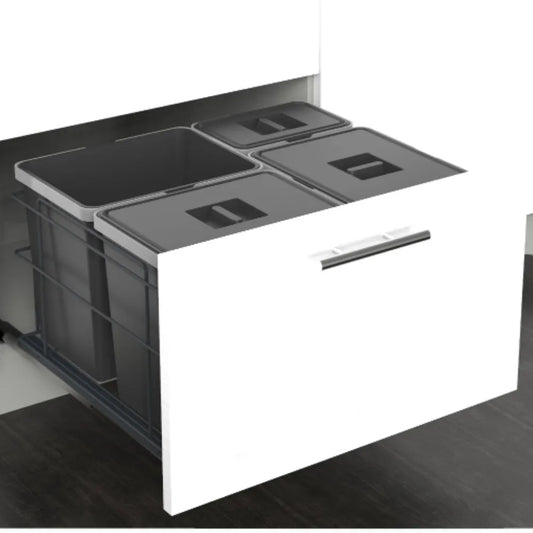

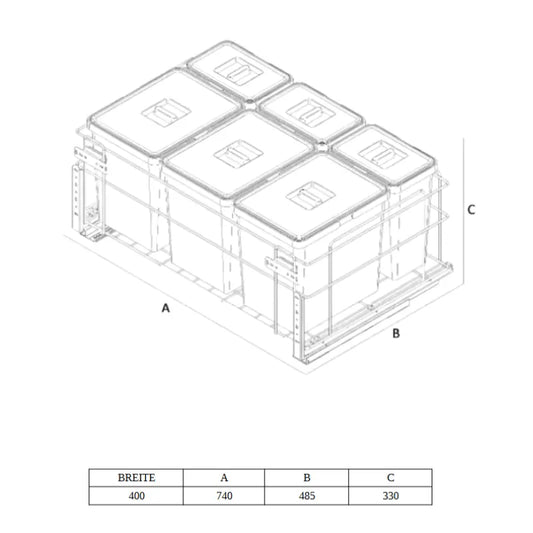
A24 inch pull out trash can(60 cm) is an integrated waste management system specifically designed for kitchen base cabinets with an exterior width of 24 in (600 mm). It fully extends from the cabinet frame using a ball-bearing or undermount slide system.
This type of system provides a hidden, odor-controlled storage solution for household waste right inside your kitchen work area. For DIYers and contractors planning a102 in (260 cm) kitchen unitor modernizing existing cabinetry, the 24 in (60 cm) base cabinet is the most common size for sink and prep stations. Installing a precision-fit pull-out system requires a clear understanding of interior cabinet dimensions, slide weight capacities, and container volume splits.
Dimensional Requirements for a 24 in (60 cm) Base Cabinet
In cabinet installation, referring to a "24 in (60 cm) cabinet" always indicates the exterior frame dimension. To install the correct24 inch pull out trash can for base cabinets, the interior clear width is the critical metric. Standard side wall panels made from 5/8 in (16 mm)particle boardyield a usable interior width of 22-3/8 in (568 mm). If 3/4 in (19 mm) panels are used, the usable interior width reduces to 22-1/8 in (562 mm). Pull-out waste bins for this size segment are engineered either to adjust seamlessly to these internal widths or to mount directly to the bottom of the cabinet, making side wall thickness irrelevant.
Cabinet depth is equally vital. Standard kitchen base cabinets have an exterior depth of 24 in (60 cm), which translates to an interior depth of roughly 19-11/16 in to 21-5/8 in (50 cm to 55 cm), depending on the back panel groove. A24 inch pull out trash canunit typically requires a minimum installation depth of 17-11/16 in to 19-5/16 in (450 mm to 490 mm). The area behind the system often remains clear for plumbing hookups or wiring.
Pay close attention to overall installation height, particularly when mounting under a sink. A24 inch high pull out trash canor models featuring tall individual bins can interfere with the P-trap or shutoff valves. Before selecting a unit, measure the precise clearance between the cabinet floor and the lowest point of the plumbing using a tape measure.
Bin Capacities and Waste Sorting Configurations
A width of 24 in (600 mm) offers ample space for multi-compartment waste sorting systems. A well-planned waste management unit functions inside a base cabinet like gears in a machine—every component fits together seamlessly to maximize available capacity. Volume is specified in liters (L) or gallons and is split across multiple plastic bin inserts.
Selecting the right configuration depends on your local recycling guidelines and household waste volume:
- 2-Compartment Sorting:Typically features two large bins (e.g., 2 x 5.3 gal / 2 x 20 L or 2 x 7.9 gal / 2 x 30 L). Ideal for households focused mainly on general waste and a primary recyclable stream.
- 3-Compartment Sorting:A classic configuration found on models like thePull-Out Kitchen Trash Can - 24 in - 3 Compartment (4 gal + 2x1.8 gal / 15L + 2x7L). One large bin holds bulky recyclables or main trash, while the smaller 1.8 gal (7 L) bins handle organic waste and specialty sorting.
- Multi-Compartment Sorting (4 to 6 Bins):Systems like theSoft-Close Trash & Recycling Bin 3 x 4 gal + 3 x 1.6 gal (3 x 15L + 3 x 6L) - 24 in Cabinetoffer maximum versatility. Beyond standard waste streams, you can store batteries, coffee pods, or compost in separate, odor-tight containers.
For households dedicated to detailedtrash and recycling sorting, setups with multiple smaller bins are recommended, as they are emptied more frequently to prevent odors.
Technical Hardware: Slide Systems and Soft-Close Mechanism
The service life of any under-counter waste system relies heavily on the quality of its kitchen cabinet pull-outs. Because a fully loaded waste system with organic compost and heavy trash can easily reach 44 lbs to 66 lbs (20 kg to 30 kg), heavy-duty slides are essential.
Full Extension vs. Partial Extension
For a24 inch pull out trash can, afull-extension slidesystem is strongly recommended. Full extension allows the mechanism to pull out 100% from the cabinet interior. This ensures that even the rear bin is completely accessible and can be lifted straight up without hitting the front cabinet edge or countertop overhang. A partial-extension slide (which opens only about 75%) makes removing rear bins in a 24 in (60 cm) deep cabinet significantly harder.
Soft-Close Feature
Most modern systems feature integrated hydraulic dampening, commonly known asSoft-Close. This hardware decelerates the pull-out frame during the last few inches of travel, pulling it softly and silently into its final rested position. This protects the cabinet structure and prevents liquid waste from sloshing out due to abrupt closing.
Technically, soft-close should not be confused withpush-to-open(tip-on). Push-to-open is an ejection mechanism designed for handleless cabinet fronts, opening the drawer when pressure is applied to the door. Soft-close is purely a closing damper. When designing handleless kitchens, ensure your chosen pull-out waste system is compatible with mechanical or electrical tip-on actuators.
Mounting Methods for 24 in Base Cabinets
Upgrading your kitchen hardware toretrofit kitchen cabinet drawerswith a waste system is a straightforward DIY project taking roughly 30 to 60 minutes. There are two primary structural designs, each requiring a different installation approach.
1. Bottom-Mount Installation
With this configuration, the support frame of the trash can assembly is screwed directly onto the cabinet floor.
- Advantage:The exact cabinet width (whether 5/8 in / 16 mm or 3/4 in / 19 mm side walls) does not matter, provided the overall system fits within the internal clearance. It offers high structural stability because the weight transfers directly to the base panel.
- Installation:Center the frame inside the cabinet. Measure the distance to each side wall using a tape measure to ensure straight alignment. Pre-drill mounting holes with a 1/8 in (3 mm) wood drill bit (use caution not to drill through the bottom panel). Secure the frame usingwood screws(typically #8 x 5/8 in / 4 x 15 mm or 4 x 17 mm, PZ2 drive).
2. Side-Mount / Door-Mounted Front Pull-Out
In this system, the waste kit replaces an entire drawer unit. The slides mount directly to the cabinet side walls.
- Advantage:The cabinet door attaches directly to the pull-out frame. Pulling the cabinet handle immediately extends the entire waste sorting assembly.
- Installation:Slides must be mounted perfectly square to the side panels. These systems often utilizeSystem 32standardized hole patterns (32 mm spacing). The door panel clips onto the system via specialized mounting brackets and can be adjusted in three dimensions (height, side, tilt) using eccentric screws to achieve crisp, uniform reveal lines.
Choosing the Right Fit for Your Kitchen Layout
Not every 24 in cabinet serves the same function. Where the unit is placed determines which waste system will fit best.
Under the Sink:Here, the trash system competes for space with P-traps, water supply lines, and potentially an under-sink water heater. A24 inch drawer pull out waste systemfor under-sink cabinets often features a shallower installation depth (e.g., 15-3/4 in / 400 mm) or a U-shaped rear cutout. Low-profile models excel in this application.
In a Standard Base Cabinet (Prep Island):If installed away from the sink directly below your primary prep surface, you can utilize the entire cabinet height and depth. High-capacity setups like theSoft-Close Recycling Trash Bin (2 x 4 gal + 2 x 1.8 gal) or (2 x 5.3 gal + 2 x 2.4 gal) - 24 in Cabinetare ideal. This allows food scraps to be swept straight off the countertop into the open bin.
If your 24 in cabinet is needed for other storage, consider narrower options. Smaller cabinet openings work well with a 20 in (50 cm) kitchen cabinet pull-out, which also pairs with custom-fit systems like thePull-Out Kitchen Trash Can - 2 x 4 gal or 2 x 5.3 gal - 20 in Cabinet.
Accessories and Cabinet Add-Ons
A high-function cabinet involves more than just the waste container. The open space above a pull-out trash unit often goes underutilized. Installing a shallow inner drawer or top tray solves this. Akitchen drawer organizerplaced in an upper interior drawer keeps trash bags, sponges, dishwasher tabs, and scrub brushes neatly organized.
For door-mounted pull-outs, match your hardware with the rest of your kitchen suite. Installing updatedkitchen cabinet handlesensures your retrofitted trash drawer blends seamlessly into your overall design. For smooth slide operation, verify that your cabinet is plumb and level, adjusting the leveling leg levelers (frequently threaded with M10 studs) as needed.
FAQ: Frequently Asked Questions About Selection and Installation
Does a 24 inch pull out trash can fit into every 24 inch cabinet?
Generally yes, because the 24 in (60 cm) metric refers to standard exterior cabinet sizing. Bottom-mounted systems work regardless of side wall thickness. For side-mounted units, verify whether the drawer slides accommodate 5/8 in (16 mm) or 3/4 in (19 mm) side panels (many include spacers for easy adjustment).
How deep does the cabinet need to be for a pull-out trash can?
Most pull-out systems require a clear internal depth of at least 17-11/16 in to 19-11/16 in (450 mm to 500 mm). Always check for rear wall plumbing, electrical boxes, or drain lines that might encroach on available interior depth before buying.
Can I convert a hinged cabinet door into a door-mounted pull-out?
Yes. If your cabinet currently has a standard hinged door with concealed European hinges, remove the hinges from the cabinet frame. Attach the door panel directly to the front mounting brackets of the new trash slide assembly using front attachment brackets. You can cover the leftover 1-3/8 in (35 mm) hinge cup holes in the door using plastic cover caps.
What tools do I need to retrofit a pull-out waste bin?
Basic installation requires a cordless drill/driver, a #2 Phillips bit (PZ2), a 1/8 in (3 mm) wood drill bit for pilot holes, a tape measure, a pencil, and a combination square to ensure slide rails are aligned parallel.
What should I do if the pull-out slides bind or feel stiff?
Stiff movement on 24 in (60 cm) kitchen cabinet pull-out slides almost always indicates non-parallel installation. If slide spacing at the front differs by even 1/16 in (2 mm) from the rear spacing, the ball bearings will bind. Slightly loosen the frame mounting screws, adjust the slides until perfectly parallel, and retighten.
Related Categories and Sizing
To complete your kitchen upgrade or configure alternate cabinet widths, explore these targeted hardware categories:
- 3-Compartment Trash & Recycling Systems
- 20 Inch Pull-Out Kitchen Trash Cans
- Pull-Out Kitchen Trash Cans
- Kitchen Cabinet Pull-Out Slides & Organizers
- 2-Compartment Trash & Recycling Systems