
160mm Cabinet Handles
Popular Subcategories
-
Cabinet Pull 160mm U098 - Matte BlackRegular price $3.64Unit price / perRegular priceSale price $3.64
-
Cabinet Handle 160mm U098 - GoldRegular price $3.92Unit price / perRegular priceSale price $3.92
-
160mm Cabinet Handle U098 - ChromeRegular price $3.64Unit price / perRegular priceSale price $3.64
-
Cabinet Handle 160mm U098 - Brushed Stainless SteelRegular price $3.92Unit price / perRegular priceSale price $3.92
-
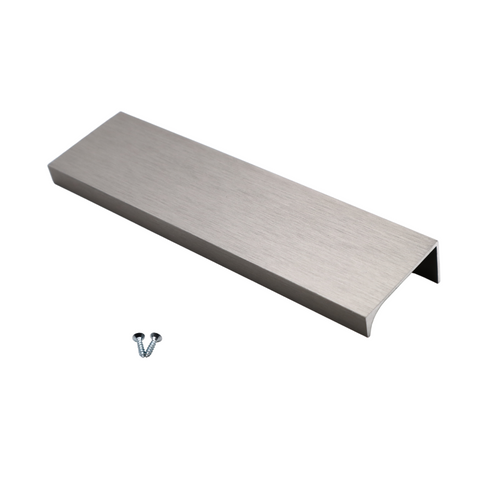
TECHNO furniture handle 6-5/16 inch - Brushed SteelRegular price $6.65Unit price / perRegular priceSale price $6.65

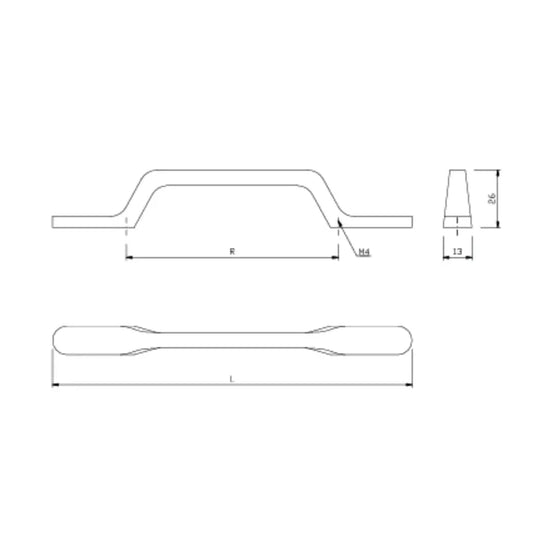

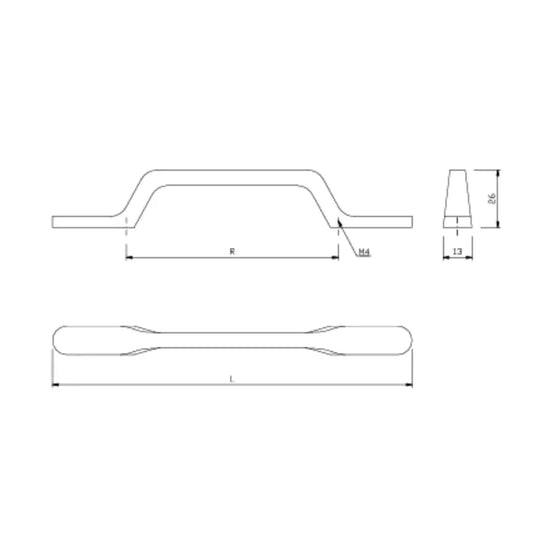

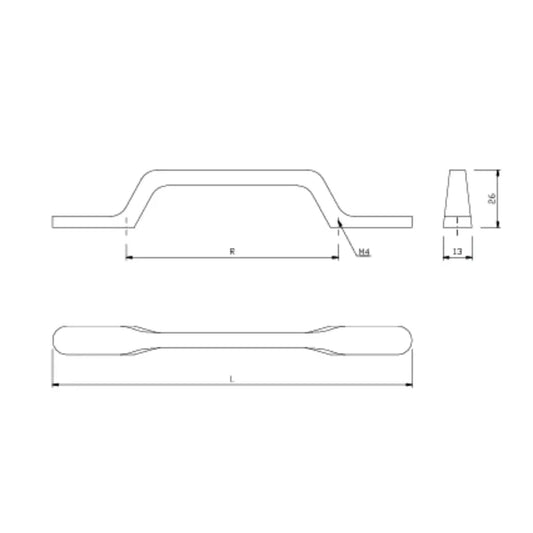

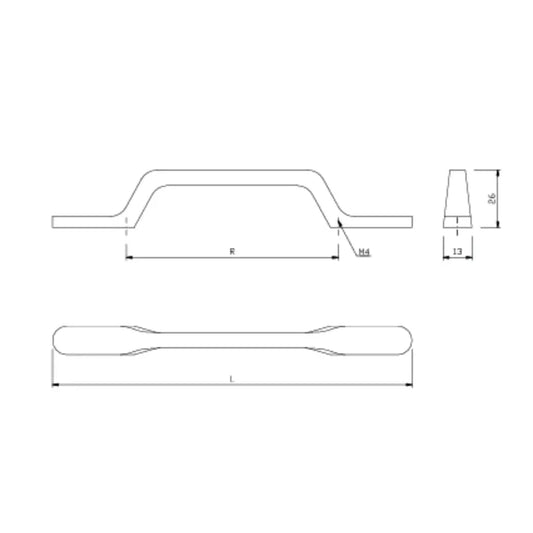

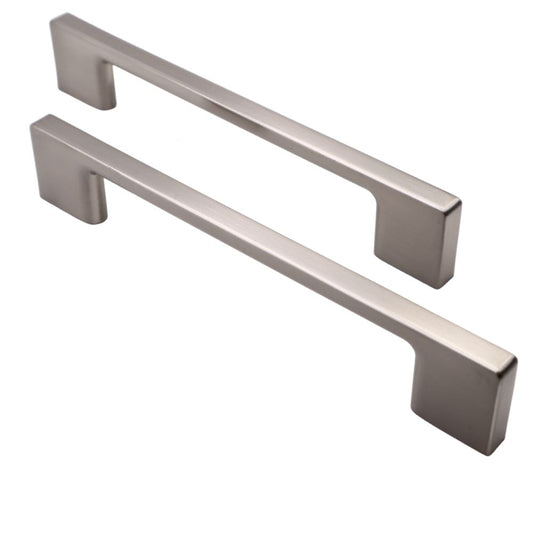
160mm cabinet handlesare hardware components used for manually operating cabinet doors, flaps, and drawers with mounting points spaced at a center-to-center hole distance (hole spacing) of exactly 6-5/16 in (160 mm).
This dimension is deeply rooted in modern cabinetmaking and industrial manufacturing because it seamlessly aligns with the standardized32mm system. As a multiple of 1-1/4 in (32 mm)—specifically 5 x 32 mm = 160 mm—this hole spacing is fully compatible with standard cabinet line boring patterns. For woodworkers, installers, and DIY enthusiasts, this size represents the ideal balance between sufficient leverage for heavy pull-out drawers and proportional aesthetics on standard cabinet fronts.
Technical Specifications and Dimensional Guidelines
When planning and installing hardware, it is critical to distinguish strictly between thecenter-to-center distance (C-C)and theoverall length. The 6-5/16 in (160 mm) hole spacing defines exclusively the distance between the center points of the two threaded inserts on the back of the handle.
The total length varies depending on the design of the pull. A classic bow handle often sits flush or with minimal overhang. However, on modern T-bar pulls or profile handles, the material extends beyond the mounting points. For example, it is standard for6-7/8 in (175 mm) aluminum handlesto measure 6-7/8 in (175 mm) in overall length while fitting a center-to-center drilling pattern of 6-5/16 in (160 mm). These 5/16 in (7.5 mm) overhangs on each end enhance ergonomics and prevent slipping when operating with wet hands.
Another crucial parameter is thegrip clearance(the space between the inner surface of the handle and the cabinet front). For ergonomic operation, especially on integrated appliances with high pulling resistance, this gap should measure between 7/8 in (22 mm) and 1-3/16 in (30 mm). This provides ample space for fingers and prevents rings or fingernails from scratching the cabinet finish.
Materials and Surface Finishes
The choice of material determines torsional rigidity, weight, and chemical resistance against household cleaners and hand perspiration. The most common materials used for160mm cabinet handlesinclude:
- Zamak (Zinc Die-Cast):A zinc, aluminum, magnesium, and copper alloy. Zamak allows for precise casting, offers high density, and serves as an ideal base material for electroplated finishes.
- Aluminum:A lightweight metal with excellent corrosion resistance.Aluminum cabinet handlesare frequently anodized to harden the surface and protect against abrasion. They are ideal for wide tall cabinet runs where minimizing hardware weight is desired.
- Stainless Steel:Extremely resistant to mechanical wear and moisture.Stainless steel cabinet handles(typically grade 304/V2A) are the industry standard for kitchens and lab environments. The alloy prevents rust formation, even under continuous exposure to steam.
- Steel (Powder-Coated):For specific design aesthetics such asindustrial cabinet handles, solid steel is often utilized and sealed with a baked-on enamel or powder coating.
The surface treatment defines the final look and feel. Brushed finishes (such as brushed stainless steel) hide fingerprints due to their micro-texture. Electroplated finishes like chrome offer a solid, mirror-like layer but require more frequent cleaning. For glare-free interior concepts, designers frequently selectmatte black cabinet handles. The matte effect is achieved using fine textured powders that diffuse light reflection.
Cabinet Construction Applications
The 6-5/16 in (160 mm) grid measurement is extremely versatile, yet it requires proper matching with the width and weight of the respective front panel. The center-to-center measurement is the core metric of cabinet hardware—it dictates whether a new handle will retro-fit an existing front or if new mounting holes must be drilled.
Kitchen Installation and Heavy Pull-Outs
Kitchen hardware must withstand significant tensile forces. A fully loadedfull-extension drawerpacked with pots and pans can reach a total weight of 66 lbs to 99 lbs (30 kg to 45 kg), including the drawer face. Here,6-5/16 in (160mm) kitchen cabinet handlesprovide the structural stability required. They distribute pulling forces evenly across both mounting points, preventing screws from tearing out of particle board cores. On standard 24 in (60 cm) base cabinets, this size is visually centered and functionally ideal. In particular,black kitchen handles 160mmare popular for creating high-contrast accents on light melamine or oak laminate fronts. Additionally,160mm kitchen door handlesinstalled on integrated refrigerators provide the necessary leverage to overcome tight magnetic door seals easily.
Living and Bedroom Furniture
For wardrobe doors featuring tall MDF or solid wood panels (often over 78-3/4 in (200 cm) in height), 160mm handles are typically mounted vertically. The length provides a comfortable gripping zone for users of various heights. On living room sideboards and dressers utilizingpartial-extension slides, handles are usually centered horizontally. Minimalist designs andmodern cabinet handlesin brushed steel are ideal here to maintain clean, uninterrupted furniture lines.
Installation and Mounting Guidelines
Properly installing bar pulls or bow handles requires precise measurements. Unlike installing simplecabinet knobs, which require only a single centered hole, 160mm handles demand two perfectly aligned holes. A deviation of just 1/32 in (1 mm) causes stress on the handle material or makes threading the screws impossible.
Tools and Preparation
When installing into engineered wood products (particle board, MDF, plywood), use a sharpbrad-point wood drill bit. Standard drill hole diameters for cabinet handles are3/16 in (4 mm)or13/64 in (5 mm). A 3/16 in (5 mm) hole allows slight clearance to compensate for minor drilling tolerances, while the screw head securely covers the hole on the backside. Using adrilling jig or templateis highly recommended to transfer the exact 6-5/16 in (160 mm) spacing onto the door face at a perfect right angle to the panel edge.
Screws and Threading
Mounting is standardized using metricM4 machine screws(pan-head or truss-head screws with Phillips or Pozidriv drives). The length of the screw must be matched to thefront panel thickness. The standard calculation is:Panel Thickness + Thread Engagement Depth = Screw Length. For standard 5/8 in to 3/4 in (16 mm to 19 mm) cabinet panels and a typical handle thread depth of 3/16 in to 5/16 in (5 mm to 8 mm), M4 x 22 mm or M4 x 25 mm screws are commonly used.
Tighten hardware moderately by hand using a manual screwdriver rather than a power driver. Overtightening can strip the internal threads cut into Zamak or aluminum, or cause hollow handle profiles to deform against the panel surface.
Featured Models in 6-5/16 in (160 mm) Spacing
The following technical lineup offers solutions for various material requirements and finish concepts built on the 160mm hole center specification.
- 160mm Cabinet Handle - Antique Brass / Patina:A classic hardware piece designed for traditional recessed panel doors or restoration projects. The chemically produced patina protects the underlying metal while offering an age-resistant finish without loss of luster.
- TECHNO Cabinet Handle 160mm - Satin:The satin finish diffuses ambient light smoothly. Ideal for office environments or kitchens where direct reflections from overhead spotlights should be avoided.
- TECHNO Cabinet Handle 160mm - Matte Black:A powder-coated version offering superior scratch resistance. Blends seamlessly into monochromatic room concepts and delivers a bold contrast on light wood grains.
- TECHNO Cabinet Handle 160mm - Brushed Steel:A mechanically brushed texture disguises micro-scratches caused by daily use. A functional choice for high-traffic environments.
- TECHNO Cabinet Handle 160mm - Chrome:Electroplated chrome finish for maximum surface hardness and a mirror-like shine. Features a non-porous, highly hygienic surface that cleans easily.
- TECHNO Cabinet Handle 160mm - Aluminum:Lightweight hardware made from anodized aluminum. Reduces overall front panel weight while shielding against oxidation.
FAQ – Frequently Asked Questions About 160mm Specifications
How do I accurately measure the hole spacing on an existing handle?
Remove the current hardware and measure the distance from the center of the left screw hole to the center of the right screw hole on the back of the panel (center-to-center). Alternatively, measure between the centers of the two threaded holes directly on the handle itself. If the measurement is 6-5/16 in (160 mm), any handle in this category can be installed without drilling new holes.
Are 160mm cabinet handles suitable for heavy appliance panels (e.g., dishwashers)?
Yes. A 6-5/16 in (160 mm) hole spacing offers a wide enough base to distribute pulling forces into the panel face when opening heavy appliances with tight door gaskets (refrigerators, dishwashers). For these applications, select solid materials like stainless steel or dense Zamak, and consider using flat washers on the inside panel face to maximize load distribution under the M4 screw heads.
What should I do if the included M4 screws are too long?
If your cabinet panel is thinner than standard (such as metal cabinet doors or thin composite panels), the screws may bottom out inside the handle thread before pulling the hardware tight against the door face. In this case, use shorter M4 machine screws or cut the existing screws to length using a wire stripper/bolt cutter tool. Alternatively, breakaway M4 segment screws can be trimmed to fit.
Can I replace a 128mm handle with a 160mm handle?
Directly swapping sizes while using both existing drill holes is geometrically impossible. However, you can reuse one of the existing 3/16 in (4 mm) holes and drill a single new hole spaced exactly 6-5/16 in (160 mm) away. The unused original hole must then be filled with color-matched wood putty, hard wax, or a hole plug, unless it is hidden beneath the footprint of the new handle baseplate.
Do these handles work with push-to-open drawer slides?
Technically,push-to-open(tip-on) systems do not require handles, as the drawer triggers mechanically via pressure applied to the panel. If you prefer to install handles for decorative consistency, they act purely as design elements or manual pull-assists. They will not interfere with the push release mechanism, provided the drawer front maintains its required 1/16 in to 1/8 in (2 mm to 3 mm) inward activation travel.
Related Sizing Systems and Styles
If the 6-5/16 in (160 mm) layout does not meet the structural or visual requirements of your project, the 32mm system offers several other standard sizes. For narrower fronts (such as 12 in (30 cm) pull-out spice racks), woodworkers frequently choose128mm cabinet handlesor compact96mm cabinet handles.
For wide drawers ranging from 32 in to 48 in (80 cm to 120 cm), where pulling off-center could twist or bind drawer slides, longer pulls offer better leverage. In these applications,192mm cabinet handlesor256mm cabinet handlesare structurally preferred.
If your search is driven primarily by material selection rather than dimensions, explore our full range ofmetal cabinet handlesor moisture-resistantchrome cabinet handles. For specialized kitchen applications, view our comprehensivekitchen cabinet handlesoverview.
- Matte Gold Cabinet Handles
- Square Stainless Steel Cabinet Handles
- Round Cabinet Handles
- White Cabinet Handles