
Standard Cabinet Hinges
Popular Subcategories
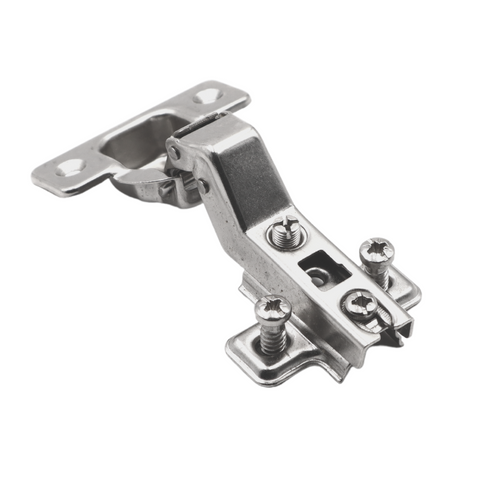
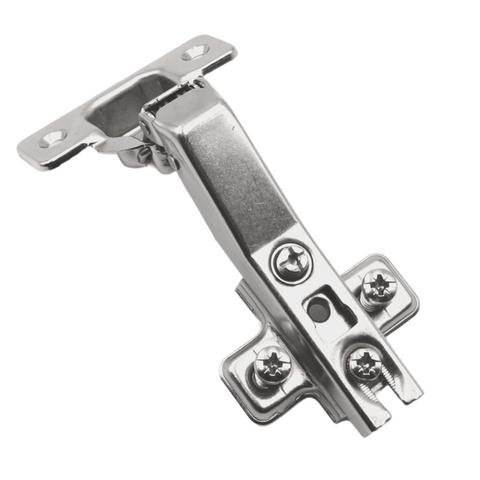
-
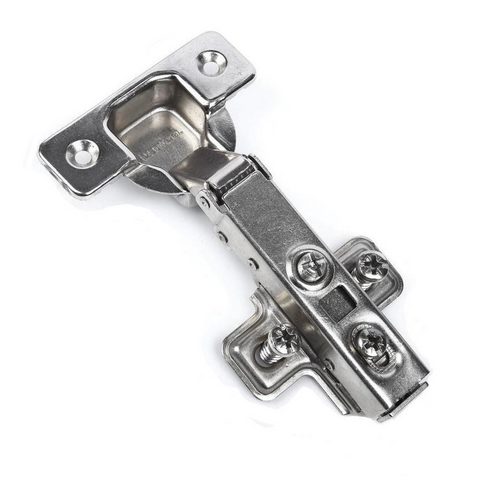
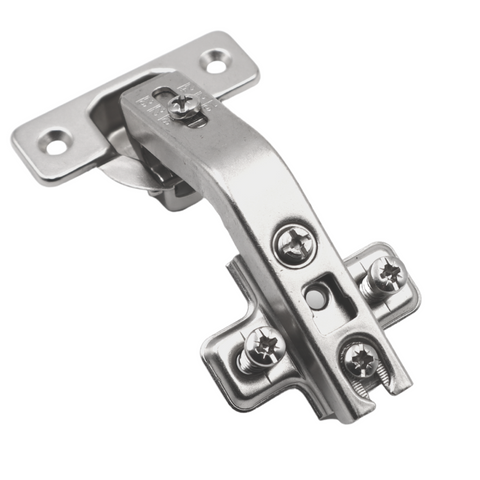
Hinge type "FROG"Regular price $0.90Unit price / perRegular priceSale price $0.90
-
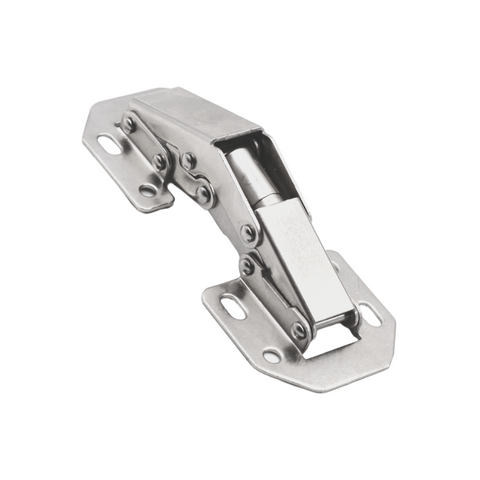
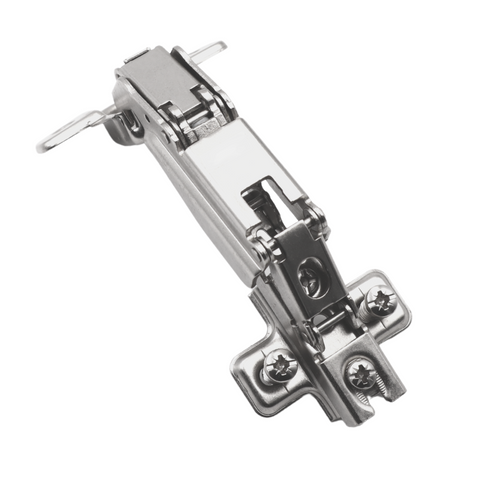
Scissor Lid Support Hinge - ZincRegular price $1.10Unit price / perRegular priceSale price $1.10

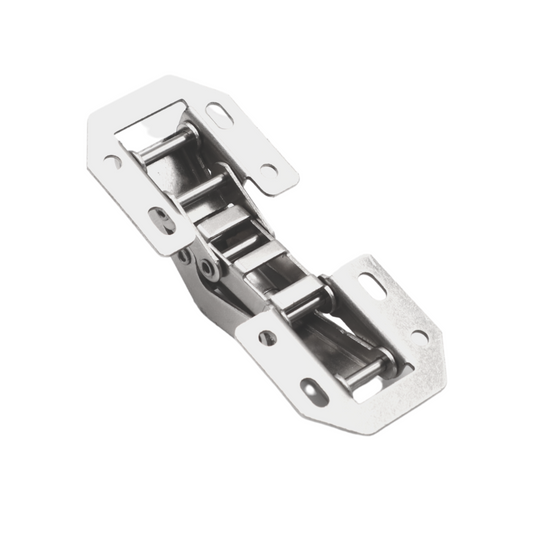

Standard cabinet hinges and 90-degree hingesare mechanical furniture fittings that restrict the opening angle of a cabinet door or flap to an exact right angle. While conventional hinges often swing wider, an exact 90-degree stop is essential in specific installation scenarios to prevent collisions with adjacent walls, furniture, or appliances.
A 90-degree hinge acts like a precise doorman at a narrow entrance—allowing just enough clearance to access the interior of the cabinet while strictly blocking further movement before the door damages surrounding surfaces. These concealed hinges are primarily used in corner installations, drop-down flap compartments, and tight architectural nooks.
Technical Specifications and Applications
Choosing the precise opening angle is a critical factor in cabinet building for both ergonomics and long-term durability. A90-degree hingeis typically installed when space for the open door is strictly limited.
Typical Applications for a 90° Opening Angle
- Cabinets Flush Against Walls:If a cabinet case sits directly flush against a room wall, the 90-degree limit keeps the door handle from hitting drywall, plaster, or wallpaper when opened.
- Flap Cabinets and Chests:A90-degree flap hingeis frequently used for doors opening downward or upward. The integrated stop ensures the flap stays perfectly horizontal, serving as a functional shelf.
- Upper Kitchen Cabinets:In U- or L-shaped kitchen layouts, doors in corner sections can easily collide. Restricting the opening to 90° protects cabinet fronts from scratches and denting.
Styles: Concealed Cup Hinge vs. Scissor Drop Hinge
In this category, hardware is broadly categorized into classic concealed cup hinges and specialized flap mechanisms.
The traditional90-degree cup hingeconsists of an articulated hinge arm and a cup that mounts flush into the door front. The industry-standard cup diameter is1-3/8 in (35 mm). These hardware options are ideal for swinging cabinet doors made of particleboard, MDF, or solid wood. For basic applications without built-in soft-close dampening, a durable model like theFROG style hingeis commonly selected. Attachment to the cabinet carcass is made via a cross mounting plate.
For drop-down flaps (such as in bar cabinets or shoe storage units), ascissor drop hingeis often the preferred choice. Azinc scissor hingeis specialized hardware combining hinge functionality with a stay support arm. It stops movement precisely at 90° to support the full weight of the flap. Be sure to check load ratings, as heavy MDF doors generate substantial leverage.
Overlay Types for 90-Degree Standard Cabinet Hinges
The resting position of the closed cabinet door relative to the side walls determines the required overlay type. This is the single most critical factor when selecting hardware for standard cabinet hinges.
Full Overlay (Corner Mount)
In a full overlay configuration, the closed door completely covers the front edge of the cabinet wall. From the outside, the case edge is hidden. The hinge arm on these models is straight (un-cranked). Choosefull overlay cup hingesfor this standard assembly.
Half Overlay (Dual/Twin Door Mount)
When two doors share a single central partition wall (typical in large wardrobes or wide credenzas), both doors must share the edge. This setup requires a heavily cranked hinge arm. Specializedhalf overlay cup hingesmaintain an appropriate reveal gap of roughly1/16 in to 1/8 in (2 mm - 3 mm)so the doors open smoothly without rubbing against each other.
Inset Overlay
In an inset design, the cabinet door does not sit on top of the case edge, but sits fully flush inside the side walls, top, and bottom panels. The front edges of the cabinet remain completely exposed when the door is closed. Aninset 90-degree hingefeatures a maximum cranked arm. Compatible hardware can be found underinset cup hingesand dedicated models for inset cabinet doors.
Installation Planning and Technical Dimensions
Proper installation of90-degree cabinet hingesrequires accurate drilling. Cabinetmakers and DIYers follow standard drilling patterns to ensure fit.
Hinge Cup Size and Drilling Distance
Drilling the door cup hole requires a standard Forstner bit. On almost all modern hardware, the cup diameter is1-3/8 in (35 mm). Recommended standard options are categorized under35 mm cup hinges. The standard drilling depth is generally7/16 in to 1/2 in (11.5 mm - 12 mm). Take extra care with thinner door materials to avoid drilling through the face.
The drilling distance (the tab distance from the edge of the door to the edge of the 35 mm hole) varies by desired reveal and overlay, but typically spans between1/8 in and 1/4 in (3 mm and 7 mm). To transfer these specs accurately, using acup hinge drilling templateis strongly advised.
Load Capacity and Recommended Hinge Quantity
A heavy-duty90-degree hingeis essential for oversized or heavy door panels (such as 7/8 in (22 mm) thick solid hardwood). The quantity of standard cabinet hinges required per door depends directly on weight and height:
- Up to35 in (900 mm)height /9 lbs - 13 lbs (4 kg - 6 kg): 2 hinges
- Up to63 in (1600 mm)height /13 lbs - 26 lbs (6 kg - 12 kg): 3 hinges
- Up to78 in (2000 mm)height /26 lbs - 37 lbs (12 kg - 17 kg): 4 hinges
- Up to94 in (2400 mm)height /37 lbs - 48 lbs (17 kg - 22 kg): 5 hinges
3D Hinge Adjustment
Once thecabinet hingesare secured using wood screws (PZ2 drive, Ø1/8 in - 3/16 in / 3.5 mm - 4 mm), reveal gaps must be aligned. Modern concealed hinges feature adjustment screws built into the arm. 3D adjustment ofstandard cabinet hingesis performed across three axes:
- Depth Adjustment:Moves the door closer to or further away from the cabinet box (gap clearance).
- Side-to-Side Adjustment:Regulates the gap and side overlay between doors.
- Height Adjustment:Adjusted by loosening the screws on the mounting plate, raising or lowering the door by± 1/16 in (± 2 mm).
Special Features: Detent Stops and Soft-Close Mechanism
Depending on application requirements, 90-degree hinges offer mechanical add-ons to enhance user convenience.
90-Degree Hinge with Catch / Detent
A90-degree catch hinge(or detent positioning hinge) includes built-in mechanical resistance. When the door or flap opens to 90 degrees, the joint snaps firmly into place. This prevents draft airflow or vibrations from causing the door to swing shut on its own. It is widely used on90-degree flap hingesfor trunks and drop-down bars that need a stable open platform.
Soft-Close Dampening
To eliminate cabinet doors slamming shut, soft-close hardware is installed. A compact hydraulic cylinder integrated inside the hinge cup cushions the closing momentum over the final few inches, pulling the door gently against the face frame or box. To add quiet operation, browse our selection ofsoft-close cabinet hinges.
Compatibility Note:Self-closing hinges without dampeners (like the FROG style) can often be upgraded using add-on soft-close dampers that clip directly onto the hinge arm.
Alternatives to a 90-Degree Opening Angle
If spatial constraints are not a factor, wider opening angles provide much easier access to cabinet interiors. For standard kitchen and wardrobe projects, our generalconcealed cabinet hingeshub is the ideal starting point.
Depending on your furniture design, alternative opening angles may suit your project better:
- Standard Access:110-degree cabinet hingesrepresent the standard entry choice for standard doors.
- Wider Clearance:135-degree cabinet hingessupply additional swing clearance, widely featured on folding bi-fold doors.
- Internal Roll-Out Drawers:If internal drawers pull out from behind the door (e.g., pantry cabinets), the door must swing fully clear of the opening. This requires zero-protrusion155-degree cabinet hingesor165-degree wide-angle hinges.
- Specialty Angled Cabinets:For corner cabinets or angled face frames, narrow-angle hinges like30-degree hingesor45-degree cabinet hingesare required.
FAQ – Frequently Asked Questions About 90-Degree Hinges
What is the difference between a 90-degree hinge and a 110-degree hinge?The opening angle defines the maximum arc the opened door can describe. A 90-degree hinge stops precisely perpendicular to the cabinet box. A 110-degree hinge swings slightly farther outward, offering easier access inside, but requiring additional clearance alongside the cabinet.
When should I use a scissor drop hinge?A scissor drop hinge is designed for horizontal drop-down doors (e.g., bar cabinets opening downward). It combines the pivot joint with a stay mechanism that catches the flap at exactly 90° to support weight horizontally. Standard swinging cabinet doors require concealed cup hinges instead.
How do I determine whether I need full overlay, half overlay, or inset hinges?Check the position of the closed door relative to the side wall. If the door fully hides the edge of the cabinet side panel, select full overlay. If two adjacent doors share a single central panel edge, choose half overlay. If the door sits flushinsidethe cabinet box framing, select inset hinges.
What tools are needed to install standard 35 mm cabinet hinges?For fresh installations, you need a power drill, a 1-3/8 in (35 mm) Forstner bit (to bore the cup hole), a pilot drill bit (Ø1/16 in - 1/8 in / 2 mm - 3 mm) for mounting screws, and a Phillips screwdriver (PZ2) for 3D adjustments.
Can I retrofit soft-close dampening onto a standard non-dampened 90-degree hinge?Yes, in most cases. Many manufacturers offer clip-on soft-close dampers that attach right onto the hinge arm. Alternatively, standalone door dampers can be face-mounted or drilled directly into the cabinet side wall.