Wohnwand Oak

0 products

No products found
Use fewer filters or remove all

An oak entertainment center wall unit is a modular living room furniture system that combines storage space, display shelves, and media console housing into one coordinated wood-grain design.These wall units typically feature a combination of floor-standing and wall-mounted cabinets that can be flexibly arranged to suit your room dimensions and outlet placement. In the RTA (ready-to-assemble) segment, these pieces are mostly constructed from durableparticle boardfinished with a resilient oak-grain melamine laminate. This construction delivers high dimensional stability, scratch resistance, and a lighter weight for wall mounting compared to solid wood.

Types, Finishes, and Color Combinations

Oak finishes are exceptionally versatile in modern furniture design. The visual impact on your room depends heavily on the selected wood grain and how it pairs with solid accent colors. A modern oak entertainment center stands out through clean lines, handleless door fronts, and a deliberate contrast between textured wood grain and matte or high-gloss surfaces.

Popular Oak Finishes

  • Wotan Oak:This laminate finish features a striking, vivid wood grain with visible knots and natural-looking splits, bringing a warm, earthy texture to your living space. Complete sets like theMIRANDA - Entertainment Wall Unit with 4 Cabinets - Wotan Oakuse this bold look as their primary design element.
  • Artisan Oak:Slightly subtle and more uniform in grain pattern than Wotan Oak, while still retaining a natural, rustic character.
  • Sonoma Oak:A lighter, highly uniform finish with a fine, muted grain pattern. It offers an understated look that visually opens up smaller rooms. Compatible additions like a Sonoma Oak Dresser are popular choices to expand storage.
  • Monument Oak:A darker, rich oak laminate that is frequently paired with light accent fronts.

Material and Color Contrasts

Solid wood-grain finishes are often broken up with contrasting accent fronts to soften the heavy appearance of a full oak wall unit.

Components and Modules of Oak Wall Units

A classic living room wall unit is built from several functional modules. Arranging these individual wall elements works much like tuning an equalizer: by shifting standing and floating modules horizontally and vertically, you dial in the exact visual balance of your room.

The TV Stand / Lowboard

The lowboard forms the anchor of the set. It typically stands between 11-13/16 in and 17-11/16 in (30 cm to 45 cm) high, with a depth of 15-3/4 in to 19-11/16 in (40 cm to 50 cm). This depth is necessary to accommodate media receivers, gaming consoles, or audio amplifiers. Widths vary widely. Ensure your TV console extends at least 3-15/16 in to 5-7/8 in (10 cm to 15 cm) wider than your TV screen on both sides for balanced visual proportions. A 65-inch television (approx. 57 in / 145 cm wide) requires a TV stand at least 63 in (160 cm) wide, though 70-7/8 in (180 cm) is ideal.
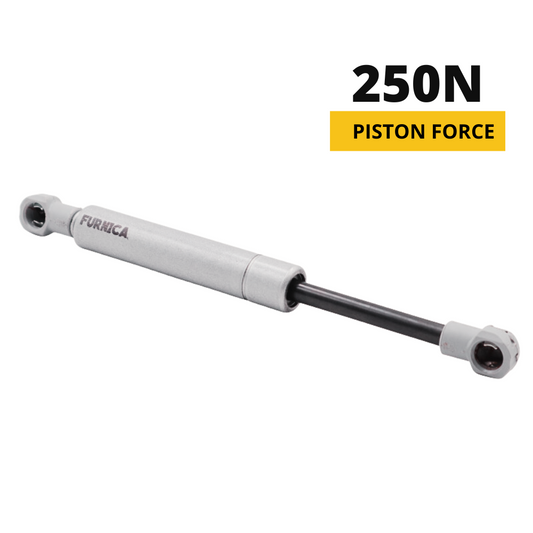
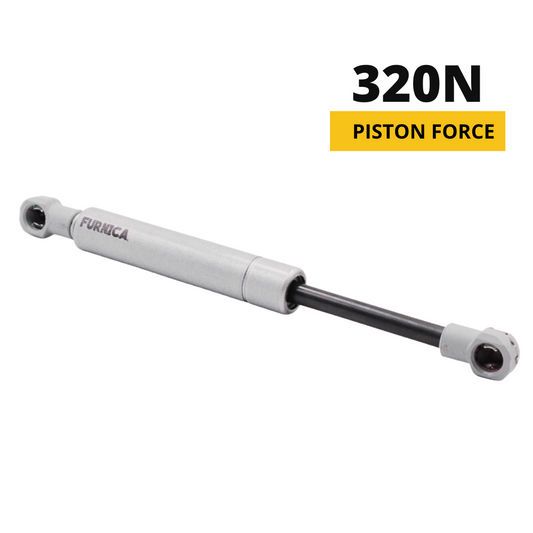
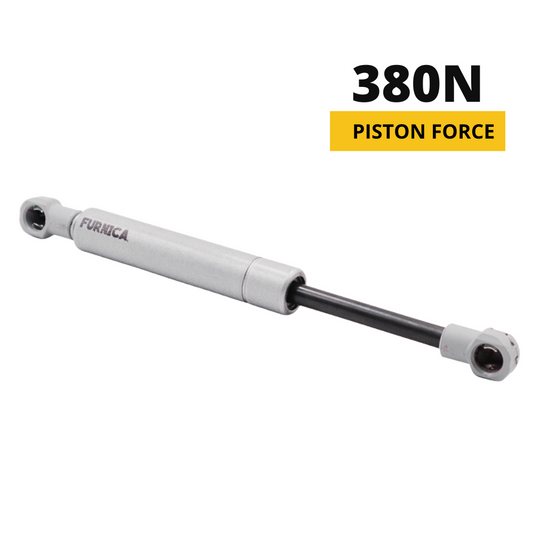
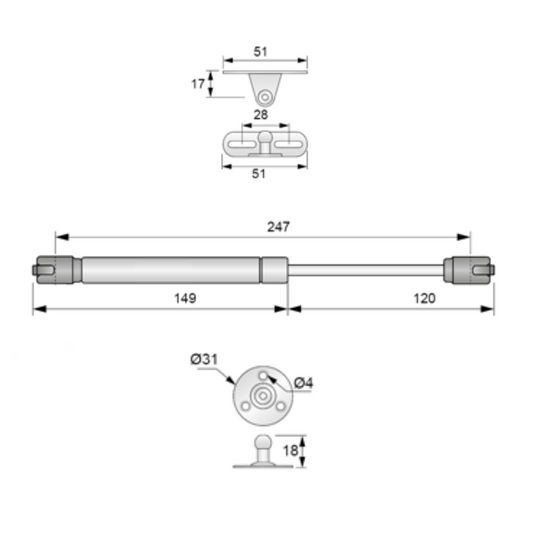
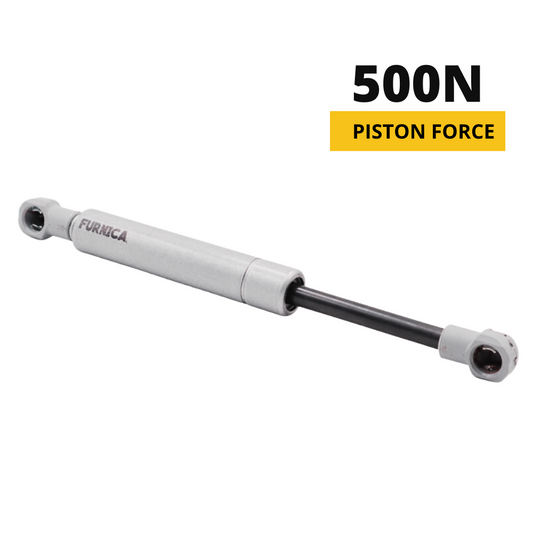
TV lowboards are usually equipped with drop-down flap doors or drawers. Flaps are held open or softly damped usinggas struts(e.g., rated at 60 N or 80 N). Drawers run on slide rails—typicallyroller drawer slidesfor light loads orball-bearing slidesfor higher weight capacity and smoother operation.

Display Cabinets and Floating Wall Units

Glass display cabinets showcase decorative items while keeping clutter hidden behind closed doors. Floating wall cabinets keep floor space open, making cleaning underneath easy. You can find complete sets in this style in ourFloating Wall Unitscategory.

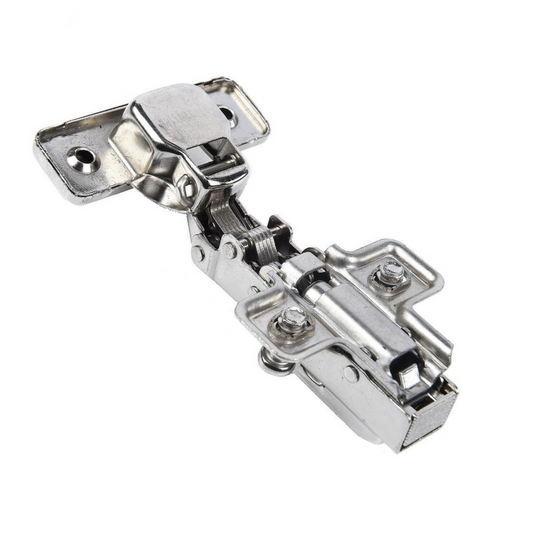
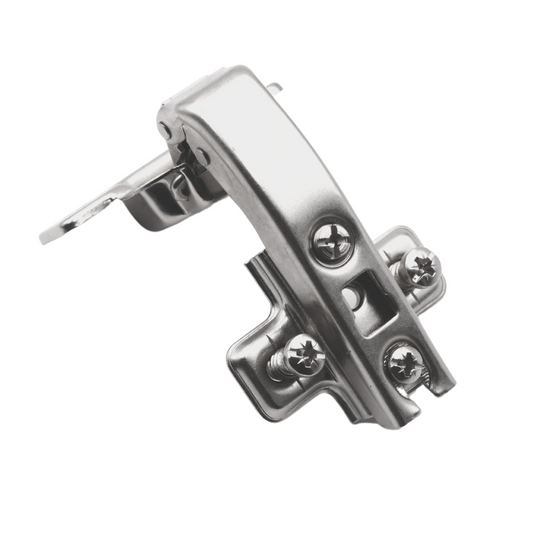
Cabinet doors are attached to the carcass using concealed Europeancup hinges(typically with a 1-3/8 in (35 mm) cup diameter) boasting a standard 110° opening angle. For clean, handle-free fronts, push-to-open latch mechanisms allow doors to spring open with a light press.

Floating Shelves and Wall Panels

Wall-mounted shelves act as a connecting feature above the television. They generally consist of an oak-finish back panel with a 90° shelf ledge. Concealed mounting hardware typically anchors the shelf directly into the wall through the back panel.

Matching Oak Living Room Furniture

Sometimes a standaloneentertainment wall unitdoesn't provide enough storage for dishware, linens, or paperwork. In these cases, the set can be complemented with freestanding accent pieces in matching oak finishes.

An oak TV stand can serve as a standalone console if you prefer to forgo tall upper cabinets. For maximum storage capacity, dressers and credenzas are ideal. Common customer queries for wotan oak dressers or charcoal oak sideboards demonstrate the need for matching extension pieces. Depending on your available space, choose from various layouts like a slim Sonoma Oak 4-Drawer Dresser for tight nooks or wider configurations like a Sonoma Oak 8-Drawer Dresser. A multi-functional oak dresser with a combination of doors and drawers brings structured organization to any room.

Technical Planning and Room Dimensions

Before installing your modern or rustic oak entertainment center, careful space planning is crucial. Take exact measurements of your target wall space and take baseboards, power outlets, and light switches into account.

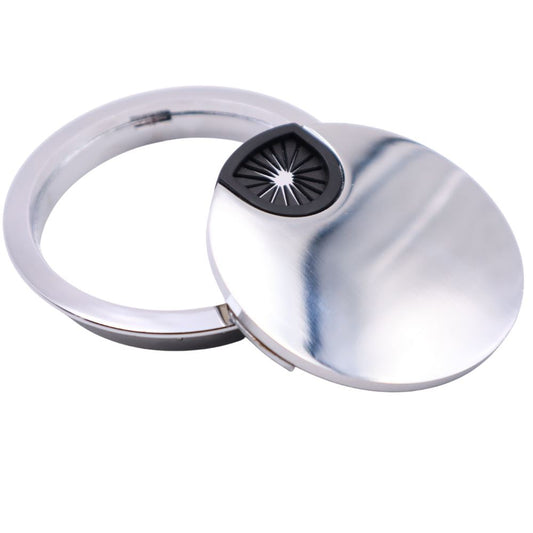
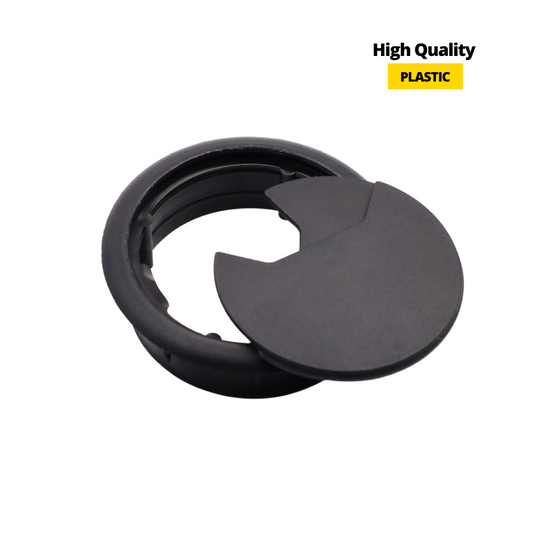
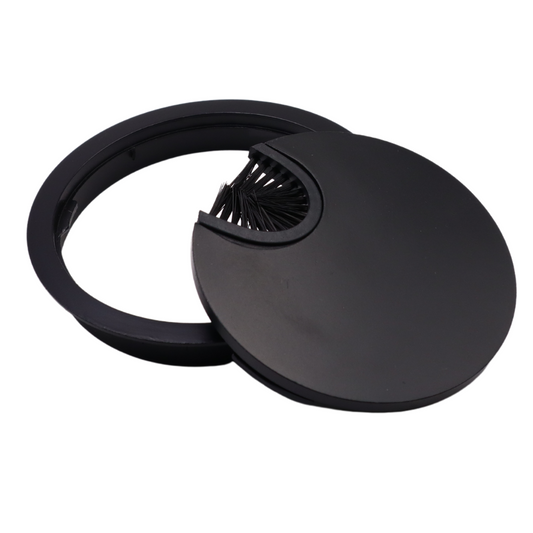
  • Cable Management:Route your cables before final installation. Many TV consoles feature pre-drilled cable grommets in the back panel (typically 2-3/8 in (60 mm) diameter). If wall outlets will be hidden behind furniture, plug in power strips and route all wiring before placing the cabinets.
  • Clearance Distances:Leave at least 5-7/8 in to 7-7/8 in (15 cm to 20 cm) of clearance between the top of your TV set and any shelf or floating cabinet mounted above it. This prevents heat buildup around electronics and keeps the setup from looking overcrowded.
  • Symmetry vs. Asymmetry:Modern wall units, such as theSANDER Wall Unit - Living Room Set - Monument Oak / High-Gloss White, often feature asymmetric layouts. Mounting floating cabinets offset from standing glass displays breaks up rigid room structures for a dynamic look.

DIY Assembly & Installation Guide

Assembling an oak wall unit requires a systematic approach. The furniture ships flat-packed in multiple cartons. Plan on 3 to 5 hours of assembly time for a full wall system, depending on your DIY experience.

Tools Required

  • Cordless drill/driver with matching bit set (PZ2 for standard wood screws, Torx TX bits for specialty connectors).
  • Phillips screwdriver (for fine-tuning cabinet door hinges).
  • Spirit level (at least 31-1/2 in (80 cm) long) or cross-line laser level.
  • Tape measure and pencil.
  • Hammer drill or rotary hammer (for mounting hanging cabinets to the wall).
  • Masonry drill bits (typically 5/16 in (8 mm) or 3/8 in (10 mm), matching your wall anchors).
  • Hammer (for seating wooden dowels and back-panel nails).

Carcass Assembly

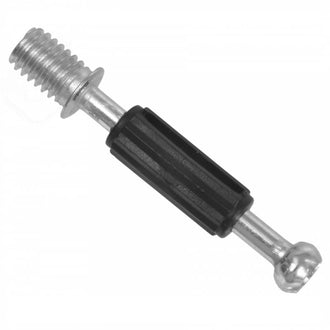
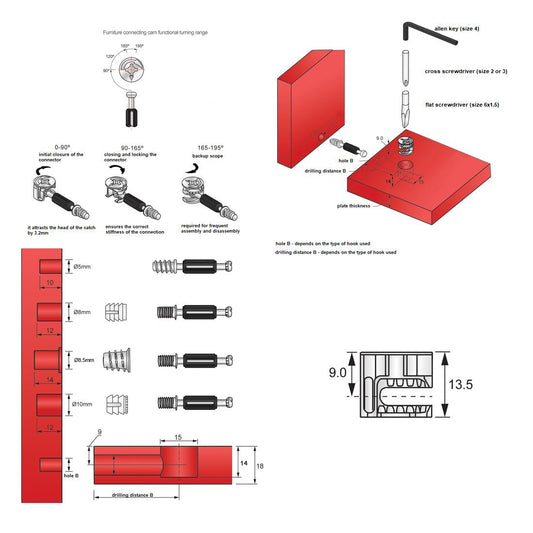
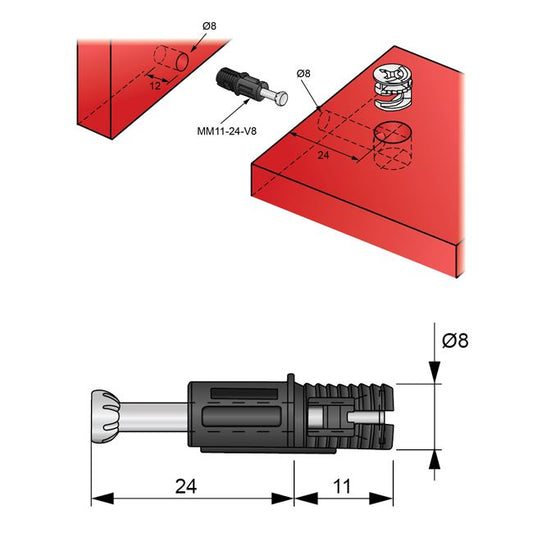
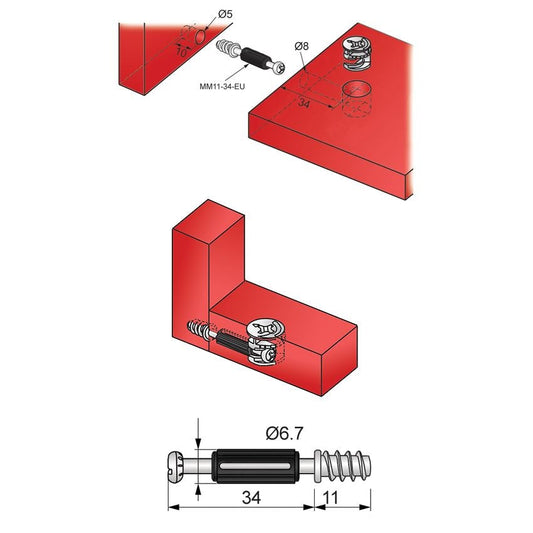
Cabinet frames on modern wall units are assembled primarily usingcam lock fasteners(Minifix) paired with wooden dowels (typically 5/16 in x 1-3/16 in (8 x 30 mm)). The dowels align the panels and absorb shear forces, while the cam lock draws the panels tightly together with a half turn. Make sure to nail or screw the back panels (typically 1/8 in (2.5 mm to 3 mm) HDF boards) square. The back panel provides structural rigidity; without a properly secured back panel, the cabinet frame can rack and collapse sideways under load.

Wall Mounting Floating Cabinets

This is a critical safety step. Floating cabinets are hung using adjustable cabinet suspension brackets attached to a steel mounting rail anchored to the wall. Always inspect wall construction before drilling:

  • Solid Concrete or Brick:Standard expansion wall anchors (5/16 in (8 mm)) and matching lag screws (e.g., #10 x 2-3/8 in (5 x 60 mm)) are sufficient.
  • Aerated Concrete:Use specialized masonry anchors engineered to bite deeply into softer materials.
  • Drywall (Stud Walls):Heavy-duty hollow wall anchors or toggle bolts are mandatory here. Always check the load rating of your drywall wall. A fully loaded wall cabinet can easily reach 66 lbs to 88 lbs (30 kg to 40 kg). When in doubt, fasten the mounting brackets directly into wood studs.

Alignment and Hinge Adjustment

Once all modules are standing or mounted, fine-tune the door alignment. Concealedcup hingesfeature three-way adjustment screws:

  1. Depth Adjustment:Moves the door closer to or further away from the cabinet carcass (adjusting the reveal gap).
  2. Vertical Adjustment:Raises or lowers the door relative to the mounting plate.
  3. Lateral Adjustment:Shifts the door left or right to prevent rubbing against adjacent fronts and maintain uniform seam gaps.

Finally, exposed screw heads inside cabinet interiors can be hidden using cover caps. To match oak finishes, choose matchingSelf-Adhesive Oak Screw Cover Caps.

FAQ – Oak Entertainment Center Wall Units

How do I clean and maintain an oak-finish wall unit?Melamine-coated particle board is very low-maintenance. Wipe away dust with a dry or slightly damp, lint-free cloth. Avoid harsh abrasive cleaners, solvent-based solutions, or soaking wet rags, as moisture can seep into seam edges and cause core boards to swell.

What is the difference between Wotan Oak and Sonoma Oak?The difference lies in the printed wood grain. Wotan Oak mimics reclaimed, rustic oak featuring dark grain cracks, prominent knots, and a warm yellow-brown undertone. Sonoma Oak, on the other hand, features a smooth, light, grayish-oak grain pattern without prominent defects.

Can I split up the modules of a wall unit around the room?Yes. Because the individual modules (TV stand, display cabinet, floating shelf) are independent cabinet units, they can be arranged anywhere in the room. They do not need to be joined together, giving you complete flexibility in your room design.

How much weight can the TV stand hold?Weight capacity depends on construction. A floor-standing TV console with a central dividing wall comfortably supports modern televisions (which typically weigh between 33 lbs and 66 lbs (15 kg to 30 kg)) plus media hardware. Check the manufacturer specifications for maximum top-shelf load capacity. Wall-mounted floating TV consoles have lower weight limits and require solid wall anchorage.

Which screws should I use for wall mounting?Hardware selection depends entirely on your wall material (concrete, brick, or drywall). For solid masonry walls, 5/16 in (8 mm) nylon anchors paired with matchingchipboard screws(e.g., #10 x 2-3/8 in (5 x 60 mm)) with flat or pan heads are the standard for mounting suspension rails.

How do I install LED lighting on glass shelves?Many entertainment units feature optional glass shelf lighting. This consists of small LED clips that slide onto the back edge of 3/16 in or 1/4 in (5 mm or 6 mm) glass shelves. Wiring is routed through the back panel out to a splitter and power adapter plug.

Related Categories and Upgrades

To complete your living room or adjoining spaces in matching wood tones, explore our wide selection of complementary modules and styles: