
Double Coat Hooks
Popular Subcategories
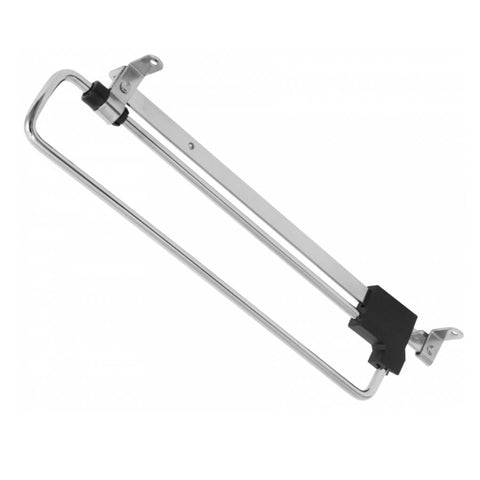
-
Double robe hook - Chrome WP01Regular price $0.85Unit price / perRegular priceSale price $0.85
-
Double robe hook - Black WP02Regular price $1.27Unit price / perRegular priceSale price $1.27
-
Double robe hook - Satin WP02Regular price $1.27Unit price / perRegular priceSale price $1.27
-
Double robe hook - Chrome WP02Regular price $1.21Unit price / perRegular priceSale price $1.21
-
Double robe hook - Aluminium WP01Regular price $0.91Unit price / perRegular priceSale price $0.91
-
Double robe hook - Aluminium WP02Regular price $1.27Unit price / perRegular priceSale price $1.27
-
Double robe hook - Satin WP04Regular price $1.19Unit price / perRegular priceSale price $1.19
-
Coat Hook - Black WP01Regular price $1.31Unit price / perRegular priceSale price $1.31
-
Double Coat Hook - 4-1/4 inch (108 mm) - ChromeRegular price $2.54Unit price / perRegular priceSale price $2.54
-
Double Coat and Hat Hook -4-1/4 inch (108 mm) - SatinRegular price $2.54Unit price / perRegular priceSale price $2.54
-
Double Coat Hook - 4-1/4 inch (108 mm) - SilverRegular price $2.54Unit price / perRegular priceSale price $2.54
-
Double Coat and Hat Hook - 6-5/16 inch (160 mm) - ChromeRegular price $4.27Unit price / perRegular priceSale price $4.27
-
Double Coat and Hat Hook - 6-5/16 inch (160 mm) - SatinRegular price $4.88Unit price / perRegular priceSale price $4.88
-
Double Coat Hook - 6-5/16 inch (160 mm) - SilverRegular price $4.88Unit price / perRegular priceSale price $4.88
-
Double Coat Hook - 1-13/16 inch (46 mm) - Antique BrassRegular price $1.29Unit price / perRegular priceSale price $1.29
-
Double Coat Hook - 1-13/16 inch (46 mm) - Brass FinishRegular price $1.23Unit price / perRegular priceSale price $1.23
-
Double Coat Hook - 1-13/16 inch (46 mm) - ChromeRegular price $1.20Unit price / perRegular priceSale price $1.20
-
Double Coat Hook - 1-13/16 inch (46 mm) - Satin FinishRegular price $1.20Unit price / perRegular priceSale price $1.20
-
Double Coat Hook - 1-13/16 inch (46 mm) - SilverRegular price $1.20Unit price / perRegular priceSale price $1.20
-
Double Coat Hook - 4-13/16 inch (122 mm) - BlackRegular price $6.25Unit price / perRegular priceSale price $6.25
-
Double Coat Hook - 4-13/16 inch (122 mm) - Brushed SteelRegular price $6.04Unit price / perRegular priceSale price $6.04

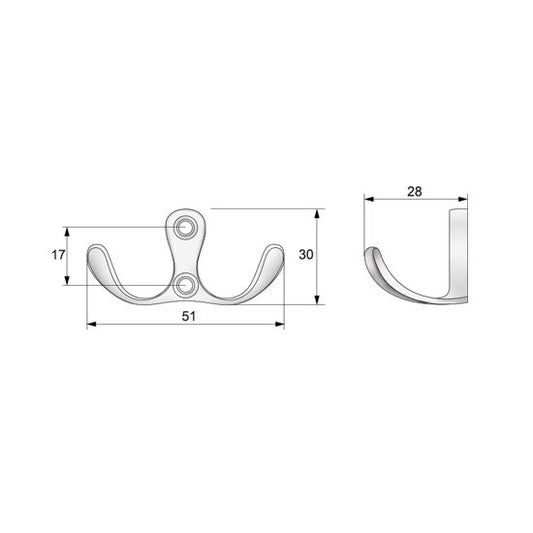

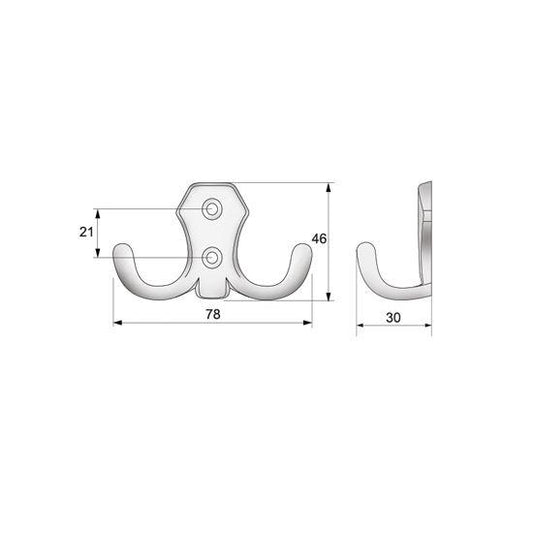

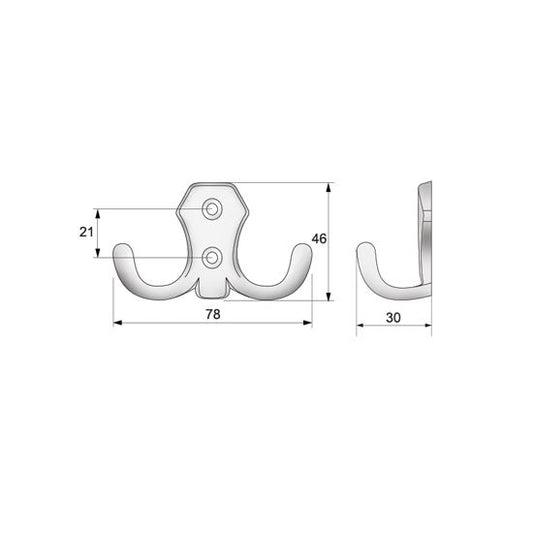

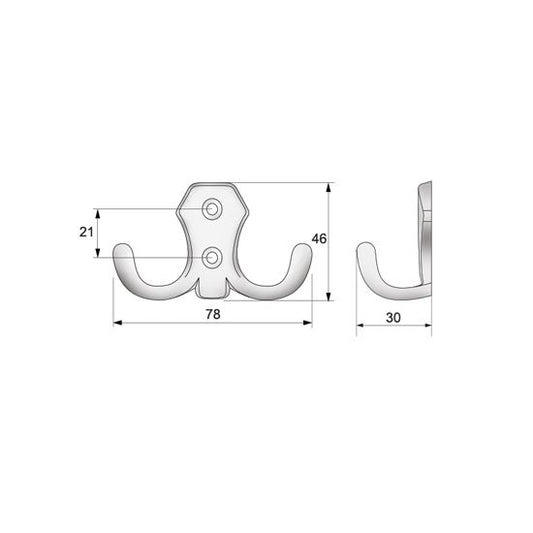

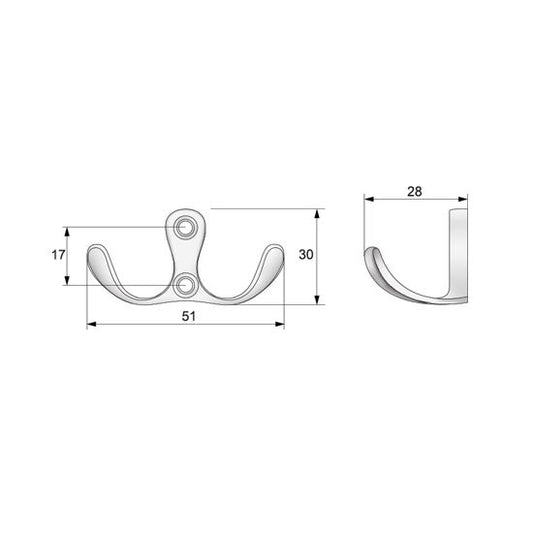

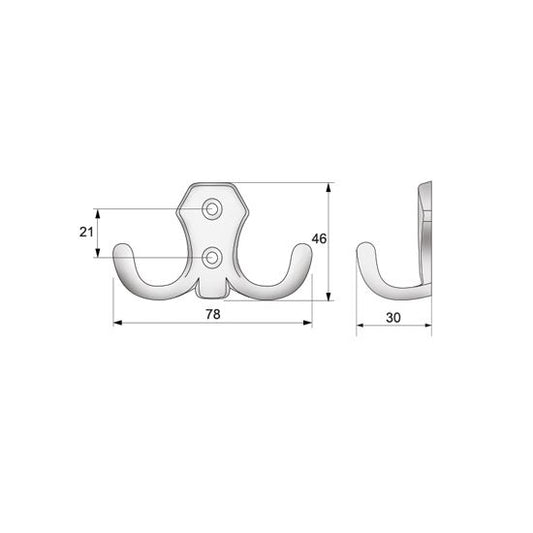

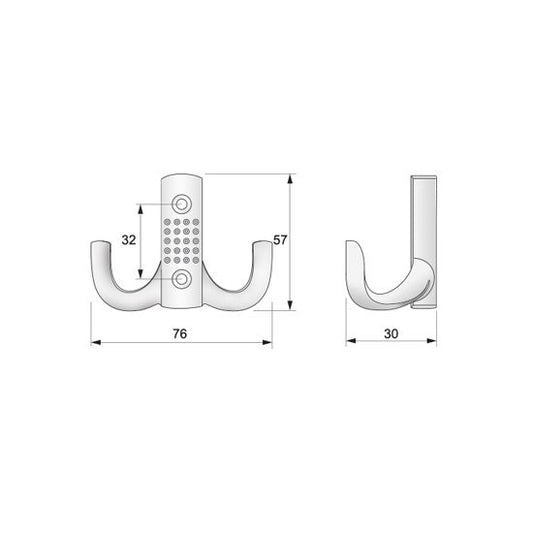

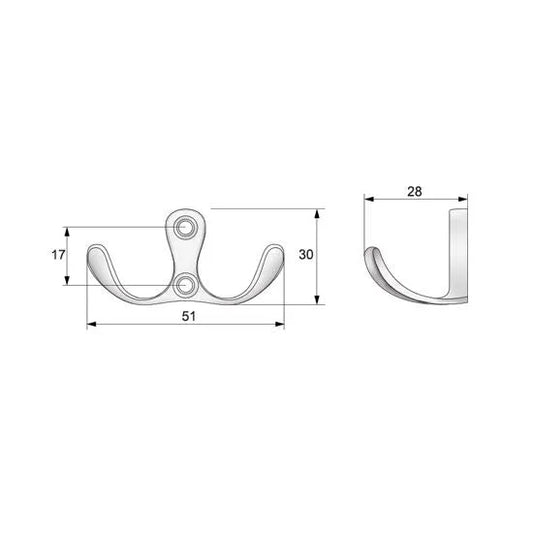

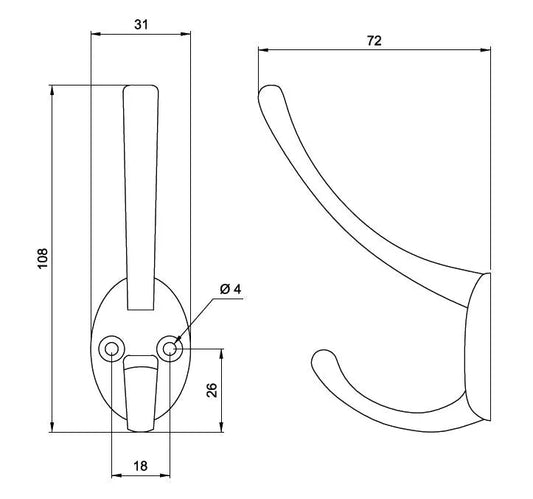



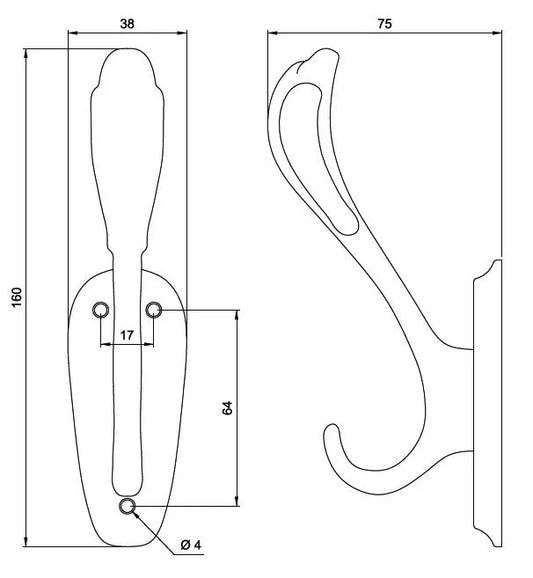


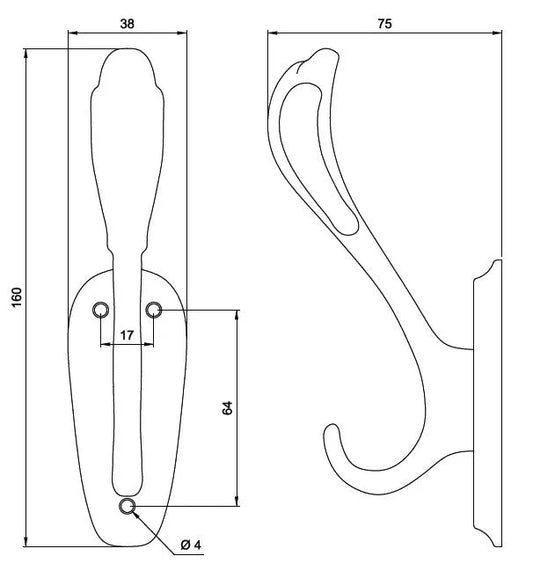

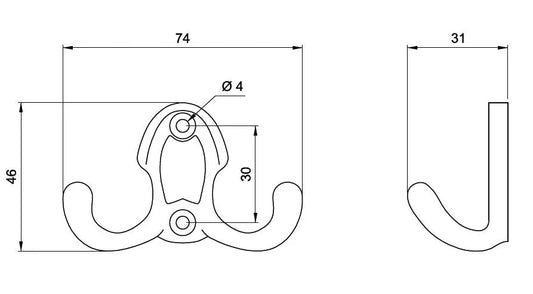

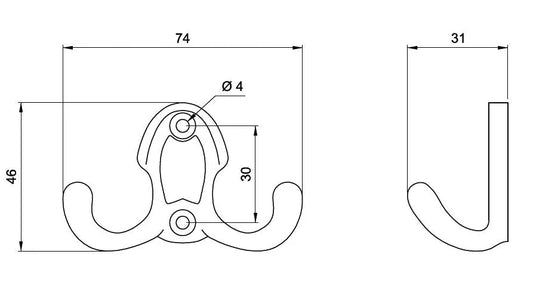

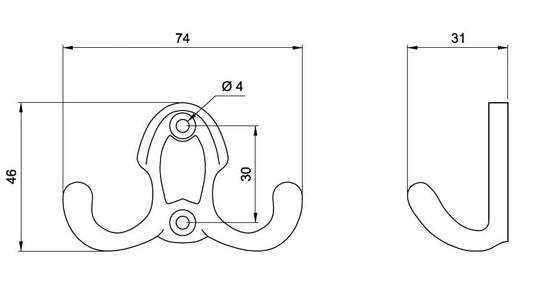

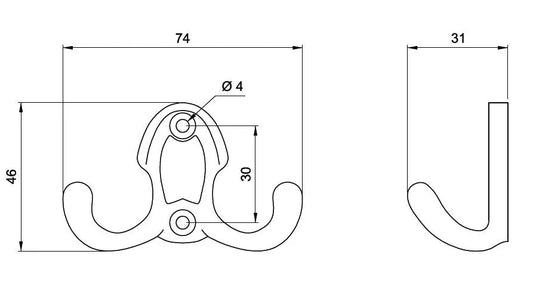

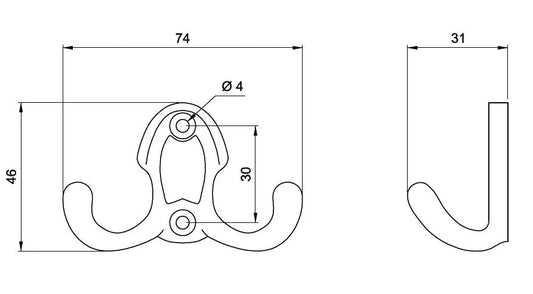


Double coat hooks(also known as dual coat hooks or double wall hooks) are mechanical hardware fittings for wall or cabinet mounting that feature two separate hanging points to hold garments, bags, or gear.
In professional cabinetmaking and interior fitting,double coat hooksoffer an efficient solution to maximize hanging capacity in limited spaces. Unlike single hooks, they require more precise alignment during installation, but provide superior structural weight distribution as the load is transferred across a wider mounting base flange. This category includes all two-pronged hardware, from compact dual hooks to sweeping hat and coat hooks built for heavy outerwear.
Designs and Geometries of Double Coat Hooks
The architecture of adouble coat hooklargely determines its intended application. In hardware engineering, a distinction is primarily made between two basic geometric designs based on the orientation of the hook arms.
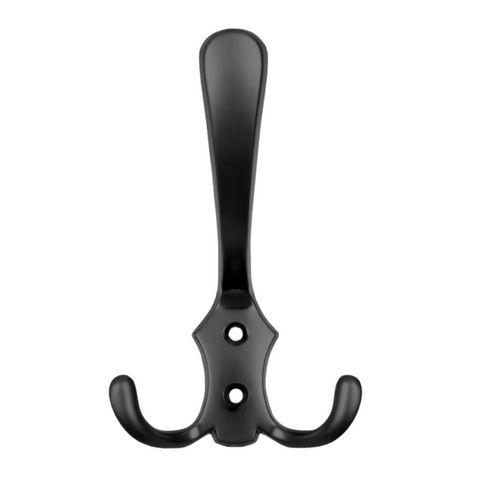
Vertical Layout: The Hat and Coat Hook
In this classic configuration, the two hanging points are arranged vertically one above the other. The upper arm is typically significantly longer and projects further into the room (projection often between2-3/8 in (60 mm) - 3-1/2 in (90 mm)) to accommodate bulky headwear or heavy winter coats. The lower, shorter arm is designed for lighter jackets, scarves, or bags.
These models require a larger vertical mounting surface. Common overall heights in this category range from compact4-1/4 in (108 mm)to prominent6-5/16 in (160 mm)options. For heavy winter wardrobes, theDouble Hat and Coat Hook - 6-5/16 in (160 mm) - Chromeis highly recommended. For standard commercial applications, a height of4-1/2 in (115 mm)or4-13/16 in (122 mm)is frequently specified, as seen in theDouble Hat and Coat Hook - 4-1/2 in (115 mm) - Blackor theDouble Hat and Coat Hook - 4-13/16 in (122 mm) - Silver.
Horizontal Layout: Compact Double Coat Hooks
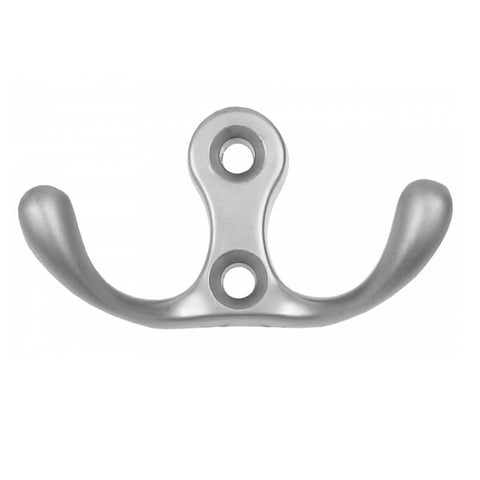
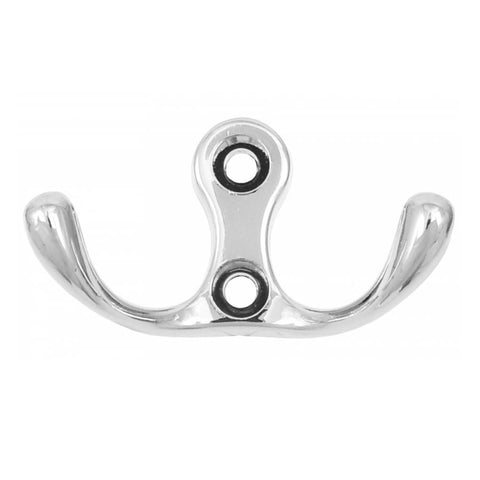
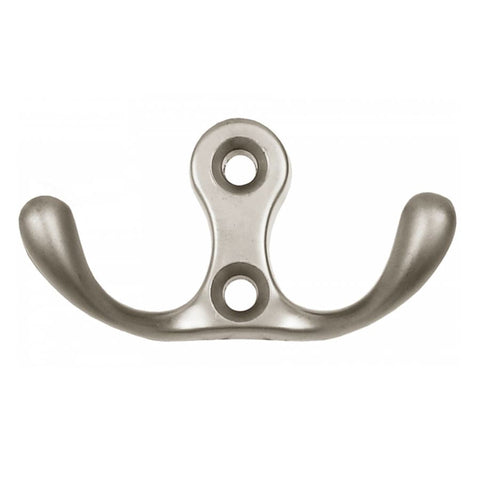
Here, two identically sized hook arms branch out horizontally from the base plate in a V- or U-shape. Thesedouble coat hooksfeature a very low profile, making them ideal for narrow hallways, alcoves, or the inside of cabinet doors. The leverage exerted on the mounting screws is lower with this design, as the center of gravity of the hanging load sits closer to the wall.
A typical height for these compact fittings is1-13/16 in (46 mm). Excellent examples of this space-saving geometry include theDouble Coat Hook - 1-13/16 in (46 mm) - Satinand theDouble Coat Hook - 1-13/16 in (46 mm) - Antique Brass.
Materials and Surface Finishes
The choice of base material and surface finish determines not only the aesthetics, but also the corrosion resistance and mechanical load capacity ofmulti-prong hooks.
- Zamak (Zinc Die-Cast):Most metaldouble coat hooksare manufactured from Zamak, an alloy of zinc, aluminum, magnesium, and copper. This material allows for extremely precise molding via die-casting and delivers high tensile strength. Zamak hooks are subsequently finished with electroplating.
- Aluminum:Aluminum fittings are lightweight and completely rustproof. They are exceptionally well-suited for humid environments (bathrooms, locker rooms). The surface is usually anodized, making it scratch-resistant. A technical example is theCoat Hook - Aluminum WP04.
- Steel:For extreme loads, heavy-duty steel hooks are utilized. However, these must be powder-coated or galvanized to prevent surface rust.
Popular Finishes in Closet & Entryway Hardware
The finish should complement the surroundingfurniture hardware(such as cabinet handles or hinges):
- Chrome (Polished):Hard, wear-resistant, and easy to clean. Ideal for high-traffic environments. See theCoat Hook - Chrome WP01.
- Matte Black:Currently the benchmark in modern industrial design. The powder coating absorbs light and hides fingerprints. A popular choice formatte black double coat hooks, realized in theDouble Hat and Coat Hook - 5-1/2 in (140 mm) - Black.
- Satin / Brushed Steel:Matte, textured surfaces created by fine brushing. They offer a refined, technical look, like theDouble Hat and Coat Hook - 5-1/16 in (128 mm) - Brushed Steel.
- Brass / Antique:Electroplated coatings artificially aged to replicate a classic patina. Perfect for traditional or rustic furniture concepts.
Load Dynamics and Installation of Double Coat Hooks
Proper mounting dictates the service life of the hardware. Even a heavy-duty hook installed with improper anchors will fail under load. When installingdouble coat hooks, two primary forces come into play: shear force (downward weight pull) and tension force (leverage pulling the top screw away from the wall).
Fasteners and Substrates
Mostdouble coat hooksfeature two pre-drilled mounting holes. Center-to-center hole spacing is model-specific and must be precisely marked during installation.
- Mounting on Wood / Cabinet Panels (Particleboard, MDF):
- Mounting on Solid Masonry (Concrete, Solid Brick):
- Mounting on Drywall (Gypsum Board):
When mounting adouble coat hookdirectly onto a cabinet back panel or wooden entryway board, standardwood screws(typically#6 (3.5 mm)or#8 (4 mm)diameter) are sufficient. For melamine-coated particleboard, pre-drilling with a3/32 in (2.5 mm)wood bit is essential to prevent surface chipping.
An expansion anchor (typically1/4 in (6 mm)or5/16 in (8 mm)) is required. The screw must be long enough to pass through plaster (typically9/16 in - 3/4 in (15 mm - 20 mm)) and fully engage the expansion zone of the anchor.
Standard drywall panels (typically1/2 in (12.5 mm)thick) cannot support the localized tension force of a fully loadeddouble coat hook. Hollow-wall metal anchors or toggle bolts that expand over a wide area behind the board must be used.
Screw Head Geometry
Pay close attention to the countersink profile of the mounting holes. If the hole is countersunk, useflat-head screwsso they sit flush with the hook surface. If the hole is flat-bottomed, usepan-head or truss-head screws. Many modern models, such as theCoat Hook - Black WP02, utilize flat-head screws covered by decorative caps or color-matched paint.
Layout and Spatial Planning
When designing a hallway entryway or outfitting fitting rooms, ergonomic spacing guidelines should be followed.
- Mounting Height:Recommended installation height for adults is63 in - 67 in (1600 mm - 1700 mm)from the finished floor level. If children need to reach thedouble coat hooks, a lower row at43 in - 47 in (1100 mm - 1200 mm)is ideal.
- Horizontal Spacing:To allow bulky winter coats to hang side-by-side without overlapping, center-to-center spacing betweendouble hooksshould be at least6 in (150 mm), though8 in (200 mm)is preferred.
- Integration with Furniture Concepts:Hook strips are frequently positioned directly above storage furniture. When planning around entryway benches or shoe cabinets (typically31-1/2 in - 39-3/8 in (800 mm - 1000 mm)high), install the hook strip high enough to ensure hanging coats clear the top surface.
Specific Applications for Double Coat Hooks
Our assortment ofdouble coat hookscovers a wide spectrum of functional requirements:
Entryway & Closet Systems
In traditional entryway furniture,double coat hooksserve as the core hanging hardware. Models with generous projection dominate this space. When designing a full accent panel wall, uniform spacing of identical hooks creates a clean, streamlined aesthetic. Models like theDouble Hat and Coat Hook - 4-1/4 in (108 mm) - Satinoffer a balanced combination of compact size and high capacity.
Bathrooms and Wet Areas
Towels and bathrobes demand hooks that will not absorb moisture or rust over time. Anodized aluminum or solid chrome-plated brasswall-mounted double hooksare the specified standard for these environments. Compact horizontal designs (e.g.,1-13/16 in (46 mm)height) work best here, as towel loops do not require deep projection.
Noches and Cabinet Door Interiors
To maximize underutilized space,double coat hooksare frequently installed on the interior side of double cabinet doors (for ties, belts, or light jackets). Always verify that the screw length is shorter than the door thickness (standard cabinet doors measure5/8 in (16 mm)or3/4 in (19 mm)). Use euro screws or short wood screws (e.g.,#6 x 5/8 in (3.5 x 15 mm)).
Frequently Asked Questions (FAQ) About Double Coat Hooks
What is the difference between a hat/coat hook and a compact double coat hook?A hat and coat hook features two vertically stacked arms. The top arm is significantly longer (often projecting over2-3/4 in (70 mm)) to hold hats or wide coat collars without rubbing against the wall. A compact double coat hook features two horizontal, equal-length arms and maintains a shallow profile (typically under2 in (50 mm)projection).
What drill bit size do I need for wall installation?That depends on the wall anchor used. For standard masonry and a1/4 in (6 mm)plastic expansion anchor, use a1/4 in (6 mm)masonry bit. For a5/16 in (8 mm)anchor, use an5/16 in (8 mm)bit. When mounting directly into wood with#8 (4 mm)wood screws, pre-drill with a3/32 in (2.5 mm)or 1/8 in (3 mm) bit.
What is the load capacity of a double coat hook?The hook fitting itself (cast from Zamak or steel) can easily hold33 lbs - 44 lbs (15 kg - 20 kg). The structural bottleneck is almost always the wall anchor system. In solid concrete with proper anchors, full load capacity is achieved; in plain drywall without hollow-wall anchors, pullout can occur at just11 lbs (5 kg).
Can double coat hooks be installed with adhesive?While technically possible using specialized silane-based structural adhesives, adhesive mounting is not recommended for heavy-dutydouble coat hooksin professional applications. Over time, the leverage applied by hanging weight causes material fatigue in the bond line. Mechanical screw fastening is always superior.
How much space should be left between multiple double coat hooks?For optimal usability without garment overlap, a center-to-center spacing of at least6 in (150 mm)is recommended. For bulky winter outerwear, increase spacing to8 in - 10 in (200 mm - 250 mm).
Are rustproof double coat hooks available?Yes. For humid environments or outdoor applications, select hardware made from solid aluminum, stainless steel (304/316), or high-grade chrome-plated brass. Untreated or basic painted steel will inevitably corrode when exposed to high humidity.
Related Storage Hardware Categories
If two hanging points are not enough or you are designing larger coat rack setups, explore our expanded hardware solutions. To maximize hanging capacity in high-density spaces, browse ourtriple coat hookscategory, which adds a third prong to increase utility per mounting point.