
Brushed Nickel Cabinet Pulls
Popular Subcategories
-
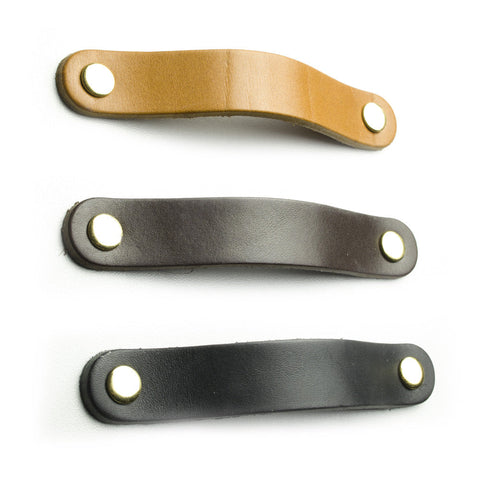
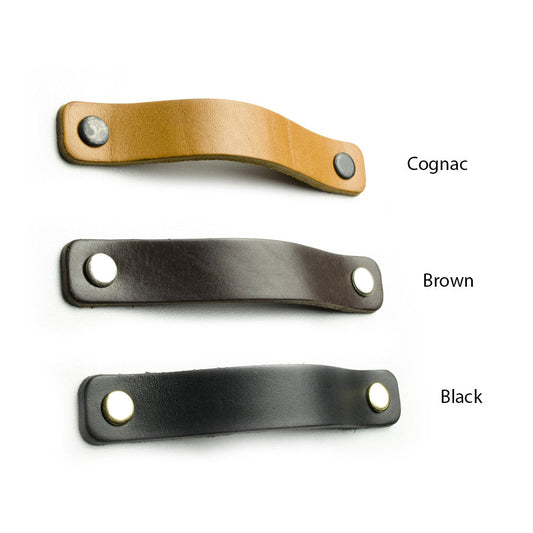
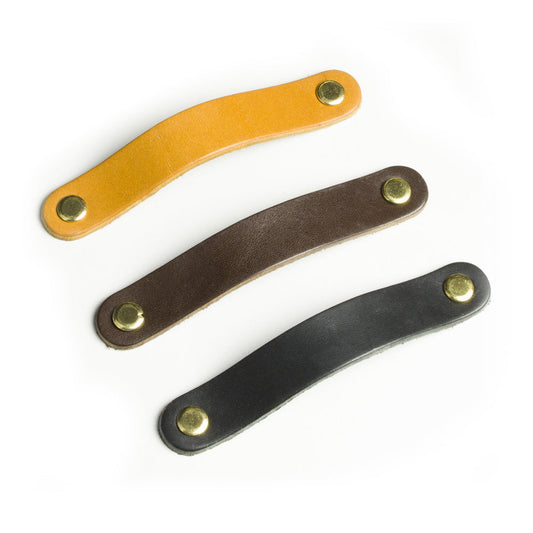
Leather handle rectangular 96mm - 160mmRegular price $9.80Unit price / perRegular priceSale price $9.80
-
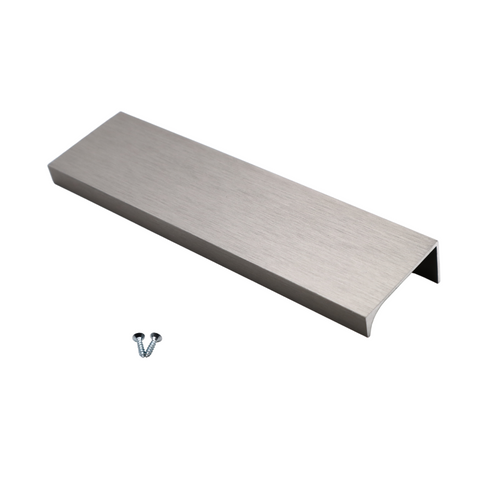
Edge Grip Profile Handle, Brushed Steel, HC 1-1/4, 3-3/4, 5-1/16 inchRegular price From $2.74Unit price / perRegular priceSale price From $2.74
-
3.75 Inch Drawer Pull 96mm U098 - Brushed SteelRegular price $2.60Unit price / perRegular priceSale price $2.60
-
5 Inch Cabinet Pull (128mm) U098 - Brushed SteelRegular price $2.99Unit price / perRegular priceSale price $2.99
-
Cabinet Handle 160mm U098 - Brushed Stainless SteelRegular price $3.92Unit price / perRegular priceSale price $3.92
-
TECHNO furniture handle 6-5/16 inch - Brushed SteelRegular price $6.65Unit price / perRegular priceSale price $6.65
-
Edge Grip Round Profile Handle 5-1/16 inch (5-13/16 inch total length) - Brushed SteelRegular price $5.99Unit price / perRegular priceSale price $5.99
-
Pull handle brushed steel - 7-7/8 inchRegular price $1.78Unit price / perRegular priceSale price $1.78
-
Pull handle brushed steel - 13-3/4 inchRegular price $2.05Unit price / perRegular priceSale price $2.05
-
Pull handle brushed steel - 17-11/16 inchRegular price $2.23Unit price / perRegular priceSale price $2.23
-
Pull handle brushed steel - 19-11/16 inchRegular price $2.30Unit price / perRegular priceSale price $2.30
-
Pull handle brushed steel - 21-5/8 inchRegular price $2.39Unit price / perRegular priceSale price $2.39
-
Pull handle brushed steel - 25-9/16 inchRegular price $2.56Unit price / perRegular priceSale price $2.56
-
Pull handle brushed steel - 27-3/8 inchRegular price $2.62Unit price / perRegular priceSale price $2.62
-
Edge Grip UFO Profile Handle 5-1/16 inch (5-13/16 inch total length) - Brushed SteelRegular price $6.42Unit price / perRegular priceSale price $6.42
-
Pull handle brushed steel - 15-3/4 inchRegular price $2.14Unit price / perRegular priceSale price $2.14
-
Pull handle brushed steel - 23-5/8 inchRegular price $2.47Unit price / perRegular priceSale price $2.47
-
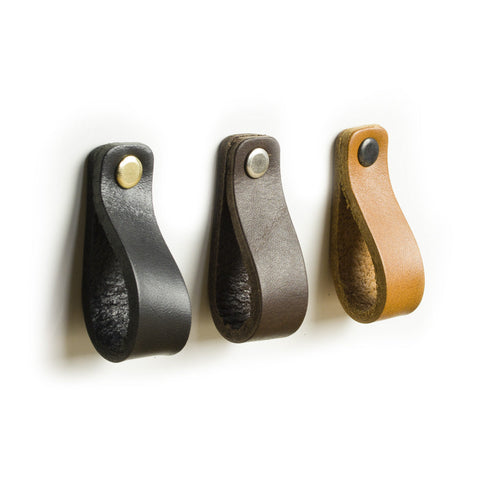
Leather handle rounded 96mm - 128mmRegular price $9.80Unit price / perRegular priceSale price $9.80
-
Pull handle brushed steel - 9-13/16 inchRegular price $1.98Unit price / perRegular priceSale price $1.98
-
Stainless Steel Style Bar Pull - 5-1/16 inch (128 mm) (7-3/8 inch / 188 mm Overall Length) - Matte BlackRegular price $2.28Unit price / perRegular priceSale price $2.28
-
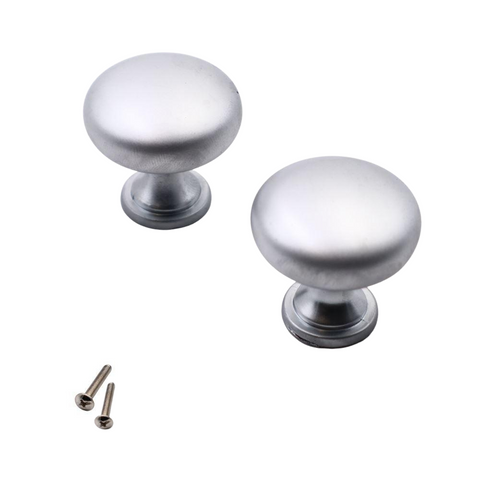
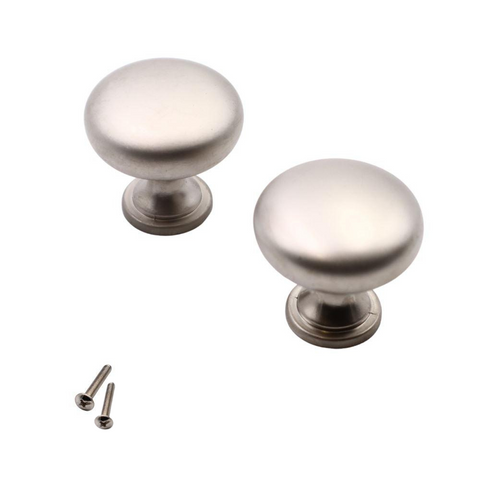
Round cabinet knob - Brushed SteelRegular price $2.98Unit price / perRegular priceSale price $2.98




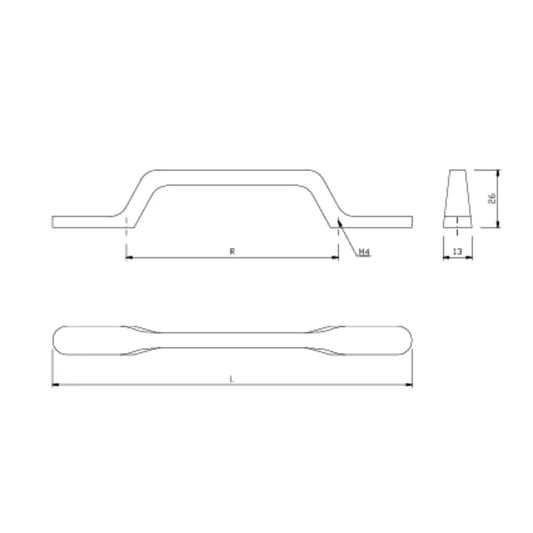

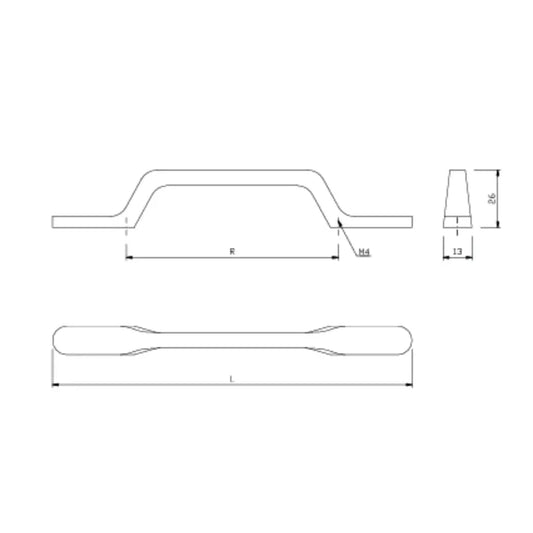

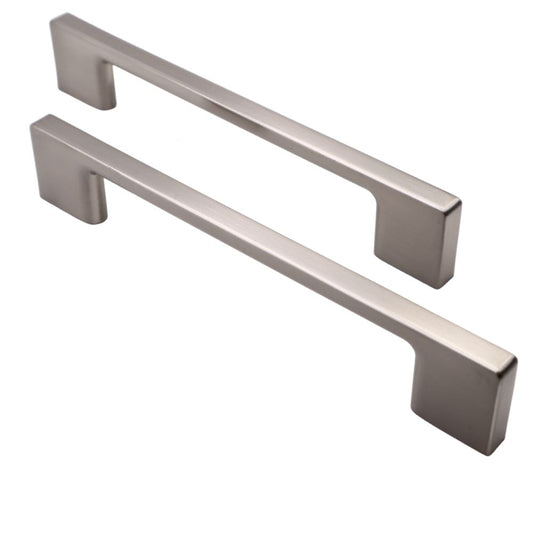

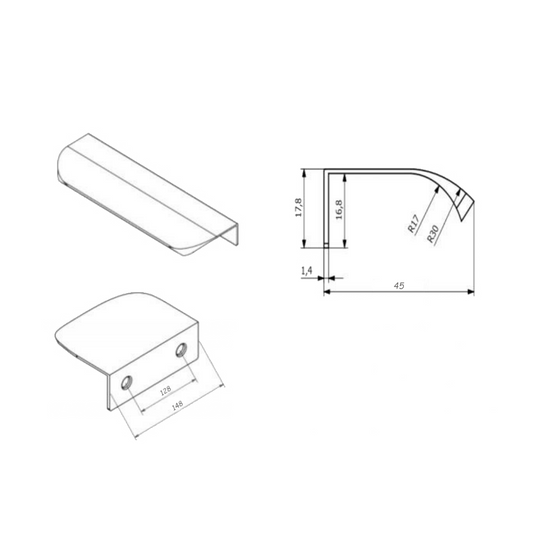

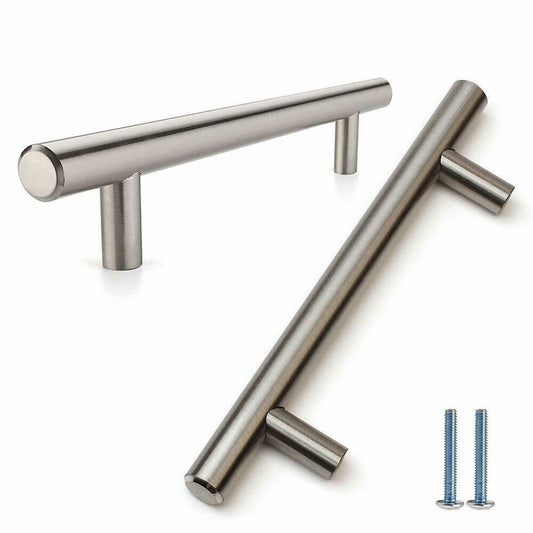

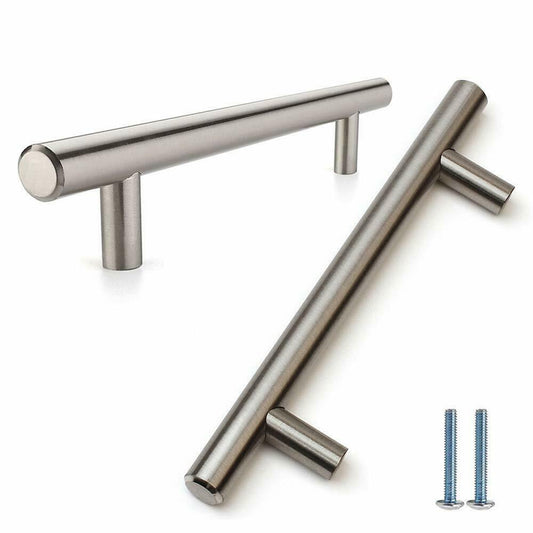

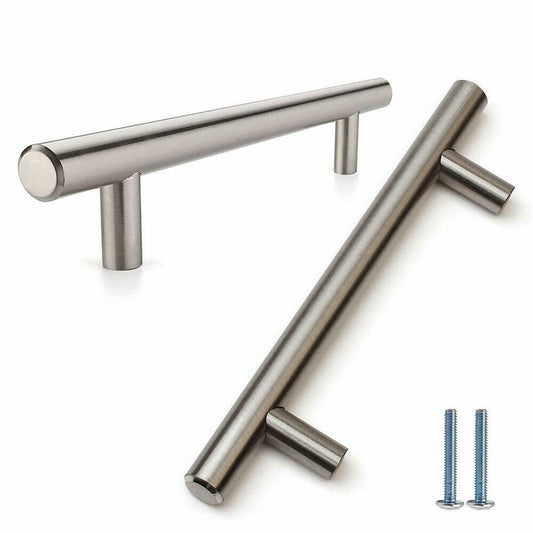

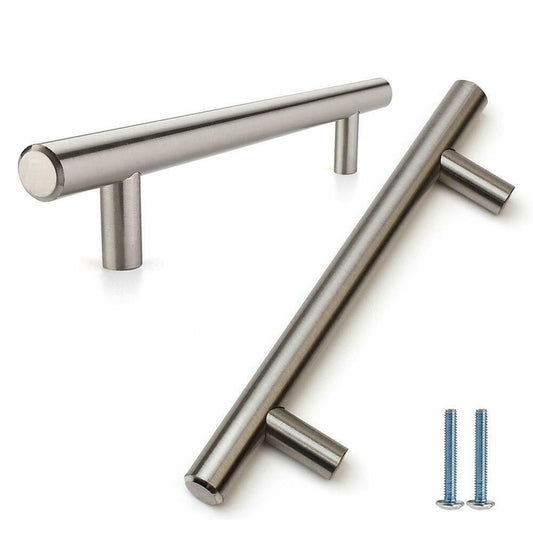

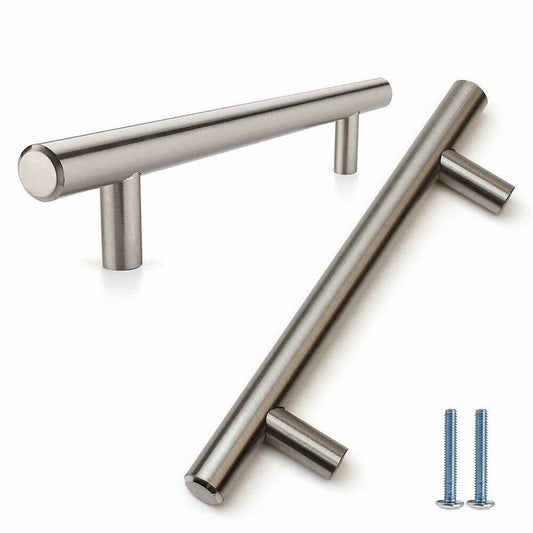

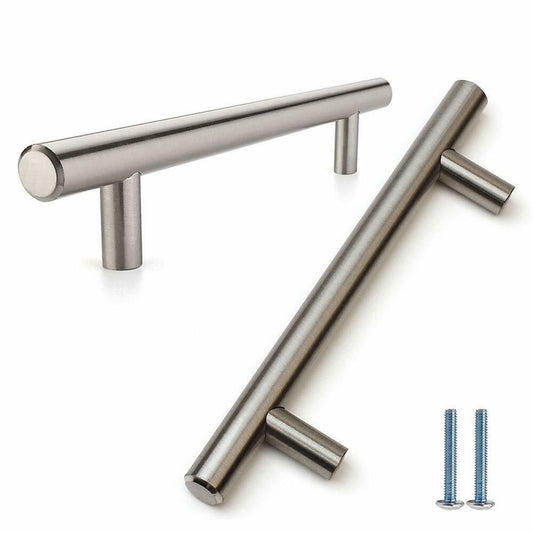

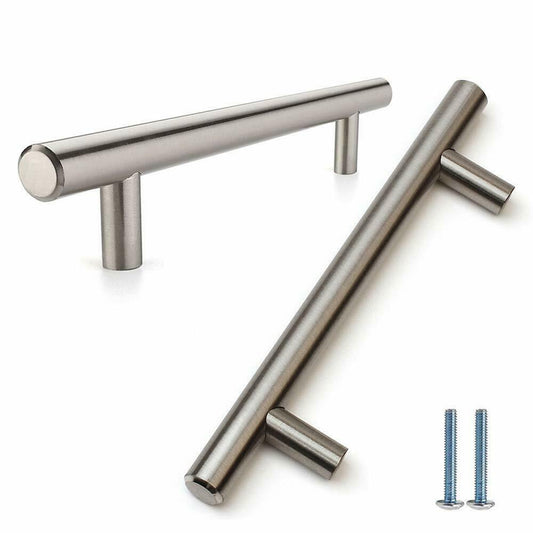


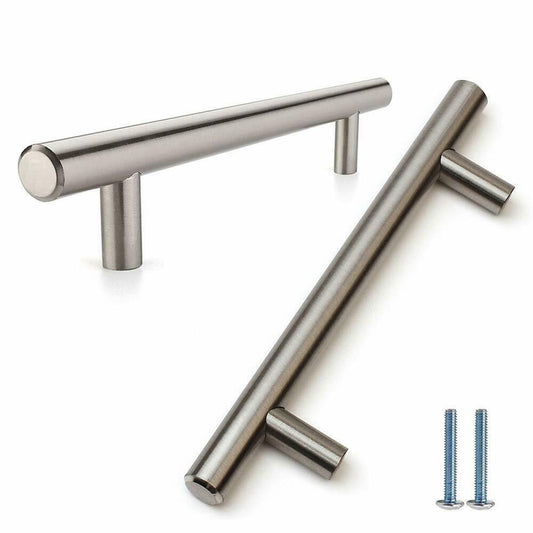

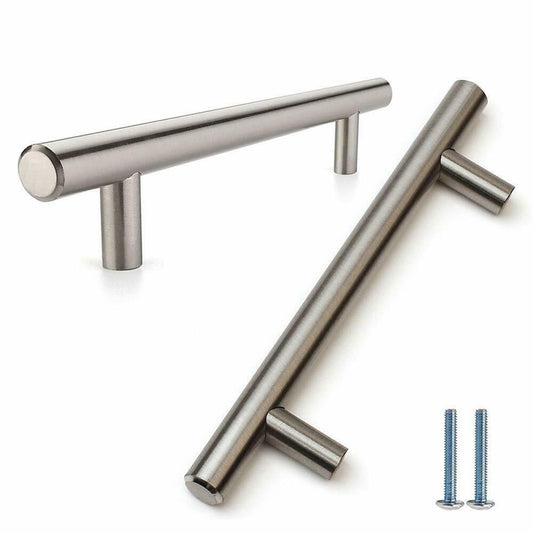


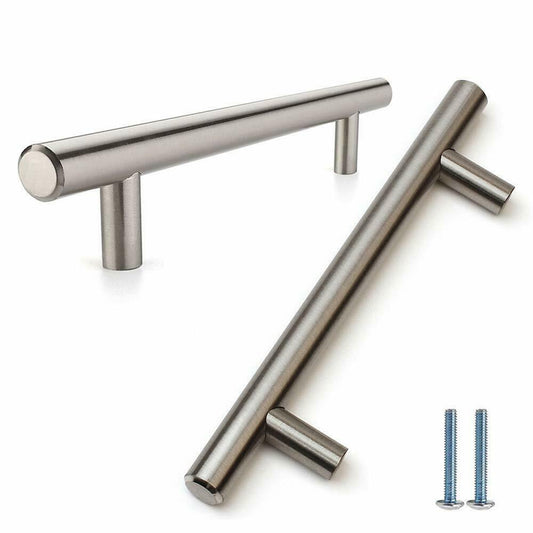

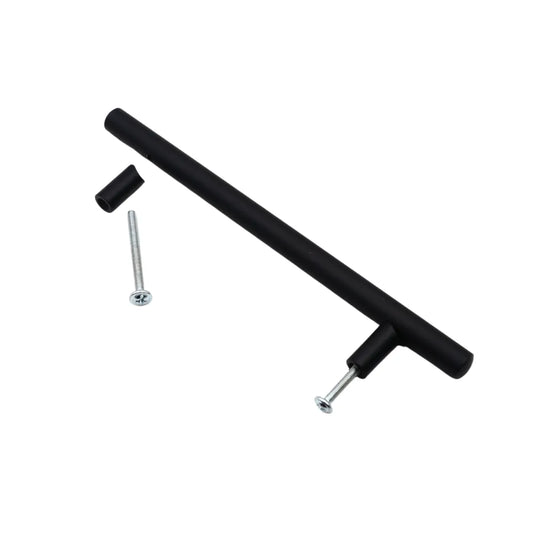

Brushed nickel cabinet pullsand brushed steel handles are essential mechanical hardware designed for cabinet doors, drawers, and flap doors. Their metal surfaces feature a fine, directional linear texture created through an abrasive grinding process. This category includes a wide range of engineered designs built for professional cabinetmaking, interior fit-outs, and custom kitchen installations. Beyond aesthetics, the brushed surface finish serves a vital functional purpose: like a micro-textured field, it diffuses incoming light, making the surface resistant to visible fingerprints, micro-scratches, and daily wear and tear.
Unlike high-gloss hardware, brushed steel cabinet handles offer a refined, glare-free matte look and tactile feel. Manufactured primarily from high-tensile carbon steel or stainless steel alloys, these pulls deliver exceptional structural strength. This mechanical integrity is crucial for heavy pull-out storage, such as wide pot drawers.
Technical Styles and Styles of Brushed Nickel Cabinet Pulls
Selecting the right hardware design depends on cabinet construction, intended tensile loads, and required grip clearance. This category features several standardized styles tailored to professional cabinetry requirements.
Bar Pulls
The classic bar pull is a staple amongstainless steel cabinet pulls. It features a cylindrical grip bar mounted on two perpendicular posts containing internal threads for mounting screws. The ends of the bar extend beyond the mounting posts. These overhangs must be factored into panel planning to prevent doors from colliding on corner cabinets. A popular choice for compact fronts is theStainless Steel Bar Pull - 3-3/4 in (96 mm) center-to-center / 5-7/8 in (150 mm) length. Longer versions are used on wide drawers to distribute pulling force evenly across the cabinet panel.
Edge Pulls and Profile Handles
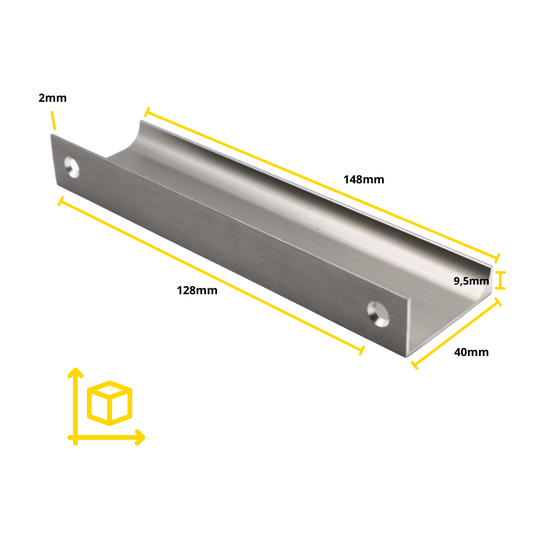
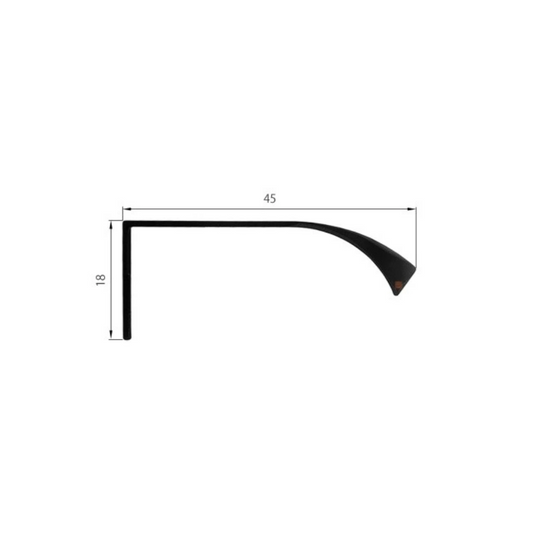
Edge pulls, often referred to assteel finger pulls, are mounted directly onto the top or side edge of the cabinet door and secured from the back rather than screwed into the front face. This requires precise calculation of thereveal gapbetween doors or counter surfaces. The metal flange extending over the edge typically has a material thickness of 1/16 in to 5/64 in (1.5 mm to 2.0 mm). This dimension must be added to the standard reveal gap (usually 1/8 in to 5/32 in (3.0 mm to 4.0 mm)) or deducted during door fabrication to ensure smooth operation. A common hardware choice for modern handle-free designs is theEdge Pull Profile Handle 1-1/4 in (32 mm) center-to-center / 2-1/16 in (52 mm) total length - Brushed Stainless Steel.
Techno Handles and D-Pulls
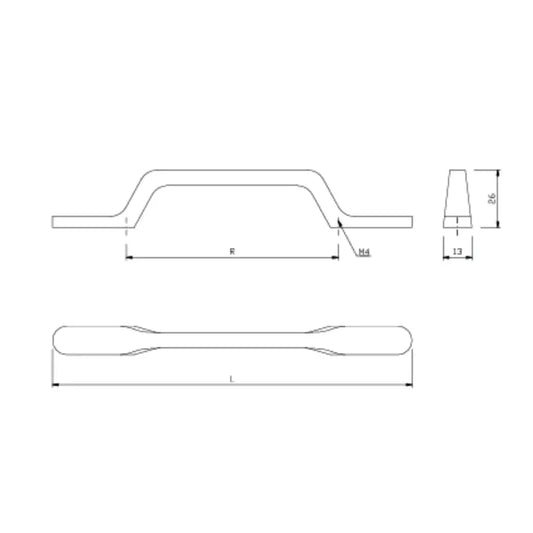
D-pulls are formed from a continuous piece of material, typically in a U-shape or D-shape. Unlike bar pulls, they have no lateral overhangs; the overall length closely matches the hole spacing plus the material thickness of the legs. Steel D-pulls provide an enclosed grip area that prevents clothing or cords from catching. A standard technical choice for versatile application is theTECHNO Cabinet Handle 5-1/16 in (128 mm) - Brushed Steel.
Cabinet Knobs
For small drawers, pull-out spice racks, or lightweight cabinet doors, a single mounting point is often sufficient. Acabinet knobrequires only a single borehole and concentrates pulling force at a single point. However, for cabinet doors or drawers wider than 15-3/4 in (400 mm), two-point handles are recommended to prevent drawer binding or hinge twisting.
The 32 mm System and Center-to-Center Hole Spacing
The most important technical measurement when selecting brushed nickel cabinet pulls is thecenter-to-center (C-to-C) distance. This value indicates the exact distance between the centers of the two threaded mounting holes in millimeters.
In modern cabinet manufacturing, nearly all hardware layout relies on the32 mm system. This standard dictates that hole spacing is always a multiple of 32 mm, enabling automated line drilling and ensuring compatibility across hardware manufacturers.
Standard center-to-center hole spacings for brushed nickel cabinet pulls include:
- 3-3/4 in (96 mm) (3 x 32 mm)
- 5-1/16 in (128 mm) (4 x 32 mm) – see128 mm Cabinet Pulls
- 6-5/16 in (160 mm) (5 x 32 mm) – see160 mm Cabinet Pulls
- 7-9/16 in (192 mm) (6 x 32 mm) – see192 mm Cabinet Pulls
- 10-1/16 in (256 mm) (8 x 32 mm)
- 12-5/8 in (320 mm) (10 x 32 mm)
When ordering, strictly distinguish between center-to-center hole spacing and overalltotal length. A bar pull with a 5-1/16 in (128 mm) center-to-center dimension may have an overall length of approximately 7-3/8 in to 7-7/8 in (188 mm to 200 mm) due to end extensions. For installation and drilling, only the center-to-center measurement matters.
Installation and Mounting Hardware
Proper installation of cabinet pulls requires precision to prevent tear-out in substrate materials (particle board, MDF, or solid wood) and ensure a durable connection.
Screws and Threads
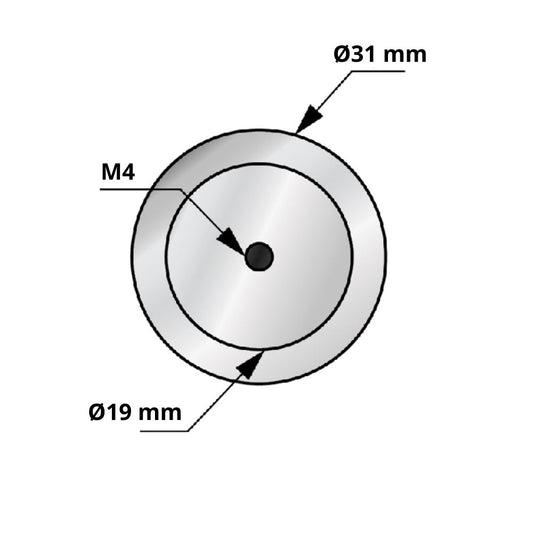
Standard mounting posts are engineered with anM4 internal thread(metric ISO thread, 4 mm diameter). Fastening is completed from the rear of the cabinet front using M4 machine screws, typically with a Phillips or combination drive head.
The required screw length is calculated by adding the cabinet front thickness to the thread engagement depth in the pull (typically 3/16 in to 1/4 in (5 mm to 6 mm)).
- For standard 5/8 in (16 mm) particle board, use a 7/8 in (22 mm) screw length.
- For a 3/4 in (19 mm) panel (common with MDF or painted doors), use a 1 in (25 mm) screw length.
Drilling the Cabinet Panels
Use a sharp brad-point wood drill bit for clean holes. The drill bit diameter should be3/16 in (4.5 mm to 5.0 mm). This slight clearance of 1/64 in to 3/64 in (0.5 mm to 1.0 mm) over the M4 screw thread gives installer tolerance to align the pull perfectly level before final tightening.
To prevent blowout of laminate or lacquer coatings on the back surface during drilling, always use a solidbacking block. Clamp a scrap piece of wood tightly against the rear of the door so the drill bit exits into the scrap. Alternatively, drill from the front until the center point barely breaks through the back, then complete the hole from the rear.
For repeatable accuracy or large production runs, use an alignmentdrilling template. This ensures consistent edge distance (typically 1-9/16 in to 2 in (40 mm to 50 mm)) across all doors.
Application Areas in Cabinetry
The material properties of brushed steel and nickel make these pulls ideal for heavy-use applications.
Kitchen Installations
Kitchen hardware endures heavy exposure to moisture, grease, and high pulling forces.Stainless steel kitchen cabinet pullsare the industry standard here. A fully loaded deep drawer storing pots and pans can easily weigh 66 lbs to 100 lbs (30 kg to 45 kg) including the slide system weight. The pull must transfer this load cleanly without flexing. The brushed texture forgives wet or flour-dusted hands far better than polished chrome or smooth paintedmetal cabinet pulls. Furthermore, the cool metallic tone seamlessly coordinates with stainless sinks, faucets, and appliances. Explore additional options in ourKitchen Cabinet Pullscollection.
Bathroom Vanities
Like kitchens, bathrooms present high humidity conditions that can trigger rust on lower-grade hardware.Stainless steel bathroom cabinet pullsfeature corrosion-resistant alloys that naturally protect against oxidation. Proper room ventilation is recommended, as fine moisture droplets can settle into the brushed grain.
Living Areas and Bedrooms
Living room and bedroom furniture frequently featuresmodern cabinet pullsto establish crisp, architectural lines. Long bar pulls (ranging from 15-3/4 in to 31-1/2 in (400 mm to 800 mm)) on tall wardrobe doors function as bold design elements that accentuate vertical lines. Against dark cabinetry (such as charcoal or matte black), brushed steel offers a striking technical contrast, while blending softly with light wood tones.
Replacement and Retrofitting
Upgrading existing hardware—such as replacing oldIKEA stainless steel pulls—is a common retrofit task. The key step is accurately measuring the existing center-to-center distance. Once the old pull is removed, measure from the center of the left screw hole to the center of the right screw hole. If this measurement equals 6-5/16 in (160 mm), any 160 mm pull in this category can be installed directly without drilling new holes or patching old ones.
Care and Maintenance of Brushed Finishes
While brushed metal is highly durable, its microscopic texture requires proper care to preserve its clean matte look long-term.
Clean hardware using a soft, slightly damp microfiber cloth. For greasy buildup (especially in kitchens), add a drop of mild dish soap.Crucial rule:Never wipe across the grain. Always wipe in the direction of the brushed grain (longitudinally along the length of the pull).
Harsh chemical cleaners containing chlorine, acids, or bleach can damage the passive protective layer of the metal, leading to discoloration. Abrasive scouring pads or steel wool must be avoided, as they destroy the factory brush pattern and create uneven, shiny scratches. For long-term maintenance, apply a specialized stainless steel care spray to leave a thin, protective dirt-repellent barrier inside the brushed micro-grooves.
Frequently Asked Questions (FAQ)
How do I correctly measure the center-to-center (C-to-C) distance on my current cabinet pulls?Measure from the exact center of one mounting hole to the center of the second hole. Use a caliper or precise tape measure. Standard measurements usually align with multiples of 32 mm (such as 3-3/4 in (96 mm), 5-1/16 in (128 mm), or 6-5/16 in (160 mm)).
Which drill bit size should I use to install cabinet pulls?Use a brad-point wood drill bit with a diameter of 3/16 in (4.5 mm to 5.0 mm). This size provides slight clearance over standard M4 screws, allowing minor alignment adjustments before fully tightening.
Why won't the M4 screw engage the threads inside the handle?The screw is likely too short. The screw must pass through the full door panel thickness and engage at least 3/16 in (5 mm) into the handle's internal threads. Use 7/8 in (22 mm) screws for 5/8 in (16 mm) door panels, and 1 in (25 mm) screws for 3/4 in (19 mm) door panels.
What is the difference between edge pulls and standard D-pulls?D-pulls and bar pulls pass through the front face of the door and sit raised on the front panel. Edge pulls (profile handles) slide onto the top or side edge of the door and mount from the back, protruding minimally for a sleek, near-handleless appearance.
Can these pulls replace old IKEA hardware?Yes, provided the center-to-center hole spacing matches. IKEA cabinet systems (such as Metod or Pax) utilize the standard 32 mm system layout. Common spacing dimensions include 5-1/16 in (128 mm) and 6-5/16 in (160 mm).
Do brushed nickel cabinet pulls rust in bathroom environments?High-grade alloys used for interior hardware are rust-resistant under normal conditions. In high-humidity areas with inadequate ventilation, light surface spotting may appear over time; this can be easily wiped away along the grain using a soft care cloth.
What does "overall length" mean compared to center-to-center distance?Overall length refers to the total outside measurement of the handle from end to end. On bar pulls, the ends extend beyond the screw holes. A pull with a 5-1/16 in (128 mm) center-to-center measurement may have an overall length of 7-3/8 in (188 mm). Only the center-to-center distance matters for drilling holes.
Related Cabinetry Hardware Categories
Complete your design concept by exploring alternative finishes and matching architectural hardware:
- Chrome Cabinet Handles– High-gloss polished finish for bright interiors.
- Anthracite Cabinet Pulls– Dark matte hardware delivering modern contrast.
- Brushed Steel Desk Grommets– Matching wire management accessories for desks and media consoles.
Related Categories
- Matte Black Cabinet Pulls
- Matte Gold Cabinet Pulls
- Square Stainless Steel Pulls
- Round Cabinet Handles
- White Cabinet Pulls