Soft Close Cabinet Hinges

9 products

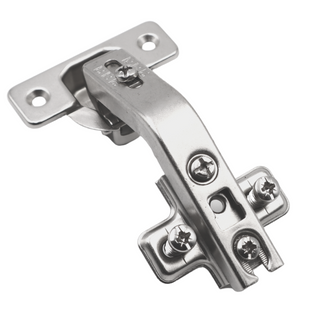
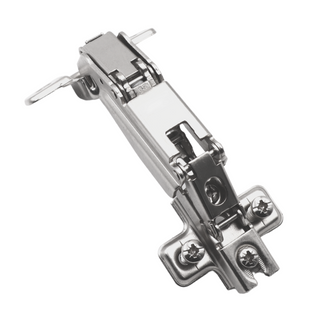
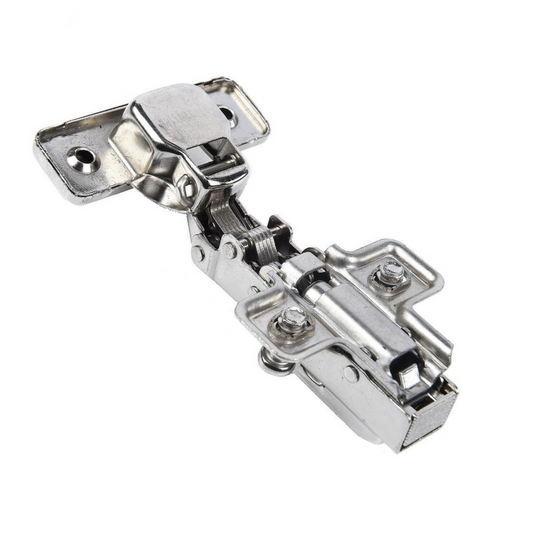
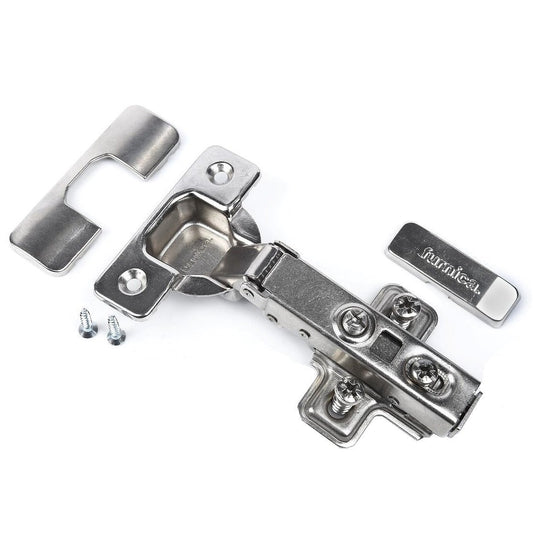
Soft close cabinet hinges and concealed dampening hingesare concealed furniture fittings made of nickel-plated steel, equipped with an integrated hydraulic cylinder to absorb the kinetic energy of a slamming cabinet door and guide it silently and smoothly into its closed final position.

In modern cabinetry and professional interior woodworking, thesoft close cabinet hingeis the absolute industry standard. Whether building new cabinet carcasses or helping installers retrofitting existing cabinets with a soft-close mechanism, this technology protects cabinet material while preventing hard impacts of MDF, particle board, or solid wood door fronts against the cabinet face edge.

The Mechanics Behind Soft Close Cabinet Hinges

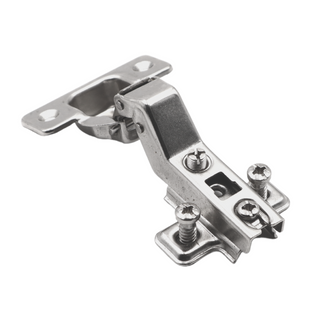
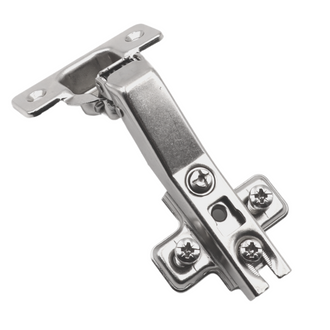
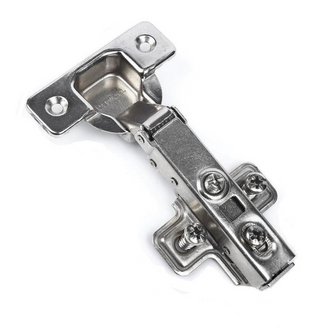
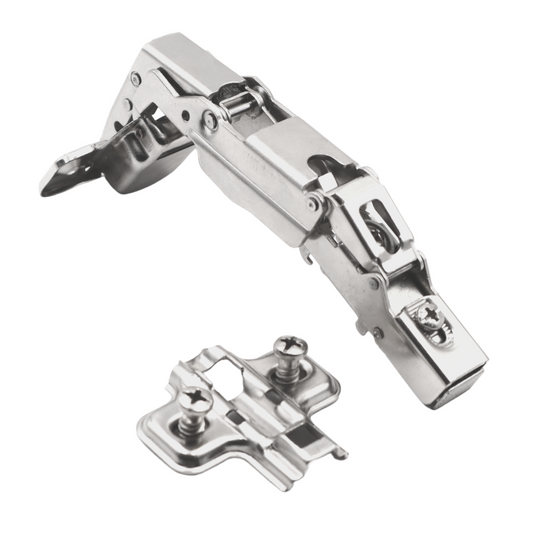
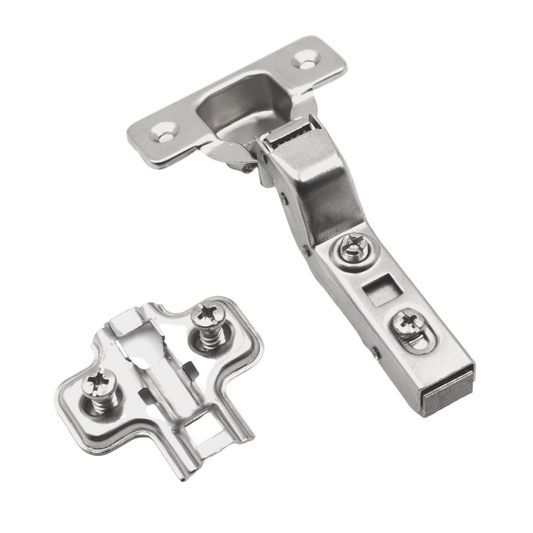
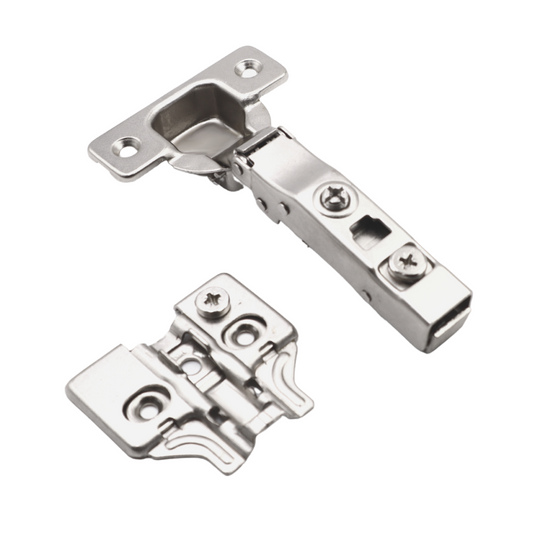
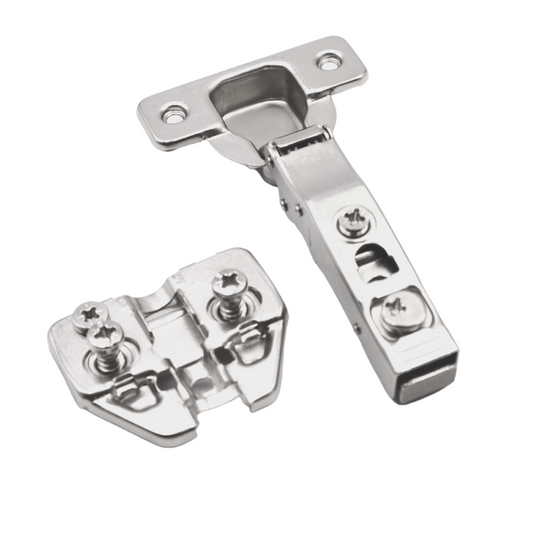
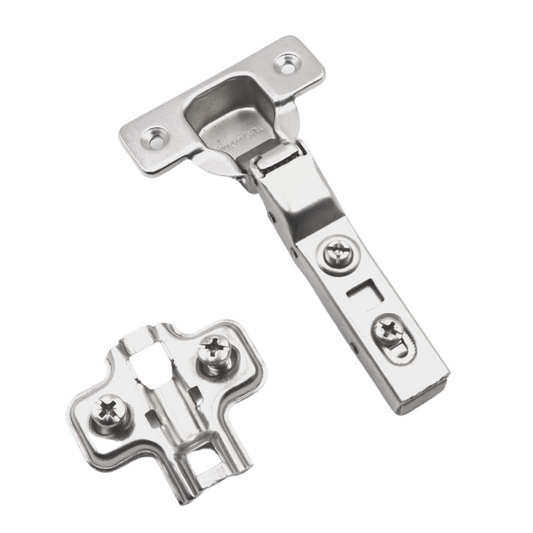
A classic concealed European hinge consists of the hinge cup mortised into the door front, the hinge arm, and the mounting plate (cross plate) fastened to the inside of the cabinet body. In asoft close cabinet hinge, the damper unit is typically housed invisibly inside the hinge cup or integrated directly into the hinge arm.

The hydraulic cylinder operates much like a shock absorber on a heavy vehicle: it provides calculated hydraulic resistance against the momentum of the closing door. As soon as the door reaches a closing angle of approximately 20° to 30°, the mechanism engages. Fluid inside the cylinder is forced through a tiny valve. The harder the door is thrown shut, the higher the hydraulic resistance. This guarantees a linear, gentle closure regardless of the door front's weight.

Choosing the Right Door Overlay Type

Properly defining the overlay type is essential for seamless cabinet installation. The crank (offset) of the hinge arm determines how the closed door aligns with the cabinet frame or carcass. There are three basic hinge mounting styles:

1. Full Overlay

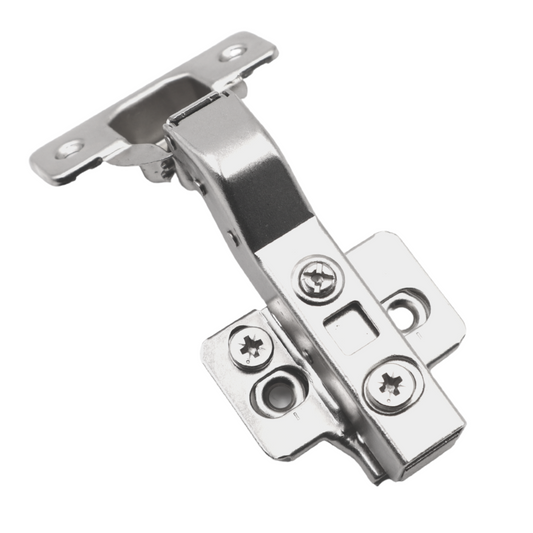
With a full overlay, the door covers almost the entire edge of the side panel, leaving only a minimal reveal gap to ensure smooth opening. The arm on these hinges is straight (0 mm offset). This style is used for standalone cabinets or on the outer ends of multi-unit runs. A typical component for this application is the110° Soft Close Cabinet Hinge, H0 Mounting Plate with Euro Screws, Full Overlay.

2. Half Overlay (Dual / Twin Application)

When two doors attach to a single center partition wall, they must share the edge of a 5/8 in (16 mm) or 3/4 in (19 mm) particle board panel. The hinge requires a distinct arm crank (typically 3/8 in (9.5 mm) offset) so each door overlays only half the side wall, leaving a center reveal gap. Cabinetmakers choose the110° Soft Close Cabinet Hinge, H0 Mounting Plate with Euro Screws, Half Overlayfor these installations.

3. Inset Door

With inset construction, the door does not sit on top of the cabinet box wall; instead, it rests completely flush within the interior opening of the cabinet, leaving the edge profile fully visible. The hinge arm features a pronounced crank offset (usually 5/8 in (16 mm) or more). For flush-door designs, the110° Soft Close Cabinet Hinge, H0 Mounting Plate with Euro Screws, Insetis recommended.

Opening Angle: From Standard to Wide-Angle

The opening angle defines the maximum arc radius a cabinet door can swing open. Selecting the right angle depends on room space and interior cabinet hardware.

  • 110° Standard Angle:The go-to choice for classic kitchen cabinets, wardrobes, and credenzas. A 110° swing allows comfortable access to shelving. Explore our full range under110-Degree Soft Close Cabinet Hinges.
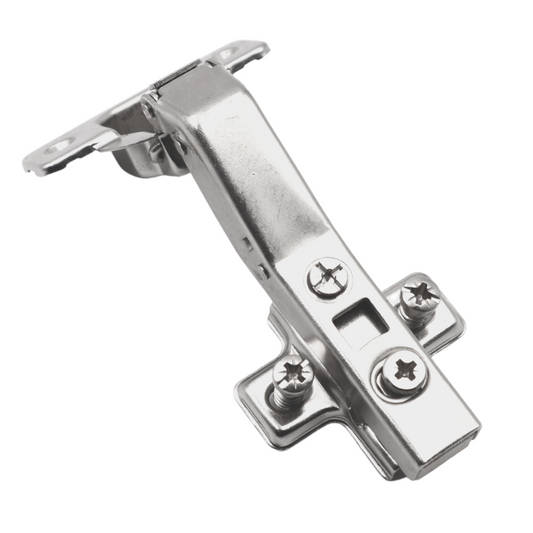
  • 155° to 165° Wide-Angle:When a cabinet features interior pull-out drawers (e.g., on full-extension slides), the door must swing completely clear of the box opening so the drawers don't rub against the inside of the door. These zero-protrusion hinges throw the door far to the side. A rugged example is the165° Soft Close Cabinet Hinge, H2 Mounting Plate with Euro Screws, Full Overlay. View all options in the165-Degree Soft Close Cabinet Hingescollection.
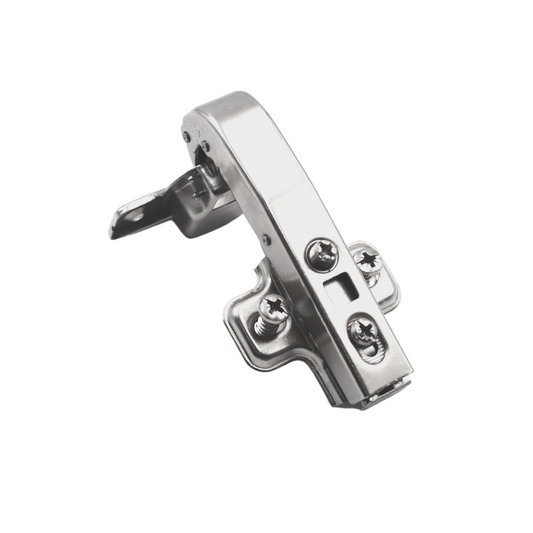
  • Specialty Angles for Corner Cabinets:Kitchen corner units (such as lazy susans) require specialized swing geometry, utilizing angles like 30°, 45°, 90°, or 135°. For angled diagonal fronts, the +45º Soft Close Cabinet Hinge, H2 Mounting Plate with Euro Screws is specifically designed for corner cabinets.

Bore Holes, Cup Diameter, and System 32

Installingsoft close cabinet hingesrelies on strict industry standardization for universal compatibility. The key specification on the door side is thecup diameter. For virtually all modern cabinetry, this is1-3/8 in (35 mm). Mortising holes (typically 7/16 in to 1/2 in (11.5 mm to 12.5 mm) deep) are drilled using a Forstner bit. The hinge cup is inserted and secured via side mounting flanges. Matching hardware can be found under35 mm Soft Close Cabinet Hinges.

On the cabinet side, theSystem 32standardized hole pattern is used. Cruci-form mounting plates are attached directly into pre-drilled pin-hole lines (hole diameter 3/16 in (5 mm), spacing 1-1/4 in (32 mm)).

Mounting Plates: H0 vs. H2

The code designation on mounting plates (frequently H0 or H2) indicates the height elevation distance in millimeters.

  • H0 (0 mm Height):The standard flat mounting plate for cabinet side walls made from 5/8 in (16 mm) or 3/4 in (18 mm) panel materials, keeping the hinge body sitting flush to the cabinet side.
  • H2 (2 mm Height):Elevates the hinge center up by 5/64 in (2 mm). This elevation is often required for thinner side panels or when achieving specific gap dimensions on heavily profiled door fronts.

Many plates come pre-assembled withEuro screws. These thick, blunt-threaded screws grip firmly into 3/16 in (5 mm) system holes, offering high pull-out resistance. Alternatively, face-frame or wood-screw plates use standard wood screws (often #6 x 5/8 in (3.5 x 16 mm) Pozidriv or Torx drive) drilled straight into solid wood.

3D Adjustment: Setting Perfect Door Alignment

A major benefit of high-qualitysoft close cabinet hingesis 3-way post-installation adjustability. Even if the cabinet box is slightly off-level, the door front can be aligned with absolute precision via adjustment screws on the hinge arm. Models like the3D 110° Soft Close Cabinet Hinge, H0 Mounting Plate with Euro Screws, Full Overlayoffer the following adjustment ranges:

  1. Side Adjustment (Overlay adjustment):Turn the front screw on the hinge arm to shift the door left or right (typically +/- 5/64 in (+2 mm / -2 mm)) to equalize the reveal between adjacent doors.
  2. Depth Adjustment:The rear screw on the arm (often an eccentric screw) moves the door toward or away from the cabinet face (typically +1/8 in / -5/64 in (+3 mm / -2 mm)). This ensures the door sits flush when closed and allows the soft-close damper to engage without binding.
  3. Height Adjustment:Made directly on the mounting plate. Loosening the mounting screws (or turning an eccentric screw on 3D plates) allows continuous vertical adjustment up or down (typically +/- 5/64 in (+2 mm / -2 mm)).

For top-tier longevity and tuning precision, many woodworkers choose brand-name hardware like the110° Soft Close Cabinet Hinge - BLUM.

Practical Installation Tips

How Many Soft Close Cabinet Hinges Per Door?

The required number ofsoft close cabinet hingesdepends directly on the door height and weight. Installing too few hinges will result in door sag and premature wear on the hydraulic dampers.

  • Up to 35 in (900 mm) height (approx. 9 - 13 lbs / 4 - 6 kg):2 hinges.
  • Up to 63 in (1600 mm) height (approx. 18 - 26 lbs / 8 - 12 kg):3 hinges.
  • Up to 79 in (2000 mm) height (approx. 29 - 37 lbs / 13 - 17 kg):4 hinges.
  • Up to 94 in (2400 mm) height (approx. 40 - 48 lbs / 18 - 22 kg):5 hinges.

For extra heavy door materials such as solid oak or thick MDF with glass inserts, always add an extra hinge to distribute the load evenly along the cabinet side.

Soft Close vs. Push-to-Open (Tip-On)

A common mistake in modern kitchen design is attempting to pairsoft close cabinet hingeswith handleless push-to-open latches.These two mechanisms work against each other physically.A soft-close hinge actively pulls the door shut during its final path of motion. A push-to-open latch requires inward spring travel space to activate and must push the door outward freely. For handleless fronts with push latches, you must useun-sprung hinges(without spring catch and without damping). A suitable match is the3D Push-to-Open Unsprung Cabinet Hinge, H0 Mounting Plate with Euro Screws, Full Overlay.

Maintenance and Care

Soft close cabinet hingesare generally maintenance-free. The cylinder is a sealed hydraulic unit. It shouldneverbe oiled or sprayed with silicone lubricants. Lubricants attract sawdust and debris, clogging moving joints and mechanism internals. If a hinge loses dampening force after years of heavy use (e.g., in a high-traffic kitchen), replace the hinge. Thanks to standardized 1-3/8 in (35 mm) cup routing and System 32 hole patterns, a 1-to-1 swap takes only minutes using a standard PZ2 or Phillips screwdriver.

---

Frequently Asked Questions (FAQ) About Soft Close Cabinet Hinges

What does "35 mm hinge cup" mean?The 1-3/8 in (35 mm) dimension refers to the diameter of the round recess bore drilled into the back of the cabinet door. The metal hinge cup sits inside this recess. It is the standard industry size across nearly all major cabinet lines. Smaller specialized doors occasionally use 1 in (26 mm) cups.

Can I upgrade old self-closing hinges to soft close cabinet hinges?Yes, upgrading is straightforward as long as the bore pattern matches. Measure your cup diameter (usually 1-3/8 in (35 mm)) and verify the overlay type (full overlay, half overlay, or inset). If you want to keep existing mounting plates in the cabinet, ensure the new hinge arms fit the snap-on or slide-on attachment pattern of the old plates. However, swapping both the hinge and plate as a set is recommended.

Why is my soft-close door closing too slowly or failing to close completely?This typically happens when the door is misaligned or binding under tension. If the depth adjustment is set too tight against the face frame, the door edge rubs against the cabinet box before the damper finishes its travel. Turn the rear adjustment screw slightly to back the door out about 1/16 in (1 mm to 2 mm) from the cabinet face.

Are Euro screws better than standard wood screws?For System 32 installations (pre-drilled 3/16 in (5 mm) holes), Euro screws are essential. Their wide thread profile and flat end anchor securely inside composite particle board without splitting it. Standard wood screws will fail to grip inside a 3/16 in (5 mm) hole and tear out over time.

How do I deactivate soft-close on small, lightweight doors?On small or light doors (such as small upper cabinets), the combined resistance of two soft close cabinet hinges can make closing overly sluggish. Many premium models feature a small mechanical switch on the hinge cup or arm to turn off damping on one of the hinges. Alternatively, woodworkers install one damped and one standard unsprung hinge from the same series.

Do these hinges work on drawers with soft-close?Concealed cabinet hinges are designed exclusively for swinging doors. If you need soft-closing motion for drawers, you require horizontal drawer slides. Discover appropriate systems in ourSoft Close Drawer Slidescategory.

---

Related Categories and Complementary Cabinet Hardware

To complete your cabinetry project or select technical specifications for custom builds, browse our organized hardware categories:

Frequently Asked Questions

Can I use these soft close cabinet hinges as replacements for IKEA cabinetry?

Yes, our soft close cabinet hinges fit IKEA systems (such as Pax or Faktum) provided the technical dimensions align. Check the cup diameter (typically 1-3/8 in (35 mm)) and hole spacing (often 1-3/4 in or 2-1/16 in (45 mm or 52 mm)). They use standard System 32 dimensions, making replacements simple.

How does the soft-close feature work, and is it adjustable?

The integrated hydraulic damper catches the cabinet door to prevent loud slamming. The dampening unit is built directly inside the hinge mechanism. For optimal performance, use at least two soft close cabinet hinges per door. You can fine-tune door gaps using the built-in 3D adjustments (depth, overlay, height).

Are these hinges compatible with Hettich or Nobilia kitchens?

Yes, our soft close cabinet hinges are compatible with Hettich setups and serve as direct replacements for Nobilia hardware. Verify your measurements: confirm the 1-3/8 in (35 mm) cup diameter and fixing screw centers. Thanks to standard System 32 spacing, they mount into existing cabinet hole patterns.

Which hinge do I need for a door that completely covers the cabinet side edge?

You need a full overlay soft close cabinet hinge. The door front fully covers the front edge of the cabinet box wall (0 mm crank offset). Ensure your hole layout uses 1-1/4 in (32 mm) spacing and a 1-3/8 in (35 mm) cup diameter. For shared middle partition walls, choose half overlay hinges instead.

Are these soft close cabinet hinges suitable as Blum replacements?

Yes, they are ideal replacements for Blum hinges when mounting specifications match. Compare the 1-3/8 in (35 mm) cup diameter and screw spacing on the cup (typically 1-3/4 in (45 mm)). If the System 32 measurements match, you can replace your old hinges with our soft-close models.