
Adjustable Table Legs
Popular Subcategories


-
Square Furniture Leg 27-15/16 inch, Chrome, ZnAl Mounting PlateRegular price $23.77Unit price / perRegular priceSale price $23.77
-
Adjustable Furniture Leg 43-5/16 inch - Steel Mounting Plate - ChromeRegular price $16.67Unit price / perRegular priceSale price $16.67
-
Adjustable Furniture Leg 32-5/16 inch - ChromeRegular price $11.38Unit price / perRegular priceSale price $11.38
-
Adjustable Furniture Leg 32-5/16 inch - ZnAl Mounting Plate - SatinRegular price $15.61Unit price / perRegular priceSale price $15.61
-
Adjustable Furniture Leg 32-5/16 inch - ZnAl Mounting Plate - ChromeRegular price $13.40Unit price / perRegular priceSale price $13.40
-
Adjustable Furniture Leg 27-15/16 inch - ZnAl Mounting Plate - AluminiumRegular price $14.23Unit price / perRegular priceSale price $14.23
-
Adjustable Furniture Leg 43-5/16 inch - ZnAl Mounting Plate - AluminumRegular price $16.38Unit price / perRegular priceSale price $16.38
-
Adjustable Furniture Leg 27-15/16 inch - ChromeRegular price $9.98Unit price / perRegular priceSale price $9.98
-
Adjustable Furniture Leg 43-5/16 inch - ZnAl Mounting Plate - ChromeRegular price $16.67Unit price / perRegular priceSale price $16.67
-
Adjustable Furniture Leg 27-15/16 inch - ZnAl Mounting Plate - ChromeRegular price $11.44Unit price / perRegular priceSale price $11.44
-
Square Furniture Leg 27-15/16 inch, White, ZnAl Mounting PlateRegular price $26.51Unit price / perRegular priceSale price $26.51
-
Square Furniture Leg 27-15/16 inch, Black, ZnAl Mounting PlateRegular price $26.51Unit price / perRegular priceSale price $26.51
-
Square Furniture Leg 27-15/16 inch, Satin, ZnAl Mounting PlateRegular price $26.51Unit price / perRegular priceSale price $26.51
-
Adjustable Furniture Leg 32-5/16 inch - ZnAl Mounting Plate - Brushed NickelRegular price $15.61Unit price / perRegular priceSale price $15.61
-
Adjustable Furniture Leg 32-5/16 inch - ZnAl Mounting Plate - AluminiumRegular price $15.61Unit price / perRegular priceSale price $15.61
-
Adjustable Furniture Leg 32-5/16 inch - ZnAl Mounting Plate - WhiteRegular price $12.50Unit price / perRegular priceSale price $12.50
-
Adjustable Furniture Leg 32-5/16 inch - ZnAl Mounting Plate - BlackRegular price $12.89Unit price / perRegular priceSale price $12.89
-
Adjustable Furniture Leg 32-5/16 inch - SatinRegular price $12.36Unit price / perRegular priceSale price $12.36
-
Adjustable Furniture Leg 32-5/16 inch - Brushed NickelRegular price $12.36Unit price / perRegular priceSale price $12.36
-
Adjustable Furniture Leg 32-5/16 inch - AluminiumRegular price $12.36Unit price / perRegular priceSale price $12.36
-
Adjustable Furniture Leg 27-15/16 inch - ZnAl Mounting Plate - SatinRegular price $14.23Unit price / perRegular priceSale price $14.23

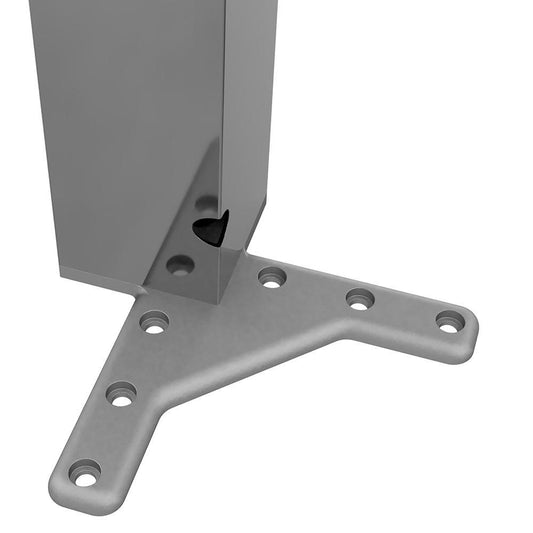

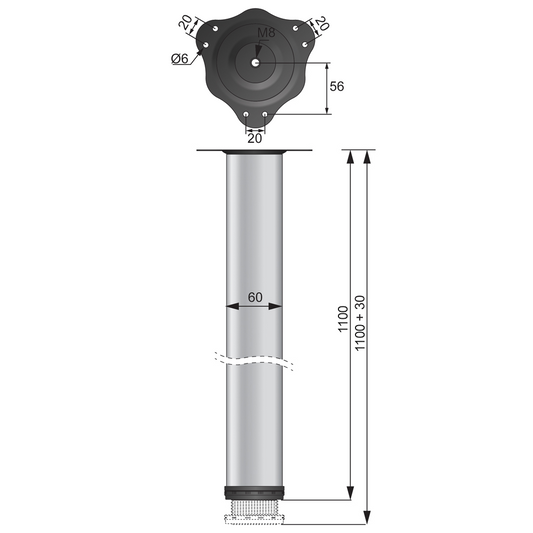

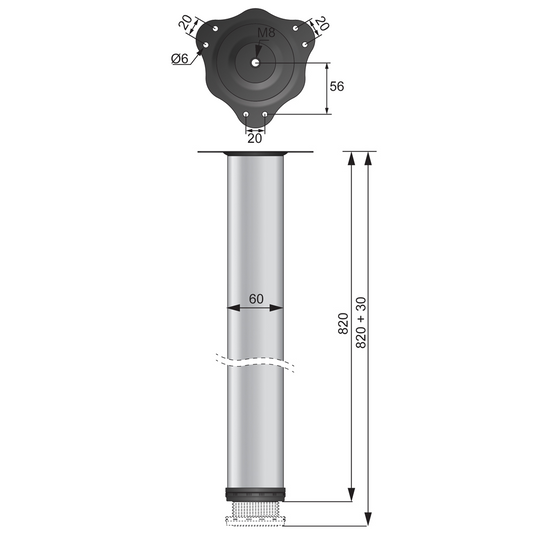

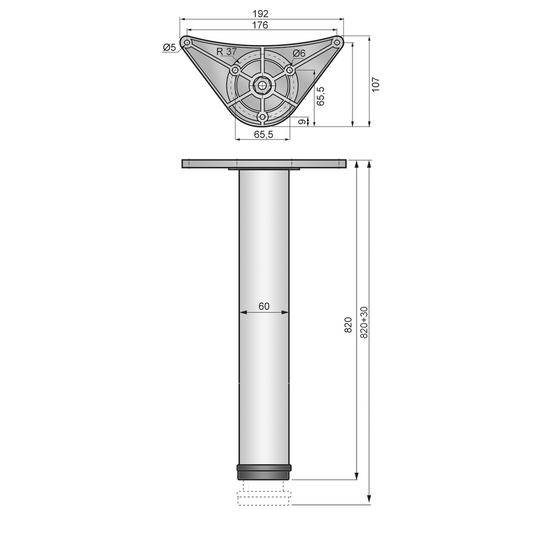

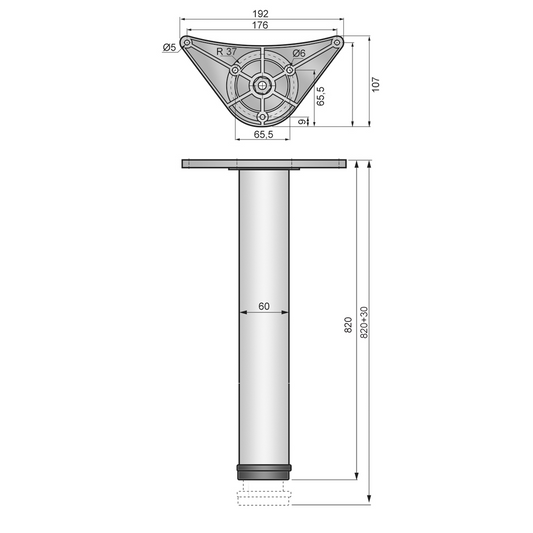

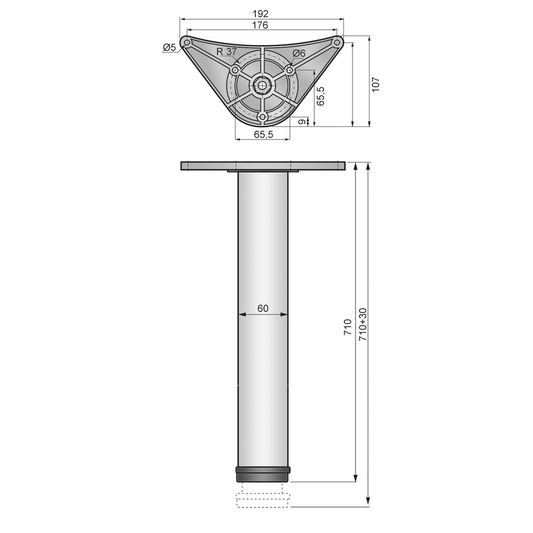

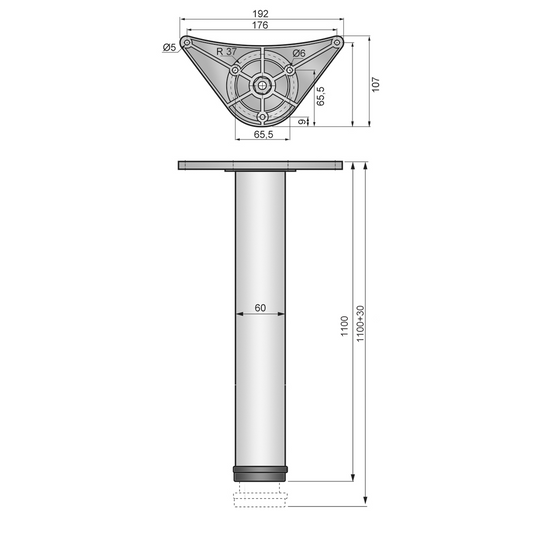

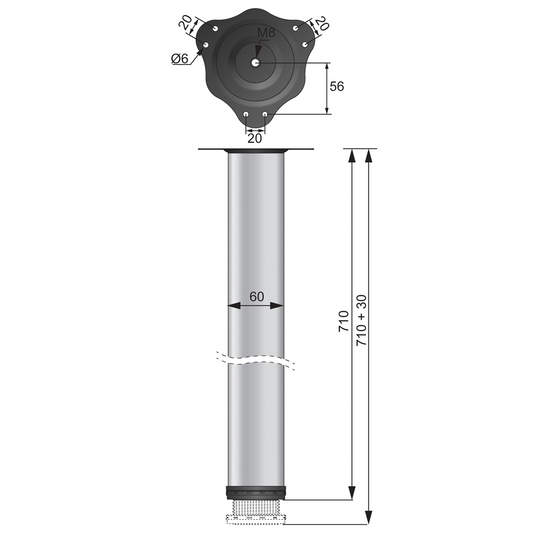

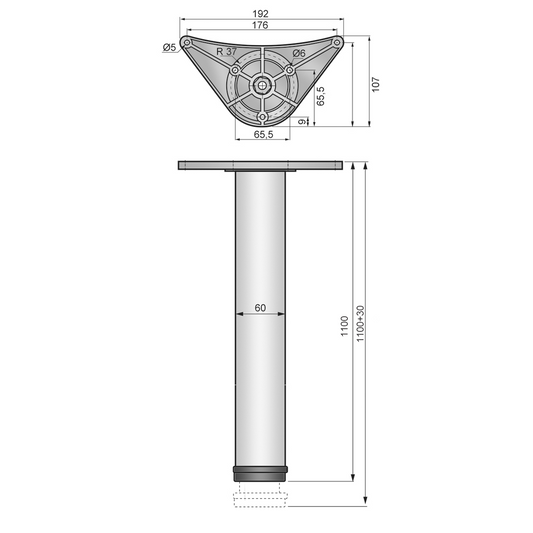

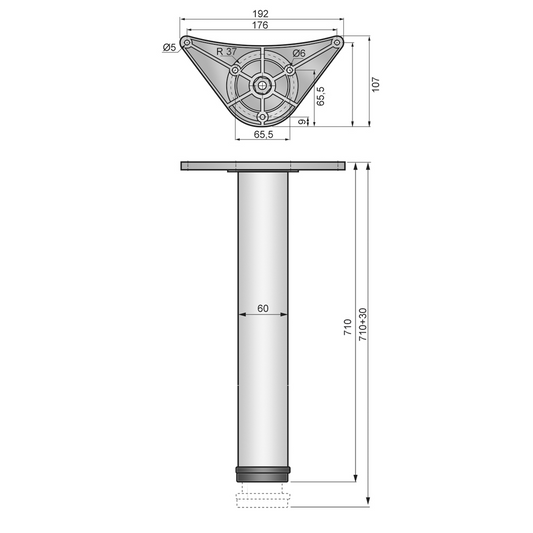



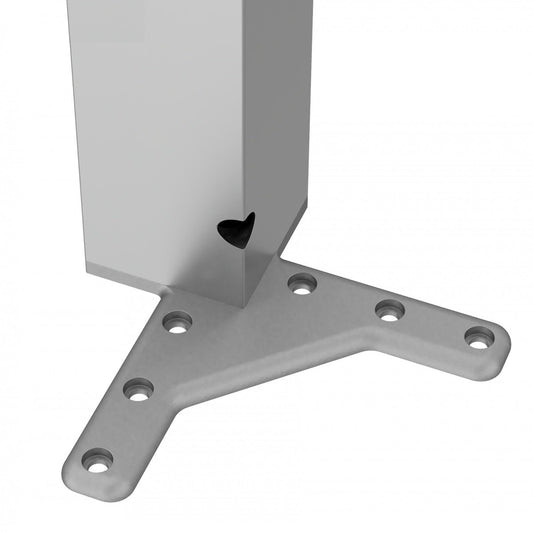

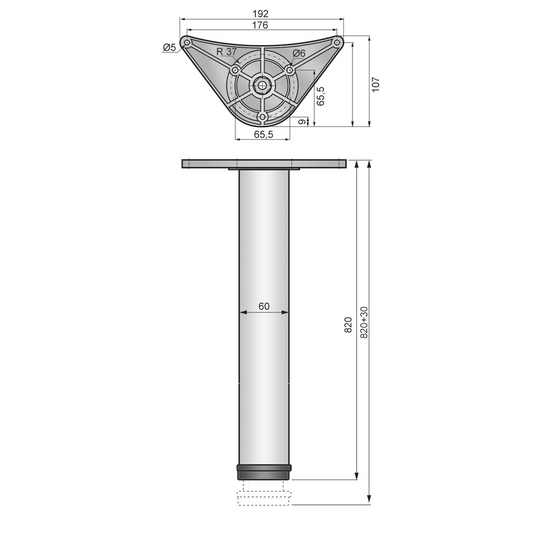

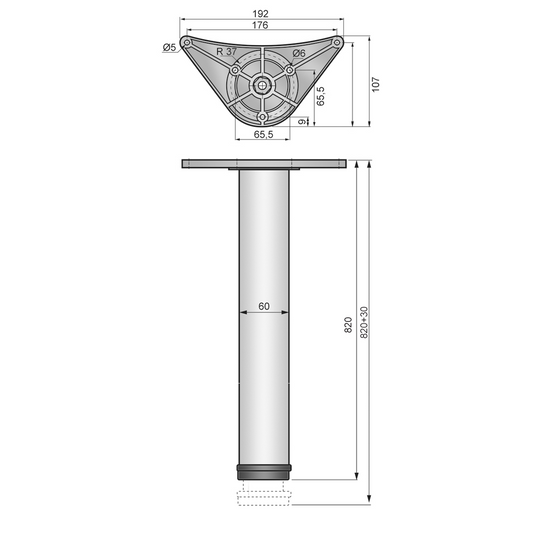

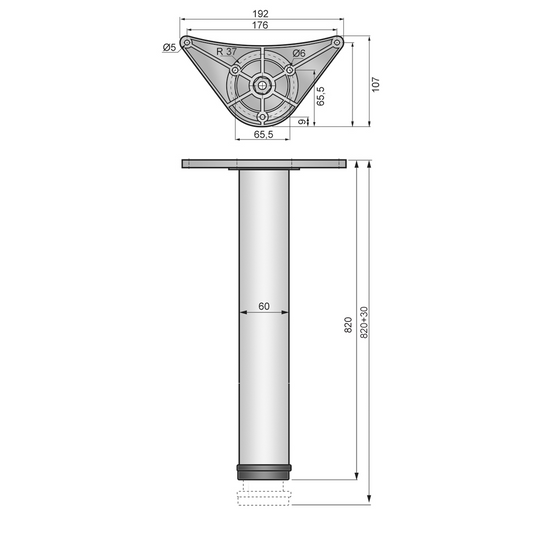

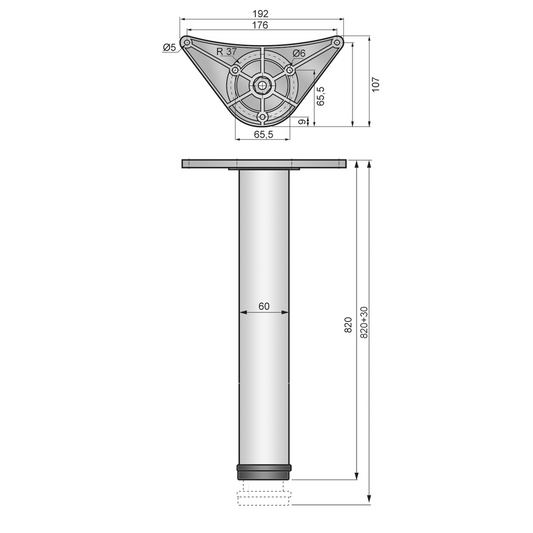

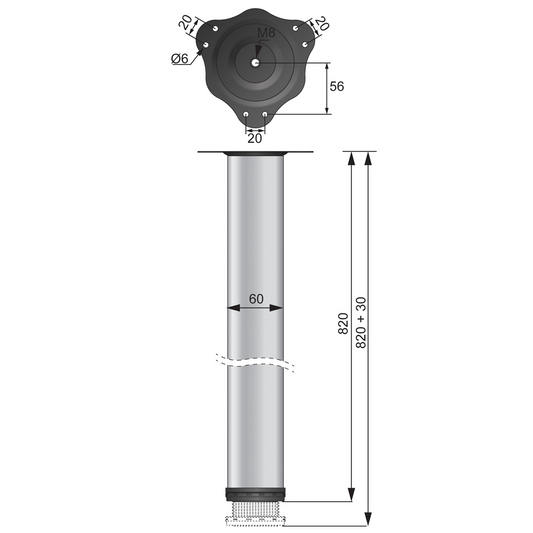

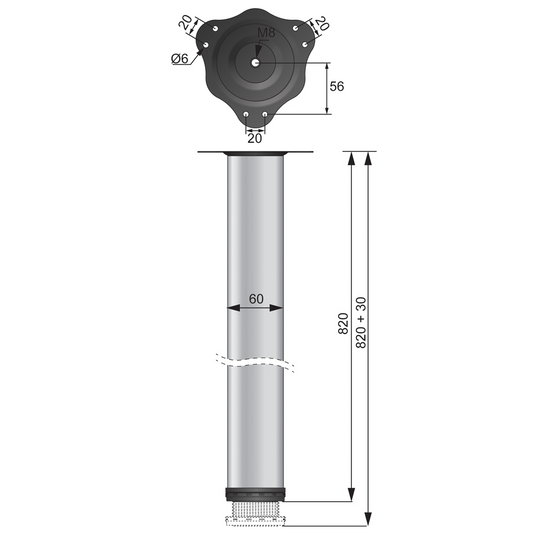

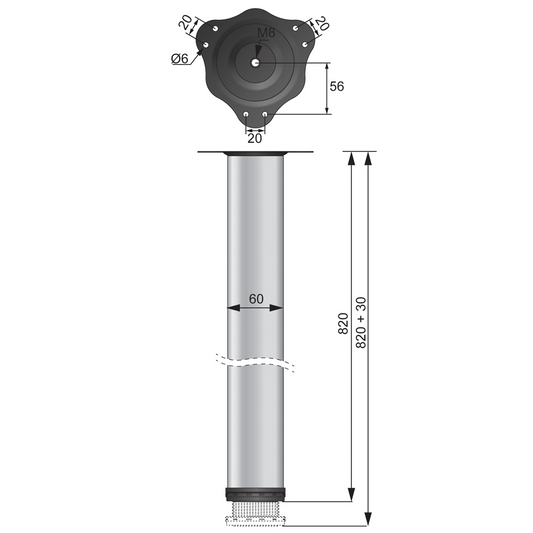

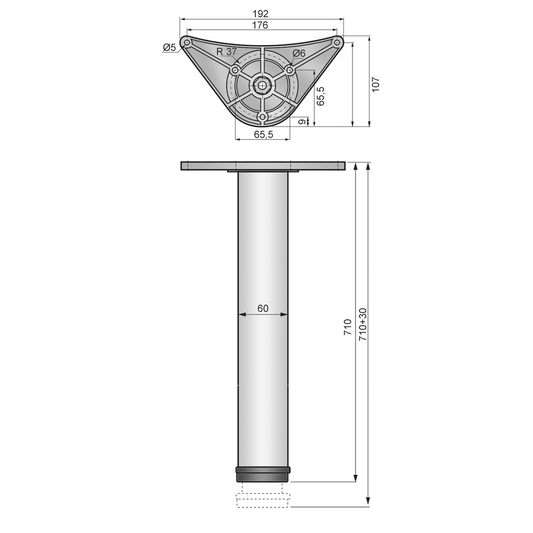
Adjustable table legsare load-bearing components for furniture construction that feature an integrated screw or telescopic mechanism in the foot base to precisely compensate for uneven floors or level the final working height of a tabletop. In professional furniture assembly and interior fitting, they form the structural foundation for freestanding tables, desks, kitchen islands, and workbenches.
Height adjustment is typically achieved via a threaded insert pressed into the lower end of the tube, guiding a plastic foot glider with a threaded pin (frequentlyM8orM10). By simply turning this glider, the leg can be continuously adjusted. This is essential to prevent wobble on hard floors such as tile, hardwood, or concrete and to guarantee full-surface load distribution.
Systematics of Heights and Ergonomic Planning
In table construction, thetable legminus the adjustment travel plus the tabletop thickness defines the final usable height. Selecting the nominal length is guided by strict ergonomic standards for the intended application.
27.95 in (710 mm): The Standard for Seated Workstations and Dining Tables
Atable legwith a nominal length of 27.95 in (710 mm) is the industry standard for traditional desks and dining tables. Combining these legs with a standard 1 in (25 mm) melamine-coated particle board results in a top edge height of 28.94 in (735 mm), meeting office workstation standards. The integrated height adjuster allows for corrections up to 0.79 in to 1.18 in (20 mm to 30 mm). When installers search foradjustable table legsfor desks, this dimension serves as the structural baseline. For modern office concepts with flexible working positions, a fully adjustable desk is recommended as an alternative.
32.28 in (820 mm): Worktops and Kitchen Islands
The nominal length of 32.28 in (820 mm) is tailored specifically to kitchen and laboratory installations. Combined with a solid 1-9/16 in (40 mm) worktop, the build reaches a working height of 33.86 in (860 mm)—ideal for standing tasks. A32.28 in (820 mm) high steel table leg with mounting plate in whiteis frequently used as a support foot for overhanging kitchen countertops. The adjustment mechanism is particularly critical here, as kitchen floors often exhibit subtle slopes.
43.31 in (1100 mm): Standing Tables and Bar Counters
For building bar counters, reception desks, or conference tables designed for standing meetings, components with a length of 43.31 in (1100 mm) are used. A43.31 in (1100 mm) high steel table leg with mounting plate in brushed stainless steelbrings the surface height to approximately 44.49 in to 45.28 in (1130 mm to 1150 mm). At this length, immense leverage acts on the mounting plate, making correct installation and a sufficiently dimensioned tabletop mandatory.
Custom dimensions such as35.43 in (90 cm) high table legsor39.37 in (1 meter) high table legsare usually realized by extending standard lengths to their limit using the leveling foot, or they require custom fabrication for commercial projects.
Materials Science: Tubes and Mounting Plates
The mechanical load capacity of a table leg depends heavily on the wall thickness of the tube and the structural design of the mounting plate.Metal table legsdominate the market due to their high flexural rigidity and long-term durability.
The Mounting Plate: Steel vs. Zinc alloy
The mounting plate is the most critical component of the entire structure. It joins the vertical tube to the horizontal tabletop and must absorb all shear forces. Just as a foundation determines a building's integrity, the screw connection of the mounting plate dictates the lateral stability of the table.
- Steel Mounting Plates:These plates are usually stamped from 1/16 in to 5/64 in (1.5 mm to 2.0 mm) sheet steel and welded solid to the tube.Steel table legswith a welded plate offer an extremely rigid connection, making them ideal for heavy solid wood tops.
- Zinc alloy Mounting Plates:Zinc alloy is azinc-aluminum alloyprocessed via die-casting. Zinc alloy plates are solid, warp-resistant, and feature no weld seams. Frequently, the tube is clamped to the Zinc alloy plate using a central set screw or internal thread. This allows the leg to be detached for transport while the plate remains screwed underneath the table. An example of this is the27.95 in (71 cm) high table leg with Zinc alloy mounting plate in aluminum.
Surface Finishes
The surface finish protects the metal from corrosion and defines its visual integration into the space.
- Powder Coating:A fused plastic coating that is extremely scratch-resistant. Classics includewhite table legsor matte black. A27.95 in (71 cm) high steel table leg with mounting plate in blackblends seamlessly into industrial interior concepts.
- Electroplated Finishes:These includechromeandsatin nickel, offering a hard, wear-resistant surface.
- Brushed Stainless Steel:A mechanically textured surface resistant to fingerprints. Frequently used in kitchen environments due to its hygienic, chemical-resistant properties.
Geometry: Round vs. Square Tubes
The cross-sectional shape of the leg influences both structural strength and aesthetic design.
- Round Tube:The standard in furniture design. Cylindrical tubes distribute vertical loads evenly onto the floor. Lacking sharp edges, they minimize injury risks in high-traffic areas or homes. Typical diameters range from 1-31/32 in to 2-3/8 in (50 mm to 60 mm).
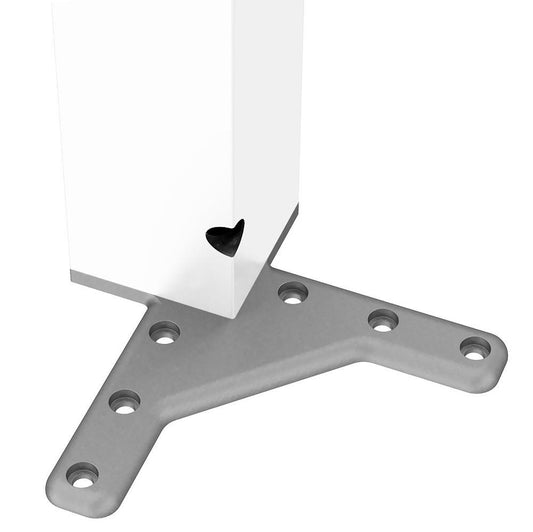
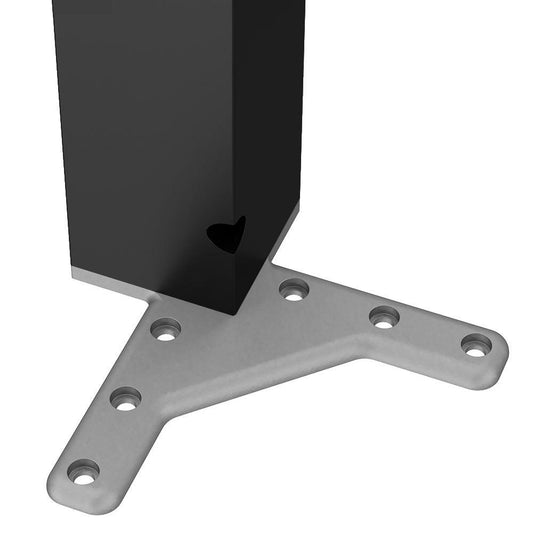
- Square Tube:A27.95 in (71 cm) high square table leg in black with Zinc alloy mounting plateor a27.95 in (71 cm) high square table leg in chrome with Zinc alloy mounting plateprovides clean, geometric lines. Due to their edge profile, square tubes offer slightly higher flexural rigidity in both longitudinal and transverse directions. Mounting plates are typically square as well to facilitate flush installation at table corners.
Professional Installation: Screw-On Adjustable Table Legs
Table stability depends entirely on the quality of the screw installation.Adjustable table legsdemand precise mounting to safely transfer leverage into the tabletop.
Tools and Preparation
Installation requires:
- Cordless drill/driver
- Wood drill bit (typically 1/8 in / 3 mm for pilot holes)
- Tape measure and square
- Matchingwood screws / particle board screws(countersunk or panhead, depending on plate hole style)
Alignment and Positioning
Legs should not sit completely flush with the tabletop edge. A setback of 1-31/32 in to 3-15/16 in (50 mm to 100 mm) from the outer edge prevents knees from bumping into the mounting plate when seated and visually conceals the hardware attachment. When working withMDForparticle board, ensure screws are not placed too close to the material edge to prevent splitting.
Selecting the Right Screw
The screw length must match the board thickness precisely. Screws should penetrate a maximum of 2/3 to 3/4 into the material. For a 1 in (25 mm) thick board minus a 5/64 in (2 mm) bracket thickness, a screw sizing of#8 x 3/4 in (4 x 20 mm)or#9 x 3/4 in (4.5 x 20 mm)is ideal. Drive types likeTorx (TX)orPozidriv (PZ)are strongly preferred to prevent stripping the head when driving into dense materials.
Installation Steps
- Marking:Mark the position of the mounting plates on the underside of the tabletop.
- Pre-drilling:Always pre-drill when working with hard coatings (melamine) or solid wood. The bit diameter should be approx. 3/64 in (1 mm) smaller than the screw diameter. Use a depth stop or tape on the drill bit to avoid drilling through the top surface.
- Screwing:Fasten the plate in a crosswise pattern. Insert all screws loosely first, then torque them down evenly.
- Leveling:After standing the table upright, rotate theadjustable table legfoot in or out until the top is perfectly level. Use a spirit level for best results.
Statics and Load Capacity
A single table leg can support a static vertical load of 66 lbs to 110 lbs (30 kg to 50 kg), depending on design and material. With four legs, the theoretical total weight capacity ranges from 265 lbs to 440 lbs (120 kg to 200 kg). However, this calculation applies only to static (stationary) loads.
In practice, dynamic loads occur—people lean on the table, equipment vibrates. Long legs (e.g., 43.31 in / 1100 mm) create significant leverage. If the tabletop is too thin (under 1 in / 25 mm particle board), it can sag in the middle, putting tensile stress on the mounting plate screws and potentially pulling them out. For spans over 59 in (1500 mm) between legs, an additional apron rail or center support leg should be included.
Frequently Asked Questions (FAQ)
What is the maximum height adjustment range?
The standard adjustment travel of the plastic leveling foot ranges between +0.79 in and +1.18 in (+20 mm and +30 mm) on most models. This range is designed primarily forleveling outuneven floors. Extending the thread further is strongly discouraged, as lateral stability drops dramatically and the threaded rod could bend inside the tube.
Can I cut a 27.95 in (710 mm) table leg down to 23.62 in (600 mm)?
No, cutting adjustable table legs down on-site is generally not possible. The threaded insert for the leveling foot is factory-pressed or welded into the bottom of the steel tube. Cutting the tube destroys the mechanism. Shortening from the top end is only possible if the mounting plate is detachable (as with select Zinc alloy systems), but requires precision tools to re-drill fixing holes.
What is the hole diameter on the mounting plate?
Holes on standard mounting plates typically measure 3/16 in to 1/4 in (5 mm to 6 mm) in diameter. They are frequently countersunk so thatflathead/countersunk screwssit flush. For flat, non-countersunk holes, panhead screws must be used.
What is the advantage of a Zinc alloy mounting plate over steel?
A mounting plate made of azinc-aluminum alloy(Zinc alloy) is cast, making it extremely dimensionally stable. A major assembly advantage is that the leg tube often connects to the plate via a clamp mechanism or thread. This allows the plate to remain screwed underneath the table permanently. When moving, the leg can simply be unscrewed, making transportation of large tables much easier. A model featuring this system is the32.28 in (82 cm) high table leg with Zinc alloy mounting plate in satin nickel.
How do I prevent the table legs from scratching laminate floors?
The bottom of the adjustable foot consists of hard plastic (typically polyamide). While wear-resistant, it can leave marks on sensitive floors like hardwood or high-gloss laminate. We recommend attaching self-adhesive felt pads to the bottom of the plastic foot. Height adjustability remains fully functional.
Will the screws hold securely in a 5/8 in (16 mm) tabletop?
A 5/8 in (16 mm) particle board is structurally marginal for freestanding tables. The maximum screw penetration depth is only about 35/64 in (14 mm), severely reducing screw pull-out strength. If a 5/8 in (16 mm) board must be used (e.g., for design reasons), inserttee nutsorthreaded inserts (Rampa inserts)into the board from below. The mounting plate is then secured with metric machine screws (M4 or M5), guaranteeing significantly higher tensile strength.
Why does my table wobble even though the legs are adjusted correctly?
If all four legs sit firmly on the ground (leveling is correct) yet the table sways horizontally, the issue lies not with the height adjustment, but with a lack of flexural rigidity in the tabletop itself. The board flexes under applied force. The only remedies are using a thicker tabletop (at least 1 in to 1-3/16 in / 25 mm to 30 mm) or installing a stabilizing apron frame beneath the top to connect the legs together.
Related Hardware and Categories
- Table Legs
- Metal Table Legs
- Steel Table Legs
- White Table Legs
- Adjustable Desks
Frequently Asked Questions
Will these adjustable table legs fit my existing IKEA tabletop?
Yes, our adjustable table legs are compatible with IKEA tabletops. Attachment is done via a standardized mounting plate (typically 2-3/8x2-3/8 in / 60x60 mm) with four screw points. Ensure your tabletop is at least 1 in (25 mm) thick. Use #8 x 3/4 in (4x20 mm) wood screws to prevent drilling through—a heavy-duty alternative to standard options.
What is the maximum weight capacity of these adjustable table legs?
Depending on the model, the static load capacity ranges from 66 lbs to 110 lbs (30 kg to 50 kg) per leg. With four legs, you can achieve a total capacity of up to 440 lbs (200 kg). Key factors include diameter (e.g., 2-3/8 in / 60 mm for heavy tops) and secure screw anchoring. Always check specific dimensions in the product description.
How does the height adjustment work, and is it continuously variable?
Yes, height adjustment is continuously variable via an integrated foot leveler at the bottom. By simply turning the threaded plastic glider, you can level out floor unevenness with millimeter precision (typically +0.79 in to +1.18 in / +20 mm to +30 mm). The mechanism locks under the table's weight; no special tools are needed.
Can I use these table legs as replacements for my office furniture system?
Yes, they are ideal replacements for commercial office systems or modular furniture. Compatibility depends solely on a flat mounting surface and the screw plate. Since the legs can be positioned freely with wood screws independently of fixed system hole patterns, you can easily achieve your desired working height (e.g., 27.95 to 29.13 in / 710–740 mm).
Which screws do I need to install the mounting plate?
Use standard countersunk wood screws matching your tabletop's thickness. The screw length must be 1/8 in to 3/16 in (3 mm to 5 mm) shorter than the board thickness (e.g., #8 x 3/4 in / 4x20 mm for a 1 in / 25 mm top). The mounting plates feature standard 3/16 in (5 mm) holes to ensure stable, centered fastening.