
Shelf Pins
Popular Subcategories



-
Shelf Pin with a Plastic Overlay Ø3/16 inch (100 pcs)Regular price $16.10Unit price / perRegular priceSale price $16.10
-
Metal-Plastic Shelf Support Ø3/16 inch (1000 pcs)Regular price $32.12Unit price / perRegular priceSale price $32.12
-
Metal Shelf Brackets 3/16 inch (5 mm) Zinc Plated - 40 PackRegular price $5.15Unit price / perRegular priceSale price $5.15
-
Metal Shelf Brackets 3/16 inch (5 mm) Zinc-Plated (Duplo II) - 40 PackRegular price $6.19Unit price / perRegular priceSale price $6.19
-
Plastic Shelf Supports 3/16 inch (5 mm) - 20 Pcs.Regular price $2.54Unit price / perRegular priceSale price $2.54
-
Shelf Support Pin Ø3/16 inch (100 pcs)Regular price $11.02Unit price / perRegular priceSale price $11.02
-
Metal-Plastic Shelf Support Ø3/16 inch (100 pcs)Regular price $3.74Unit price / perRegular priceSale price $3.74
-
Shelf Brackets Metal-Plastic 3/16 inch (5 mm) - 1 PieceRegular price $0.05Unit price / perRegular priceSale price $0.05
-
Angle Metal Shelf Support with a Dowelb NickelRegular price $0.17Unit price / perRegular priceSale price $0.17

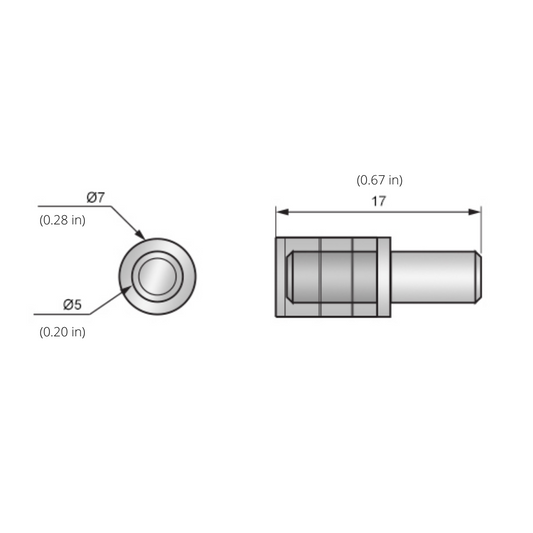

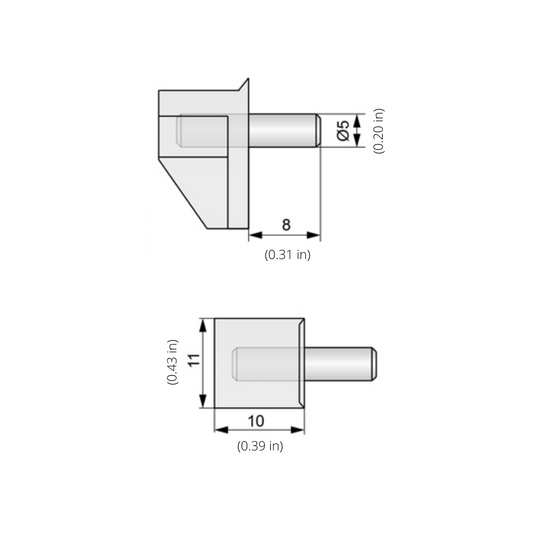

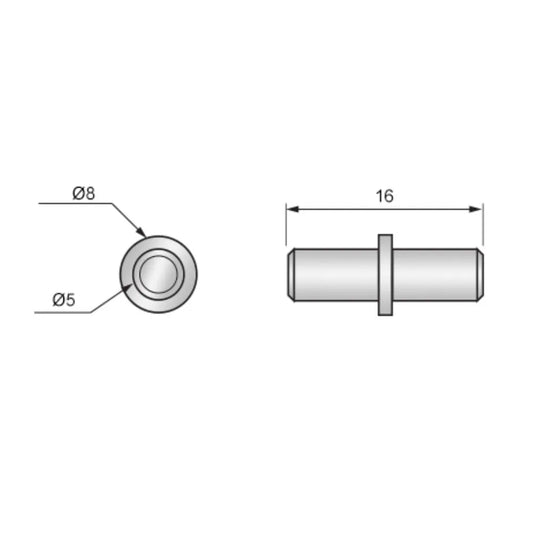

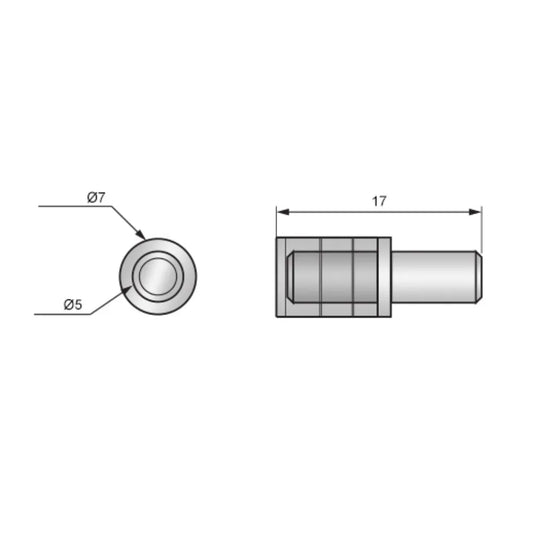


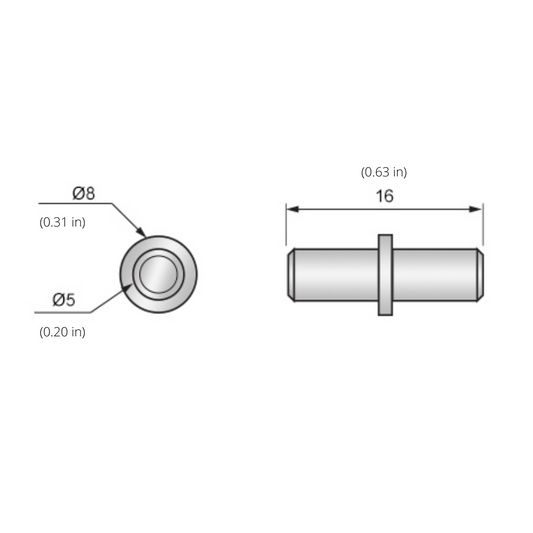

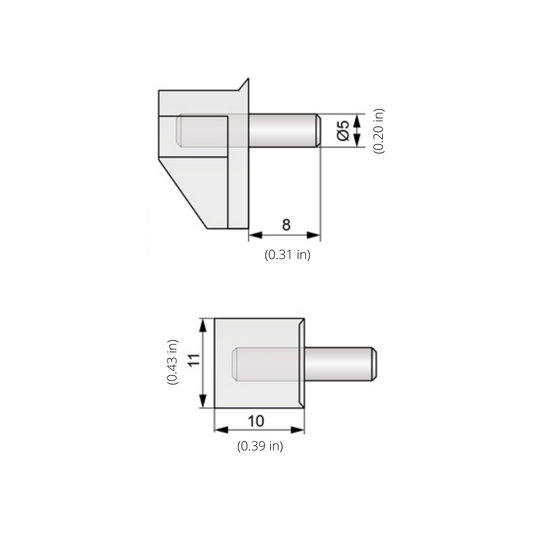

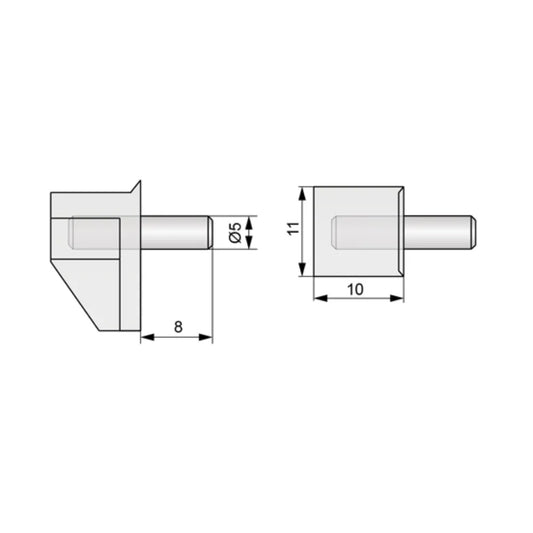

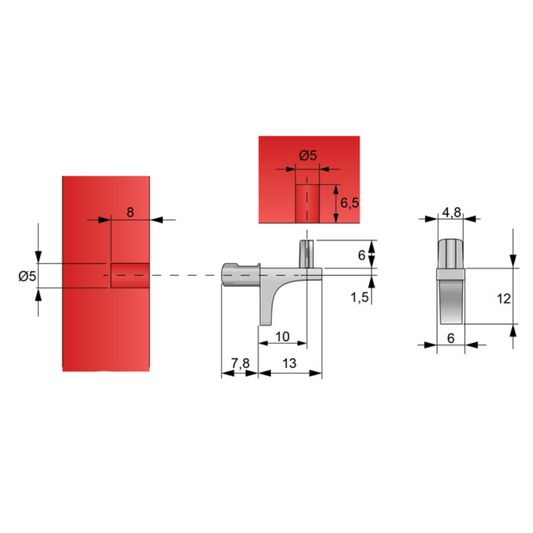
Shelf pinsare mechanical support brackets and connecting elements used in cabinetmaking to hold horizontal shelves inside a cabinet body. They transfer the vertical load of the shelf and the items stored on it as shear force into the vertical side walls of the cabinet. In professional furniture construction, they form the foundation for flexible yet load-bearing interior layout options.
A precisely installed shelf pin acts like an invisible support pier within the cabinet frame, transferring the shelf load smoothly and securely into the side panels. Choosing the right hardware determines the static load capacity of the piece of furniture, the exact fit of the shelves, and the long-term durability of the hole line in particle board, MDF, or solid wood.
Technical Fundamentals: System 32 and Hole Diameters
In modern furniture manufacturing and cabinet design, positioning forshelf support pegsalmost universally follows the32 mm system(System 32). This international standard defines the center-to-center spacing of the side wall drill holes at exactly 1-1/4 in (32 mm). The standard distance from the front line of holes to the edge of the cabinet body is 1-7/16 in (37 mm).
Two hole diameters have established themselves as industry standards for accepting shelf pins:
- 3/16 in / 0.2 in (5 mm) Hole:The absolute industry standard forcabinet shelf pinsand nearly all common case goods. Most pins have a nominal size of 0.19 in (4.9 mm) to 0.2 in (5.0 mm) to ensure a snug fit inside the hole.
- 1/8 in (3 mm) Hole:Used less frequently, primarily for delicate furniture, display cases, or lightweight shelving where the line of holes should remain visually subtle.
Product Types and Their Specific Features
The shelf support product range includes various designs chosen based on shelf material (wood-based vs. glass), required load capacity, and desired shelf security.
Metal Push-In Shelf Pins
The classicmetal shelf pinis the most widely used option for wooden shelves. Made from solid steel, it inserts directly into pre-drilled pin holes. The cylindrical pin shape effectively absorbs vertical shear forces.
A proven standard model for versatile applications is the5mm Metal Shelf Pins Zinc Plated - 100 Pack. It offers a flat resting surface that prevents indentation into the underside of the shelf. For larger projects or commercial needs, this style is available in bulk quantities such as the5mm Metal Shelf Pins Zinc Plated - 1000 Packor in smaller packs like the5mm Metal Shelf Pins Zinc Plated - 40 Pack.
Collared Shelf Pins (Duplo II)
An advanced engineering feature over the basic straight pin is theDuplo II collared shelf pin. These models feature a prominent center collar (a ridge around the middle). This collar serves a critical structural purpose: it prevents the metal pin from being driven deeper into the side wall hole under heavy vertical loads (especially in soft particle board). This protects the hole from tearing out and maintains the exact internal cabinet width.
Models like the5mm Metal Shelf Pins Collared (Duplo II) Zinc Plated - 100 Packare ideal for heavy loads in bookcases or pantry cabinets. Bulk packages are also available for volume production, including the5mm Metal Shelf Pins Collared (Duplo II) Zinc Plated - 1000 Pack.
Shelf Pins with Dowels / Pegs
When shelves need to be secured against sliding forward in addition to weight support,locking shelf supportsor models with an upward-facing pin are used. The shelf features a matching blind hole on its underside (usually 3/16 in (5 mm)) that receives the support pin.
This locks the shelf horizontally. A typical example of this construction is theShelf Support Peg with Dowel, Nickel. This design slightly increases overall cabinet rigidity, as the shelf holds the side walls together against outward tension.
Metal-Plastic Combination Pins
To combine the high load capacity of steel with surface-friendly plastic, two-component shelf pegs are engineered. The pin inserted into the wall is steel, while the shelf rest is molded from plastic. This prevents scratching on painted or laminate surfaces and dampens rattling sounds.
An example is theMetal-Plastic Shelf Pins 5mm - 100 Pack, also available for bulk requirements as theMetal-Plastic Shelf Pins 5mm - 1000 Pack.
All-Plastic Shelf Pins
For light loads, such as in bathroom cabinets or small shoe racks, plastic pegs are often sufficient. ThePlastic Shelf Pins 5mm - 20 Packis corrosion-resistant and blends discreetly into white cabinet interiors.
Glass Shelf Supports
Glass shelves require completely different support characteristics than wooden shelves. Glass is rigid but extremely sensitive to point-pressure concentration and hard materials.Glass shelf supportsare therefore equipped with soft cushions (rubber, silicone, or soft plastic).
TheShelf Support for Glass Shelves, Nickelfeatures protective bumpers that hold glass firmly without slipping while dampening micro-vibrations. Precise alignment of supports is critical for glass, as the material cannot flex to accommodate uneven placement without risking breakage.
Screw-In Shelf Supports
In addition to push-in styles, there arescrew-in shelf pins. These hardware components are screwed directly into the side wall and often into the shelf itself (typically using Euro screws or wood screws). A securely screwed shelf acts as a structural shelf in cabinet load calculations. It prevents cabinet racking into a parallelogram and ensures rigid squareness. These specializedshelf bracket screwsare primarily used in open shelving units without full back panels or in extra-wide cabinets.
Materials and Surface Finishes
The physical properties of the support material determine its load capacity. Most metalshelf pegsare manufactured from steel, which receives protective surface treatments against corrosion and for refined aesthetic appeal:
- Zinc-Plated Steel:A functional, matte finish offering reliable rust protection. Ideal for concealed installations in wardrobes, kitchen cabinets, or workshop storage.
- Nickel-Plated Steel:Features a shiny, slightly warm silver appearance. Nickel-plated hardware, such as theNickel Shelf Pegs, provides a higher-end look suitable for open shelving, living room furniture, or glass display cabinets.
Technical Installation Guidelines
Installingshelf pins for adjustable shelvescorrectly requires adhering to specific dimensions and tolerances to ensure an accurate fit.
Hole Depth and Diameter
The hole in the side panel must be drilled cleanly at a 90° angle to the surface. For a standard 0.2 in (5 mm) diameter pin with a typical insertion depth of 1/4 in to 5/16 in (7 mm to 8 mm), the blind hole should be drilled at least 0.04 in (1 mm) deeper—around 3/8 in (9 mm)—so the pin does not bottom out before the collar sits flush against the cabinet wall. Tear-out at the hole edge (especially in melamined particle board) dramatically reduces load capacity because shear forces can no longer be supported directly at the edge.
Clearance and Shelf Sizing
The shelf should not equal the exact inner width of the cabinet. To prevent jamming and allow easy placement, a small side clearance allowance is calculated. Typically, the shelf width is cut 1/16 in to 5/64 in (1.5 mm to 2.0 mm) narrower than the clear interior dimension of the cabinet.
When using acollared shelf pin, the thickness of the collar must be factored in on both sides. If the collar projects 0.04 in (1 mm) into the interior on each side, the shelf must be planned at least 3/32 in to 1/8 in (2.5 mm to 3.0 mm) narrower than the total internal cabinet width.
Load Capacity and Distribution
The maximum load limit of a shelf depends not only on themetal shelf pinitself, but also on shelf material (flexural strength) and wall screw-holding capacity. A standard shelf mounted on four metal shelf pins in 3/4 in (19 mm) particle board comfortably supports 33 lbs to 44 lbs (15 kg to 20 kg) when properly installed.
Under heavy loads (such as bookcases orshelf pins for metal cabinets), shelf spans should not exceed 31-1/2 in (800 mm) to prevent sagging. Wider shelves require heavy-duty support channels or center supports.
Practical Applications
Selecting the idealcabinet shelf pegdepends on the furniture type:
- Kitchen Cabinets:Heavy dynamic loads occur here (stacks of plates, cookware). Replacement pins are often needed if original hardware is lost (e.g., as replacements forSiematic kitchen cabinet shelf pins). Zinc-plated metal pegs with flat resting surfaces or pin-locking styles to prevent shelf sliding are standard.
- Wardrobes:Deep cabinet bodies (typically 23-5/8 in (600 mm)) and wide spans require maximum stability. Awardrobe shelf pinmust prevent sagging under heavy stacks of clothes. Duplo collared pins offer the structurally cleanest solution.
- Display Cases and Bathroom Vanities:High humidity in bathrooms or visual demands in glass display cases make nickel-plated fittings, plastic pins, or specializedglass shelf pinsthe preferred choices.
FAQ – Frequently Asked Questions About Shelf Pins
What diameter are standard shelf pins?The universal industry standard for cabinet hole patterns is 3/16 in / 0.2 in (5 mm). Pins are precision-sized to fit these holes. Smaller 1/8 in (3 mm) pins are occasionally used for delicate or compact furniture.
How many shelf pins do I need per shelf?A standard shelf requires exactly 4 shelf pins—two on the left side wall and two on the right. For extra-deep shelves over 23-5/8 in (600 mm) or corner units, additional pins can be placed for added support.
Can I mix shelf pins from different manufacturers?Standard 5 mm sizing is metric-standardized. You can easily use standard metal pins as replacements for missingIKEA shelf pinsorHettich shelf pins, provided the hole size is 0.2 in (5 mm). However, always use four identical pins per shelf; variations in support height will cause the shelf to wobble.
What is the difference between shelf pins for wood and glass?Awooden shelf pinis typically bare metal or rigid plastic with a flat or curved surface. A glass shelf pin must include a soft component (a rubber/silicone ring or soft pad) to protect the glass from scratches, relieve point stress, and prevent smooth glass panels from sliding.
Why do my cabinet shelves keep sliding forward?Shelves slide when there is too much side clearance between the shelf and cabinet, or due to vibration. To resolve this, installlocking shelf pegsor pins with top dowels. This requires drilling a small blind hole on the underside of the shelf for the pin to engage, locking it safely in place.
How do I remove stuck push-in shelf pins?If a metal pin fits tightly in the hole, grip the exposed end gently with flat-nose pliers. Pull straight out using subtle, steady twisting movements. Avoid levering up and down, which can blow out the hole edge in particle board.
Related Categories
For specialized applications and different shelf materials, explore our full range of hardware solutions. If you need hardware designed specifically for transparent glass shelves, browse ourGlass Shelf Supports. For a broad overview of classic support systems, check out our full collection ofShelf Supports & Pegs.
Frequently Asked Questions
Are these shelf pins suitable replacements for IKEA Pax or Billy units?
Yes, they fit IKEA shelving as long as it uses standard hole spacing. Measure your hole diameter: for System 32, you will need shelf pins with a 0.2 in (5 mm) pin diameter. Some systems require 1/8 in (3 mm). Verify dimensions before ordering to ensure secure shelf support.
Which shelf pins should I use for glass shelves?
Glass shelves require specialized glass shelf supports featuring rubber rings or plastic pads. These soft cushions prevent slipping and protect glass from scratching. Be sure to match the pin diameter—typically 0.2 in (5 mm) for standard 32 mm hole grids—and check the rated weight capacity per shelf.
How much weight do metal shelf pins hold compared to plastic ones?
Metal shelf pins offer significantly higher load ratings (often 33 lbs to 44 lbs (15 kg to 20 kg) per pin) than plastic options. For heavy books or storage boxes, we recommend solid steel or zinc die-cast shelf pins with a 0.2 in (5 mm) pin. Calculate the total weight of your loaded shelf and distribute it across four pins.
Can I use your shelf pins as alternatives to Hettich or Blum hardware?
Yes, our pins serve as ideal replacements for Hettich or Blum hardware when technical dimensions match. The critical factors are the cabinet hole diameter (1/8 in (3 mm) or 0.2 in (5 mm)) and hole depth. Our shelf pegs are fully compatible with standardized System 32 cabinet dimensions.
Are there shelf pins available that prevent shelves from sliding out?
Yes, choosing locking shelf pins or shelf supports with an integrated top pin prevents forward sliding. These pins lock into a matching blind hole drilled on the underside of wooden shelves. They are excellent for mobile furniture and typically require standard System 32 cabinet holes measuring 0.2 in (5 mm).