
Heavy duty gas struts
Popular Subcategories

-
Gas Strut 9-13/16 inch - 200NRegular price $1.75Unit price / perRegular priceSale price $1.75
-
Gas Strut 9-13/16 inch - 120NRegular price $1.75Unit price / perRegular priceSale price $1.75
-
Gas Strut 9-13/16 inch - 100NRegular price $1.75Unit price / perRegular priceSale price $1.75
-
Gas Strut 9-13/16 inch - 150NRegular price $1.75Unit price / perRegular priceSale price $1.75
-
Gas Strut 9-13/16 inch - 180NRegular price $1.75Unit price / perRegular priceSale price $1.75

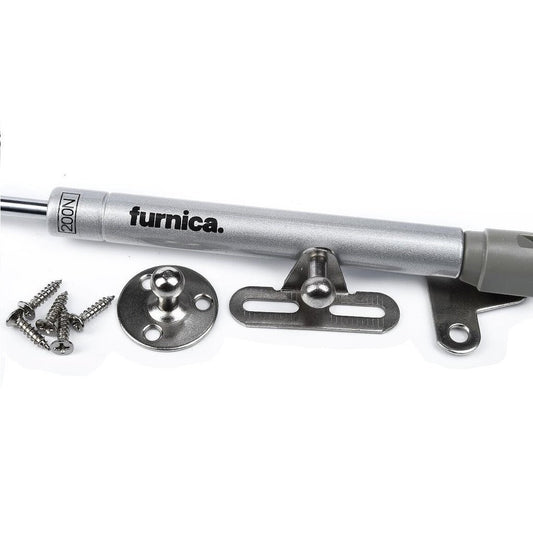

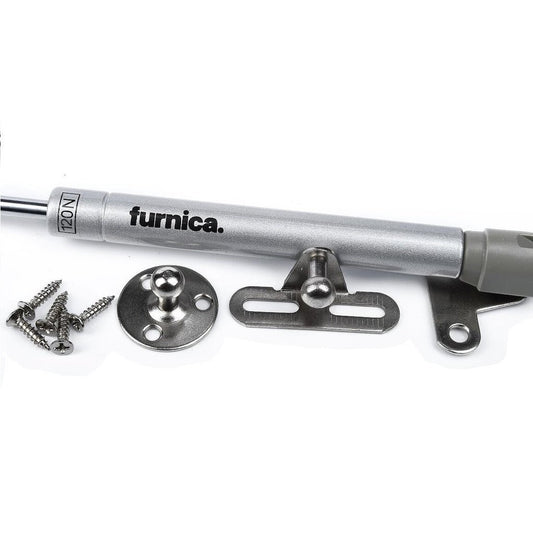

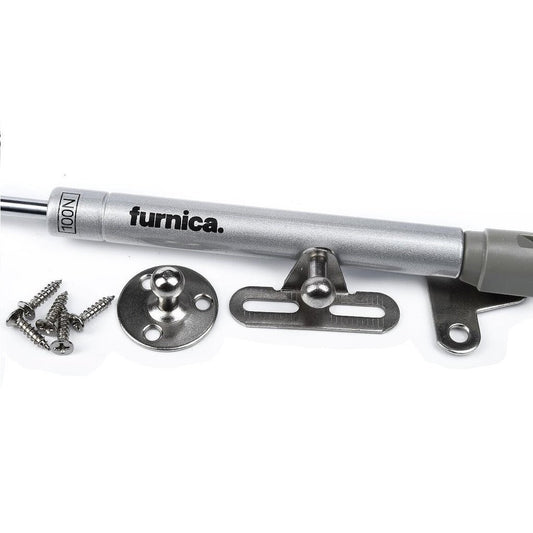

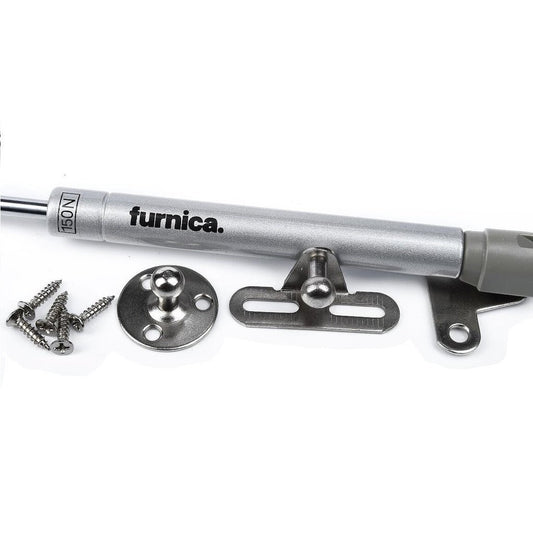

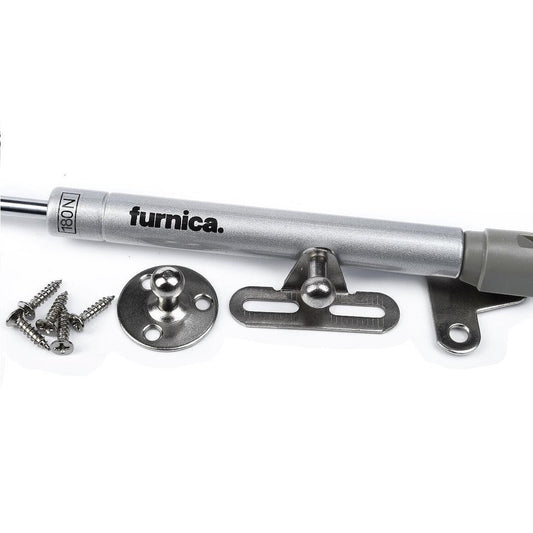
Heavy duty gas strutsare pneumatic lifting and holding mechanisms designed with compressed nitrogen gas inside a sealed cylinder to generate the exact extension force required to controlled-open dense furniture fronts and hold them securely in the open position. They effortlessly support the weight of large solid wood doors, thick MDF panels, or frameless glass constructions, preventing them from slamming shut or dropping unassisted.
In professional cabinetmaking and custom interior fitting, wide and tall upper wall cabinets demand specializedlift-up fittings. Standard concealed hinges or purely mechanical lid supports reach their structural limits when faced with heavy loads. This is where specialized heavy duty gas struts come into play. In modern cabinetry, they function like the suspension system of a heavy truck: they support the static load and convert a massive downward force through precision-engineered counter-pressure cylinders into a smooth, controlled motion.
Technical Specifications and Available Forces
Selecting the correctheavy duty gas strutsprimarily depends on the required force rating, measured inNewtons (N). For heavy-duty cabinet applications, force ranges typically span from 150 N up to 500 N per cylinder. The standard overall length for these specialized fittings is9-7/8 in (250 mm)when fully extended, which matches common wall cabinet carcass dimensions.
In this category, you will find high-capacity cylinders tailored for heavy loads, including:
- Silver Gas Strut 9-7/8 in (250 mm) - 150Nfor medium-heavy cabinet doors.
- Silver Gas Strut 9-7/8 in (250 mm) - 200Nfor wider MDF lift-up doors.
- LIFT-O-MAT Gas Strut - 320Nfor extra-wide wall cabinets.
- LIFT-O-MAT Gas Strut - 380Nfor solid wood doors.
- LIFT-O-MAT Gas Strut - 500Nfor maximum load requirements, such as thick composite materials or oversized panel dimensions.
Calculating Required Extension Force
The most common error when installingheavy duty gas strutsfor lift-up doors is miscalculating the necessary Newton force rating. A strut that is too weak will fail to hold the door open, while an overly powerful strut will cause the door to fly open aggressively and demand immense force to pull closed—eventually tearing thecabinet hingesright out of the cabinet frame.
The precise force required depends on two core factors: theweight of the door(including handles/hardware) and theheight of the door. Because the panel pivots on a fixed axis (the hinge), standard leverage rules apply. A 23-5/8 in (600 mm) high door creates a significantly longer lever arm and higher torque than a 11-13/16 in (300 mm) high door of the exact same weight.
Rule of Thumb for Calculation:
- Determine the weight of the panel in lbs (kg) (volume in cu ft / m³ × material density, e.g., particle board approx. 40.5 lbs/cu ft or 650 kg/m³).
- Add the weight of the handle hardware.
- As a baseline rule: 2.2 lbs (1 kg) of door weight requires approx. 10 N of holding force.
- Multiply this value by the leverage factor (for standard upper cabinets, this value typically doubles).
- Always divide the final total force equally between twolift support struts.
Example: If your cabinet construction requires a total holding force of 400 N, install two separate cylinders rated at 200 N each, such as theLIFT-O-MAT Gas Strut - 200N.
Applications in Cabinetry and Custom Woodworking
Heavy duty gas strutswith high Newton ratings are used anywhere gravity needs to be overcome via smooth upward movement.
Kitchen Wall Cabinets
Wide bi-fold doors or single-piece lift-up doors in modern kitchens are frequently made from lacquered MDF or heavy frosted glass. The dead weight of these fronts easily exceeds 17.6 lbs to 22 lbs (8 kg to 10 kg). Here, a heavy-dutylift-up cabinet mechanismensures effortless, hands-free access to cabinet interiors, such as an integratedupper cabinet dish drying rack.
Living Room and Office Furniture
Deep wall-mounted credenzas or broad desktop hutch units use overhead flip-up doors to conceal monitors or file storage. The leverage exerted by deep door panels requires heavy-duty gas struts rated between 320 N and 450 N, such as theLIFT-O-MAT Gas Strut - 450N.
Chest Lids and Floor Access Hatches
A specialized application includesgas struts for floor hatchesor heavy storage benches. When opening a heavy horizontal door or floor panel, the full gravitational weight acts instantly during lift-off. In these setups, mounting plate angles must be calculated precisely so that when closed, the strut passes over center to hold the hatch down rather than pushing up.
Installation and Technical Alignment
Proper installation ofhydraulic lift cylinders for cabinet doorsdirectly dictates the lifespan of the hardware and cabinetry. Unlike basic mechanical stay brackets, gas cylinders do not tolerate asymmetrical alignment.
Symmetrical Setup Is Required
Always use two gas struts for cabinet widths over 15-3/4 in (400 mm). Relying on a single, side-mountedstrut supportinevitably causes the cabinet door to warp. Over time, the wood twists, panel gaps become uneven, and the concealed hinges on the opposite side experience premature wear due to torsional strain.
Mounting to Carcass and Door Panels
Each set includes the central gas cylinder alongside dedicated mounting brackets designed for wood panels or aluminum frame profiles.
- Fastener Selection:For particle board or MDF, always use countersunkwood screws / chipboard screwswith a diameter of1/8 in to 5/32 in (3.5 mm to 4 mm)(PZ or Torx drive).
- 32 mm System Compatibility:Many cabinet side brackets feature spacing designed for the standard1-1/4 in (32 mm)system hole pattern. The setback from the front edge of the carcass is typically1-7/16 in (37 mm).
- Opening Angles:Positioning the bracket attachment points on the interior carcass and door panel sets the door's final opening angle. Standard end positions are set at75°, 90°, or 110°. Refer closely to the technical drawings for exact X- and Y-axis drilling dimensions, as shifting pivot points by just a few millimeters alters the travel arc.
Cylinder Orientation
A frequent question among cabinet installers concerns mounting direction: as a rule, the wider body cylinder mounts to the door panel, while the thinner piston rod points downward toward the cabinet frame. This ensures that internal lubricating oil continuously coats the piston rod seal while in the closed position. Allowing the seal to dry out causes gas leakage and total component failure.
LIFT-O-MAT Technology
In high-end cabinet hardware engineering, the termLIFT-O-MATrepresents an industry benchmark. These precision gas springs feature an exceptionally flat spring characteristic curve. This means the force output delivered by the cylinder remains nearly constant throughout the entire stroke length (the travel distance of the piston rod).
In low-grade cylinders, resistance increases exponentially toward the end of the stroke, causing doors to snap open forcefully. In contrast, aLIFT-O-MAT Gas Strut - 250Nuses integrated hydraulic end-position dampening to slow down movement right before full extension, allowing cabinet fronts to slide smoothly into their resting position.
Hardware Terminology: Gas Struts, Springs, or Lid Stays?
Terminology often overlaps in trade practice, leading to incorrect orders during hardware replacement. It is important to distinguish the mechanical differences:
- Gas Struts / Gas Springs (gas struts):Active, force-exerting components that actively push doors upward and hold weight in place. While terms like "shock absorbers" are occasionally used, automotive shock absorbers only dissipate kinetic energy without extending on their own—whereas gas struts actively extend.
- Soft-Close Dampers (furniture dampers):Small plastic or metallic housings featuring a plunger designed purely to cushion door closing. They possess zero lifting force.
- Lid Stays / Friction Stays:Mechanicallid supportsgenerally consist of metal arms with an adjustable friction screw. They do not lift doors automatically, but rather lock them at whatever angle the user manually positions them.
If you are building agas strut lift-up cabinet door, you will need a combination of dedicatedcabinet flap hinges(typically un-sprung or reverse-sprung concealed hinges) and the force cylinders offered in this category.
Maintenance and Replacement
Gas struts are sealed, high-pressure systems. They are completely maintenance-free. If a heavy cabinet panel begins to drop after years of service, nitrogen gas has gradually escaped past the internal seals over time. Repairing or repressurizing these cylinders is technically impossible and unsafe due to high pressure.
Replacement is simple and straightforward: the cylinders attach to their mounting plates via a metal spring clip mechanism on the ball sockets. By inserting a small flathead screwdriver under the retaining clip and lifting gently (do not remove it completely), the old strut detaches from the ball studs instantly. The new cylinder then simply snaps onto the existing ball ends. Ensure your replacement strut features the exact same overall extended length (9-7/8 in (250 mm)) and Newton force rating.
FAQ – Frequently Asked Questions
How do I determine the Newton (N) rating on a failed gas strut?
The outer casing of the original cylinder almost always features a printed part number or specification label. Look for a number followed by the letter "N", such as "320N" or "0320 N". This represents the extension force. Order a matching replacement with the exact same rating, such as theLIFT-O-MAT Gas Strut - 320N.
What happens if I install heavy duty gas struts with too much force?
If you install a 500 N force cylinder where only 200 N is required, closing the cabinet door will require extreme physical effort. Over time, the continuous excess leverage force will pull thedoor hingesout of the cabinet's particle board side walls.
Why won't my cabinet door close flush even though the Newton force is correct?
This issue usually stems from using incompatible hinges or incorrect mounting plate positioning. Standard self-closing concealed hinges (with internal springs) pull against the extension force of the gas strut. For lift-up doors, always use unsprung hinges or dedicated flap hinges. Additionally, verify installation dimensions to ensure the cylinder passes over center when fully closed to hold the door flat against the carcass.
Are mounting plates included with the gas struts?
Yes. All complete gas strut sets offered in this category include standard mounting plates for wood doors and interior cabinet side walls along with fasteners.
Can I use these heavy duty gas struts for drop-down doors?
No. The struts featured here are engineered specifically for upward-opening lift doors. For downward-opening flap doors (such as drop-front desks or bar cabinets), you require specialized drop-flap stays that brake downward momentum rather than pushing upward.
How do I disconnect a gas strut from its mounting bracket?
Each socket end of the cylinder features a metal retaining spring clip over the ball joint. Insert a thin flathead screwdriver beneath the clip and pry it up slightly to release tension. The strut socket will pop off the ball stud without force.
Related Categories
Explore matching hardware and alternative lifting mechanisms for your cabinet projects:
- Gas Struts– Main category featuring all load capacities.
- Lift-Up Cabinet Fittings– Complete overview of overhead lift mechanisms.
- Mechanical Lid Supports– Friction-based stays and adjustable lid supports.
- Silver Gas Struts– Cylinders finished in metallic silver.
- Black Gas Struts– Sleek black finishes for modern or dark interiors.
- White Gas Struts– Tailored for clean, light-colored cabinet designs.
Frequently Asked Questions
How do I choose the correct force rating (in Newtons) for heavy duty gas struts?
Calculate the total weight of the door panel including handle hardware. As a general benchmark, 10 N supports approximately 2.2 lbs (1 kg). For a 33 lb (15 kg) cabinet door, you will need gas struts offering a combined 150 N total. Always verify mounting dimensions and opening angles to ensure optimal mechanical leverage.
Can I use these heavy duty gas struts as direct replacements in my existing kitchen?
Yes, they serve as excellent replacements for OEM struts from manufacturers like Blum, Hettich, or IKEA Utrusta setups. Check extended lengths and ball stud mounting points. If the mounting hole layout matches (typically standard 32 mm systems) and the Newton force rating is equal, replacing them is quick and straightforward.
Do I need one or two heavy duty gas struts for a large cabinet door?
Always install two heavy duty gas struts on wide or heavy doors (23-5/8 in / 60 cm wide and above). Using two struts prevents panel twist and ensures balanced load distribution. Simply split the required total lift force (e.g., 200 N) across two struts (100 N each).
Are interior mounting brackets included with the struts?
Yes, all required mounting plates and matching wood screws are included in the package. Brackets are engineered to align with standard 1-1/4 in (32 mm) system hole spacing. They are fully compatible with Häfele or Nobilia cabinet configurations provided pre-drilled grid dimensions match.
Can the force of a gas strut be adjusted after installation?
No, the compressed force (N rating) inside gas struts is factory-set and cannot be adjusted manually after production. Always select the appropriate Newton strength prior to purchasing based on panel weight. However, fine-tuning the physical placement of the mounting plates allows you to make minor adjustments to the final opening angle.