
Furniture Connectors
Popular Subcategories

-
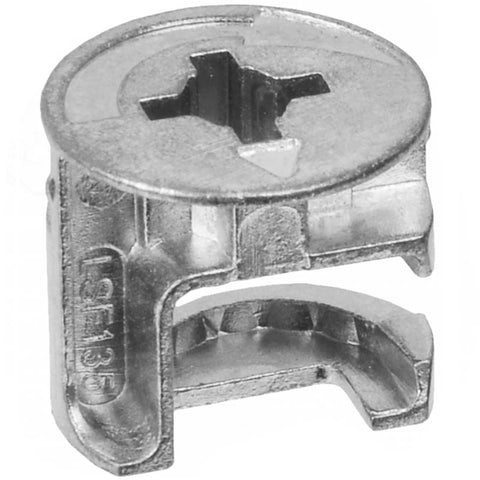
Furniture cam lock 9/16 inch, a=3/8 inch (100 pcs)Regular price $8.75Unit price / perRegular priceSale price $8.75
-
Cam Dowel 1-1/8 inch with Euro Screw-Thread - 100 pcsRegular price $5.15Unit price / perRegular priceSale price $5.15
-
Confirmat Screws - 1/4x1-15/16 inch (1000 pcs)Regular price $33.05Unit price / perRegular priceSale price $33.05
-
Cam Dowel 15/16 inch with Euro Screw-Thread - 100 pcsRegular price $5.02Unit price / perRegular priceSale price $5.02
-
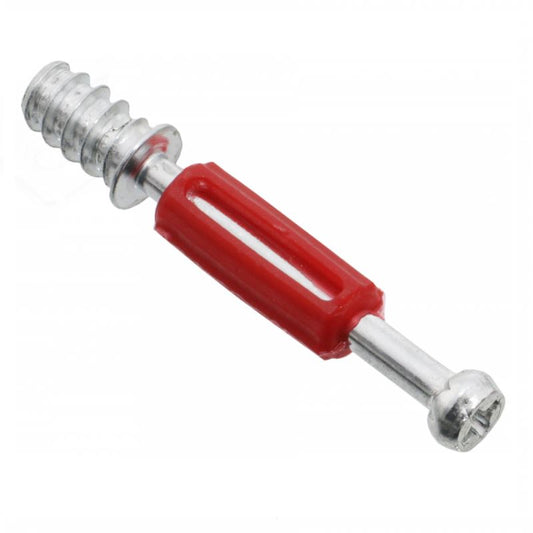
Cam Dowel 1-5/16 inch with M6 Screw-Thread - 100 pcsRegular price $5.59Unit price / perRegular priceSale price $5.59
-
Wood Dowels - 5/16 inch x 1-3/8 inch (Ø 8 x 35 mm) - 100 pcsRegular price $3.50Unit price / perRegular priceSale price $3.50
-
Confirmat Screws - 1/4x2-3/4 inch (1000 pcs)Regular price $51.59Unit price / perRegular priceSale price $51.59
-
Confirmat Screws - 1/4x1-15/16 inch (100 pcs)Regular price $3.96Unit price / perRegular priceSale price $3.96
-
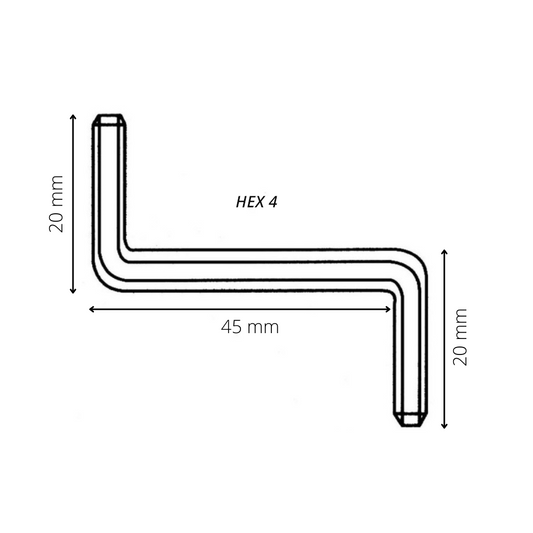
Hex 4 "Z" Key White ZincRegular price $1.80Unit price / perRegular priceSale price $1.80
-
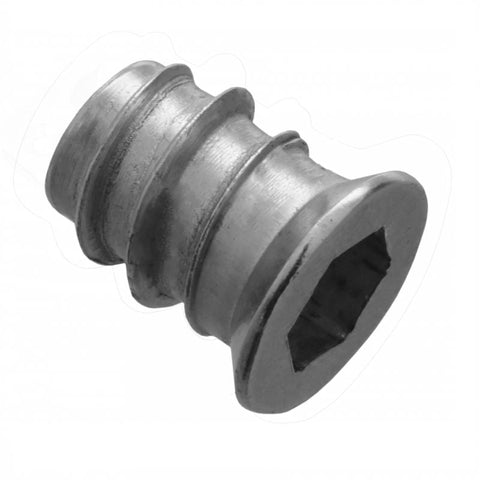
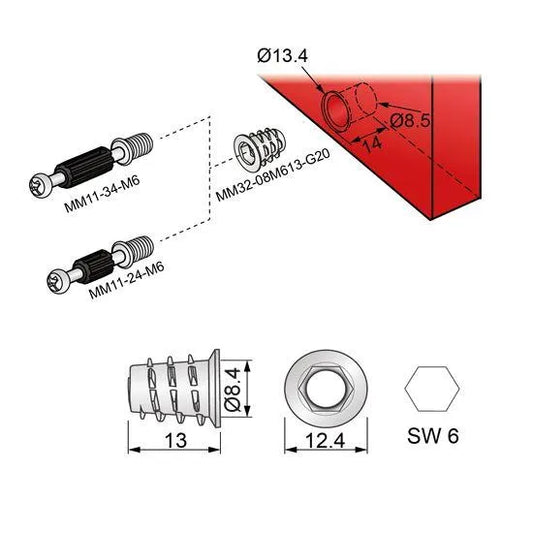
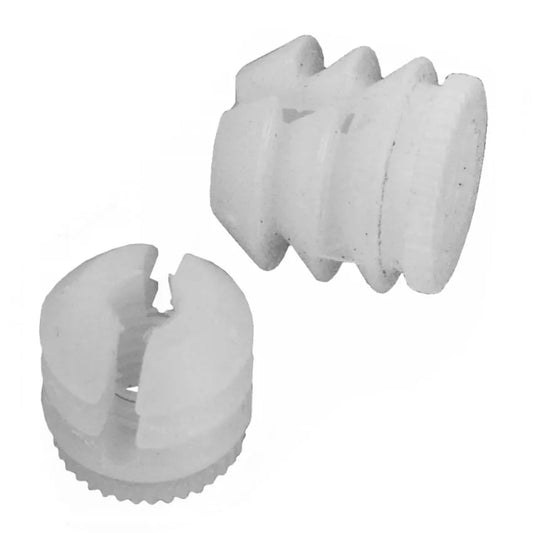
Threaded Insert M6 - 5/16 x 1/2 inch (8x13 mm) - 1 PcRegular price $0.10Unit price / perRegular priceSale price $0.10
-
Cam dowel 15/16 inch with Euro Screw-Thread - 1000 pcsRegular price $29.52Unit price / perRegular priceSale price $29.52
-
Cam Dowel 1-1/8 inch with M6 Screw-Thread - 1000 pcsRegular price $65.57Unit price / perRegular priceSale price $65.57
-
Cam Dowel 1-5/16 inch with M6 Screw-Thread - 1000 pcsRegular price $46.57Unit price / perRegular priceSale price $46.57
-
Cam Dowel 1-5/16 inch with Euro Screw-Thread - 1000 pcsRegular price $46.57Unit price / perRegular priceSale price $46.57
-
Cam Expanding Dowel 15/16 inch, M8 - 1000 pcsRegular price $72.37Unit price / perRegular priceSale price $72.37
-
Cam Dowel 15/16 inch with M6 Screw-Thread - 1000 pcsRegular price $41.84Unit price / perRegular priceSale price $41.84
-
Cam Dowel 15/16 inch with Euro Screw-Thread - 1000 pcsRegular price $41.84Unit price / perRegular priceSale price $41.84
-
Cam Lock 9/16 inch (15 mm), H=11/32 inch (9.0 mm) - 1 Pc.Regular price $0.08Unit price / perRegular priceSale price $0.08
-
Furniture Cam Lock 9/16 inch (15 mm), Height = 5/16 inch (7.5 mm) - 1 Pc.Regular price $0.08Unit price / perRegular priceSale price $0.08
-
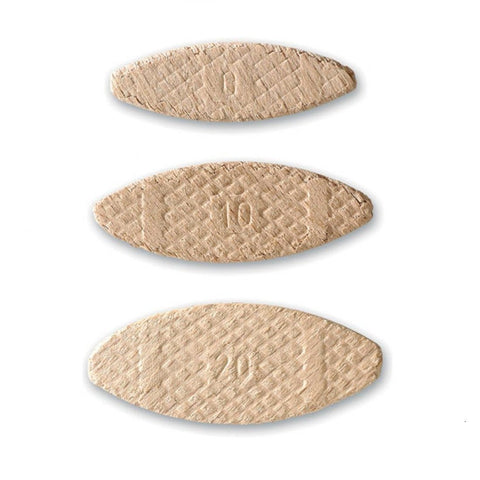
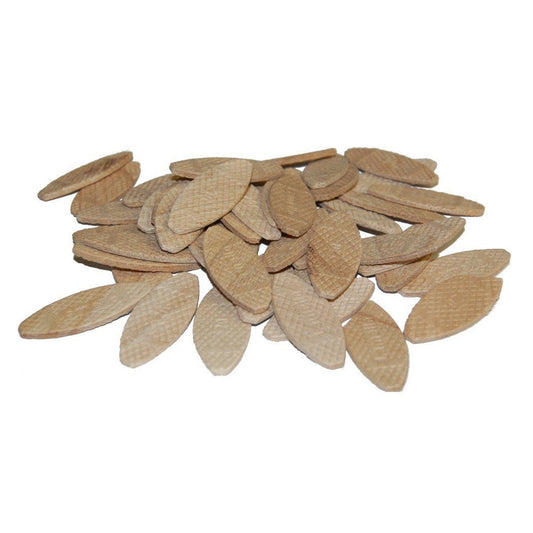
No. 10 Jointing Biscuits - 1000 pcsRegular price $35.94Unit price / perRegular priceSale price $35.94
-
Threaded Insert M10 - White - 1 PcRegular price $0.05Unit price / perRegular priceSale price $0.05













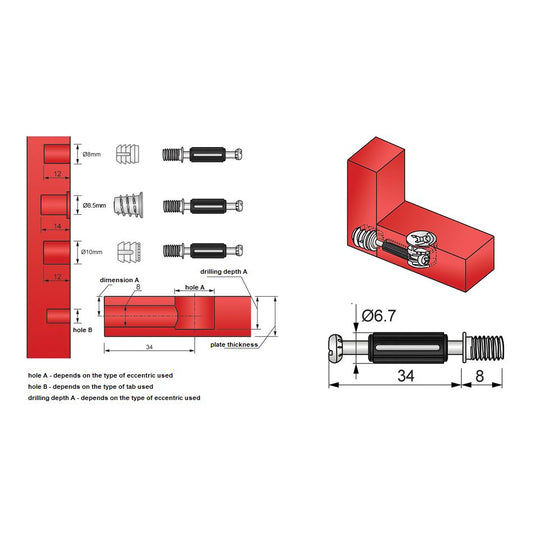

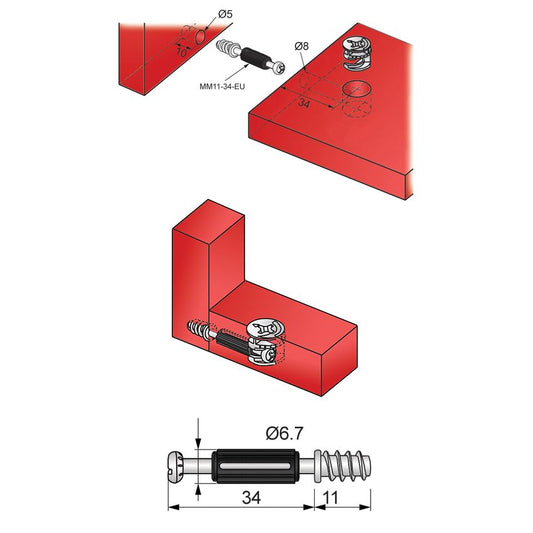

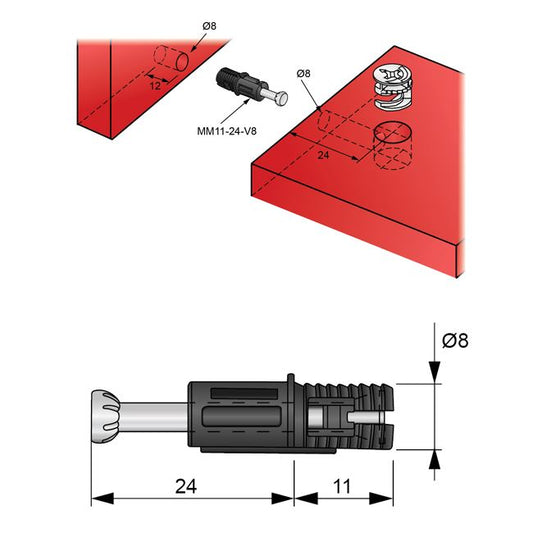

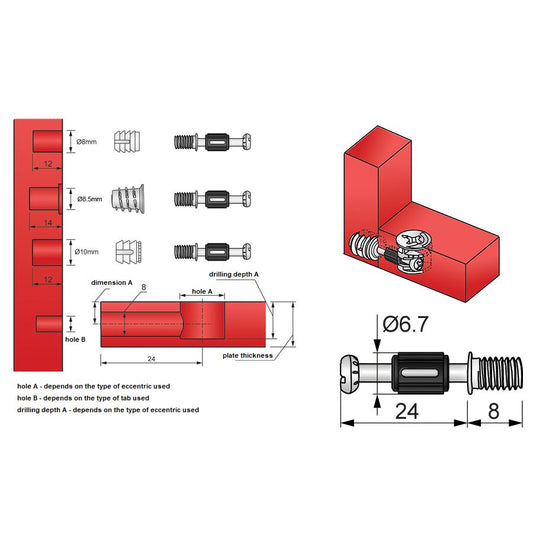





Furniture connectors are form-fit and force-fit structural fittings made of metal, cast zinc alloy or plastic that join individual panels, cabinet components and frame constructions into stable furniture. They ensure the static rigidity and torsional strength of cabinets and, depending on the design, allow furniture structures to be taken apart repeatedly without damage.
Operating principles and hardware types in modern furniture building
Choosing the right connectors depends on the tensile, shear and bending forces involved and on how detachable the parts need to be. Modern furniture manufacturing relies on a range of hardware systems to fix wood-based materials such as particleboard, MDF or plywood permanently.
Cam lock systems and cam dowels for knockdown cabinets
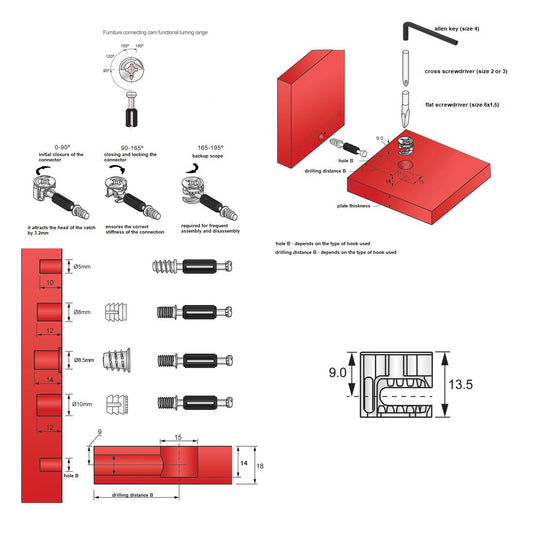
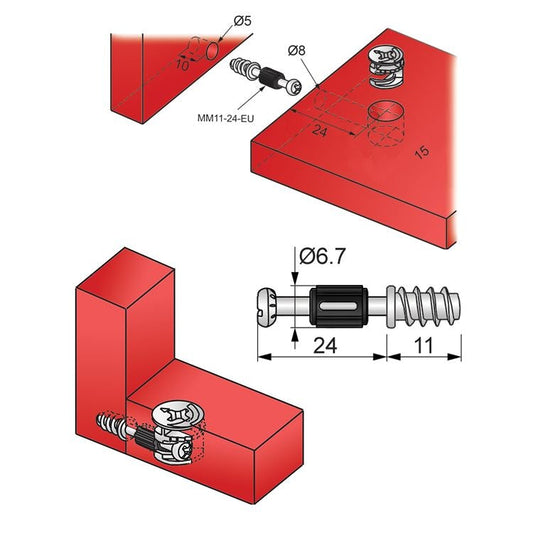
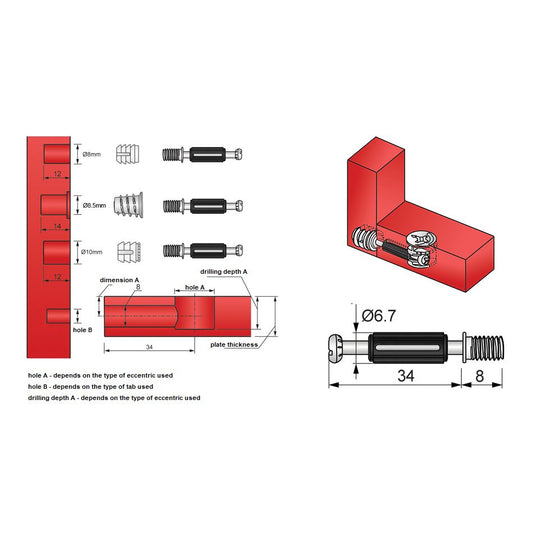
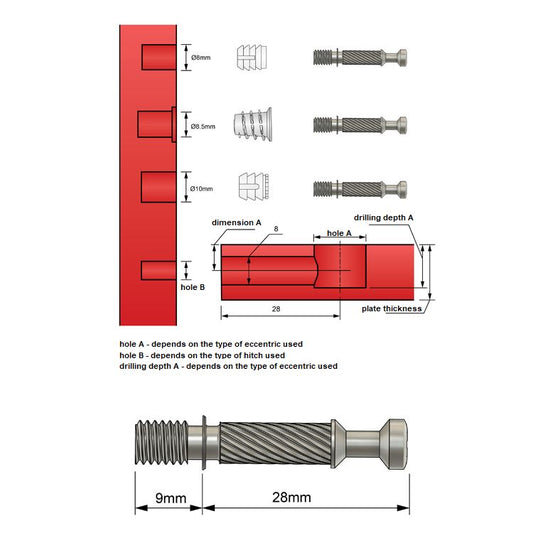
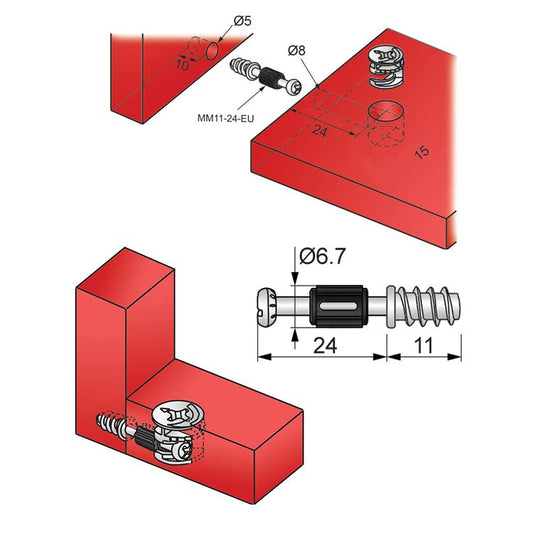
Cam connections are the backbone of modern knockdown furniture. The system consists of two components: the cylindrical cam lock housing and the matching connecting bolt, the cam dowel. The dowel is installed in the cabinet side, while the housing is set flush into the structural panel. When the housing is turned, an internal wedge-shaped cam pulls the dowel head in with high clamping force. In a cabinet, a cam connector acts like the keystone in a masonry arch; it pulls all adjacent elements together and locks the entire assembly under constant tension.
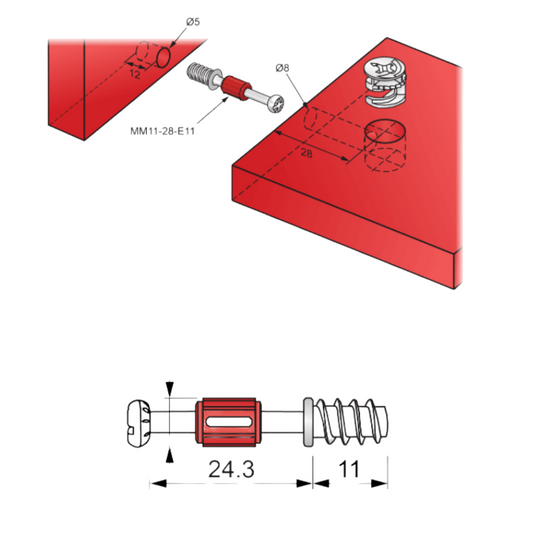
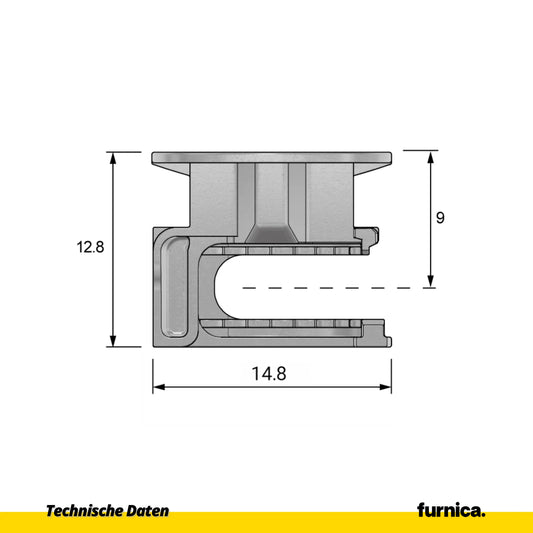
Matching housing heights are available for different material thicknesses. For common 18 mm (23/32 inch) panels, the 15 mm cam lock with H=9.0 mm (100 pcs) is the right choice, while for thinner 15 mm (19/32 inch) panel walls the 15 mm cam lock with H=7.5 mm (100 pcs) is used. Both versions have a standard cup diameter of 15 mm (19/32 inch). For anchoring in the mating panel, a typical choice is the screw-in cam dowel with Euro thread, L34 mm (1-5/16 inch), in a pack of 100; its thread bites directly into a 5 mm (3/16 inch) bore.
Furniture screws and direct connectors
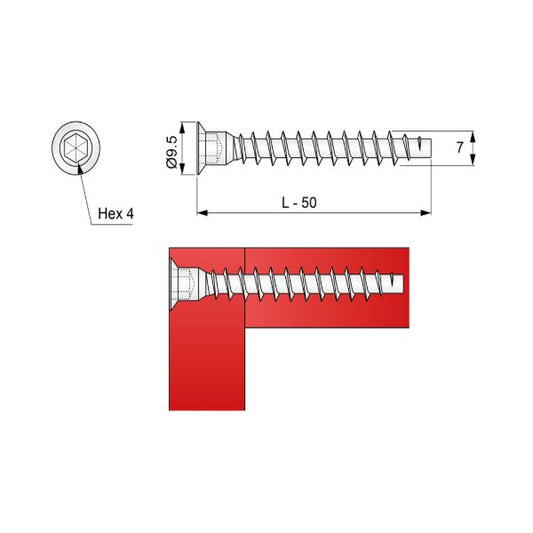
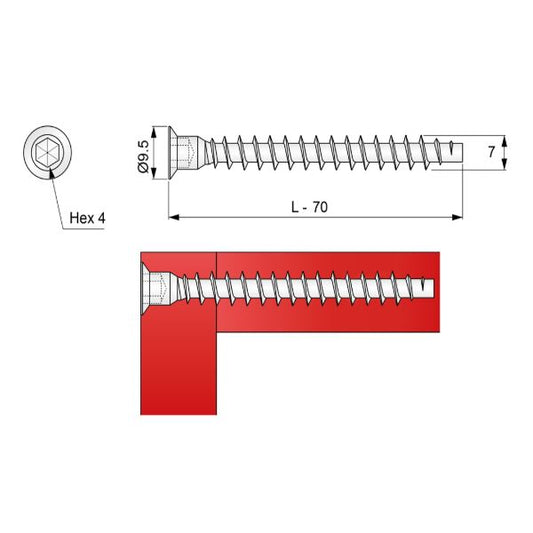
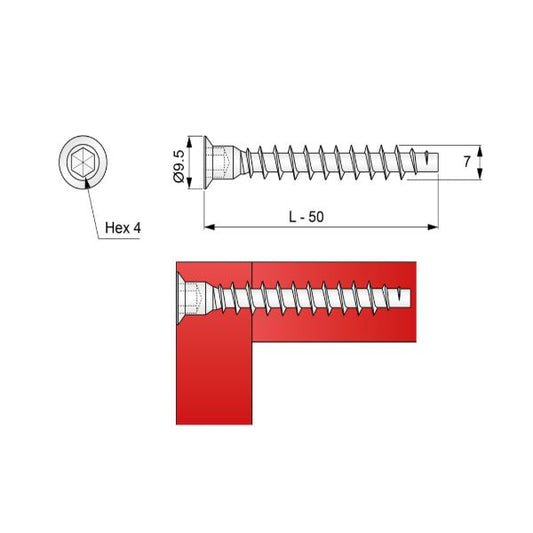
High-strength direct corner joints call for special direct-fastening screws with a countersunk head. These screws have a pronounced core diameter and a wide, self-cutting thread for wood-based panels, which gives them extreme pull-out resistance in the edges of particleboard and fiberboard. Within the wood screws and furniture screws range, versions with a hex socket (HEX 4) are available. For 16 mm (5/8 inch) panels, the 6.4x50 mm (1/4 x 2 inch) furniture screw (100 pcs) is often used, while for thicker 19 mm (3/4 inch) panels the screws with a 7.0 mm (9/32 inch) diameter are preferred, such as the 7.0x70 mm (9/32 x 2-3/4 inch) furniture screw (100 pcs) or the 7.0x50 mm (9/32 x 2 inch) furniture screw (100 pcs).
Plastic cabinet connectors and surface-mount brackets
Surface-mount connectors are a good option for retrofit installations, toe kick panels or conversions where visible surfaces must not be drilled through. A sturdy plastic cabinet connector with a separate cover (length 24 mm, height 24 mm, width 19 mm; 15/16 x 15/16 x 3/4 inch) or the compact plastic cabinet connector (length 21 mm, height 20 mm, width 24 mm; 13/16 x 13/16 x 15/16 inch) is mounted directly in the inside corner with fastening screws. The slide-on or snap-on cap hides the screws completely and gives the cabinet interior a tidy look.
Joining and repairing cabinets
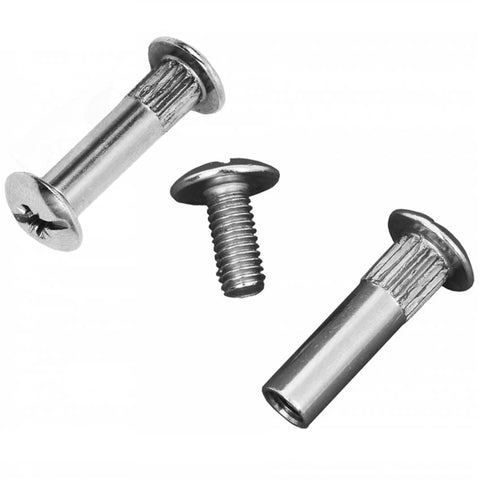
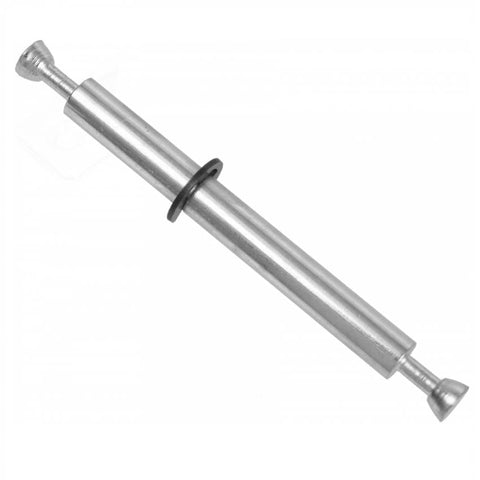
When several cabinets are mounted side by side to form a continuous wall unit, metric connecting screws keep them aligned flush. With products from the screw fasteners category, such as the nickel-plated Ø6 sleeve bolts, two cabinet sides can be clamped together permanently and without distortion through a 6 mm (1/4 inch) bore. To stabilize damaged joints or to stiffen them afterwards, the flat straight mending plate (10 pcs) of galvanized steel, 45 mm (1-3/4 inch) long and 12 mm (1/2 inch) wide, is a good option.
Design criteria: dimensions, grid and materials
A durable furniture joint requires an exact match between hardware geometry and material properties. Deviations of a tenth of a millimeter can lead to visible gaps or to the panel material breaking out.
- Panel thickness and drilling depth: The height of the cam lock housing must always be smaller than the panel thickness. With 15 mm (19/32 inch) material, a 9.0 mm housing already puts the face layer at structural risk; a housing 7.5 mm high is mandatory here. For 18 mm and 19 mm (23/32 and 3/4 inch) panels, housing heights from 9.0 mm to 12 mm are standard.
- System 32 compatibility: Industrial furniture hardware and professional hole rows are based on the 32 mm (1-1/4 inch) grid. The standard distance from the front edge of the cabinet to the first row of holes is 37 mm (1-7/16 inch). Screw-in bolts and dowels are designed around these center distances.
- Load capacity and material density: Particleboard has a lower bulk density in the core than in the face layers. Screw dowels and direct connectors therefore need sufficient shank diameters to absorb pull-out forces reliably. In soft substrates, metal threaded inserts increase stability considerably.
Processing and installation in practice
Proper installation of connecting hardware requires precise drilling and setting tools.
Preparing cam lock bores
Drilling the 15 mm (19/32 inch) housing bore calls for a Forstner bit with a center point to produce a flat bottom without breaking through on the visible face. A precisely set depth stop prevents drilling through the panel by accident. The through-hole for the dowel neck (usually 7 mm to 8 mm, or 9/32 to 5/16 inch, in diameter) is drilled into the edge of the mating panel; it must meet the center of the cam at a right angle and exactly on axis.
Installing direct-fastening screws
Furniture screws with diameters of 6.4 mm (1/4 inch) or 7.0 mm (9/32 inch) must not be driven in without a pilot hole, because the large volume of displaced material would split the panel edge. Cabinetmakers use step drills for this, which produce the core hole (e.g., 5 mm), the shank diameter (7 mm) and the countersink for the head in a single pass. When tightening with a cordless drill/driver through the HEX 4 hex socket, set the torque limit so that the thread in the wood-based material is not stripped.
Specific applications in furniture building
In different types of furniture, connecting hardware takes on specialized tasks:
Kitchen cabinets and wardrobes
In tall cabinet constructions, connecting hardware must not only carry the dead weight of the shelves but also withstand lateral forces during alignment. The combination of wood dowels to absorb shear forces and cam connectors to absorb tensile forces ensures lasting dimensional stability. Once the cabinet is assembled, visible areas are often concealed neatly with matching components from the screw cover caps category.
Drawer box and frame joints
Drawer boxes are stressed by dynamic load changes as they are pulled out. Front panels are often coupled to the side walls with concealed dowels. Sagging drawer bottoms can be stabilized with support wedges mounted underneath, which press the 3 mm to 4 mm (1/8 to 5/32 inch) thick bottom firmly back into the groove of the drawer side.
Related hardware categories at furnica.com
A stable cabinet is the basis for installing further functional furniture hardware. To go with our connector systems, our range includes:
- Cup hinges: Hinge systems for full overlay, half overlay and inset mounting with a 35 mm (1-3/8 inch) cup bore.
- Cup hinges / cabinet hinges with damping: Integrated Soft-Close damping for quiet closing of cabinet doors.
- Lift systems: Robust hardware solutions for furniture fronts that open upward.
- Gas struts: Precisely calculated spring force in newtons for the controlled lifting of furniture flaps.
- Gas struts for heavy flaps: Powerful struts for large-format fronts in kitchens and living areas.
- Undermount drawer slides: Concealed slides for full-extension or partial-extension drawers.
- Drawer slides with damping: High-quality drawer systems with gentle self-closing.
- Kitchen cabinet pull-out, 20 cm (7-7/8 inch): Slim storage solutions for kitchen runs and niches.
- Shelf supports & brackets: Shelf pins and brackets for carrying heavy shelf loads.
- Adjustable cabinet legs: Height-adjustable plinth systems to compensate for uneven floors.
- Steel furniture legs: Stable furniture legs in modern metal finishes.
- Table legs: Sturdy leg constructions for dining tables, desks and countertops.
- Height-adjustable table legs: Flexible leg profiles for individual ergonomic height adjustment.
- Furniture casters: Swivel and fixed casters for mobile cabinets and rolling pedestals.
- Furniture locks: Locking systems for cabinet doors, drawers and flaps.
- Cabinet locks with rod linkage: Rotating rod locks for multi-point locking on tall cabinet doors.
- Matte black furniture handles: Modern handle profiles and knobs in a trendy matte finish.
- Furniture handles 128 mm (5-1/16 inch): Standardized handle sizes for the universal hole spacing of 128 mm.
- Cable grommets: Clean cable routing for wall units and media cabinets.
- Desk cable grommets: Practical desk pass-throughs for organized workspaces.
Frequently asked questions
What cam lock housing height do I need for 15 mm and 18 mm particleboard?
For 15 mm (19/32 inch) panel materials, use cam lock housings with an overall height of 7.5 mm to keep the face layer from being pushed through. For panel thicknesses of 18 mm or 19 mm (23/32 or 3/4 inch), choose housings 9.0 mm high. The cup diameter for the bore is 15 mm (19/32 inch) as standard for both versions.
Why must Confirmat furniture screws always be pre-drilled?
Furniture screws have a large core diameter and a coarse thread with an outside diameter of 6.4 mm (1/4 inch) or 7.0 mm (9/32 inch). Without a pilot hole, the displaced material would burst the structure of particleboard or MDF panels. A step drill cuts the core hole (e.g., 5 mm), the shank clearance (7 mm) and the head countersink cleanly in a single pass.
When are sleeve bolts used instead of wood dowels or cam locks?
Sleeve bolts couple two already assembled cabinets with a force-fit joint, for example in kitchen runs or wall units. Through an aligned through-hole 6 mm (1/4 inch) in diameter, the bolt and the threaded sleeve are inserted from both sides and tightened firmly. They hold adjacent side panels together completely free of distortion.
What is the difference between Euro thread and metric M6 thread on dowels?
A dowel with a Euro thread is screwed directly into a pre-drilled 5 mm (3/16 inch) bore in the wood-based panel, where its deep thread grips with a positive fit. Dowels with a metric M6 thread, by contrast, need a threaded insert or tee nut installed beforehand in the substrate. M6 threads offer considerably higher durability under repeated assembly and disassembly.
How are plastic cabinet connectors installed?
Plastic cabinet connectors are placed directly in the right-angle inside corner of the two panels and fastened with particleboard screws. No drilling into the panel edge is required, so the outer faces stay untouched. After screwing, the cover cap included in the set is simply snapped or slid on to hide the screw heads completely.