
Gas Struts
-
Gas Strut 9-13/16 inch - 60NRegular price $1.75Unit price / perRegular priceSale price $1.75
-
Reverse Gas-Piston Stay 9-13/16 inch 80NRegular price $2.48Unit price / perRegular priceSale price $2.48
-
Gas Strut 9-13/16 inch - 30NRegular price $1.75Unit price / perRegular priceSale price $1.75
-
Gas Strut 9-13/16 inch - 200NRegular price $1.75Unit price / perRegular priceSale price $1.75
-
Reverse Gas-Piston Stay 9-13/16 inch 60NRegular price $2.48Unit price / perRegular priceSale price $2.48
-
Gas Strut 9-13/16 inch White - 80NRegular price $2.60Unit price / perRegular priceSale price $2.60
-
Gas Strut 9-13/16 inch - 120NRegular price $1.75Unit price / perRegular priceSale price $1.75
-
Gas Strut 9-13/16 inch - 100NRegular price $1.75Unit price / perRegular priceSale price $1.75
-
Gas Strut 9-13/16 inch - 50NRegular price $1.75Unit price / perRegular priceSale price $1.75
-
Gas Strut 9-13/16 inch - 40NRegular price $1.75Unit price / perRegular priceSale price $1.75
-
Reverse Gas-Piston Stay 9-13/16 inch 100NRegular price $2.48Unit price / perRegular priceSale price $2.48
-
Gas Strut 9-13/16 inch - 150NRegular price $1.75Unit price / perRegular priceSale price $1.75
-
Top Cabinet Lift System - Light/Medium/StrongRegular price $16.45Unit price / perRegular priceSale price $16.45
-
Gas Strut 9-13/16 inch White - 60NRegular price $2.60Unit price / perRegular priceSale price $2.60
-
Gas Strut 9-13/16 inch - 180NRegular price $1.75Unit price / perRegular priceSale price $1.75
-
Gas Strut 9-13/16 inch - 80NRegular price $1.75Unit price / perRegular priceSale price $1.75
-
Gas Strut 9-13/16 inch White - 50NRegular price $2.60Unit price / perRegular priceSale price $2.60

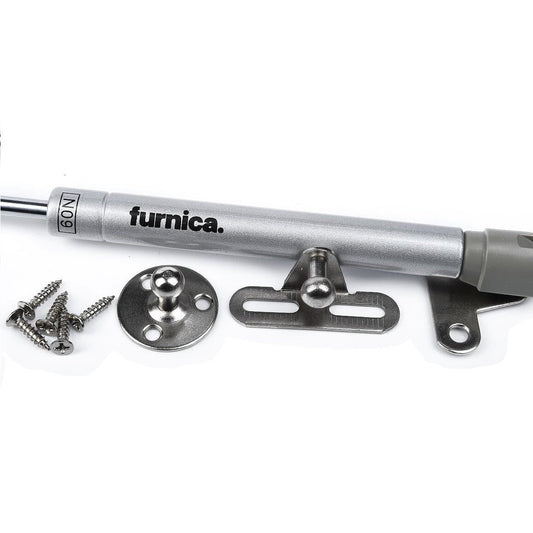

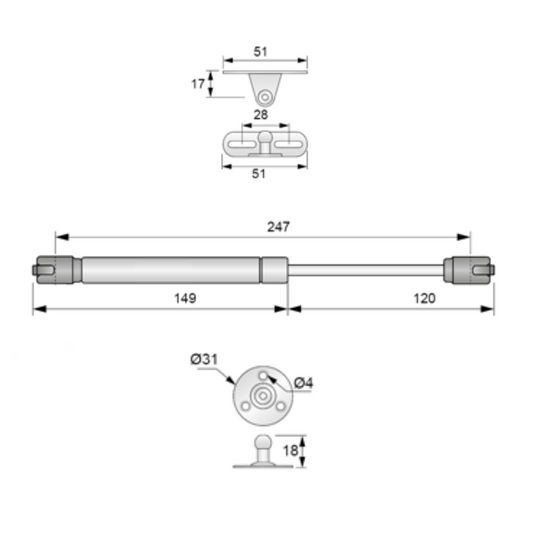

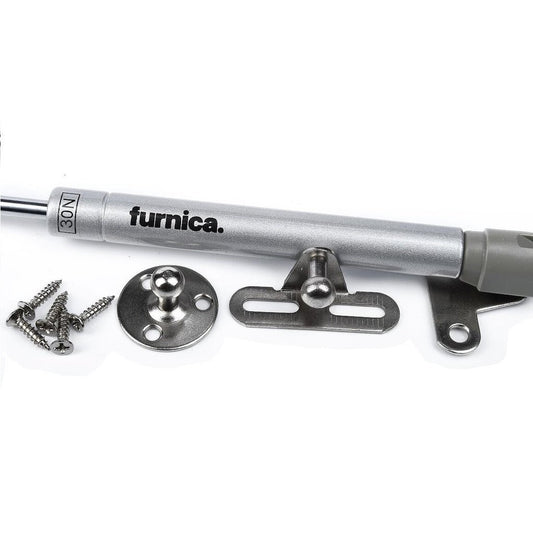

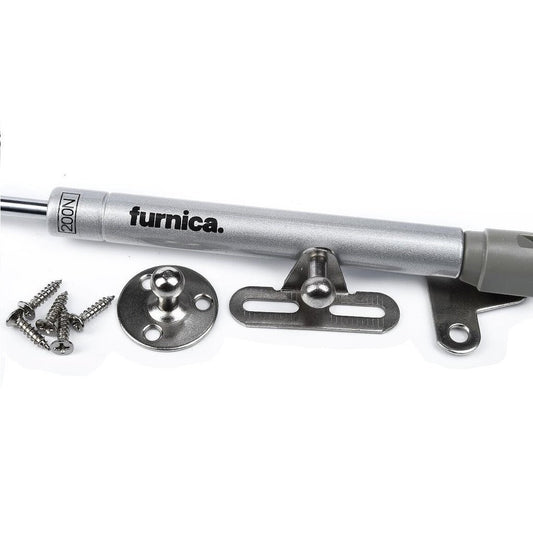

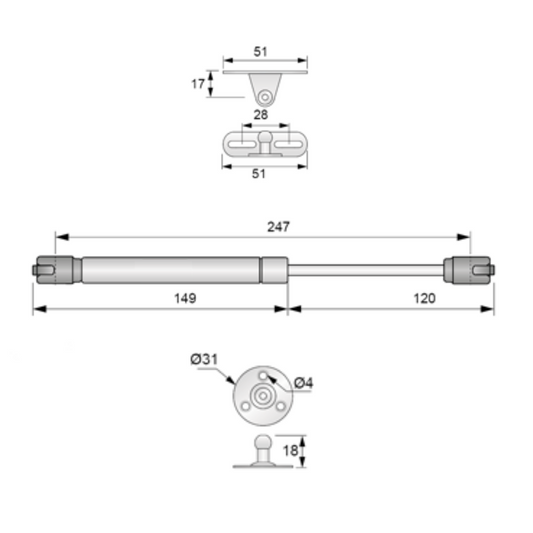

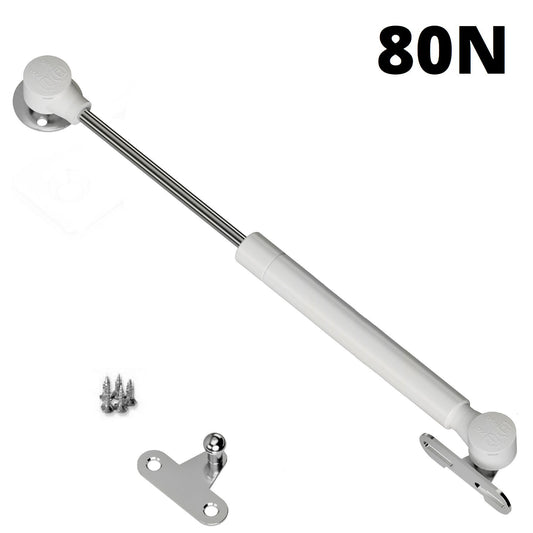

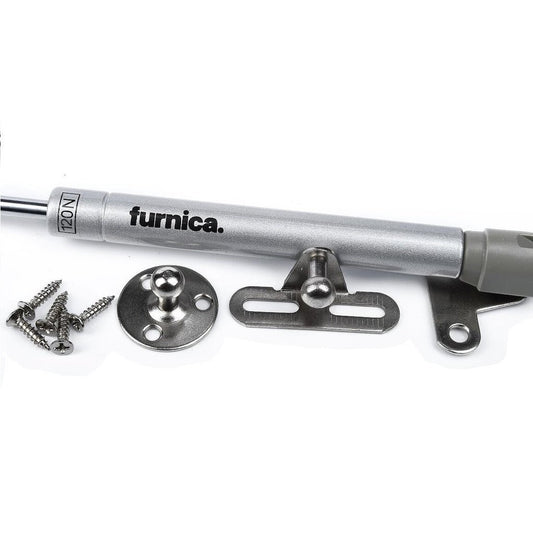

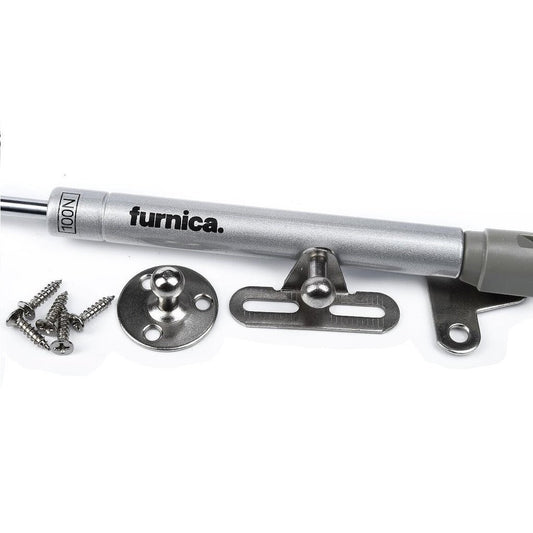

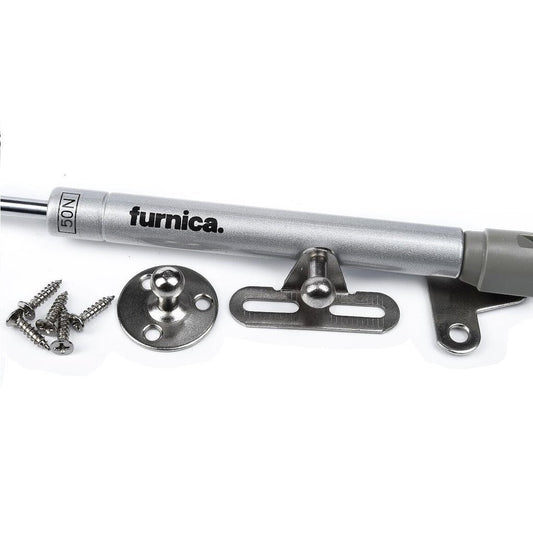

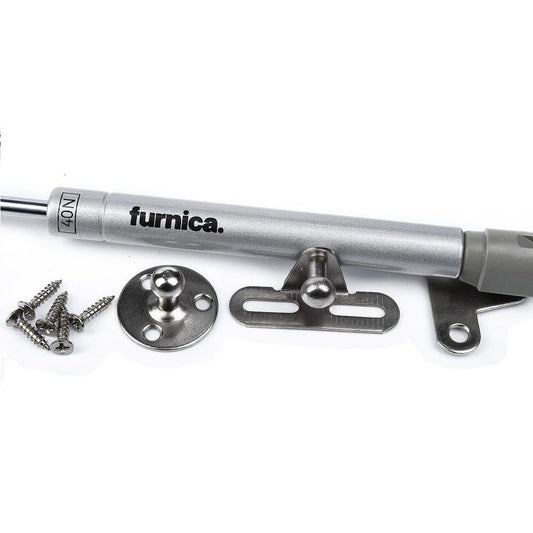

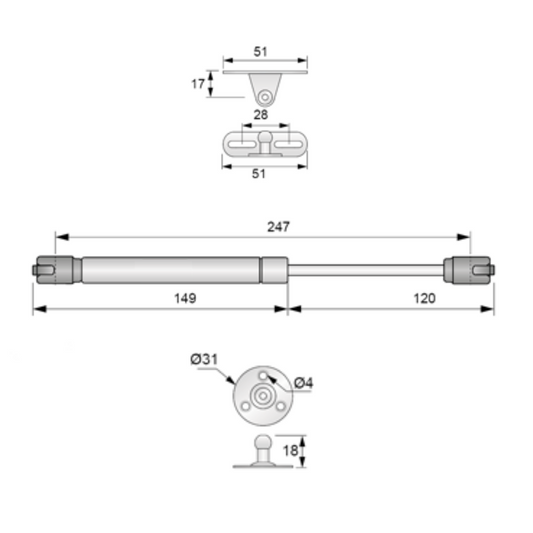

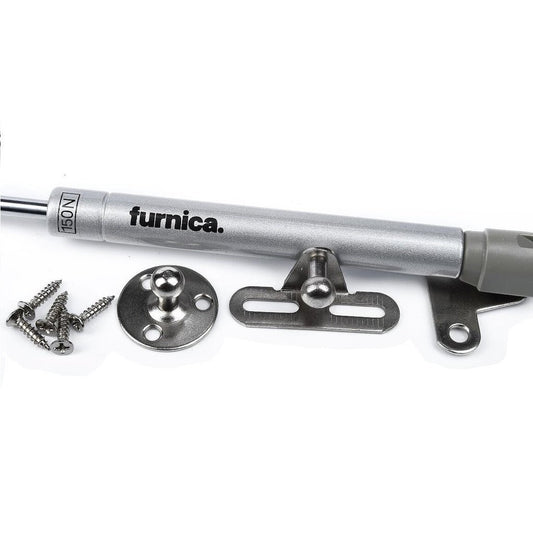

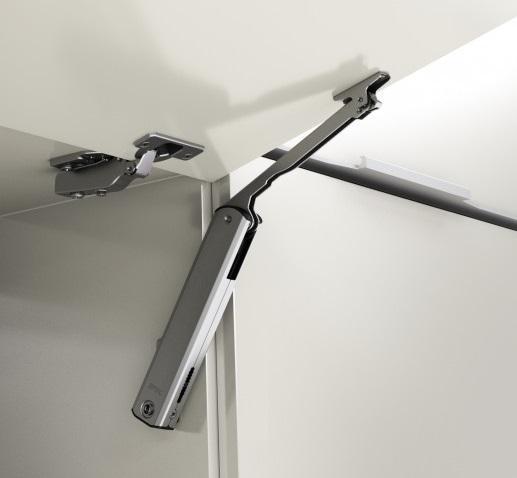

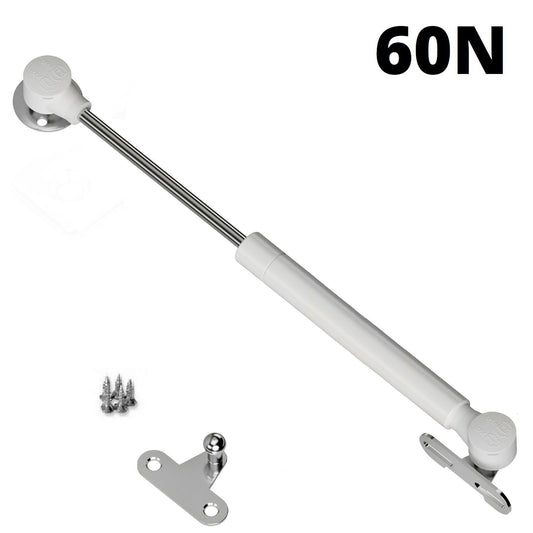

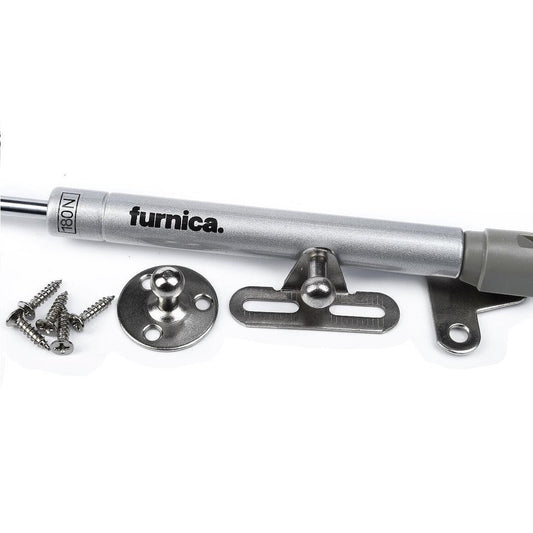

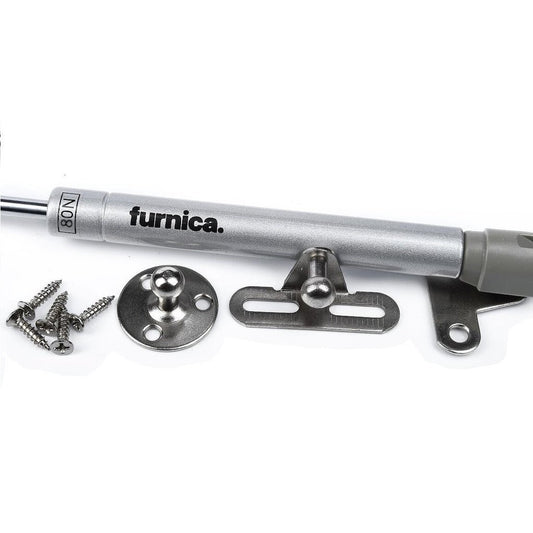

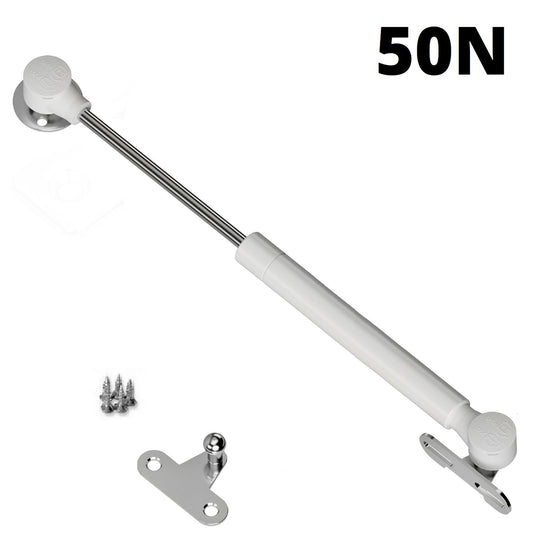
Gas struts(technically referred to as gas springs) are hydropneumatic adjustment elements consisting of a sealed cylinder and a piston rod. Utilizing compressed nitrogen gas inside, they generate a defined lifting force measured inNewtons (N)to smoothly raise, hold at a specific opening angle, and dampen the closing of cabinet fronts, heavy flaps, and lids.
How They Work and Technical Fundamentals
The mechanics of gas struts rely on a precisely calibrated pressure system. Inside the pressure tube, nitrogen gas is stored under high pressure. When the flap is closed, the piston rod pushes into the cylinder and further compresses the gas. Upon opening, the gas expands again, pushing the piston rod back out. This action supports the weight of the cabinet front and overcomes gravity.
An integrated damping system with a defined quantity of oil at the end of the cylinder provides end-position cushioning. This oil slows down the extension speed during the final few millimeters, allowing the flap to open softly without a harsh impact.
Important for professional planning: Gas struts should not be confused with pure cabinet soft-close dampers. Soft-close dampers merely catch the momentum of a slamming door. Gas struts, on the other hand, act like a muscle by providing active lifting force.
In this setup, gas struts strictly handle force transmission. To guide the travel motion,concealed cabinet hinges (European hinges)are required. Standard gas struts are typically installed alongside hingeswitha self-closing spring feature. The kinematic reason for this is that the hinge spring securely pulls the flap shut over the final few degrees (over-center kinematics) and holds it closed, counteracting the continuous outward force exerted by the gas strut.
Standard Designs vs. Push-to-Open Systems
When planning cabinet fronts, you must distinguish between two basic systems. Standard gas struts continuously push the flap upward during opening. They require a handle on the front panel and self-closing hinges to overcome the strut's backpressure when closed.
For handleless designs (push-to-open), specialized gas struts with modified kinematics are used. These pair with push catches (touch latches) and strictly require hingeswithoutself-closing springs. When tapped, the front panel must be free to pop open slightly via the touch latch before the gas strut takes over the rest of the stroke. A self-closing hinge spring would block this initial pop-out action.
Calculating the Correct Force: Sizing in Newtons (N)
The critical parameter when selecting gas struts is output force, measured in Newtons. Incorrect sizing leads directly to malfunction: If the strut is too weak, the flap drops shut. If it is too strong, closing the cabinet requires excessive force, or the hinges may eventually pull out of the cabinet body due to constant pressure.
A common rule-of-thumb mistake in practice is assuming "1 kg = 10 N" (or ~2.2 lbs = 10 N). This equation only applies to a direct vertical lift. On cabinet flaps, however, leverage (torque) comes into play. As the flap opens, its center of gravity shifts outward, creating a lever arm.
The required nominal force depends heavily on the weight of the flap (including the handle), theheight of the flap, and the mounting point distance. The taller the flap, the greater the leverage, and the more force is required.
For quick practical calculations, use this simplified formula:F = (Flap weight in lbs × 4.5 × Flap height in inches) / (2 × Mounting distance from hinge in inches)[or in metric:F = (Flap weight in kg × 10 × Flap height in mm) / (2 × Mounting distance from hinge in mm)].
A practical calculation example:An 11 lbs (5 kg) heavy, 15-3/4 in (400 mm) tall MDF flap does not simply require 50 N. Assuming a typical mounting distance of 3-1/8 in (80 mm) (distance from hinge to the gas strut's mounting plate), the math works out to:(5 kg × 10 × 400 mm) / (2 × 80 mm) = 125 N per side.That equals 250 N total force. In this case, a singlegas strut 250nor—technically better to prevent twisting—a pair of gas struts rated at 125 N each would be the proper professional choice to keep the flap safely open.
For heavy-duty applications like large chests or industrial lids, installers turn toGas Struts for Heavy Flaps. In this segment, high-performance models like theLIFT-O-MAT Gas Strut - 380Nor variants up to 500 N are widely used.
Pro Tip: Finding the Right Replacement Part
If an existing cabinet flap no longer stays open, the gas inside the cylinder has escaped over the years. The strut needs to be replaced. To find the exact replacement part, two parameters are key:
- Check the Newton rating:A power rating is usually printed or stamped on the pressure tube (the thick cylinder body). Look for a number combination ending in "N". For example, if it says "0320N", you need a 320 Newton strut.
- Measure the installed length:Measure the old strut in its fully extended state. The critical measurement is center-to-center distance from one mounting hole (ball socket/eyelet) to the other.
Lengths and Mounting Dimensions in Cabinetry
Besides force, the installed dimension determines the door opening geometry. The overall extended length sets the maximum opening angle and stroke distance of the piston rod.
The industry-standard length in traditional upper cabinet construction is9-7/8 in (250 mm). For a standard cabinet height of 11-13/16 in to 15-3/4 in (300 mm to 400 mm), this length yields an ergonomic opening angle of approximately75°, 90°, or 110°, depending on the chosen mounting position on the door. For deeper cabinets or custom setups, alternative lengths such as 10-5/8 in (270 mm) are also available.
Practical Applications
Gas struts are versatile hardware components suitable for various builds. Selecting the correct force and length depends on your project's specific requirements.
Kitchen Cabinets and Upper Wall Units
In modern kitchen design, traditional swinging doors on upper cabinets are widely replaced by lift-up doors. Upward-opening fronts provide headroom and unimpeded access to the entire cabinet interior. If you are looking for a reliablekitchen cabinet strutfor standard wall units with lightweight doors, aGas Strut Silver 9-7/8 in (250 mm) - 60N(often installed in pairs) is a popular choice.
Chests, Storage Benches, and Toy Boxes
On storage chests, lids lift open rather than swinging up. Here, robustgas struts for flapshold the lid open and prevent accidental slamming—a crucial safety feature to avoid pinched fingers, especially on toy boxes. Because chest lids are often made of solid wood, higher Newton ratings are usually required.
RV and Camper Cabinet Doors
Camper and RV interior builds require lightweight yet highly reliable hardware that won't vibrate loose during travel. Since caravan cabinet doors are typically constructed from lightweight poplar plywood, compact models with low extension force (e.g., 30 N to 50 N) are ideal.
Trash Can Enclosures and Outdoor Storage
Lids on outdoor trash enclosures are often heavy, awkward, and exposed to the elements. Gas struts make one-handed opening effortless. Because these lids are frequently made from heavy wood or metal, strong struts rated at 300 N and higher are necessary.
Lifting Mechanisms as Alternative Flap Systems
While standard gas struts exert a constant force curve and push flaps to their maximum opening angle, advanced cabinet designs can also use mechanical lift mechanisms.
Systems like theFURNICA HK-XS Lift Mechanism LF 500-1500 - Light/Medium/Strongutilize mechanical spring packs. They offer the functional advantage of a multi-position stop—the flap holds firmly at whatever angle you release it. However, for standard applications and retrofits, gas struts remain the most cost-effective and easiest-to-calculate solution.
Color Variants for Seamless Cabinet Aesthetics
Even though technical performance comes first, aesthetics inside visible cabinet interiors matter. Gas strut cylinders are available in various finishes to subtly match your cabinet decor:
- Silver Gas Struts:The established hardware standard in cabinetry. The neutral finish complements almost all interiors, from clean white to warm wood grains like oak or beech.
- Black Gas Struts:Designed for modern dark kitchens, loft-style interiors, or charcoal cabinets. They blend seamlessly into dark interiors for a high-end, sleek look.
- White Gas Struts:The top choice for classic white cabinets, medicine chests, and bathroom vanity units where hardware should blend into the background.
Proper Installation and Alignment
Installing gas struts requires precision. Mounting point deviations of just a few millimeters drastically alter leverage, which can prevent the flap from closing flush, cause binding against the cabinet frame, or make it hard to open.
1. Correct Orientation (Rod Down)
The cardinal rule of gas strut installation:The thin piston rod must point downward when the flap is closed.This ensures that the internal oil stays settled against the seal. The oil lubricates the seal, traps the nitrogen gas inside the cylinder, and provides smooth end-position damping when opening. If installed upside down (piston rod up), the seal dries out, gas leaks prematurely, and the strut fails.
2. Symmetrical Installation to Prevent Twisting
For door widths over 23-5/8 in (600 mm)—or on particularly heavy front panels—you should always installtwo gas struts(one on the left, one on the right). Using a single strut on a wide door causes racking and twisting during closure. This leads to uneven reveal gaps and places excessive stress on the hinge without a strut. When using pairs, simply divide the required total force in half (e.g., 200 N total requirement = two 100 N struts).
3. Mounting Points and Material Requirements
Exact drilling dimensions depend on your desired opening angle. Manufacturers provide mounting charts for this purpose. Placing the front mounting bracket closer to the hinge increases the door opening angle but requires more force to close.Material note:For standard wood or MDF doors, use standard screw-on mounting plates with wood screws (countersunk, typically 1-3/8 in (3.5 x 16 mm)). Pre-drilling is essential on MDF. If installing struts on narrow aluminum frame doors (e.g., glass doors), specialized narrow-frame adapters are required, as standard round plates will not fit on narrow metal profiles.
4. Clip-On Mounting
Gas struts feature ball sockets on both ends. Once the mounting plates are screwed onto the cabinet side and door, simply press the cylinder socket onto the mounting ball studs until it snaps into place. For removal, slightly lift the small metal retaining clip on the ball socket using a flathead screwdriver, and the strut will slide off effortlessly.
Maintenance and Service Life
Gas struts are sealed, maintenance-free units. They must never be oiled, greased, or sprayed with silicone. External lubricants attract dust and dirt, which act like sandpaper against the delicate piston rod seal when retracting. Painting the piston rod must also be strictly avoided.
When installed correctly (piston rod pointing down) and properly sized for load, high-quality gas struts easily achieve40,000 to 50,000 cycles. If a strut loses power after years of use, physical design prevents it from being repaired or refilled; it must be replaced as a complete unit.
---
FAQ – Frequently Asked Technical Questions About Gas Struts
How do I calculate how many Newtons (N) my gas strut needs?
Calculations depend on flap weight, flap height, and mounting point distance. The rule of thumb "1 kg = 10 N" is inaccurate for flaps because it ignores leverage. Use the formula:(Weight × 10 × Flap Height) / (2 × Mounting Distance)[using metric base units]. For an 11 lbs (5 kg), 15-3/4 in (400 mm) tall flap with a 3-1/8 in (80 mm) mounting offset, you need approximately 250 N total force.
Do I still need hinges if I install gas struts?
Yes, absolutely. Gas struts only transfer lifting force and do not guide the door's trajectory. They must always be paired with cabinet hinges (European hinges). For standard lifted doors with handles, use hingeswithbuilt-in springs to pull the door shut past the tip point. Hingeswithoutsprings are only used for handleless push-to-open doors.
Why won't my cabinet flap close completely with the new gas strut?
This usually happens for two reasons: Either the strut is severely oversized (too many Newtons for a lightweight door), or the mounting dimensions are off. If the door mounting bracket is installed too far from the hinge, the geometry blocks full closure because the cylinder bottoms out before the door touches the frame.
Which direction should a gas strut be installed?
When the cabinet flap is closed, the thin piston rod must point downward and the thick pressure tube upward. This keeps the internal oil positioned at the main seal, maintaining lubrication, preventing gas loss, and ensuring smooth soft-stop cushioning.
At what door width do I need two gas struts?
For door widths of 23-5/8 in (600 mm) or wider, installing two gas struts (one on each side) is strongly recommended. For narrower but very heavy doors (e.g., solid hardwood), dual struts are also advisable. This prevents uneven load distribution, which causes door twisting and premature hinge wear.
Can I repair a broken gas strut or refill the gas?
No. Gas struts are under extremely high pressure (often exceeding 1,450 psi / 100 bar) and are permanently sealed. Attempting to open or drill into a strut is extremely dangerous. A failed strut must be properly disposed of and replaced with a new unit of matching length and Newton rating.
Frequently Asked Questions
How do I choose the right spring force (Newtons) for my flap?
Calculate the total weight of the flap, including the handle. As a general rule of thumb, 2.2 lbs (1 kg) of weight requires approximately 10 N of spring force. For a 13.2 lbs (6 kg) MDF flap, you will need a 60 N gas strut. When in doubt, select the next higher rating for optimal support.
Can I use these gas struts as replacements for IKEA Utrusta?
Yes, they work excellently as replacement struts for IKEA Utrusta. Before purchasing, verify two key technical specifications: the extended center-to-center length and the Newton rating (N) must match your existing setup exactly. Mounting plates fit standard wood cabinet doors.
Are the mounting points compatible with standard System 32 hole patterns?
Yes, our gas struts integrate seamlessly into cabinet boxes using the standard 1-1/4 in (32 mm) line bore pattern. The included mounting plates align perfectly with standard spacing. Just ensure the correct set-back distance from the front edge according to your desired opening angle (75°, 90°, or 110°).
Do these struts work as alternatives to Häfele or Blum lift mechanisms?
They are a direct-fit alternative to Häfele and compatible with Blum systems whenever dimensions match. The critical factors are overall extended length (e.g., 10-1/2 in (268 mm)) and lifting force (e.g., 100 N). Compare these specs with your original hardware before ordering.
Do I need one or two gas struts per cabinet door?
We generally recommend installing two struts per door (one on each side). This prevents door panel twisting and ensures balanced weight distribution. A single strut with a matching Newton rating is only sufficient for small, lightweight doors under 11-13/16 in (30 cm) wide.