
Cabinet door bumpers
Popular Subcategories


-
Cabinet door bumper - self-adhesive silicon 1/4x1/16 inch - 50pcsRegular price $1.70Unit price / perRegular priceSale price $1.70
-
Cabinet door bumper - self-adhesive silicon 3/8x1/16 inch - 50pcsRegular price $1.86Unit price / perRegular priceSale price $1.86
-
Cabinet door bumper - self-adhesive - 3/8 inch Grey - 50pcsRegular price $1.88Unit price / perRegular priceSale price $1.88
-
Cabinet door bumper - self-adhesive - 3/8 inch Black - 50pcsRegular price $1.88Unit price / perRegular priceSale price $1.88
-
Cabinet door bumper - self-adhesive - 5/16x7/8 inch Black - 30pcsRegular price $1.27Unit price / perRegular priceSale price $1.27
-
Cabinet door bumper - self-adhesive - 3/8 inch Beige - 50pcsRegular price $1.88Unit price / perRegular priceSale price $1.88
-
Cabinet door bumper - self-adhesive - 3/8 inch White - 50pcsRegular price $1.88Unit price / perRegular priceSale price $1.88
-
Cabinet door bumper - self-adhesive - 5/16x7/8 inch White - 30pcsRegular price $1.27Unit price / perRegular priceSale price $1.27
-
Cabinet door bumper - self-adhesive - 5/16x7/8 inch Grey - 30pcsRegular price $1.27Unit price / perRegular priceSale price $1.27
-
Cabinet door bumper - self-adhesive - 5/16x7/8 inch Beige - 30pcsRegular price $1.27Unit price / perRegular priceSale price $1.27


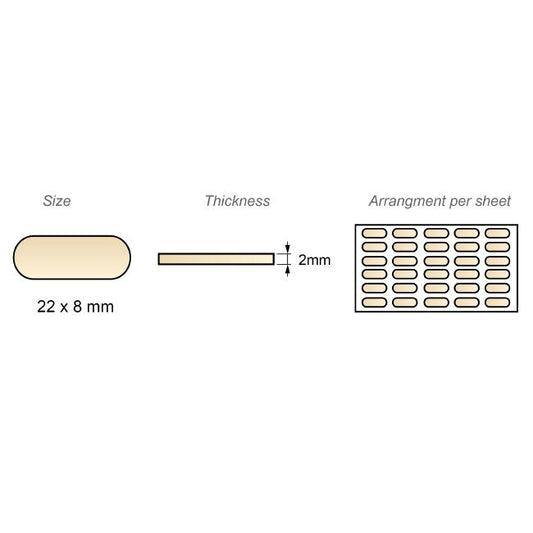


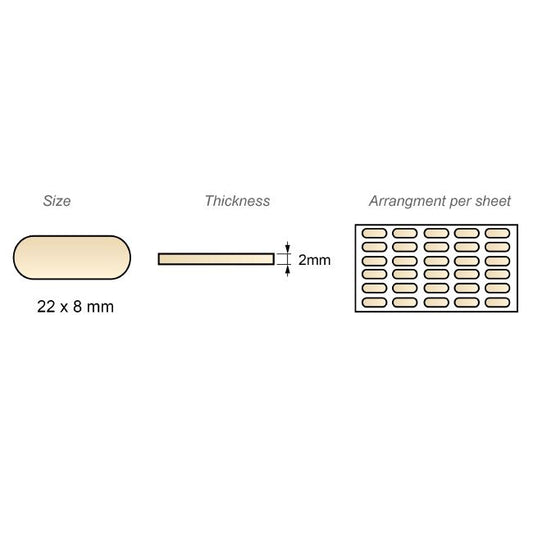

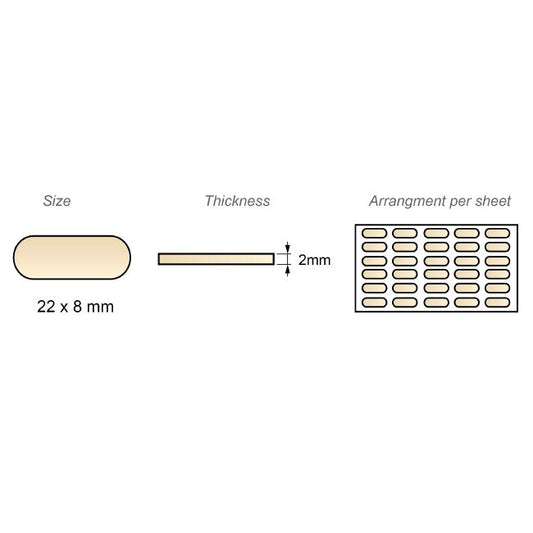

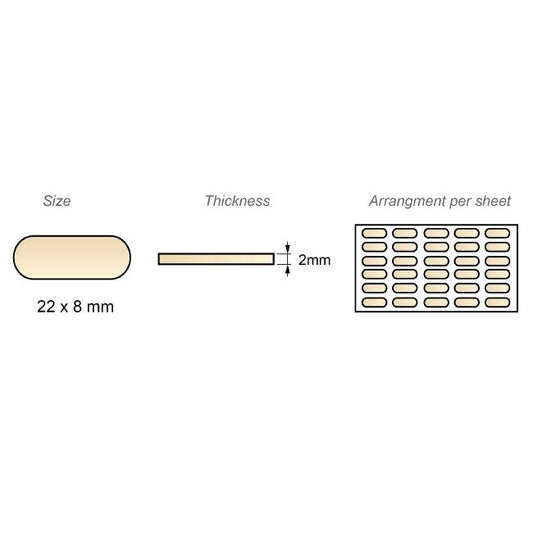
Cabinet door bumpersare self-adhesive, highly flexible cushioning elements made of polyurethane or silicone used in furniture construction for noise reduction, vibration damping, and as spacers. They form the contact point between moving furniture parts and the cabinet carcass, preventing material abrasion and absorbing the impact energy of closing doors and drawer fronts.
In professional cabinetmaking and interior design, these discrete components are a functional necessity to ensure the longevity of furniture and optimize both tactile feel and acoustics during use. This guide covers technical specifications, physical material properties, and proper sizing and installation of door stop bumpers.
Technical Fundamentals and Material Properties
The primary function of a dampening element is to absorb kinetic energy. Operating like tiny shock absorbers in a vehicle chassis, these components absorb the movement energy of a closing door and convert it into minimal deformation heat. To perform this task permanently without material fatigue, manufacturers rely on specific elastomers.
Polyurethane vs. Silicone
Most silicone bumpers and polyurethane dampers feature a Shore hardness in the range of 60 to 75 Shore A. This degree of hardness offers the ideal compromise between compressibility (for soft cushioning) and dimensional stability (to prevent the door front from bottoming out against the carcass).
Polyurethane (PUR) stands out due to its extremely high abrasion and tear resistance. It is age-resistant and retains its resilience even after thousands of closing cycles. Silicone, on the other hand, offers outstanding thermal properties and is completely free of plasticizers, which is particularly important when contacting delicate surfaces like painted wood or specific plastics. When working with self-adhesive silicone bumpers, you also benefit from high UV resistance, which minimizes the yellowing of clear bumpers over the years.
Geometry and Damping Characteristics
The shape ofcabinet door bumperssignificantly influences their cushioning performance:
- Hemispherical Bumpers:Provide progressive cushioning. The initial contact point is minimal, resulting in very soft, silent contact. As the door pushes further, material resistance builds up. A classic example is theSelf-Adhesive Silicone Bumper 1/4 in x 1/16 in (7x1.5 mm).
- Cylindrical Bumpers (Flat Dampers):Offer a larger contact surface right from the start. They are less suited for smoothly slowing down hinged doors and are primarily used as static spacers or anti-slip feet under equipment and enclosures. Products like theSelf-Adhesive Silicone Bumper 3/8 in x 1/16 in (10x2 mm)or the slightly differentSelf-Adhesive Silicone Bumper 23/64 in x 1/16 in (9x2 mm)fall into this category when featuring a flat profile.
- Oblong/Recessed Bumpers:Used when impact force needs to be distributed over a larger surface area or when narrow edges require protection.
Applications in Professional Cabinetmaking
Selecting the right self-adhesivecabinet door bumpersalways depends on the specific application, the weight of the moving parts, and the surface properties of the contact areas.
Impact Damping for Hinged Doors and Drawers
On conventional cabinet doors equipped with standard concealed hinges lacking integrated soft-close mechanisms, the door front slams unbuffered against the front edge of the cabinet body. This creates a loud banging noise and can lead to micro-cracks in edge banding on veneered or painted panels over time. This is where self-adhesive rubber bumpers come into play.
Placement typically occurs at the corners of the inside of the door opposite the hinges. For standard doors up to approx. 23-5/8 in (600 mm) in height, two bumpers (top and bottom) are sufficient. For taller doors, such as those on wardrobes, an additional bumper should be placed at intervals of approx. 19-11/16 in to 31-1/2 in (500 mm to 800 mm) to prevent door bow upon impact.
For dark woodgrains like Wotan Oak, Walnut, or black MDF panels, using color-matched dampers is essential to keep reveal gaps visually clean. Here, aSelf-Adhesive Bumper 3/8 in (10 mm) - Blackis recommended, or for elongated applications, theSelf-Adhesive Bumper 5/16 in x 7/8 in (8x22 mm) - Black. For white cabinet bodies, installers choose theSelf-Adhesive Bumper 3/8 in (10 mm) - Whiteor theSelf-Adhesive Bumper 5/16 in x 7/8 in (8x22 mm) - White.
Glass Tabletop and Shelf Support
A highly sensitive application area is pairing glass with metal or wooden subframes. When a glass panel rests directly on a hard surface, micro-movements inevitably cause scratches. Furthermore, point loading creates a high risk of breakage.
A rubber bumper for glass tabletops serves a dual function: it compensates for minor irregularities in the frame and, thanks to the high coefficient of friction of the polymer material, ensures slip-resistant holding without needing mechanical screws. For smaller display case shelves or side tables, aProtective Bumper for Glass Tables 9/16 in x 1/16 in (14x2.0 mm) - 28 pcsorProtective Bumper for Glass Tables 23/32 in x 5/32 in (18x3.8 mm) - 12 pcsis often sufficient.
For heavy glass dining tables with high dead weight, a larger contact area is required for load distribution. A large clear bumper like theProtective Bumper for Glass Tables 7/8 in x 1/16 in (22x2.0 mm) - 15 pcsis the proper component. Transparent designs ensure support points remain visually unobtrusive beneath the glass surface.
Vibration Isolation and Spacers
In addition to traditional door stop damping, self-adhesivecabinet door bumpersact as vibration isolators. When heavy-duty full-extension drawers (e.g., rated for 100 lbs (45 kg)) are shut forcefully, vibrations transfer to the entire cabinet carcass. Even if drawer slides feature internal dampening, adding extra adhesive bumpers behind the drawer front prevents direct contact between the front panel and cabinet side.
They are also used as wall spacers. For example, if a back panel is surface-mounted rather than dadoed into a groove, rear-mounted bumpers prevent the piece of furniture from rubbing against the wall. This ensures airflow behind the unit (preventing mold) and protects wall paint.
Selection Criteria and Sizing
Choosing the right damper depends on three factors: material thickness, diameter, and color integration.
Sizing: Diameter and Height
Dimensions for elastomeric bumpers are always given in diameter x height (in mm and imperial equivalents).
- Height (Damping Distance):A height of 1/16 in (1.5 mm to 2.0 mm) is standard for cabinet doors. It leaves a minimal, barely noticeable reveal gap between the door and carcass. A bumper with a height of 5/32 in (3.8 mm) creates a visible gap and is better suited as an anti-slip bumper foot for small electronics or heavy glass tops.
- Diameter (Surface Area):A diameter of 1/4 in to 3/8 in (7 mm to 10 mm) is ideal for standard cabinet doors. A larger diameter of 7/8 in (22 mm) distributes pressure better and is used for heavy door fronts or table top supports.
Color Variations and Visual Integration
While clear self-adhesivecabinet door bumpersare versatile and let the underlying surface show through, specific wood grains require solid colors.
For light wood finishes like Oak or solid light colors, aSelf-Adhesive Bumper 3/8 in (10 mm) - Beigeor the oblongSelf-Adhesive Bumper 5/16 in x 7/8 in (8x22 mm) - Beigeis suitable. For graphite gray kitchen fronts or office furniture made of anthracite melamine-faced particleboard, aSelf-Adhesive Bumper 3/8 in (10 mm) - GrayorSelf-Adhesive Bumper 5/16 in x 7/8 in (8x22 mm) - Grayis the correct choice.
If you are looking for a wide selection of clear bumpers for glass and acrylic applications, browse ourClear Cabinet Bumperscollection.
Adhesive Technology and Proper Installation
The most critical factor when using self-adhesive protective bumpers is not the cushioning material itself, but the adhesive backing system. High-quality bumpers feature high-tack acrylic adhesive or synthetic rubber adhesive on the back.
Acrylic adhesives require time to reach maximum bond strength (cohesion), but offer excellent temperature and aging resistance. Rubber adhesives provide high initial tack, but are more sensitive to UV exposure.
Surface Preparation (Step-by-Step)
To ensure bumpers adhere permanently and do not shift under shear forces during door closure, surfaces must be completely clean, dry, and free of oil or dust.
- Cleaning:Wipe down the cabinet frame at the installation spot using a lint-free cloth. For kitchen cabinets where grease films accumulate, cleaning with isopropyl alcohol (IPA) is required. Avoid household cleaners that leave behind residue or glass cleaners with wax/silicone additives.
- Drying:Allow the cleaning solvent to evaporate completely. The surface must be 100% dry.
- Application:Peel the bumper from the backing sheet without touching the adhesive side with your fingers (skin oils drastically reduce adhesion).
- Pressure:Position the bumper on the desired spot and press firmly for 3 to 5 seconds. Pressure-sensitive adhesive activates under force by pressing into the microscopic pores of melamine or painted surfaces.
- Curing:Avoid putting full force on the bumper for the first 24 hours. Peak bonding strength develops over this period.
Placement and Leverage Considerations
Bumper placement affects the leverage applied to cabinet hinges. Never place a bumper too close to the hinge cup. Impact energy close to the pivot point creates extreme leverage forces on the hinge mounting plate and screws in the cabinet carcass. Bumpers should always be installed on the pull/handle side (the edge opposite the hinge), ideally setback about 3/4 in to 1-3/16 in (20 mm to 30 mm) from the top and bottom corners.
Frequently Asked Questions (FAQ)
What is the difference between silicone and polyurethane bumpers?Polyurethane (PUR) is extremely wear-resistant and tear-proof, making it ideal for high-use mechanical stop bumpers. Silicone is softer, chemically inert, and completely plasticizer-free. It is primarily used where chemical reactions with sensitive finishes (like high-end lacquers) must be avoided.
Can cabinet door bumpers replace soft-close hinges?No. Soft-close concealed hinges decelerate door momentum during the closing motion (over the last 30° of swing angle) using a hydraulic cylinder. Rubber bumpers are pure impact mitigators. They deaden the sound of the door contacting the frame, but do not slow down the closing speed of the door.
How many bumpers do I need per cabinet door?For a standard wall cabinet door up to 27-1/2 in (700 mm) high, twocabinet door bumpersare sufficient—one at the top corner and one at the bottom corner on the handle side. For heavy solid wood doors or tall pantry doors up to 78-3/4 in (2000 mm) high, use 3 to 4 bumpers evenly spaced along the edge to prevent door warping upon closing.
Why do some clear bumpers turn yellow over time?Yellowing is caused by UV exposure and oxidation of lower-grade polymers or adhesives. High-quality clear bumpers are UV-stabilized to prevent discoloration. However, direct sunlight over many years can still cause subtle color shifts. Inside enclosed cabinetry, this effect is virtually non-existent.
How do I remove old, hardened adhesive bumpers from furniture?If a bumper has hardened over time and needs replacement, warm it slightly with a hairdryer (do not overheat to avoid damaging decorative wood foil or laminate). This softens the acrylic adhesive. Slowly peel the bumper off. Rub off any remaining adhesive residue with a small amount of isopropyl alcohol or adhesive remover. Avoid sharp scrapers that can scratch cabinet surfaces.
Which bumper size is best for heavy glass table tops on metal frames?For heavy glass tops, a larger surface area is critical to distribute load and increase friction. Use flat bumpers with a larger diameter, such as 7/8 in (22 mm) diameter and 1/16 in (2.0 mm) thickness. The flat profile prevents tabletop wobble while the wide diameter maximizes grip.
Do self-adhesive bumpers stick to unfinished, raw wood?Adhesion on raw, untreated wood or bare particleboard is limited because porous surfaces and loose wood dust disrupt the adhesive layer. Adhesives require a smooth, sealed surface (such as melamine laminate, varnish, or glass) to achieve full holding power. On raw wood, lightly sand the contact spot, remove dust completely, and seal it with lacquer or primer before sticking the bumper on.