
Table Legs
Popular Subcategories
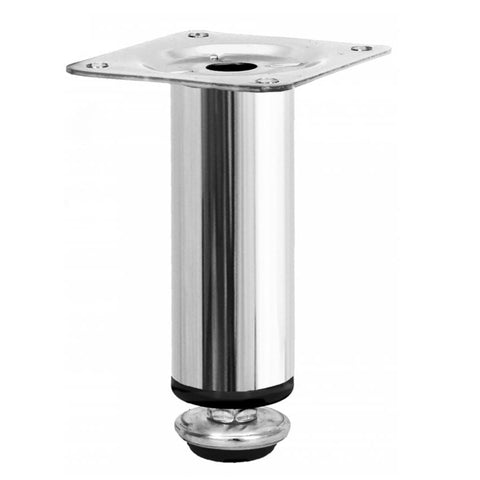

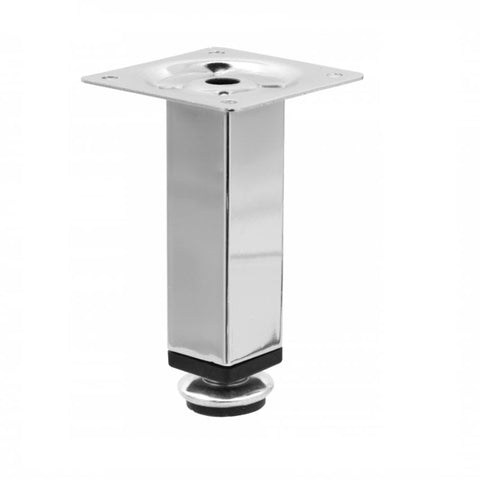
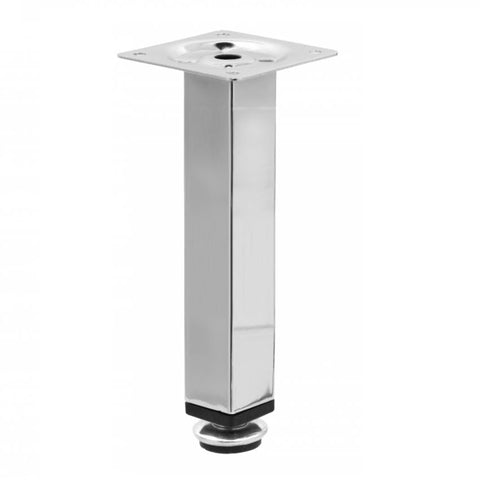
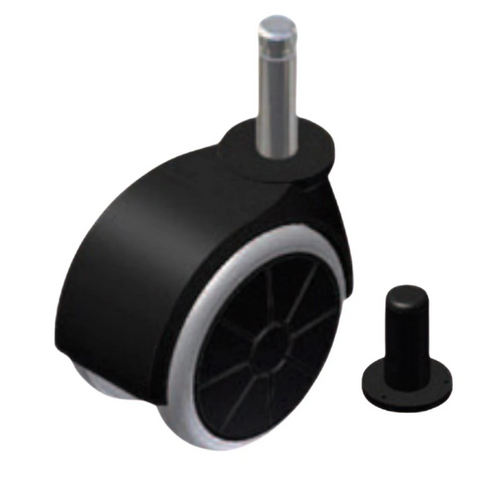
-
Square Furniture Leg 27-15/16 inch, Chrome, ZnAl Mounting PlateRegular price $23.77Unit price / perRegular priceSale price $23.77
-
Adjustable Furniture Leg 43-5/16 inch - Steel Mounting Plate - ChromeRegular price $16.67Unit price / perRegular priceSale price $16.67
-
Adjustable Furniture Leg 32-5/16 inch - ChromeRegular price $11.38Unit price / perRegular priceSale price $11.38
-
Adjustable Furniture Leg 32-5/16 inch - ZnAl Mounting Plate - SatinRegular price $15.61Unit price / perRegular priceSale price $15.61
-
Adjustable Furniture Leg 32-5/16 inch - ZnAl Mounting Plate - ChromeRegular price $13.40Unit price / perRegular priceSale price $13.40
-
Adjustable Furniture Leg 27-15/16 inch - ZnAl Mounting Plate - AluminiumRegular price $14.23Unit price / perRegular priceSale price $14.23
-
Adjustable Furniture Leg 43-5/16 inch - ZnAl Mounting Plate - AluminumRegular price $16.38Unit price / perRegular priceSale price $16.38
-
Adjustable Furniture Leg 27-15/16 inch - ChromeRegular price $9.98Unit price / perRegular priceSale price $9.98
-
Adjustable Furniture Leg 43-5/16 inch - ZnAl Mounting Plate - ChromeRegular price $16.67Unit price / perRegular priceSale price $16.67
-
Adjustable Furniture Leg 27-15/16 inch - ZnAl Mounting Plate - ChromeRegular price $11.44Unit price / perRegular priceSale price $11.44
-
Level Regulator for 11/16 inch (18mm) Boards, M6, BlackRegular price $1.80Unit price / perRegular priceSale price $1.80
-
Level Regulator, M8, BlackRegular price $0.30Unit price / perRegular priceSale price $0.30
-
Square Furniture Leg 27-15/16 inch, White, ZnAl Mounting PlateRegular price $26.51Unit price / perRegular priceSale price $26.51
-
Square Furniture Leg 27-15/16 inch, Black, ZnAl Mounting PlateRegular price $26.51Unit price / perRegular priceSale price $26.51
-
Square Furniture Leg 27-15/16 inch, Satin, ZnAl Mounting PlateRegular price $26.51Unit price / perRegular priceSale price $26.51
-
Adjustable Furniture Leg 32-5/16 inch - ZnAl Mounting Plate - Brushed NickelRegular price $15.61Unit price / perRegular priceSale price $15.61
-
Adjustable Furniture Leg 32-5/16 inch - ZnAl Mounting Plate - AluminiumRegular price $15.61Unit price / perRegular priceSale price $15.61
-
Adjustable Furniture Leg 32-5/16 inch - ZnAl Mounting Plate - WhiteRegular price $12.50Unit price / perRegular priceSale price $12.50
-
Adjustable Furniture Leg 32-5/16 inch - ZnAl Mounting Plate - BlackRegular price $12.89Unit price / perRegular priceSale price $12.89
-
Adjustable Furniture Leg 32-5/16 inch - SatinRegular price $12.36Unit price / perRegular priceSale price $12.36
-
Adjustable Furniture Leg 32-5/16 inch - Brushed NickelRegular price $12.36Unit price / perRegular priceSale price $12.36

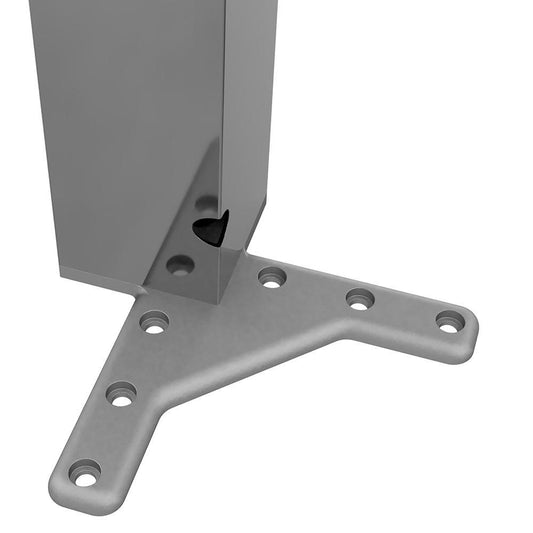

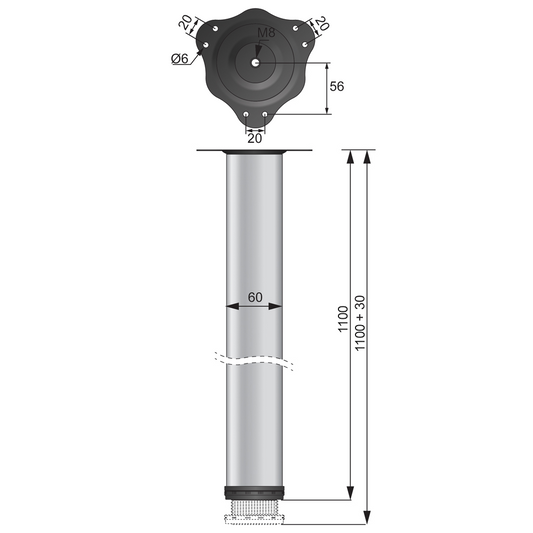

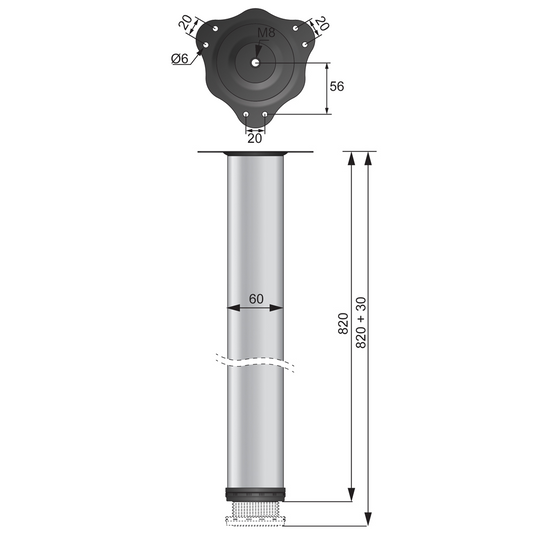

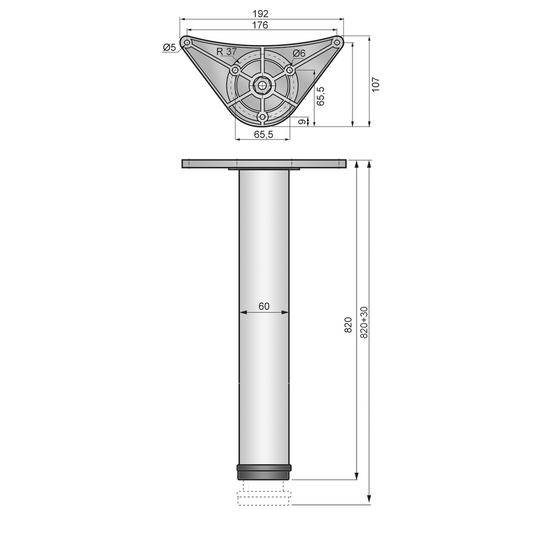

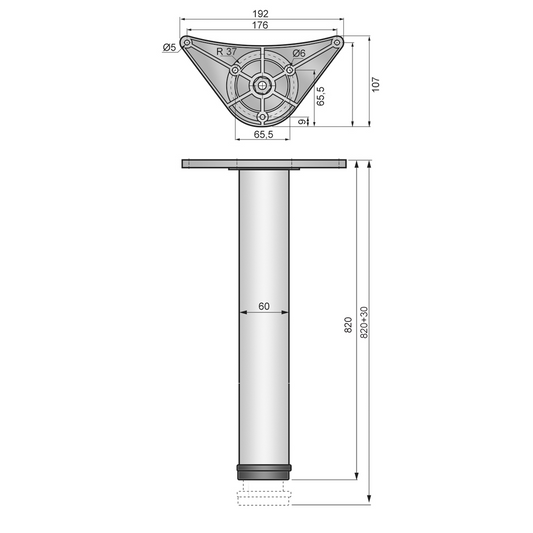

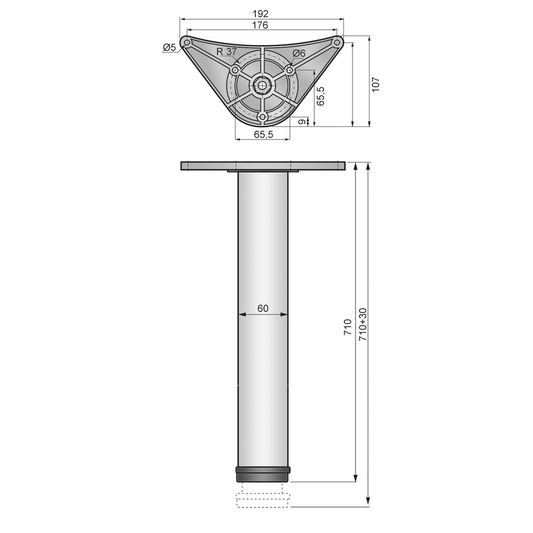

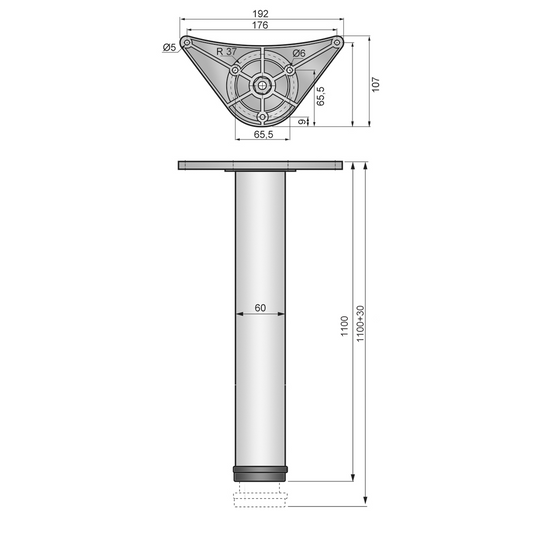

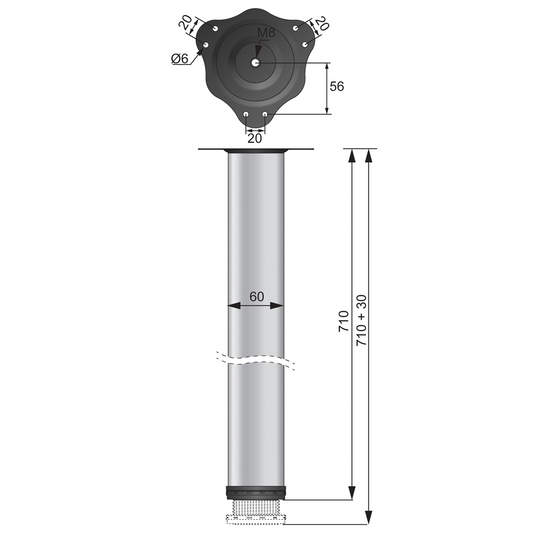

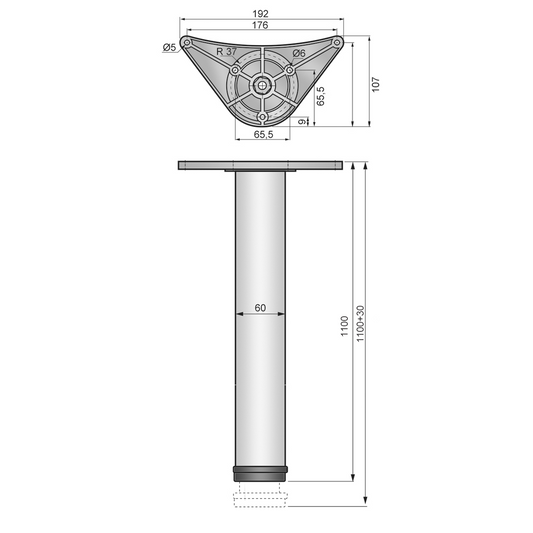

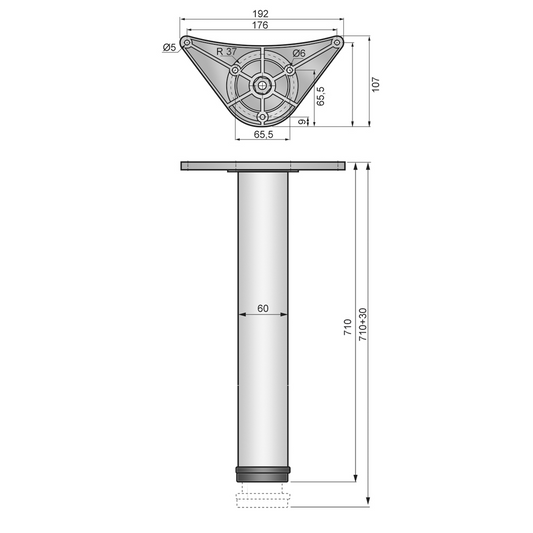

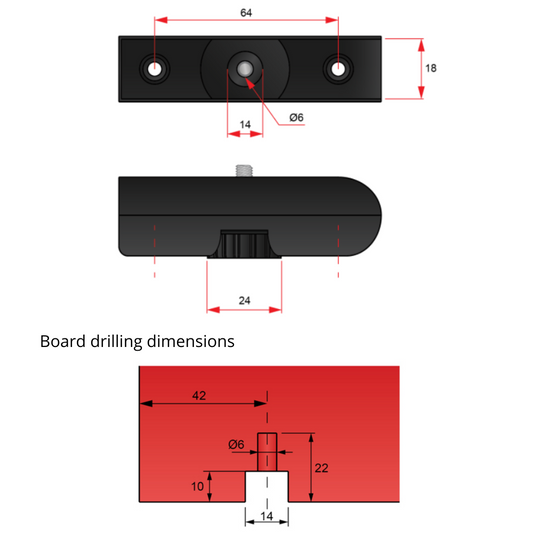


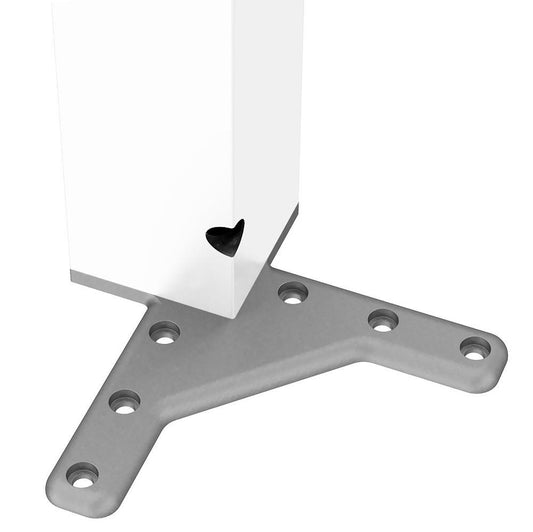

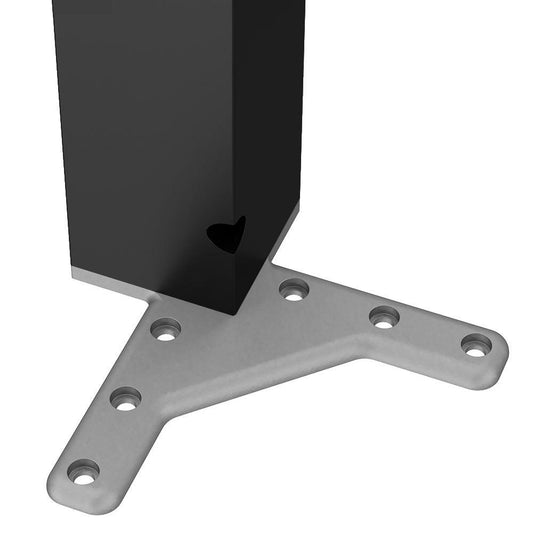

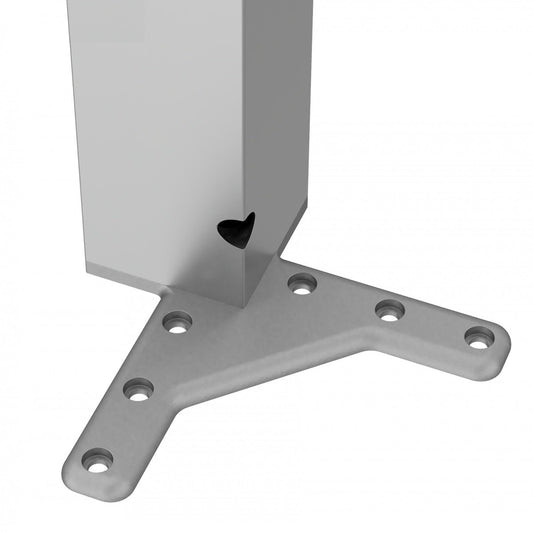

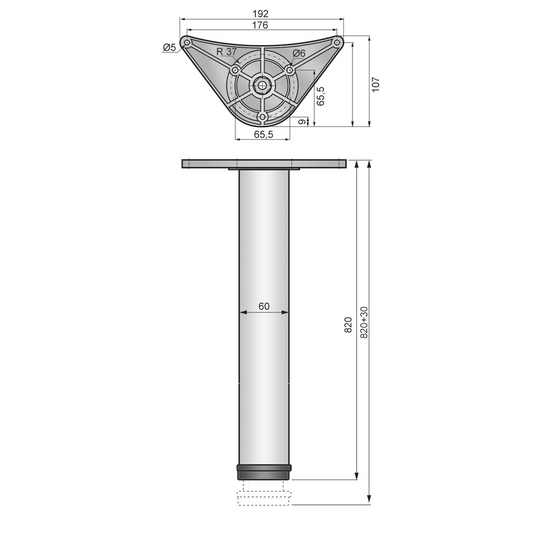

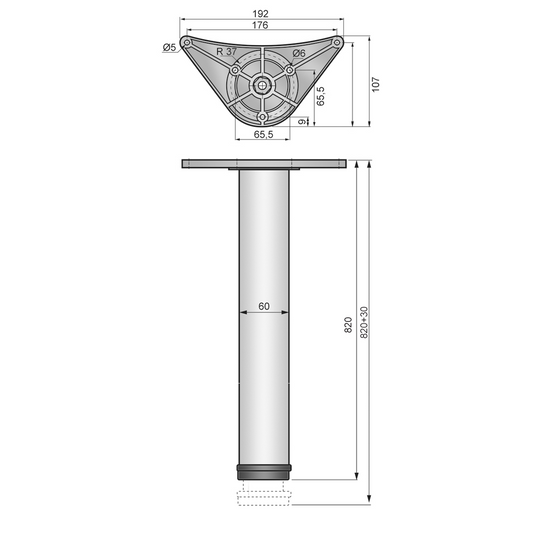

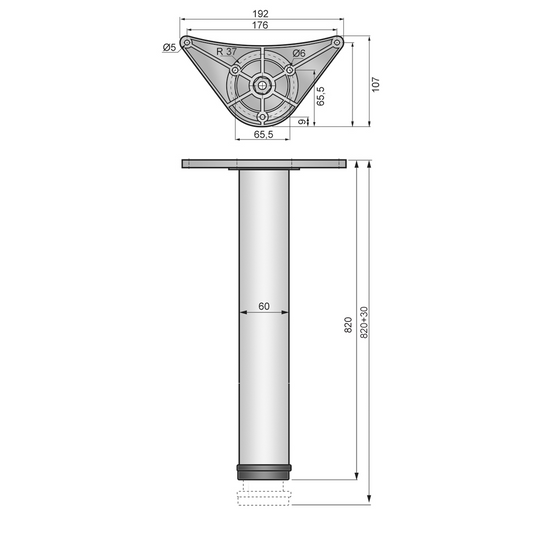

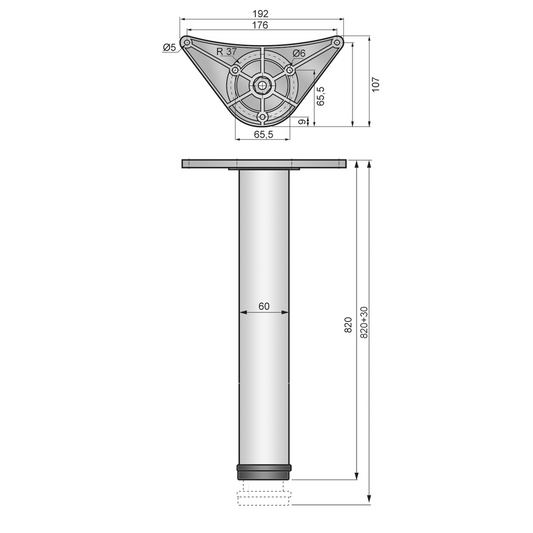

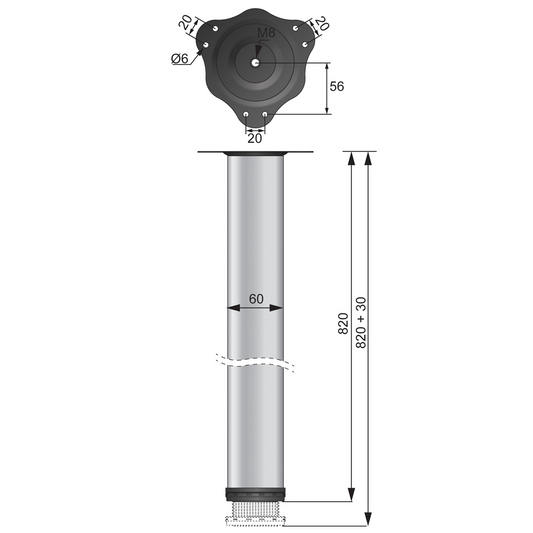

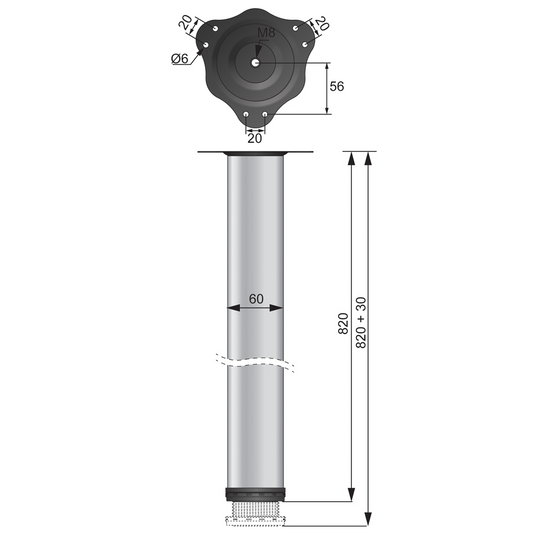
Table legsare load-bearing, vertical structural elements made of metal that form a positive, force-locking connection to the tabletop while safely diverting static and dynamic loads into the floor. In furniture construction and interior design, they decisively define the final height, stability, and maximum weight capacity of desks, dining tables, and freestanding work surfaces.
For carpenters, installers, and experienced furniture designers, selecting the correcttable legsis a matter of structural integrity and ergonomics. The forces acting on the tabletop—particularly lateral shear forces from horizontal movement—must be fully absorbed by the mounting plate. Much like the chassis of a commercial vehicle, metal legs for tables must not only support the resting dead weight of the structure, but also compensate for asymmetrical loads during daily use.
Geometry and Ergonomics: Standard System Heights
Choosing the correct length dictates the intended purpose of the furniture piece. In professional furniture assembly, the total table height is calculated by adding the thickness of the tabletop to the length of the leg. The industry uses established standard heights based on ergonomic guidelines.
Legs for Coffee and End Tables (16 in / 406 mm)
For low-profile living room setups, the16 in (406 mm)height is the standard. This height is ideal for coffee tables placed in front of sofa arrangements. A classic example is the16 in (406 mm) Matte Black Table Leg. With this height, the center of gravity remains low, which minimizes leverage forces on the mounting plate.
Desk Legs and Dining Table Legs (28 in / 710 mm)
The standard height across the furniture industry for seated workstations and dining spaces is28 in (710 mm). Combining thesemetal table legswith a typical 1 in to 1-3/16 in (25 mm to 30 mm) tabletop results in an ergonomic top-edge height of roughly 29 in (740 mm). In this category, you will find numerous styles ranging from round tubular profiles to the28 in (710 mm) Square Table Leg - Black with Zinc alloy Mounting Plate. When planningtable feetfor dining setups, adhering to this height is crucial to ensure proper legroom beneath the apron or tabletop.
Countertops and Kitchen Islands (32 in / 820 mm)
For extended prep surfaces, kitchen counter extensions flush with existing cabinetry, or semi-height workbenches, the32 in (820 mm)size is used. A32 in (820 mm) Table Leg - Steel Mounting Plate - Whitepaired with a 1-1/2 in (40 mm) postforming top brings the surface to a comfortable, back-friendly working height of about 34 in (860 mm). Because lateral leverage increases at these lengths, secure and precise screw attachment of the mounting plate is essential.
Tall Table Legs for Bar Tables and Counters (43 in / 1100 mm)
For standing workstations, bar counters, or reception desks, installers rely on43 in (1100 mm) tall table legs. When using40 in (1 meter) or taller table legs, structural dynamics shift significantly. Leverage forces at the mounting point double compared to a standard coffee table. A43 in (1100 mm) Table Leg - Steel Mounting Plate - Chromerequires a solid tabletop and, ideally, additional wall anchors to eliminate sway or wobbling.
Materials Science: Metal and Steel Table Legs
The structural integrity oftable legsdepends heavily on the base material and profile wall thickness. Modern modular furniture construction frequently replaces wood with metal, as metal components deliver reliable weight capacities and a rigid, twist-resistant connection to the mounting plate.
Tubular Steel and Steel Profiles
The core of most builds consists ofsteel table legs. Cold-rolled steel offers exceptionally high tensile and compressive strength. The round or square tubing is machine-cut and either welded directly to the mounting plate or clamped internally via a heavy-duty threaded rod. Steel is the preferred choice whenever maximum weight capacity is required.
Aluminum
Aluminum table legsstand out for their lighter weight combined with superior corrosion resistance. Extrusion processes give aluminum profiles their precise geometry. They are especially suited for high-moisture environments or covered outdoor areas. Most surfaces are anodized, which seals the metal pores to create a hard, scratch-resistant protective layer.
Surface Finishes and Aesthetic Integration
Beyond structural support,table legsdefine the visual appeal of the furniture piece. High-grade surface coatings also protect the core material against oxidation, wear, and abrasion.
- Powder Coating (Matte Black / White):Electrostatically charged color powder is sprayed onto the metal and baked at approx. 390 °F (200 °C). The result is an impact-resistant, uniform finish.White table legsand matte black options like the28 in (710 mm) Matte Black Table Legbenefit greatly from this durable seal.
- Electroplating (Chrome):Through an electrolytic bath, the steel tube is coated with a micro-thin, extremely hard layer of chrome. This high-gloss finish is wear-resistant and highly resilient against common household chemicals.
- Brushed Stainless Steel (Look):The base material is nickel-plated and mechanically brushed to create a fine, directional texture that resists fingerprints better than mirror-polished chrome. A prime example is the28 in (710 mm) Table Leg - Steel Mounting Plate - Brushed Stainless Steel Look.
- Satin Finish:A soft, semi-matte finish achieved using specialized alloy additives or light sandblasting prior to final coating. It diffuses light smoothly for a sleek, technical look.
Table Leg Attachment: Mounting Plates in Detail
The most critical point in any table construction is the connection between the horizontal top and the vertical leg. Attachingtable legsrequires a flange plate, commonly known as amounting plate, which determines how efficiently torsional forces are transferred and dissipated.
Two main mounting plate materials dominate the industry:
- Steel Mounting Plates:Typically welded or heavy-bolted directly to the leg to provide maximum rigidity. Steel plates are ideal for solid wood tops where screws can bite deep into the material.
- Zinc alloy Mounting Plates:Zinc-aluminum alloy (Zamak) plates are die-cast, allowing for intricate shapes and integrated threaded sockets. Zinc alloy plates are rustproof and offer exceptional dimensional accuracy.
Screw Selection and Pilot Holes
Screw-on table legsdemand correct hardware selection. Standard particle board 3/4 in to 1 in (18 mm to 25 mm) or MDF tops require **chipboard screws**. Their thread geometry is designed to cut cleanly into engineered wood without splitting the board.
- Screw Length:Screw length should not exceed tabletop thickness minus 1/16 in to 1/8 in (2 mm to 3 mm). For a 3/4 in (18 mm) top and a 1/16 in (2 mm) mounting plate, select a #8 x 5/8 in (#10 x 5/8 in) screw (4 x 16 mm or 5 x 16 mm).
- Drive Type:Screws with **PZ (Pozidriv)** or **TX (Torx)** drives are strongly recommended. Torx offers superior torque transmission, preventing cam-out or stripped screw heads during installation.
- Pilot Holes:Hard materials like solid oak or beech must be pre-drilled. The drill bit diameter should match the screw shank diameter (e.g., a 1/8 in / 3 mm bit for a #8 / 4 mm screw). Pre-drilled holes also prevent melamine surfaces from tearing on laminated boards.
For heavy-duty tables or furniture frequently disassembled for moving, using **threaded wood inserts** (Rampa inserts) is recommended. Embedded into the tabletop, they accept metric machine screws (e.g., M6), dramatically increasing pull-out resistance.
Height Adjustment and Leveling Feet
Floors in homes and offices are rarely completely flat. Subfloor variations or transitions between flooring materials require adjustable hardware. This is whereadjustable table legsshine.
Height adjustments are made via an integrated plastic or metal foot at the base of the leg, mounted on a threaded rod that screws in and out. Typical adjustment ranges span from +3/8 in to +1-3/16 in (+10 mm to +30 mm).
For replacing or retrofitting worn glides, standalone leveling feet are available. TheM8 Black Leveling Footutilizes a solid 5/16 in (8 mm) thread capable of carrying heavy compression loads. For lighter builds or thinner panels, anM6 Black Leveling Foot for 3/4 in (18 mm) Panelsprovides a clean solution.
Leveling feet also provide floor protection: they isolate the metal table leg from hard flooring (hardwood, laminate, tile), preventing scratches and dampening vibration.
Compatibility and Upgrades
Installers frequently need to upgrade existing desks or replace damaged support systems. Many look for direct aftermarket solutions (such as replacement options for **IKEA table legs**) to restore or enhance their setup.
Standardizedmetal table legsfeaturing universal mounting plates can be installed underneath virtually any solid tabletop. The primary requirement is that the top has sufficient thickness for secure screw engagement. Hollow-core honeycomb panels require solid wood blocking or internal inserts at the mounting points, as standard wood screws cannot hold in hollow spaces. Once verified, factory legs can be replaced with heavy-duty steel table legs to significantly increase load capacity and stability.
FAQ – Frequently Asked Questions About Table Leg Installation
How many table legs are needed for a standard dining table?A standard rectangular dining table requires fourdining table legsplaced near the corners. Mounting them about 2 in to 4 in (50 mm to 100 mm) from the outer edge reduces leverage on the top's edge and helps prevent tear-out. For very long tables over 78 in (2000 mm) without a support apron, a fifth center leg is recommended to prevent sagging.
What screws should I use to mount table legs?Use dedicated chipboard screws for engineered wood or wood screws for solid timber. A screw diameter of #8 or #10 (4 mm or 5 mm) is ideal. Calculate screw length by taking the tabletop thickness, subtracting 1/16 in (2 mm) for safety, and adding the thickness of the mounting plate.
How do I stabilize tall table legs (43 in / 1100 mm)?Tall table legsexperience extreme leverage forces. To stop sway, the tabletop itself must be rigid (e.g., 1-1/2 in / 40 mm solid wood). For freestanding setups, adding a support frame or apron underneath is structurally advisable. Alternatively, anchor one side of the tabletop securely to a wall.
What is the difference between steel and Zinc alloy mounting plates?Steel plates are welded and deliver ultimate torsional rigidity for heavy loads. Zinc alloy (zinc-aluminum) plates are cast, rustproof, precisely dimensioned, and perfect for standard office desks and indoor dining tables. Both styles safely transfer forces from the plate into the leg tube.
Can I trim or cut a table leg to custom length?While cutting a metal leg tube with a hacksaw or pipe cutter is physically possible, you will lose the internal insert or threading for the leveling foot, which is factory-pressed or welded into place. It is strongly advised to purchase the correct factory height (e.g., 28 in / 710 mm or 32 in / 820 mm) from the start.
How do height-adjustable table legs work?The base of the leg features an internal threaded insert (typically M6 or M8). A durable plastic or metal foot on a threaded stem screws into this insert. Turning the foot extends the threaded rod out of the tube, extending leg length by up to 1-3/16 in (30 mm) to level out uneven floors with millimeter precision.
Frequently Asked Questions
How much weight can these table legs support?
The maximum load capacity is up to 110 lbs (50 kg) per table leg (totaling 440 lbs / 200 kg across four legs). Achieving this rating requires proper installation with the included mounting plate onto a sturdy, solid tabletop. Ensure you use properly sized screws appropriate for your tabletop thickness to guarantee maximum stability.
Are the table legs adjustable for uneven floors?
Yes, most of our table legs include an integrated floor leveling feature. They can be smoothly adjusted from +3/4 in to +1-3/16 in (+20 mm to +30 mm) in height. This keeps your table steady and wobble-free on uneven surfaces. The adjustable foot pad is made of floor-friendly plastic to prevent scratches on hardwood or tiled floors.
Can I use these table legs on my existing IKEA tabletop?
Yes, our table legs are compatible with IKEA tabletops. They install using a universal screw-on mounting plate with standard hole patterns. The primary technical requirement is that the mounting areas on the tabletop are solid enough (at least 3/4 in / 18 mm material thickness) for wood screws to bite securely and hold over time.
Which screws do I need to install the table legs?
Use standard chipboard or wood screws (such as #8 x 5/8 in / 4x16 mm or #8 x 3/4 in / 4x20 mm), depending on your tabletop thickness. Screw length should be about 1/16 in to 1/8 in (2–3 mm) shorter than the top's overall thickness. The metal mounting plates feature pre-drilled holes (3/16 in / Ø 5 mm) for fast, aligned attachment.
Are these table legs available in standard kitchen countertop heights?
Yes, we offer table legs in a standard 32 in (820 mm) height specifically designed for kitchen counter extensions and islands. If you are using them as support legs for cabinetry systems, check your target overall height carefully. The integrated plastic leveling foot allows for an extra +1-3/16 in (+30 mm) of fine adjustment.