
Round Furniture Legs
Popular Subcategories


-
Kitchen Cabinet Leg 3-15/16 inch - BlackRegular price $1.13Unit price / perRegular priceSale price $1.13
-
Adjustable Furniture Leg 43-5/16 inch - Steel Mounting Plate - ChromeRegular price $16.67Unit price / perRegular priceSale price $16.67
-
Adjustable Furniture Leg 32-5/16 inch - ChromeRegular price $11.38Unit price / perRegular priceSale price $11.38
-
Adjustable Furniture Leg 32-5/16 inch - ZnAl Mounting Plate - SatinRegular price $15.61Unit price / perRegular priceSale price $15.61
-
Adjustable Furniture Leg 32-5/16 inch - ZnAl Mounting Plate - ChromeRegular price $13.40Unit price / perRegular priceSale price $13.40
-
Furniture Leg 5-7/8 inch - ChromeRegular price $3.32Unit price / perRegular priceSale price $3.32
-
Adjustable Furniture Leg 27-15/16 inch - ZnAl Mounting Plate - AluminiumRegular price $14.23Unit price / perRegular priceSale price $14.23
-
Adjustable Furniture Leg 43-5/16 inch - ZnAl Mounting Plate - AluminumRegular price $16.38Unit price / perRegular priceSale price $16.38
-
Kitchen Cabinet Leg 5-7/8 inch - BlackRegular price $1.22Unit price / perRegular priceSale price $1.22
-
Adjustable Furniture Leg 27-15/16 inch - ChromeRegular price $9.98Unit price / perRegular priceSale price $9.98
-
Adjustable Furniture Leg 43-5/16 inch - ZnAl Mounting Plate - ChromeRegular price $16.67Unit price / perRegular priceSale price $16.67
-
Adjustable Furniture Leg 27-15/16 inch - ZnAl Mounting Plate - ChromeRegular price $11.44Unit price / perRegular priceSale price $11.44
-
Furniture Leg 5-7/8 inch - SatinRegular price $3.90Unit price / perRegular priceSale price $3.90
-
Furniture Leg 3-15/16 inch - SatinRegular price $3.14Unit price / perRegular priceSale price $3.14
-
Adjustable Furniture Leg 32-5/16 inch - ZnAl Mounting Plate - Brushed NickelRegular price $15.61Unit price / perRegular priceSale price $15.61
-
Adjustable Furniture Leg 32-5/16 inch - ZnAl Mounting Plate - AluminiumRegular price $15.61Unit price / perRegular priceSale price $15.61
-
Adjustable Furniture Leg 32-5/16 inch - ZnAl Mounting Plate - WhiteRegular price $12.50Unit price / perRegular priceSale price $12.50
-
Adjustable Furniture Leg 32-5/16 inch - ZnAl Mounting Plate - BlackRegular price $12.89Unit price / perRegular priceSale price $12.89
-
Adjustable Furniture Leg 32-5/16 inch - SatinRegular price $12.36Unit price / perRegular priceSale price $12.36
-
Adjustable Furniture Leg 32-5/16 inch - Brushed NickelRegular price $12.36Unit price / perRegular priceSale price $12.36
-
Adjustable Furniture Leg 32-5/16 inch - AluminiumRegular price $12.36Unit price / perRegular priceSale price $12.36

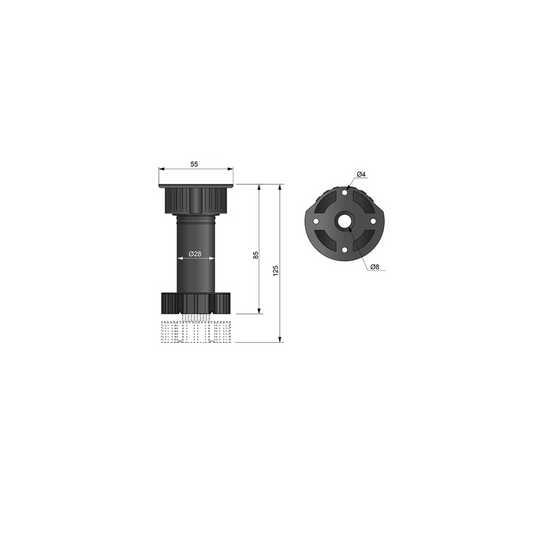

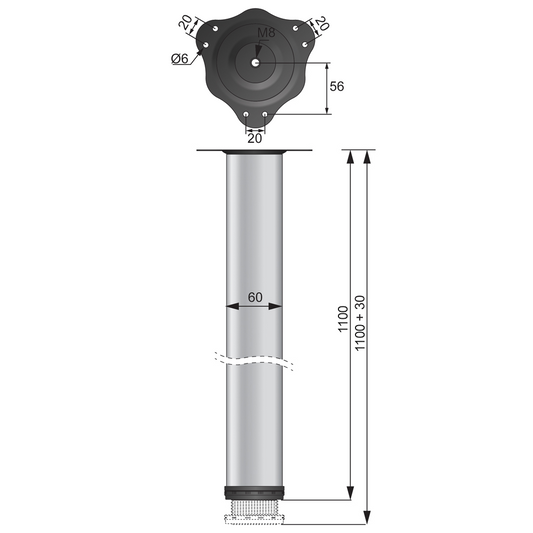

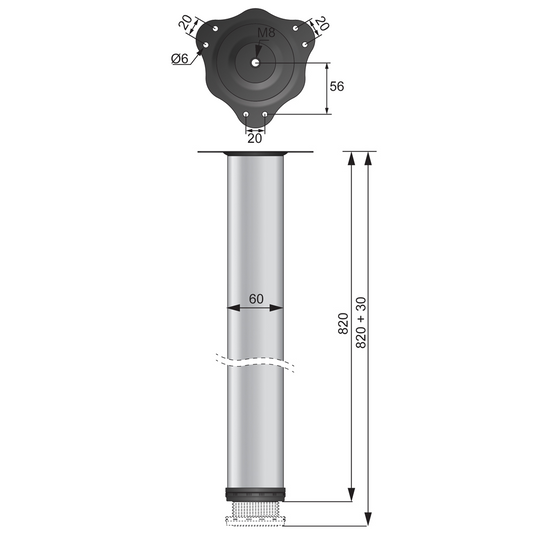

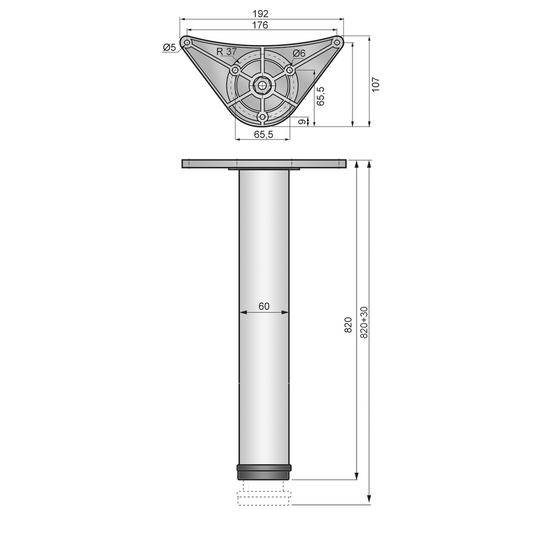

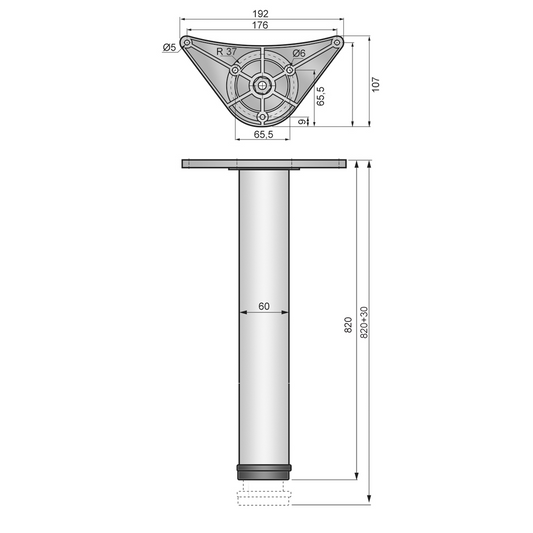

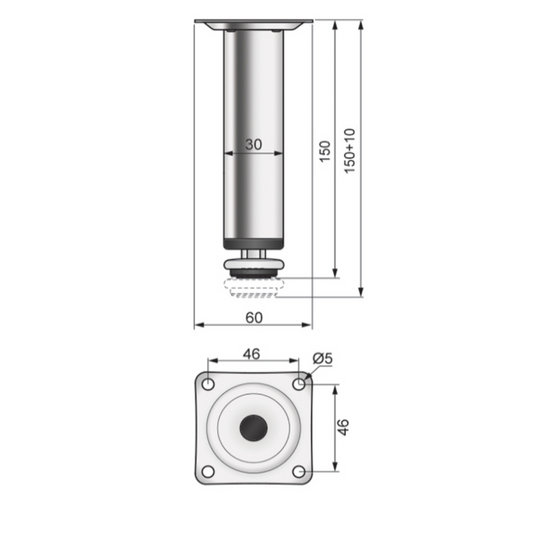

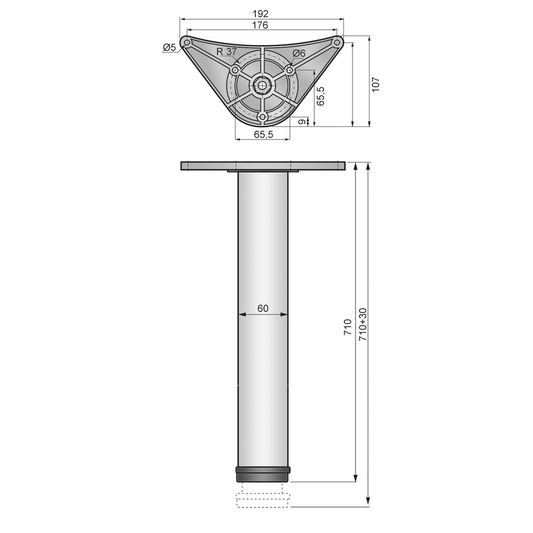

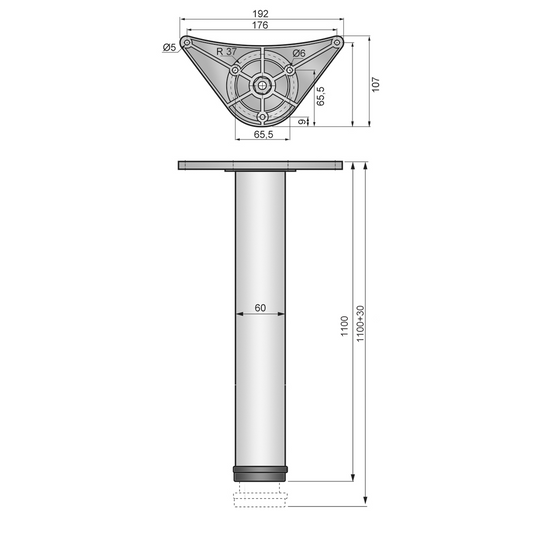

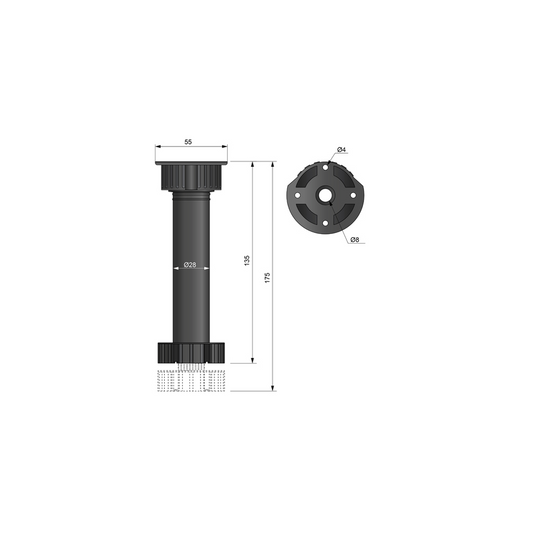

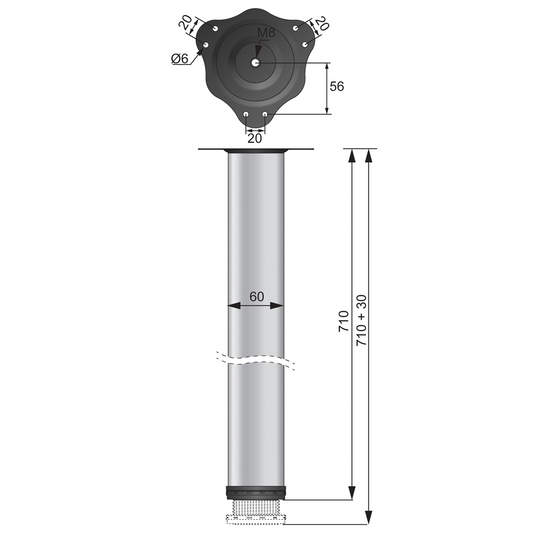

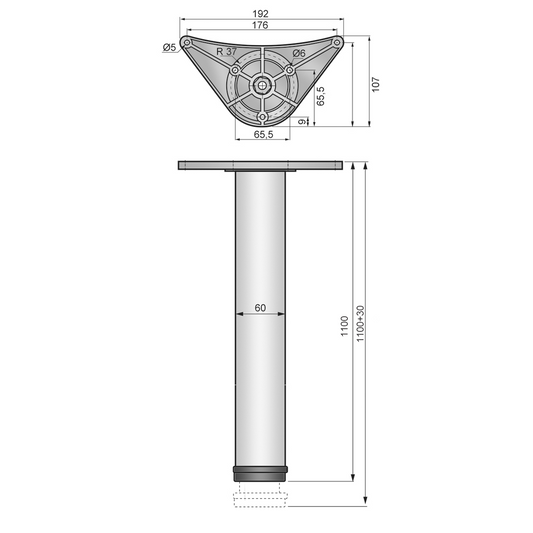

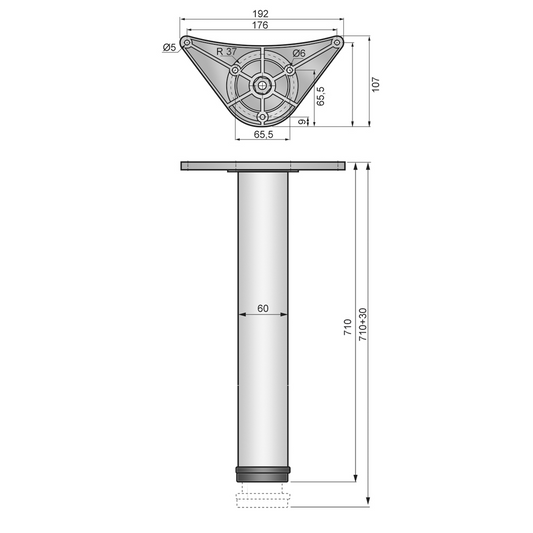

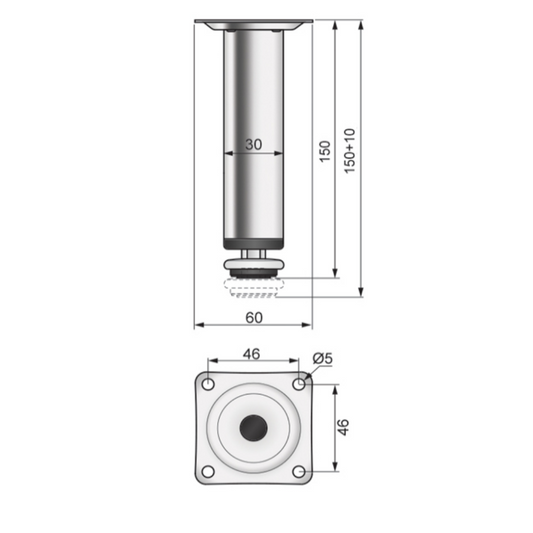

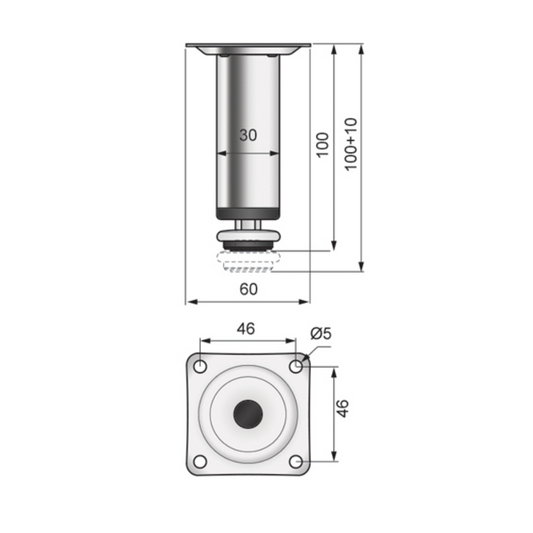

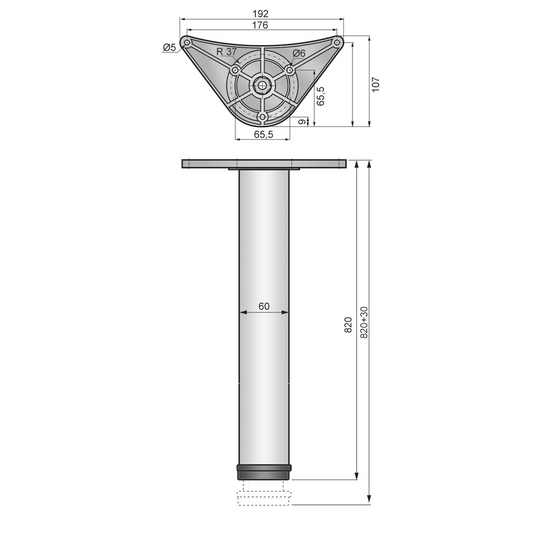

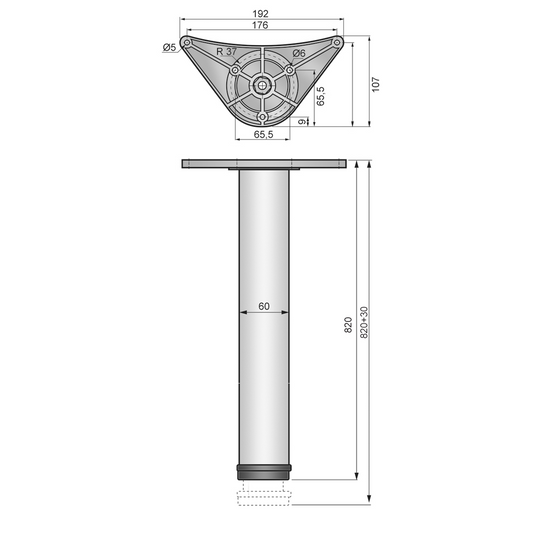

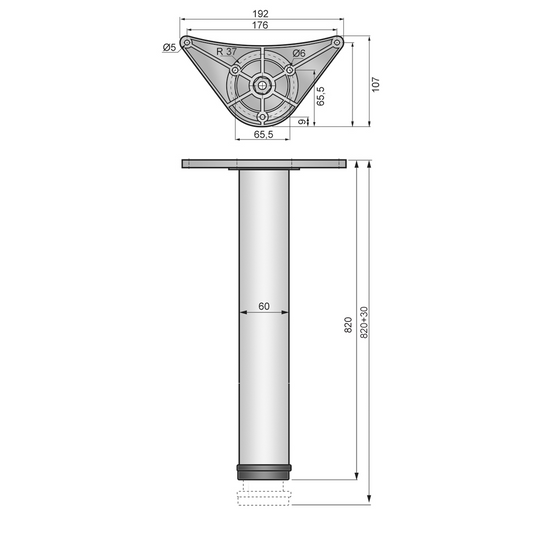

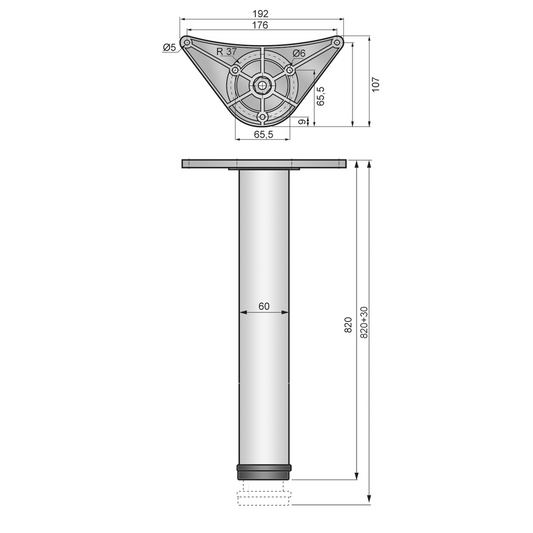

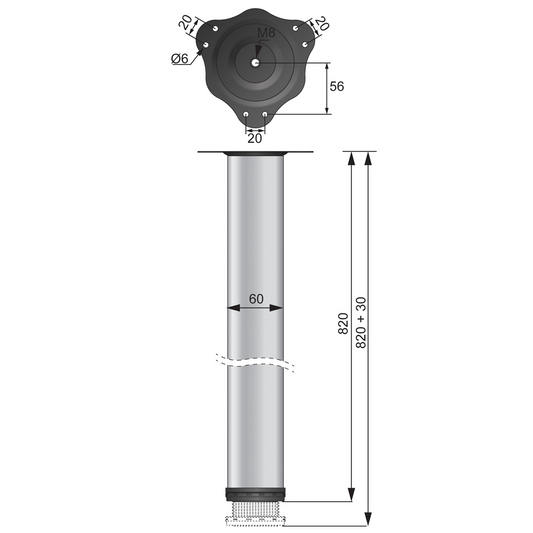

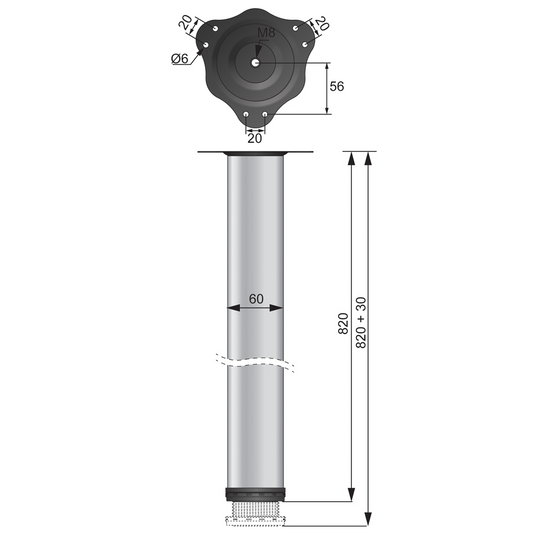

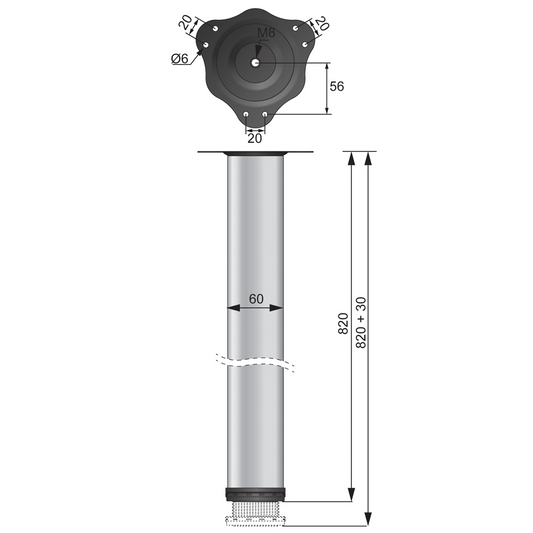
Round furniture legsare cylindrical or slightly tapered support elements for furniture pieces that transfer the weight of cabinets, tables, dressers, or kitchen runs to the floor while ensuring stable, point-load distribution. They not only raise the furniture to an ergonomic working height or comfortable seat height, but also uncouple the cabinet frame from the floor. This protects the core material—typically melamine-faced particle board or MDF—from rising moisture and makes floor cleaning much easier.
Construction: Design and Mechanics of Round Furniture Legs
A round furniture leg typically consists of three core functional components: the mounting plate, the structural body (the tube or cylinder), and the foot base, which frequently incorporates height adjustment.
Much like the foundation of a building, these components must be precisely engineered to handle dynamic shear forces when moving furniture as well as continuous static load pressures. The mounting plate creates the connection to the furniture base. Two main materials are used here:
- Steel mounting plates:Extremely rigid and ideal for high dynamic loads, such as those encountered on freestanding tables.
- Zinc alloy mounting plates:A zinc-aluminum alloy. Manufactured via die-casting, these plates are completely corrosion-resistant and provide high-precision thread guidance for the leg body.
The cylindrical body defines the height and visual weight. Models from theMetal Furniture Legscategory are mostly hollow, thick-walled round tubes offering an optimal strength-to-weight ratio.
Dimensions and Heights for Different Furniture Types
Choosing the right height is crucial in furniture construction. The lengths of round legs are standardized according to their specific application in living spaces.
Plinth and Cabinet Feet (2-3/8 in to 6 in (60 mm to 150 mm))
Short, compact feet are used for heavy cabinet structures such as wardrobes, sideboards, or kitchen base units. A popular size for modern dressers is4 in (10 cm) Furniture Legs. This height leaves sufficient clearance for radiant floor heating air circulation and allows robot vacuums to pass beneath. For lower profile builds or strictly as a moisture barrier in bathrooms, models likeAdjustable Kitchen Feet 2-3/8 in (60 mm) - Blackare ideal. If taller kitchen toe kicks are planned, woodworkers choose models likeAdjustable Kitchen Feet 6 in (150 mm) - Blackor utilize compatibleKitchen Foot Extensions - Black.
Table Legs for Dining Tables and Desks (28 in (71 cm))
Standard height for dining tables and office desks ranges from roughly 29 in to 30 in (74 cm to 76 cm). Subtracting the tabletop thickness—typically 3/4 in to 1-1/2 in (2 cm to 4 cm)—yields the required base height. ATable Leg 28 in (71 cm) High - Steel Mounting Plate - Blackis standardized precisely for this ergonomic setup. These long round tubes are usually attached via a large mounting plate with multiple screw locations to prevent tabletop wobbling.
Table Legs for Kitchen Islands and Countertops (32 in (82 cm))
Kitchen countertops require a standing work height of about 34 in to 36 in (86 cm to 92 cm). For freestanding kitchen islands or extended countertops used for seating, aTable Leg 32 in (82 cm) High - Steel Mounting Plate - Whiteis the correct choice. Combined with a 1-1/2 in (40 mm) thick countertop, this yields a comfortable standing height of 34 in (86 cm).
Support Legs for Bar Counters and High Tops (43 in (110 cm))
Elevated builds such as bar counters, reception desks, and high tables require extra-long support legs. ATable Leg 43 in (110 cm) High - Steel Mounting Plate - Brushed Stainless Steelbrings the surface up to standard standing height. For lengths over 39 in (100 cm), a perfectly flush screw connection is imperative, as leverage forces on the mounting plate multiply over the length of the leg.
Height Adjustability: Leveling Systems
Uneven floors are common in both old and new homes. FunctionalAdjustable Furniture Legsare essential to prevent furniture wobbling or cabinet doors binding due to a warped frame.
Adjustment is handled via a threaded insert at the bottom of the leg. Simply turning the plastic or metal glider adjusts the height continuously. The typical adjustment range for round furniture legs spans between +3/8 in and +3/4 in (+10 mm and +20 mm). For example: A model likeAdjustable Furniture Legs 4 in (100 mm) - Chromecan be adjusted up to 4-1/8 in or 4-7/16 in (105 mm or 112 mm) to compensate precisely for uneven tile or hardwood floors. Installation tip: Always set the furniture in its final location before leveling it with a spirit level.
Materials and Finishes in Detail
The choice of finish determines visual integration into the room as well as resistance to impacts (e.g., from vacuum cleaners).
- Black (Matte or Gloss):Powder-coated finishes are extremely scratch-resistant. ATable Leg 43 in (110 cm) High - Steel Mounting Plate - Blackcomplements industrial decor perfectly or creates an attractive contrast with light solid oak tops.
- Brushed Stainless Steel:This surface hides minor scratches and resists fingerprints. ATable Leg 28 in (71 cm) High - Steel Mounting Plate - Brushed Stainless Steelis the standard choice for clean, modern office and kitchen environments.
- Chrome:Electroplated chrome legs offer a reflective, smooth surface. They are classic and timeless. ATable Leg 32 in (82 cm) High - Zinc alloy Mounting Plate - Chromereflects the floor covering, making the leg visually lighter.
- Satin / Aluminum Look:A matte, light silvery finish that provides a subtle, technical look. Frequently chosen for functional utility furniture or modern offices. Models such asAdjustable Furniture Legs 6 in (150 mm) - Satinblend seamlessly into gray or white schemes.
- White:White powder-coated round tubes merge visually with white cabinet bases, giving the furniture a light, floating appearance.
DIY Installation Guide
Proper installation of round furniture legs requires accuracy. Improper mounting can cause screws to pull out of particle board.
Required Tools
- Cordless drill/driver
- Wood drill bit (1/8 in or 5/32 in (3 mm or 4 mm), depending on screw size)
- Phillips bit (PZ2) or Torx bit (TX20)
- Tape measure and pencil
- Spirit level
1. Positioning the Mounting Plate
For cabinets and dressers, do not mount legs flush with the outer edge. A setback of 3/4 in to 1-3/16 in (20 mm to 30 mm) from the edge protects your toes when standing in front of the piece and keeps the mounting plate hidden. For round table legs, the plate is usually installed in the corners of the table top set back 1-3/16 in to 2 in (30 mm to 50 mm) from both edges.
2. Pre-Drilling
Particle board and MDF tend to split if screws are driven directly. Mark the drill holes through the openings on the mounting plate. Pre-drill the pilot holes. Rule of thumb: The drill bit should be 1/32 in (1 mm) smaller than the screw thread diameter. For a 5/32 in (4 mm) pan-head screw, use a 1/8 in (3 mm) bit. Take care with drill depth so you do not bore through the top side of the furniture panel. A piece of tape wrapped around the drill bit works well as a depth stop.
3. Screwing Down
Secure the mounting plate. Use dedicated coarse-thread wood/particle board screws. When installing heavy-duty6 in (15 cm) Furniture Legs, utilize every available screw hole in the plate.
4. Attaching the Cylinder
On many round models, only the plate is screwed down first. The round leg tube is then threaded onto the plate's central stud or secured via a set screw on the side.
Floor Protection and Gliders
A round metal furniture leg should never rest directly on delicate flooring such as hardwood, laminate, or vinyl. Sharp metal edges or hard plastic leveling threads can scratch floors under heavy loads. Therefore, a floor glider should be fitted to the bottom of the leg. For hard floors,Round Felt Glidersoffer the ideal technical solution. They distribute load weight, dampen sliding noise, and protect floor finishes.
FAQ – Frequently Asked Questions About Round Furniture Legs
How many legs do I need for a long sideboard?For furniture wider than 39 in (100 cm), four corner legs are often insufficient. The bottom panel may sag under the weight of stored contents. For widths starting at 47 in (120 cm), a fifth center support leg under the base panel is mandatory. For widths over 71 in (180 cm), six legs (three front, three back) are recommended.
What is the right screw length?Calculate screw length by taking the thickness of the furniture bottom panel, subtracting 1/16 in to 1/8 in (2 mm to 3 mm) as a safety margin, and adding the thickness of the mounting plate. For a standard 3/4 in (18 mm) particle board panel and a 1/16 in (2 mm) steel plate, a #8 x 5/8 in (4 x 16 mm or 4 x 17 mm) screw is ideal.
What is the load capacity of a round table leg?A single tubular steel table leg measuring 28 in (71 cm) long easily supports 88 lbs to 110 lbs (40 kg to 50 kg) of vertical static load. A table with four legs easily supports heavy solid oak tops and items placed on them. Screw pull-out strength in the wood top is typically a more critical failure point than the steel tube capacity itself.
Can I replace old plastic legs with round metal legs?Yes, this is a popular DIY project to give existing furniture a fresh look. Once oldPlastic Furniture Legsare removed, check the hole pattern. If they do not match, shift the new mounting plates by a few inches and drill new pilot holes.
What is the difference between surface mounting and concealed mounting?With surface mounting, the plate is visibly screwed to the underside of the cabinet base. With select designer legs, a threaded insert (Rampa nut) is installed flush into the wood, allowing the leg to screw in directly. However, this method requires a thick base panel and perfectly perpendicular drilling.
Related Categories and Hardware
For complete planning of your furniture project, explore additional leg styles and hardware in our catalog. If you prefer geometric shapes, review our square options. When building desks, functional grommets complete your setup.