
Bar Pulls
-
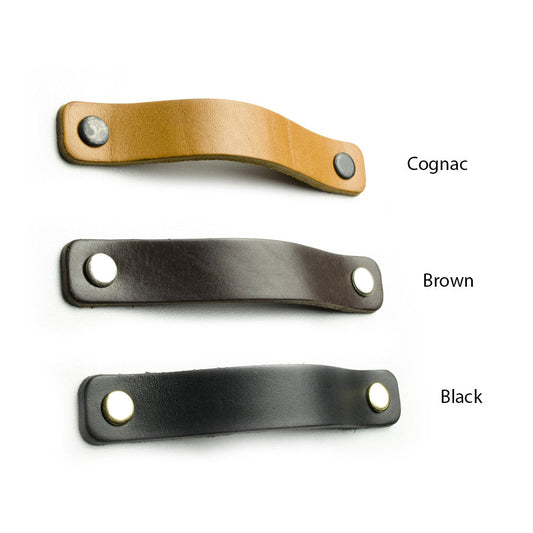
Leather handle rectangular 96mm - 160mmRegular price $9.80Unit price / perRegular priceSale price $9.80
-
Pull handle brushed steel - 7-7/8 inchRegular price $1.78Unit price / perRegular priceSale price $1.78
-
Pull handle brushed steel - 13-3/4 inchRegular price $2.05Unit price / perRegular priceSale price $2.05
-
Pull handle brushed steel - 17-11/16 inchRegular price $2.23Unit price / perRegular priceSale price $2.23
-
Pull handle brushed steel - 19-11/16 inchRegular price $2.30Unit price / perRegular priceSale price $2.30
-
Pull handle brushed steel - 21-5/8 inchRegular price $2.39Unit price / perRegular priceSale price $2.39
-
Pull handle brushed steel - 25-9/16 inchRegular price $2.56Unit price / perRegular priceSale price $2.56
-
Pull handle brushed steel - 27-3/8 inchRegular price $2.62Unit price / perRegular priceSale price $2.62
-
Pull handle brushed steel - 15-3/4 inchRegular price $2.14Unit price / perRegular priceSale price $2.14
-
Pull handle brushed steel - 23-5/8 inchRegular price $2.47Unit price / perRegular priceSale price $2.47
-
Leather handle rounded 96mm - 128mmRegular price $9.80Unit price / perRegular priceSale price $9.80
-
Pull handle brushed steel - 9-13/16 inchRegular price $1.98Unit price / perRegular priceSale price $1.98
-
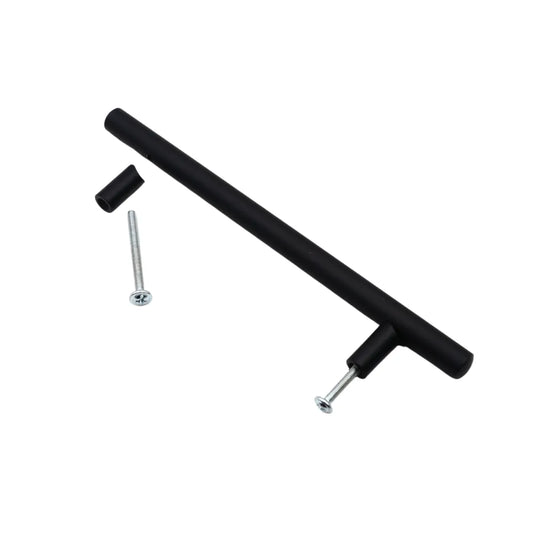
Stainless Steel Style Bar Pull - 5-1/16 inch (128 mm) (7-3/8 inch / 188 mm Overall Length) - Matte BlackRegular price $2.28Unit price / perRegular priceSale price $2.28
-
Pull handle brushed steel - 11-13/16 inchRegular price $1.97Unit price / perRegular priceSale price $1.97
-
Pull handle brushed steel - 5-7/8 inchRegular price $1.73Unit price / perRegular priceSale price $1.73


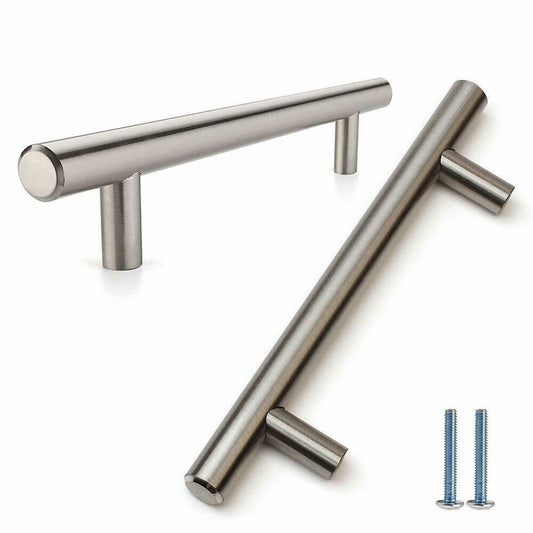

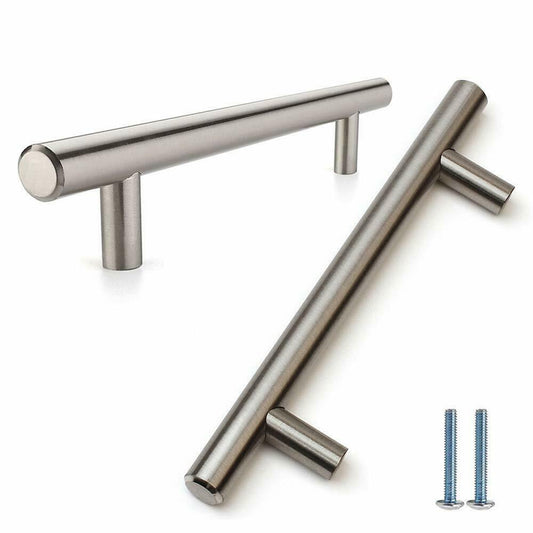

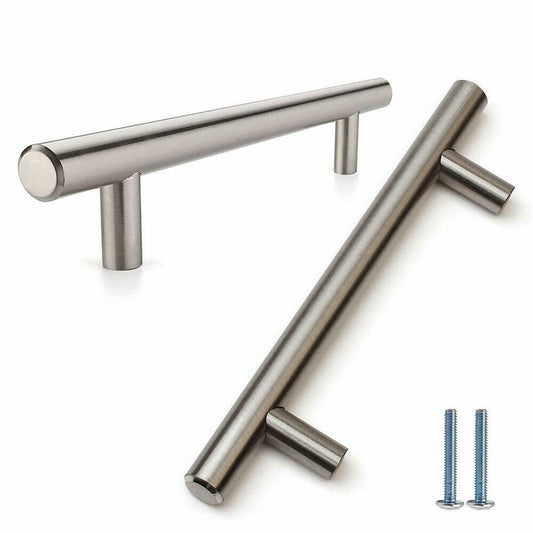

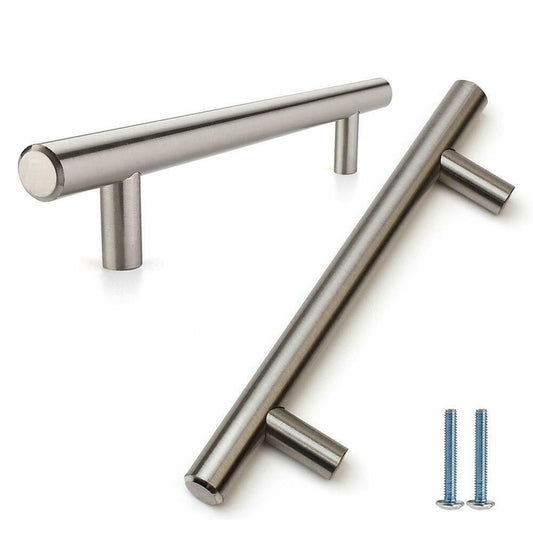

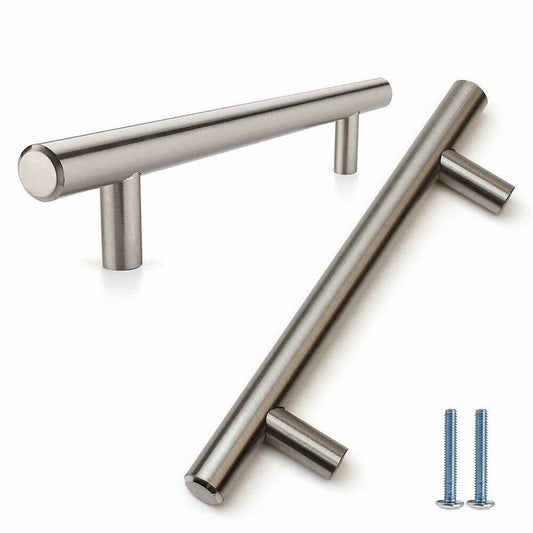

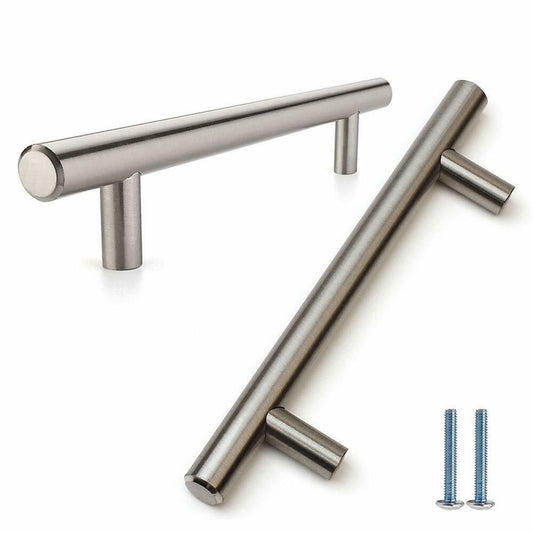

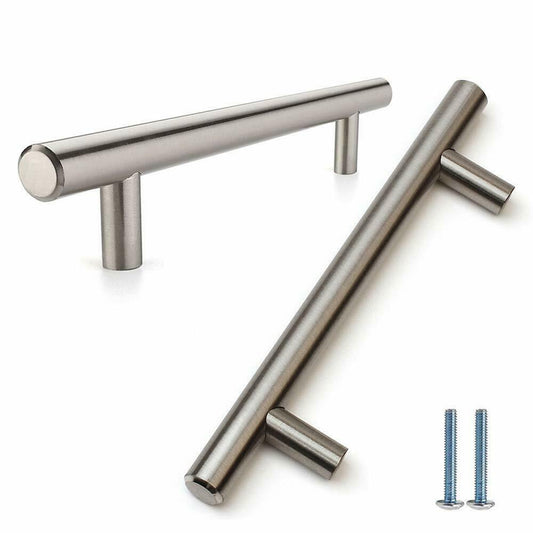

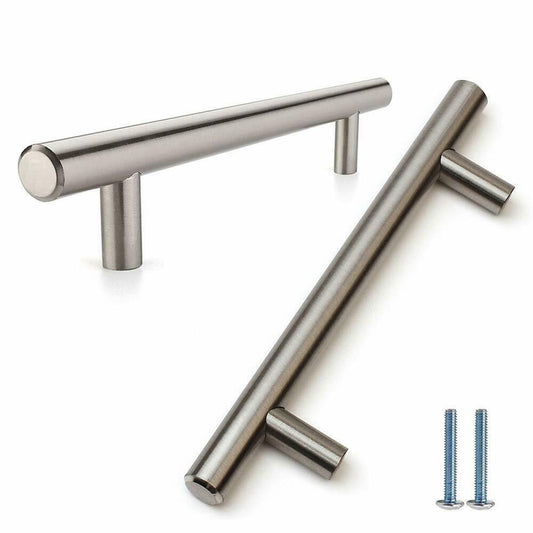

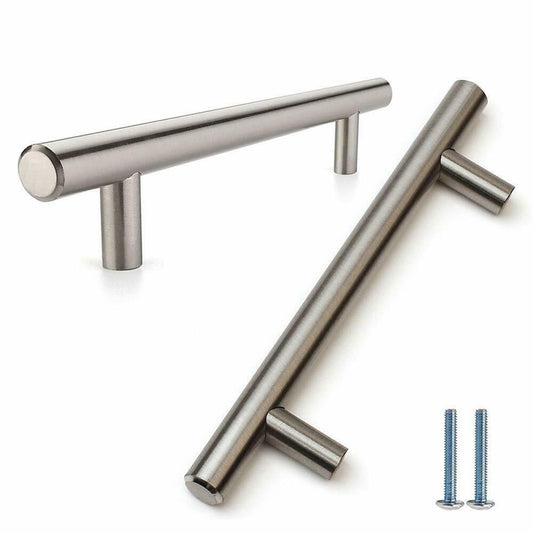


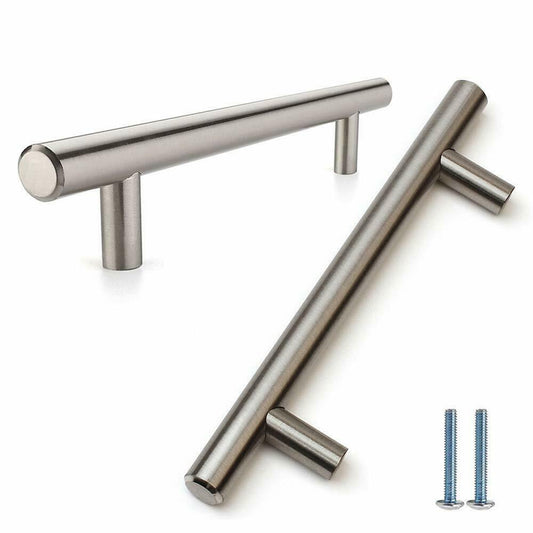


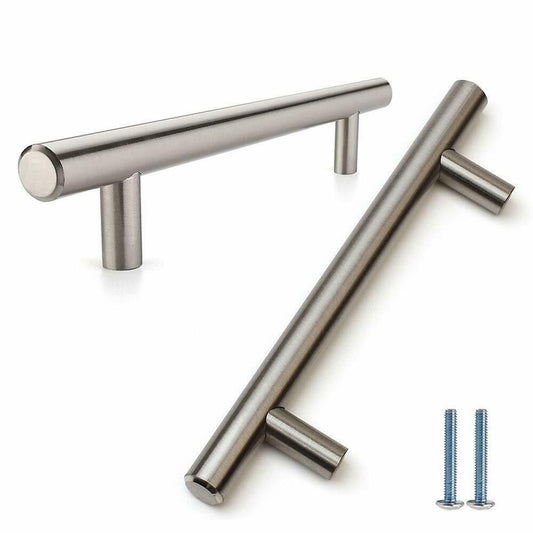

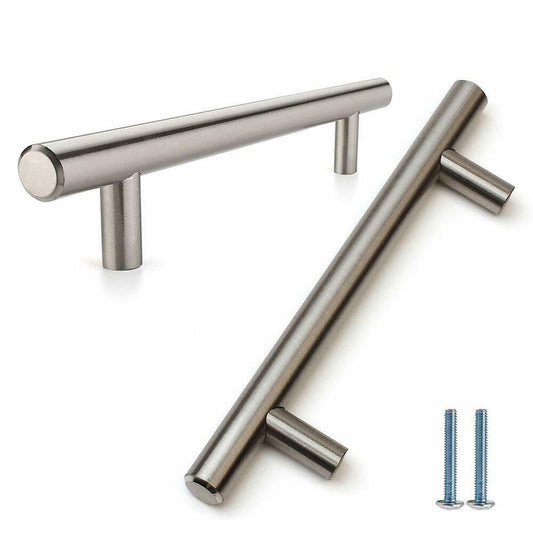
A bar pull is a straight-lined, cylindrical, or square cabinet handle that mounts to a furniture front via at least two attachment points, transmitting manual pulling force to open doors, drop-down fronts, or drawers.
In modern cabinetry and interior design, bar pulls serve as the physical interface between the user and the furniture mechanism. They must not only absorb the pulling forces generated by heavy full-extension slides or large wardrobe doors, but also align precisely with standard industrial manufacturing hole patterns. This technical overview breaks down the specifications, sizing systems, materials, and mounting requirements for bar pulls.
Sizing System: Center-to-Center Distance vs. Overall Length
The most critical factor when selecting and installing bar pulls is distinguishing betweencenter-to-center distance(hole spacing) and theoverall lengthof the pull. By design, a bar pull extends past its mounting posts on both ends.
When technical drawings specify a dimension, it almost always refers to center-to-center hole spacing, as this determines where to drill the holes in theparticle boardorMDF door front. Overall length, on the other hand, is key for visual proportions and preventing adjacent cabinet doors or drawer fronts from colliding in corner configurations.
The 32 mm System in Cabinetry
Nearly all professionalcabinet pullsand bar pulls rely on the32 mm system. This standardized European hole pattern dictates that the center-to-center distance between mounting points is always a multiple of 1-1/4 in (32 mm). This system stems from the standardized drill spindle spacing used in industrial gang drilling machines.
Common center-to-center hole spacings for bar pulls include:
- 3-3/4 in (96 mm)(3 x 32 mm)
- 5-1/16 in (128 mm)(4 x 32 mm)
- 6-5/16 in (160 mm)(5 x 32 mm)
- 7-9/16 in (192 mm)(6 x 32 mm)
- 8-13/16 in (224 mm)(7 x 32 mm)
- 10-1/16 in (256 mm)(8 x 32 mm)
- 12-5/8 in (320 mm)(10 x 32 mm)
- 15-1/8 in (384 mm)(12 x 32 mm)
- 17-11/16 in (448 mm)(14 x 1-1/4 in (32 mm))
A classic example of this dimensioning is theStainless Steel Bar Pull - 3-3/4 in (96 mm) (5-7/8 in (150 mm) Overall Length). Here, the distance between the threaded holes is exactly 3-3/4 in (96 mm), while the physical bar measures 5-7/8 in (150 mm). The overhang on each end is 1-1/16 in (27 mm).
Materials and Surface Finishes
Material selection directly impacts load capacity, corrosion resistance, and tactile quality.
Stainless Steel (304 / Brushed)
Stainless steel cabinet pullsare the industry standard for high-use areas. Grade 304 stainless steel offers high resistance to moisture, mild acids (such as sweat from hands), and surface abrasion. The surface is typically brush-finished, creating a fine, linear texture that hides fingerprints and ensures a non-glare, professional look.
Stainless steel kitchen bar pullsare widely specified in commercial and residential kitchens because they withstand grease-cutting detergents without surface degradation. A popular option for standard drawers is theStainless Steel Bar Pull - 6-5/16 in (160 mm) (9-13/16 in (250 mm) Overall Length).
Coated Steel and Aluminum (Matte Black)
For modern dark cabinet fronts or high-contrast pairings with wood tones like Wotan oak, powder-coated options are the go-to choice. Amatte black bar pullundergoes an electrostatic coating process where dry powder is applied and cured under high heat, forming a durable, scratch-resistant finish. A prime example for this style is theStainless Steel Bar Pull - 5-1/16 in (128 mm) (7-3/8 in (188 mm) Overall Length) - Black.
Alternative Materials: Leather Pulls
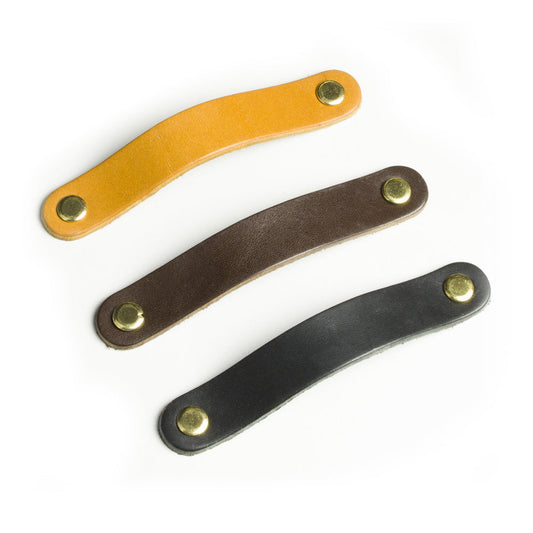
In living rooms and bedrooms where a softer touch is desired, leather pulls offer a stylish alternative to rigid metal hardware. These pulls are made from thick, stitched cowhide leather secured to the cabinet front via metal standoff bushings. Flexible yet sturdy, they handle light to medium drawer pull forces easily. Popular options include theRectangular Leather Pull - 3-3/4 in / 5-1/16 in / 6-5/16 in (96 mm / 128 mm / 160 mm)and theRound Leather Pull - 3-3/4 in / 5-1/16 in (96 mm / 128 mm).
Pull Lengths and Recommended Applications
A bar pull's length should be proportional to the width and weight of the drawer or door front. When properly mounted, a bar pull distributes force evenly, transmitting pulling force straight into the slide mechanisms without racking the cabinet box.
Short Bar Pulls (3-3/4 in to 6-5/16 in / 96 mm to 160 mm)
Short pulls are ideal for narrow drawers (11-13/16 in to 17-11/16 in (300 mm to 450 mm) wide), pull-out spice racks, or small upper cabinet doors. A single central pull point is sufficient for these sizes, as quality slides (such as roller or under-mount drawer slides) resist binding.
- Stainless Steel Bar Pull - 5-1/16 in (128 mm) (7-7/8 in (200 mm) Overall Length)
- Stainless Steel Bar Pull Series - 3-3/4 in to 15-1/8 in (96 mm to 384 mm) C-C(variable series)
Medium Bar Pulls (7-9/16 in to 12-5/8 in / 192 mm to 320 mm)
Medium bar pulls are the standard choice for base cabinets and drawers ranging from 19-11/16 in to 31-1/2 in (500 mm to 800 mm) wide. They allow off-center grabbing without binding the drawer. This is especially important for heavy-duty soft-close drawers, where higher initial pulling force is needed to release the damping mechanism.
- Stainless Steel Bar Pull - 7-9/16 in (192 mm) (11-13/16 in (300 mm) Overall Length)
- Stainless Steel Bar Pull - 8-13/16 in (224 mm) (13-3/4 in (350 mm) Overall Length)
- Stainless Steel Bar Pull - 10-1/16 in (256 mm) (15-3/4 in (400 mm) Overall Length)
- Stainless Steel Bar Pull - 11-5/16 in (288 mm) (17-11/16 in (450 mm) Overall Length)
- Stainless Steel Bar Pull - 12-5/8 in (320 mm) (19-11/16 in (500 mm) Overall Length)
Long Bar Pulls (13-7/8 in to Over 23-5/8 in / 352 mm to Over 600 mm)
Long stainless steel bar pullsare designed for full-height pantry doors, wide pot drawers (35-7/16 in to 47-1/4 in (900 mm to 1200 mm) wide), or assliding door bar pulls. On tall wardrobe doors (over 78-3/4 in (2000 mm) tall), a long pull distributes force across a larger surface area, minimizing board warping. They also improve ergonomics, allowing users of different heights to grab the pull comfortably.
- Stainless Steel Bar Pull - 13-7/8 in (352 mm) (21-5/8 in (550 mm) Overall Length)
- Stainless Steel Bar Pull - 15-1/8 in (384 mm) (23-5/8 in (600 mm) Overall Length)
- Stainless Steel Bar Pull - 16-3/8 in (416 mm) (25-9/16 in (650 mm) Overall Length)
- Stainless Steel Bar Pull - 17-11/16 in (448 mm) (27-3/8 in (695 mm) Overall Length)
Installation and Mounting Guidelines
Proper pull installation requires precise drilling and selecting the right fasteners. Misalignment creates uneven reveal lines across cabinet banks, while poor drilling technique can tear out the melamine face.
Threads and Screws
Standard cabinet bar pulls feature internalM4 metric threadsmachined into the posts. Pulls are mounted from the back of the door or drawer face using M4 machine screws (typically truss head or pan head with Phillips drive).
To determine the correct screw length, add the door thickness to the pull post's thread engagement depth:
- For standard5/8 in (16 mm)particle board, use an M4 x 22 mm screw.
- For3/4 in (19 mm)cabinet fronts (common with painted MDF), use an M4 x 25 mm screw.
Internal post threads are typically tapped to a depth of 5/16 in to 1/2 in (8 mm to 12 mm). A screw that is too long will bottom out before securing the pull tight against the front, while a screw that is too short can strip the first few threads under heavy strain.
Drilling Hole Pattern
A drill diameter of3/16 in (4.5 mm to 5.0 mm)is recommended for M4 screws. This slight clearance gap is deliberate: it allows minor adjustments to align the pull perfectly straight before tightening the screws down.
When drilling melamine-coated boards, always use a sharp brad-point wood drill bit. To prevent tear-out (chipping) on the back side as the bit exits, apply light pressure and clamp a sacrificial block of scrap wood firmly behind the panel. Alternatively, drill a pilot hole (e.g., 1/16 in (2 mm)) from the front, then finish from both sides using the 3/16 in (5 mm) bit.
Templates and Alignment
For production work or fitting out an entire kitchen, a drilling jig or template is essential. These tools feature edge guides and hole grids set to the32 mm standard, ensuring a23-5/8 in (600 mm) stainless steel bar pullmounts perfectly parallel to the drawer edge. For horizontal drawer pulls, center alignment is standard. For vertical door installations, place the pull 1-3/8 in to 2 in (35 mm to 50 mm) from the unhinged side edge.
Hardware Compatibility
Bar pull performance works hand-in-hand with cabinet hinges and drawer slides.
Full-Extension Soft-Close Slides:Soft-close mechanisms automatically pull the drawer shut over the last few inches. However, opening requires overcoming this soft-close resistance. Wide drawers (over 23-5/8 in (600 mm)) demand rigid, heavy-duty pulls like a solidstainless steel bar pullto translate force straight into the slides without flexing.
Push-to-Open (Touch Latches):Cabinets with push-to-open latches do not strictly require pulls. If bar pulls are added for style, they act as decorative accents or guides to push against. Take care not to accidentally trigger the push latch when grabbing the pull to shut the door.
Concealed Hinges on Swing Doors:On cabinet doors with standard European concealed hinges (e.g., 110° opening angle), a vertically mounted bar pull acts as a lever. Mounting the pull farther from the hinge edge reduces the force needed to open the door. For extra-tall pantry doors with 3 or 4 hinges, center the pull vertically to distribute load evenly across all hinges.
Architectural Applications vs. Furniture Pulls
While designed primarily for cabinetry, long bar pulls are sometimes sought out for other architectural uses, such asfront entry door pulls. However, there is an important technical distinction: cabinet bar pulls are built for material thicknesses of 5/8 in to 3/4 in (16 mm to 22 mm), feature M4 threads, and are intended for interior use.
Exterior entry door pulls require heavy-duty M8 or M10 mounting systems, through-bolts, and escutcheon plates designed for door thicknesses of 2-3/4 in (70 mm) or more. Exterior applications also require grade 316 (V4A) stainless steel to resist rust, whereas grade 304 (V2A) stainless steel—used in our bar pulls—is ideal for indoor settings. The products listed here are strictly classified as cabinet hardware.
---
Frequently Asked Questions (FAQ) About Bar Pulls
What is the difference between center-to-center distance and overall length?
Center-to-center (C-C) distance measures the exact space from the center of one screw hole to the center of the other. This measurement determines where to drill holes in your cabinet front. Overall length is the total end-to-end measurement of the pull itself. Because bar pulls overhang their mounting posts, the overall length is always larger than the center-to-center distance.
What drill bit size should I use to install bar pulls?
For standard M4 cabinet screws, use a 3/16 in (4.5 mm to 5.0 mm) brad-point wood drill bit. A slightly oversized hole allows subtle adjustments to ensure the pull is level before final tightening.
How long should M4 screws be for mounting a bar pull?
To calculate screw length, add your cabinet front thickness to 3/16 in to 5/16 in (5 mm to 8 mm) for thread engagement. For a standard 5/8 in (16 mm) drawer front, use a 7/8 in (22 mm) screw. For 3/4 in (19 mm) cabinet doors, a 1 in (25 mm) screw is recommended.
Are stainless steel bar pulls rustproof?
Yes, grade 304 (V2A) stainless steel cabinet pulls are corrosion-resistant and will not rust under normal indoor conditions. They hold up great to humidity and steam in kitchens and bathrooms. However, they are not intended for unheated outdoor settings or pool enclosures exposed to salt or chlorine.
How do I clean brushed stainless steel cabinet pulls?
Clean brushed stainless steel using warm water and a mild dish soap with a soft microfiber cloth. For greasy fingerprints, use a dedicated stainless steel cleaner spray. Always wipe in the direction of the brushed grain to preserve the satin finish, and avoid abrasive pads or harsh, chlorine-based cleaners.
Can I replace old cabinet handles with new bar pulls?
Yes! As long as the center-to-center hole spacing matches your existing drill holes, replacement is quick and easy. Simply measure the distance between the center points of the existing holes. Since most hardware uses the standard 32 mm hole system, you can easily swap out old 5-1/16 in (128 mm) arch pulls for new 5-1/16 in (128 mm) bar pulls without drilling new holes.