
Metal Table Legs
Popular Subcategories


-
Square Furniture Leg 27-15/16 inch, Chrome, ZnAl Mounting PlateRegular price $23.77Unit price / perRegular priceSale price $23.77
-
Adjustable Furniture Leg 43-5/16 inch - Steel Mounting Plate - ChromeRegular price $16.67Unit price / perRegular priceSale price $16.67
-
Adjustable Furniture Leg 32-5/16 inch - ChromeRegular price $11.38Unit price / perRegular priceSale price $11.38
-
Adjustable Furniture Leg 32-5/16 inch - ZnAl Mounting Plate - SatinRegular price $15.61Unit price / perRegular priceSale price $15.61
-
Adjustable Furniture Leg 32-5/16 inch - ZnAl Mounting Plate - ChromeRegular price $13.40Unit price / perRegular priceSale price $13.40
-
Adjustable Furniture Leg 27-15/16 inch - ZnAl Mounting Plate - AluminiumRegular price $14.23Unit price / perRegular priceSale price $14.23
-
Adjustable Furniture Leg 43-5/16 inch - ZnAl Mounting Plate - AluminumRegular price $16.38Unit price / perRegular priceSale price $16.38
-
Adjustable Furniture Leg 27-15/16 inch - ChromeRegular price $9.98Unit price / perRegular priceSale price $9.98
-
Adjustable Furniture Leg 43-5/16 inch - ZnAl Mounting Plate - ChromeRegular price $16.67Unit price / perRegular priceSale price $16.67
-
Adjustable Furniture Leg 27-15/16 inch - ZnAl Mounting Plate - ChromeRegular price $11.44Unit price / perRegular priceSale price $11.44
-
Square Furniture Leg 27-15/16 inch, White, ZnAl Mounting PlateRegular price $26.51Unit price / perRegular priceSale price $26.51
-
Square Furniture Leg 27-15/16 inch, Black, ZnAl Mounting PlateRegular price $26.51Unit price / perRegular priceSale price $26.51
-
Square Furniture Leg 27-15/16 inch, Satin, ZnAl Mounting PlateRegular price $26.51Unit price / perRegular priceSale price $26.51
-
Adjustable Furniture Leg 32-5/16 inch - ZnAl Mounting Plate - Brushed NickelRegular price $15.61Unit price / perRegular priceSale price $15.61
-
Adjustable Furniture Leg 32-5/16 inch - ZnAl Mounting Plate - AluminiumRegular price $15.61Unit price / perRegular priceSale price $15.61
-
Adjustable Furniture Leg 32-5/16 inch - ZnAl Mounting Plate - WhiteRegular price $12.50Unit price / perRegular priceSale price $12.50
-
Adjustable Furniture Leg 32-5/16 inch - ZnAl Mounting Plate - BlackRegular price $12.89Unit price / perRegular priceSale price $12.89
-
Adjustable Furniture Leg 32-5/16 inch - SatinRegular price $12.36Unit price / perRegular priceSale price $12.36
-
Adjustable Furniture Leg 32-5/16 inch - Brushed NickelRegular price $12.36Unit price / perRegular priceSale price $12.36
-
Adjustable Furniture Leg 32-5/16 inch - AluminiumRegular price $12.36Unit price / perRegular priceSale price $12.36
-
Adjustable Furniture Leg 27-15/16 inch - ZnAl Mounting Plate - SatinRegular price $14.23Unit price / perRegular priceSale price $14.23

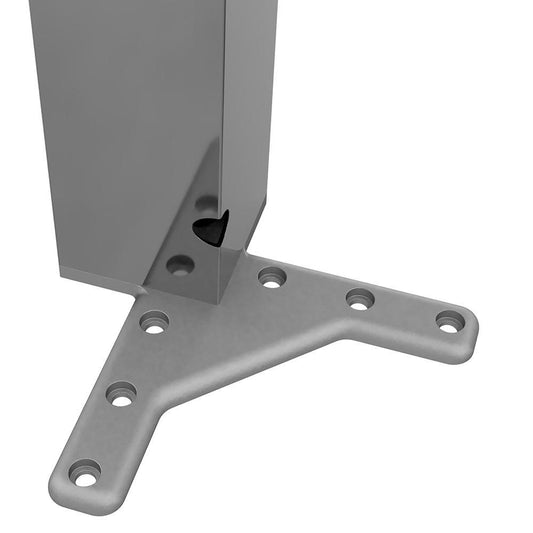

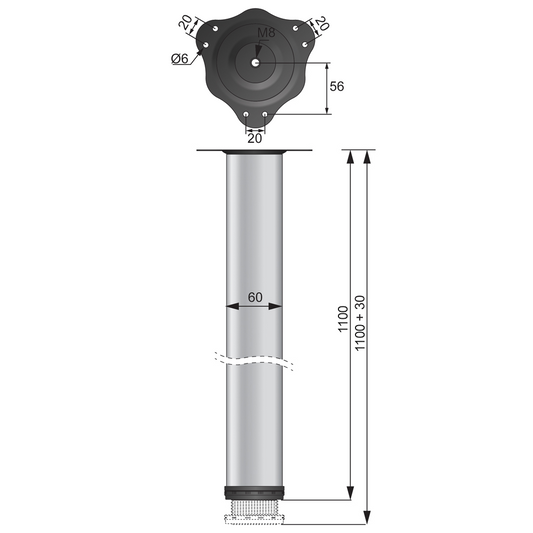

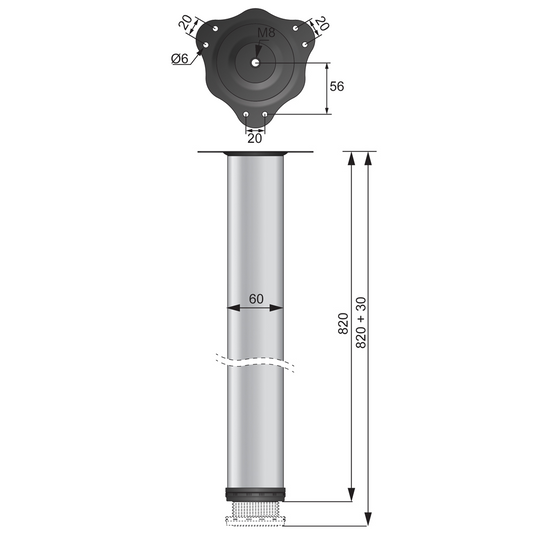

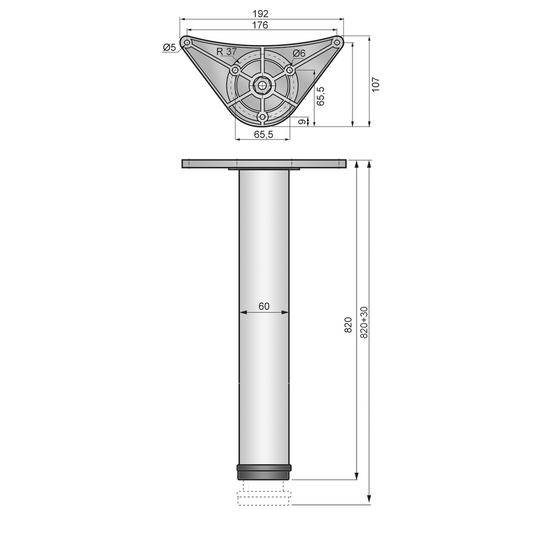

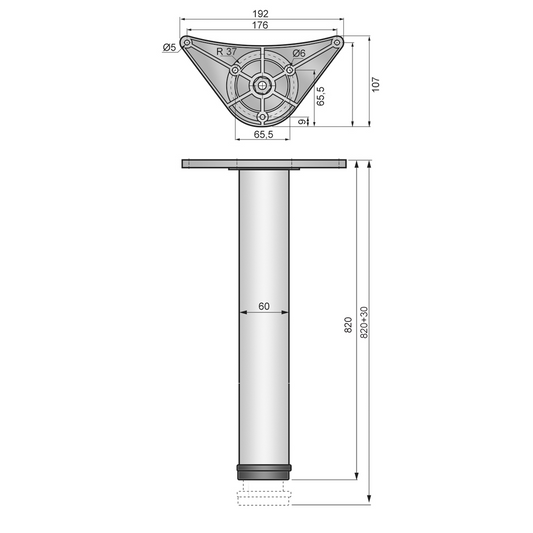

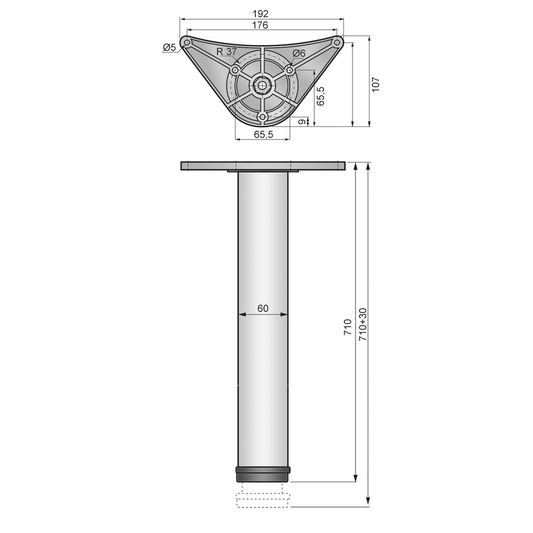

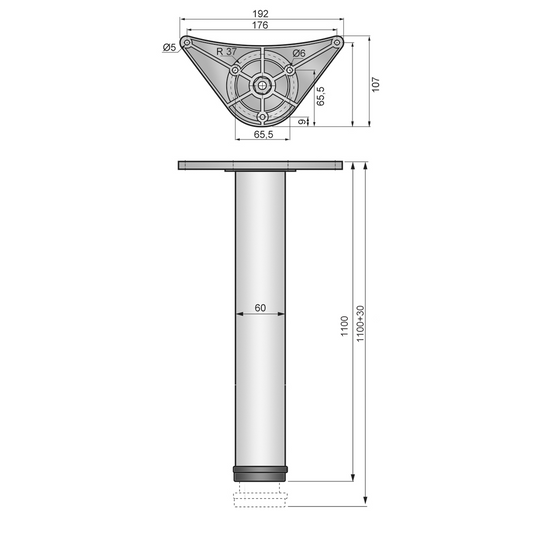

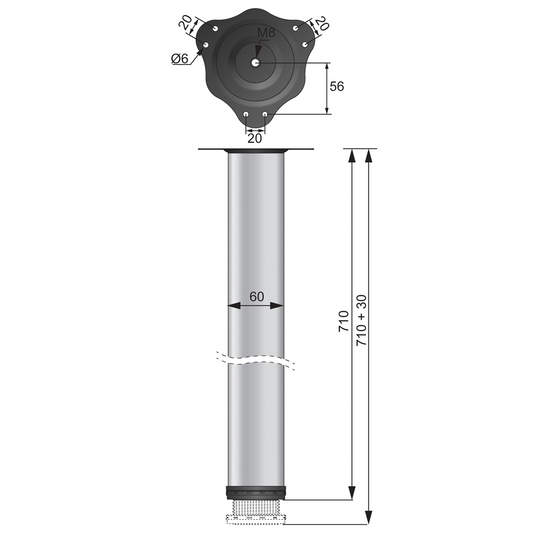

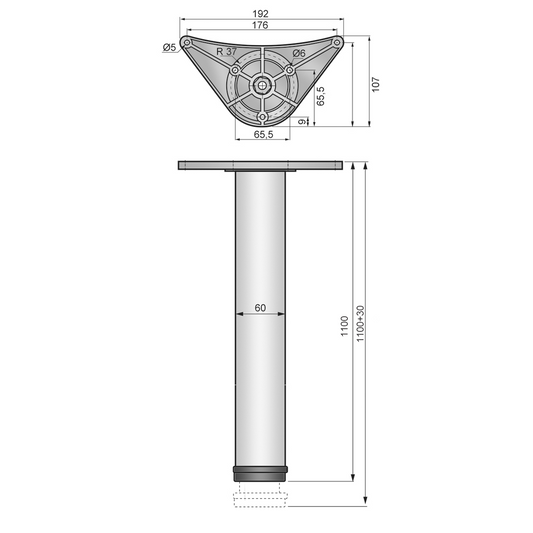

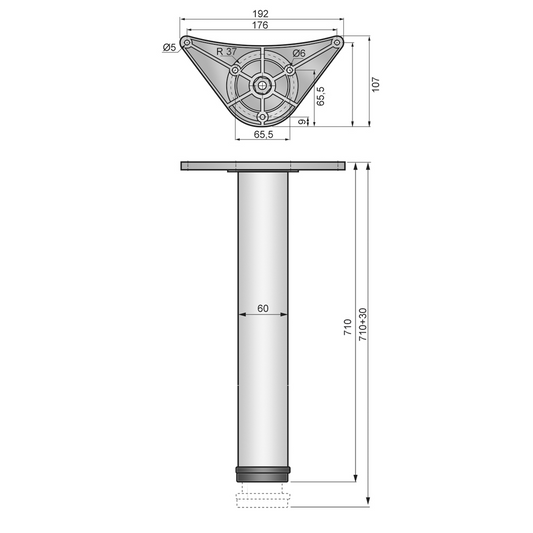

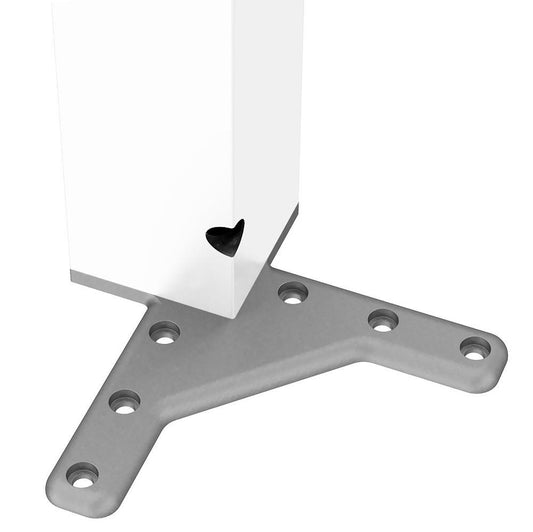

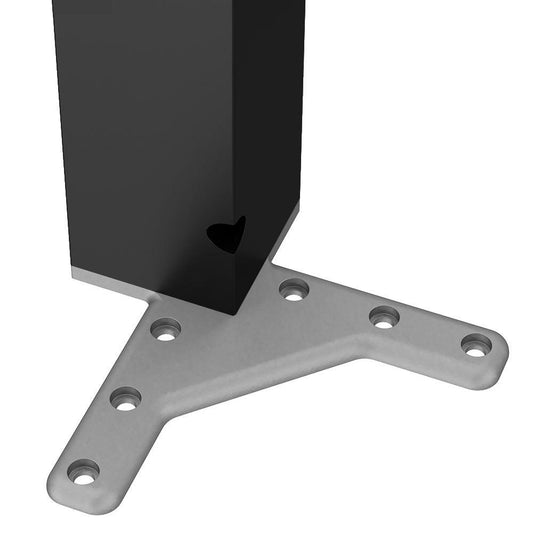

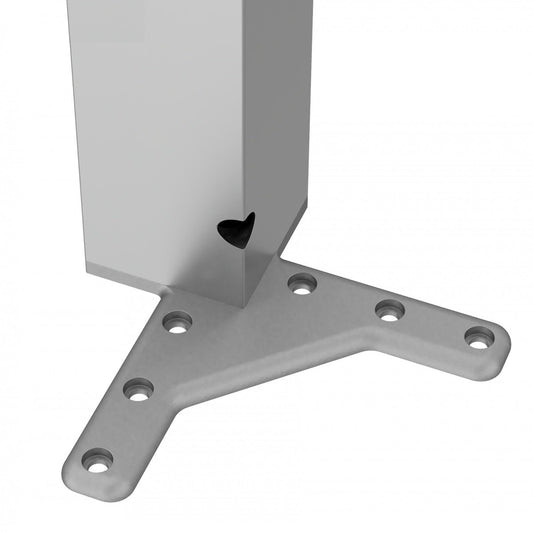




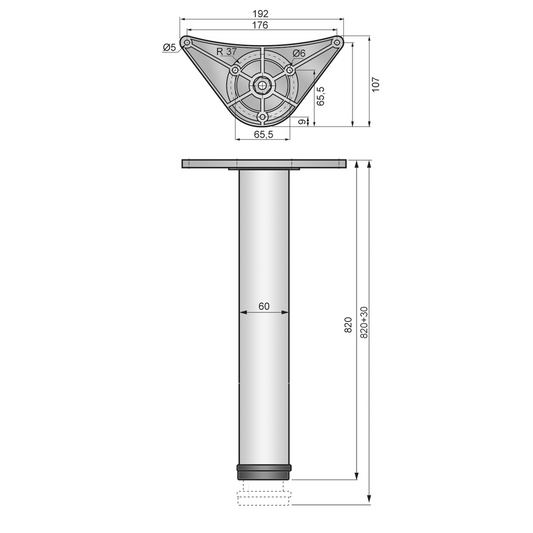

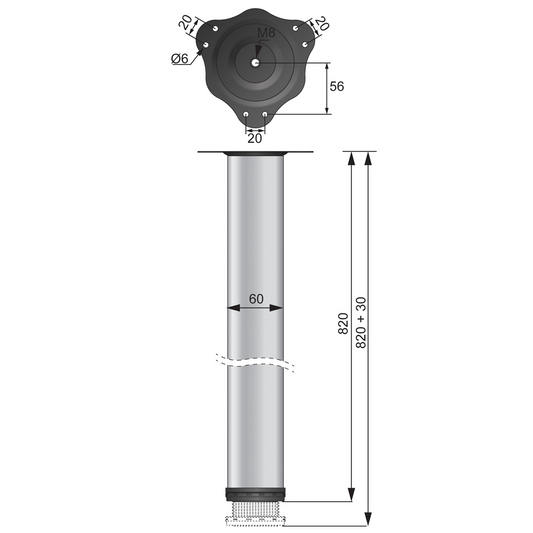

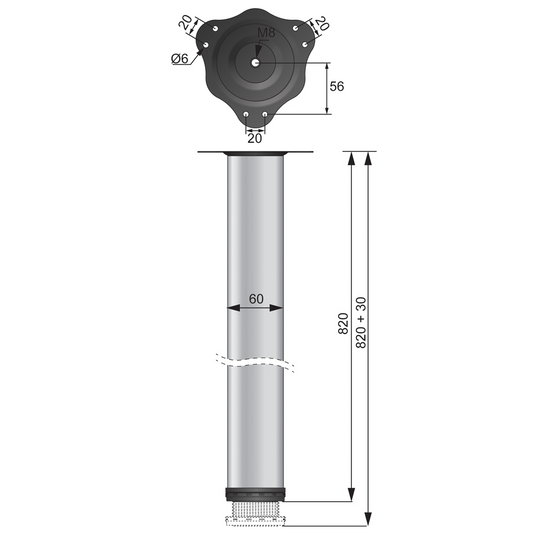

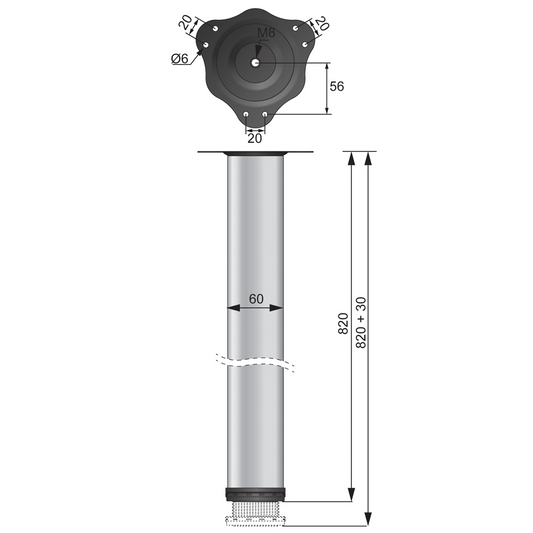

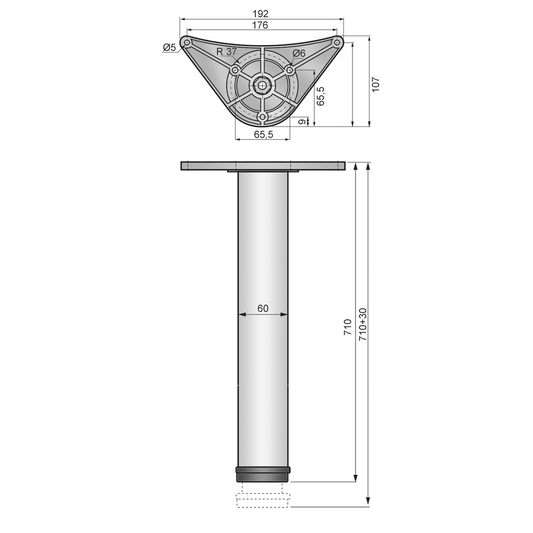
Metal table legsare load-bearing structural elements made of steel, aluminum, or zinc-aluminum alloys (Zinc alloy) that securely join tabletops, work surfaces, or consoles to the floor while significantly defining the weight capacity, torsional rigidity, and working height of the respective piece of furniture.
Technical Specifications and Material Selection
When designing freestanding tables, kitchen islands, or worktops, choosing the right support material is critical for structural integrity.Metal table legsoffer a reliable foundation for heavy tabletop materials such as solid wood, laminated particle board, or compact laminate (HPL) due to their high material density and tensile strength.
The table feet commonly used in furniture manufacturing primarily consist of three material groups:
- Tubular Steel:Provides the highest mechanical load capacity. The profiles are typically welded and subsequently surface-treated. Steel is especially suitable for heavy dining tables or workbenches.
- Aluminum:Features a low self-weight combined with high structural stability. Aluminum does not oxidize in the conventional sense, making it a viable option for humid rooms or covered outdoor areas.
- Zinc alloy (Zinc-Aluminum Alloy):Frequently used in the zinc die-casting process formounting platesor connecting pieces. This material allows for highly precise screw threads and complex shapes with high fracture resistance.
The mounting plate acts as the backbone of the table structure, safely redirecting vertical compression forces and lateral shear forces into the horizontal tabletop surface. The more solid this plate and the more precisely the welded or screwed connection to the actual tubular profile is executed, the lower the tendency of the finished furniture piece to wobble.
Surface Finishing and Corrosion Protection
The surface finish ofmetal table legsdetermines not only their visual integration into the room design, but also their resistance to mechanical impacts such as vacuum cleaner bumps or shoe soles.
- Powder Coating:Color powder is electrostatically applied to the metal and baked on at high temperatures. The result is an extremely scratch-resistant, impact-resistant layer. Typical finishes include Matte Black or White.
- Electroplating:Processes like chrome plating or nickel plating generate a hard, metallic protective layer. Chrome offers a high-gloss, easy-to-clean surface, while brushed nickel or brushed stainless steel provides a matte, low-glare look.
- Anodizing:Applied to aluminum to convert the outermost metal layer into a dense oxide layer that protects the underlying material.
Dimensional Guidelines: Height Profiles for Different Table Types
The ergonomics of a piece of furniture are dictated by the correct height of themetal table legs. In professional furniture assembly, specific length dimensions have established themselves as industry standards tailored to average body height and standard seating furniture.
28 in (710 mm / 71 cm) – The Standard for Seating
A28 in (71 cm) table legis the classic size for desks and dining tables. Combined with a standard tabletop (thickness 1 in to 1-5/8 in (25 mm to 40 mm)), this yields a final top height of approximately 29 in to 29-1/2 in (735 mm to 750 mm). This corresponds to the ergonomic standard for seated workstations and dining areas.Steel table legsare frequently used for these applications to ensure maximum stability with expansive tops.
32-1/4 in (820 mm / 82 cm) – Kitchen Countertops and Consoles
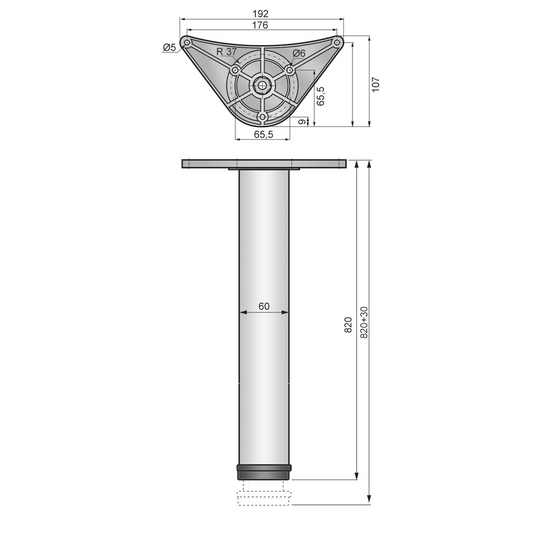
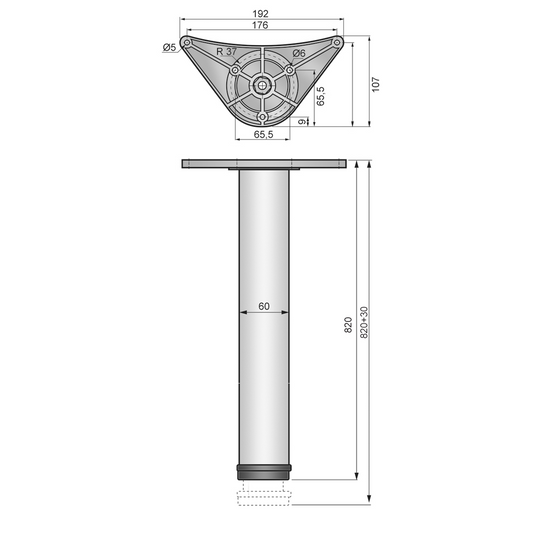
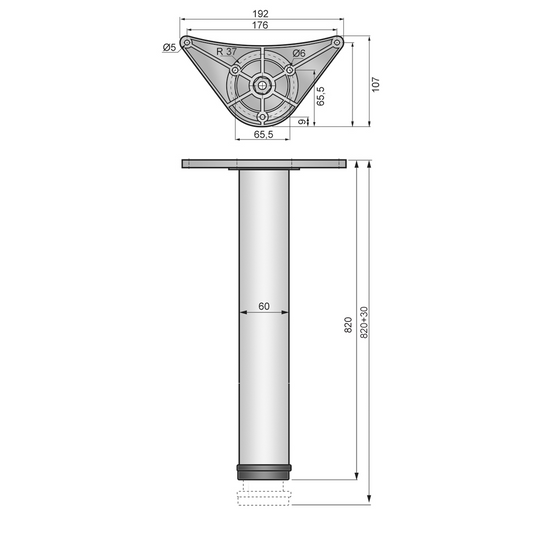
This intermediate height is tailored precisely to the demands of kitchen construction. A32-1/4 in (82 cm) table legis used to support extended worktops, kitchen islands, or add-on tables. With a 1-1/2 in to 1-5/8 in (38 mm to 40 mm) kitchen countertop, it matches the standard cabinet height of fitted kitchens (approx. 33-7/8 in (860 mm)).
43-5/16 in (1100 mm / 110 cm) – Bar Tables and Counters
For bar tables, reception counters, or modern standing workstations,tall metal table legsmeasuring 43-5/16 in (1100 mm) are used. At this height, significantly stronger leverage forces act on the mounting points. Therefore, a large-surface steel or Zinc alloymounting plateis strictly required to prevent screws from tearing out. If planning fortable legs 39-3/8 in (100 cm) tallor higher, the tabletop must possess sufficient inherent rigidity (e.g., via sliding battens for solid wood).
Height Adjustment and Floor Leveling
Nearly all professionalmetal table feetfeature a leveler glide made of impact-resistant plastic at the bottom. Via an integrated thread (usually M8 or M10), the foot can typically be unscrewed by +3/4 in to +1-3/16 in (+20 mm to +30 mm). Thisheight adjustment for metal table legsprimarily serves to compensate for uneven floors to prevent the table from rocking. For structures that require regular height adjustments, explore theAdjustable Metal Table Legscategory.
Installation and Mounting Hardware
The long-term stability ofmetal legs on a tabledirectly depends on the quality of the screw attachment. The mounting plate usually features four to six pre-drilled holes (3/16 in to 1/4 in (Ø 5 mm - 6 mm)).
When mounting into engineered wood materials (particle board, MDF, plywood), observe the following technical guidelines:
- Screw Selection:Only pan-head or round-head screws with aPZ or TX driveshould be used. Countersunk screws can damage the mounting plate holes or loosen under lateral load. The diameter should be 3/16 in (4.5 mm or 5.0 mm).
- Thread Engagement Depth:Choose a screw length as long as possible without penetrating through the tabletop. For a 1 in (25 mm) thick top, a screw length of 3/4 in (20 mm) is optimal.
- Pre-drilling:To prevent splitting the core material, pre-drilling is mandatory. For a 3/16 in (5 mm) particle board screw, a 1/8 in (3 mm) wood bit is typically used to pre-drill.
- Threaded Inserts:For tables that are assembled and disassembled frequently (e.g., conference tables), direct screwing into wood is unsuitable. Here,insert nuts (Rampa inserts)must be embedded into the board, which then accept metric machine screws (e.g., M6 x 3/4 in (20 mm)).
Product Selection for Specific Requirements
Selecting the right profile depends on structural requirements and design intent. For building dining tables or heavy desks, installers often choose round profiles with a diameter of 2-3/8 in (60 mm). A proven model for dark interior schemes is the28 in Table Leg - Matte Black. For a brighter, minimalist look, the28 in Table Leg - Steel Mounting Plate - Whiteis ideal.
If the design calls for a square, modern edge, square profiles (e.g., 2-3/8 x 2-3/8 in (60 x 60 mm)) are the right choice. TheSquare 28 in Table Leg - Black, Zinc alloy Mounting Plateor the high-gloss variantSquare 28 in Table Leg - Chrome, Zinc alloy Mounting Plateprovide exceptionally high torsional stiffness due to their angular geometry.
For kitchen projects and work islands, 32-1/4 in (820 mm) variants are essential. Here, the32-1/4 in Table Leg - Steel Mounting Plate - Brushed Stainless Steelprovides a resilient finish that pairs well with kitchen appliances. Alternatively, the32-1/4 in Table Leg - Zinc alloy Mounting Plate - Whiteis available for white kitchen fronts.
In the bar table and counter sector (43-5/16 in (1100 mm)), mounting plate stability is the primary criterion. Models like the43-5/16 in Table Leg - Steel Mounting Plate - Blackor the43-5/16 in Table Leg - Steel Mounting Plate - Aluminumreliably transfer leverage forces into the table base through their heavy-duty steel plate.
Frequently Asked Questions (FAQ)
How do I calculate the required weight capacity for metal table legs on a dining table?
Static load capacity is stated per leg (often between 66 lbs and 110 lbs (30 kg and 50 kg)). For a table with four legs, the weight capacities add up. A table with four legs rated at 88 lbs (40 kg) each can statical support 352 lbs (160 kg). The self-weight of the tabletop must be subtracted from this total. For dynamic loads (people leaning on the table), factor in a safety factor of 2.0.
Are thin metal table legs stable enough for freestanding dining tables?
Thin metal table legs(e.g., hairpin legs or profiles under 1-5/8 in (40 mm)) tend to vibrate under lateral force. They are primarily suited for side tables, wall-anchored consoles, or desks built with an additional cross-brace (apron) under the top. For freestanding dining tables, tubular profiles measuring 2-3/8 in (60 mm) diameter or larger should be selected.
What advantage does a Zinc alloy mounting plate offer over a steel mounting plate?
Zinc alloy (zinc-aluminum) is manufactured using a die-casting process. This allows the transition from the tube to the plate to be cast in one piece or made with highly precise threads, guaranteeing an exact 90° alignment. Steel mounting plates are usually welded, but offer an even higher absolute breaking load under extreme leverage forces, such as those occurring on bar tables (43-5/16 in (110 cm)).
How can metal table legs be attached to glass or stone tabletops?
Direct screw mounting is not possible here. For glass tops, special stainless steel bonding adapters are used, which are glued flush to the glass using UV-curing adhesive. The metal leg is then screwed into these adapters. For natural stone (granite, marble), blind holes must be drilled, using special expansion anchors for stone or glued-in threaded inserts (chemical anchor mortar).
Related System Components for Furniture Building
Beyond standard metal table legs, professional furniture building and interior fit-outs require additional hardware to complete the build. For lower casegoods, dressers, or sofas, consider exploringMetal Furniture Feetas well as geometrically cleanSquare Metal Furniture Feet.
When designing desks or conference tables, clean cable management is imperative. MatchingMetal Desk Grommetscan be routed flush into the tabletop for this purpose. To visually coordinate hardware throughout the room,Metal Furniture Handlescan also be mounted on surrounding cabinet fronts.
- White Metal Table Legs