
Black Felt Pads
Popular Subcategories


-
Self-Adhesive Felt Pad 13/16x13/16 inchRegular price $1.88Unit price / perRegular priceSale price $1.88
-
Self-Adhesive Felt Pads 11/16 inch (18 mm)Regular price $2.25Unit price / perRegular priceSale price $2.25
-
Self-Adhesive Felt Pad 15/16 inchRegular price $1.88Unit price / perRegular priceSale price $1.88
-
Self-Adhesive Felt Pads 2 x 2 inch (50x50 mm)Regular price $2.25Unit price / perRegular priceSale price $2.25
-
Self-Adhesive Felt Pad 1-3/16 inch (30 mm)Regular price $2.25Unit price / perRegular priceSale price $2.25

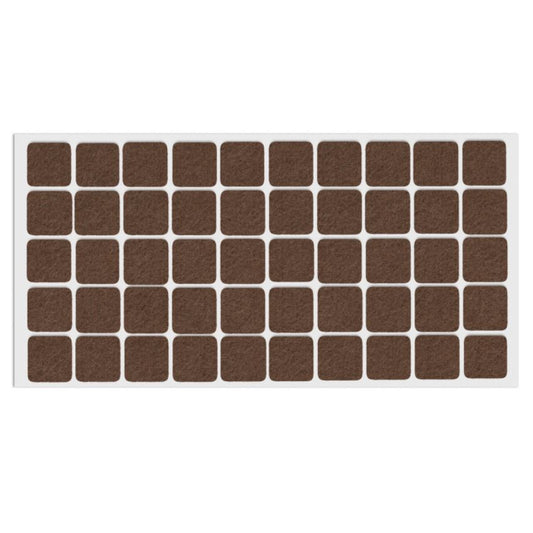

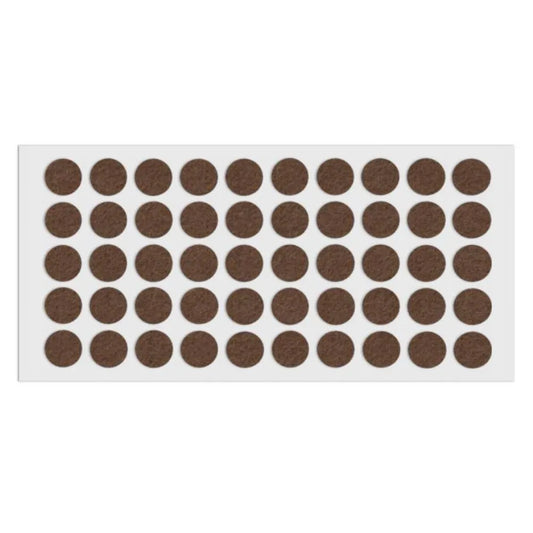

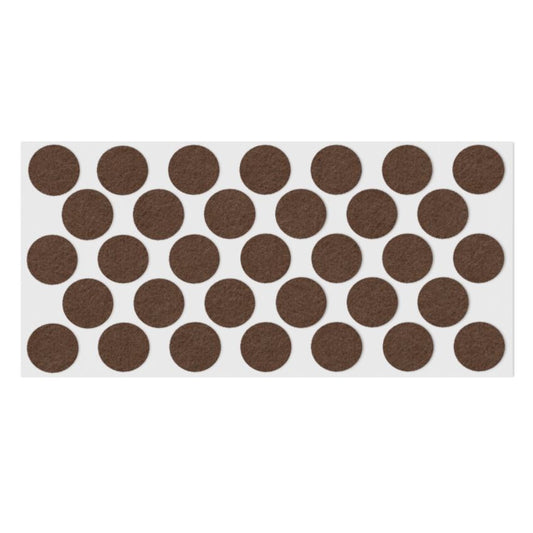

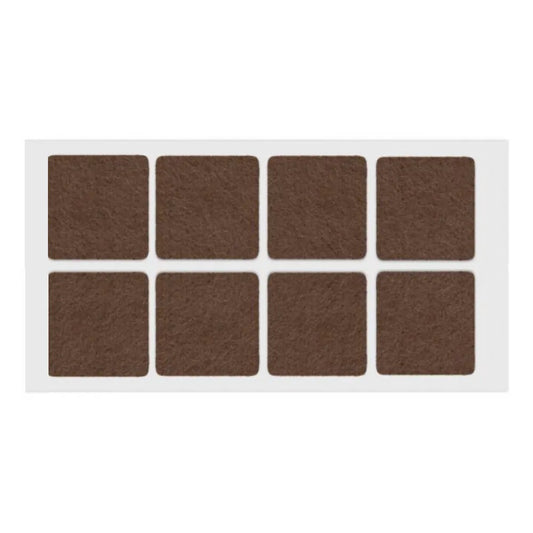

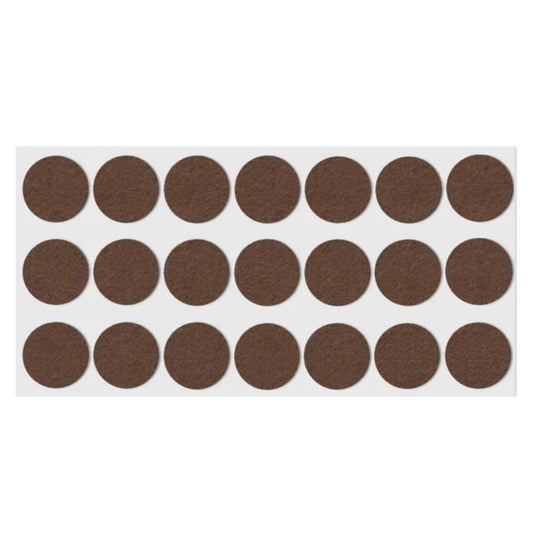
Black felt padsare self-adhesive, high-density floor protectors made of synthetic needle felt, designed primarily for installation underneath furniture with dark bases or feet. They reduce sliding friction and prevent scratches and scuff marks on hard flooring like hardwood, laminate, vinyl, or tile. Thanks to their dark color, these hardware components blend seamlessly into the overall look of dark furniture without creating a distracting contrast at floor level.
The Technical Function of the Color Black in Floor Glides
When constructing and assembling furniture, the transition between the piece of furniture and the floor plays a critical role in the longevity of the floor covering. While light-colored glides often remain visible as an annoying white line under dark furniture, a black glide is virtually invisible beneath a dark wood or metal foot. Acting like a hidden shock absorber between the chassis and the road, the felt absorbs frictional energy without compromising the design of the furniture.
Additionally, the color black offers a practical technical advantage in daily use: dust, microscopic floor abrasion, and fine dirt that inevitably collect at the edges of floor pads are much less noticeable on black felt. Unlikewhite felt pads, which quickly turn unsightly gray in high-traffic areas, black versions retain their visual neutrality over a significantly longer period. For lighter wood tones, installers typically usebrown felt pads, whilegray felt padsare the most technically appropriate choice for concrete-look furniture or aluminum feet.
Applications: Long-Term Protection for Heavy and Dark Furniture
The load that a piece of furniture exerts on the floor is known aspoint load. The heavier the furniture and the smaller the contact area of the feet, the higher the pressure in pounds per square inch (kg/cm²). Felt pads distribute this pressure and create a smooth sliding surface. Proper sizing of the pads is essential, especially in modern, dark interior design concepts.
Living Room and Dining Area
A solid black sideboard or a fully loaded black cabinet exerts immense pressure on the floor. When these pieces are moved even slightly to clean the floor, a single grain of sand under an unprotected furniture leg can gouge deep grooves into hardwood flooring. An invisible floor protector is also essential for a high-gloss black dresser that serves as a central room feature. Even for wall-mounted elements like a black wall shelf, small, custom-cut felt pads can serve as rear wall spacers to protect wallpaper from paint transfer.
Bedroom and Closet
Large-format cabinet systems often dominate the bedroom area. A floor-to-ceiling black wardrobe quickly reaches a total weight of over 330 lbs (150 kg) when filled. Large-surfacefelt padsshould be applied under the base plates here to optimally distribute the weight. Freestanding furniture like a black bedroom dresser or compact black nightstands also benefit from a black felt base. Furthermore, the pads dampen structure-borne noise if the furniture is bumped accidentally.
Hallway and Entryway
The entryway is particularly demanding due to moisture and dirt tracked in from outside. A black coat rack, black shoe cabinets, or a narrow black hallway dresser often sit on tile. Here, the felt pad not only prevents scratches but also compensates for minor unevenness in grout lines, ensuring the furniture stays wobble-free. Even a small black cabinet in a guest bathroom should be equipped with suitable pads to protect the floor tiles.
Shapes and Sizes: Choosing the Right Cut
Selecting the correct geometry and size is essential for the durability of the adhesive bond. The pad should maximize the contact area of the furniture foot while setting back about 1/16 in (1.0 mm to 2.0 mm) from the edges so it doesn't overhang laterally under pressure.
- Round Cross-Sections:Round felt padsare used for cylindrical furniture feet or tapered legs. The selection ranges from very small diameters like 5/8 in (Ø 15 mm) for delicate chair legs up to 2-3/16 in (Ø 55 mm) for solid table legs or wide bases.
- Square Cross-Sections:Square feet are usually fitted under cabinet furniture, such as a 31-1/2 in wide (80 cm) black dresser or a solid 47-1/4 in wide (120 cm) black dresser.Square felt pads(e.g., 3/4 x 3/4 in (20 x 20 mm) or 2 x 2 in (50 x 50 mm)) are ideal here.
- Custom Cuts:For continuous baseboards, sled frames, or asymmetrical contact surfaces, large-formatrectangular felt padsare ideal (e.g., 4-3/4 x 9-1/2 in (120 x 240 mm)). These sheets can be trimmed precisely to the required dimensions using a sharp utility knife.
The material thickness of the high-density felt layer is typically about 1/8 in (3.0 mm). This provides the ideal balance between sufficient cushioning and a low profile, keeping the stability and height of the furniture unchanged.
Installation Guide: Securing Self-Adhesive Black Felt Pads for the Long Term
The bonding strength of the rear acrylic adhesive depends heavily on surface preparation. Improper installation inevitably leads to lateral shifting (shearing) of the pad under load.
- Clean the Surface:The furniture foot must be completely free of dust and grease. Lightly sand raw wood surfaces. For metal or plastic feet, cleaning with isopropyl alcohol or a residue-free evaporating silicone remover is recommended.
- Drying:Allow the solvent to flash off completely. The surface must be 100% dry.
- Positioning and Pressure:Peel off the backing film without touching the adhesive layer with your fingers. Center the pad on the foot. Initial pressure is crucial for adhesive cross-linking. Press the pad firmly for about 15 to 30 seconds with high pressure (approx. 22 lbs to 33 lbs (10 kg to 15 kg)).
- Curing:The adhesive needs time to reach its maximum final bond strength. Ideally, avoid moving or placing dynamic loads on the furniture for 24 hours.
When building your own furniture, such as a custom black dresser, it is best to apply the pads as the absolute final step after allblack wood screwsare set and the cabinet parts are fully assembled.
Featured Products from This Category
To find the right dimensions for your project, our selection offers various options. Here are a few specific versions:
- Self-Adhesive Black Felt Pad 3/4 in (Ø20mm):The standard choice for delicate metal feet, lightweight side tables, or as bumper pads for cabinet doors.
- Self-Adhesive Black Felt Pad 1-3/8 x 1-3/8 in (35x35mm):Ideal for square wooden legs under medium-heavy cabinet furniture.
- Self-Adhesive Black Felt Pad Variety Pack:A multi-size set of various diameters, perfect for installers who need to adapt flexibly on-site to different leg shapes.
- Self-Adhesive Black Felt Sheet 4-3/4 x 9-1/2 in (120x240mm):The large pad sheet for custom trimming. Perfect for continuous side panels on a black wardrobe or full-surface base constructions.
Frequently Asked Questions (FAQ) About Black Felt Pads
How often should felt pads be replaced?Service life depends on floor conditions, furniture weight, and frequency of movement. On stationary furniture like a heavy dresser, the pads often last for many years. For chairs moved daily, a visual inspection every 6 to 12 months is recommended. Replace the pads as soon as the felt compresses to under 1/16 in (1.0 mm) or becomes clogged with dirt.
Are felt pads suitable for carpeted floors?No. Felt on fabric creates extremely high friction. Moving the furniture becomes almost impossible, and the resulting shear forces would immediately strip the self-adhesive pad off the leg. Smooth plastic or PTFE (Teflon) glides are strictly required for carpets.
How do I remove old, stubborn adhesive residue from a furniture leg?When an old pad detaches, the acrylic adhesive layer often remains on the foot. This must be completely removed before installing a new pad. Gently warm the residue with a heat gun and roll the adhesive off with your thumb. Stubborn spots can be dissolved with mineral spirits or specialized adhesive removers and scraped off with a plastic putty knife.
Related Categories
To find additional hardware components, alternative colors, or matching cabinet elements for your next assembly project, explore the following sections:
- Black Dressers
- Black Wardrobes
- Felt Pads(Overview of all colors and shapes)
- Black Wood Screws