
Adjustable Cabinet Legs
-
Plinth Clip, BlackRegular price $0.05Unit price / perRegular priceSale price $0.05
-
Kitchen Cabinet Leg 3-15/16 inch - BlackRegular price $1.13Unit price / perRegular priceSale price $1.13
-
Aluminum Plinth Clip, BlackRegular price $0.07Unit price / perRegular priceSale price $0.07
-
Kitchen Cabinet Leg 5-7/8 inch - BlackRegular price $1.22Unit price / perRegular priceSale price $1.22
-
Extension for Kitchen Cabinet Legs - BlackRegular price $1.05Unit price / perRegular priceSale price $1.05
-
Adjustable Plastic Furniture Feet 2-3/8 inch (60 mm) - BlackRegular price $0.24Unit price / perRegular priceSale price $0.24





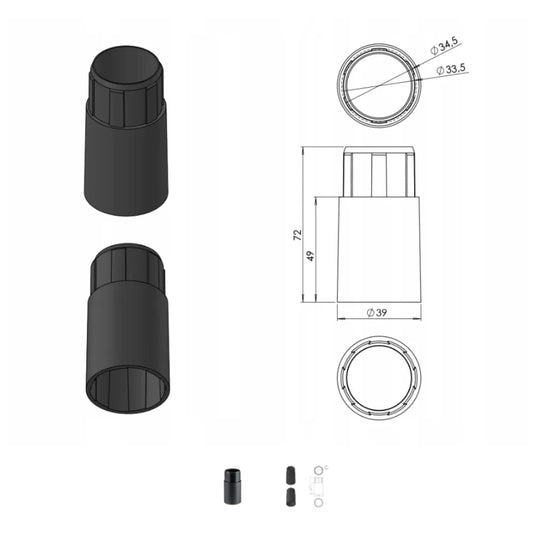

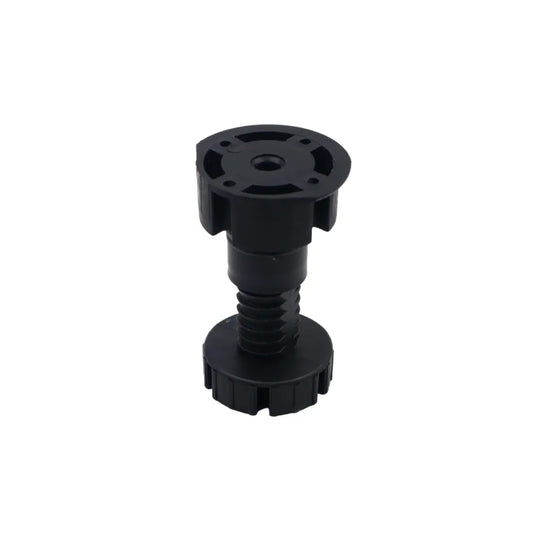
Adjustable cabinet legsare load-bearing, mechanically levelable base support components primarily used for the vertical alignment of kitchen cabinets, heavy built-in cabinetry, and commercial furniture on uneven floors. Positioned invisibly between the subfloor and the bottom of the cabinet carcass, their integrated threaded design enables precise horizontal leveling of entire cabinet rows prior to installing the front toe kick panel.
As the foundation of any professional kitchen installation, these structural elements perform a critical static function. Much like the heavy-duty chassis of a transport truck, adjustable cabinet legs must safely transfer the entire load—including the cabinet box, heavy stone or solid wood countertops, and integrated appliances—directly to the floor while compensating for uneven ground down to the fraction of an inch. Precise leveling is essential to align door reveals and drawer gaps accurately, ensuring smooth, snag-free operation of drawer slides and hinges.
Technical Specifications and Standard Dimensions
In cabinet construction, leg dimensions are determined by the planned toe kick height of the kitchen or cabinetry system. The installed height dictates the available clearance for floor-level utility runs (plumbing supply, drainage, electrical) and establishes the ergonomic height of the countertop.
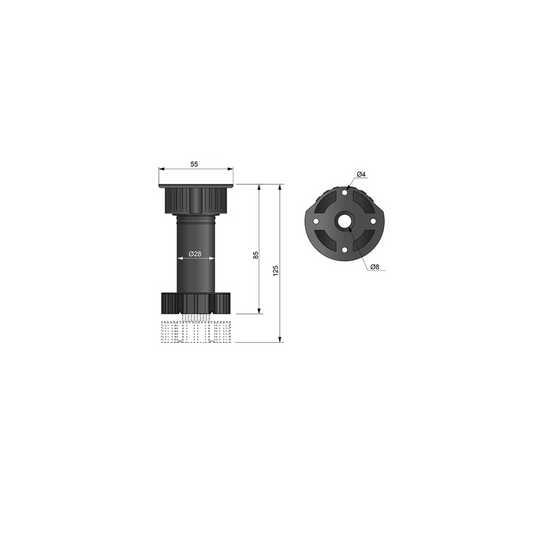
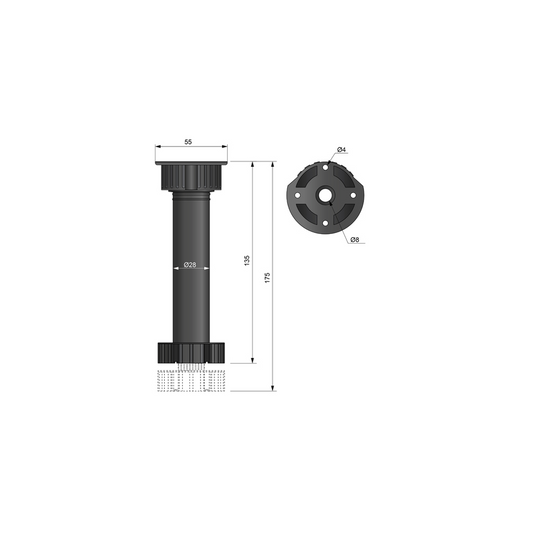
A standard adjustable cabinet leg consists of three main components: themounting flange(which screws to the bottom of the cabinet box), the cylindricalshaft, and thethreaded spindlewith an integrated base pad for height adjustment.
Typical nominal sizes and their common applications:
- 2-3/8 in (60 mm):Ideal for ultralow toe kick profiles or modern, floor-adjacent cabinet designs. A matching component for these setups is ourAdjustable Kitchen Feet 60mm - Black. Due to design constraints, the adjustment range is shorter on low-profile legs.
- 4 in (100 mm):The industry standard for European-style framed and frameless kitchen designs. This height provides ample clearance behind the toe kick for routing waste pipes and electrical conduits. Standard models such as ourAdjustable Kitchen Feet 100mm - Blacktypically offer a leveling adjustment range from `-3/8 in (-10 mm)` to `+3/4 in (+20 mm)`.
- 6 in (150 mm):Designed for elevated counter heights, custom ergonomic kitchen layouts, or severely uneven floors in historic homes. Systems like ourAdjustable Kitchen Feet 150mm - Blackdeliver wide installation tolerances.
When the standard height of a leg is insufficient for a specific project, modular extenders can be added. A dedicatedKitchen Leg Extension - Blacksnaps securely between the mounting flange and the shaft, rigidly increasing overall height without compromising the structural stability of the threaded spindle.
Load Capacity and Material Characteristics
Static load capacity is the most vital criterion when selecting cabinet feet. Kitchen cabinet legs are typically injection-molded from high-impactABS plastic(Acrylonitrile Butadiene Styrene) or polypropylene (PP). These engineered thermoplastics deliver high compressive strength, complete moisture resistance against floor cleaning or plumbing leaks, and long-term resistance to embrittlement.
A standard plastic adjustable cabinet leg boasts an axial load capacity of220 lbs to 330 lbs (100 kg to 150 kg). Using four legs under a standard 24-inch (600 mm) cabinet box provides a theoretical static load rating of up to `1320 lbs (600 kg)`. This offers more than enough support for fully loaded cabinets and heavy solid-surface countertops.
The base pad of the threaded spindle features a diameter of1-1/2 in to 2 in (40 mm to 50 mm). This wide surface area ensures even weight distribution across subfloors, concrete overlays, or tile, preventing point-load cracking.
Installation Parameters and Leveling
Installing adjustable cabinet legs requires precise placement to prevent interference with the subsequent attachment of toe kick panels.
1. Flange Positioning
The mounting flange is fastened directly to the underside of the cabinet bottom (typically 5/8 in or 3/4 in (16 mm or 19 mm) particleboard or plywood).
- Front Recess:Front legs must be set back from the edge. The setback is calculated based on the thickness of the toe kick panel plus the depth of the kick clip. A standard front setback from the cabinet edge to the center of the leg is2 in to 2-3/4 in (50 mm to 70 mm).
- Side Alignment:To maximize support along the load-bearing cabinet side panels, place the flange flush against the side wall. Many flanges feature an integratedstop tabthat rests directly against the edge of the panel, preventing screw shear under heavy vertical load.
2. Fastening
Attach flanges using standardwood or particleboard screws(flathead or panhead). Depending on cabinet panel thickness, use#6 x 5/8 in (3.5 x 15 mm)or#8 x 5/8 in (4 x 16 mm)screws. Drive types likePZ (Pozidriv)orTX (Torx)are recommended to prevent bit cam-out during overhead or tight-clearance installation. Each flange typically includes four screw mounting locations.
3. Alignment and Leveling
Once cabinets are placed in position, leveling begins at the highest point of the floor. Use a spirit level or self-leveling cross-line laser to establish the datum line. Rotate the ribbed base pad to extend or retract the threaded spindle. The spindle utilizes heavy-dutytrapezoid (acme) threadsdesigned to withstand high axial loads without backing out or slipping under heavy weight.
Accessories: Toe Kick Attachment Clips
In addition to carrying structural weight, adjustable cabinet legs act as the primary mounting system for the front toe kick panel that conceals the under-cabinet void. Attachment is completely concealed using dedicated clips that screw to the back of the toe kick board or slide into integrated panel grooves before snapping directly onto the cylindrical leg shaft.
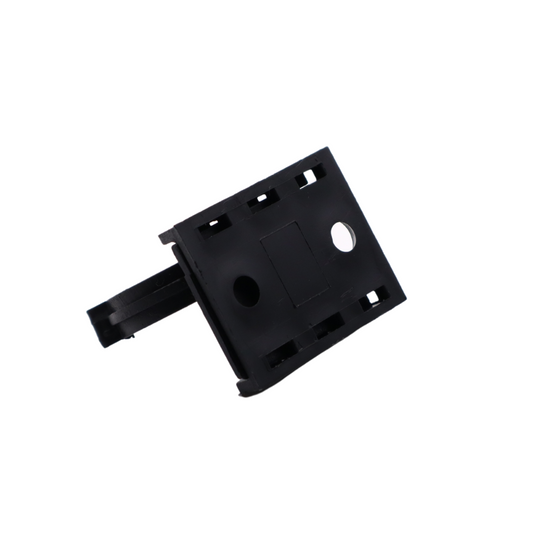
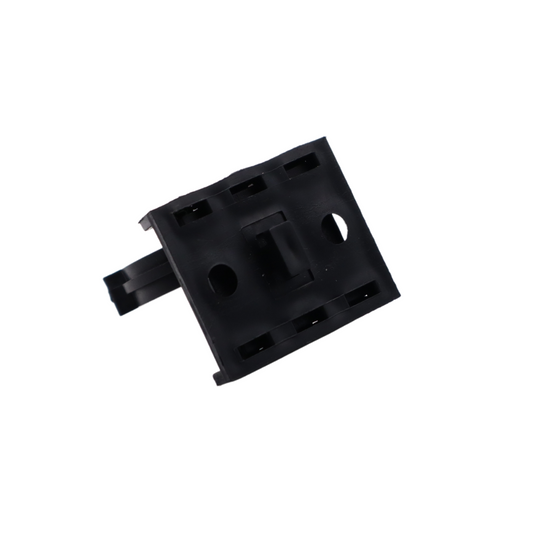
- For wood or composite toe kick panels, use the standardKitchen Leg Clip - Black, featuring a flat screw-on mounting plate.
- For modern metal kickboards, use a specializedAluminum Kitchen Leg Clip - Black, engineered to fit the rear channels of standard hollow aluminum profiles.
The flexible plastic collar grips the leg shaft securely (designed for standard leg shaft diameters around1-1/8 in (28 mm to 30 mm)). This snap-on mechanism allows quick, tool-free panel removal for easy access to under-cabinet plumbing, wiring, or dishwasher hookups.
Product Comparison: Cabinet Legs vs. Decorative Legs & Table Legs
While adjustable cabinet legs are strictly functional, hidden components, technical demands change significantly when supporting legs remain visible or must handle lateral forces.
Decorative Furniture Legs
When sideboards, vanities, or open-base cabinets are designed without a continuous toe kick, exposed decorative legs are used. These legs are crafted from brushed stainless steel, aluminum, or powder-coated steel. They include leveling adjustments (typically a small, hidden plastic foot disc inside the leg tube), but prioritize aesthetic integration. Their adjustment range is usually limited to+3/8 in to +5/8 in (+10 mm to +15 mm). Browse these options in ourAdjustable Furniture Legssection.
Table Legs and Countertop Supports
For freestanding structures like kitchen islands, dining tables, or overhanging breakfast bars, standard cabinet legs lack lateral stiffness. These applications experience high leverage and shear force. A dedicatedheight-adjustable table legfeatures a heavy-duty mounting plate (cast aluminum or thick steel) and a structural tube diameter of2-3/8 in to 3-1/8 in (60 mm to 80 mm). Height adjustments are made via an adjustable bottom foot or a telescopic tube locked by hex screws. For reliable island and counter support, choose dedicated systems from ourHeight-Adjustable Table Legsline.
Motorized Electric Lift Columns
The most advanced level of height adjustment is found in ergonomic office furniture. Anelectric height-adjustable deskreplaces manual threads with integrated linear motor actuators inside the lifting columns. These systems dynamically raise loads of175 lbs to 265 lbs (80 kg to 120 kg)at the touch of a button, moving smoothly across an ergonomic range from roughly25-1/2 in to 49 in (650 mm to 1250 mm). Synchronized control units ensure both legs elevate in parallel. Discover motorized solutions under Height-Adjustable Desks.
Frequently Asked Questions (FAQ)
How many adjustable cabinet legs do I need per cabinet box?As a general rule, standard base cabinets up to 24 in (600 mm) wide require four legs (two front, two rear). For wider cabinets ranging from 30 in to 48 in (800 mm to 1200 mm), such as wide drawer bases, a fifth and sixth leg must be installed centrally under the bottom panel to prevent sagging under heavy drawer loads.
What thread type is used in adjustable cabinet legs?Most plastic cabinet legs feature a coarse acme/trapezoidal thread molded directly into the shaft. This allows rapid height adjustments in fewer turns while remaining impervious to jobsite dust, dirt, and debris.
How far can I safely unscrew an adjustable cabinet leg?While manufacturer specs vary, a reliable rule of thumb is to keep at least5/8 in to 3/4 in (15 mm to 20 mm)of thread engagement inside the shaft to prevent buckling under heavy loads. A 4-inch (100 mm) leg should not be extended beyond 4-3/4 in (120 mm). If additional height is required, switch to a taller nominal leg size, such as 6 in (150 mm).
Can adjustable cabinet legs support heavy natural stone countertops?Yes. A 1-3/16 in (30 mm) thick granite countertop weighs approximately18.5 lbs per square foot (90 kg/m²). A standard cabinet resting on four legs rated at 330 lbs (150 kg) each provides a combined load capacity of 1320 lbs (600 kg). The stone weight transfers vertically through the cabinet side walls directly into the leg flanges, well within the legs' static load ratings.
What is the difference between a hinge corner stop setback and leg positioning?A hinge corner stop setback applies exclusively to cup hinges, defining how the door overlays the cabinet frame side. It is unrelated to cabinet leg placement. The mounting flange of an adjustable leg attaches underneath the bottom panel and should ideally sit directly under the load-bearing vertical side panel of the cabinet box.
Which screws should I use to install the mounting flange?Always use standard wood or particleboard screws. For 5/8 in (16 mm) cabinet bottoms,#6 x 5/8 in (3.5 x 15 mm)or#8 x 5/8 in (4 x 15 mm)screws are ideal. They offer strong thread engagement without breaking through the interior bottom surface. Choose Pozidriv (PZ) or Torx (TX) drive styles for secure installation.
How do I install toe kick panels on 90-degree corner cabinets?Toe kick panels attach to front leg shafts using standard leg clips. At 90-degree outer corners, panels join together using dedicated plastic or aluminum corner connector profiles rather than attaching to a corner leg. Ensure corner legs are set back sufficiently so they do not interfere with the corner profile installation.
Related Categories for Cabinetry and Millwork
Explore these specialized categories for additional furniture leveling, framing hardware, and height adjustment solutions:
- Adjustable Furniture Legs– Decorative exposed leveling feet designed for living room furniture, sideboards, and vanities requiring minor adjustments.
- Height-Adjustable Table Legs– Heavy-duty metal legs and support pillars for island countertops, dining tables, and overhangs.
- Height-Adjustable Desks – Electric motorized lift columns engineered for ergonomic sit-stand workstations and dynamic desk loads.
Frequently Asked Questions
Will these adjustable cabinet legs fit under my existing IKEA kitchen cabinets?
Yes, these legs work great with IKEA kitchen cabinets. Simply install them using the included screw-on mounting plates. They align smoothly with standard cabinet base layouts (such as 1-1/4 in / 32 mm hole patterns). With an adjustable range (e.g., 4 in to 4-3/4 in / 100 mm to 120 mm), you can easily compensate for uneven subfloors while ensuring high load stability.
How much weight can these adjustable furniture legs hold?
Depending on the specific model, a set of 4 legs can support up to 880 lbs (400 kg). This makes them ideal for heavy kitchen base cabinets and solid-surface countertops. To ensure maximum structural stability, distribute weight evenly and install at least four legs per cabinet box.
How many inches of height adjustment do these cabinet legs provide?
Depending on the model, the adjustment range is typically -3/8 in to +3/4 in (-10 mm to +20 mm). For example, a 4 in (100 mm) foot adjusts flexibly between 3-1/2 in and 4-3/4 in (90 mm to 120 mm). Simply rotate the threaded base pad to level cabinets precisely on unlevel floors.
How do I attach the front toe kick panel to the cabinet legs?
Toe kick panels attach using specialized toe kick clips that snap directly onto the circular shaft of the leg (typically fitting 1-1/8 in / 28 mm or 30 mm diameters). These clips screw onto the back of your wood, composite, or plastic kickboard, keeping the panel securely attached while allowing tool-free removal for cleaning or maintenance.
Can I use these to replace damaged legs on major brand kitchen cabinets?
Yes, our adjustable cabinet legs serve as excellent replacements for major cabinet manufacturers like Nobilia, Nolte, or Alno. Check your required height specifications (e.g., 6 in / 150 mm). If the old mounting style differs, simply replace the original leg along with its top mounting plate using the provided hardware.