Cabinet Connectors
No products found
Use fewer filters or remove all
Cabinet connectorsare structural hardware fittings designed to securely and permanently join perpendicular cabinet panels—typically side walls, bases, and tops—to ensure the static stability of the cabinet carcass. In professional cabinetmaking and high-end interior fitting, they form the backbone of any cabinet assembly. They prevent component shifting, absorb mechanical loads, and ensure that reveal tolerances are precisely maintained even under heavy weight.
The Technical Importance of Cabinet Connectors in Furniture Construction
From a structural standpoint, a piece of furniture is a complex system subjected to continuous loads. Dead weight, shelf payloads, and dynamic forces from opening and closing doors constantly act on the joints. Acting much like ligaments and tendons in a joint, cabinet connectors absorb shearing forces and safely dissipate them into the adjoining panels.
Without proper fastening using qualitycabinet connectors, a cabinet would simply collapse under lateral loads (the so-called parallelogram effect). While the back panel provides foundational racking resistance, it is thecabinet joint connectorsin the corners that regulate the primary tensile and compressive loads between vertical and horizontal components. Particularly in engineered wood constructions likeparticle boardorMDF, which have lower internal tensile strength thansolid wood, selecting the right connector is crucial for long-term durability.
Types and Configurations of Cabinet Connectors
Selecting the appropriate fitting depends on the required load capacity, panel thickness (typically 5/8 in (16 mm) or 3/4 in (19 mm)), and the aesthetic requirements of the finished piece.
Surface-Mounted Corner Brackets (Corner Connectors)
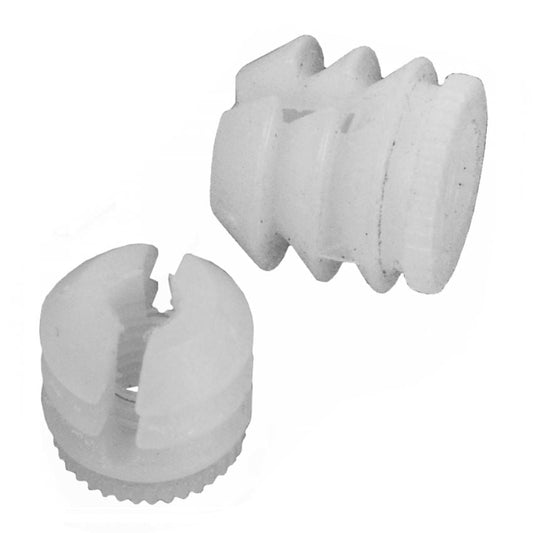
This classic form ofcabinet connectorsis installed onto the internal corners of the cabinet carcass. They consist of a right-angled main body secured to the side wall and base with screws. They are especially popular for retrofit stabilization or custom builds since they require no complex routing. A standardplastic cabinet connectoroffers a fast, efficient solution for light- to medium-duty builds.
Connectors with Cover Caps
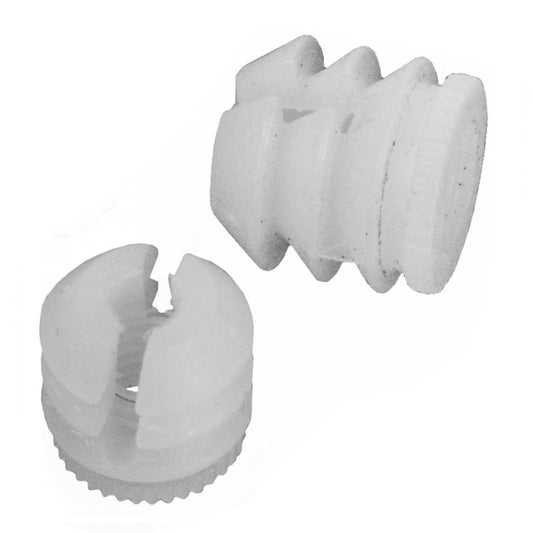
For visible areas where hardware and screw heads should remain hidden, multi-piece systems are used. Aplastic cabinet connector with separate cover capconsists of a load-bearing mounting block and a precision-fit cap. After driving thecabinet connecting screws, the cap snaps into place. This protects screw heads from moisture and dust while ensuring a clean, finished appearance inside the cabinet.
Rounded Specialty Designs
In wardrobes or closets where delicate textiles are stored, sharp hardware edges pose a risk. In these applications,rounded plastic cabinet connectors with separate cover capsare ideal. The smooth, contoured lines of the cap prevent fabrics from snagging or pulling threads at the joint.
Cam Lock Connectors (Minifix / Rastex)
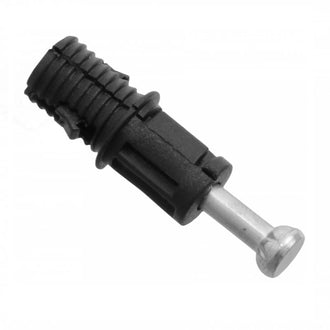
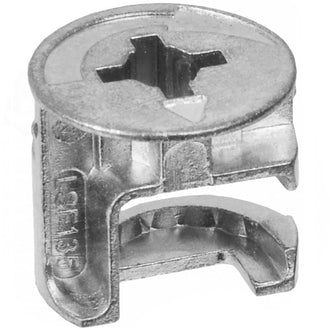
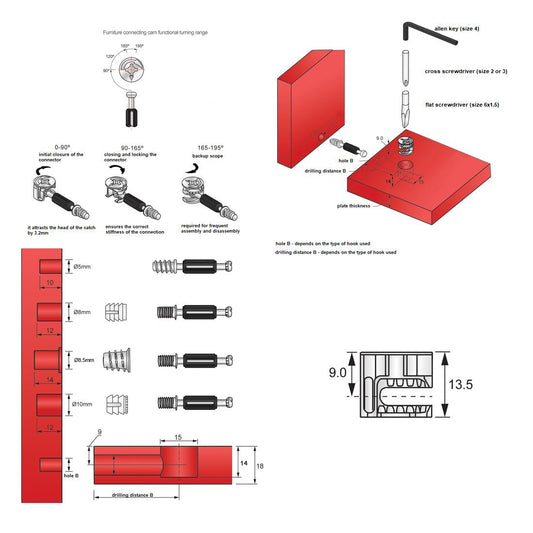
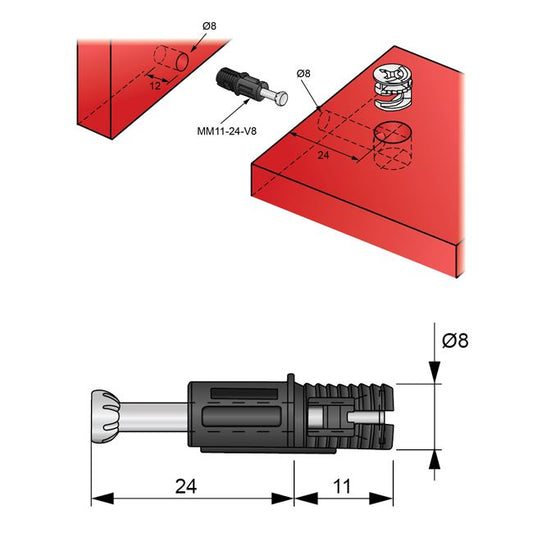
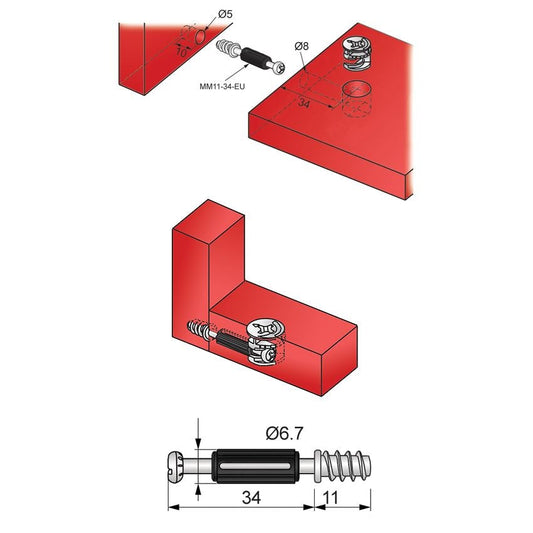
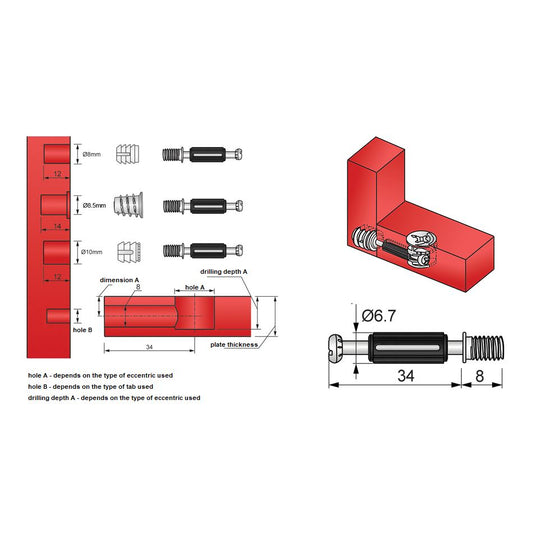
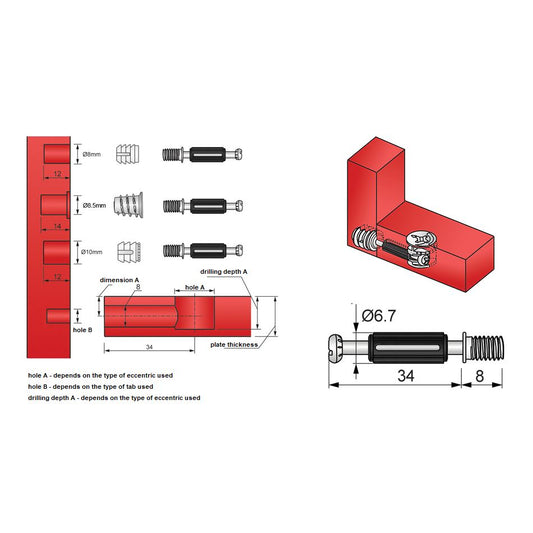
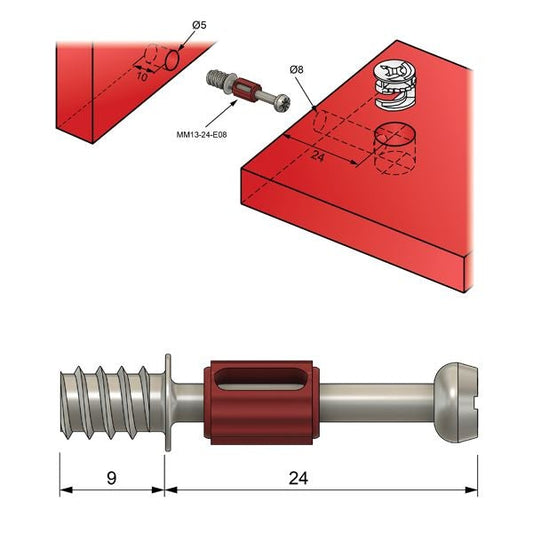
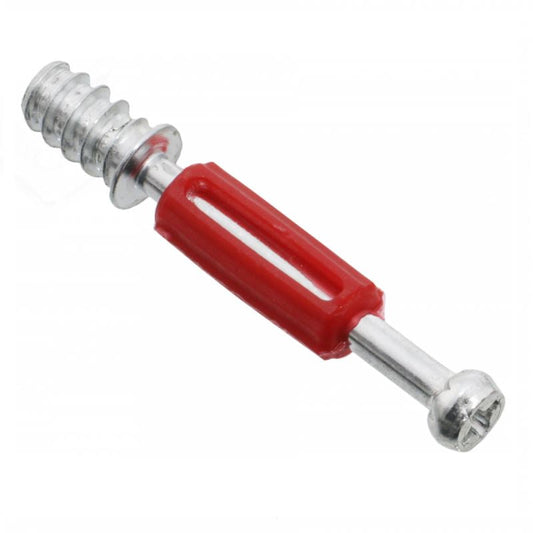
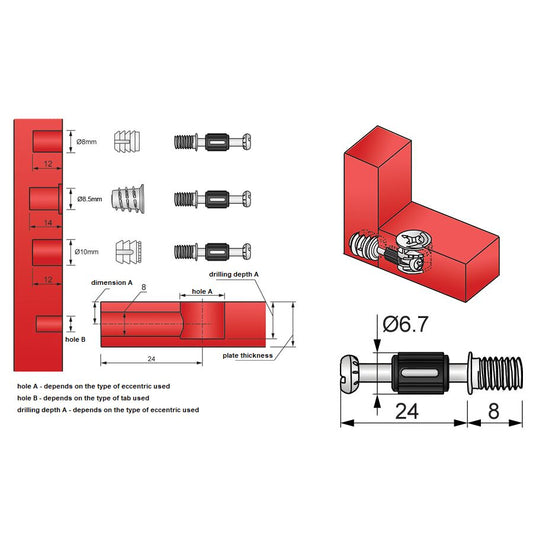
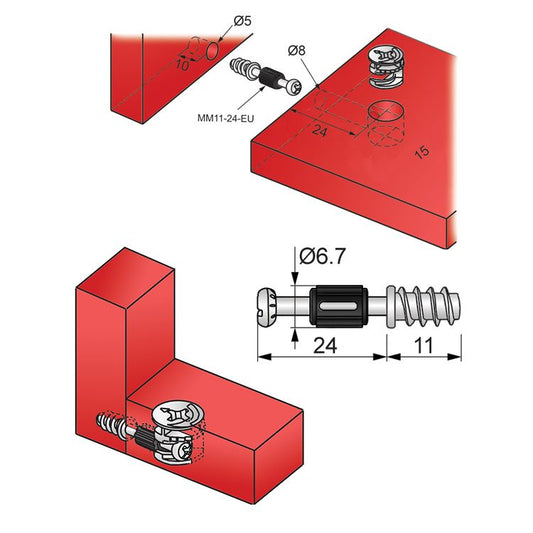
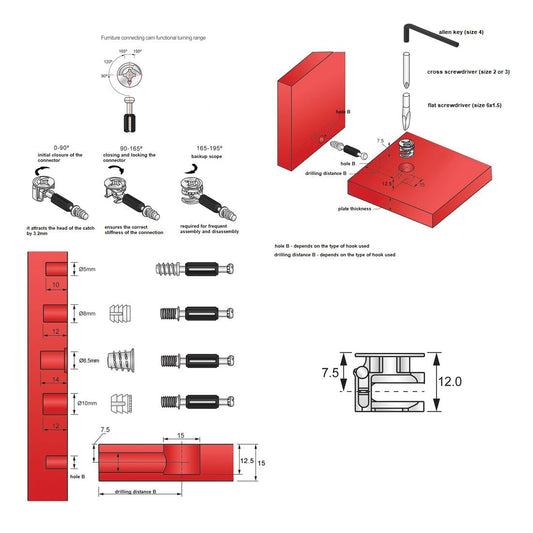
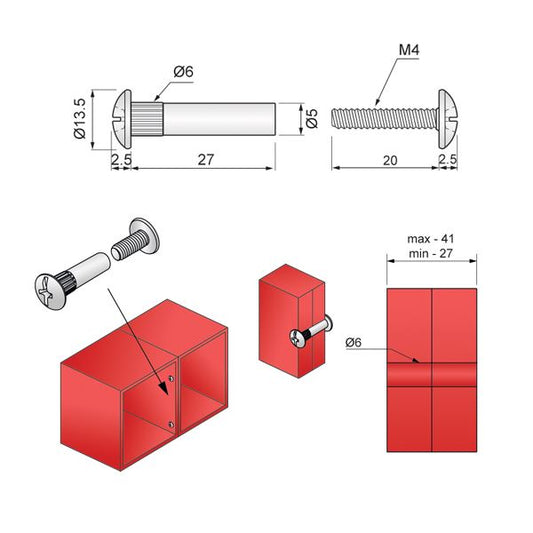
Acam lock cabinet connectorbelongs to the category of concealed fittings. It consists of a connecting bolt (usually threaded for a 3/16 in (5 mm) hole) and a cam housing (zinc die-cast, typically requiring a 19/32 in (15 mm) bore). By rotating the cam approximately 210°, it pulls the bolt tight and clamps the panels flush together. Installing theseinvisible cabinet connectorsis the standard in industrial furniture manufacturing.
Material Guide: Plastic vs. Metal
The load capacity of a cabinet joint depends heavily on the connector material. Both primary materials serve specific technical purposes.
Plastic Cabinet Connectors
Modernplastic cabinet connectorsare manufactured from high-strength polymers (such as polyamide or ABS). They are corrosion-free, lightweight, and adapt to minor cutting tolerances in panel materials thanks to slight material elasticity. Another advantage is color versatility: unlike plain metal fittings, plastic connectors can be precisely color-matched to cabinetdecor finishes(e.g., White, Black, Sonoma Oak). For standard kitchen wall cabinets, bathroom vanities, or shelving units, they offer more than enough structural rigidity. Aplastic cabinet connectoralso dampens minor vibrations caused by drawer operation.
Metal Cabinet Connectors
When extreme loads must be supported—such as in workshop cabinets, heavy library shelving, or platform bases—a heavy-duty metalcabinet connectoris required. These corner brackets made from galvanized steel or zinc die-cast deliver maximum rigidity. A metalangle bracket cabinet connectorwill not flex even under severe vertical shear loads, though it lacks decorative cover options and should be monitored for corrosion in high-moisture environments (e.g., under-sink cabinets).
Installation and Assembly Techniques
Proper installation techniques dictate the pull-out resistance of the screws and, consequently, the overall stability ofpanel cabinet connectors.
Selecting the Right Screws
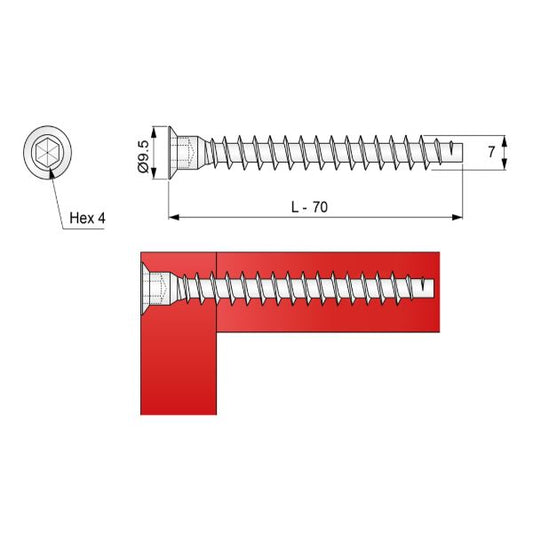
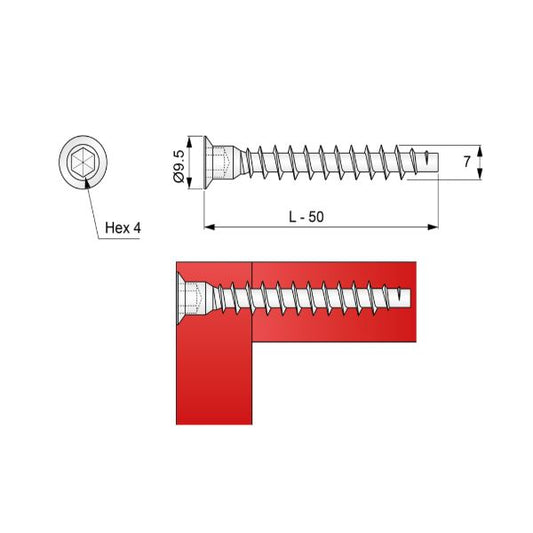
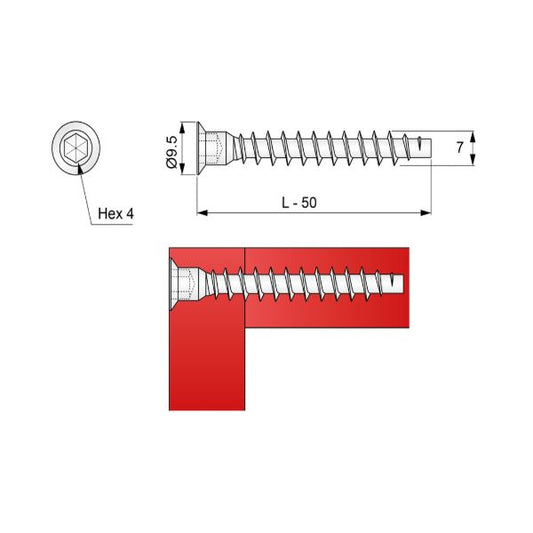
Using the correctcabinet connector screwsis essential. For particle board and MDF, specialtywood screwswith deep, sharp threads must be used.
- Diameter:Standard plastic connectors typically accept screws with a diameter of #6 (3.5 mm) or #8 (4.0 mm).
- Length:Screw length is calculated by adding the flange thickness of the connector to the maximum penetration depth in the wood panel without breaking through the opposite side. For a 3/4 in (19 mm) panel and a 5/32 in (4 mm) connector flange, a 5/8 in (4.0 x 16 mm or 4.0 x 17 mm) screw is ideal.
- Drive System:To optimize torque transmission from cordless drivers and prevent stripping (spinning out in wood), choose screws with aPZ (Pozidriv)orTX (Torx)drive.
Pre-drilling and Positioning
Pre-drilling is highly recommended—especially in coated particle board (melamine) or dense MDF panels—to prevent the substrate from splitting. For a #8 (4 mm) screw, a 3/32 in (2.5 mm) or 1/8 in (3.0 mm) pilot bit is recommended.
When mounting standardplastic cabinet connectors with separate cover caps, press them flush into the 90-degree corner. Drive the screw into the continuous side wall (vertical) first, then secure the horizontal panel (base/top). This pulls the joint tight and seamless.
Repairing Stripped Connections
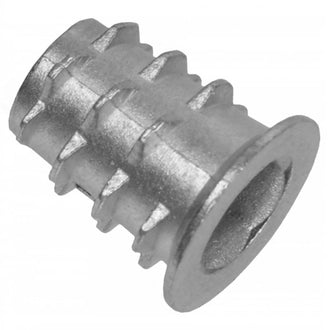
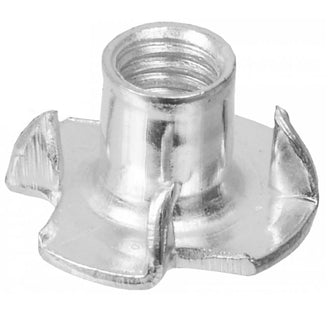
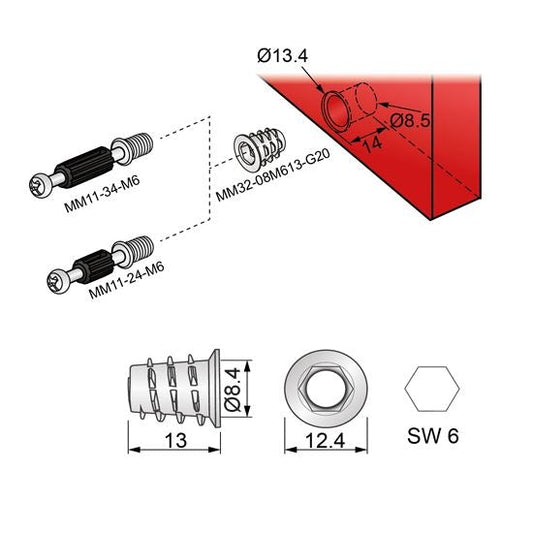
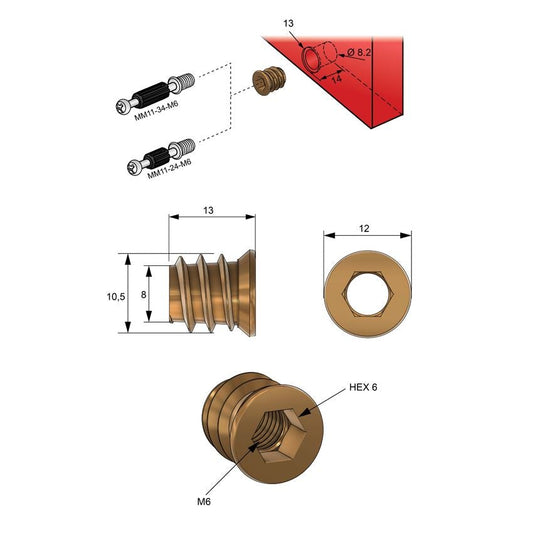
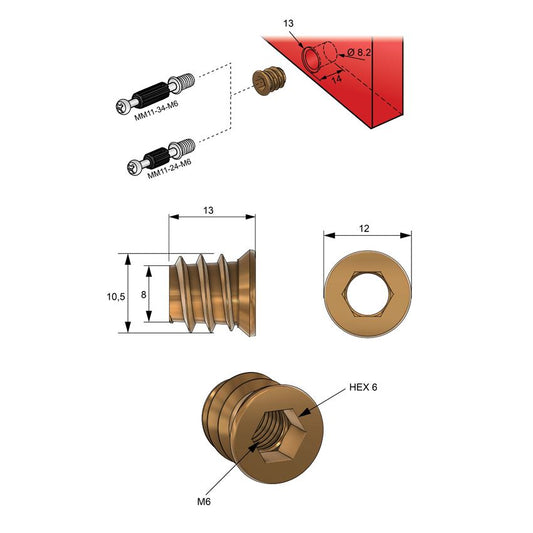
Strippedcabinet screwsare a common job-site issue. If the screw threads lose grip in particle board, drill the hole out to 3/16 in (5 mm) or 5/16 in (8 mm) and install a me threaded insert (Rampa nut). Alternatively, re-mount the connector shifted a few inches to fresh material. In many cases, a wideplastic cabinet connectorwill fully conceal the old, damaged screw holes.
Specific Applications in Furniture Construction
Connector hardware demands vary based on room requirements and furniture types.
Kitchen Cabinetry (Kitchen Cabinet Connectors)
In kitchen construction, wall cabinets must support their own weight as well as heavy stacks of plates and glassware. High tensile strengthkitchen cabinet connectorsare essential here. Because kitchen environments experience elevated humidity,plastic cabinet connectors with separate cover capsare ideal. The cap seals the screw head from flash rust caused by cooking steam.
Wall Units and Living Room Furniture
Large modular wall units require precise panel alignment. In addition to providing internal rigidity to single carcasses,wall unit connectorsare frequently used to gang multiple cabinet modules together. Precision-fit corner connectors ensure consistent reveals and door gap alignments.
Wardrobes and System Furniture (IKEA Pax & More)
Due to their height (often over 78-3/4 in (2000 mm)), large wardrobes require immense torsional stiffness. When these cabinets are disassembled and reassembled multiple times, factory cam locks often fatigue. When searching for replacementIKEA Pax cabinet connectorsor genericIKEA cabinet connectors, professionals frequently turn to surface-mounted brackets. Retrofitting arounded plastic cabinet connector with separate cover capin the upper and lower corners of a Pax wardrobe restores structural integrity without exposing clothing to snagging risks.
Compatibility with Industry-Standard Hardware Systems
Standardized hole patterns dominate professional cabinetmaking. The most widespread isSystem 32, which uses holes spaced 1-1/4 in (32 mm) apart and set 1-29/32 in (37 mm) from the front edge.
Manufacturers like Hettich and Häfele produce highly specialized hardware. AHettich cabinet connector(such as the Rastex) or aHäfele cabinet connector(such as the Minifix) relies on the eccentric cam principle and requires precise CNC routing.
For field installers, carpenters, or DIYers repairing furniture, these concealed systems can be impractical without specialized equipment for 19/32 in (15 mm) face cup routing. Surface-mounted brackets offer a major advantage here: they are system-agnostic. Whether used as a replacement for a brokenHettich cabinet connectoror to reinforce flat-pack furniture, surface-mount plastic or metal brackets require only a flat surface and standard screws.
Furnica – Quality Hardware for Cabinet Construction
Trade professionals rely on dependable components for their projects.Furnicasupplies structural cabinet hardware engineered to simplify installation. Precision injection moulding ensures cover caps fit snugly without popping off, while thick plastic walls allow high screw torque without cracking.
---
Frequently Asked Questions (FAQ) about Cabinet Connectors
1. How many cabinet connectors do I need per cabinet shelf or base?
As a rule of thumb: For cabinets up to 23-5/8 in (600 mm) wide, two connectors per joint edge (4 total per shelf/base) installed approximately 2 in (50 mm) from the front and rear edges are sufficient. For cabinets wider than 31-1/2 in (800 mm), add a third connector in the center to prevent panel sagging.
2. What screw length should I use for 5/8 in (16 mm) particle board?
To avoid blowing through the panel face, the screw should penetrate no deeper than 35/64 in (14 mm) into the wood. For aplastic cabinet connectorwith a 1/8 in (3 mm) flange thickness, a #6 x 5/8 in (3.5 x 16 mm) screw is the safest option.
3. Can cabinets assembled with surface-mounted connectors be disassembled multiple times?
Yes, though screw threads in particle board wear with repeated removal. If a piece of furniture is disassembled frequently, step up to a slightly larger screw diameter (e.g., #8 / 4.0 mm instead of #6 / 3.5 mm) during reassembly, or install threaded inserts (Rampa nuts) paired with machine screws.
4. What is the difference between a corner bracket connector and a cam lock connector?
A surface corner bracket is screwed onto the inside panel faces and remains visible when doors are open (though it can be concealed using caps, like on aplastic cabinet connector with separate cover cap). A cam lock connector is recessed into pre-drilled panel holes to pull the joints together invisibly from the inside.
5. Are these cabinet connectors suitable for solid wood?
Absolutely. Solid wood provides superior screw-holding strength compared to particle board. However, when working with hardwoods (oak, beech), pre-drilling a pilot hole matching the root diameter of the screw is mandatory to prevent snapping fasteners or splitting wood.
6. How do I remove cover caps without damaging them?
Cover caps onrounded plastic cabinet connectorsare designed for a tight fit. Insert a small flathead screwdriver or plastic trim tool carefully into the seam between the cap and body, then gently pry upward with a slight twist.
7. Can I use cabinet connectors to mount cabinets to the wall?
No. Cabinet connectors are designed exclusively to join furniture panelsto each other. To hang wall cabinets safely, you must use dedicated heavy-duty steel cabinet suspension brackets anchored directly into wall studs or masonry.
---