
Pull Out Trash Can
-
Pull-Out Kitchen Waste Bin - 2x20L - 15-3/4 inch CabinetRegular price $134.10Unit price / perRegular priceSale price $134.10
-
Recycling bins for kitchen - 23-5/8 inch - 3 Buckets (15L+ 2x7L)Regular price $74.44Unit price / perRegular priceSale price $74.44
-
Trash Can Pull Out Waste Separator - 34L+2x17L - 23-5/8 inch (60 cm) CabinetRegular price $174.59Unit price / perRegular priceSale price $174.59
-
Dual Trash Can Pull Out - 2x15L or 2x20L - 23-5/8 inch (60 cm) Kitchen CabinetRegular price From $103.22Unit price / perRegular priceSale price From $103.22
-
Pull Out Kitchen Recycling Bins - 2x15L or 2x20L - 19-11/16 inch Base CabinetRegular price From $100.66Unit price / perRegular priceSale price From $100.66
-
Pull Out Cabinet Recycling Bins Soft-Close 4x15L or 4x20L - 31-1/2 inch Kitchen CabinetRegular price From $130.44Unit price / perRegular priceSale price From $130.44
-
Pull Out Cabinet Recycling Bins with Soft-Close (2 x 15L + 2 x 7L) or (2 x 20L + 2 x 9L) - 23-5/8 inch CabinetRegular price From $114.83Unit price / perRegular priceSale price From $114.83
-
Cabinet Recycling Bins Soft-Close 3 x 4 gal + 1 x 1.6 gal - 23-5/8 inch Base CabinetRegular price $184.24Unit price / perRegular priceSale price $184.24
-
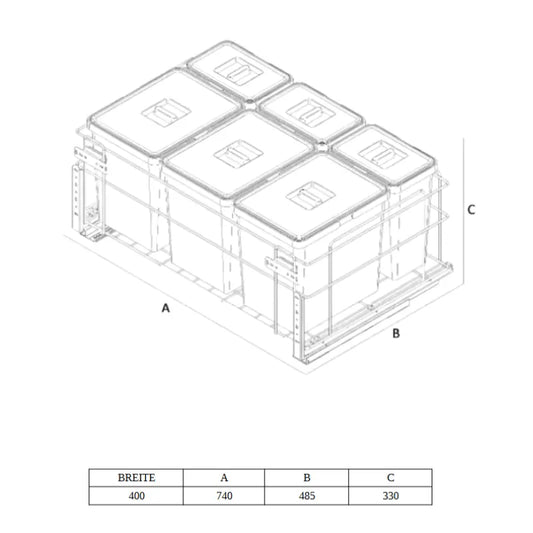
Cabinet Recycling Bins Soft-Close 3 x 4 gal + 3 x 1.6 gal - 23-5/8 inch Base CabinetRegular price $227.23Unit price / perRegular priceSale price $227.23
-
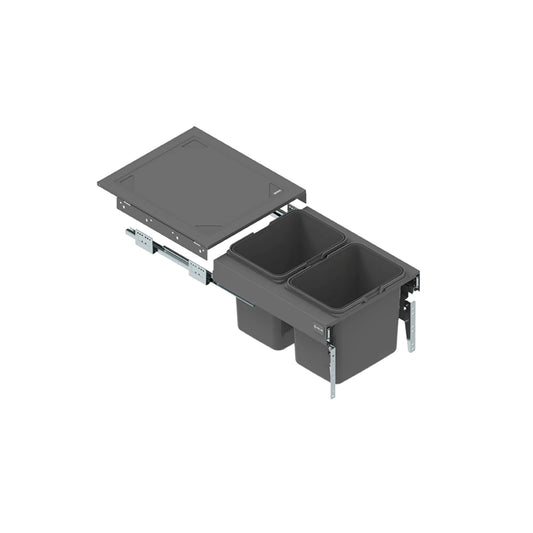
Cabinet Recycling Bins 2 x 4 Gal - 17-3/4 inch, D = 18-7/8 inch H = 12-5/8 inch Kitchen Cabinet - Anthracite GrayRegular price $99.18Unit price / perRegular priceSale price $99.18

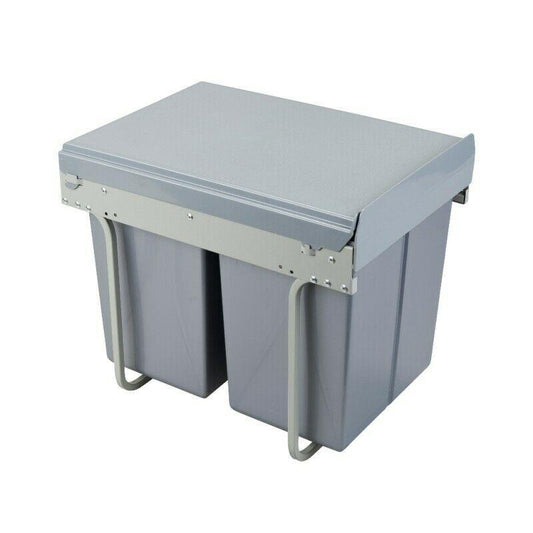


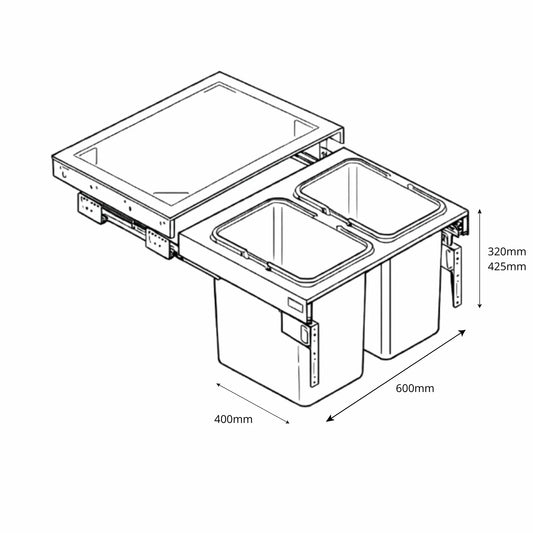

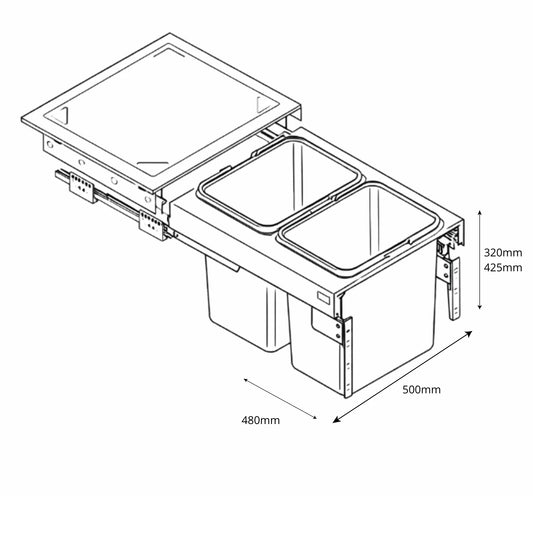

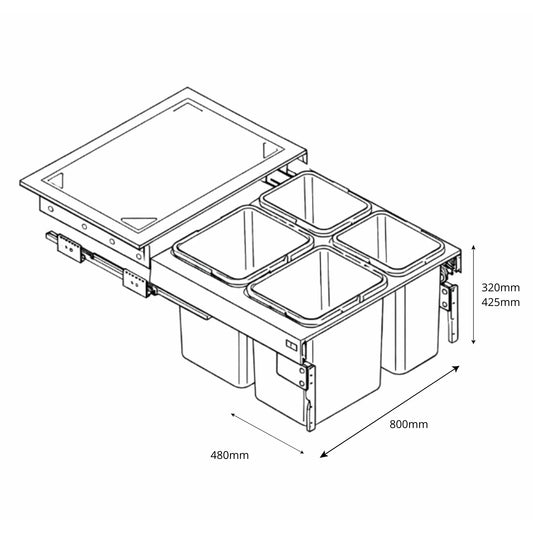


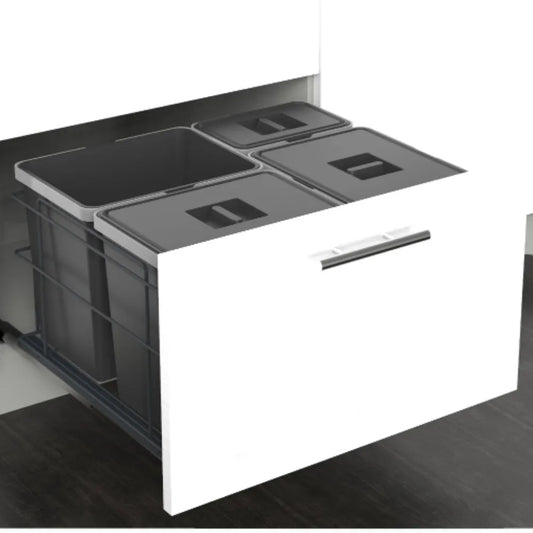


Apull out trash can for the kitchenis a waste management system permanently mounted inside a base cabinet. Sliding smoothly on heavy-duty drawer runners, it pulls forward to enable clean, space-saving recycling right where you prepare meals.
A freestanding trash can takes up valuable floor space and frequently obstructs walkways. Integrating a hidden waste system into yourkitchen cabinetis the logical step toward a well-planned kitchen layout. When retrofitting or installing a newpull out trash can for kitchen cabinets, you relocate waste management to unused cabinet space under the countertop. Like a motor's precision gearbox, a well-engineered pull-out waste bin operates quietly in the background—you only notice it if it binds. Achieving optimal performance relies on exact measurements, proper extension slides, and secure mounting.
Measuring and Space Planning for Kitchen Base Cabinets
Before installing a recycling system, measure the available interior space accurately. Most systems are engineered for standardized cabinet widths. Width specifications (e.g., 15-3/4 in (40 cm) or 23-5/8 in (60 cm)) always refer to the cabinet's outer carcass dimension. The usable internal width depends on standard sidewall thicknesses, typically 5/8 in (16 mm) or 23/32 in (18 mm)particle board.
P-Traps, Plumbing Lines, and Installation Depth
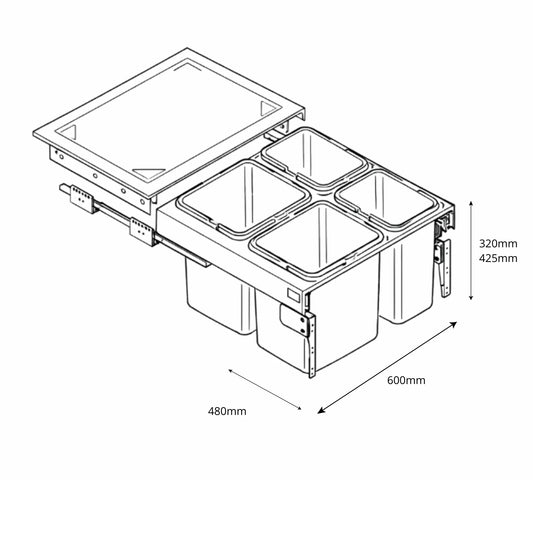
The under-sink cabinet is the most common location for a kitchen pull-out waste bin. Here, the recycling system competes for space with P-traps, shut-off valves, and water supply lines. Always measure the clear internal depth from the front cabinet edge back to the sink plumbing. A standard pull out trash can typically requires an installation depth of around 18-7/8 in (480 mm). If plumbing interferes, select a lower-profile system or swap in a space-saving P-trap. Installation height is equally critical: measure from the cabinet base to the bottom edge of the sink bowl. A clearance height of 12-5/8 in to 15-3/4 in (320 mm to 400 mm) accommodates most pull-out systems.
Cabinet Widths and Bin Capacities
Depending on household size and available layout space, several configuration formats are available:
- Narrow Cabinets (11-13/16 in to 15-3/4 in / 30 cm to 40 cm):Ideal for compact kitchens. A15-3/4 in (40 cm) pull out trash cantypically holds two bins lined up front-to-back.
- Standard Cabinets (19-11/16 in to 23-5/8 in / 50 cm to 60 cm):The most common sizing. A23-5/8 in (60 cm) pull out trash canprovides ample width for three to four bins arranged side-by-side and front-to-back.
- Wide Cabinets (31-1/2 in / 80 cm):Offers maximum capacity for large families, often utilizing four large bins for trash, paper, plastics, and compostables.
Recycling Configurations: 2-Bin, 3-Bin, or 4-Bin Systems
Bin layout depends on your household waste and local recycling needs. A2-bin pull out trash canis the standard choice for separating general trash and organic waste. Households managing additional recyclables like paper, plastics, or glass can opt for three- or four-compartment systems.
- 2-Bin System:Usually split symmetrically, such as 2 x 3.96 gal (2 x 15 L) or 2 x 5.28 gal (2 x 20 L). Excellent for a standard2-compartment pull out trash cansetup.
- 3-Bin System:Frequently feature asymmetrical bin sizes—one large container (e.g., 3.96 gal / 15 L) for general recyclables and two smaller units (e.g., 1.85 gal / 7 L) for organic and landfill waste. An example is thePull Out Trash Can - 23-5/8 in (60cm) - 3-Bin (3.96 gal + 2x 1.85 gal / 15L + 2x7L).
- 4-Bin System:Engineered for comprehensive multi-stream waste sorting. These multi-bin systems generally require cabinet widths starting at 23-5/8 in (60 cm) or 31-1/2 in (80 cm).
Slide Technology: Full-Extension and Soft-Close Mechanism
Hardware quality dictates long-term durability and daily operation. An under-counter pull out trash can experiences significant dynamic loading. Damp organic waste, glass bottles, and cans add substantial weight over time.
Full-Extension vs. Partial-Extension Slides
When selecting slide hardware, prioritize afull-extension slidesystem. Full-extension runners allow the frame to pull 100% out of the cabinet interior. This complete extension is essential for lifting out the rearmost bin (often used for compost) straight up without hitting the countertop overhang. Partial-extension slides stop short at around 75%, making rear bin removal awkward and increasing the risk of spills inside the cabinet.
Soft-Close Mechanism
Premium pull-out systems feature integratedsoft-close hardware. An internal hydraulic dampening cylinder slows the sliding movement during closure, gently pulling the framework back into the cabinet in a quiet, smooth action. This dampening cushions structural impact and prevents trash from jostling over the bin rims. Note that soft-close is distinct from push-to-open mechanisms: push-to-open acts as a spring ejector for handleless cabinet fronts, whereas soft-close dampens the closing motion. These two mechanical options are typically mutually exclusive on standard slides.
Step-by-Step Installation in Kitchen Base Cabinets
Installing a floor-mounted pull out trash can is a straightforward DIY task, though accurate positioning is key. Most bottom-mount systems arrive pre-assembled on metal subframes.
Tools Required
- Cordless drill/driver
- Wood drill bit (1/8 in / Ø 3 mm) for pilot holes
- Tape measure and pencil
- Matching driver bit (typicallyPZ2orTX20)
Layout and Fastening Process
- Positioning:Set the base frame centered on the bottom panel of the kitchen cabinet. Verify that the framework pulls forward freely without rubbing against open cabinet door edges. For door-mounted hinges, offset the base slightly or ensure the door swings open wide enough.
- Hinge Clearance Check:If installing behind a standard swinging cabinet door, check yourcup hinges. Standard 95° opening hinges often project into the clear opening width. Upgrading to 110° or 155° wide-angle hinges provides the clearance necessary for full slide extension.
- Drilling Pilot Holes:Mark screw locations through the subframe onto theparticle boardbase. Drill pilot holes with a 1/8 in (3 mm) bit to a maximum depth of 3/8 in (10 mm). Pilot holes prevent the melamine laminate surface from cracking or flaking.
- Securing the Frame:Fasten the subframe securely using suitableparticle board screws(e.g., #8 x 5/8 in / 4 x 16 mm flathead). Avoid longer screws to keep from penetrating through the underside of the cabinet floor panel.
Recommended Product Solutions for Your Project
Select from tailored solutions designed to fit various cabinet dimensions and capacity needs:
- For Tight Under-Sink Spaces:ThePull Out Trash Can 2 x 3.96 gal (15L) - 17-11/16 in (45cm), D = 18-7/8 in (480mm) H = 12-5/8 in (320mm) Cabinet - Anthracite Graymaximizes depth while maintaining a low height profile that clears most P-traps.
- For Maximum Capacity:If you have a wide base unit, thePull Out Trash Can Soft-Close 4 x 3.96 gal or 4 x 5.28 gal (4x15L / 4x20L) - 31-1/2 in (80cm) Cabinetis an ideal selection. Integrated soft-close dampers comfortably absorb the dynamic weight of four fully loaded bins.
Retrofitting Pull-Out Drawers and Kitchen Cabinets
To optimize your entire kitchen layout beyond waste storage, consider replacing fixed shelves with functional pull-out drawer hardware. When you retrofit kitchen cabinet pull-outs, deep, dark cabinets are converted into accessible storage space. Installing a 23-5/8 in (60 cm) cabinet pull-out system offers convenient access for heavy pots and pans.
The installation logic matches pull-out waste bins: simply mount side-mountedball-bearing slidesto cabinet inner walls and drop in the drawer box. Addingkitchen drawer organizerskeeps cutlery and utensils neatly segmented. When building a newkitchen island or base unit layout, you can incorporate these pull-out runners directly into your preliminary carcass planning, topping off the design with matchingkitchen cabinet handles.
FAQ – Frequently Asked Questions About Pull Out Trash Cans
Will a pull out trash can fit inside an Ikea kitchen cabinet?Yes, these hardware systems are universal and independent of cabinet brands. The key requirement is matching interior cabinet dimensions. Because Ikea (such as Sektion systems) uses standardized exterior cabinet widths of 15 in, 24 in, or 30 in (or European metric 40 cm, 60 cm, 80 cm), bottom-mount waste hardware attaches directly to the bottom panel. Always verify interior clearance depth if utility pipes are present.
What is the difference between bottom-mount and door-attached (front-mount) systems?With bottom-mount systems, the steel subframe screws to the bottom floor of the cabinet interior. You open the hinged cabinet door manually, then pull out the trash unit frame. With a door-attached (front-mount) system, your cabinet door face mounts directly onto the pull-out frame bracket. Pulling the door handle opens the entire unit forward on heavy-duty drawer slides mounted to the sidewalls or floor.
How do I clean and maintain pull-out slide rails?Kitchen cabinet slides are exposed to dust, crumbs, and debris. Clean the sliding tracks ofroller runnersor ball-bearing slides periodically using a dry cloth. Avoid applying harsh degreasers inside slide tracks, as this strips away the factory-applied lubricating grease necessary for smooth, silent motion and soft-close operation.
Can I convert a partial-extension slide system into a full-extension system?If your trash framework comes factory-assembled with welded or integrated track brackets, replacing individual slide rails is usually not possible. We recommend selecting a system explicitly manufactured with full-extension slides at the time of purchase.
How much total bin capacity do I need?For a 2-person household, a combined capacity of 8 to 10.5 gallons (30 to 40 liters)—such as two 3.96 gal (15 L) bins—is generally sufficient. Families of four or more benefit from capacities of 13 gallons (50 liters) and up (e.g., two 7.1 gal / 27 L or four 3.96 gal / 15 L bins) to avoid frequent trips to outside trash cans.