
Dual Trash Can Cabinet
-
Pull-Out Kitchen Waste Bin - 2x20L - 15-3/4 inch CabinetRegular price $134.10Unit price / perRegular priceSale price $134.10
-
Recycling bins for kitchen - 23-5/8 inch - 3 Buckets (15L+ 2x7L)Regular price $74.44Unit price / perRegular priceSale price $74.44
-
Trash Can Pull Out Waste Separator - 34L+2x17L - 23-5/8 inch (60 cm) CabinetRegular price $174.59Unit price / perRegular priceSale price $174.59
-
Dual Trash Can Pull Out - 2x15L or 2x20L - 23-5/8 inch (60 cm) Kitchen CabinetRegular price From $103.22Unit price / perRegular priceSale price From $103.22
-
Pull Out Kitchen Recycling Bins - 2x15L or 2x20L - 19-11/16 inch Base CabinetRegular price From $100.66Unit price / perRegular priceSale price From $100.66
-
Pull Out Cabinet Recycling Bins Soft-Close 4x15L or 4x20L - 31-1/2 inch Kitchen CabinetRegular price From $130.44Unit price / perRegular priceSale price From $130.44
-
Pull Out Cabinet Recycling Bins with Soft-Close (2 x 15L + 2 x 7L) or (2 x 20L + 2 x 9L) - 23-5/8 inch CabinetRegular price From $114.83Unit price / perRegular priceSale price From $114.83
-
Cabinet Recycling Bins Soft-Close 3 x 4 gal + 1 x 1.6 gal - 23-5/8 inch Base CabinetRegular price $184.24Unit price / perRegular priceSale price $184.24
-
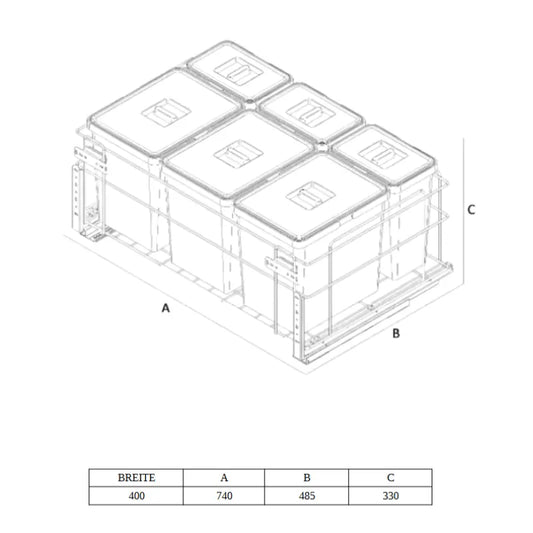
Cabinet Recycling Bins Soft-Close 3 x 4 gal + 3 x 1.6 gal - 23-5/8 inch Base CabinetRegular price $227.23Unit price / perRegular priceSale price $227.23
-
Cabinet Recycling Bins 2 x 4 Gal - 17-3/4 inch, D = 18-7/8 inch H = 12-5/8 inch Kitchen Cabinet - Anthracite GrayRegular price $99.18Unit price / perRegular priceSale price $99.18

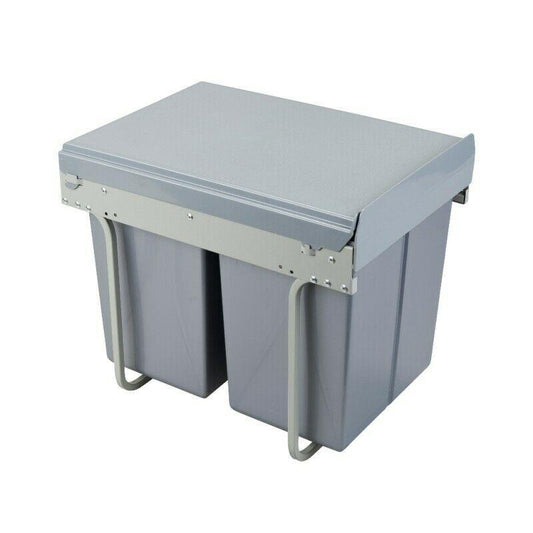








Adual trash can cabinetsetup refers to integrated waste disposal systems for base cabinets that enable systematic sorting of household trash, compostable waste, paper, and recyclables directly at the source using multiple removable bins. Mounted securely inside the cabinet frame, these systems maximize available storage space using smooth slide-out runners.
Anyone designing a kitchen or remodeling an existingkitchen cabineteventually faces the question of waste organization. A freestanding trash can consumes valuable floor space and frequently obstructs walkways. Integrating a dual trash can cabinet system into a base cabinet is the logical solution for a tidy, efficient workspace. A well-planned pull-out trash unit inside a base cabinet functions like precision machinery—invisible from the outside, yet essential for smooth prep and cooking routines.
Requirements for an In-Cabinet Waste Sorting System
Before installing a pull-out bin system into a cabinet drawer or base unit, the exact physical dimensions of the furniture must be measured. Selecting the right unit depends primarily on the cabinet's interior dimensions.
Cabinet Dimensions and Clear Interior Width
Furniture manufacturers list cabinets by their exterior dimensions. A standard base cabinet typically measures15-3/4 in (40 cm),19-11/16 in (50 cm), or23-5/8 in (60 cm)wide. However, the clear interior width is what matters for installing a pull-out waste system. With a typical 5/8 in (16 mm) wall thickness for standardparticleboard, a 23-5/8 in (60 cm) cabinet yields an interior width of 22-3/8 in (56.8 cm). Slide systems are engineered to accommodate these tolerances via adjustable frames or fixed bottom mounting plates.
Installation Depth and Obstructions
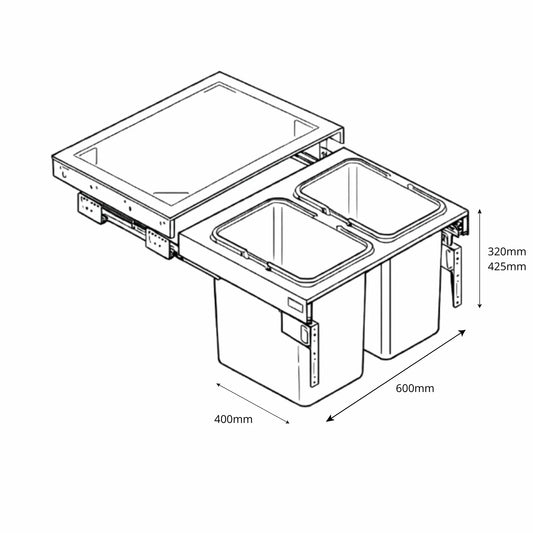
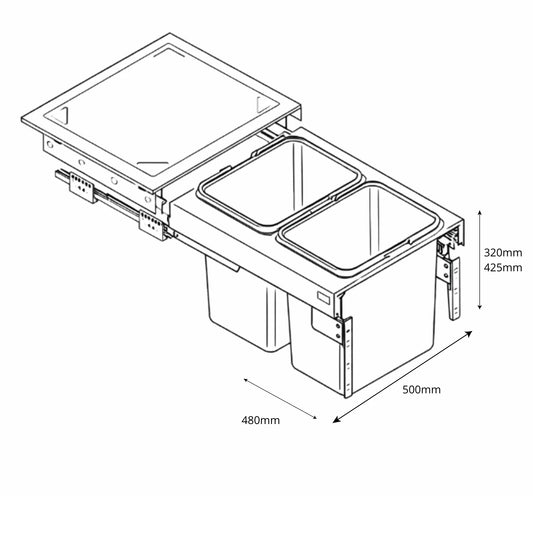
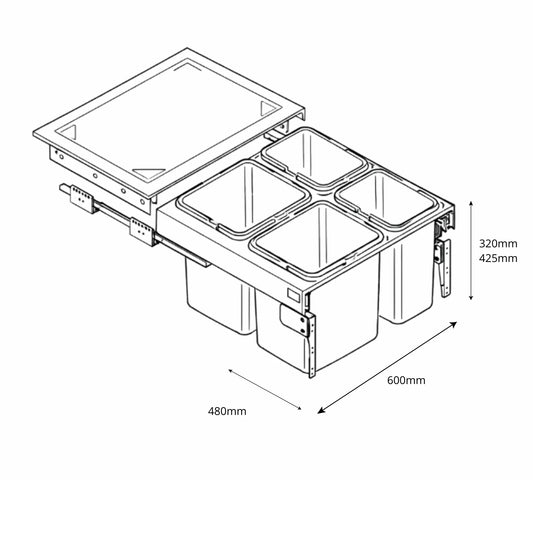
The standard depth of a kitchen base cabinet ranges from approximately 22 in to 22-7/8 in (56 cm to 58 cm). Most waste systems require an installation depth of15-3/4 in - 18-7/8 in (400 mm - 480 mm). Pay extra attention under the sink. Here, p-traps, water supply lines, and instant hot water dispensers encroach on available space. For sink cabinets, shallow-depth systems must be selected, often limited to an overall height of12-5/8 in (320 mm)to13-25/32 in (350 mm)to avoid plumbing interference.
Capacity and Number of Bins
Choosing the number of bins depends on your local recycling guidelines. Common configurations include a2-bin waste sorterfor garbage and recyclables, or a3-bin waste sorterto isolate organic waste separately. Total capacity varies widely. Narrow cabinets often hold combinations like2 x 4 gal (2 x 15 L), while wide, full-extension drawers can accommodate up to four bins with individual volumes of5.3 gal (20 L)or more.
Specific Solutions for Various Cabinet Widths
For the DIYer looking toretrofit kitchen drawersor convert a standard hinged cabinet, several design configurations are available.
Systems for Narrow Base Cabinets (15-3/4 in and 17-23/32 in / 40 cm and 45 cm)
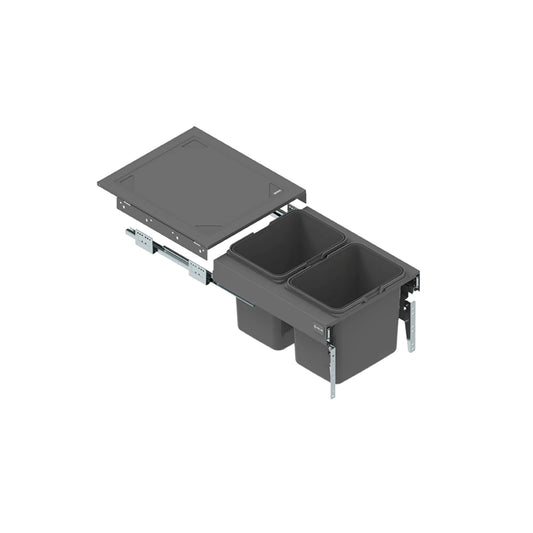
In smaller kitchens, space next to the sink is often limited. A15-3/4 in (40 cm) pull-out kitchen trash canmakes full use of these narrow niches. In these setups, bins are usually arranged front-to-back on a narrow sliding frame. Typical configurations feature two 4-gallon (15-liter) bins. Due to the narrow build, the drawer slide is often mounted centrally beneath the bins as anundermount drawer slideto avoid wasting a single millimeter on the sides.
Standard Widths (19-11/16 in and 23-5/8 in / 50 cm and 60 cm)
The 23-5/8 in (60 cm) base cabinet is the gold standard in modern kitchen design. A23-5/8 in (60 cm) pull-out kitchen trash cansystem allows side-by-side bin arrangements. This reduces the depth you need to pull the drawer out during daily use, as the rear bin doesn't necessarily have to extend completely to access the front one. These accommodate complex sorting layouts, such as 3 x 4 gal (15 L) plus smaller auxiliary bins for batteries or coffee pods.
Large-Capacity Cabinets (31-1/2 in / 80 cm and wider)
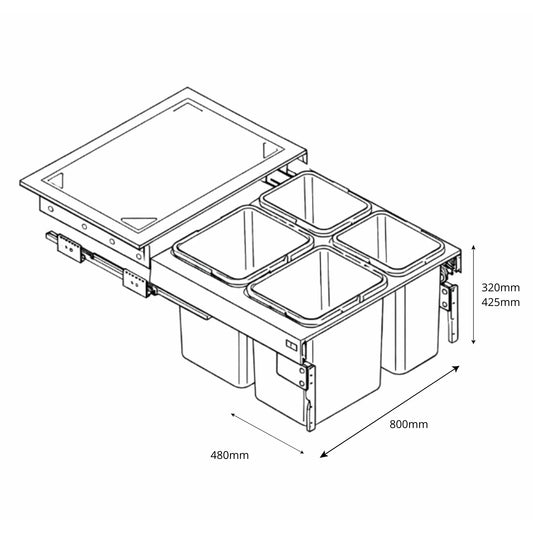
When space permits, wide drawers are used for multi-bin trash separation. These units utilize heavy-duty drawer slides, as the weight of four filled 5.3-gallon (20-liter) bins plus the mounting frame can quickly reach 66 lbs to 88 lbs (30 kg to 40 kg).
Hardware Mechanics and Installation: A DIY Guide
Installing an in-cabinet waste system is a classic DIY project that can be completed in about 30 to 60 minutes with basic tools. You will need a cordless drill, a tape measure, a pencil, an awl for pilot marking, and suitablewood/particleboard screws(typically #8 / Ø 4 mm with aPozidrivorTorxdrive).
Bottom-Mount vs. Door-Mounted Systems
There are two primary installation designs for pull-out waste bins:
- Bottom-Mount Behind Hinged Doors:This is the simplest retrofitting option. The entire assembly consists of a frame with integrated telescopic slides that simply screws to the floor of the cabinet interior. The cabinet door remains attached to its standardconcealed cup hinges. You open the cabinet door manually and pull out the trash bin using its handle.
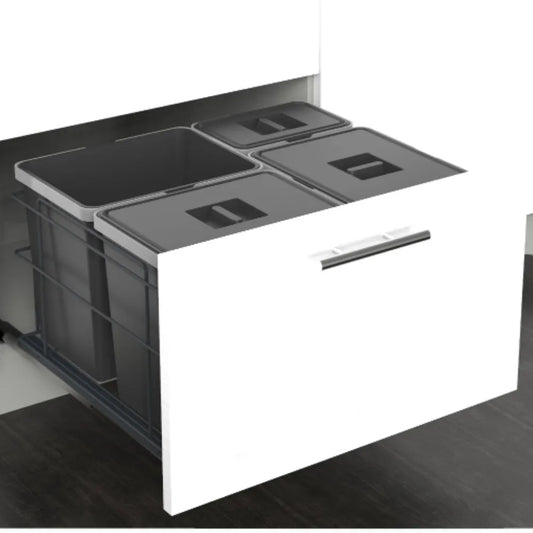
- Door-Mounted (Drawer Style):Here, the cabinet door front attaches directly to the pull-out waste frame. Pulling the cabinet handle glides the entire trash system out like a standardkitchen inner drawer. This requires higher precision during installation to align the door front perfectly for uniform reveal gaps with adjacent cabinets. These systems feature 3D adjustment mechanisms on the front mounting brackets (height, side, and tilt).
Slide Technology: Full Extension and Soft-Close
For maximum convenience, look for a system withfull-extension drawer slides. This means the slides extend 100% out of the cabinet casing. This feature allows the rearmost bin to be lifted straight up without catching on the countertop or the cabinet's top front rail.Partial-extension slides, which stop at roughly 75%, are ill-suited for deep trash systems.
Another key feature is integratedcushioning, commonly called soft-close. Asoft-close waste bin sorter 3 x 4 gal + 3 x 1.6 gal for 23-5/8 in (60 cm) cabinetgently decelerates the drawer in its final inches of travel, pulling it quietly into the closed position. This protects cabinet components and prevents refuse from splashing out of the bins during forceful closing. Note: Soft-close should not be confused with push-to-open. Push-to-open requires a light tap on a handleless front to eject the drawer. The two mechanisms are generally mutually exclusive or require highly complex combined hardware fittings.
Detailed Hardware Overview: Featured Waste Systems
To highlight the variety of options available, here are specific configurations suited for distinct cabinet spaces:
- Compact Solution for Narrow Spaces:A system like thedual trash bin sorter 2x4 gal (2x15L) for 15-3/4 in (40 cm) cabinetis the go-to setup for compact kitchens. With a depth often under 19-11/16 in (500 mm), it fits nearly any standard cabinet depth. Four-screw bottom mounting makes it an ideal beginner DIY project.
- The All-Rounder for Standard Widths:If you have a 19-11/16 in (50 cm) cabinet, thepull-out kitchen waste bin - 2x4 gal or 2x5.3 gal for 19-11/16 in (50 cm) cabinetis a great fit. It fills the width more efficiently, eliminating wasted dead space on either side.
- High-Capacity System:Designed for high-traffic kitchens or large households, thesoft-close waste bin sorter 4x4 gal or 4x5.3 gal for 31-1/2 in (80 cm) cabinetprovides four separate compartments for comprehensive sorting (e.g., trash, paper, plastic, glass). Ball-bearing heavy-duty slides are built-in to handle the heavy load.
- Low-Profile Variant for Under-Sink Use:A model like thewaste sorter 2 x 4 gal (15L) - 17-23/32 in (45cm), D = 18-7/8 in (480mm), H = 12-5/8 in (320mm) - Anthracite Grayfeatures a reduced height of just 12-5/8 in (320 mm). This leaves ample overhead clearance for sink p-traps and drainage assemblies.
Frequently Asked Questions (FAQ) About Cabinet Trash Systems
What should I check when installing under a sink?Measure the exact height from the bottom panel of the cabinet to the lowest point of the p-trap or drain fitting. The chosen waste system must clear this obstacle both when fully closed and throughout its entire extension path. Also check for water lines running along the back wall, which reduce usable installation depth.
Can I retrofit a trash bin system into a cabinet with a hinged door?Yes. For cabinets with standard door hinges, select a bottom-mount system. You simply open the door as usual to at least95°(preferably110°so the door clears the opening completely) and manually pull out the frame. The door front remains untouched.
How do I clean and maintain the slide runners?The sliding rails, typicallyball-bearing slides, come factory-greased. Avoid applying harsh chemical cleaners directly inside the runner profiles, as they break down the lubricant. Vacuum away dust and crumbs dry or clear them with a soft brush. The plastic bins themselves can be lifted out and washed with warm water and mild dish soap.
What is the difference between partial-extension and full-extension slides on waste bins?A partial-extension slide leaves part of the rear bin tucked inside the cabinet frame. This makes it difficult to lift the bin out for emptying, often requiring you to tilt it awkwardly. A full-extension slide extends 100% out of the cabinet, allowing all bins to be lifted straight up. For waste pull-outs, full-extension slides are always the superior technical choice.
Related Categories for Kitchen Upgrades
When enhancing kitchen functionality beyond a **dual trash can cabinet**, additional hardware components help maximize your storage efficiency. If you're upgrading existing cabinetry, explore our kitchen cabinet pull-outs category. Here you'll find wire baskets and tray pull-outs to keep pantry items clearly organized. Akitchen drawer organizerkeeps flatware and cooking utensils neatly arranged to match your updated space.
If you're looking to update your cabinet's exterior aesthetic, swapping in newkitchen cabinet handlesprovides a quick hardware refresh. Starting a complete kitchen redesign? Browse ourkitchen cabinet setsto find complete layouts that integrate waste separation directly into base cabinet planning. For ultimate hygiene, consider astainless steel trash can, which is easy to sanitize and resists lingering odors.