
Kitchen Cabinet Hardware
Popular Subcategories


-
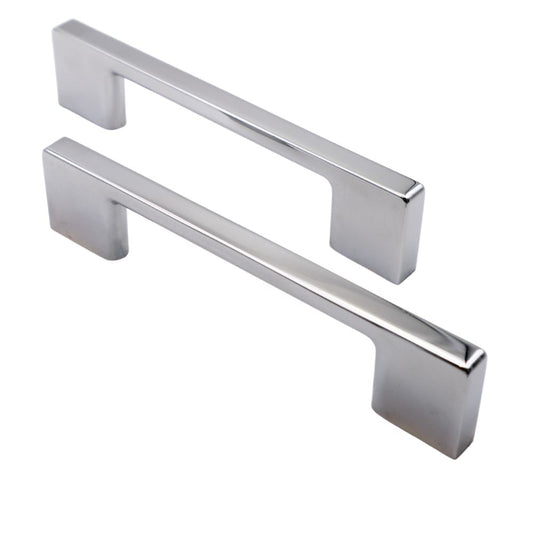
TECHNO furniture handle 3-3/4 inch - ChromeRegular price $4.62Unit price / perRegular priceSale price $4.62
-
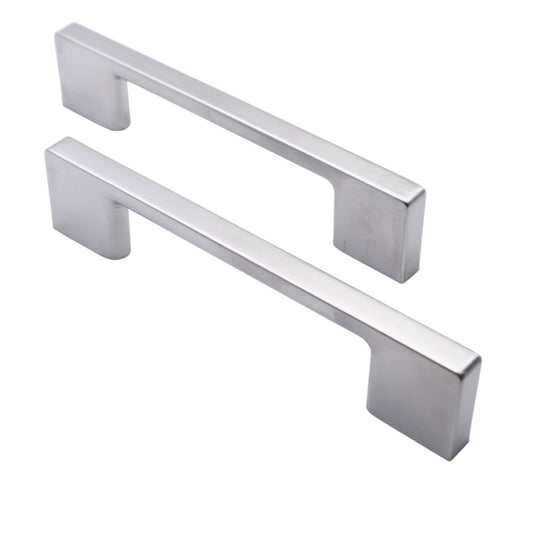
TECHNO furniture handle 5-1/16 inch - AluminiumRegular price $5.58Unit price / perRegular priceSale price $5.58
-
3.75 Inch Drawer Pulls 96mm U098 - Matte BlackRegular price $2.42Unit price / perRegular priceSale price $2.42
-
3.75 Inch Drawer Pull 96mm U098 - GoldRegular price $2.60Unit price / perRegular priceSale price $2.60
-
3.75 Inch Drawer Pull 96mm U098 - Brushed SteelRegular price $2.60Unit price / perRegular priceSale price $2.60
-
3.75 Inch Drawer Pull 96mm U098 - ChromeRegular price $2.42Unit price / perRegular priceSale price $2.42
-
Cabinet Pull 160mm U098 - Matte BlackRegular price $3.64Unit price / perRegular priceSale price $3.64
-
Cabinet Handle 160mm U098 - GoldRegular price $3.92Unit price / perRegular priceSale price $3.92
-
160mm Cabinet Handle U098 - ChromeRegular price $3.64Unit price / perRegular priceSale price $3.64
-
5 Inch Cabinet Pull 128mm U098 - Matte BlackRegular price $2.83Unit price / perRegular priceSale price $2.83
-
5 inch cabinet pull 128mm U098 - GoldRegular price $2.99Unit price / perRegular priceSale price $2.99
-
5 Inch Cabinet Pull (128mm) U098 - Brushed SteelRegular price $2.99Unit price / perRegular priceSale price $2.99
-
Cabinet Handle 160mm U098 - Brushed Stainless SteelRegular price $3.92Unit price / perRegular priceSale price $3.92
-
5 Inch Cabinet Pull 128mm U098 - ChromeRegular price $2.83Unit price / perRegular priceSale price $2.83
-
Furniture handle 3-3/4 inch UZ05 - SatinRegular price $1.58Unit price / perRegular priceSale price $1.58
-
Furniture handle 3-3/4 inch UZ04 - SatinRegular price $1.39Unit price / perRegular priceSale price $1.39
-
Furniture handle 3-3/4 inch UZ02 - ChromeRegular price $0.92Unit price / perRegular priceSale price $0.92
-
Furniture handle 3-3/4 inch UZ01 - ChromeRegular price $1.61Unit price / perRegular priceSale price $1.61
-
Furniture handle 3-3/4 inch UZ02 - SatinRegular price $0.97Unit price / perRegular priceSale price $0.97
-
Furniture handle 3-3/4 inch UZ01 - SatinRegular price $1.63Unit price / perRegular priceSale price $1.63
-
LEAF Edge Pull Furniture Handle 1-1/4 inch (2-3/8 inch total length) - Pearl Matt SilverRegular price $3.94Unit price / perRegular priceSale price $3.94





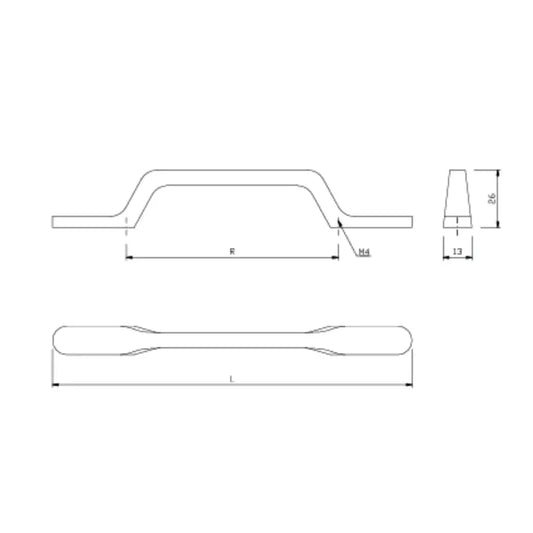

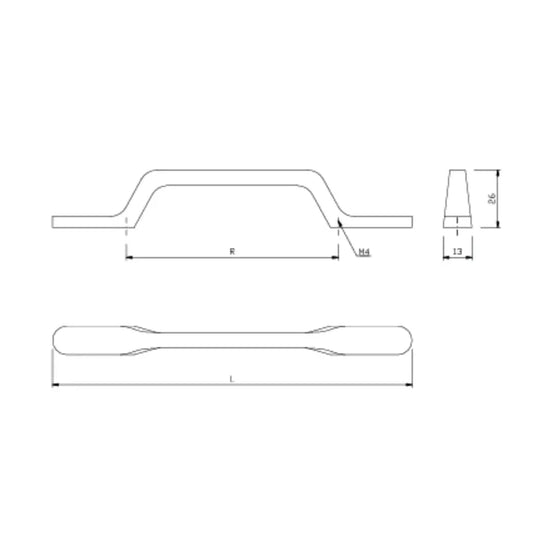

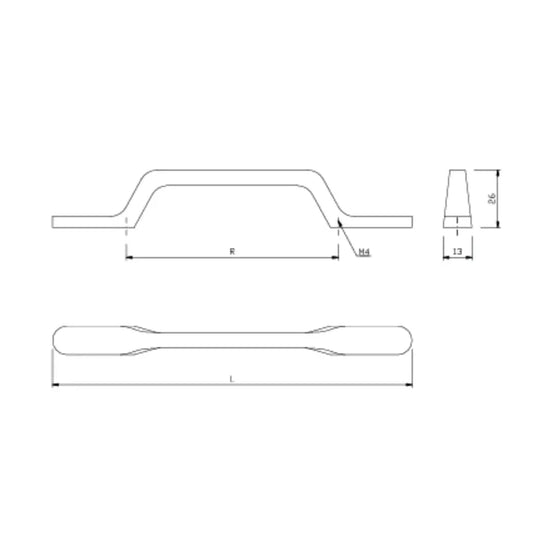

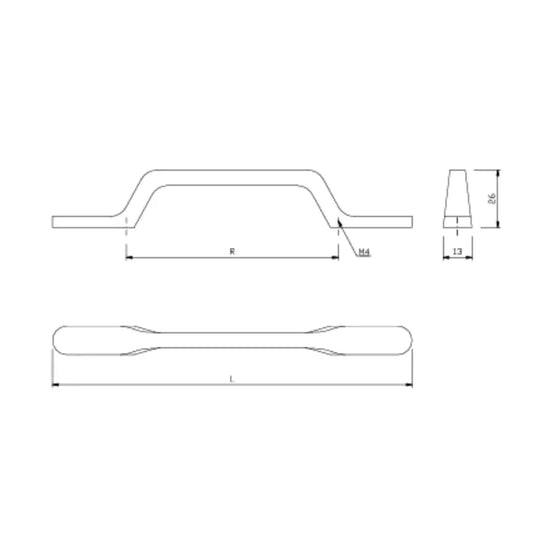

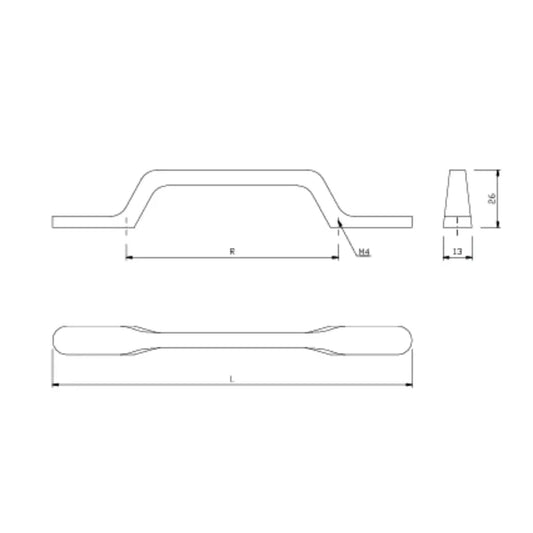

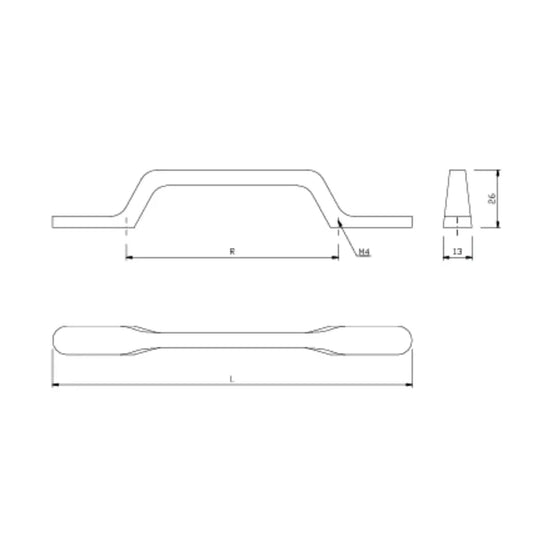

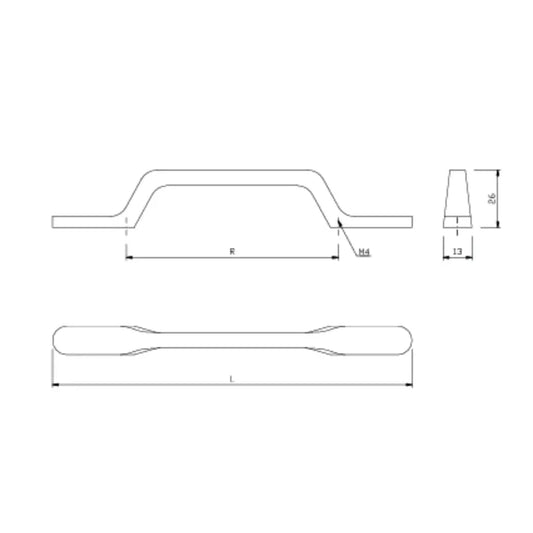

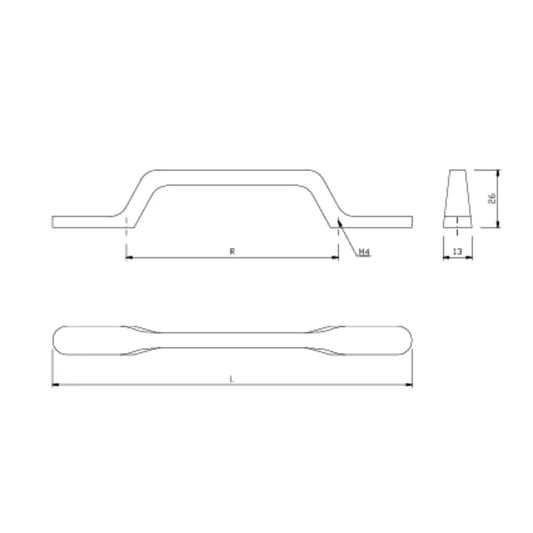

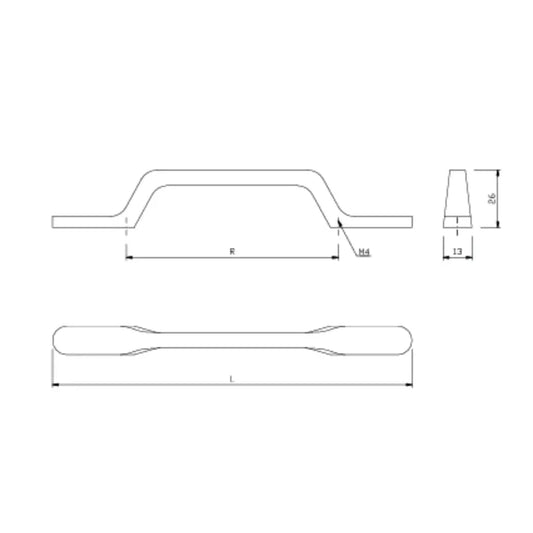

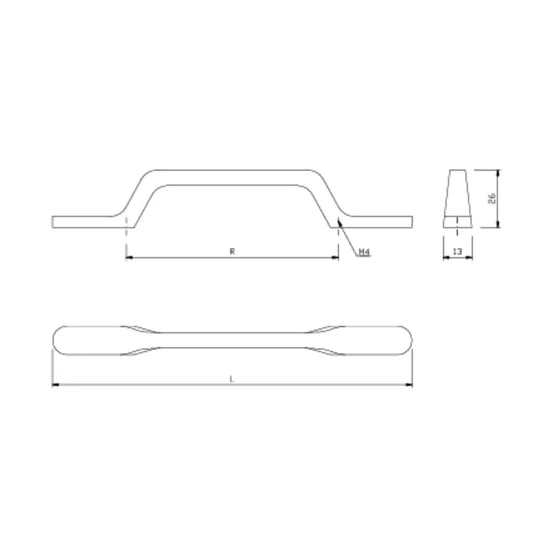

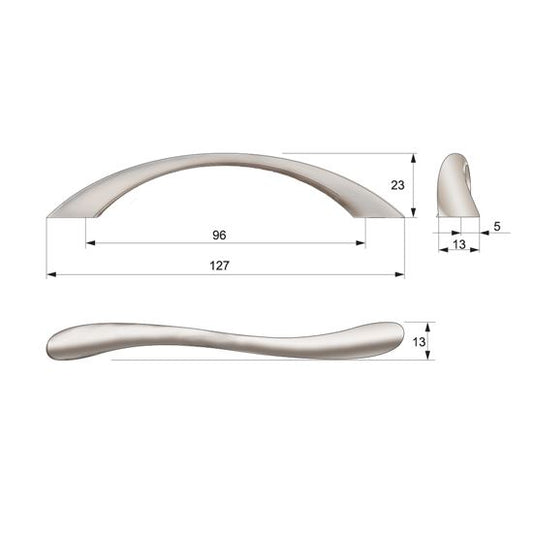

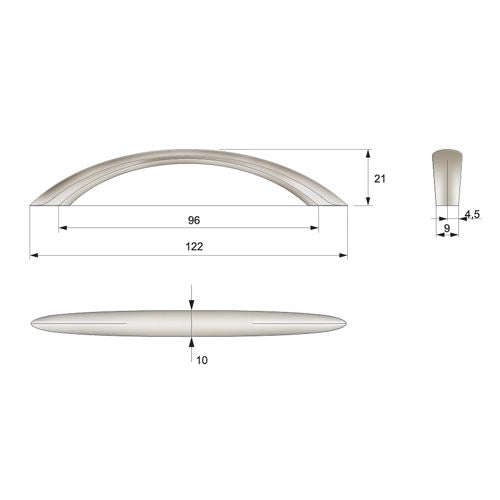

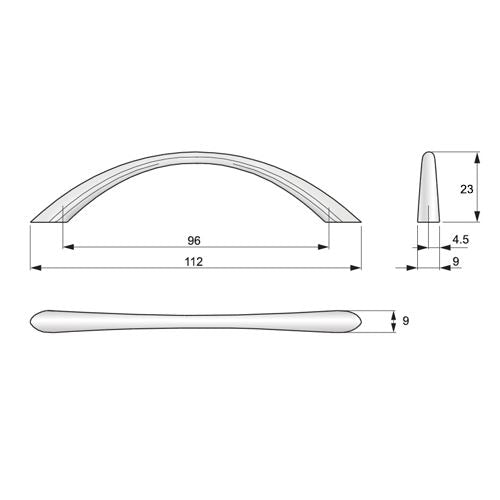

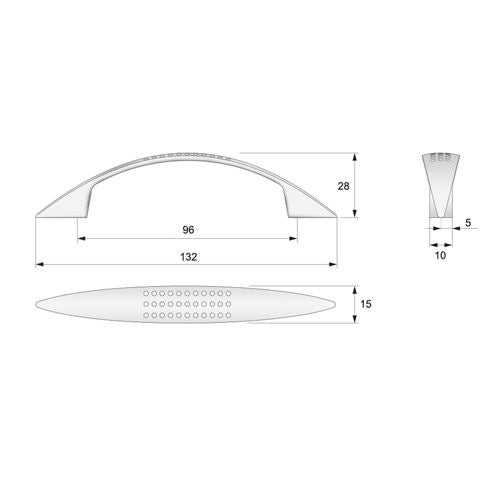

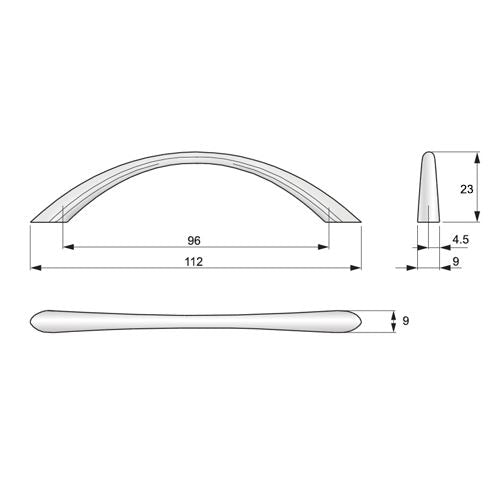

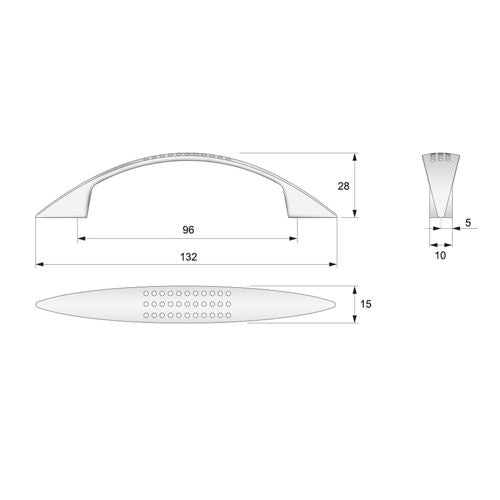


Kitchen cabinet hardwareincludes mechanical pull handles and knobs used to manually open and close kitchen fronts, drawers, and pull-out systems. These components are standardized around specific hole centers based on the 32 mm (1-1/4 in) system (System 32) and are engineered to meet demanding requirements for ergonomics, moisture resistance, and chemical durability.
The kitchen is the engine room of the home—subject to constant temperature shifts, steam, and heavy, continuous mechanical stress. Cabinet pulls and knobs must withstand these physical and chemical demands for years. When designing kitchen fronts—whether made of melamine-coated particle board, painted MDF, or solid wood—selecting the rightkitchen cabinet hardwareis essential to ensure efficient power transmission to the underlying hinges and drawer slide systems.
Technical Requirements for Kitchen Cabinet Pulls & Knobs
Unlike hardware designed for living rooms or bedrooms,kitchen cabinet hardwaremust meet specific functional performance criteria. Operability often occurs with wet or greasy hands. Therefore, tactile grip must be sufficient to open heavy, fully loadedkitchen drawerswith a single swift pull. When working with modern soft-close slide systems, the initial opening pull must overcome the built-in resistance of the damping cylinder.
Surface durability is equally critical. Exposure to household cleaners, food acids, and continuous friction demands wear-resistant finishes. Anodized, powder-coated, or electroplated surfaces effectively prevent corrosion and material fatigue on the pull body.
System 32 and Standard Hole Spacing
In modern cabinetry manufacturing, hole positioning relies almost universally onSystem 32. This layout grid defines the distance between drilled holes as multiples of 32 mm (1-1/4 in). When planning a new cabinet front or replacing existing hardware, thecenter-to-center measurement (hole spacing)is the critical dimension. It is always measured from the center of one screw hole to the center of the other.
For upper wall cabinets and standard drawers, compact dimensions are commonly used. Installers frequently specify96 mm (3-3/4 in) cabinet pullsor128 mm (5-1/16 in) cabinet pulls. A typical example of this sizing is the96 mm (3-3/4 in) UZ01 Cabinet Pull - Aluminum, featuring a low profile that fits flush against the cabinet door.
Wider fronts, especially deep pull-out drawers for pots and pans, generate higher leverage forces. These require wider mounting points to prevent racking or binding ofkitchen drawer slide systems. Ideal solutions include160 mm (6-5/16 in) cabinet pullsor192 mm (7-9/16 in) cabinet pulls. For oversized drawer fronts or full-height pantry pull-outs, long bar pulls like256 mm (10-1/16 in) cabinet pullsor custom lengths up to 480 mm (18-7/8 in) are recommended.
Design Styles and Hardware Geometries
The geometric profile of a pull not only shapes the visual gap lines of your kitchen, but also defines the ergonomic motion of the grip. Four primary technical designs are used in cabinet construction.
Bar Pulls and Appliance Pulls
Featuring cylindrical or square profiles, these pulls deliver a maximum gripping surface. They can be mounted horizontally on drawers or vertically on hinged cabinet doors. Solid mounting bases ensure optimal force distribution. The TECHNO series delivers industrially manufactured precision for this exact application. For heavy built-in refrigerator panels or wide pull-outs, theTECHNO 480 mm (18-7/8 in) Cabinet Pull - Matte Blackprovides exceptional stability. To maintain a uniform look across varying drawer widths, lengths such as theTECHNO 320 mm (12-5/8 in) Cabinet Pull - Matte Blackor theTECHNO 128 mm (5-1/16 in) Cabinet Pull - Matte Blackseamlessly combine. Thesekitchen bar pullsoffer superior torsional rigidity.
Edge Pulls (Profile Pulls)
Edge pulls (also known as profile pulls or tab pulls) do not require drilling through the front face of the cabinet door. Instead, they mount or recess directly onto the top or side edge of the cabinet panel. They deliver a minimalist, handle-free look without requiring mechanical push-to-open latches. Pulling force applies directly to the edge of the door. A prime technical example is theLEAF Edge Pull 64 mm (2-1/2 in) Center-to-Center / 118 mm (4-5/8 in) Overall Length - Mother of Pearl Silver. For narrower cabinet fronts, such as a 30 cm (11-13/16 in) kitchen cabinet pull-out, a shorter edge grip like theLEAF Edge Pull 32 mm (1-1/4 in) Center-to-Center / 60 mm (2-3/8 in) Overall Length - Brass Goldis often sufficient. Both fall into the category of32 mm (1-1/4 in) center-to-center cabinet pulls.
Recessed Pulls (Cup Pulls / Flush Pulls)
For tight spaces where protruding handles could obstruct walkways or interfere with sliding doors,recessed flush pullsare installed. The installer routs an exact mortise pocket into the MDF or wood panel. The pull sits completely flush and is secured from the rear or glued into place. The 128 mm (5-1/16 in) Recessed Pull - Satin requires precise woodworking tools (a plunge router) but rewards the installer with an entirely flat, snag-free front surface.
T-Bar Pulls
This streamlined variant of the bar pull is frequently used as acabinet knobalternative on narrow cabinet doors. TheT-Bar Pull 128 mm (5-1/16 in) Center-to-Center / 200 mm (7-7/8 in) Overall Length - Brushed Steel/Nickelextends past its mounting posts, providing outstanding leverage for hinged door operation.
Materials and Surface Finishes
The long-term durability ofkitchen cabinet hardwaredepends heavily on the underlying alloy and surface finishing process.
- Aluminum:Lightweight, corrosion-resistant, and highly scratch-resistant when anodized.Aluminum cabinet hardware, such as the128 mm (5-1/16 in) Cabinet Pull - Aluminum, delivers a sleek, modern tactile feel and resists fingerprint smudge marks.
- Zamak (Zinc-Aluminum-Magnesium-Copper Alloy):A heavy, solid die-cast alloy that provides an exceptional substrate for electroplating. It serves as the core material for most chrome and satin finishes.
- Electroplated Finishes:Chrome cabinet pulls(such as theTECHNO 192 mm (7-9/16 in) Cabinet Pull - Chrome) feature a high-gloss, non-porous surface that cleans effortlessly.Satin cabinet pullsundergo a matte finishing process that reduces light reflection and conceals micro-scratches (Example:96 mm (3-3/4 in) UZ02 Cabinet Pull - Satin).
- Powder Coating:Formatte black cabinet hardware, dry color powder is applied electrostatically and cured under high heat. This creates an impact-resistant layer capable of withstanding accidental bumps from pots and pans.
Installation: Precision on Kitchen Fronts
Installingkitchen cabinet hardwarecorrectly requires high accuracy, as misdrilled holes in cabinet fronts are permanent.
- Use a Drilling Jig:To transfer center-to-center hole spacing accurately to the door front, always use a cabinet hardware drilling jig. Ensure spacing from top and side edges remains perfectly uniform across all drawer fronts.
- Drilling:Drill using a sharp wood drill bit, typically 4 mm (5/32 in) or 5 mm (3/16 in) in diameter, depending on the machine screw tolerance. To prevent blowout or tear-out of the melamine coating on the backside of theparticle boardpanel, firmly clamp a scrap piece of wood to the rear of the front while drilling through.
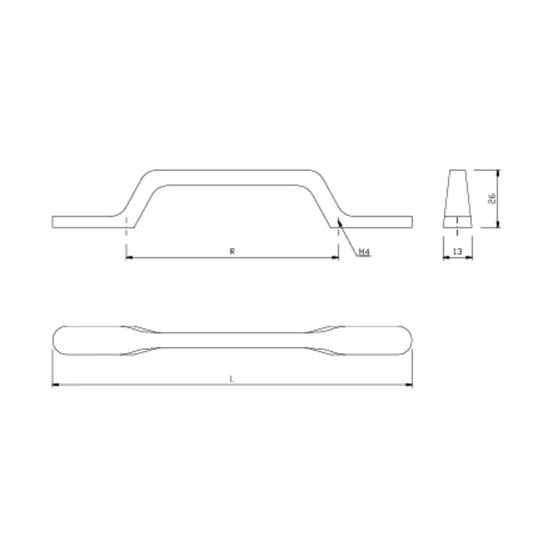
- Fastening:Hardware is almost universally attached usingM4 machine screws. Determine screw length by adding the cabinet front thickness (typically 16 mm to 19 mm / 5/8 in to 3/4 in) to the internal thread depth of the pull (typically 5 mm to 8 mm / 3/16 in to 5/16 in). Standard 22 mm (7/8 in) or 25 mm (1 in) M4 screws are typical.
- Torque:Tighten screws hand-tight or using a low torque setting on a cordless screwdriver. Over-tightening can strip the internal threads in soft aluminum or zinc die-cast hardware.
Integration with Interior Kitchen Organizers
Akitchen pull or knobacts as the external interface for internal motion systems. When homeowners choose toretrofit kitchen drawers, the pull strength of the hardware must match the dynamic load rating of the new pull-out system.
When pulling a 60 cm (23-5/8 in) kitchen cabinet drawer pull-out loaded with 30 kg (66 lbs) of cookware, the pull must remain rigid and firmly anchored to the front panel. Onfull-extension slides(where the drawer extends 100% out of the cabinet body), leverage forces reach their peak at full extension.
Specialty pull-outs like trash storage systems also require heavy-duty hardware. A60 cm (23-5/8 in) pull-out kitchen trash canor atrash recycling organizeris operated dozens of times daily. For these, closed-loop designs like the96 mm (3-3/4 in) UZ04 Cabinet Pull - Aluminumprevent clothing from catching on exposed edges.
When installing aninner kitchen drawerbehind a main cabinet front, ensure that the rear mounting screw heads of the primary exterior pull do not collide with the front panel of the inner drawer. Use low-profile truss-head screws or countersink them flush. Adding interior accessories like akitchen drawer organizer insertincreases total drawer weight, making sturdy hardware options like theTECHNO 256 mm (10-1/16 in) Cabinet Pull - Brushed Steela smart structural choice.
Additionally, cabinet pulls work directly againstsoft-close kitchen cabinet hinges. The soft-close mechanism inside European cup hinges (typically requiring a 35 mm (1-3/8 in) cup hole) cushions the door during the final inches of closure. Upon opening, however, this damper cylinder must be reset, creating initial pulling resistance. An ergonomically designed pull simplifies overcoming this retention force effortless.
FAQ – Frequently Asked Questions
What is the standard hole center distance for kitchen cabinet hardware?
There is no single universal standard, but almost all modern drilling followsSystem 32. The most common center-to-center dimensions for existing and new kitchens are96 mm (3-3/4 in), 128 mm (5-1/16 in), 160 mm (6-5/16 in), and 192 mm (7-9/16 in). Always measure precisely from hole center to hole center before ordering replacement hardware.
What size screws are needed for kitchen cabinet pulls?
Standard installations use metricM4 machine screwswith Phillips drive heads (PZ or PH). For standard kitchen cabinet doors with a panel thickness of16 mm to 19 mm (5/8 in to 3/4 in), screw lengths of22 mm to 25 mm (7/8 in to 1 in)are required.
Can bar pulls be installed both horizontally and vertically?
Yes. Technically, installation works identically in both orientations. Horizontal mounting is typical on drawer fronts to distribute pulling force evenly across the slide mechanism (usually centered). Vertical mounting is used on hinged doors (such as pantries or refrigerator panels), placed opposite thekitchen cabinet door hingeto maximize opening leverage.
How should you clean powder-coated (matte black) cabinet hardware?
Matte black finishes should never be cleaned with abrasive tools (microfiber cloths containing abrasive fibers, scouring pads) or harsh chemical solvents. These can damage the microscopic surface structure of the powder coating, causing shiny, worn spots. A soft cotton cloth with warm, mild soapy water is ideal.
What is the difference between a recessed flush pull and an edge pull?
Arecessed flush pullrequires routing a mortise pocket directly into the face of the cabinet door, allowing the hardware to sit flush with the surface. Anedge pull ( profile pull)mounts over the top or side edge of the door panel and fastens from behind, keeping the front face of the door intact.