
20 Inch Pull Out Trash Can
-
Pull-Out Kitchen Waste Bin - 2x20L - 15-3/4 inch CabinetRegular price $134.10Unit price / perRegular priceSale price $134.10
-
Pull Out Cabinet Recycling Bins Soft-Close 4x15L or 4x20L - 31-1/2 inch Kitchen CabinetRegular price From $130.44Unit price / perRegular priceSale price From $130.44
-
Cabinet Recycling Bins 2 x 4 Gal - 17-3/4 inch, D = 18-7/8 inch H = 12-5/8 inch Kitchen Cabinet - Anthracite GrayRegular price $99.18Unit price / perRegular priceSale price $99.18

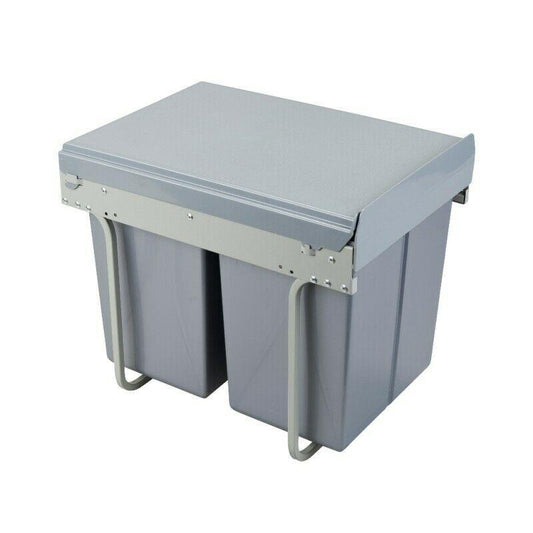

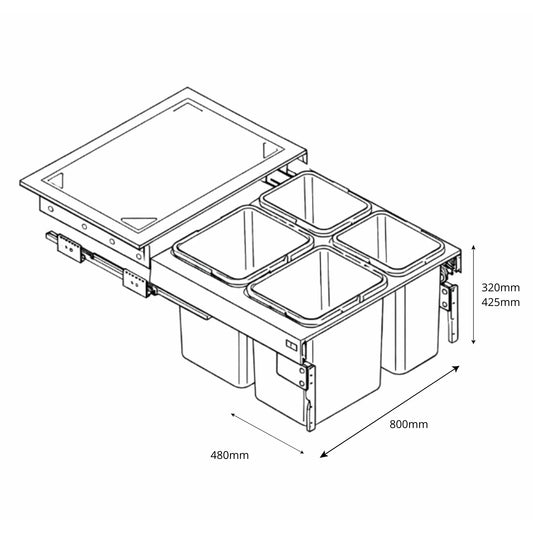

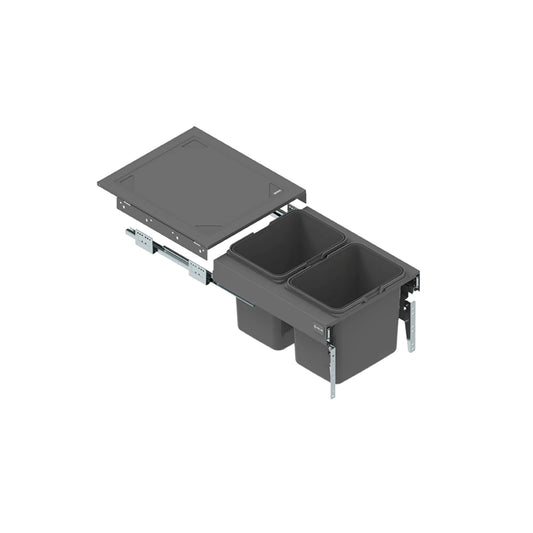
A20 inch pull out trash canfor the kitchen is an integrated waste recycling system designed specifically for installation in base cabinets with an exterior width of 20 in (50 cm), operating smoothly on a ball-bearing or roller slide system.
Proper waste separation directly inside the kitchen base cabinet is a key element of modern kitchen design. Whether you are building a new kitchen or retrofitting an existing cabinet, a 20 in (50 cm) cabinet size offers the ideal balance between required space and bin capacity. In this guide, DIYers and installers will learn how to select the right waste system for a 20 in (50 cm) base cabinet, which technical requirements the cabinet must meet, and how to ensure a smooth installation.
Understanding the Dimensions of a 20 in (50 cm) Base Cabinet
Before installing a recycling system, it is essential to analyze the exact dimensions of your existing or planned cabinet. In cabinet making, the term "20 in" or "50 cm" typically refers to theexterior cabinet width.
Clear Interior Width and Obstructions
If the kitchen cabinet measures 19-11/16 in (500 mm) wide on the outside, you must subtract the side wall material thickness. For standard 5/8 in (16 mm) particle board walls, this leaves a clear interior width of 18-7/16 in (468 mm) (500 mm minus 2 x 16 mm). For 3/4 in (19 mm) thick side walls, 18-3/16 in (462 mm) remain. The selected bin system must be narrower than this clear interior width.
In addition, watch out for internal obstructions. If the cabinet uses a traditional hinged door, the hinges protrude into the interior space. A standard concealed cup hinge with a 110° opening angle can reduce the usable interior width by 3/4 in to 1 in (20 mm to 25 mm). Always measure the clear interior width at hinge height. If the system is too wide, it may rub against the open door when pulled out. Alternatively, it is worth checking the 20 in (50 cm) Kitchen Cabinet Pull Out category to cross-reference exact tolerances for this cabinet size.
Cabinet Depth and Height
Along with width, depth and height are critical factors. A standard kitchen base cabinet usually features a interior depth of around 22 in (560 mm). A kitchenpull out trash cantypically requires an installation depth of 15-3/4 in to 18-7/8 in (400 mm to 480 mm). When measuring, be sure to account for drain pipes or P-traps running along the back wall, especially if the trash can is installed under a sink.
Many users look for a "50 cm tall trash bin". Installation height varies greatly depending on bin capacity. A system with two 15-liter (4-gal) bins often needs a height of just 12-5/8 in to 13-3/4 in (320 mm to 350 mm), whereas large-capacity systems can require 17-3/4 in to 19-11/16 in (450 mm to 500 mm) in height.
Slide Technology: Full Extension vs. Partial Extension
The slide system acts like a vehicle's chassis—it carries the load and defines daily operating comfort. For a 20 in (50 cm) base cabinet kitchen recycling system, two primary slide types are used:
Partial Extension Slides
Withpartial extension slides, the system pulls out roughly 75% to 80% from the cabinet. The rear section of the trash bin remains inside the cabinet. This is a sturdy and often budget-friendly solution, though removing the rear bin requires tilting it slightly. For compact systems, this is usually more than sufficient.
Full Extension Slides
Afull extension slideallows the entire waste system to extend 100% out past the front edge of the cabinet. This is essential for systems with three or four compartments, giving you unobstructed access to the rear bin. The integrated zinc-plated steelball-bearing slidesprovide high lateral stability. If you are retrofitting kitchen drawers, full extension slides are the preferred choice due to their superior convenience.
Soft-Close Mechanism
Many modern systems feature an integratedsoft-close mechanism(damping). A hydraulic dampener in the slide absorbs the closing force and gently, silently pulls the waste system into its final position over the last few inches. Be careful not to confuse soft-close with "push-to-open." Push-to-open is an ejection mechanism for handleless fronts activated by pressure, whereas soft-close cushions and slows down the closing motion.
Waste Separation Configurations
A 20 in (50 cm) cabinet offers ample capacity for multi-compartment waste separation. The total capacity for this cabinet width typically ranges between 30 and 50 liters (8 to 13 gal). Those specifically looking for a "50 liter kitchen trash can" or "50l kitchen bin" will find suitable options here.
- 2-Compartment Recycling:Ideal for trash and recyclables. A common configuration is 2 x 15 liters (2 x 4 gal) or 2 x 20 liters (2 x 5.3 gal). A suitable option for slightly tighter tolerances in the same cabinet is theRecycling Trash Can - 2x20L - 16 in (40 cm) Kitchen Cabinet. Additional configurations can be found under2-Compartment Recycling Trash Cans.
- 3-Compartment or 4-Compartment Recycling:If you want to separate compost and paper as well, select systems with multiple smaller bins (e.g., 1 x 20 liters and 2 x 10 liters). You can find these setups underKitchen Recycling Trash Cans.
The bins themselves are typically made from durable, easy-to-clean ABS plastic and feature fold-down handles that also secure the trash bags in place.
Installation Types for DIYers
When installing a kitchen pull out trash can, there are two primary mounting options depending on the system. Both methods can be completed with standard tools (cordless drill/driver, tape measure, pencil, PZ2 screwdriver) in about 30 to 45 minutes.
1. Bottom Mounting
This is the easiest method for retrofitting a cabinet trash can. The entire system consists of a support frame that screws directly onto the bottom shelf of the kitchen cabinet.
- Advantage:You do not need to match the exact clear interior width, provided the system is narrower than the cabinet interior. A system originally designed for a 16 in (40 cm) or 18 in (45 cm) cabinet, such as theRecycling Trash Can 2 x 15L - 18 in (45 cm), D = 18-7/8 in (480 mm) H = 12-5/8 in (320 mm) Kitchen Cabinet - Anthracite Gray, can easily be mounted centered or offset on the base of a 20 in (50 cm) cabinet. This leaves extra space next to it for cleaning supplies.
- Process:Position the frame in the cabinet, check for clearance with door hinges, pre-drill screw holes using a 1/8 in (3 mm) wood bit, and secure the frame withchipboard screws(typically #8 x 5/8 in / 4 x 16 mm).
2. Side Mounting (Door-Mounted / Front Pull-Out)
In this variation, telescopic slides are mounted directly to the left and right side walls of the cabinet frame. The cabinet door is no longer opened via hinges, but is attached directly to the pull-out frame. When you pull the front handle, the entire 20 in (50 cm) trash pull-out drawer glides forward.
- Advantage:Maximum ergonomics, as you don't have to bend down or open a separate cabinet door first.
- Process:The slides must be installed perfectly level and parallel on the side walls using System 32 hole spacing. The cabinet front panel is then attached to the trash system via front mounting brackets. These brackets typically offer 3D adjustment to align door gaps precisely with adjacent cabinet fronts.
Integration into Kitchen Design
A 20 in (50 cm) pull out trash can is a versatile module in kitchen planning. For example, when setting up a102 in (260 cm) kitchen runor a compactkitchen cabinet set, the trash base cabinet is usually placed directly next to or beneath the sink.
If you discover that your cabinet dimensions differ, you can explore adjacent categories. For narrower openings, consider a 16 in (40 cm) Kitchen Cabinet Pull Out or matching waste systems. For wider sink cabinets, a24 in (60 cm) Pull Out Trash Canis ideal.
To maximize space above the waste system, consider installing a shallow internal drawer. Retrofitting an internal kitchen drawer creates convenient storage for trash bags, sponges, or dishwasher pods. Find matching organizing accessories in ourKitchen Drawer Organizerssection. When planning handleless fronts or updating hardware aesthetics, be sure to select suitableKitchen Cabinet Handlesthat can comfortably handle the pull forces of a fully loaded trash pull-out (often weighing up to 66 lbs (30 kg) total weight).
If you need to replace complete drawer box systems, our Kitchen Cabinet Drawer Systems category offers matching drawer sides and slide rails.
Care and Maintenance of the Slide Mechanism
To keep your pull out trash bin working smoothly for years, minimal maintenance is required. The ball-bearing slides are factory-lubricated. Avoid spraying harsh chemical cleaners or degreasers directly onto the steel slides, as this will wash away the lubricant. The plastic bins can simply be lifted out of the support frame using their handles and washed with warm water and mild dish soap.
If the system becomes stiff over time, check whether debris or dirt particles have settled in the ball-bearing tracks. Wiping them with a dry cloth and applying a drop of resin-free machine oil will quickly restore smooth sliding action.
Frequently Asked Questions (FAQ)
What does "20 inch" (50 cm) mean for a pull out trash can?
This measurement always refers to theexterior widthof the kitchen base cabinet. The trash system itself is engineered narrower (typically around 16-1/8 in to 18-1/8 in (410 mm to 460 mm)) to fit seamlessly between 5/8 in or 3/4 in (16 mm or 19 mm) side walls.
Can I install a door-mounted front pull-out system in a cabinet with a hinged door?
Yes, this is possible with many models. You will need to remove the existing door hinges (concealed hinges) from both the cabinet frame and the door. Next, mount the trash system to the cabinet side walls or base, and attach the original door directly to the trash frame using front mounting brackets.
How much load capacity should the slide system offer?
A trash system for a 20 in (50 cm) cabinet typically holds between 30 and 50 liters (8 to 13 gal). Because heavy wet organic waste or glass bottles add up, the integrated telescopic slides are generally rated for a dynamic load capacity of 66 lbs to 100 lbs (30 kg to 45 kg). This ensures the system pulls out smoothly without sagging even under full load.
Can this system be installed under a sink?
Generally, yes. However, you must carefully measure the available clearance height and depth prior to installation. P-traps, drain pipes, and water lines often extend far into the cabinet interior. Measure from the front cabinet edge to the furthest protruding pipe to determine the maximum installation depth for your waste system.
What is the difference between roller slides and ball-bearing slides?
Roller slides feature plastic wheels running on painted metal channels. They are simple and functional. Ball-bearing slides consist of interlocking steel profiles containing small steel ball bearings. Ball-bearing slides deliver significantly higher lateral stability, operate quieter, and easily support full extension, making them the superior choice for heavy pull out trash cans.