
Cabinet Drawer Pulls
Popular Subcategories
-
Furniture handle 3-3/4 inch UZ05 - SatinRegular price $1.58Unit price / perRegular priceSale price $1.58
-
Furniture handle 3-3/4 inch UZ04 - SatinRegular price $1.39Unit price / perRegular priceSale price $1.39
-
Furniture handle 3-3/4 inch UZ02 - ChromeRegular price $0.92Unit price / perRegular priceSale price $0.92
-
Furniture handle 3-3/4 inch UZ01 - ChromeRegular price $1.61Unit price / perRegular priceSale price $1.61
-
Furniture handle 3-3/4 inch UZ02 - SatinRegular price $0.97Unit price / perRegular priceSale price $0.97
-
Furniture handle 3-3/4 inch UZ01 - SatinRegular price $1.63Unit price / perRegular priceSale price $1.63
-
LEAF Edge Pull Furniture Handle 1-1/4 inch (2-3/8 inch total length) - Pearl Matt SilverRegular price $3.94Unit price / perRegular priceSale price $3.94
-
3.75 Inch Drawer Pull 96mm UZ04 - AluminumRegular price $1.68Unit price / perRegular priceSale price $1.68
-
LEAF Edge Pull Furniture Handle 2-2/4 inch (4-5/8 inch total length) - Pearl Matt SilverRegular price $5.72Unit price / perRegular priceSale price $5.72
-
Pull handle brushed steel - 7-7/8 inchRegular price $1.78Unit price / perRegular priceSale price $1.78
-
Furniture handle 3-3/4 inch UZ03 - Antique BrassRegular price $0.91Unit price / perRegular priceSale price $0.91
-
Furniture handle 3-3/4 inch UZ01 - AluminumRegular price $1.68Unit price / perRegular priceSale price $1.68

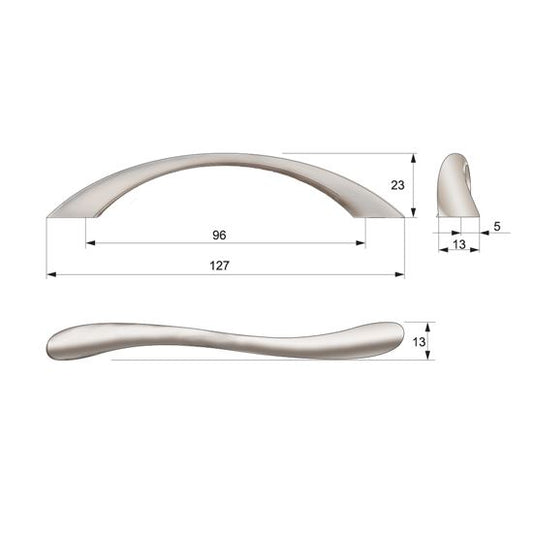

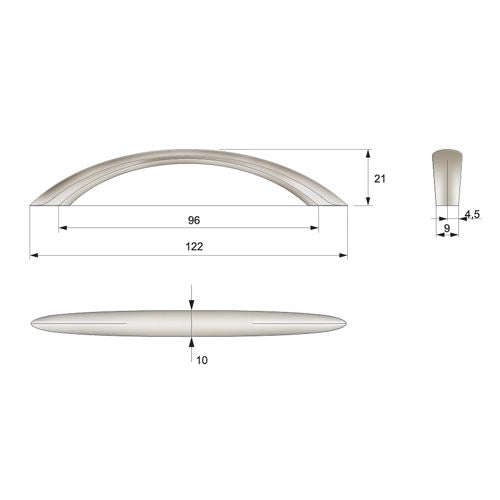

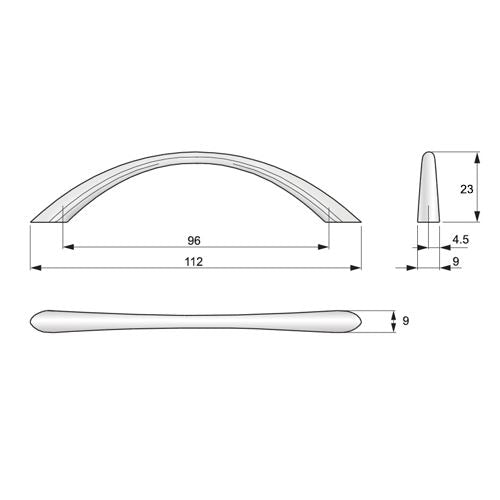

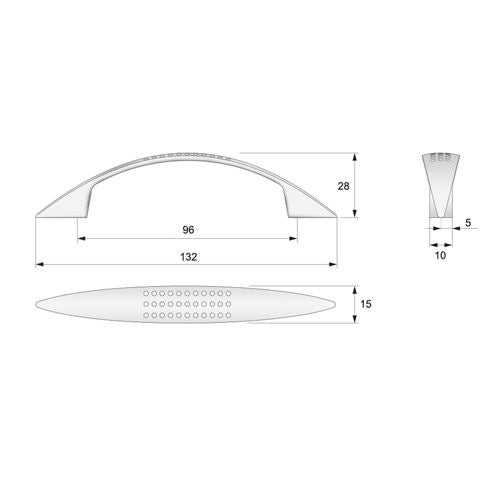

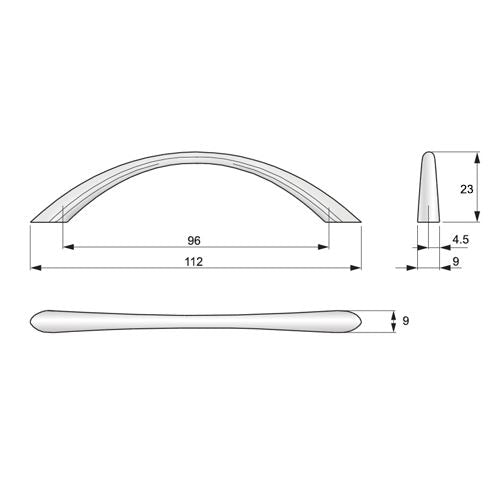

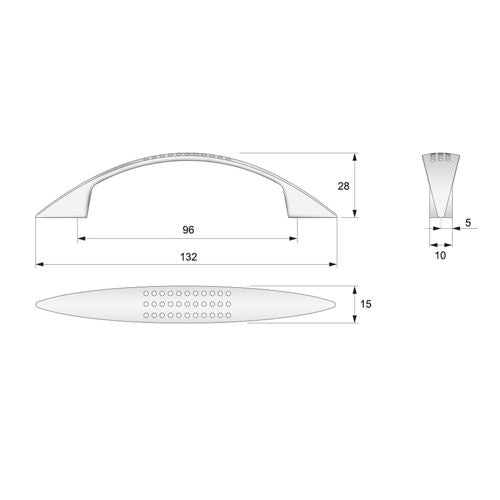


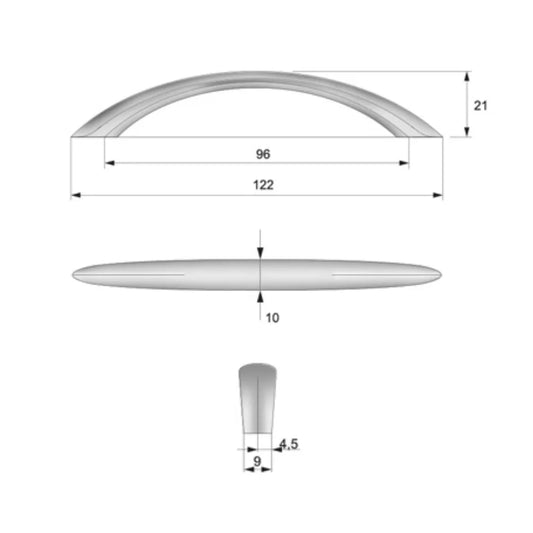


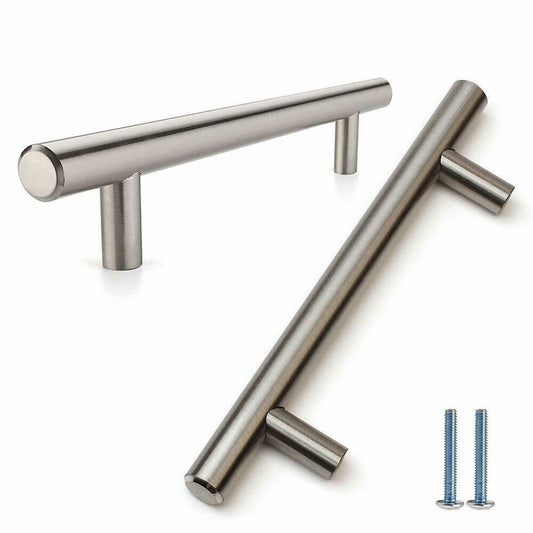

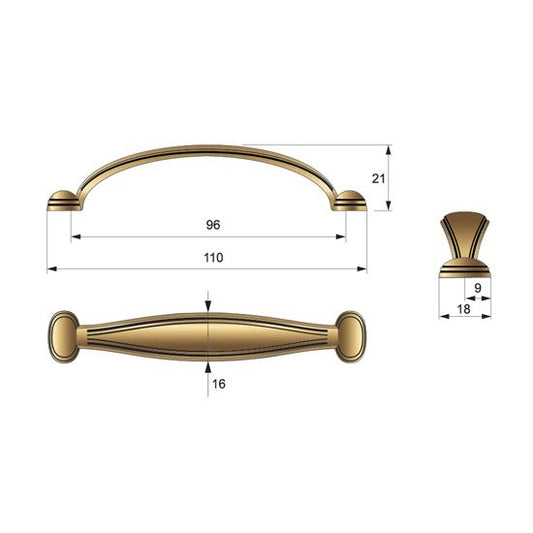

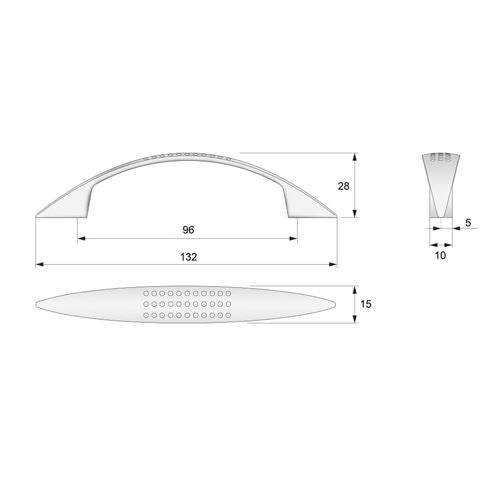
Cabinet drawer pulls(often used synonymously in the trade withfurniture handlesorcabinet pulls) are mechanical hardware elements designed for the manual operation of slide-outs, drawers, and cabinet doors. They are positively secured to the furniture front via a defined screw connection.
Selecting the correctcabinet drawer pulls, handles, and knobs for furniture construction and millwork installation is not purely an aesthetic decision, but a technical requirement. A precisely bolted cabinet handle functions like a mechanical transmission: it efficiently transfers the user's pulling force to the drawer slide mechanism without racking the furniture front or applying uneven loads to the slide system. Especially on wide drawers carrying heavy loads, the mechanical stability and exact positioning of the pull are critical to the overall service life of the cabinet.
This technical guide details the key parameters for selectingcabinet drawer pullsand wall cabinet hardware—from standardized center-to-center hole spacing to material specifications and precise mounting requirements.
System 32 and Center-to-Center Hole Spacing (C-C)
The most critical technical parameter when selecting cabinet drawer pulls is thecenter-to-center distance (C-C), which is the exact measurement from the center of one screw hole to the center of the next. In European furniture manufacturing and modern US frameless cabinetry, hole spacing almost universally adheres to the32 mm System.
This grid system dictates that the distance between two mounting points is always a multiple of 32 mm (approx. 1-1/4 in). This originates from industrial multi-spindle drilling machines whose spindles are set precise to this interval.
Common center-to-center dimensions under this standard include:
- 32 mm (1-1/4 in):Typically used for very small drawers or specialized edge pulls like theLEAF Edge Pull Cabinet Handle 32mm (1-1/4 in) - Pearl Silver.
- 64 mm (2-1/2 in):Ideal for narrow fronts, such as apothecary cabinets or pull-out spice racks.
- 96 mm (3-3/4 in):A classic standard dimension. Popular choices include theCabinet Pull 96mm (3-3/4 in) UZ01 - Aluminumand theCabinet Pull 96mm (3-3/4 in) UZ02 - Satin.
- 128 mm (5-1/16 in):The most widely used size for standard kitchen drawer fronts.
- 160 mm (6-5/16 in):Designed for wider drawers starting at 600 mm (23-5/8 in) cabinet width.
- 192 mm (7-9/16 in) to 320 mm (12-5/8 in):Used for oversized drawer fronts or tall pantry cabinet doors.
When installers upgrade or replaceIkea drawer pulls, they will virtually always encounter this 32 mm grid. Nevertheless, measuring with a digital caliper (center to center) prior to installation is mandatory to eliminate front drilling tolerance issues.
Design Types of Cabinet Drawer Pulls
The geometry of a pull determines how tensile force is distributed across the front panel and the underlyingdrawer slide. Depending on the application and drawer weight capacity, different styles are utilized.
Bow Pulls and Bridge Handles
Classiccabinet drawer pullsfeature two mounting points. The pulling force is distributed evenly across two screw connections, minimizing leverage stress on the core material of the front panel (typically 19 mm / 3/4 in particle board or MDF). For standard applications, models such as theCabinet Handle 96mm (3-3/4 in) UZ05 - SatinorCabinet Handle 128mm (5-1/16 in) UZ04 - Satinoffer structural integrity with an ideal balance of clearance and stability.
T-Bar Pulls
These models feature a cylindrical or square bar mounted on one or two posts. On longer versions, such as theT-Bar Cabinet Pull 128mm / 5-1/16 in (200mm / 7-7/8 in Overall Length) Brushed Steel/Nickel, the bar extends beyond the mounting points. This offers an extended grip surface, but demands secure screwing, as asymmetrical pulling on the overhanging ends generates higher torsional strain on the screws.
Edge Pulls / Profile Pulls
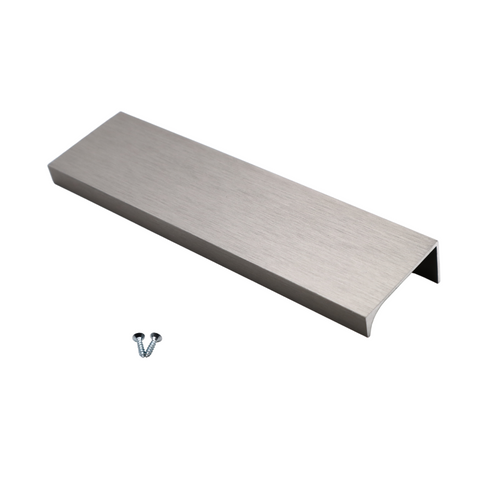
Edge pulls are mounted to the top or side rear edge of the front rather than the face of the panel, wrapping over the lip. When designing cabinetry with edge pulls, clear gap tolerances between fronts are critical. The thickness of the pull profile (typically 1.5 mm to 2.0 mm / 1/16 in) requires an increased door/drawer gap of at least 3.0 mm to 4.0 mm (1/8 in to 5/32 in) to prevent mechanical binding when closing. Standard options include theLEAF Edge Pull Cabinet Handle 64mm (2-1/2 in) - Pearl Silveror theLEAF Edge Pull Cabinet Handle 64mm (2-1/2 in) - Brass Gold. They are ideal for seamless handleless aesthetics, but require wood screws (typically 3.5 x 16 mm / #6 x 5/8 in) inserted into the rear rather than machine screws passing all the way through.
Recessed Pulls / Cup Pulls
For sliding doors or internal drawer units where flush clearance is required, recessed pulls are used. A model like the Recessed Pull 128mm (5-1/16 in) - Satin requires precise routing into the cabinet front. The installer uses a router, straight bit, and template guide. Routing depth typically ranges between 10 mm and 12 mm (3/8 in to 1/2 in), requiring a minimum front thickness of 16 mm (5/8 in). Securing is done via press-fitting, construction adhesive, or concealed rear screws.
Material Specifications and Finishes
The core material ofcabinet drawer pullsdetermines their mechanical load resistance and durability against environmental factors (humidity, hand oils, and cleaning agents).
Zinc Die-Cast (Zamak) and Aluminum
The majority of modernmetal drawer pullsare manufactured from zinc die-cast alloys (Zamak: zinc, aluminum, magnesium, copper) or solid aluminum. These materials support tight casting tolerances and durable female threads. Aluminum hardware like theCabinet Pull 96mm (3-3/4 in) UZ04 - Aluminumis lightweight, while Zamak offers higher density and a solid haptic feel.
Stainless Steel and Plated Finishes
When searching forbrushed stainless steel drawer pullsorchrome drawer pulls, the hardware usually consists of an engineered Zamak or steel core finished with electroplating.
- Chrome:Electroplated chrome pulls (such as theCabinet Pull 96mm (3-3/4 in) UZ01 - Chrome) present an extremely hard, non-porous surface. They offer high corrosion resistance, though fingerprints show readily.
- Satin / Brushed Nickel:Finishes like theCabinet Pull 96mm (3-3/4 in) UZ01 - Satinfeature a brushed or matte nickel plating. They diffuse light, concealing minor scratches and smudges, makingsatin silver drawer pullsthe standard for high-traffic environments.
Antique and Brass Finishes
For restorations or transitional furniture designs,antique cabinet drawer pullsorvintage drawer pullsare specified. These typically feature patinated brass or oil-rubbed finishes over solid brass or steel. Examples include the Cabinet Pull 160mm (6-5/16 in) - Antique Patina or theCabinet Pull 96mm (3-3/4 in) UZ03 - Antique Brass. The aged finish is achieved through chemical passivation and sealed with a protective clear coat to prevent rubbing off on hands.
Wood and Leather
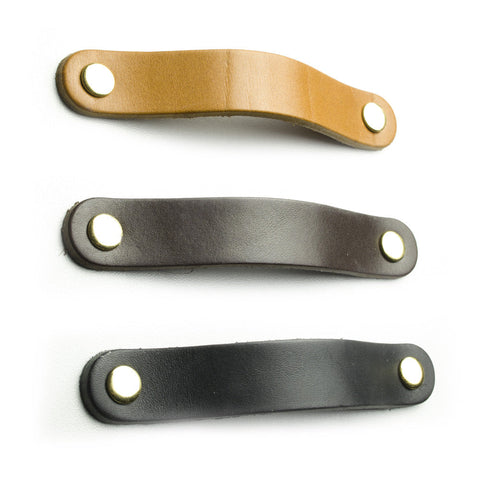
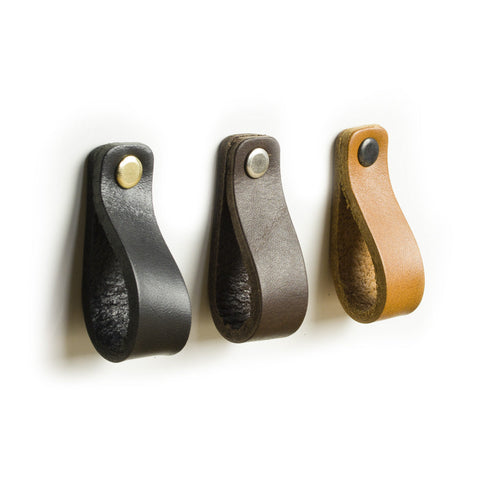
Wooden drawer pullsrequire threaded metal inserts (such as Rampa inserts) for structural integrity, as cutting M4 threads directly into natural wood will strip under pulling loads.Leather drawer pullsconsist of folded straps secured through the front panel with decorative Chicago screws or rivets. They provide dynamic flexibility and prevent impact damage in tight spaces.
Application Areas and Load Requirements
Hardware selection and placement must match the intended functional space and cabinet loading conditions.
Kitchen Cabinet Drawer Pulls
Kitchen drawers experience heavy dynamic forces. A wide 900 mm (35-7/16 in) pot drawer equipped with heavy-duty undermount slides can weigh upwards of 40 kg to 60 kg (88 lbs to 132 lbs) when loaded.Cabinet drawer pulls for kitchensmust absorb these high tensile forces without flex. Wide handles with center-to-center measurements of 160 mm (6-5/16 in) or greater are recommended. Finishes must also resist kitchen fats, food acids, and alkaline cleaning spray; anodized aluminum and electroplated finishes perform best under these conditions.
Wall Cabinet Hardware
Wall cabinet doors are typically actuated from the bottom third of the door panel. Ergonomics dictate placement here. Small profile edge pulls or low-profile bow handles are common choices. Tensile loads are reduced (handling only door weight and hinge resistance), but tactile feel is crucial as users often open these doors blindly.
Matte Black Drawer Pulls and Modern Designs
The demand formatte black drawer pullsandmodern cabinet drawer pullsrelies on durable powder coating. Powder coatings are baked on at roughly 200 °C (392 °F) to produce a scratch-resistant finish. Care should be taken during installation to ensure driver bits do not mar the coated screw recesses.
Technical Installation Guide for Hardware Installers
Installing cabinet hardware requires strict precision. A hole offset by just 1.0 mm (1/32 in) results in visible misalignment or introduces binding stress inside the pull's female threads, leading to thread failure over time.
1. Determining Machine Screw Length
Standard cabinet pulls feature metricM4 female threads. The thread engagement depth inside the handle post is typically 8 mm to 12 mm (5/16 in to 1/2 in). Calculate the required screw length using this formula: `Front Panel Thickness + 4 mm to 5 mm (approx. 3/16 in) = Screw Length` For a standard 19 mm (3/4 in) MDF or particle board front, use an M4 x 22 mm or M4 x 24 mm screw (approx. #8-32 x 1 in equivalency). Screws that are too long cause the pull to wobble; screws that are too short won't fully engage threads and can strip under load.
2. Drilling the Mounting Holes
For M4 machine screws, drill a clearance hole with a diameter of4.5 mm to 5.0 mm (3/16 in). This slight 0.5 mm to 1.0 mm clearance provides necessary micro-adjustability to align the pull perfectly level.
- Tooling:Brad point wood drill bit with center tip.
- Procedure:Secure a sacrificial scrap block of wood tightly behind the rear of the front panel while drilling. Without backing support, the drill bit exit will tear out laminate, melamine, or wood veneer.
3. Using Hardware Jig Templates
Professional millwork installers avoid manual tape-measure layouts for hole centers. Instead, adjustable cabinet hardware jigs are clamped to the top and side edges of the front. This guarantees that everycabinet drawer pullis placed with millimeter precision across all drawers in a bank.
4. Tightening Fasteners
Screws are inserted from the rear of the drawer front. Hand driving with a screwdriver (typically Pozidriv PZ2 or Phillips PH2) is recommended. If using an electric driver/drill, set the clutch torque to a low setting (e.g., setting 2 or 3). Over-torquing an M4 machine screw will permanently strip out zinc die-cast or aluminum threads inside the pull.
Troubleshooting Hardware Installation Issues
Even with accurate layout work, field tolerances can require adjustments.
- Slightly Misaligned Holes:If the front drilling centers miss the handle posts by up to 1.0 mm (1/32 in), widen the clearance hole in the front to 6.0 mm (1/4 in). The oversized head of the M4 truss head screw (typically 8 mm / 5/16 in diameter) will still cover the hole from the back.
- Stripped Threads:If thread engagement is destroyed by over-torquing, the internal threads are ruined and the handle must be replaced.
- Reusing Holes During Remodeling:When replacing oldercabinet pullswith new models featuring different hole centers, old drill holes will be left exposed. Seal these using matching 5 mm (3/16 in) hole covers. Alternatively, select replacement hardware featuring an integrated backplate wide enough to conceal the original holes.
---
FAQ – Frequently Asked Technical Questions on Cabinet Drawer Pulls
How do I accurately measure center-to-center distance for replacement cabinet drawer pulls?
Center-to-center distance (C-C) is measured directly from the exact center of the first screw hole to the center of the second screw hole. Use a digital caliper or rigid rule for precision. Standard dimensions usually follow metric 32 mm intervals (e.g., 96 mm / 3-3/4 in, 128 mm / 5-1/16 in, 160 mm / 6-5/16 in). Do not measure overall handle length, as that does not dictate hole placement.
What fasteners are used to mount cabinet handles and drawer pulls?
The industry standard for cabinet handles and pulls is an M4 metric machine screw thread (commonly interchangeable with US #8-32 cabinet screws depending on the manufacturer). Fastener length must match front thickness plus roughly 5 mm (3/16 in) of thread insertion depth. A standard 19 mm (3/4 in) thick front panel requires M4 x 24 mm screws.
Are edge pulls suitable for heavy-duty kitchen drawers?
Yes, provided they are properly installed. Because edge profile pulls are mounted to the rear of the front using wood screws (typically 3.5 mm or 4.0 mm / #6 or #8 screws), load capacity depends on the pull-out strength of the core material (particle board or MDF). For extra-heavy drawers carrying over 40 kg (88 lbs), through-bolted handles using M4 machine screws are preferred.
How do I install recessed cup pulls into a drawer front?
Installing recessed pulls requires routing out a mortise in the front panel. Using a plunge router, straight bit, and mortise template, mill a recess to the precise depth and dimensions of the pull housing. For structural integrity, ensure the remaining panel thickness behind the routed pocket is at least 5 mm (3/16 in).
What should I keep in mind when drilling handles into high-gloss lacquer fronts?
Lacquered MDF fronts chip easily during drilling. Drill at high RPMs with low forward pressure using a sharp brad point bit. Apply painter's tape over the drilling site beforehand to stabilize the finish, and clamp a solid wood backing block tightly to the rear face before plunging the drill.
Are there specific hardware standards for high-humidity areas like bathrooms?
Bathroom vanity hardware should be made from anodized aluminum, solid stainless steel, or high-grade electroplated zinc die-cast. Unfinished wood, untreated leather, or poorly painted steel can swell, peel, or corrode under high ambient humidity and temperature fluctuations.