
Single Coat Hooks
Popular Subcategories
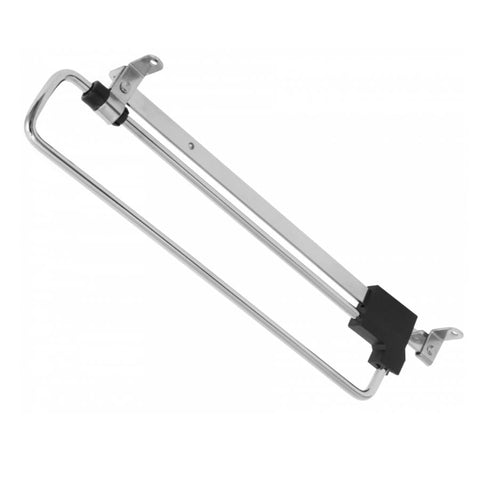
-
Single hanger hook - Antique GoldRegular price $1.18Unit price / perRegular priceSale price $1.18
-
Single hanger hook - GoldRegular price $1.18Unit price / perRegular priceSale price $1.18
-
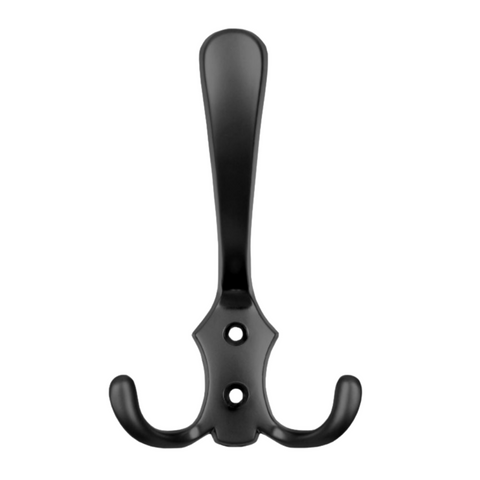
Single hanger hook - Black MattRegular price $1.18Unit price / perRegular priceSale price $1.18
-
Single hanger hook - WhiteRegular price $1.18Unit price / perRegular priceSale price $1.18
-
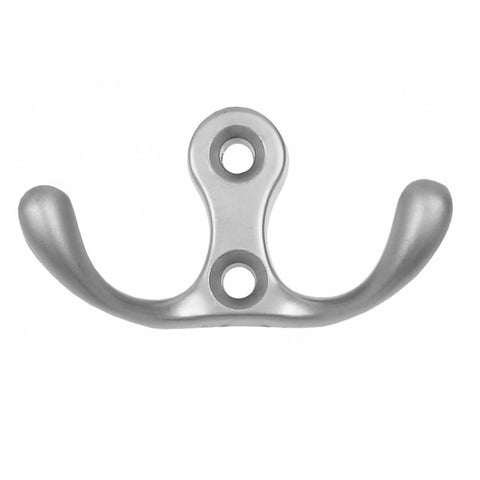
Single hanger hook - SatinRegular price $1.18Unit price / perRegular priceSale price $1.18
-
Single hanger hook - AluminiumRegular price $1.18Unit price / perRegular priceSale price $1.18
-
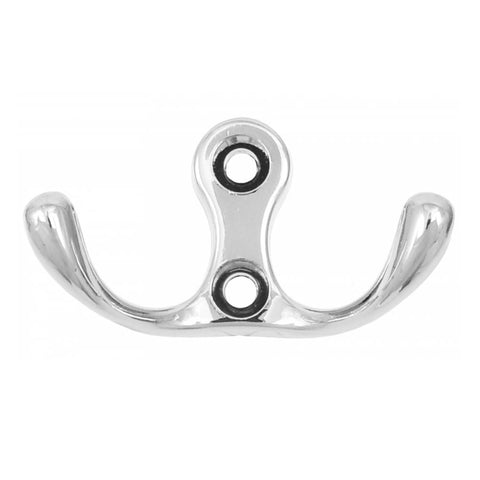
Single hanger hook - ChromeRegular price $1.18Unit price / perRegular priceSale price $1.18
-
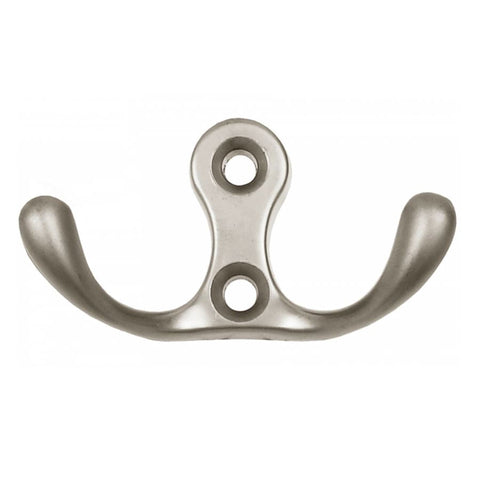
Single hanger hook - Brushed SteelRegular price $1.18Unit price / perRegular priceSale price $1.18

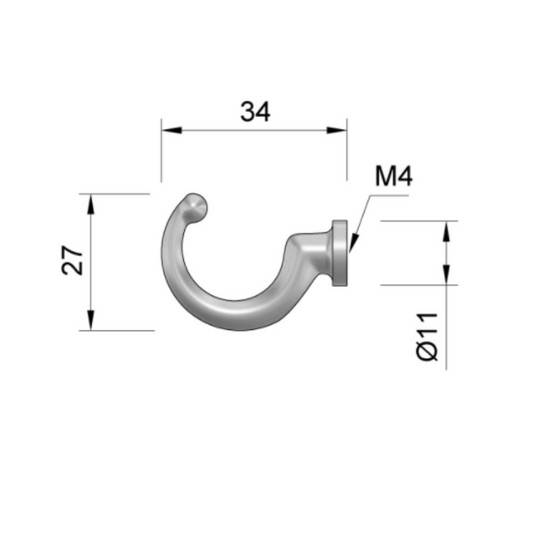

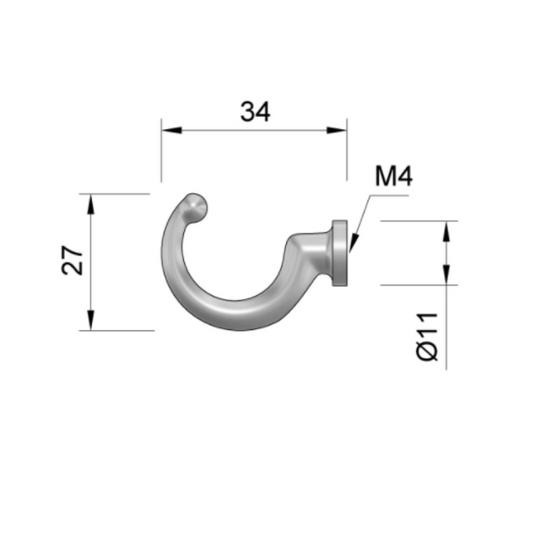

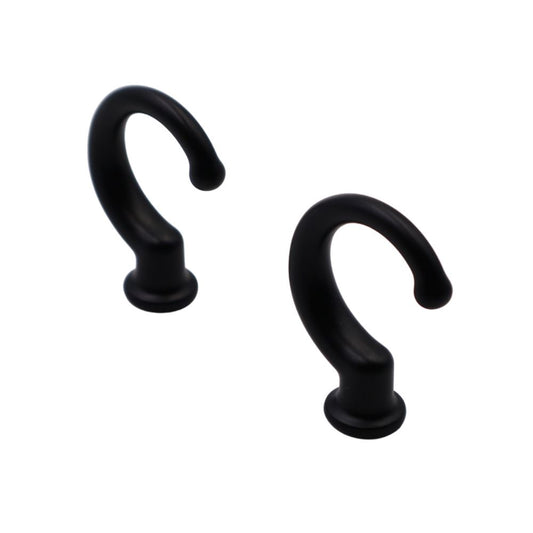

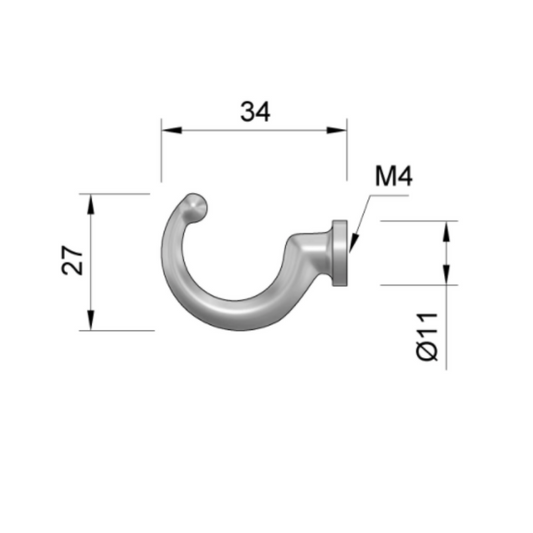

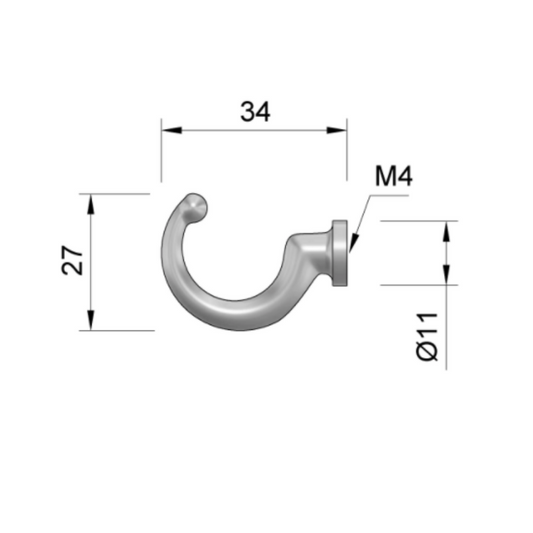

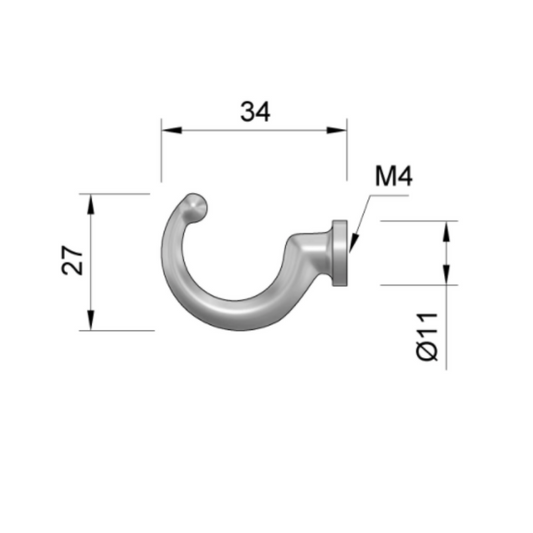

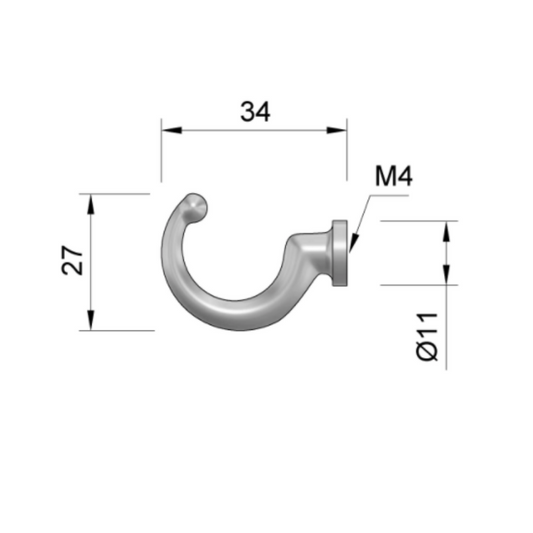

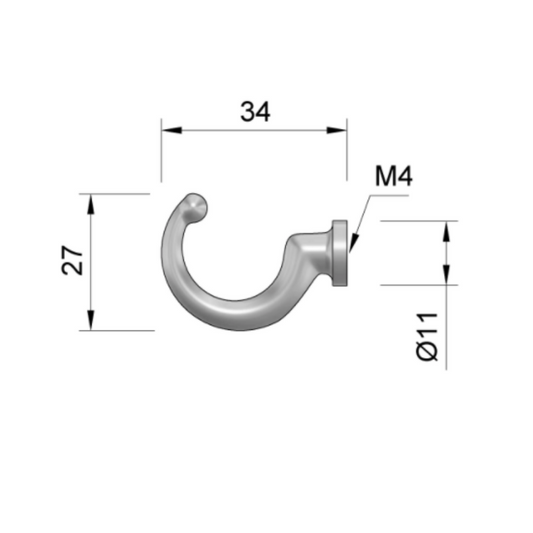
Single coat hooksare compact, individual hardware components designed for hanging clothing, bags, or accessories. They are screwed directly onto substrate materials such as engineered wood, solid wood, or masonry, usually via a one-piece base plate. Unlike fixed hook racks, mountingsingle coat hooksindividually offers maximum layout flexibility, allowing spacing, height, and overall arrangements to be tailored precisely to architectural constraints and user ergonomics.
In professional furniture manufacturing and interior design, individual coat hooks serve as a crucial functional interface. They must reliably transfer static loads into the substrate while remaining resistant to mechanical abrasion, moisture, and corrosive elements. Choosing the right hook depends on material selection, surface finishing, projection depth, and mounting hardware.
Material Science and Construction of Single Coat Hooks
The foundation of long-lasting hardware is its base material. Single coat hooks for furniture construction are dominated by metals and alloys that feature high tensile strength and dimensional stability.
Zinc Die-Cast (Zamak)
The majority of modern furniture fittings are manufactured from Zamak, an alloy of zinc, aluminum, magnesium, and copper. In the die-casting process, this material allows for extremely precise shaping. Zamak has a high density and is resistant to twisting. It forms an ideal substrate for electroplated coatings. Under extreme overload, a Zamak hook will deform slightly before snapping, preventing sudden catastrophic detachment of heavy garments.
Steel and Stainless Steel
Hooks made of bent or milled steel are used for applications subjected to very high mechanical stress. Steel provides the highest load capacity, but strictly requires a surface treatment (galvanizing, powder coating) to prevent corrosion. In damp rooms or outdoor areas, rust-free stainless steel (304 or 316 grade) is used.
Aluminum
Aluminum is lightweight, corrosion-resistant, and ideal for extruding or milling. AnAluminum Single Coat Hookis often anodized, a process that converts the top metal layer into an extremely hard, scratch-resistant oxide surface. Aluminum hooks are particularly well-suited for modern, minimalist entryways and bathroom environments, as the material will not rust even if the surface gets scratched.
Surface Finishing and Aesthetic Integration
The finish of a single coat hook determines not only its appearance, but also its tactile feel and resistance to environmental factors like sweat from hands, wet coats, or cleaning agents. When designing coat storage, coating technologies should be chosen to match other interior hardware (such as door levers or cabinet handles).
Electroplated Coatings
During electroplating, the base material is submerged in an electrolytic bath to coat it with a thin layer of metal.
- Chrome:AChrome Single Coat Hookprovides a high-gloss, reflective surface. Chrome is extremely hard and wear-resistant, making it ideal for high-traffic entryway areas.
- Satin and Brushed Steel:Mechanical brushing before or after electroplating creates a soft, brushed texture. ASatin Single Coat Hookor aBrushed Steel Single Coat Hookis less susceptible to fingerprints and micro-scratches than polished chrome. These finishes coordinate perfectly with modern kitchen fronts and cabinet hardware.
- Precious Metal Finishes:For traditional or luxurious interiors, finishes like brass, bronze, or gold are adapted. AGold Single Coat Hookprovides striking accents on dark mounting panels. For rustic or vintage-style furniture, the surface can be artificially aged, as seen in anAntique Gold Single Coat Hook, where the patina is created through specialized distressing processes.
Powder Coating
In powder coating, dry paint powder is electrostatically applied to the hook and cured at roughly 300°F to 400°F (150°C to 200°C). The result is a seamless, impact-resistant finish.
- AMatte Black Single Coat Hookabsorbs light and creates strong contrast against light woods like Sonoma Oak or against white walls. The matte powder layer offers a pleasant, lightly textured feel.
- AWhite Single Coat Hookblends seamlessly with white walls or cabinet fronts and is frequently used in minimalist hallways or medical facilities.
Statics and Load Capacity: Coat Rack Physics
A single coat hook acts like a cantilever arm on the wall—the further out the load (e.g., a heavy winter coat) hangs from the mounting point, the greater the tensile forces acting on the upper mounting screw. While a hook's load capacity is specified in pounds (lbs), in practice, it primarily depends on the substrate material and mounting method.
Shear Force vs. Pull-Out Force
When a jacket hangs on a hook, gravity acts vertically downward. Thisshear forceattempts to drag the hook down parallel to the wall. Most screws can handle immense shear forces. Far more critical is thepull-out force. The outward projection of the hook creates leverage (torque). The bottom part of the hook's base plate presses into the wall, while the top part pulls outward. The upper screw must withstand this tension. On long hooks with deep projection (such as 3-1/8 in (80 mm) or more), this lever effect multiplies.
Real-World Load Limits
A solid Zamak or steel single coat hook can mechanically hold 33 lbs to 44 lbs (15 kg to 20 kg) without issue. The weak point is almost always the screw connection in the mounting substrate. When properly installed into 3/4 in (19 mm) thickparticleboardusing suitable wood screws, a continuous working load of 11 lbs to 22 lbs (5 kg to 10 kg) per hook is a realistic guideline.
Mounting Methods for Various Substrate Materials
Correct installation is essential for long-term reliability. Screw selection depends entirely on the backing surface. Single coat hooks typically feature countersunk holes. The screw head must sit flush within the hole to prevent snagging clothes.
Mounting on Particleboard and MDF
Engineered wood like melamine-facedparticleboardorMDF(Medium-Density Fiberboard) are the most common backing materials for coat panels.
- Screw Selection:Use fully threadedparticleboard screws. The screw diameter should match the hook's mounting holes (typically #6 or #8 / 3.5 mm or 4 mm).
- Drive Type:ATX (Torx)drive provides superior torque transmission without cam-out;PZ (Pozidriv)is another standard option. Avoid using PH (Phillips) drives for engineered wood.
- Pre-Drilling:Pre-drilling is essential in MDF to keep the material from splitting. For a #8 (4 mm) screw, pre-drill using a 3/32 in or 1/8 in (2.5 mm or 3 mm) wood drill bit. The drill depth should be about 1/16 in (2 mm) shorter than the screw length. On melamine particleboard, pre-drilling also prevents chip-out of the decorative finish.
- Screw Length:Use the longest screw possible without piercing the back of the panel. For a 3/4 in (19 mm) panel and a 1/8 in (3 mm) thick hook base plate, a #8 x 5/8 in (4 x 16 mm or 4 x 17 mm) screw is ideal.
Mounting on Solid Wood
Solid wood (e.g., oak, beech, pine) offers excellent screw holding strength.
- Wood Screws:Use standard countersunk wood screws.
- Pre-Drilling:Hardwoods (like oak or maple) must always be pre-drilled to prevent the screw head from shearing off during insertion. The drill bit diameter should match the root diameter of the screw (excluding thread width).
Mounting on Masonry (Drywall, Concrete, Brick)
When installingsingle coat hooksdirectly onto a wall, wall anchors are required.
- Anchor Selection:Standard expansion anchors (e.g., 1/4 in / 6 mm diameter) are ideal for concrete and solid brick. For hollow block or cellular concrete, specialized hollow-wall anchors should be used.
- Screws:Use countersunk screws long enough to penetrate the hook base, plaster/drywall (often 3/8 in to 5/8 in / 10 mm to 15 mm), and the full length of the anchor. A #8 x 1-1/2 in or #8 x 2 in (4 x 40 mm or 4 x 50 mm) screw paired with a 1/4 in (6 mm) wall anchor is standard.
Ergonomics and Layout Spacing: Planning a Coat Hook Array
Flexible positioning is the main advantage of choosing single coat hooks. To achieve a balanced and functional look, follow standard spacing guidelines and ergonomic principles when setting up your layout.
Hook-to-Hook Spacing
Horizontal spacing between hooks dictates how much bulk hanging garments can take up without making the rack look cluttered.
- Compact Spacing:4 in to 4-3/4 in (100 mm - 120 mm). Ideal for light jackets, shirts, or children's wear.
- Standard Spacing:6 in to 7 in (150 mm - 180 mm). Provides ample space for heavy winter jackets and coats.
- Staggered Layout:To fit more hooks in a tight space, mount them in two staggered rows (a zig-zag pattern). Vertical distance between rows should be at least 6 in (150 mm) so the bottom hooks remain easily accessible.
Mounting Heights
Hook height depends on user height and the types of garments being stored.
- Adults (Standard Height):63 in to 67 in (1600 mm - 1700 mm) from finished floor level. This gives full-length coats enough clearance without touching the floor.
- Children's Entryways:39 in to 47 in (1000 mm - 1200 mm). Position hooks so children can easily reach them independently.
- Dual Lower Row:For family entryways, adding a secondary lower row at 43 in (1100 mm) works great. It functions as the primary coat hook height for kids while serving adults as storage for short jackets, bags, or umbrellas.
Specialized Configurations and Styles
The geometry of a single coat hook defines its specific application. Terminology varies based on shape and function.
- Hat and Coat Hooks:This traditional design features two catching points. The upper, longer arm (hat hook) projects further out to hold hats, caps, or collars. The lower, shorter arm (coat hook) holds jacket hanging loops.
- Single Peg / Cylinder Hooks:Minimalist pegs or cylinders extending at a 90° angle from the wall. To keep clothes from sliding off, they usually feature a flared front rim (rosette) or a slight upward slant (e.g., 5° to 10°).
- Folding / Retractable Hooks:Specialized hardware such as the popularFalter Fanni single folding hookfolds flat against the wall or panel when not in use. They are ideal for narrow hallways or temporary valet hanging in bedrooms.
- Ceiling / Under-Shelf Hooks:Mounted underneath a shelf or cabinet top rather than on a wall. Perfect for hanging clothes hangers or purses inside wardrobe closets.
Integration into Cabinetry and Furniture
In custom furniture making, single coat hooks are used beyond entryways. They are essential components inside wardrobe cabinets—mounted on door interiors to hold belts, ties, or bathrobes. Screw length must be chosen carefully here: on standard 5/8 in or 3/4 in (16 mm or 19 mm) cabinet doors, the screw should penetrate no deeper than 9/16 in (15 mm).
Single hooks are equally important in wet environments. Towel hooks in bathrooms must be crafted from corrosion-resistant materials (aluminum, stainless steel) or high-grade electroplated alloys due to high humidity. AChrome Single Coat Hookis technically the safest choice here thanks to its sealed, moisture-repellent surface.
Frequently Asked Questions (FAQ) About Single Coat Hooks
How much weight can a single coat hook hold?The metal hardware itself (made of steel or Zamak) easily supports 33 lbs to 44 lbs (15 kg to 20 kg). The true limiting factor is the screw fastening in the wood or wall. With proper mounting into 3/4 in (19 mm) particleboard, expect a safe working load capacity of 11 lbs to 18 lbs (5 kg to 8 kg). Heavy winter coats rarely weigh more than 6.5 lbs (3 kg).
What screws should I use for installing hooks on MDF board?Use countersunk wood screws or fully threaded particleboard screws (e.g., #8 x 5/8 in / 4 x 16 mm). You must pre-drill MDF using a wood drill bit (approx. 3/32 in to 1/8 in / 2.5 mm to 3 mm diameter) to keep the board from splitting.
What is the difference between a single coat hook and a coat rack?A coat rack groups multiple hooks onto a single backing plate or wooden board, requiring fewer drill holes in the wall. A single coat hook is mounted individually. While this requires drilling holes for each hook, it provides complete freedom over spacing, height, and overall layout (such as staggered or diagonal patterns).
Can I install coat hooks on the inside of a wardrobe door?Yes, this is common practice for hanging ties, belts, or robes. Check the thickness of your cabinet door first (usually 5/8 in or 3/4 in / 16 mm or 19 mm). Screws must not punch through the outer front. Use screws no longer than 9/16 in (15 mm) and take care not to drill through!
Which material is best suited for bathroom use?Select corrosion-resistant materials for humid areas. Aluminum, stainless steel (304 grade), or premium chrome-plated zinc die-cast are ideal. Avoid uncoated steel or hooks with damaged painted finishes, as rust can form.
How do I clean and care for electroplated hooks (chrome, satin finish)?Clean exclusively with a soft, slightly damp microfiber cloth. Avoid harsh abrasive cleaners, solvent-based solutions, or scouring pads, as they will scratch the delicate electroplated layer. On brushed surfaces, always wipe in the direction of the brushed grain.
How far apart should single coat hooks be spaced on a panel?For standard entryway coats, we recommend horizontal spacing of 6 in to 7 in (150 mm to 180 mm) between hook centers. If you are only hanging light summer jackets or kids' clothing, spacing can be tightened to 4 in to 4-3/4 in (100 mm to 120 mm).