
Round Felt Pads
Popular Subcategories

-
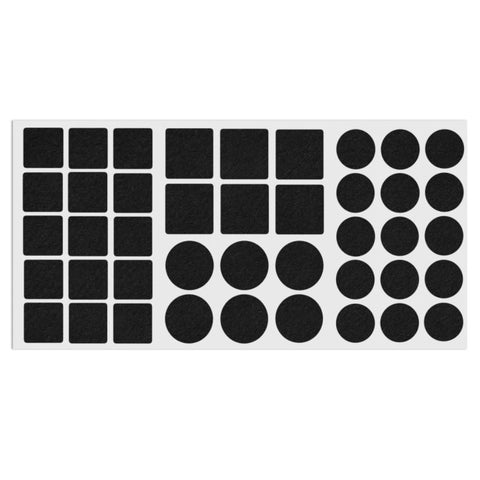
Self-Adhesive Felt Pad Mixed BrownRegular price $1.88Unit price / perRegular priceSale price $1.88
-
Self-Adhesive Felt Pads 11/16 inch (18 mm)Regular price $2.25Unit price / perRegular priceSale price $2.25
-
Self-Adhesive Felt Pad 15/16 inchRegular price $1.88Unit price / perRegular priceSale price $1.88
-
Self-Adhesive Felt Pad 2 inch (50 mm) GrayRegular price $2.25Unit price / perRegular priceSale price $2.25
-
Self-Adhesive Felt Pad Ø2-3/16 inch BrownRegular price $1.88Unit price / perRegular priceSale price $1.88
-
Self-Adhesive Felt Pad Ø1-15/16 inch BrownRegular price $1.88Unit price / perRegular priceSale price $1.88
-
Self-Adhesive Felt Pad Mixed WhiteRegular price $1.88Unit price / perRegular priceSale price $1.88
-
Self-Adhesive Felt Pad Ø9/16 inch BrownRegular price $1.88Unit price / perRegular priceSale price $1.88
-
Self-Adhesive Felt Pad Ø9/16 inch WhiteRegular price $1.88Unit price / perRegular priceSale price $1.88
-
Self-Adhesive Felt Pad Ø13/16 inch BrownRegular price $1.88Unit price / perRegular priceSale price $1.88
-
Self-Adhesive Felt Pad Ø13/16 inch WhiteRegular price $1.88Unit price / perRegular priceSale price $1.88
-
Self-Adhesive Felt Pad 3/4 inch (20 mm) GrayRegular price $2.25Unit price / perRegular priceSale price $2.25
-
Self-Adhesive Felt Pad Ø15/16 inch BrownRegular price $2.02Unit price / perRegular priceSale price $2.02
-
Self-Adhesive Felt Pad Ø15/16 inch WhiteRegular price $2.02Unit price / perRegular priceSale price $2.02
-
Self-Adhesive Felt Pad Ø1-1/8 inch BrownRegular price $1.88Unit price / perRegular priceSale price $1.88
-
Self-Adhesive Felt Pad Ø1-1/8 inch WhiteRegular price $1.88Unit price / perRegular priceSale price $1.88
-
Self-Adhesive Felt Pad 1-1/8 inch (28 mm) GrayRegular price $2.25Unit price / perRegular priceSale price $2.25
-
Self-Adhesive Felt Pad 1-3/16 inch (30 mm)Regular price $2.25Unit price / perRegular priceSale price $2.25
-
Self-Adhesive Felt Pad Ø1-3/8 inch BrownRegular price $1.88Unit price / perRegular priceSale price $1.88
-
Self-Adhesive Felt Pad Ø1-3/8 inch WhiteRegular price $1.88Unit price / perRegular priceSale price $1.88
-
Self-Adhesive Felt Pad 1-3/8 inch (35 mm) GrayRegular price $2.25Unit price / perRegular priceSale price $2.25


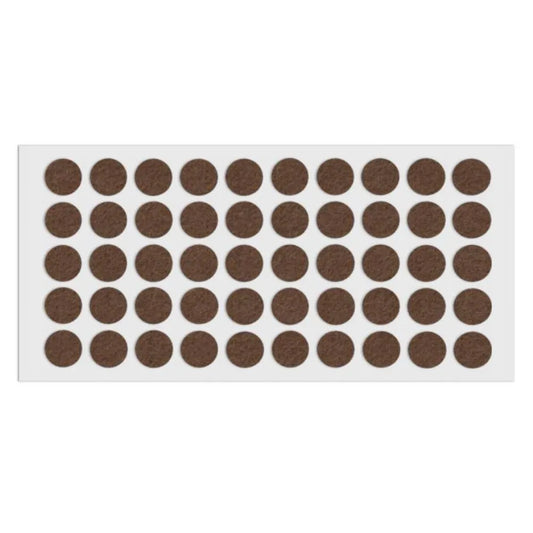

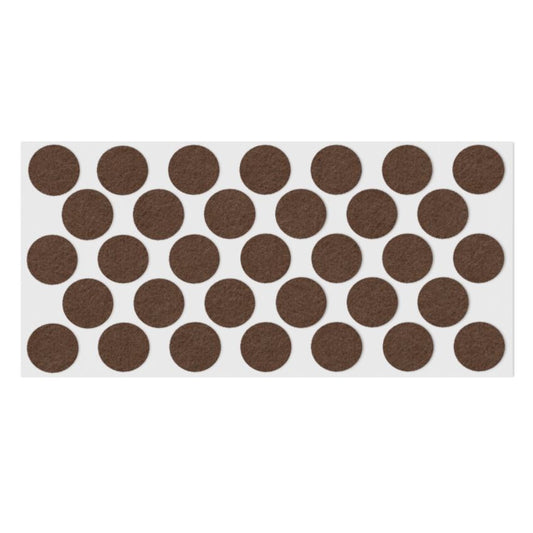


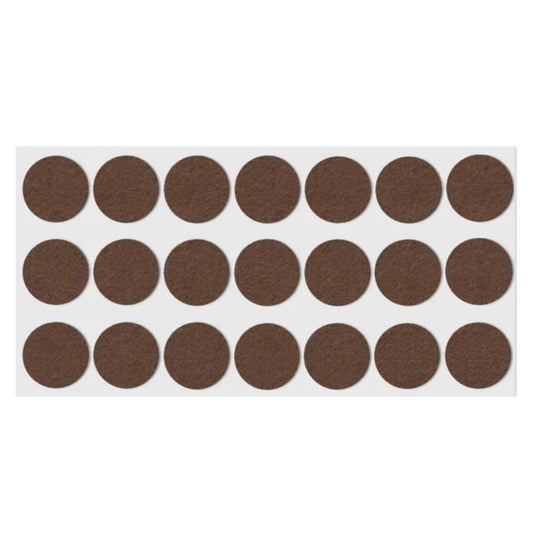


Round felt padsare die-cut circular, self-adhesive protective pads made from high-density industrial felt that serve as a mechanical buffer zone between furniture and hard flooring surfaces. They reduce the coefficient of friction when moving static and dynamic loads, minimize structure-borne noise transmission, and prevent abrasive damage such as scratches, gouges, or scuffs on sensitive surfaces like hardwood, laminate, vinyl, or tile. Thanks to their radial shape, they have no corners, significantly reducing the risk of accidental detachment caused by lateral shear forces when coming into contact with tile joints or thresholds.
The Physical Function of Furniture Felt Pads
Moving furniture generates substantial frictional forces between the furniture piece and the floor. Heavy furniture creates a high point load over a very small contact area. For example, if a fully loadedround dresserwith a total weight of 176 lbs (80 kg) rests on four feet, each foot bears 44 lbs (20 kg). Without a protective barrier, this force transfers directly to the floor covering.
Industrial felt absorbs this point load through its compressible fiber structure. The material thickness, typically 1/8 in to 5/32 in (3 mm to 4 mm), acts as a shock absorber. Under dynamic loads—such as sliding—the felt transforms sliding friction into smooth movement. The floor is not stressed by the hard material of the furniture foot (wood, metal, or plastic), but glides smoothly over soft felt fibers.
Adhesive Technology: Adhesion Under Stress
The underside of the glides is coated with a pressure-sensitive adhesive (PSA). The adhesive layer functions like a microscopic root system, interlocking into the fine pores of the wood or plastic surface to withstand lateral shear forces during movement. These adhesives are typically based on acrylate or synthetic rubber. They require initial pressing force to achieve maximum surface wetting and build full adhesive strength.
Sizing: Determining the Correct Diameter
Selecting the exact diameter is crucial for the longevity of the bond. An overhanging felt pad collects dust and lint around its edges, weakening edge adhesion and leading to premature peeling. Conversely, an undersized pad concentrates the load on too small an area, compressing and wearing down the felt extremely fast.
As a technical rule of thumb: the diameter of the felt pad should be exactly 1/16 in to 3/32 in (1 mm to 2 mm) smaller than the contact surface of the furniture foot.
Small Diameters (19/32 in to 25/32 in (15 mm to 20 mm))
These dimensions are primarily designed for delicate furniture, lightweight chairs, decorative items, or as door stoppers and buffers.
- Self-Adhesive Felt Pad Ø19/32 in (15 mm) Gray
- Self-Adhesive Felt Pad Ø23/32 in (18 mm) Black
- Self-Adhesive Felt Pad Ø25/32 in (20 mm) White
Medium Diameters (15/16 in to 1-3/8 in (24 mm to 35 mm))
This is the standard size for classic dining chairs, stools, side tables, and a typicalround nightstand. It offers an optimal balance between sufficient sliding surface and an unobtrusive appearance.
- Self-Adhesive Felt Pad Ø15/16 in (24 mm) Brown
- Self-Adhesive Felt Pad Ø1-3/32 in (28 mm)
- Self-Adhesive Felt Pad Ø1-3/16 in (30 mm) Gray
- Self-Adhesive Felt Pad Ø1-3/8 in (35 mm)
Large Diameters (1-9/16 in to 2-5/32 in (40 mm to 55 mm))
Engineered for heavy loads. When outfitting a solidtable leg for a round tableor protecting heavy cabinets and sofas, these large pads distribute weight over a wider area.
- Self-Adhesive Felt Pad Ø1-9/16 in (40 mm) Black
- Self-Adhesive Felt Pad Ø1-25/32 in (45 mm)
- Self-Adhesive Felt Pad Ø1-31/32 in (50 mm) Brown
- Self-Adhesive Felt Pad Ø2-5/32 in (55 mm) Gray
For versatile applications or workshops working on various furniture pieces, aSelf-Adhesive Felt Pad Variety Packcombines multiple diameters in a single set.
Color Matching Your Furniture
The color of the felt pad has no impact on its mechanical performance, but it is essential for seamless visual integration. A light oak leg paired with a black pad creates an unwanted visual contrast, especially if the pad is minimally visible.
- Gray Felt Pads:The universal standard. Gray conceals household dust most effectively and blends seamlessly with most neutral floors.
- White Felt Pads:Ideal for white-painted furniture, light Scandinavian woods (pine, spruce, birch), and use on light-colored tile.
- Black Felt Pads:The ideal choice for dark woods (wenge, walnut), black powder-coated metal legs, and industrial design furniture.
- Brown Felt Pads:Tailored for classic wood finishes such as oak, beech, or cherry.
Specific Applications and Furniture Types
The applications forround felt padsare vast, yet proper installation requires a tailored approach depending on the furniture type.
Tables and Heavy Tops
A dining table experiences substantial dynamic loads. When people lean against or shift the table, massive shear forces are exerted on the legs. When equippingtable legs for a round tableor a classic four-legged frame, the contact surfaces must be completely flat. Any tilt in the leg (e.g., angled legs) causes the felt pad to rest on a single edge. In such cases, the felt wears down on that edge extremely quickly. The pad must cover the entire cross-section of the foot.
Seating and Chairs
Chairs represent the most demanding application for round felt pads. A chair is moved multiple times daily, often under the heavy load of a seated person. Surface preparation is essential here. For chairs with tubular steel frames, the end caps must be flat. If the caps are rounded (convex), the pad will not have sufficient bonding area and will inevitably peel off.
Static Furniture (Dressers, Shelves, Cabinets)
For furniture that is rarely moved—such as around shelving unitor heavy sideboards—the glides primarily protect flooring during initial setup and decouple structure-borne sound. When setting up these pieces, the felt guards the floor against indentations caused by high static weight over months or years. Additionally, when attachinground table legsto heavy countertops, the pads make final room positioning significantly easier.
Professional Installation: Step-by-Step Guide
The lifespan of a self-adhesive felt pad depends 90% on proper surface preparation. An insufficiently cleaned surface leads to immediate adhesive failure under the first shear force.
- Remove Old Residue:Completely strip off old pads. For stubborn adhesive residue, use a mechanical scraper (e.g., plastic) and a suitable solvent (adhesive remover or rubbing alcohol).
- Degrease the Surface:This is the most critical step. Wipe the contact surface of the furniture foot with isopropyl alcohol. Wood dust, furniture polish, waxes, or skin oils prevent proper adhesive bonding.
- Drying:Allow the solvent to evaporate completely (approx. 1 to 2 minutes). The surface must be 100% dry.
- Centered Application:Peel off the backing paper of the felt pad without touching the adhesive surface with your fingers. Center the pad precisely over the furniture foot. Any overhang causes dust accumulation and reduces durability.
- Apply Pressure:Firmly press the pad for about 10 to 15 seconds applying strong pressure (approx. 22 lbs to 33 lbs (10 kg to 15 kg)). The pressure-sensitive adhesive requires this force to penetrate the surface's microstructure.
- Curing Time:Set the furniture down so its own weight applies static pressure, but avoid sliding the furniture for the first 24 hours. The adhesive needs this time to reach its maximum final bond strength.
Wear, Maintenance, and Flooring Compatibility
Industrial felt is a wear-and-tear item. Under heavy loads, the fibers compress over time. A pad originally 1/8 in (3 mm) thick can compress down to 1/16 in (1.5 mm) after intensive use. Simultaneously, fine dust and grit particles from the room embed themselves into the felt fibers.
If too many hard particles become trapped in the felt, the pad loses its protective function and can act like fine sandpaper itself. Inspect pads under high-use chairs every 6 months. As soon as the felt becomes severely hardened, glossy, or starts peeling at the edges, it must be replaced immediately.
Flooring Material Compatibility
- Hardwood and Solid Plank Floors (Oiled or Varnished):Felt is the absolute ideal choice. It prevents scratches and glides smoothly over the wood grain.
- Laminate and Vinyl:Excellent compatibility. Felt prevents scuff marks on the wear layer.
- Tile and Natural Stone:Well suited. On tile with wide or deep grout lines, round felt pads excel because they do not catch on edges while crossing joints.
- Carpet:Felt pads arenotsuitable here. Felt creates extremely high frictional resistance on textile surfaces. Hard plastic or PTFE (Teflon) glides are required for carpets.
Geometry: Why Round Pads Are Often Superior
While square furniture pieces are often fitted with square pads, round pads offer distinct mechanical advantages—even when mounted beneath a square furniture leg.
Asquare felt padorrectangular felt padfeatures 90° corners. When a chair slides across an uneven floor or tile grout line, peak shear forces act directly on these corners. If a corner catches slightly, the pad begins to peel from that point inward.
A round pad dissipates these lateral forces much better due to its geometry. It glides more smoothly over edges, significantly extending the lifespan of the adhesive bond on chairs and tables. Therefore, if you have a square furniture foot measuring 1-3/16 in x 1-3/16 in (30 mm x 30 mm), a round pad with a 1-3/32 in (28 mm) diameter is often the technically superior, longer-lasting solution compared to an exact-sized square pad.
---
Frequently Asked Questions (FAQ) About Round Felt Pads
1. Which diameter is optimal for my chair legs?
Measure the exact diameter of the contact surface in mm or inches. Subtract 1/16 in to 3/32 in (1 mm to 2 mm) from this value. For a chair leg measuring 1 in (25 mm) in diameter, select a 15/16 in (24 mm) pad. The pad must never extend beyond the edge of the foot.
2. Why do my felt pads peel off when I move my furniture?
This is almost always caused by two factors: either the bonding surface was not thoroughly degreased prior to installation (dust, wax, or oils prevent adhesion), or the furniture was moved immediately after application. The adhesive requires 24 hours under static pressure to cure fully.
3. Can I use round felt pads under square furniture legs?
Yes, technically this is often recommended. Round pads have no sharp corners that can snag on rough floors or tile joints. As long as the diameter of the round pad is slightly smaller than the edge length of the square foot, this combination works exceptionally well.
4. Are self-adhesive felt pads suitable for radiant floor heating?
Yes. The high-quality industrial felt and adhesive withstand typical residential floor temperatures (up to 82 °F (28 °C) at the surface) without the adhesive softening or degrading.
5. How often should felt pads be replaced?
This depends heavily on usage and floor type. On static furniture (cabinets, dressers), they often last for years. For dining room chairs moved daily across textured tile, pads should be inspected every 6 to 12 months for hardening or wear and replaced as needed.
6. How do I remove stubborn adhesive residue from old pads?
Use rubbing alcohol (isopropyl alcohol) or a specialized adhesive remover. Apply the solvent, let it sit briefly, and scrape away the residue using a plastic scraper. Avoid sharp metal blades to prevent damaging the wood or metal finish of the furniture foot.
---
Related Categories and Complementary Products
To find the ideal protection for all your furniture, explore our specialized subcategories. Depending on the shape of your furniture feet and design preferences, we offer various geometries and color options:
- Felt Pads– The main category for all floor-protecting pads.
- Rectangular Felt Pads– Ideal for wide runners, flat bases, and elongated table frames.
- Square Felt Pads– The precise fit for square table and chair legs.
- Black Felt Pads– Perfect for dark furniture and powder-coated metal frames.
- White Felt Pads– The discreet choice for light woods and white finishes.
- Gray Felt Pads– The versatile, stain-resistant standard for almost any application.
- Brown Felt Pads– Color-matched to classic wood tones like oak, beech, or walnut.